
Active· since Jun 7, 2026
- 100
- days running
- 0
- relaunches
Ad copy
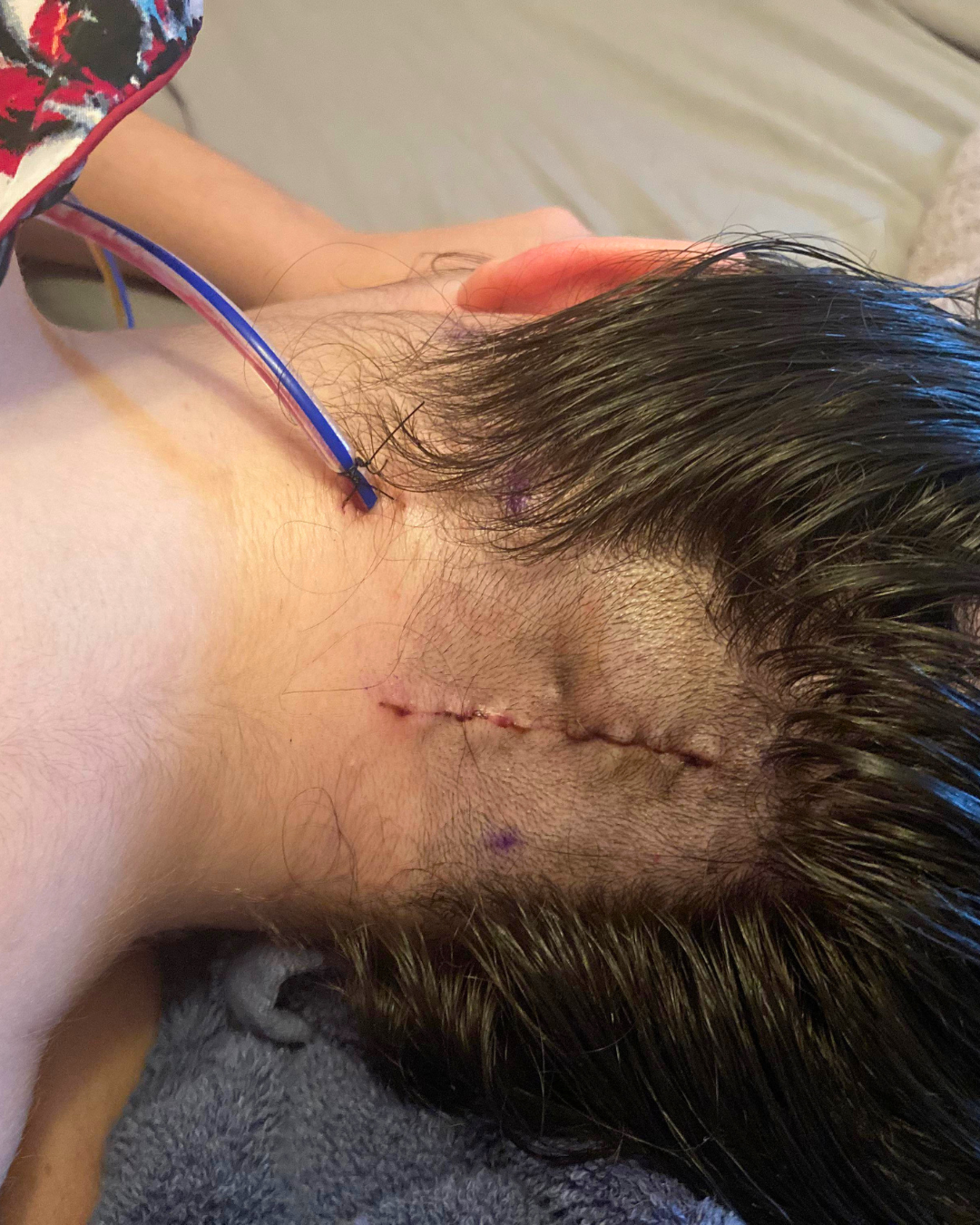
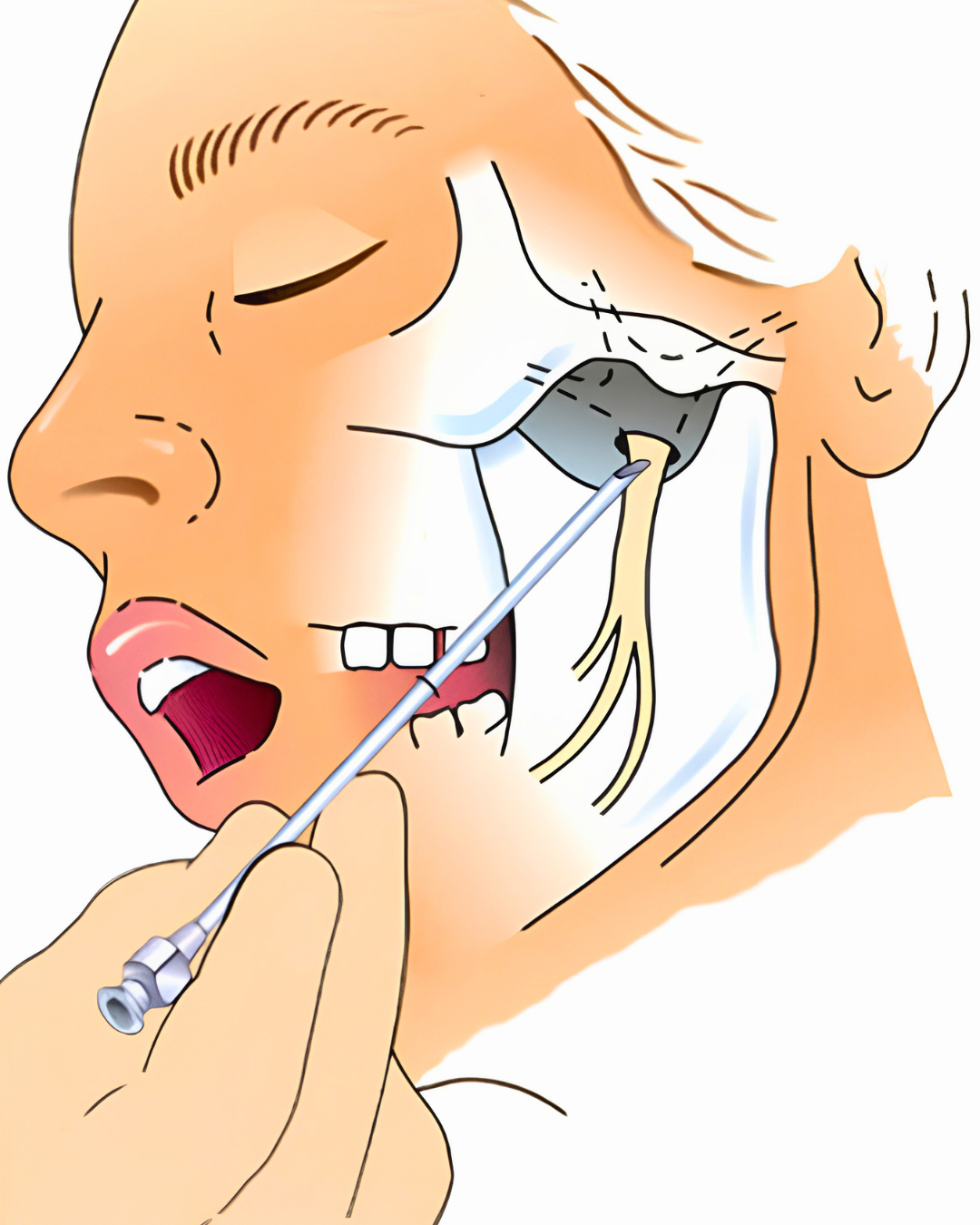
There is a nerve sitting 2 millimeters under your skin. I had Migraines for fourteen years before I knew its name. It was a Wednesday in January. My son had a sixth-grade science project on the human nervous system and I was sitting at the kitchen table at 9 p.m. helping him find diagrams. I had spent the whole day with a Migraine. I had taken two Excedrin and a Sumatriptan and spent forty-five minutes in a dark room before I could function again, and now I was helping label cranial nerves on a printout. He pointed at the biggest one on the diagram. "What's this one called?" Trigeminal nerve. I read it off the legend. V1, V2, V3. Three branches. Runs through the temples, behind the ears, down to the base of the skull. The three exact places I had been pressing my fingers for fourteen years every time a Migraine started. I sat there with a printout in my hand and felt something turn over in my chest. I'm going to tell you the rest of the story. But first I have to say this: I am 43 years old. I have had Migraines for fourteen years. I have seen four neurologists. I have been on Topamax, Propranolol, Amitriptyline, Botox at thirty-one injection sites every twelve weeks for two years, and a CGRP inhibitor that cost $700 a month before insurance. And not a single one of them ever once said the word "trigeminal" to me. I want you to sit with that for a moment. I sat with it for about three hours that Wednesday night after my son went to bed. I went down a research rabbit hole that lasted until 2 a.m. Here is what I learned. The trigeminal nerve is the largest cranial nerve in your face. It has three main branches. V1 runs through the forehead and the sinuses. V2 runs across the cheekbones. V3 runs along the jaw and into the temple. All three branches converge at the brainstem. When that nerve becomes sensitized — which is what happens in a Migraine — it begins firing 20 to 40 minutes before you ever feel pain. That's called the prodrome window. The aura. The pressure starting behind one eye. The faint nausea you can't explain. The strange smell. The mood drop. All of it is the nerve cascade beginning to fire. And here is what made me sit on my kitchen floor at 1 a.m. with tears running down my face: Every single medication I had been on for fourteen years worked downstream of that cascade. Triptans constrict blood vessels after the cascade has triggered them to dilate. CGRP blockers neutralize a signaling protein after it has already been released. Beta blockers slow the whole nervous system to dampen reactivity but don't touch the cascade itself. Botox interrupts pain signal transmission, not nerve initiation. Topamax sedates the entire central nervous system into firing less, at the cost of my cognition. Excedrin and Sumatriptan? Both have to be swallowed, absorbed through the stomach, cross into the bloodstream, and reach the trigeminal pathway. That process takes about 45 minutes. By the time the pill has finished its journey, the storm has already arrived. And worse — and this is the part nobody told me — using Triptans more than ten days a month or Excedrin more than fifteen days a month trains the trigeminal nerve to fire more easily, more often, with smaller triggers, at lower pain thresholds. It's called Medication Overuse Headache. It's in the International Classification of Headache Disorders. It's in the American Migraine Foundation literature. It is real, it is documented, and I had been doing it for fourteen years. The medications I was taking to stop my Migraines were the reason I was having more of them. I want you to understand what that feels like to read at 1 a.m. on a Wednesday in January, when you have just spent the day in a dark room with a cold cloth on your face for the 600th time. I kept reading. I needed to find what actually addresses the trigeminal nerve in the prodrome window. That's how I found Dr. Fiora Laurent. She is a neurologist who has Migraines herself. She had been writing for years about something almost no other neurologist talks about: topical access to the trigeminal nerve at the three points where it sits closest to the skin. The temples. Behind the ears. The base of the skull. At those three points, the nerve sits roughly two millimeters below the surface. A topical compound can reach it in seconds. It doesn't need 45 minutes through the stomach. It doesn't pass through the liver. It doesn't sedate your central nervous system. It calms the nerve at the source, in the prodrome window, before the storm becomes the storm. She had built a roll-on around five ingredients chosen specifically for trigeminal calming. Magnesium glycinate to support nerve relaxation. Wild peppermint and menthol crystals at the exact concentration that activates the TRPM8 cooling receptors which interrupt pain signal transmission along the trigeminal pathway. Chamomile for inflammation along the nerve. Feverfew extract for chronic reactivity reduction over time. It was called Florus. I ordered a bottle at 1:47 a.m. that Wednesday night. I want to tell you what happened next without exaggerating. The bottle arrived two days later. That Saturday afternoon I felt the familiar shimmer in my left visual field. The faint pressure behind my eye. Fourteen years of muscle memory said reach for the Excedrin. I reached for Florus instead. Temples. Behind both ears. Base of the skull. Sat down on my couch. Within 90 seconds I felt the cooling reach somewhere deeper than skin. The pressure stopped escalating. The shimmer faded. I sat there for forty minutes waiting for the storm. It never came. That had never happened to me in fourteen years. Week 1: three prodromes, all caught at the first sign, none developed into full Migraines. Week 2: two prodromes, both caught, both stopped. Week 3: one Migraine broke through during a barometric drop. Caught it at a 4 instead of an 8. Week 4: I stopped carrying Excedrin in my purse for the first time since 2010. Week 8: I had two Migraine days that month. Both managed. Neither destroyed a day. It has now been six months. My Migraines this month: one. Caught in the prodrome. Worked through the afternoon. I want to tell you one more thing. Last week I had a follow-up with my neurologist. He looked at my logged data. He looked at my medication list. He asked what changed. I told him. The trigeminal nerve. The prodrome window. The three application points. The 45-minute absorption gap. The medication overuse cycle. The topical formula. He sat there for a long moment. Then he said: "Keep doing what you're doing. I don't want to add anything new right now." He didn't argue. He didn't have a counter. He just nodded and closed my chart. If you are reading this and you have been on the rotation for years. If your neurologist has stacked four medications on top of each other. If you have tried Botox or are about to. If you have started a CGRP inhibitor and are not sure it's working. If you have been quietly using Excedrin or Triptans more often than you tell your doctor. I am not going to tell you to stop your medications. I am not your doctor. I am going to tell you the trigeminal nerve is real. The prodrome window is real. The 2-millimeter skin-to-nerve distance at the three application points is real. The article below walks through the mechanism in detail with the research and the 5 reasons the neurologist who built this recommends it for the exact pattern I had. 7,405 five-star reviews. 90-day money-back guarantee. If it doesn't work for you, you send it back. You lose nothing except, hopefully, the Sumatriptan subscription you have been on too long. 👉 https://florusrelief.com/blogs/news/5-reasons-i-recommend-this-roll-on-to-every-migraine-sufferer P.S. My son's sixth-grade science project on cranial nerves probably saved my career. I cannot make that up. The whole answer was on a printout from a middle school worksheet. Fourteen years and four neurologists never said the word. A worksheet did. P.P.S. There are cheap roll-ons on Amazon that look almost identical to Florus. They use synthetic peppermint fragrance oil and call it Migraine relief. They don't contain therapeutic-grade magnesium glycinate or real feverfew. They smell nice and do nothing for the nerve. The real Florus is only on the official site.
I Charge $189 for a Migraine IV Drip. My Patients Keep Asking About a $29 Roll-On I Keep at the Front Desk.
Reach the cascade of a migraine where it starts. Not 45 minutes downstream of it.
LEARN MORELike this ad? Make it yours.
Crush rebuilds this exact creative around your product — your brand, your colors, your offer — in about a minute.