
Inactive· since Apr 28, 2026
- 77
- days it ran
- 0
- relaunches
Ad copy
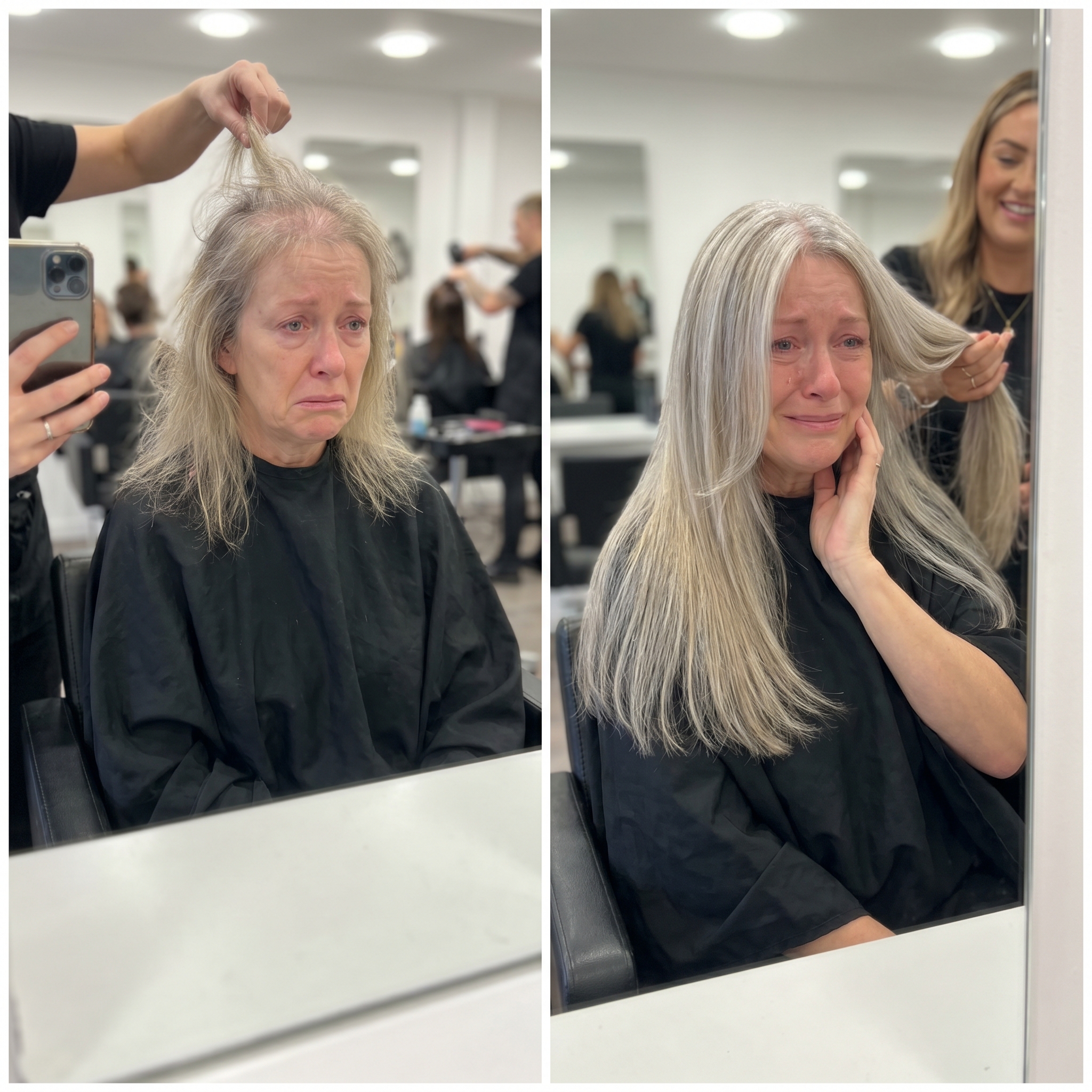
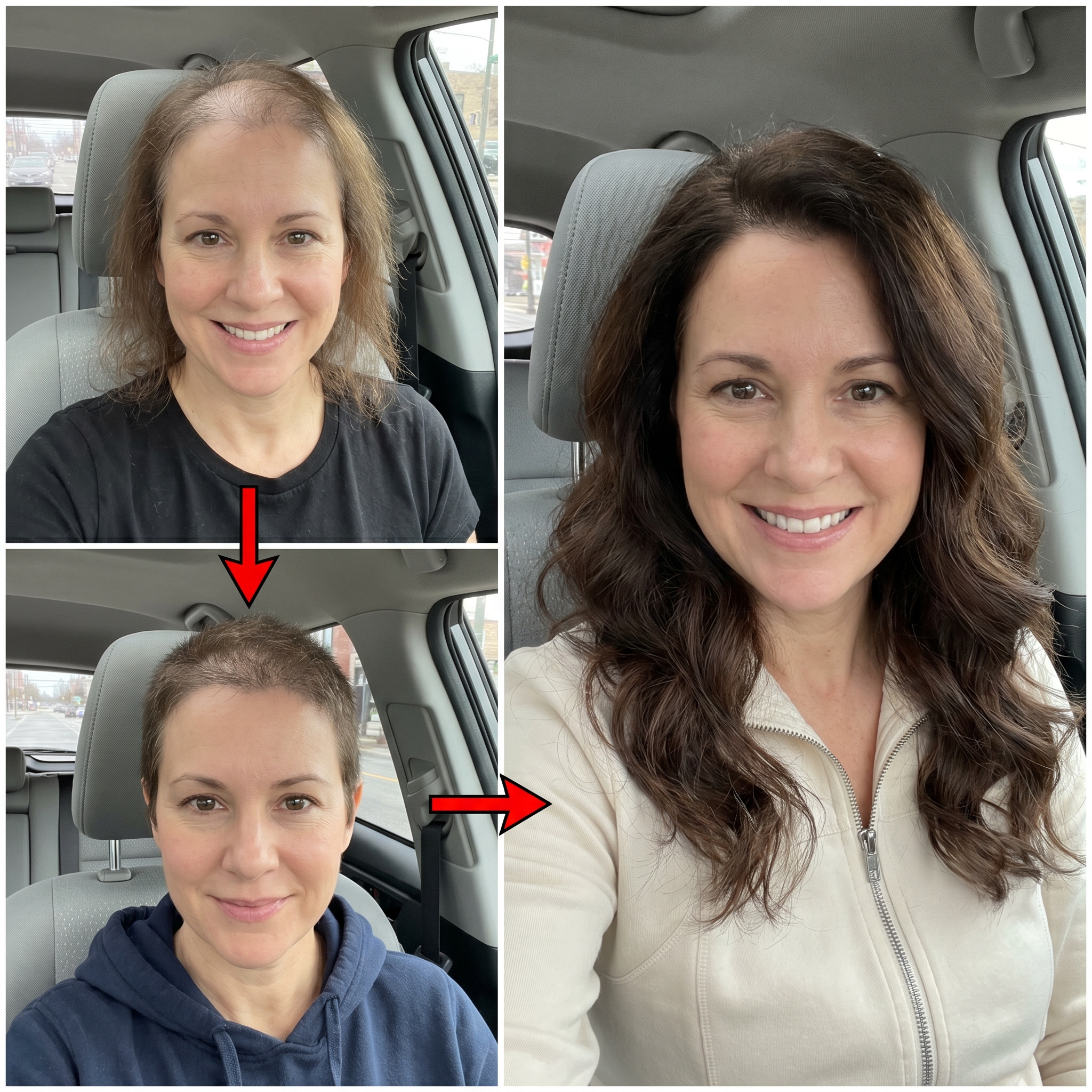
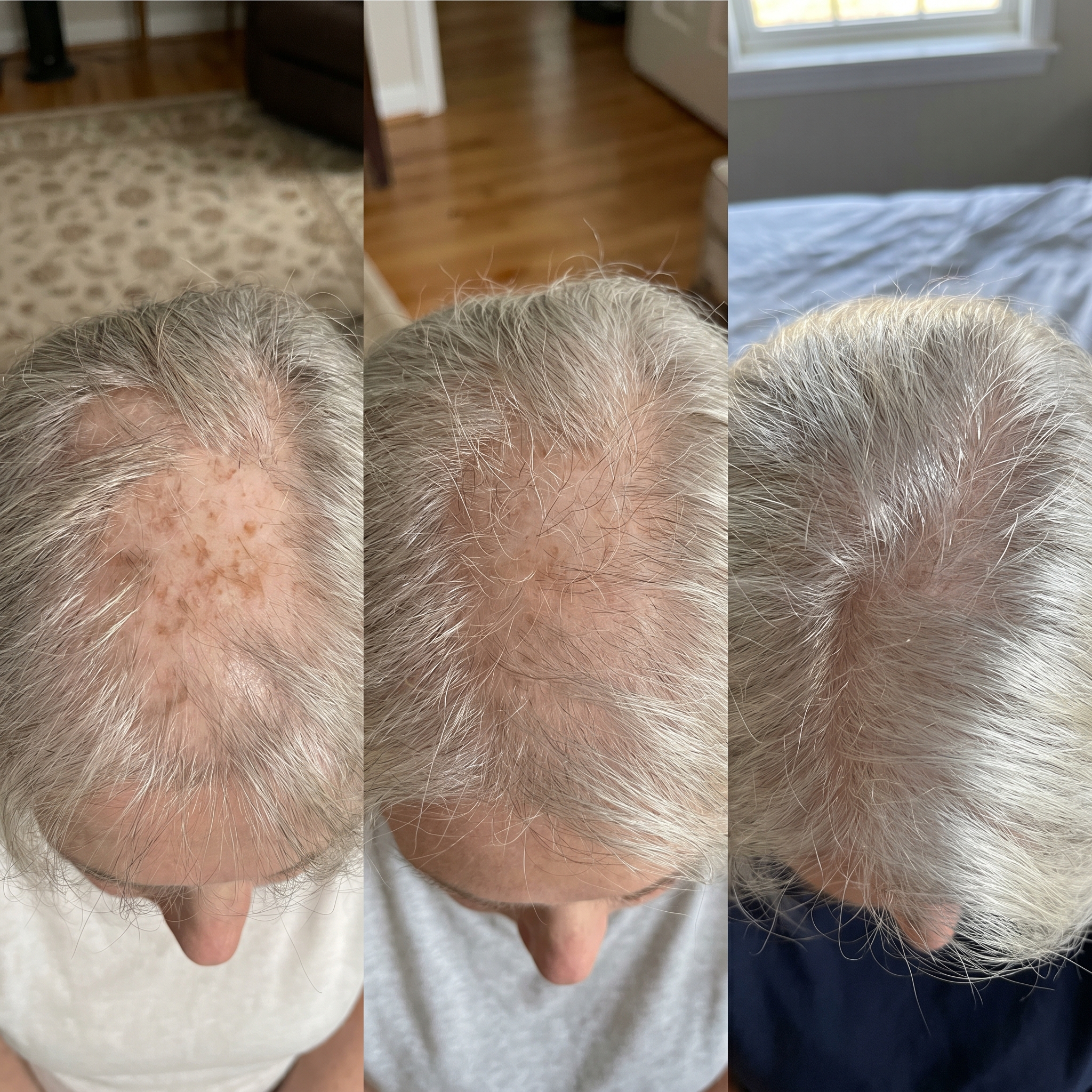
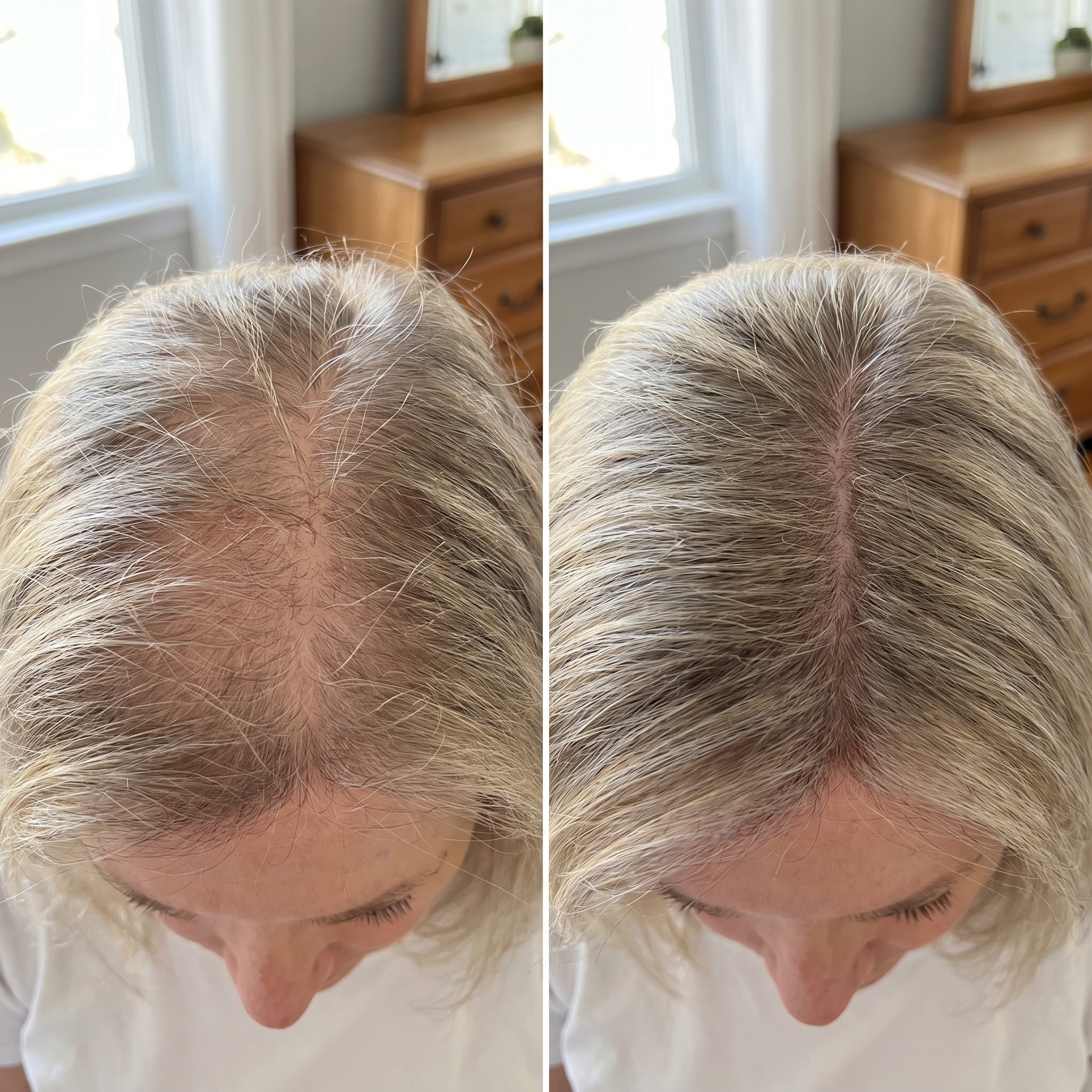
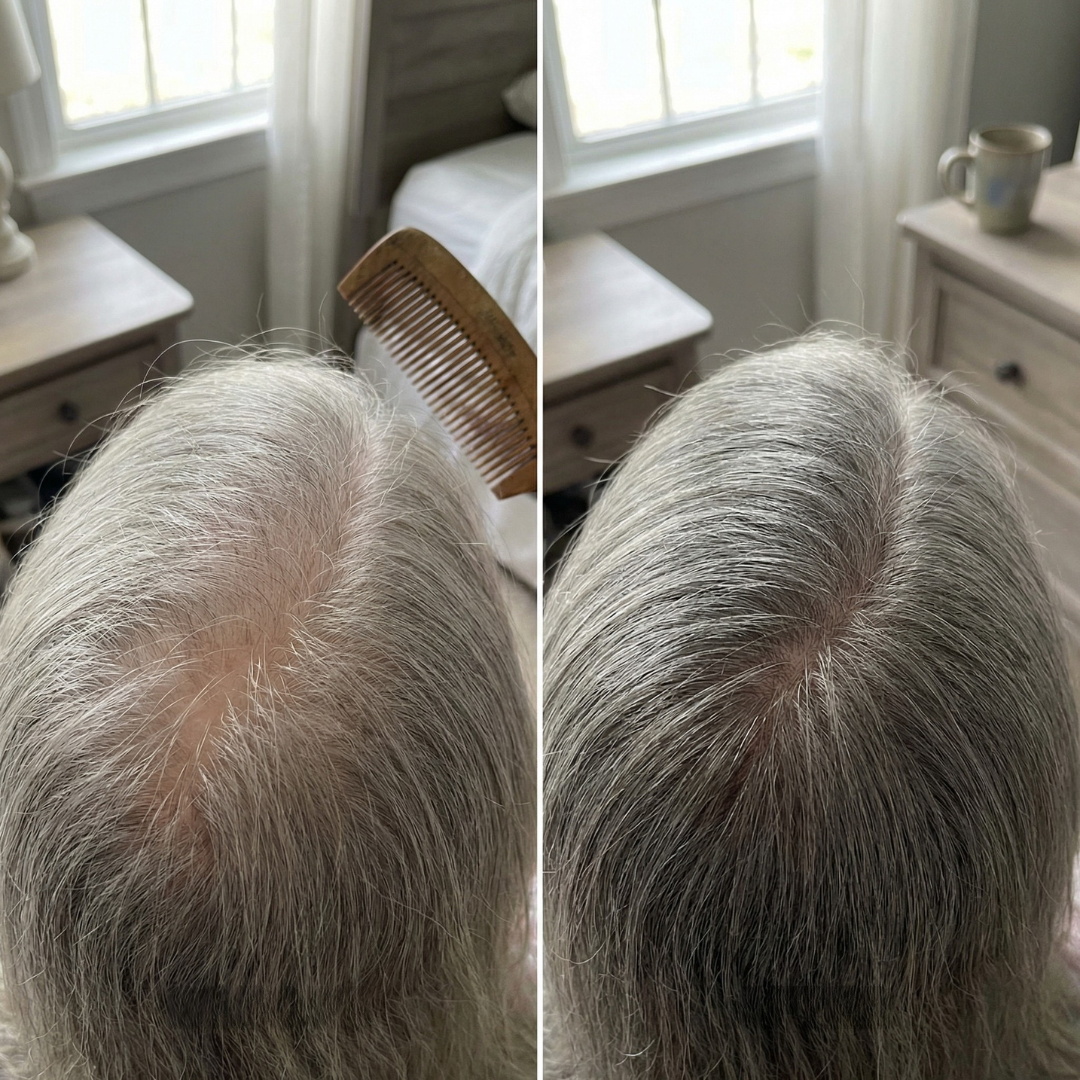
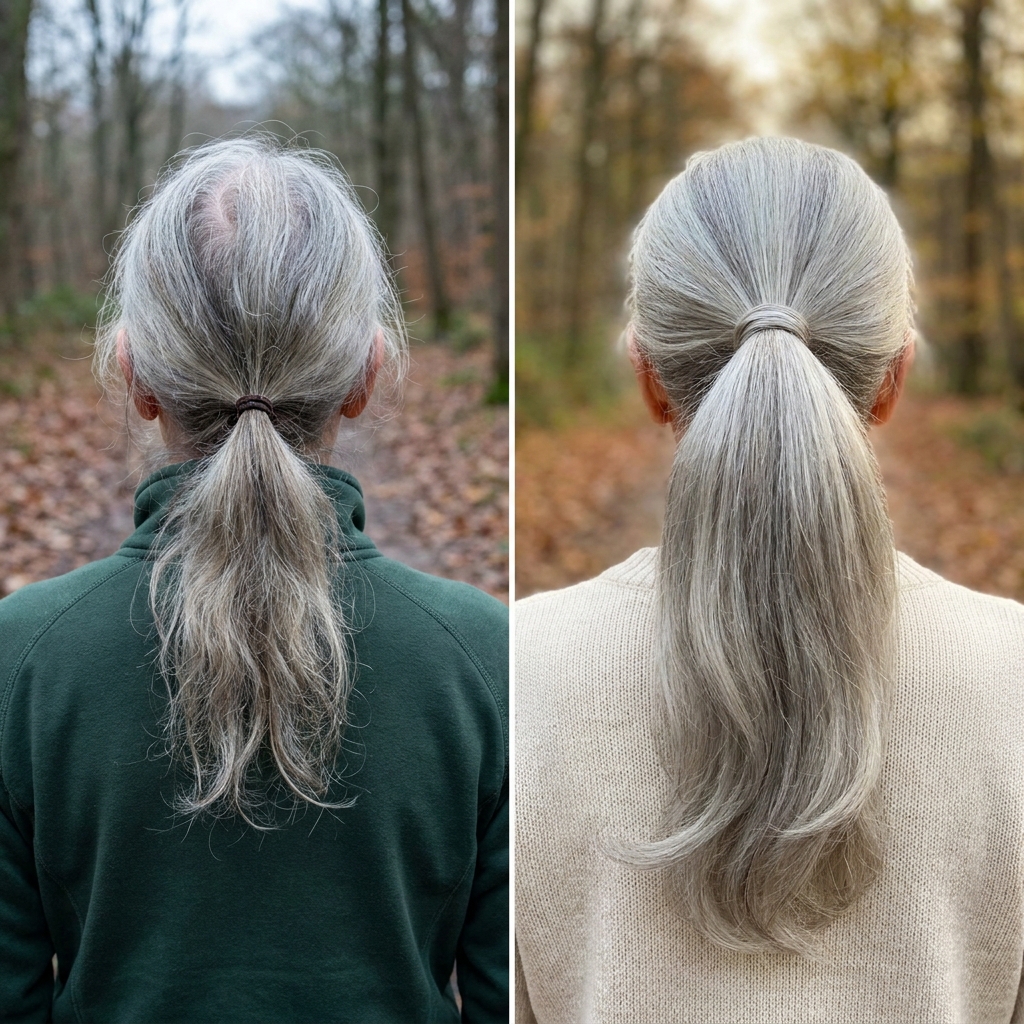
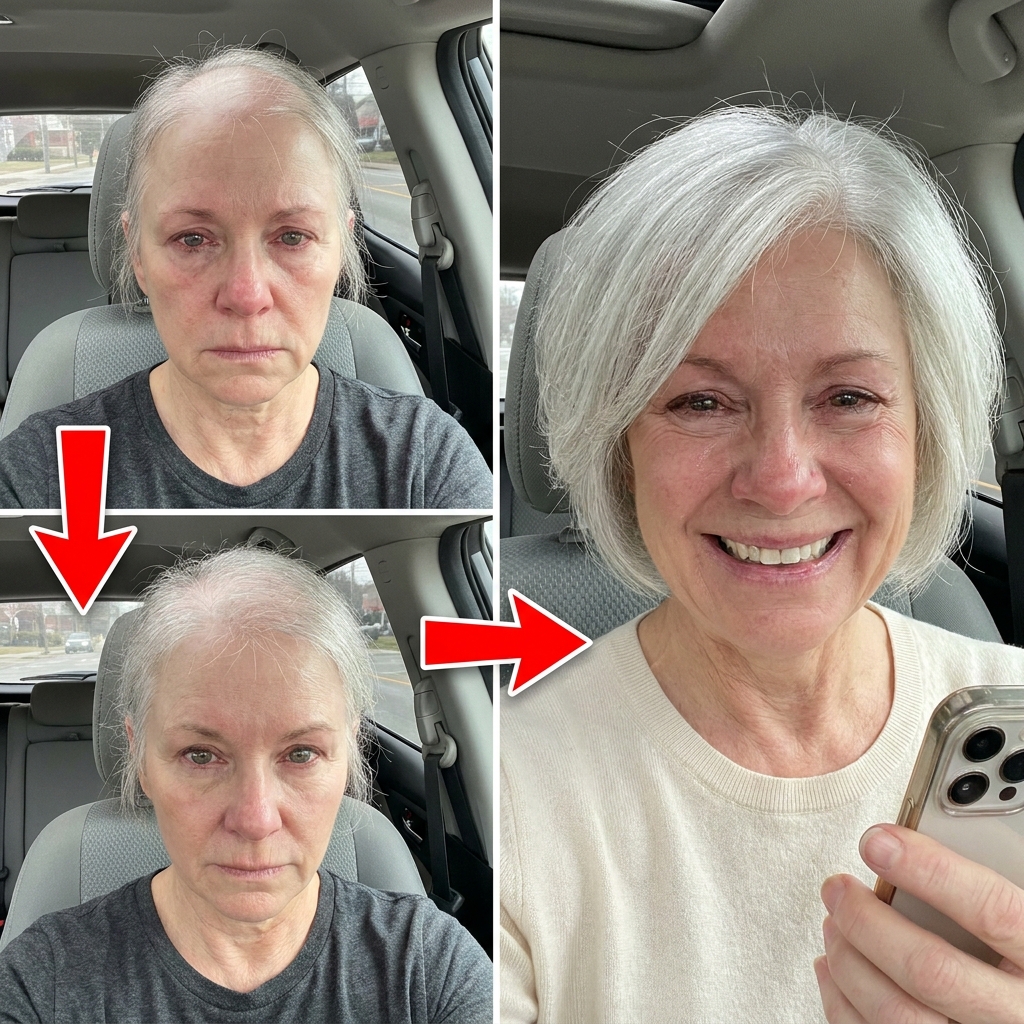
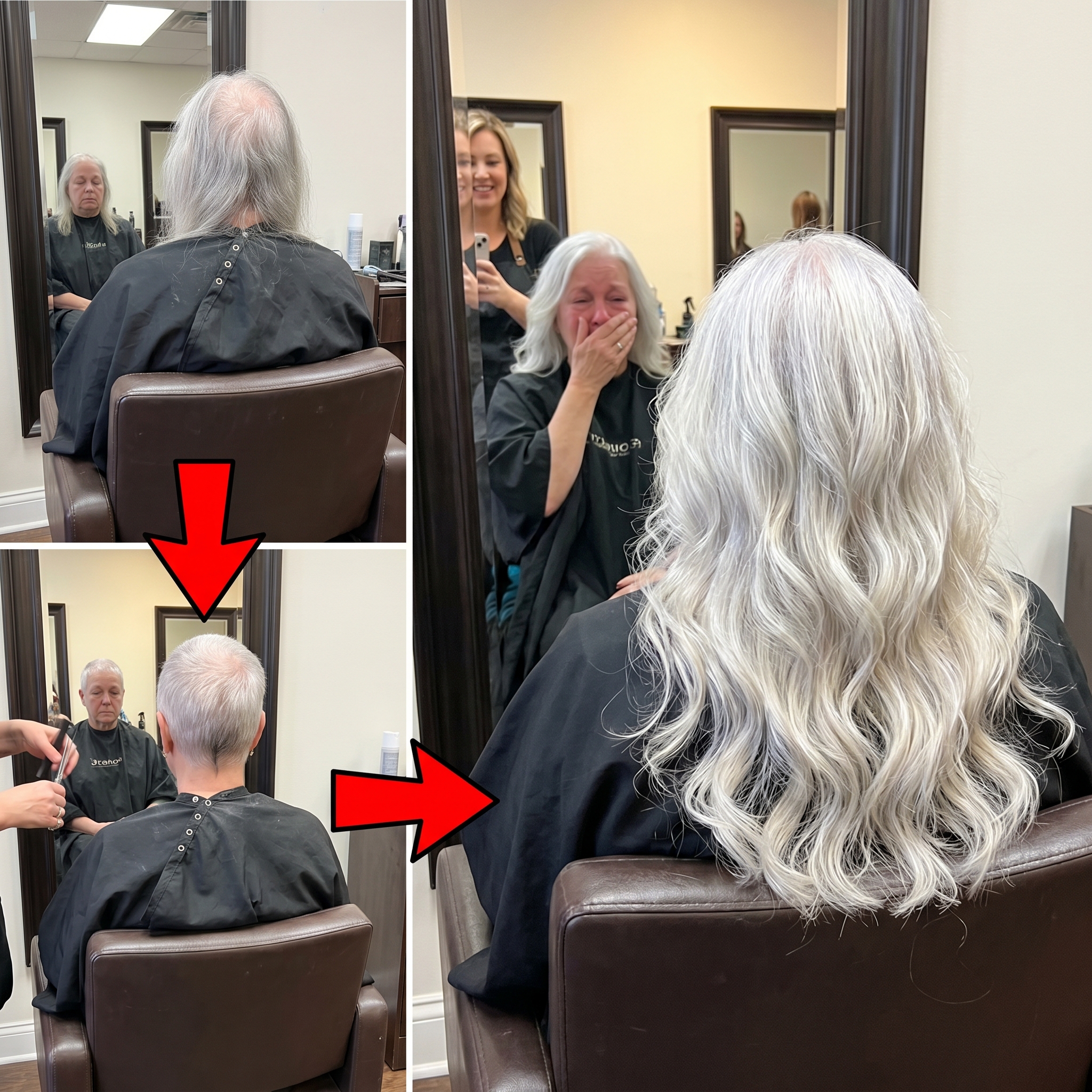
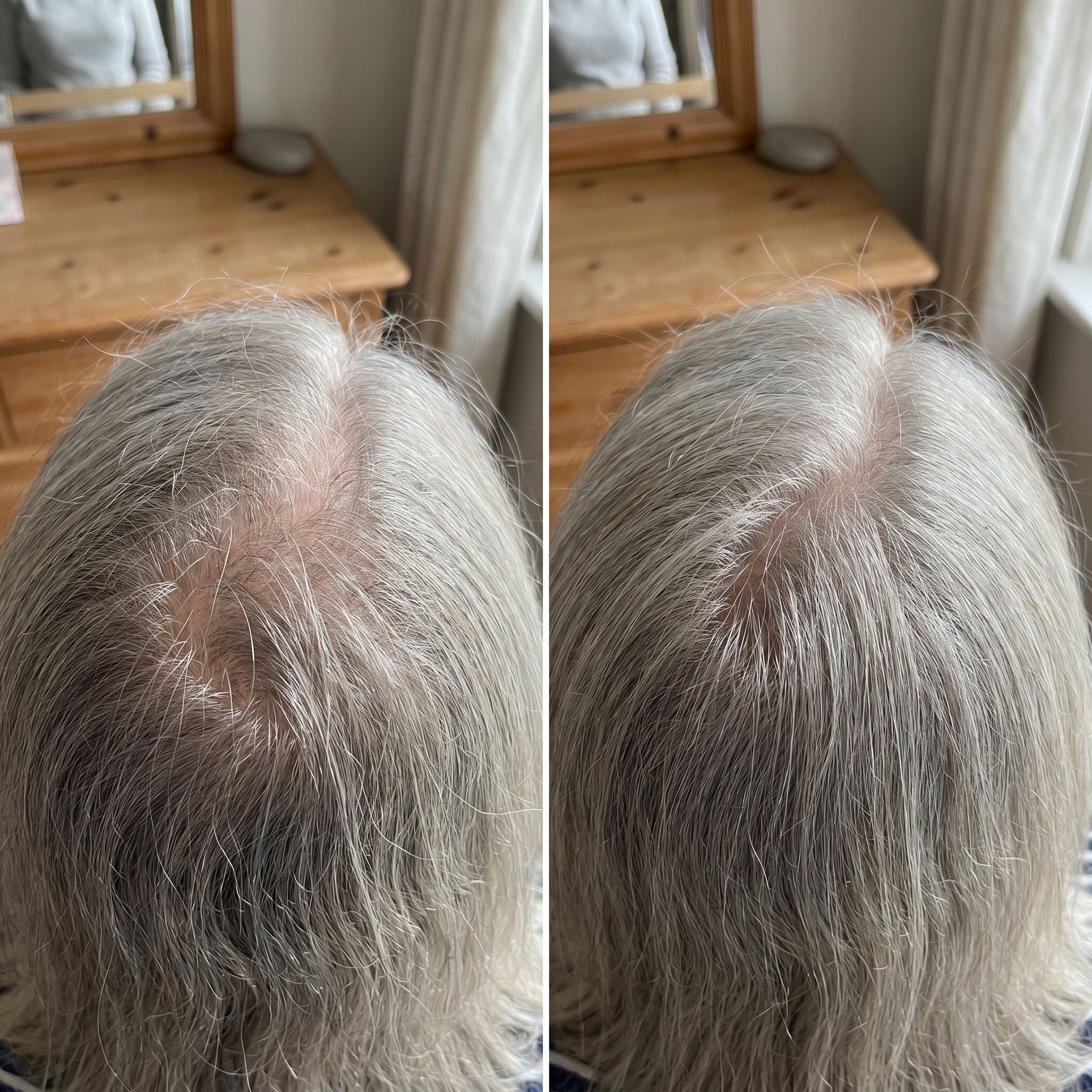
I am an engineer. I have worked for a defence contractor in Edinburgh for sixteen years. I am 49 and three years into perimenopause. I describe myself this way at the start of this piece because the way I dealt with my hair loss was not the way most of the writing on the internet about menopausal hair loss assumes you will deal with it. I built a spreadsheet. The spreadsheet had eight columns. Date started, product, claim made, daily cost, monthly cost, daily shed count (averaged across the wash and a morning brush), photograph of the part on a fixed grid, qualitative notes. It started in May 2024, four months after my GP had told me my thyroid was fine, my iron was within range, and that my hair was probably "a perimenopausal thing". The grid photographs were the part I am most proud of, in retrospect. I had set up a small jig in the bathroom — a piece of grey card on the wall opposite the mirror, a fixed mark on the floor where my heels had to go, a phone cradle taped to the inside of the cabinet door at exactly the same height every time. Every Saturday morning, post-wash, I took two photographs. I labelled them. I logged them in the spreadsheet by date. I had been told, by every product I had bought, that change took time. I wanted to be in a position to see change if it came, and to be honest with myself if it did not. I will spare you the full thirty-two rows. The headlines are these. Topical minoxidil 5%. Started June 2024. £24 a month from the chemist. The shed worsened for the first eight weeks, in line with the documented dread shed, and then settled to roughly where it had been before. I stopped at month seven, on a holiday, and the shed worsened again. Restarted. Stopped again at month eleven. The crown was visibly thinner on the grid photographs than at start. Biotin. Started July 2024. £8 a month. No measurable change in the shed count. Brittle nails improved. Stopped at month nine when my GP asked me to, because it was complicating thyroid bloods. Nutrafol Women's Balance. Started October 2024. £79 a month. Six months. No measurable change in shed count. No measurable change in the part width on the photograph grid. Stopped. Wellbel. Started April 2025. £45 a month. Three months. Same. A scalp treatment course at a clinic in Stockbridge. £340. Four appointments. The trichologist was professional and kind. The shed count did not change. A laser cap. £210, on offer. Used three nights a week for ten months. The qualitative notes column reads, in month ten, "possibly some change in the texture, possibly placebo". Spearmint tea, daily, six months. £4 a month. No measurable change. Rosemary oil applied twice a week, three months. £6 a month. The smell was nice. A pumpkin seed oil supplement. Two months. Stopped after I read more about its evidence base. A scalp massager. £18. The qualitative notes column simply reads "felt nice". Collagen powder in my morning coffee. Five months. £22 a month. No measurable change in shed count. My nails were stronger. The spreadsheet's bottom line, at month sixteen, was £712 spent and a part on the grid photographs that had widened by what I would estimate at three to four millimetres. The shed count had not improved on any rolling four-week average across the entire data set. I had begun, by month fourteen, to think the obvious thing — that the follicles in question were dead, that the hair was gone, that the rational response was to stop spending money on it. I am, by training, comfortable with negative results. I had begun to write off my own crown the way I would write off a failed component in a system. What changed my mind was a 2011 dermatology paper. In menopausal androgenetic alopecia, the follicle does not die. It is chemically silenced by DHT. The hair cycle has three phases — anagen (growth), catagen (transition), telogen (rest). In a healthy scalp, anagen lasts two to six years. DHT shortens anagen. Where it might have lasted four years, it now lasts eighteen months, then twelve, then six. The hair the follicle produces in those compressed cycles becomes progressively finer and shorter, until what is produced is barely a hair at all. From the outside, the follicle looks like it has stopped functioning. But it has not. The follicle is still there, still alive, still connected to its blood supply, still containing the stem cells that can produce a normal cycle. It has been pushed into extended dormancy by local DHT activity at the scalp. If you interrupt the local DHT, anagen extends. The follicle wakes up. Over months, the hair it produces becomes longer, thicker, more normal. This is the bit that, as an engineer, made me rethink my spreadsheet. The interventions on the spreadsheet that had failed were, with one exception, either systemic (Nutrafol, Wellbel, biotin, spearmint, pumpkin seed, collagen) or non-specific to the local DHT mechanism (laser cap, scalp treatment, rosemary oil, scalp massager). Topical minoxidil acts on the follicle but through a different mechanism — increasing follicular blood flow and prolonging anagen via potassium channel modulation — and is also notoriously inconsistent in women. It is not designed to interrupt the specific DHT activity that is silencing the follicle. Re-read in the light of the 2011 paper, my spreadsheet was not a list of failed products. It was a list of mechanisms that did not match the mechanism of my own hair loss. None of the rows had been targeting local DHT activity at the follicle. Most of them had been working on adjacent levers — circulation, nutrition, growth-cycle stimulation — that, in a follicle being chemically silenced, were never going to be sufficient on their own. Topical caffeine does target local DHT activity. Applied to the scalp, it blocks 5-alpha-reductase at the follicle and extends anagen directly. The 2011 paper and a substantial body of follow-up work is the reason that mechanism is taken seriously in the dermatology literature. I added Mellenza to the spreadsheet in late November as row thirty-three. It is a topical scalp serum. Caffeine, polygonum multiflorum, arginine, biotin, ginger. Sprayed on the crown, the part, and the temples at night. Not a shampoo. Not a volumiser. Not a supplement. A topical wake-up call for follicles that have been dormant too long. I committed to twelve weeks of data before forming a judgement. Week 4. Average daily shed count down by an estimated 30% from the prior month. First measurable shift on the spreadsheet in fourteen months. Week 6. Texture on the grid photograph began to change. Not the part width yet. The texture. Week 9. The grid photograph showed a measurably narrower part for the first time. There was visible short, fine regrowth along the edge of the part. I added a column to the spreadsheet for "regrowth visible (yes/no)" and ticked it for the first time. Month 4. My partner, who had not commented on my hair in two years, said it looked thicker. I had not asked. He said it standing at the kitchen sink, looking at me from the side rather than the front, in the kind of soft afternoon light that, for the previous eighteen months, I had started to actively avoid. He said it the way he says things he has noticed and waited a while to mention. I asked him how long he had been thinking it. He said about three weeks. I should also say, because I think it matters in a piece written by an engineer about a topical product, that I am sceptical by training and I am not, even now, certain about everything. I am certain about the trend on the spreadsheet. I am certain that the mechanism the 2011 paper describes is the only mechanistic account of menopausal thinning I have read that has explained both the failure of every previous row of my spreadsheet and the change of direction in the most recent rows. I am not certain how far the trend will go. I am not certain whether I will need to keep using Mellenza indefinitely. I am willing to find out, in the way I have been willing to find anything out about my own body that has actually been measured rather than asserted. The spreadsheet is still open. I expect to keep it open for another year, because the mechanism the 2011 paper describes operates over months, not weeks. What I can say at month four is that for the first time since I started measuring, the trend on the part-width column has reversed. The link is below.
I kept a spreadsheet of every product I tried. Here's what it showed.
Women's Health · Updated April 2026 Menopause · Hair Routine 7 Mistakes That Make Menopausal Hair Loss Worse, And the 30 Second Ritual 10,000 Women Used to See Regrowth in 8 Weeks Dr. Sarah Mitchell — Women's Health Writer. If you're standing in front of the mirror doing the 3-elastic ponytail t...
LEARN MORELike this ad? Make it yours.
Crush rebuilds this exact creative around your product — your brand, your colors, your offer — in about a minute.