
Inactive· since Jun 28, 2026
- 31
- days it ran
- 3
- relaunches
Ad copy
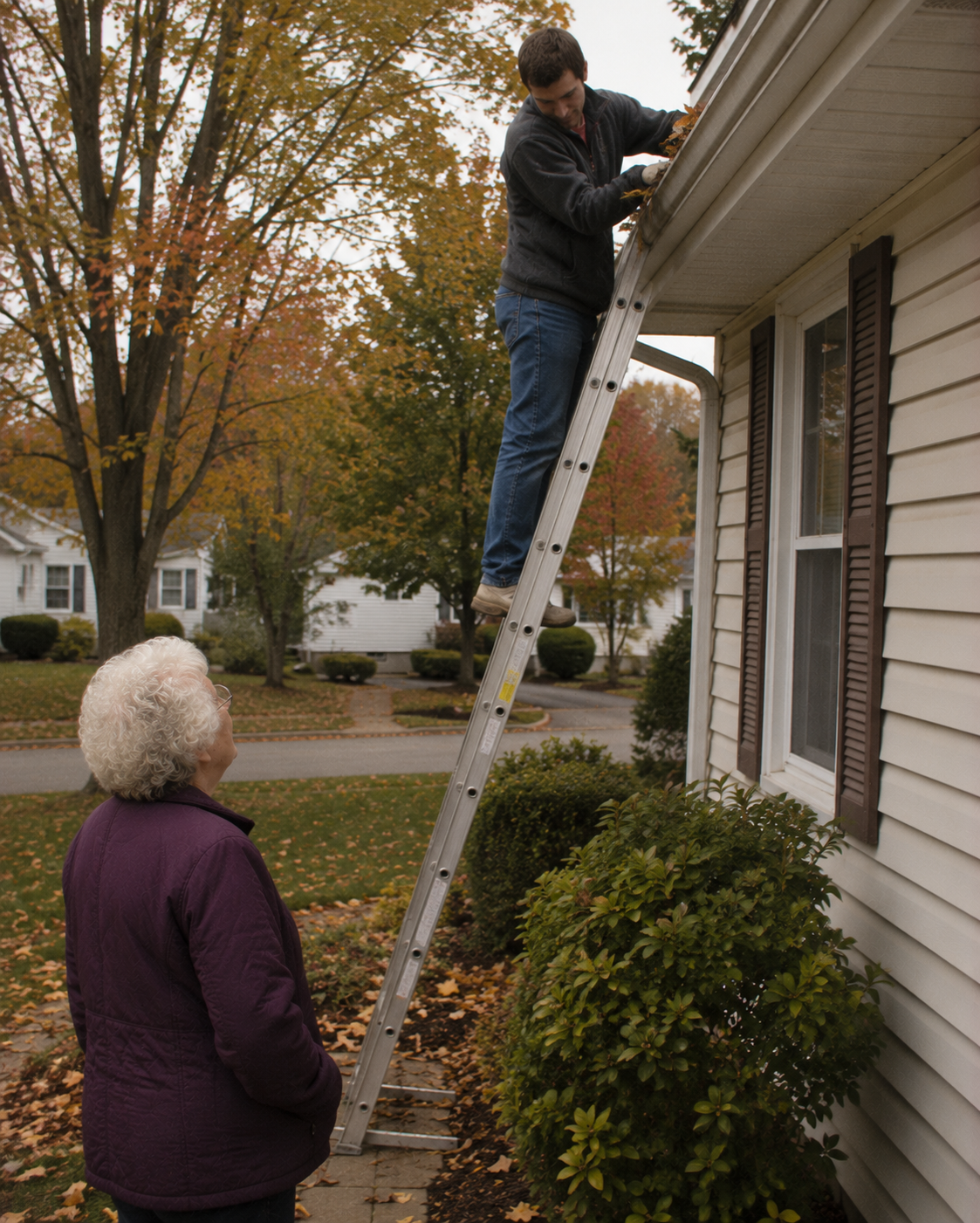
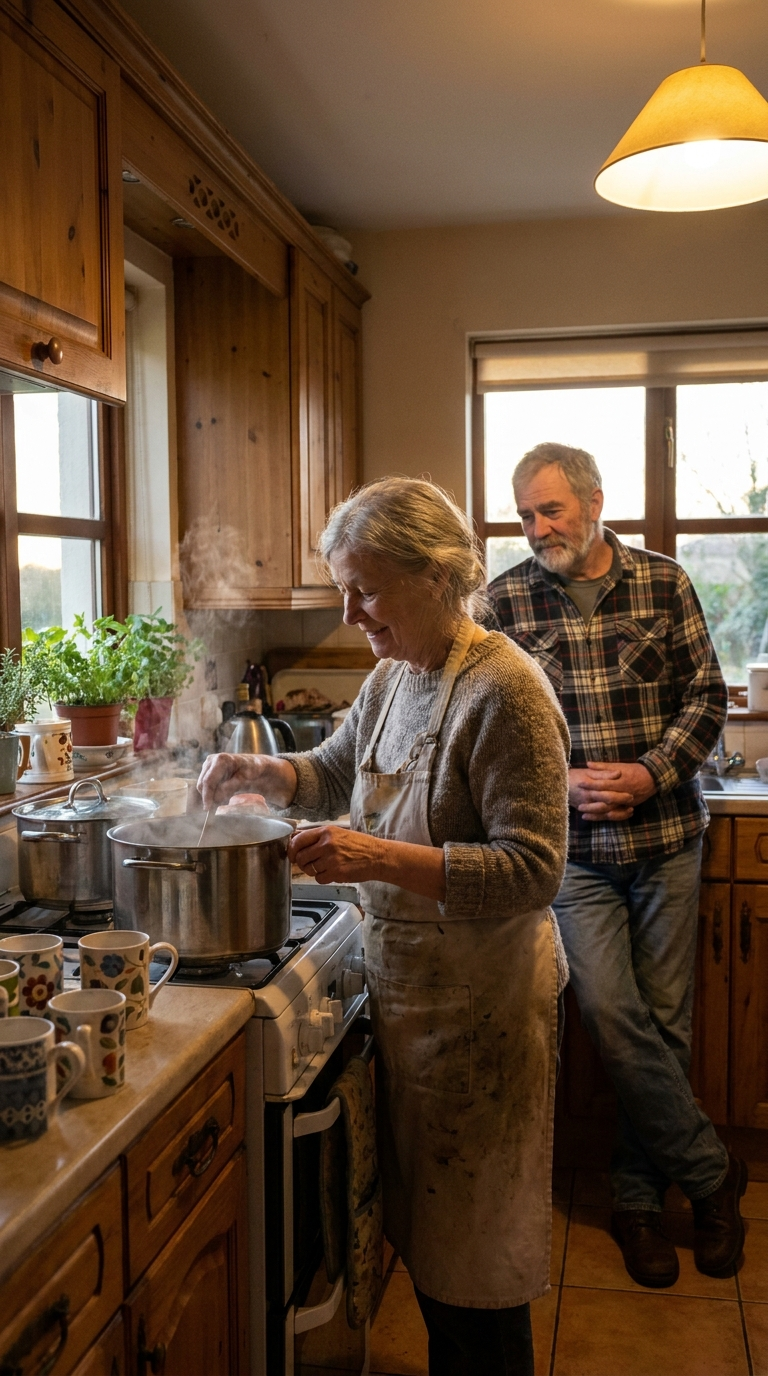
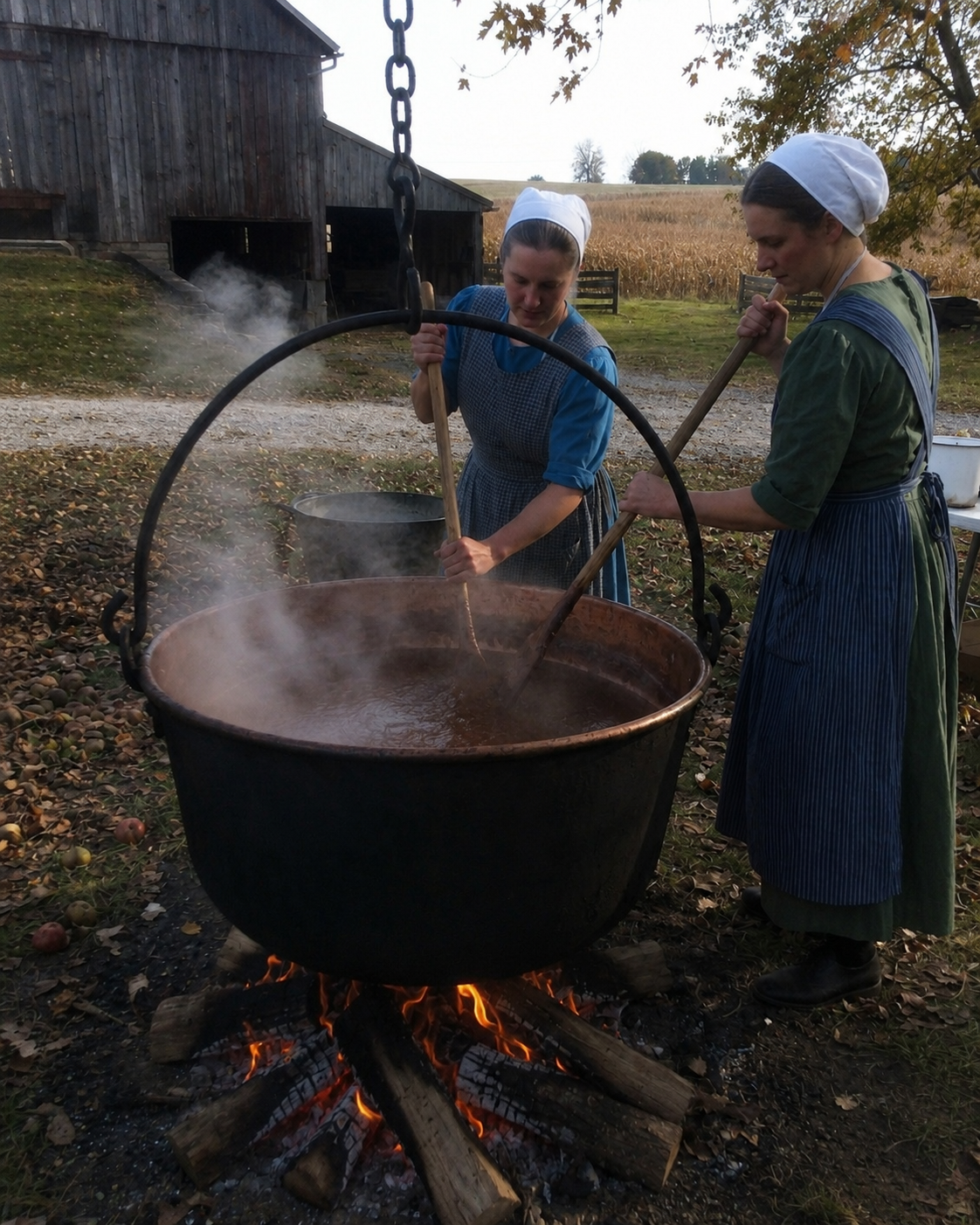
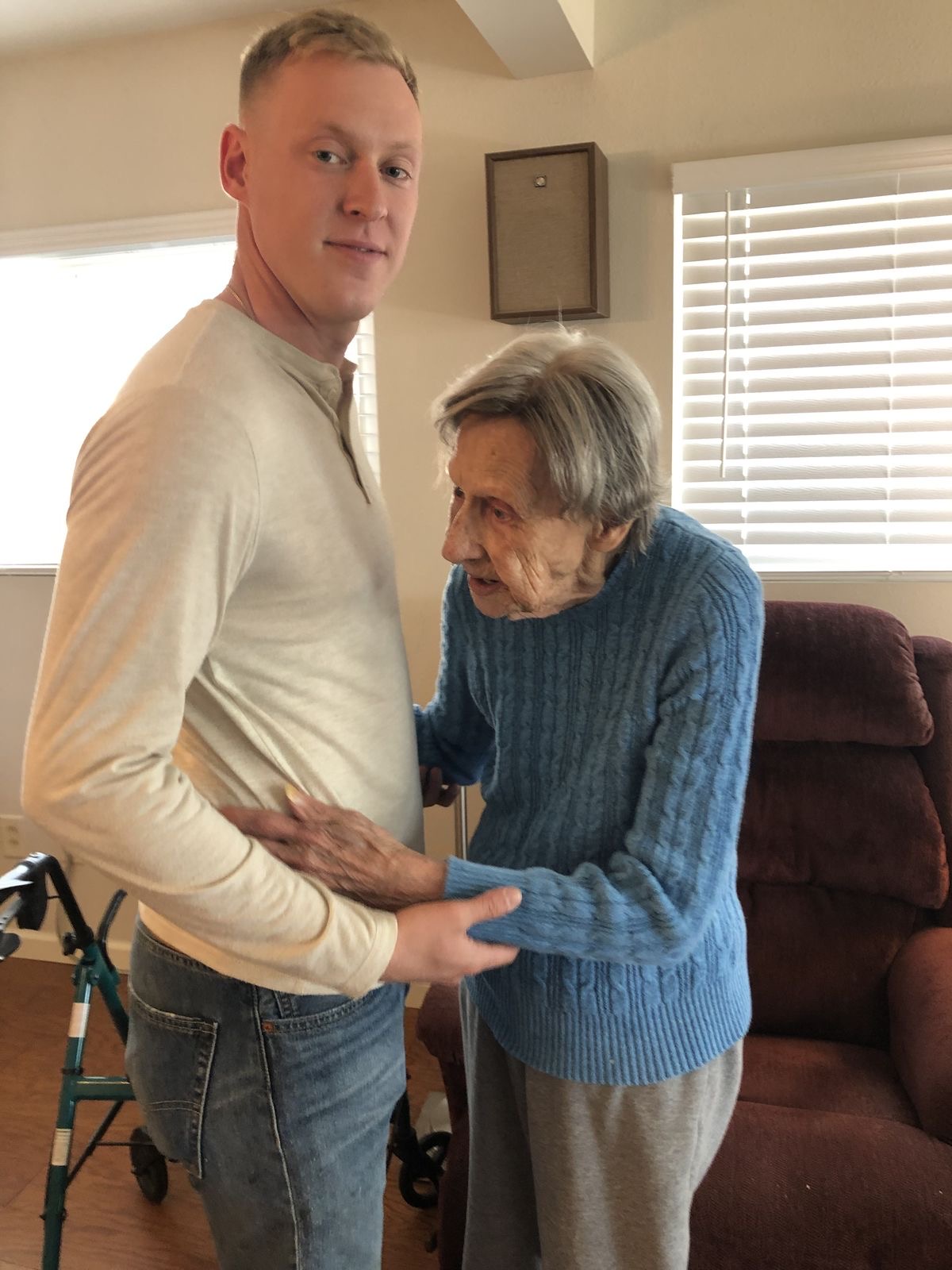
Everyone figured I looked after my 85-year-old neighbor for the inheritance. When she died, she left me nothing. The next morning, her lawyer knocked. "She left you one thing," he said. "She was very clear you couldn't have it until today — the day after the reading." Her name was Dorothy Rhode. Everyone on the block called her Mrs. Rhode. Nobody called her Dorothy except the mailman — and she didn't like the mailman. I was nineteen, just aged out of foster care. No family, no one. I'd been renting the basement apartment in the duplex next to her house for two months when she knocked on my door one Saturday morning and said: "You. The tall one. My rain gutters are full of leaves and I'm not climbing a ladder at my age. I'll pay you forty dollars." That was the beginning. She didn't need a caretaker. She needed someone to do the things her body wouldn't let her do anymore — gutters, storm windows, the heavy bags of salt for the water softener. One afternoon she watched me reset a sticking hinge on her back door and said: "You've got a craftsman's hands. Somebody should've put you in a trade." Nobody had ever said a thing like that to me. Nobody had ever looked at the one thing I was good at and given it a name. She was sharp, and funny in a way that caught you off guard — she'd say something devastating with a completely straight face, then go back to watering her tomatoes like nothing happened. She insisted on cooking me dinner every Tuesday and Thursday. I told her she didn't have to do that. She told me she wasn't asking. "You eat like a boy who raised himself," she said once, watching me microwave a gas station burrito through her kitchen window. "Come over at six. Bring nothing. Don't be late." I came over at six, brought nothing, and wasn't late. For four years. Every Tuesday and Thursday. Pot roast, chicken and dumplings, a meatloaf she swore was Harold's recipe but had changed so much he wouldn't have recognized it. She talked about Harold sometimes — her husband. Dead eleven years by the time I met her. The sugar took him at seventy-one. She kept his photo on the mantle, his reading glasses on the side table next to his chair, and his work boots by the back door — and never moved any of them in the four years I knew her. I sorted her pills every Sunday night. The plastic Monday-through-Sunday organizer, the six prescriptions, the calcium supplement she took with dinner. I'd sit at her kitchen table on Sunday evenings and fill the little compartments while she told me stories about the neighborhood, about the old days, about the world. I thought the arrangement was simple. She needed help. I needed something I couldn't name. She gave me forty dollars for the gutters and what she really gave me was a kitchen table to sit at and a person who expected me to show up. In four years in the foster system nobody ever expected me to show up. Mrs. Rhode expected it. And not showing up was not an option. I pushed it exactly once. "James. You're three minutes late." "I was —" "You were across the street. I watched you sit in your car for four minutes looking at your phone. Come in. The chicken is getting dry." It was on one of those Sunday evenings that I told her the one thing I knew about the family that gave me up. That the men in it had the sugar, and it took them in pieces. A foot. Then the rest. Young. My father. His father before him. I didn't know much else about them — not a face, not a town, not a reason. But I knew that. It was the only inheritance they ever left me. She didn't say anything for a long moment. Just set down the pill she was holding and looked at me. "Harold's doctor told him his numbers were perfect," she said. "Right up until they took his foot." She picked the pill back up. Put it in the compartment. Didn't say another word about it that night. I didn't think anything of it. I didn't know she was already turning it over. She was the closest thing to a mother I'd ever had. I didn't say that to her. I think she knew. The diagnosis came that spring. Pancreatic. The doctor gave her a few months, and she met it the way she met everything — a small nod, no drama, like she'd been handed a weather forecast. Then it was fast. The kind of fast that doesn't give you time to prepare. I drove her to the hospital. I sat in the waiting room. I went to her house and sorted her pills into the organizer even though she wasn't there to take them because I didn't know what else to do with my hands. She died on a Thursday. One of our dinner nights. Eighty-nine years old. I found out about the will from her lawyer. He called me and said there'd be a reading. That I was invited. He said it in a way that made me think being invited meant something. The lawyer's office was small. Wood paneling. A conference table that seated eight. I sat at the end. There were four of us. Me. A woman from the church — Mrs. Rhode had been a member for forty years. A representative from a children's charity. And a woman I'd never seen before, mid-forties, wearing a gray blazer and checking her phone. The lawyer opened the folder. The house — a three-bedroom colonial Mrs. Rhode and Harold had owned since 1971 — went to the children's charity. To be sold, proceeds to the organization. The savings account — I didn't know how much, the lawyer didn't say — went to the church. All of it. Building fund. The jewelry — Harold's mother's ring, a pearl necklace Mrs. Rhode wore to church every Sunday, two bracelets I'd seen in the velvet box on her dresser — went to the woman in the gray blazer. A great-niece. I learned later she'd visited twice in four years. Once at Christmas. Once when Mrs. Rhode was already in the hospital. That was it. The lawyer closed the folder. The church woman shook his hand. The great-niece signed something and left without looking at me. I sat there. Four years. Every gutter, every storm window, every bag of salt. Every Tuesday and Thursday. Every Sunday evening sorting her pills at her kitchen table while she told me about the neighborhood and the world. Nothing. Not a sentence. Not a mention. Not my name anywhere in the document. I drove home with my hands tight on the wheel and my jaw clenched and I told myself I didn't do it for the money. I told myself it wasn't about that. And it wasn't about the money — it was about the fact that she didn't think of me at all. Four years of showing up and she walked out of this life without putting my name on a single piece of paper. I sat in my apartment that night and I was twenty-three years old and I had no one again. The knock came at 8:15 the next morning. Her lawyer. Standing on my doorstep in a coat and tie, holding something under his arm. A dented metal lunchbox. Green. The paint chipped at the corners. The kind of lunchbox a man would carry to a factory in 1965. "Mrs. Rhode left specific instructions," he said. "This was to be delivered to you separately. Not at the reading. The morning after." He held it out. "She was very clear about the timing." I took it. It was heavier than it looked. "There's a letter inside," he said. "And a key. She asked that I tell you the key opens a safe deposit box at First National on Carroll Street. Box 7414. She added your name to the access list months ago. Long before the end." He paused. "She also asked me to tell you — and these are her words — 'He's going to be angry. Tell him to read the letter before he does anything stupid with the key.'" That sounded exactly like her. I closed the door. Set the lunchbox on my kitchen table. Sat down and stared at it. I didn't open it. I was too angry. Too raw. I'd spent the night convincing myself I meant nothing to her, and now here was this object — Harold's lunchbox, the one from the photo on her mantle. Inside was a letter I didn't want to read. What if it made it worse? What if it was an apology? What if it was an explanation that didn't explain anything? I picked it up. Carried it to the closet in my hallway. Set it on the top shelf behind a box of winter clothes. Closed the door. I was twenty-three. I was grieving. And yes — I was angry at a dead woman for not loving me the way I thought she had. But anger burns off. A year, maybe two, and I wasn't angry at her anymore. That's not what kept the box shut for thirty years. Fear did. Because part of me was afraid of what it was about. It was Harold's, after all — and the sugar had taken Harold a piece at a time. And I was the one who'd sat at Mrs. Rhode's table and told her the only thing I knew about my own blood: that it runs in us, and it takes us in pieces, young. Whatever she'd left me in that box was about how I end. And for thirty years, I wasn't ready to look at that. So it moved with me — top shelf, behind the winter coats, through every apartment of my life. I never took it down. Not once. I didn't open that lunchbox for thirty years. You don't really notice the years passing until you catch your reflection and wonder, for the first time, if you've started to look like the father you never saw. I became what Mrs. Rhode said I'd become. I went into a trade. Finish carpentry first, then furniture — the slow kind, the kind almost nobody orders anymore. Hand-cut joinery. Dovetails you fit by eye. Tables and chests built to outlast the people who bought them. The orphan who owned nothing made a living building things other families would keep for a hundred years. My hands did that. The same hands Mrs. Rhode had given a name to, over a sticking hinge, when I was nineteen. And eight years ago a doctor told me I was fine. He kept telling me that, every six months, while the thing in my blood took me apart. He just never once called it by its name. I'd walked into his office at forty-five and told him the same thing I'd once told Mrs. Rhode across her kitchen table — that the men in my family had the sugar, that it took them young, that it was the one thing I knew about my own blood. I thought I was being responsible. He ran my bloodwork, frowned at a number, and put me on Metformin. The same kind of pill Harold took for twelve years. I didn't know that then — Harold never crossed my mind. I just took it the way you're supposed to, every morning, and trusted the man in the coat. The first thing to go was the energy. Year two, maybe three. I'd come in from the shop, sit down at four in the afternoon, and that was the end of me. The man who used to work past dark couldn't keep his eyes open through dinner. I told myself it was age. Fifty does that. Then it was the feet. It started small — a numbness in the mornings, a tingle I had to stamp out on the floor before I trusted my weight on it. I'd stand at the side of the bed and press my soles into the cold boards until I could feel them enough to walk. I didn't think anything of it. Lots of men my age have bad feet. But it got worse, and it spread to the one place a man like me can't afford to lose it. It went to my hands. My fingers stopped telling me things. I'd reach into the tray for a screw I used to find by feel, in the dark, and my fingers wouldn't tell me what they were touching. I'd set a chisel down and not be sure my hand had let go of it. And there was my eyes. The line I was cutting to would swim in the afternoons. I'd lose the edge of a pencil mark. Walk a board over to the window for better light and still not trust it. Measure a board twice because I couldn't trust what my eyes told me the first time. I blamed that on age too. I blamed everything on age. The doctor had taught me how. Because I did go to him. I told him about the feet. He looked at my chart instead of my feet and told me my numbers had never looked better — sugar down, A1C right where he wanted it. "This is exactly where we want you," he said. The numbness was probably just neuropathy. Common with the diabetes. Age. Nothing much to do about it. He could add a second pill if I wanted, get the number even lower. He never once looked at my feet. Then came the morning it stopped being something I could tell myself a story about. I had a walnut chest on the bench — a commission, hand-cut dovetails, the kind of work I could do half-asleep. I picked up the chisel to pare a joint I'd cut a thousand times, set the edge to the line, and my hand couldn't feel it. Not wouldn't quite. Couldn't. Couldn't tell me where the steel ended and the wood began. It drifted, and then it slipped, and the chisel skated off the line and tore a gouge clean across a face of walnut I'd spent two days bringing to glass. I stood there and looked at my own hands like they belonged to a stranger. And for the first time in two years I let myself think the thing I'd been holding off. It was happening. The thing in my blood — the thing that took the men in my family in pieces, my father, his father, faces I never even saw — it had found me. I was fifty-three years old and my hands, the only thing I'd ever owned that was worth a damn, were going quiet on me one finger at a time. I set the chisel down. I set the chest aside, half-finished, the gouge still raw across the wood. I didn't touch it again. And that night, for the first time in thirty years, I thought about the lunchbox. The old woman who'd left me something I was always too afraid to open. Who'd looked at me across her kitchen table and said Harold's numbers were perfect right up until they took his foot. Who'd spent her dying months on something she never told me about, and left me a key. She'd known something. And I'd been so afraid of what it said about how I end that I'd never found out what it was — while the thing she was trying to warn me about walked into my shop and picked up exactly where my father left off. I'd carried her answer on the top shelf of every closet I'd owned for thirty years. Too scared to look at it. While the disease took my hands one morning at a time. I went to the closet. I reached past the winter coats, past thirty years of boxes I'd never unpacked. It was still there. Dusty. The green paint still chipped. I carried it to my own kitchen table and sat down the way I used to at hers on Sunday nights. The latch was stiff. I had to work it with my thumb — the same hand that couldn't feel a chisel that morning. It opened with a click that echoed off the walls. Inside: a sealed envelope, yellowed at the edges. My name on the front in her handwriting. And a key. Small. Brass. Taped to an index card that read: First National. Carroll Street. Box 7414. I picked up the envelope. Slid my finger under the seal. The paper tore unevenly. A stack of pages. Her handwriting filling every line. James, If you're reading this, I'm gone. And if I know you — and I do, better than you ever let me — you didn't read it right away. You took the box, you got angry, and you put it somewhere high and dark and told yourself you'd never open it. So I don't know what day it is for you. Maybe it's the morning after the reading. Maybe it's been twenty years. Maybe more. Knowing you, it's been a long time, and something finally happened that made you climb up and take it down. If that's it — if it's been years, if you're tired in a way that frightens you, if those hands I told you to make a life with have started to go quiet, if you can't feel the floor under your own feet anymore — then you already know why I wrote this. You don't need me to tell you what's coming. You're living it. The way Harold lived it. So let me tell you about Harold. Quickly — because you don't have the time for the long version, and neither did he. My husband took a pill for his sugar every morning for twelve years. Never missed a dose. Every few months a doctor checked a number, smiled, shook his hand, and sent him home, and the number was always good. And the whole time, the man was going. First the tiredness. Then his feet — he stopped feeling them, stopped trusting the stairs, started watching the ground like a stranger's. Then a sore on the bottom of his foot he never felt begin, because by then he couldn't feel his foot at all. The doctor called it age. Called it manageable. Called it anything but the disease. The sore didn't heal. Nothing healed on him anymore. They took the foot at sixty-seven, and his number was still beautiful the week they took it. Then a second sore came on the same leg, and it didn't heal either, and a few winters later the infection got into his blood and he was gone before the spring. Twelve years of perfect numbers, and they buried him with one leg. Toward the end he asked me to bring him his work boots. He hadn't worn them in two years. He just wanted to hold them. I kept them by the back door. You've seen them. You never asked. I buried him believing it was bad luck. Genetics. The sugar. The things people tell you. And then one Sunday you sat at my table and told me the one thing you knew about your own blood — that it runs in your family, that it takes the men in pieces, young. And I knew. I'd just watched it. I knew exactly what was coming for you, because I'd already lost a man to it. I wasn't fast enough for Harold. I decided that night I would be fast enough for you. So I spent the last months I had finding out what really took him — not the version the doctor gave me, the real one. It's in the safe deposit box. Every study, every page, written down by people far smarter than an old woman with a library card and a stubborn streak. I couldn't fit it in a lunchbox. And if I'm honest, I knew that if I handed you a folder of medical studies you'd bury it in a closet faster than you'd bury this. So I made you come find it. When you read it, you'll understand the thing I can't explain in a letter — that the number everyone kept watching was never what was taking him. They were all looking at the wrong thing. Harold's doctor. My Harold. Me. All of us staring at a number while the real thing went on underneath, where nobody was looking. There's a checklist in the box too. Five things. When you go to find what those studies point to, follow it exactly. Don't skip a line, and don't settle for the cheap one to save a few dollars — the cheap one is dead before it ever reaches you, and you'll have thrown away the one thing I'm trying to leave you. Promise me that much. Somewhere along the way a doctor handed you a pill for your sugar and called it the standard of care. Maybe you've been taking it for years now, the way Harold did, trusting it the way we all did. If you have, I'm not angry, and you shouldn't be either. We were all trusting the wrong thing. But now you'll know. Read what's in that box before you trust that pill one more day. I love you like you were my own. Dorothy I read it three times. Then I put my head on the kitchen table and I cried. Not the angry crying of thirty years ago, the night I'd buried the box in a closet. A different kind. The kind that comes when you find out someone saw you — really saw you — and you never knew it. The kind that comes thirty years too late. She hadn't forgotten me. She'd seen me more clearly than anyone ever had. Not the way you see a neighbor, or a boy who does your gutters — the way you see your own. I'd sat at that table once and told her the single thing I knew about my blood, and where everyone else in my life had heard a sad little fact and moved on, she'd heard a countdown. She'd already buried a husband to the same clock. And instead of looking away, she spent the months she had left — dying — in a library, so that the kid nobody had ever fought for would have something to fight with. Nobody had ever done that for me. Nobody had ever looked at what was coming for me and stood in front of it. And she'd been right. About all of it. Right that a doctor would hand me that pill one day and call it the standard of care. Right that I'd trust him and swallow it. Right that it would come for my feet first, the way it came for Harold's. Right, even, that I'd be too scared to open her box until it was nearly too late — she wrote that letter knowing I'd let it sit for years, because she knew me better than I knew myself. Thirty years. The answer had been on a shelf in my own closet for thirty years, while the disease did exactly what she said it would. One morning at a time. I didn't sleep. By morning I'd read it so many times I could have recited it, and at nine I was standing outside First National on Carroll Street with a brass key in my hand and thirty years of dust still on the lunchbox in my passenger seat. Showed my ID. They looked up the box. My name was on the access list, just like the lawyer said — added thirty years ago, by a woman who'd been dead almost as long, who'd walked into this same bank while she was dying and put my name on a steel drawer because she believed I'd come for it eventually. She was right about that, too. Box 7414 was small. Inside it, one manila folder, thick, held shut with a rubber band that snapped the second I touched it. Studies. Printed off library computers, the edges gone soft. Some highlighted yellow, some pink. And in the margins, her handwriting — the same steady hand as the letter, but smaller, more crowded, like she was running out of paper and time at the same rate. I carried it to my car meaning to drive home and read it there. I didn't make it out of the parking lot. The first page she'd marked wasn't about what I expected. I expected too much sugar. A number too high. That's the whole story anyone had ever told me — Harold's doctor, my doctor, the commercials. That's not what the study was about. It was about what the sugar does once it's already inside you. She'd highlighted one line and written beside it, pressed hard: THIS. This is what happened to Harold. Sugar on its own isn't the enemy. Your body runs on it — it needs it. The danger doesn't start until there's too much of it, and it begins to do the one thing too much sugar does. It sticks. Sugar molecules bond, permanently, to the proteins in the walls of your blood vessels and your nerves. The studies had a word for it. Glycation. The same brown that crusts onto a pan when the sugar in a sauce cooks down and won't scrub off. Sugar, turning to glue, and then to glaze, on the inside of a man. That was happening inside Harold. Inside the smallest vessels of a man whose sugar number looked perfect on paper. And the smallest vessels go first — the feet, the eyes, the kidneys, the nerves — because they're the most delicate things you own. The number — the one everyone spends their life watching — measures none of it. It counts how much sugar was in your blood. It says nothing about how much of it has already glued itself to your walls. You can have a beautiful number and glazing, hardening vessels in the same body. Harold did. For twelve years. In the margin she'd written: The number was the cover of the book. Nobody ever read what was inside. But the gluing wasn't the whole of it, and the next page is where she'd pressed the pen down hardest. Because the sticking doesn't happen quietly. It lights a fire. The studies called it oxidation — the sugar floods the lining of those small vessels with what they called free radicals, and they burn. And the burning does a second thing, worse than the first. It silences a signal. Your vessels need a signal to stay open and carry blood — a thing your body makes called nitric oxide, the little instruction that tells the walls to relax and let the blood through. The fire from the sugar burns that signal out. So the small vessels don't just stiffen with glue. They lose their blood supply on top of it. That's why the feet go. They're glazing shut and starving at the same time. One disease. Two hands on the same throat. Page by page, the study laid out the whole road, from a brown crust on a pan to a man asking for his work boots in a hospital bed. The next study answered the question that had been sitting in my chest since the letter. If the number was beautiful, why didn't the pill save him? Because the pill was never aimed at the glue, or the fire. It's aimed at the number. Metformin works by going to the liver and telling it to stop releasing sugar into the blood, so less of it goes in and the chart drops. That's the entire job. It lowers the amount. It does nothing — nothing — about the sugar already glued to your walls, and nothing about the signal already burned out. Twelve years, and Harold's pill never once touched the actual thing that took his foot. But that wasn't the part that made me set the folder down and grip the wheel. The pill did exactly one thing well. It made the number look safe. And the number looking safe was the same thing that kept Harold from ever fighting for his foot — because why would a man fight a fire nobody told him was burning? Every few months, a smile, a handshake, "looking good, see you in the spring," and he walked out reassured, and the reassurance was the thing that killed him. It bought the disease another six months of quiet, every single time. The pill and the foot were the same transaction. You couldn't have one without the other. And when one pill stopped holding the number, they didn't go looking for the fire. They added a second — she had the name on the page, the one they'd given Harold and the one they'd later give me, the kind they call Januvia — and then they offered the shot after that. More drugs, each one chasing the number a little harder, and not one of them within a mile of the glue or the fire eating him alive underneath. She'd read past the pills, too. There were pages on the things people reach for when they want to do it "naturally" — cinnamon capsules, berberine, chromium, the blood-sugar support pills off the pharmacy shelf. A line drawn through every one, with a note on why. Every single one was chasing the same thing the pill chased: the number. The amount. Not one of them went anywhere near the glue, or the fire. By the bottom of that stack, Mrs. Rhode had quietly walked me to the only place the road could go — and she'd done it without naming a cure. She'd done something smarter. She'd made the problem name its own answer. If the killer wasn't the amount of sugar but the damage it was doing — the glue and the fire — then lowering the amount was never going to be enough. For anyone. What a man like Harold actually needed was something that did two things at once, and nothing on that shelf could do either. One: it had to stop the fire — reach the burning already happening inside him, put out the oxidation eating the nerves and driving the glue, before it took one more piece of him. Two: it had to reopen the road — restore the signal the fire had burned out, get blood moving back into the starved feet and eyes and nerves that were dying for want of it. Stop the fire. Reopen the road. That was the whole specification, and she'd crystallized it in the margin in four words: Stop the burn. Reopen the road. I had no idea such a thing existed. Mrs. Rhode already knew it did. She'd just made me earn the answer one page at a time — the way she earned everything. I turned the page expecting another dead end. Instead I found the thing that met both lines of her specification, and a margin note that just said: Here. This is it. It had a name I'd never heard. Betalains. The deep red pigment that gives a beet its color — the same stain that won't scrub off your hands or your cutting board. That stain, it turned out, is one of the most selective fire-fighters anyone has ever measured. Most things people call antioxidants work like a carpet bomb. They flood the body and knock out every loose radical they touch — including the ones you need to fight off infection. That's why throwing more of them at the problem never did much. You can't blanket-bomb your own bloodstream and expect it to go well. Betalains don't do that. They hunt one specific kind of damage — the exact burning reaction that floods the vessels and silences the signal — and they neutralize it, while leaving the radicals your body actually needs alone. A smart missile instead of a carpet bomb. That was the first line of her spec — stop the burn — and betalains hit it dead center. And the second line — reopen the road — the same beet answered, with something else it carries. Dietary nitrates. The body turns them into the exact signal the fire had burned out: nitric oxide, the instruction that tells the starved vessels to open and let the blood back through. The betalains put out the fire. The nitrates reopened the road. Two things at once. The exact two things she'd written that nothing else could do. The pill lowered a number and touched neither of them. This touched both — put out the fire and reopened the road — and never went anywhere near the number at all. There was proof, and she'd marked the hardest number on the page. A twelve-week trial: people taking concentrated betalains brought their fasting blood sugar down on average. But that wasn't the line she'd underlined twice. The line she underlined was the damage — the markers of the glue setting and the fire burning, the stuff that actually does the taking. It fell by more than a fifth. Beside it: Not about lowering the number. About stopping what the number was hiding. I kept waiting for the catch. Some compound you could only get by prescription. Some name I'd never be able to find or afford. There wasn't one. The richest source of betalains on earth was something I'd pushed a cart past a thousand times. A beet. Which is where, if you didn't know better, you'd get this exactly wrong — and Mrs. Rhode had circled the trap in heavy ink so I couldn't. Because almost none of the beetroot you can actually buy will do a single thing for you, and for two separate reasons. The first is the beet itself. The common beet — the one in every store, in every cheap capsule — has been bred for more than a hundred years for one trait: sugar. Sweeter, sweeter, sweeter, season after season, until the things that made it medicine got bred right out of it. The betalains down to a trace. The nitrates down to nothing. The beet that used to be medicine became candy. Which, if you've got the sugar, is the cruelest joke in the whole folder: the one plant that could have helped Harold, bred into the very thing that was killing him. The old heirloom strain — the one nobody bothered to sweeten — still carries close to ten times the betalains, and ten times the nitrates, of the grocery beet. But you'd never know to ask for it, because the label just says "beet." The second is heat. Betalains are fragile, and heat tears them apart. Spray-drying, high-temperature processing, the fast cheap way every commodity supplement gets made — all of it cooks the betalains and the nitrates down to nothing before the bottle is ever sealed. What's left is a brown powder she had a name for in the margin: red dust. Dead before you buy it. The color is the tell — real betalains are deep crimson; cook them and they go a dull, lifeless brown. So most of what calls itself beetroot is either candy or dust. Sugar-bred, or heat-killed, or both. You could swallow it every morning for the rest of your life and never come within reach of the thing in the studies. That was when I reached the back of the folder and found the last thing she'd left in it. Not a study. An index card, clipped to the inside cover, where she'd buried it on purpose — because she knew me, and she knew that if she put it on top I'd skip the reading and run straight to the shopping. Block letters. Underlined twice: JAMES — FOLLOW THIS. DON'T SKIP A LINE. 1. Heirloom strain — the Blutwurzel beet. Not the grocery beet. They bred the medicine out of that one a century ago to make it sweet. The old strain carries ten times what the common one does. 2. Shade-dried, never heat-processed. Heat kills it. If it's been spray-dried or cooked, it's red dust, and it was dead before it reached you. 3. At least 1,300 mg a capsule. That's the dose in the studies that worked. Most sell you a fraction and hope you don't check. 4. A Certificate of Analysis. A real lab, testing a real batch, publishing exactly what's inside — the betalain content, the purity, the metals. If they won't show you what's in it, they're hiding what isn't. 5. Trust the lab, not the reviews. Anyone can buy five stars. Nobody can fake a number on a lab sheet. That was Mrs. Rhode. Dying in a library, and still she'd boiled four months of work down to a grocery list and warned me not to come home with the wrong thing. On the back of the card, smaller, like she'd added it last, two more lines. The first: too late for Harold — scratched out, pressed so hard the pen tore the card. Under it, the one she let stand: In time for you. Don't waste it. She'd done all of this in the last four months of her life. Dying. Printing studies off a library computer, asking strangers to explain words she'd never heard, writing it out by hand for one person who wouldn't open the box for thirty years. I closed the folder and held it against my chest in that parking lot, and thirty years of believing she'd left me nothing finally came apart. She didn't leave me nothing. She left me everything. I went home and did what any man in my position would do. I ignored the checklist. Not completely. I read it. I understood it. I set it on the kitchen table next to the folder and told myself I'd follow it to the letter. But that same night I found a bottle of beetroot capsules online — twenty-two dollars, four and a half stars, two thousand reviews — and I ordered it, because I'm the kind of man who buys the first thing he finds even when a dead woman has told him, in writing, not to. Mrs. Rhode knew me better than I knew myself. The capsules came in three days. Small. Cheap. I swallowed two the next morning and waited — for my feet, for my hands, for any sign of the man the studies said I could get back. Nothing. The next morning, nothing. The morning after that, nothing. No change in my feet. No change in my hands. Nothing that felt any different from the cheap multivitamins I'd started and quit a dozen times before. I gave it two and a half weeks. Every morning. Waiting. It never came. Then one night I was sitting at the kitchen table staring at the bottle, and her index card was lying right there beside it. Where it had been the whole time. I picked it up and went down it line by line, and the bottle failed before I reached the bottom. I twisted a capsule open over a white saucer — and there it was. A dull, brick-brown powder, not the deep crimson she'd described on every page of those studies. The red dust. Heat-killed, dead before it ever reached me. I read the rest of the card anyway. The label said only "beet root powder" — no strain, the sugar-bred grocery beet she'd warned me about. Just 500 milligrams where the studies used 1,300, and even that buried in a "proprietary blend." No certificate of analysis anywhere. And I'd bought the whole thing on four and a half stars — the one thing her last line told me never to trust. Five rules. The cheap bottle failed every one. I'd spent two and a half weeks swallowing a product a dying woman had told me, in advance, would do nothing — because she'd watched me long enough to know the first thing I'd do with her checklist was set it down and buy the wrong thing anyway. Fifty-three years old, and still the same kid trying to fix a gutter with the wrong screws. I threw the bottle in the trash and picked the card back up. This time I read it like my life depended on it — because by now I understood that it did. Then I did what I should have done from the start. I went through every beetroot supplement I could find, one at a time, against her five rules — and one at a time, the whole shelf came up short. I crossed off every last one. Exactly the way she would have. Then I found the one that passed. Rosabella. Heirloom Blutwurzel beetroot — the old strain, saved by hand for a hundred and fifty years, the one nobody ever bred the medicine out of. Rule one. Grown by Amish families in Lancaster County, hand-harvested after the first frost and shade-dried at low temperature, so the betalains reach the capsule deep crimson and alive instead of cooked to dust. Rule two. 1,300 milligrams a capsule — the exact dose in the studies that worked. Rule three. A certificate of analysis published right on their site — the betalain content, the purity, the heavy-metal screening, all of it third-party tested and posted for anyone to read. Rules four and five. Every line on her card. Check, check, check, check, check. I could almost hear her. See? Was that so hard? It cost more than the bottle I'd thrown away. Of course it did. She hadn't sent me to a bank vault to save a few dollars. When it came, I knew before I ever swallowed one. I twisted a capsule open over the same white saucer I'd used for the cheap one. Where that powder had been a dull, dead brown, this was deep crimson — almost violet — and the second a drop of water touched it, it bled red across the dish like a fresh cut. A completely different thing, in every way that mattered. The thing she spent the last four months of her life making sure I'd find. I made two decisions at that kitchen table, and I made them in the same breath. The first was to start the Rosabella. The second was harder, and it was the one Mrs. Rhode had been pointing at for thirty years without ever quite saying it out loud. I stopped taking the Metformin. And the Januvia they'd added on top of it. Eight years I'd swallowed those pills every morning on faith. Eight years they'd kept a number on a chart looking safe while the thing that number was hiding took my feet and my hands a morning at a time. I was done handing them my mornings. If the studies in that folder were right — and every page of my own body said they were — then the pills had never been protecting me from anything. They'd been keeping me from looking. I won't pretend that's an easy decision, or tell you to make it without looking a doctor in the eye first. I'd earned mine with two and a half weeks, a folder full of research, and thirty years of a dead woman's work. But I made it. I pushed the orange bottles to the back of a drawer and shook two crimson capsules into my palm instead. Twenty minutes. That's when I felt it. A lift. A clarity, like someone had wiped a film off a window I didn't know was dirty. The fog that fell every afternoon, that had been falling for years — it just wasn't there. My head was clear. Sharp. Present in a way I'd forgotten was supposed to be normal. I told myself it was placebo. But I'd swallowed the cheap capsules seventeen mornings straight and felt exactly nothing, and this was not nothing. This was real. By the end of the first week the afternoon exhaustion that had been my shadow for years was gone. Not lighter. Gone. I worked past dark for the first time in longer than I could tell you, and walked in the door still standing. Then, in the second and third weeks, the thing I hadn't let myself hope for. The mornings got easier. I'd wake and not have to stamp my feet awake against the floor. The tingling that had lived in my soles for years began, slowly, to quiet. And one morning I reached into the tray for a screw and my fingers found it by feel, in the dark, the way they used to — and I didn't notice I'd done it until it was already in my hand. The cut on my shin — the one from a board three weeks back that had just sat there, open, the way nothing on me healed anymore — closed. Scabbed, then closed, then was gone. I stood in the bathroom and looked at the clean skin and thought of Harold's sore that never did. In the fifth week I went out to the shop and stood in front of the walnut chest I'd set aside the morning everything came apart, the gouge still raw across the face of it where my hand had failed me. I picked up a chisel. Set the edge to a line. And my hand felt it. Knew exactly where the steel met the wood. The way it had known for thirty years. It took me two more weeks of evenings, but I finished that chest. Cut new stock for the ruined face, pared the dovetails by hand, stood at the bench past dark on feet that held me, and rubbed the oil in with fingers that told me everything they touched. When it was done I stood in the sawdust and had to sit down — because the last time my hands had done work like that, I'd still believed the pill was keeping me alive. In the eighth week I had my blood drawn. Not just the number my doctor liked to run. I ordered the whole panel myself, and I told them to add the tests that measured the damage — the glue, the fire — the ones Harold's doctor never thought to run, the ones Mrs. Rhode had spent her last months learning the names of. And then I made an appointment to have the one test done that you can't argue with on a man like me: the one where they touch the bottom of your foot with a thin filament and a tuning fork and ask you to say when you feel it. The results came back, and I had to read them twice, because they told two completely different stories depending on which one you looked at. My sugar numbers had come down — the A1C, the fasting glucose, both lower than they'd been in years. Fine. Good, even. But I'd stopped caring much about those numbers, because they were never the test that mattered, and now I knew it. The markers of the damage — the glue, the fire, the part that actually takes a man's foot — had gone quiet. Down into the normal range. The burning had stopped. And then the part I drove home from in a daze. For eight years, the filament test had gotten worse every single time they ran it. Every year, a little more of my foot that couldn't feel the thread. It only ever went one direction. That's the thing about the nerves, the thing every doctor had told me without quite saying it: once they're gone, they're gone. I pressed my thumb hard against the sole of my own foot, sitting there in the car in the lab parking lot. And I felt it. I hadn't felt my own foot in three years. I sat there a long time. Then I folded the page into my shirt pocket and drove to the one place left where it might mean something. My doctor's office. My doctor pulled the panel up on his screen, expecting the usual — a managed number, a polite handshake. He saw the sugar come down and nodded, not surprised, ready to take the credit on my behalf. Then he kept reading, and he went quiet in a way I'd never once seen him go quiet. "Your damage markers," he said — to the screen, not to me. "These are normal. These were never normal." He scrolled. He frowned, not unhappy, just confused, like the page was arguing with itself. Then he found the sensation scores, mine, the history of them, eight years deep. "This has gone down every year I've recorded it," he said. "Every year. For eight years." He looked up. "It doesn't go back up, James. The nerve doesn't come back. Once it's gone it's gone — that's the one thing about this I've never had to wonder about." He got the filament out himself. Came around the desk. Pressed it to the bottom of my foot. "Tell me when you feel it." "I feel it," I said. He moved it. "Now?" "I feel it." He sat back down slowly and didn't say anything for a moment. "I've been doing this a long time," he said finally. "I don't see this. What did you change?" So I told him. The beetroot. The dose. And that I'd stopped the Metformin and the Januvia eight weeks ago. I braced for the lecture — the warning about stopping a prescribed drug. It didn't come. He looked at the screen, then at the man in front of it. For the first time in eight years of appointments, he actually looked at me — at my color, at the way I was sitting up in the chair instead of folding down into it, at a man who'd walked into his office without watching the floor the whole way. "I won't pretend I understand exactly what happened here," he said. "But you're better off than you were on the medication, and you're sitting in front of me looking better than I've seen you in years." He closed the laptop. He didn't reach for the pad. "Whatever you changed — keep doing it." He never said the word "supplement." Didn't endorse it. Just shook his head slow, the way a man shakes his head at something that won't line up with everything he was taught. For eight years he'd watched my chart and called me fine while the disease took my feet one morning at a time. It took a dead woman, a lunchbox, and a test he'd never once thought to measure right to make him finally look up from the screen and see the man it belonged to. I drove to the cemetery that afternoon. Her headstone is small. Gray granite. Next to Harold's. Dorothy Mae Rhode. Beloved wife of Harold. I stood there with the folder in my hands. The one she'd assembled. The studies. The checklist on the index card. Her notes in every margin — including the one that said the number was the cover of the book. "You left me everything," I said. The wind moved through the trees. "I thought you forgot me. For thirty years I thought you forgot me. And you were the only person who ever really saw me." I set my hand on the stone. Cold granite. The October sun low behind me. "Harold would be proud of you. You figured out what his doctor never could. And you left it for a kid too scared to open it for thirty years. And too stubborn to follow your checklist even when he finally did." A long pause. "Thank you, Mrs. Rhode." I drove home and set the folder on the kitchen table — the one where I'd opened her lunchbox, read her letter, and thrown the wrong bottle in the trash. I shook two Rosabella capsules into my palm and took them with a glass of water, sitting where I'd sat through all of it. That was seven months ago. My last panel: the damage markers still quiet. The feeling still in my feet. My sugar lower than the medication ever kept it — and I have never in my life cared less about that number, because I finally know it was never the one that mattered. No Metformin. No four-o'clock collapse. No numb feet in the morning. No cut that won't close. No version of Harold's twelve years playing out in mine. I'm fifty-three years old. I grew up with no one. But I had Mrs. Rhode. And Mrs. Rhode left me the one thing that mattered more than a house or a savings account or a ring. She left me the truth about what took her husband. And it saved my life. I'm writing this because Mrs. Rhode can't. She spent the last four months of her life assembling research for one person — me. She didn't have Facebook. She didn't have a platform. She had a library card, a lunchbox, and not enough time. If she'd had more, she'd have told everyone — she'd have knocked on every door on the block. I know that, because I knew her. So I'm knocking for her. And here's the one thing she taught me. Mrs. Rhode wasn't a doctor. For twelve years she watched a number wreck the man she loved while his doctor called it perfect — she watched the man, not the chart, and she was right. Then a grieving kid sat at her table and told her what ran in his blood, and she recognized the same thing coming for him. She trusted what she saw over what any chart said. That's the whole of it. The doctor watches the chart. The person who loves you watches the man. And the one watching the man is almost always closer to the truth. You're standing where I stood. Maybe a doctor just handed you the prescription and called it the standard of care. Maybe you've been swallowing it for years already — the way I did, the way Harold did. You already know the signs. You've just been calling them by the wrong name. The afternoon that's over by four, in a chair, with the evening still ahead of you. The feet you can't feel the floor through. The sore that should have healed two weeks ago and just sits there. The line you used to cut clean that swims now in the afternoon light. The fingers that have stopped telling you what they're holding. The doctor has a single word for all of it. Age. It's the same word he had for Harold — for twelve years. One path leads where Harold's led. Take the pill. Watch the number drop and trust that the number means you're safe. Hope the numbness is just aging. Hope the sore heals. Hope the next one heals too. And every few months, shake the doctor's hand and hear "looking good" while the sugar you still have keeps gluing your vessels shut and burning out the nerves nobody is testing. Harold walked that path for twelve years. Perfect numbers. Perfect compliance. They took his leg, and then they buried him. There's another path. The one Mrs. Rhode spent her last four months building. The one I was too scared to walk for thirty years. Ask for the tests the doctor never orders — the ones that measure the damage, not just the sugar. Ask what your feet still feel. Find out whether the sugar you have is actually doing harm, not just sitting at a number. Address the glue and the fire the pill was never built to touch. Track it. Verify it with your own blood, and your own feet. Walk into your next appointment with something the chart can't argue with. That's what I did. That's what Mrs. Rhode wanted me to do. It's what she'd have wanted for Harold, if she'd found it in time. She ran out of time for Harold. She didn't run out of time for me. And you're reading this now. Which means she didn't run out of time for you, either. P.S. — The product Mrs. Rhode's research led me to is called Rosabella. You can check availability here: https://track.tryrosabella.com/cdc16426-3e48-40a7-9fad-21098084f6cf When I first ordered it, I didn't know they had a 90-day money-back guarantee. I wish I had — would have saved me the anxiety during those first few weeks of waiting for results. If Rosabella doesn't work for you, you get every penny back. No questions asked. In twelve years, nobody ever offered Harold a refund when the disease took his leg and then his life. The system doesn't do refunds. Rosabella does. Mrs. Rhode would have appreciated that. She hated wasting money almost as much as she hated being lied to. P.P.S. — Here's what I'd tell you to do, because it's what I did: shake two capsules into your palm and take them with a tall glass of water. Set a timer for twenty minutes. You're going to feel something shift — a clarity, a lift, like someone adjusted the focus on a camera you didn't know was blurry. That's not placebo — I took the cheap capsules for seventeen days and felt nothing. The first morning on Rosabella I felt it in twenty minutes. That's the betalains crossing your gut wall and reaching your cells for the first time as a real dose. Mrs. Rhode taught me to read the color — crimson alive, brown dead. The rest I learned myself, over seventeen wasted mornings: if you feel it, it's real. If you don't, the betalains are dead and you bought the red dust. Even gone, she was still telling me what to watch for. P.P.P.S. — Rosabella is a small company. They sell out. It's one heirloom strain, grown by a handful of Amish families in Lancaster County, hand-harvested after the first frost. When a season's batch is gone, it's gone until the next harvest. When I tried to reorder my second bottle, it took over a week to come back in stock. I keep two bottles in my apartment now. If your next A1C is in thirty to sixty days, check availability now. They currently have a buy 3 get 3 free deal that I used to stock up. Not next week. Now. Mrs. Rhode ran out of time. Harold ran out of time. You still have yours. P.P.P.P.S. — For the women reading this — the ones who found this post because you're up at midnight worrying about your husband's sugar the way Mrs. Rhode worried about Harold's, the way she worried about mine without me knowing: here is the one thing I need you to hear. His doctor is watching a number on a screen. You are watching the man across the kitchen table. You are closer to the truth than that chart is, and you have been the whole time. Don't let anyone tell you the worry is just in your head. Rosabella works the same way in women as it does in men. The glue and the fire don't care whether you're a man or a woman. And if he's on the pill right now, every day he stays on it trusting that number is another day the sugar keeps gluing his vessels shut and burning out his nerves while everybody smiles at the chart. If YOUR sugar is high, if YOUR doctor is pushing medication, if YOUR feet have started to go quiet despite doing everything right — this is for you too. Mrs. Rhode didn't just research this for Harold. She researched it for me. She researched it for anyone she loved enough to leave a lunchbox for. You're reading this because someone — maybe you — loves someone enough to stay up at midnight looking for answers. Mrs. Rhode would have understood. She was you. P.P.P.P.P.S. — Do not forget about their 90-day money-back guarantee. https://track.tryrosabella.com/cdc16426-3e48-40a7-9fad-21098084f6cf
Support stamina and heart health every day
LEARN MORELike this ad? Make it yours.
Crush rebuilds this exact creative around your product — your brand, your colors, your offer — in about a minute.