
Active· since Jun 18, 2026
- 90
- days running
- 0
- relaunches
- 7,000
- EU reach
Ad copy
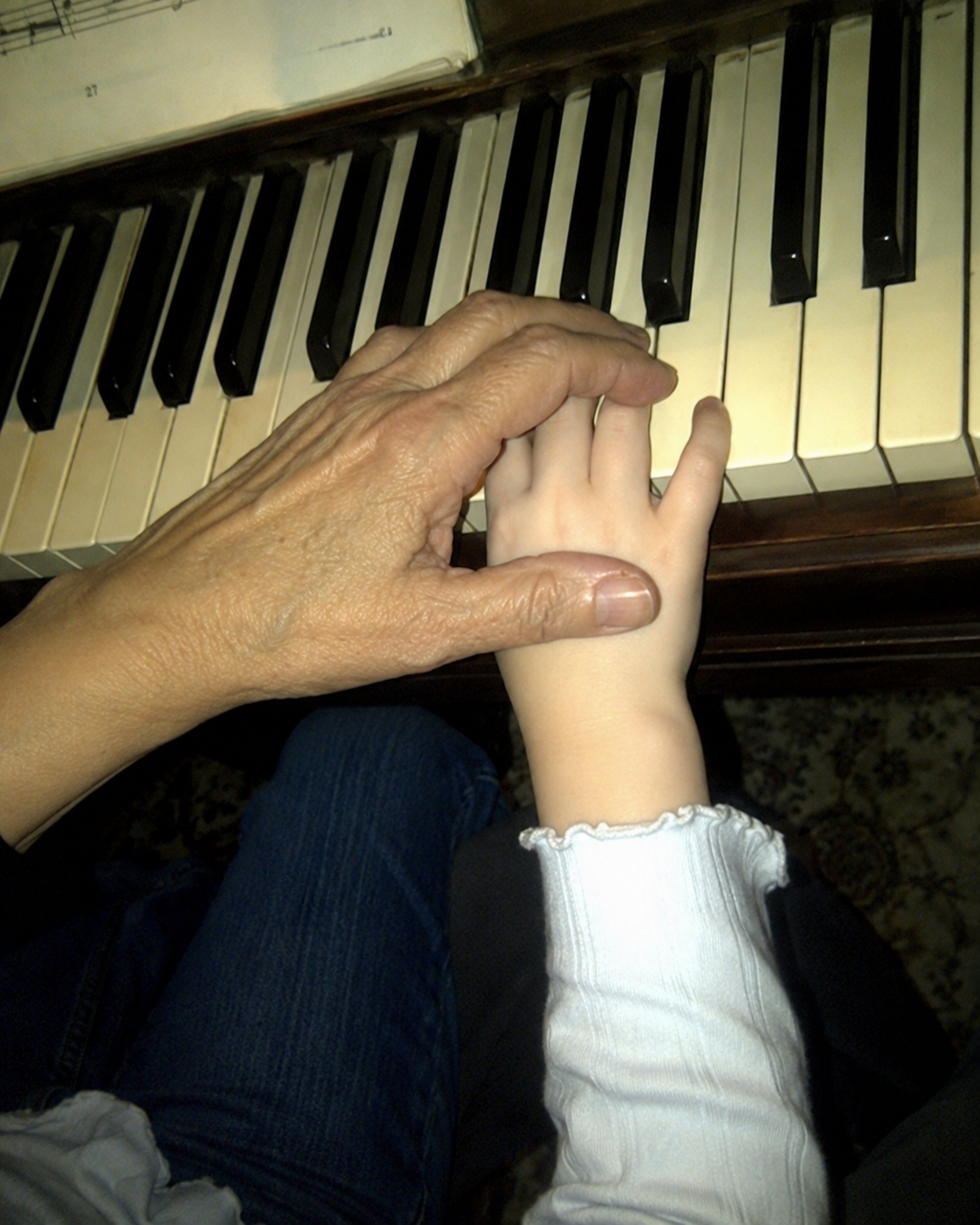
I'm a piano teacher. The first thing I noticed was that I couldn't feel the difference between two keys with my eyes closed. I've taught piano for thirty-four years. The same upright in the same front room, a parade of children and their scales, four days a week. I'm sixty-two. And the thing about playing — really playing, not just hitting the right notes — is that your hands have to know the keys without looking. The weight of them. The little gap between black and white. The give of the key as it goes down. You feel your way across a keyboard the way you feel your way across your own kitchen in the dark. So the first sign was small, and I almost missed it. I closed my eyes to play a piece I've known for forty years, and I couldn't quite feel where one key ended and the next began. I told myself it was nothing. Cold hands. A long day. The piano needs tuning, somehow, as if that made sense. But once I'd noticed, I couldn't un-notice. My fingertips had gone a little… far away. Like there was a thin glove between me and the keys that hadn't been there before. In the evenings my feet would start up — a faint pins-and-needles hum along the bottoms, into the toes. I'd wake in the night and my hands would feel like they belonged to someone else for the first few minutes, and I'd lie there flexing them, waiting for them to come back to me. For a woman whose whole life is in her hands, that waiting was a quiet kind of terror I didn't say out loud to anyone. It crept into the teaching, which is how I knew it was real. I used to guide a child's hand into position by feel, my fingers over theirs, shaping the curve. I started doing it by sight instead — watching, correcting with my eyes, because my fingers weren't telling me what they used to. I stopped playing the hard pieces for my own pleasure in the evenings, the ones that live in the fingertips. I told myself I was tired, or busy. The truth was I didn't trust my hands to find their own way across the keys anymore, and it broke my heart a little to be reminded. A piano teacher who'd started playing with her eyes. I did the sensible thing. I went to my doctor and told her everything — the keys, the far-away fingertips, the feet at night, the hands in the dark. She took it seriously. Ran the full workup, the send-away panels, the whole careful set. And it all came back in range. Across the board. Better than a lot of women my age, she said. I asked her, plainly, what would make my own hands go strange on me if the bloodwork was fine. And she was honest with me. She said some of this can come with the years. Keep moving, keep your weight steady, keep your hands busy, come back if anything changes. She wasn't dismissive. She just didn't have a next thing to hand me. And she was decent enough not to invent one. So I drove home with good bloodwork. And hands that still felt like they were wearing a glove. There was a whole layer of what was happening to me that no panel was measuring. Nobody had a tool for it. I'll be honest about how I came to it, because it arrived sideways, the way most real things do. It was a parent. The mother of one of my Tuesday students, waiting in my front room while her daughter butchered a sonatina. We got to talking, the way you do over thirty minutes of scales, and somehow I let slip — I don't usually — that my hands had been giving me trouble. She mentioned her own mother had been through something similar, and had started drinking a tablet in water in the mornings. Hydrogen, she said. I smiled and nodded and went back to counting one-and-two-and for her daughter. But the word stuck. So that night, when sleep wasn't coming and my hands were doing their far-away thing, I sat up and looked it up myself. I'm not a credulous woman. Thirty-four years of "the dog ate my practice schedule" will cure you of credulity. I went in expecting nonsense. What I found was quieter than I expected. A growing body of research on molecular hydrogen and cellular wellness. Not flashy. Not a cure for everything. Just a steady, patient amount of interest in something very small. Molecular hydrogen is the smallest molecule there is. The most I'd take from it, as a piano teacher and not a scientist, was that it's looked at for supporting the body's natural antioxidant balance, supporting healthy circulation, and supporting healthy nerve function already within the normal range. I noticed she'd — the research, I mean — kept that careful phrasing. Already within the normal range. Healthy circulation. Healthy nerve function, the ordinary kind a body's meant to have. That was the layer nobody had a tool for. Here's the part I'd most want you to copy. Not the tablet. This. Before I bought a thing, I called my pharmacist. Same fellow for years, who doesn't sugarcoat anything. I told him exactly what I was looking at, and everything else I take. I asked if there was any reason it'd be a problem alongside all of it. He looked into it and said there was nothing he'd be concerned about as an addition to my routine. Then I brought it to my own doctor at my next visit. I said it plainly: I want to add this. Not instead of anything. On top of everything. Sensible? She said it sounded reasonable — added to whatever I was already doing, not replacing any of it, a fine thing to try. Two careful people, the same answer, before I spent a dime. The one I landed on is called PrimeCell H2. A rapid-dissolve tablet. You drop it in a tall glass of cool water, it dissolves and releases the hydrogen, and you drink it fresh, right away. That's not a flourish — it's the reason for the format. Hydrogen's the smallest molecule there is, and it escapes the second it meets heat or sits out. So you don't mix it and walk off. You drink it right then. One tablet. One glass. Once a day. I changed nothing else. Same doctor. Same students. Same everything she'd told me to do. I just put the glass next to my morning coffee and got on with my life. Now the honest part, because I've no patience for a story that oversells. Nothing happened the first morning. Or the third. I stood at my counter feeling a little foolish — a grown woman drinking fizzy water and waiting to feel her own fingers. I nearly quit twice. I can't tell you which week it turned. I genuinely can't. But there came an evening when I sat down at the upright after my last student had gone. I don't even remember deciding to play the hard piece — the one I'd quietly stopped playing. I just started it. And somewhere in the second page I realized my eyes were closed. I was playing by feel. Finding the keys the way I used to, the little gaps and weights and gives of them, my fingertips telling me where I was without my having to look. I finished the piece in the dark of my own closed eyes and sat there with my hands resting on the keys. The glove was gone. I hadn't noticed the day it left. I only noticed, in that moment, that it wasn't there. It wasn't dramatic after that. It was just my hands coming back to me, a little at a time. I started guiding the children's hands by feel again, my fingers over theirs. I stopped waiting in the dark each morning for my fingers to report in — they were just there, the way hands are supposed to be. The feet quieted in the evenings, too, somewhere along the way. I can't prove to you any of it was the tablet. I won't pretend I can. I was keeping my hands busy, doing everything my doctor said. Maybe it was all of it. Maybe it was the one thing I added. But I'd been doing the rest of it the whole time my hands were drifting away. And somewhere after the glass of water, quietly, they came back. That's the honest version. It's the only one I've got. At my next visit my doctor said everything still looked good and to keep doing what I'm doing. I didn't make a thing of it. I just agreed. So here's what the product is for, plainly. PrimeCell supports healthy nerve function already within the normal range. It supports healthy circulation. It supports the body's natural antioxidant balance. That's not a promise about your hands, or your feet, or anything at all. It's not a promise about anything. It's just what it's for. Some people notice something in the first week or two. Others take much longer. Some, I'd imagine, not much at all. Bodies are different. Mine is just one, with one story. It's a slow thing, taken steadily — the cellular processes it supports build up gradually, not overnight. It isn't a pill you reach for on a night your hands feel far away. It's a glass of water you drink every morning whether you feel anything that day or not. So here's what I'd tell you, if you were sitting on the bench beside me. If your hands or your feet have started feeling far away — a glove that isn't there, a hum in the toes at night, fingers that take a moment in the morning to feel like yours — and your bloodwork keeps coming back fine, and your doctor has run out of next things to hand you: First, talk to your doctor or your pharmacist. Both, if you can. Especially if you're already taking something for your blood pressure, your blood sugar, or your heart. Ask the plain question: is this sensible to add to what I'm already doing? If they say yes — and there's a fair chance they will — it's a tablet and a glass of cool water in the morning. On top of everything else, not in place of any of it. Then give it a few weeks. Don't watch it like a metronome. Just set the glass next to the coffee and let your body keep its own time. Be patient with yourself. Your hands have done a lifetime of work for you. They're allowed a little patience in return. That's the whole of it. That's what an offhand word from a student's mother, and a sleepless night of reading, between them did for me. And I'd be a poor sort of teacher not to pass on the thing that helped. P.S. I never did tell that mother how much her passing comment changed for me — her daughter finished lessons and they moved away before I'd put it together. If she ever reads this: thank you. You were folding a coat over your arm, waiting on a sonatina, and you handed me back my own hands without either of us knowing it. P.P.S. I keep a spare box in the cupboard now. PrimeCell's a small company and they've sold out before, and a woman who's never let her metronome run down mid-lesson doesn't care to run low on something she counts on. I'd rather it just be there in the morning, next to the coffee. P.P.P.S. The steps, in order: Call your doctor or pharmacist first, ask if it's sensible to add to what you're on. If yes, drop one tablet in a tall glass of cool water each morning and drink it fresh, right away. Change nothing else — just add it. Then give it a few weeks. Some notice something in the first week or two, others longer, some not much at all. Be patient. P.P.P.P.S. PrimeCell H2 has a 90-day money-back guarantee — not satisfied for any reason at all, every penny back, no questions. For a supplement, that's the only sensible policy. Enough time to actually tell, instead of deciding in a week. I'd take the full ninety days. P.P.P.P.P.S. I played a little recital last month — just me, for the adult students and their families, the hard pieces I love. Eyes closed for the last one, the way I like to. Afterward a parent asked how I could play without looking, and I said my hands know the way. Two years ago I couldn't have said that and meant it. That's not a headline. It's a small, quiet thing. But the small quiet things — a piece played in the dark, by feel — are the ones worth telling someone on the bench about. https://track.getamalahealth.com/5548c06d-d9c3-4785-b466-fec64a6fdb28 The people and events depicted in this ad are illustrative and not based on any specific individual. Individual experiences vary. These statements have not been evaluated by the FDA. This product is not intended to diagnose, treat, cure, or prevent any disease.
Fix Yourself at the Cellular Level
PrimeCell H2 is a next-generation molecular hydrogen tablet formulated to support your body's natural antioxidant defenses — helping you feel sharper, more energized, and more like yourself.
LEARN MORELike this ad? Make it yours.
Crush rebuilds this exact creative around your product — your brand, your colors, your offer — in about a minute.