
Key Takeaways
- 1Successful Facebook pet product ads connect owners’ care with clear purchase reasons through emotional storytelling, according to Graphed; feature pets using products, supported benefits, and offers matching destination pages.
- 2Test restocking copy for repeat-purchase products with a named range and browsing invitation, connecting the replenishment need to a purchase-oriented next action.
- 3Set audience briefs by animal, shopping need, and product fit; use reporting to assess message relevance and shopping practicality for actual viewers and their devices.
- 4Calculate allowable acquisition spending per order from product, shipping, discount, and other order costs; after planned test spending, pause overspending versions and examine offer, product fit, and destination.
Compare pet product ads from Chewy, K&D Equestrian, Pampered Pet Shop, and Pet Station, plus Petco's Meta campaign, with copy and practical creative lessons.
Successful Facebook ads for pet products connect the owner's care for their pet with a clear reason to buy. Show the pet using your product, explain the relevant benefit, and give the shopper a concrete offer. This emotional-storytelling approach is described by Graphed.
Facebook ads for pet products: real examples
These pet-product ads show different ways to present savings, specialist products, and delivery convenience. Petco adds a campaign example from Meta. Chewy, K&D Equestrian, Pampered Pet Shop, and Pet Station use image ads with a Shop Now button.
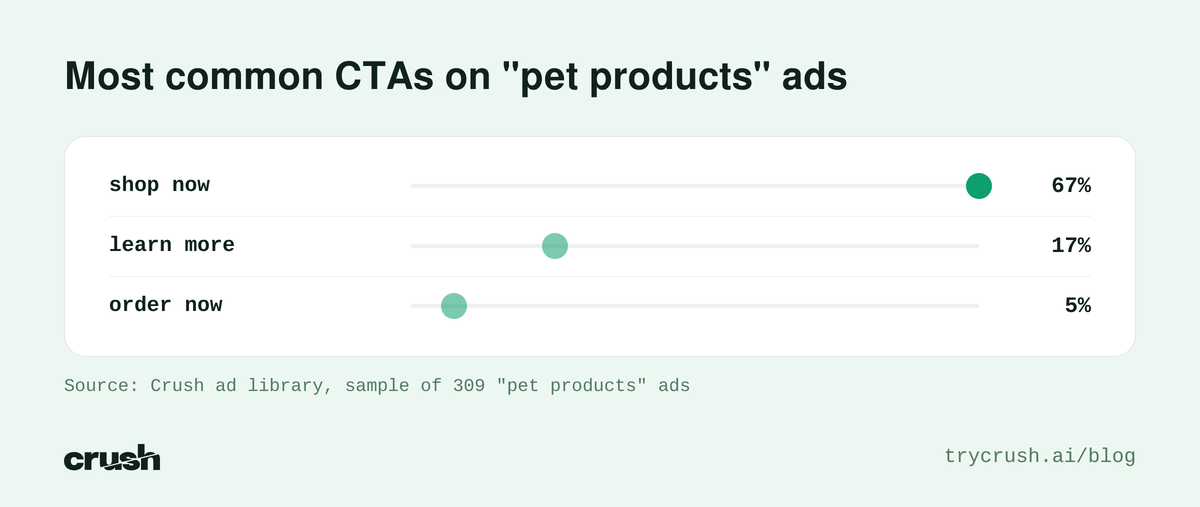
Among the 309 ads in our sample, 94% are images and 6% are videos. For the 307 ads in our sample's call-to-action data, the most common buttons are Shop Now (67%), Learn More (17%), and Order Now (5%). These shares describe advertisers' choices, not which button performs best.
Use a leaderboard to shortlist relevant ads and inspect their offers. To understand how the ranking works, check the measure behind the order: our ad library records run length and later ads using the same creative. A purchase-performance ranking would also need purchase results.
| Advertiser | Copy angle or campaign type | Offer or product detail |
|---|---|---|
| Petco (Meta campaign example) | Automated sales campaign | Meta Advantage+ sales campaign |
| Chewy | Stocking up | 35% off the first Autoship order |
| K&D Equestrian | Small family-owned company | Grooming brushes, buckets, and stall forks |
| Pampered Pet Shop | Pet happiness | 10% off with PAMPERED10 |
| Pet Station | Range and convenience | Pet food, toys, accessories, grooming essentials, and home delivery |
Petco's automated sales campaign
Meta highlights Petco, a pet care retailer, using an automated Meta Advantage+ sales campaign.
Use this example to consider campaign setup alongside the copy and offer tests below.
Chewy
Chewy's ad text says "Don't wait 'til it's too late. Stock up now and save 35% on your first Autoship order of pet faves."
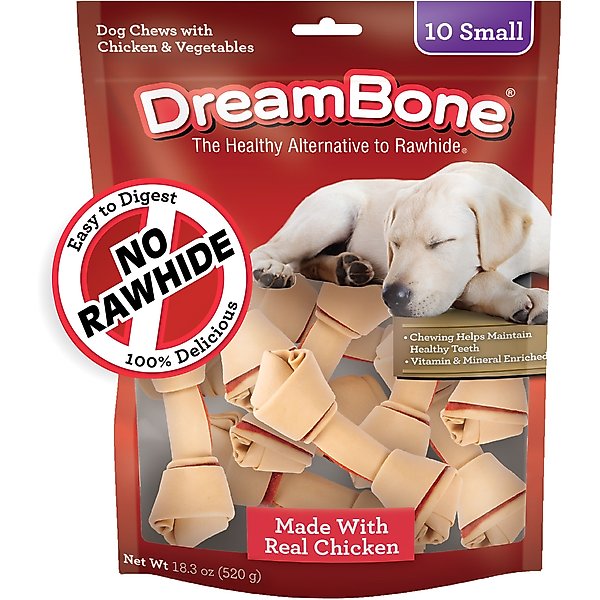
164 days live, last seen Mar 3, 2026.
The hook combines restocking urgency with a specific introductory offer. The discount is attached to the first Autoship order, which makes the qualification part of the pitch. Its Shop Now button provides a purchase-oriented next action.
Our ad library records 88 later ads using the same creative.
For products customers buy repeatedly, test copy about replenishing supplies. Name the relevant products and invite shoppers to browse your collection.
K&D Equestrian
K&D Equestrian uses the headline "K&D Equestrian" and the text "K&D Equestrian is a small family owned company based out of Gainesville, Tx. We manufacture many types of equine and pet products from grooming brushes to buckets and stall forks. Please check out our website!"

974 days live, last seen Sep 4, 2026.
The ad identifies K&D Equestrian as a small family-owned company that manufactures equine and pet products. Specific products give the reader something more useful than a broad claim about pet supplies. The offer is access to that range, with Shop Now as the button.
This is a useful reference for a store whose strongest material is product knowledge or manufacturing identity. Copy the specificity: name the products your buyer recognizes and explain your genuine role in making or selecting them.
Sample ad for a grooming-supplies store: Grooming brushes for your pet's daily care. Explore our grooming essentials and choose the brush suited to your pet. Shop now.
Pampered Pet Shop
Pampered Pet Shop uses the headline "10% OFF" and opens with "Welcome to Pampered Pet Shop, where every pet's happiness is our priority!"

684 days live, last seen Aug 29, 2026.
Its broader copy promotes toys, grooming essentials, and cozy beds, with 10% off an order using PAMPERED10. Another headline segment is "PAMPERED10", and the button is Shop Now.
The welcome message supplies the emotional framing, while the headline supplies a concrete incentive. The code tells the shopper how to claim that incentive. Product categories help turn a general promise about happiness into a shopping proposition.
Pet Station
Pet Station uses the headline "Online Pet Store | Pet Station" and opens with "Looking for high-quality pet products?"
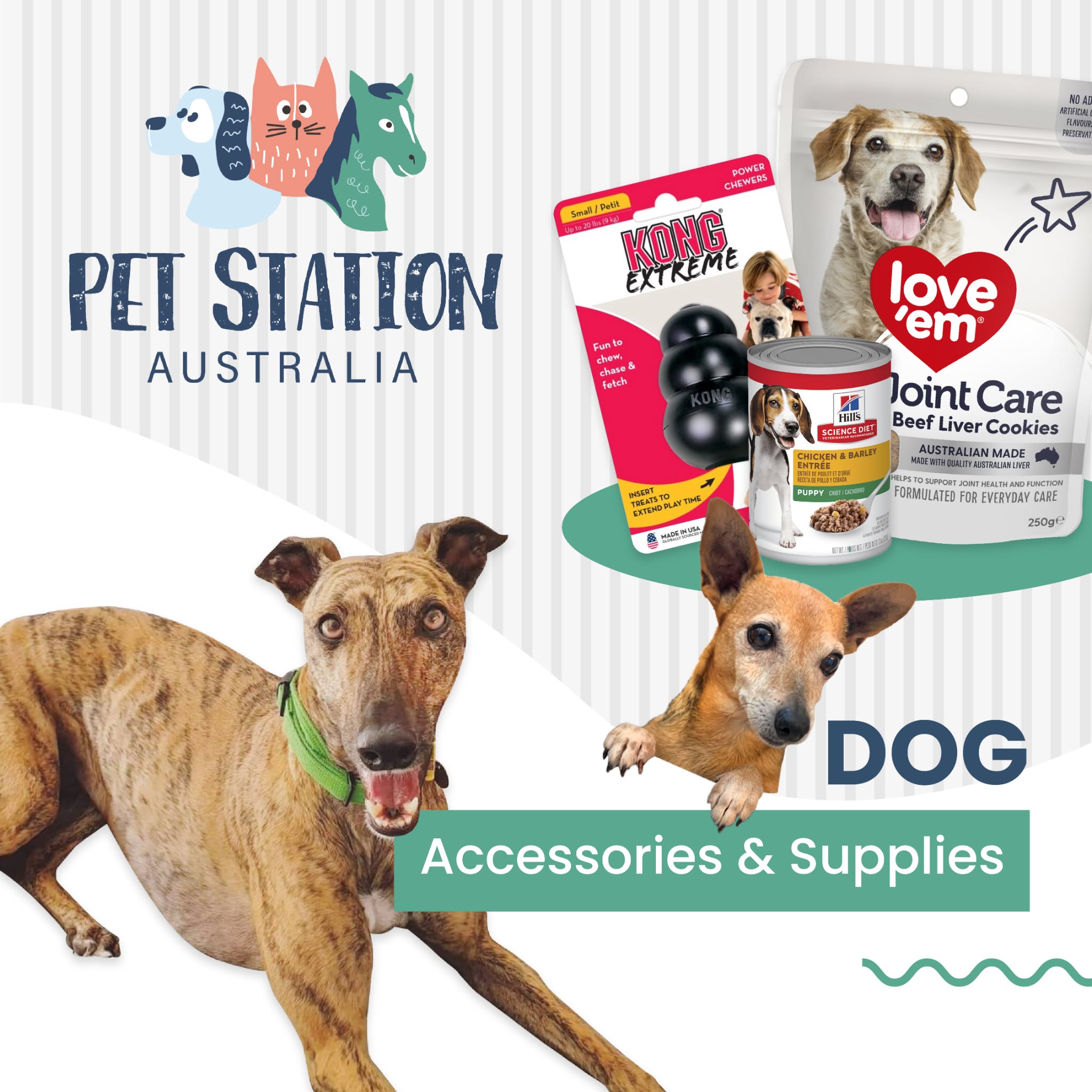
543 days live, last seen Aug 5, 2026.
Its text also includes "from premium pet food, toys, accessories, grooming essentials, and more!" and "Shop online & enjoy delivery to your door!" Another segment says "Great deals & exclusive discounts!" Its button is Shop Now.
The proposition combines assortment, delivery, and deals. The category list gives substance to the range message, while delivery addresses the practical task of getting supplies home. The discount language is less specific than Chewy's or Pampered Pet Shop's offer.
Copy the convenience angle when delivery is genuinely part of your advantage. Replace general quality language with relevant product details in your own version.
How these examples were picked: our ad library had 449 unique ads under search terms containing "pet products" on Oct 12, 2026. Of all 449, 309 passed our quality filter. A long run means an advertiser kept an ad going, not that it was profitable.
Our quality filter leaves out ads with no store website or not in English, catalog templates with unfilled fields, styled text made of special symbols, adult, gambling, medical-claim and scam ads, and pages that are tests, look like a person, sell a service or are otherwise junk. Run length counts whole days from the start date Meta gives an ad to the last day it is known to have run, so it does not subtract pauses or show when the ad's wording was added.

How to plan your pet product ad creative
Plan pet product creative around a relevant pet experience, a supported product benefit, and an offer that matches the page receiving the shopper.
The following creative checklist draws on MHI Growth Engine's pet creative advice and the product-range and delivery messages above.
- Feature the pet front and center.
- Show pets responding positively to your product.
- Explain your ingredient or formulation choice. For premium foods or supplements, explain why the ingredient or formulation matters. Keep the explanation within benefits you can support.
- Describe the product range and delivery offer. Name relevant categories and state how the shopper can receive the products.
- Check the destination. Confirm that the advertised product and delivery offer match what the shopper encounters after clicking.
- Make the shopping invitation clear. Invite the reader to browse the advertised products.
Keep the pet central, but give the viewer enough product information to understand why this particular item belongs in the ad.
How to write an advertisement for a pet shop?
Write a pet shop advertisement by naming a shopping need, relevant products, and the genuine offer, then inviting the reader to shop.
For pet store ads, the practical challenge is choosing between a store-wide message and a product-specific message. If the landing page is a broad collection, name its useful categories. If it is a product page, keep the copy focused on that product's use and offer.
To write an advertisement for a pet shop, adapt the product-range and shopping-invitation patterns used by K&D Equestrian and Pet Station:
- Choose the shopping need. Use restocking, grooming, play, comfort, or another need your products actually address.
- Name what you sell. Replace a vague claim about having everything with the category or item the shopper can buy.
- Describe the shopping options. Explain which products are available and whether shoppers can order delivery.
- Invite the reader to shop. Tell the reader to browse the relevant collection or shop the advertised item, consistent with the destination.
Sample ad for a pet supply collection: Bring playtime and grooming essentials into your pet's day. Browse our toys and grooming supplies, choose what suits your pet, and shop online.
This sample focuses on product categories and online shopping. Add delivery details only when your store offers them. For pet supplies ads covering several categories, keep the opening focused on the shared shopping task instead of listing every item you stock.
Choose the purchase goal separately from the copy idea. Explore our ecommerce marketing goal examples to put that goal into words.

Which pet-owner audiences should your campaign address?
Use MHI Growth Engine's suggested groups as targeting ideas to test: dog owners, cat owners, specific breed communities, and pet supplies or pet store interests. Choose animal or breed groups for products intended for those pets, and test pet-shopping interests for a broader collection. Check the targeting choices in your own account before building the campaign.
Campaign strategies for pet product brands should also distinguish potential new customers from engaged people and repeat buyers. Graphed recommends broad interest targeting with educational content for potential new customers and retargeting, or addressing people who have already engaged with you, with product demonstrations. For buyers replenishing supplies, test a restocking reminder that names the relevant products, using Chewy's shopping need as a starting point.
MHI Growth Engine frames pet buying around love and bonding, plus worry and protection. Those motivations suggest different briefs: enjoyable play for a toy, everyday care for grooming supplies, or a clear ingredient explanation for premium food.
Make those briefs specific enough to be useful. A grooming brush ad should explain the relevant grooming task. A food ad should explain the product's intended fit. A broad pet store promotion should tell the owner which categories are worth browsing.
For unique marketing strategies for reaching pet owners, test pet reactions, product education, and reminders to replenish supplies.
Give each strategy a concrete brief. Capture a genuine response to a toy. Explain an ingredient choice in plain language. For repeat purchasing, name the products shoppers may need to restock.
These approaches create different material to compare without depending on an invented emotional story. A specialist seller can also use a genuine manufacturing or selection story, as the wording in K&D Equestrian's ad illustrates.
For audience demographic insights, Meta says you can use breakdowns to see your audience's age, where they view your ads, and what devices they use. The reporting procedure appears below.
Translate those observations into questions about fit: does the message suit the people seeing it, and is the shopping experience practical on their devices? These our audience analysis examples from real ads offer another way to organize your observations.
What are the best social media platforms for pet product influencer marketing?
Pet product influencer marketing, or promotion through creators, has different platform fits, according to Influencerfee: Instagram and TikTok are primary options. It favors YouTube for detailed product reviews when video length is an asset, and Instagram for established breed and pet care communities.
An owner who can explain the actual use case is a better creative fit than someone selected only because their pet content is entertaining.
Graphed's pet store strategy article suggests a full-funnel approach. That means preparing messages for awareness, consideration, and purchase: educational content first, product demonstrations or owner proof for engaged people, and applicable offers for shoppers ready to buy.
Following Influencerfee's advice, consider TikTok Shop when researching pet-product shopping content. Study product presentations and shopping invitations, then compare those choices with the detailed-review approach it favors for YouTube. Keep your own product question consistent across that comparison.
When studying user-generated content (UGC), or content made by users, note the product presentation and the questions it addresses. Develop your own demonstrations from those observations, using product claims and shopping details you can support.
How to track pet product ad performance in Ads Manager
Pet stores should review purchases, amount spent, and cost per purchase, which Meta defines as amount spent divided by purchases attributed to your ads.
Meta describes the following reporting actions:
To track pet product ad performance in Ads Manager:
- Choose Ads Reporting from All tools for more detailed campaign performance metrics and audience demographic insights.
- Click Columns > Customise columns and select purchases, amount spent, and cost per purchase.
- Use breakdowns to see the age of your audience, where they are viewing your ads, and what devices they are using.
If purchase data is unavailable, check whether your site's purchase tracking records completed orders before using the reports for spending decisions. For troubleshooting, Adsuploader advises checking the Purchase event, the event used in purchase tracking, for value and currency.
Measuring pet product ad performance means comparing those purchase metrics with the amount your order margin leaves for advertising. Keep a separate note of the advertised product, offer, and creative concept so that the numbers remain connected to a specific pet product proposition.
Compare purchase outcomes and the amount spent on ads alongside the offer's economics. Use your own product costs, shipping expense, discounts, and other order costs to determine what remains for acquisition.
Hypothetical calculation: A $40 order leaves $12 after product, packing, delivery, discounts, and payment costs. Reserving $4 as profit leaves $12 - $4 = $8 for advertising per order. An ad spending $48 for six acquired orders uses $48 / 6 = $8 per order. Compare Meta's cost per purchase with your allowable spending on ads per order, checking which purchases are attributed to the ad.
If advertising expense per acquired order exceeds the amount your margin allows after your planned test spending, pause that version and examine the offer, product fit, and destination. Compare versions by purchase outcomes and expense, not attention alone.
Astro Loyalty advises tracking customer feedback, reviews, and social media interactions alongside quantitative measurements.
Use those responses to identify what the next creative should clarify. Questions about product suitability call for a better explanation. Delivery questions call for accurate fulfillment information.
For more copy references, Crush, our ad platform, has a free public ad library with Facebook ads across niches, their text, and how long they ran.
Frequently Asked Questions
Common questions about this topic
1How to write an advertisement for a pet shop?
2What are the best social media platforms for pet product influencer marketing?
3What are some Facebook ads for pet products examples?
4What are unique marketing strategies for reaching pet owners?
About this article
This article was written with AI assistance and researched against the sources listed below. It was reviewed by our automated editorial checks before publishing. Ad examples and ad data come from the Crush ad library.
Sources
- Facebook Ads For Pet Stores: The Complete 2026 Strategy Guide | Graphed Blog (graphed.com)
- Facebook (facebook.com)
- Meta Ads for Pet Product Brands: Strategy and Creative | MHI Growth Engine (mhigrowthengine.com)
- Pet Brand Influencer Marketing: Rates and Campaign Strategy for Pet Products (influencerfee.com)
- Cost per purchase: a metric measuring purchase events | Meta Business Help Centre (facebook.com)
- Use Meta Ads Manager reporting tools to understand your ads performance | Meta Business Help Centre (facebook.com)
- Meta Pixel Standard Events: The Complete 2026 List, Parameters and Setup Reference (adsuploader.com)
- Key Metrics for Evaluating Your Pet Retail Marketing Efforts, Astro Loyalty (astroloyalty.com)
Written by

Rokas Steponavičius
Founder, CEORokas is the Founder and CEO of TryCrush.ai, an ex-IBM professional turned entrepreneur focused on building AI-driven growth platforms. With a strong background in ecommerce, performance marketing, media buying, and artificial intelligence, Rokas specializes in creating scalable, data-led systems that drive measurable revenue. His mission is to help modern businesses leverage AI to optimize acquisition, conversions, and long-term profitability.
Stop Guessing.
Start Crushing.
AI Ad Manager trained by world-class media buyers to generate your creatives and optimize your ads 24/7.
Learn more
Related articles

Facebook Ads for Dropshipping Success: The 2026 Blueprint
Dropshipping isn't dead, but the old methods are. Discover the 2026 blueprint focusing on niche stores, the CBO Blitz testing framework, and high-converting UGC creatives. Learn how to launch winners and scale your store to $10k/day with modern Facebook ad strategies.
Dropship.io Reviews 2026: Pricing, Features, and Accurate Data
An in-depth look at Dropship.io's features and pricing in 2026. Learn where the platform excels and why its estimated revenue metrics might cause media buyers to burn through their ad budgets.
Ads Fast Food Data: What Actually Converts in 2026
Learn how the most profitable fast food campaigns actually operate in 2026 by analyzing ad longevity, duplicate counts, and specific call-to-action data.

Data-Backed Ways to Spot a Winning Product Trend in 2026
A real product trend is not defined by search volume, but by how long advertisers are willing to spend money promoting it.