

Key Takeaways
- 1Test underlying psychological triggers, not just surface-level ad variables.
- 2Use a Concept Matrix to balance emotional and rational angles in your ads.
- 3Mine Amazon reviews and TikTok comments to ethically steal ad concepts.
- 4Build an Iteration Tree to turn a $10k winning ad into a $100k machine.
- 5Automate your concept testing pipeline to beat ad fatigue before it happens.
Transition from throwing spaghetti at the wall to becoming an advertising scientist. Discover how to identify, test, and scale winning ad concepts using psychological triggers and AI data analysis to build an automated pipeline for profit.
The Marketer's Mindset: Throwing Spaghetti vs. Analyzing the Wall
In the world of advertising, there are two types of marketers. And the difference between them is not talent, budget, or experience. It is mindset.
Type A throws spaghetti at the wall. They churn out ads based on what they think looks cool. Sometimes it sticks, usually it slides off. When they find a winner, they say, "I got lucky." They celebrate, but deep down, they are terrified because they don't know how to repeat it.
Type B is a scientist. They don't throw spaghetti. They analyze the wall. They analyze the humidity. They analyze the spaghetti. When they identify unicorn ads, they say, "I expected this." They are calm, confident, and in control. They know exactly why it worked, and more importantly, they know how to do it again.
To succeed with your creative strategy in 2026, you must become Type B. You must learn to decode Winning Concepts before your competitors do.
What is an Ad Concept?
A concept is not just an ad. It is the underlying psychological trigger behind the ad.
An image of a smiling woman holding a product is an ad.
The idea that "this product makes you happy and stress-free" is the concept.
If you only test ads, your creative testing is burning your budget on surface-level variables. If you test concepts, you are testing human nature.
The Concept Matrix for A/B Testing
We break down concepts into a 2x2 matrix to ensure we are testing a wide range of angles and triggers:
Emotional vs. Rational: Does the user buy because of how they feel, or because of the specific specs and features?
Positive vs. Negative: Do they want to gain pleasure ("Get rich") or avoid pain ("Stop losing money")?
Example Concepts for a Weight Loss App
Rational/Positive: "Lose 5lbs in 2 weeks. Scientifically proven."
Rational/Negative: "Obesity increases heart risk by 50%."
Emotional/Positive: "Feel confident in your bikini this summer."
Emotional/Negative: "Don't be the slow one on the hike."
You must rigorously test all four quadrants of this matrix to find true audience resonance.
Reverse-Engineering Success with AI
So how do you find these Winning Concepts?
You use data. And more specifically, you use AI algorithms that consistently beat human media buyers at pattern recognition.
AI tools can analyze thousands of successful ads in your niche. They can identify subtle patterns that are completely invisible to the human eye.
Maybe the AI notices that ads with a blue background perform 20% better. Or that headlines starting with a question mark have a significantly higher click-through rate (CTR).
This isn't magic. It is pure pattern recognition.
3 Ways to Steal Ad Concepts (Ethically)
You don't have to reinvent the wheel. You can look at what is already working for others and apply that competitive intelligence to your brand.
The Amazon Review Mine: Go to Amazon. Look for 5-star reviews. Look for phrases like "I love that it..." That is a winning concept. Now look for 1-star reviews. "I hate that it..." That is a prime pain point to solve.
The Ad Library Spy: Go to the Facebook Ad Library. Search for your competitors. Filter by "Active ads running > 30 days." If an ad has been running for a month, it is highly likely to be profitable. Analyze the underlying concept.
The Comment Section: Look at the comments on viral TikToks in your niche. What questions are people asking? Answer them directly in your ads.
Building the Iteration Tree
Once you find a winner, you don't stop. You must build better iterations to combat the myth of creative fatigue.
Let's say the "Rational/Positive" concept won. Now you create an Iteration Tree for that specific concept by testing one variable at a time:
Branch 1: Change the Headline.
Branch 2: Change the visual style (UGC vs. Professional).
Branch 3: Change the offer (Free trial vs. Discount).
This deliberate, systematic process is how you turn a $10k winner into a $100k winner.
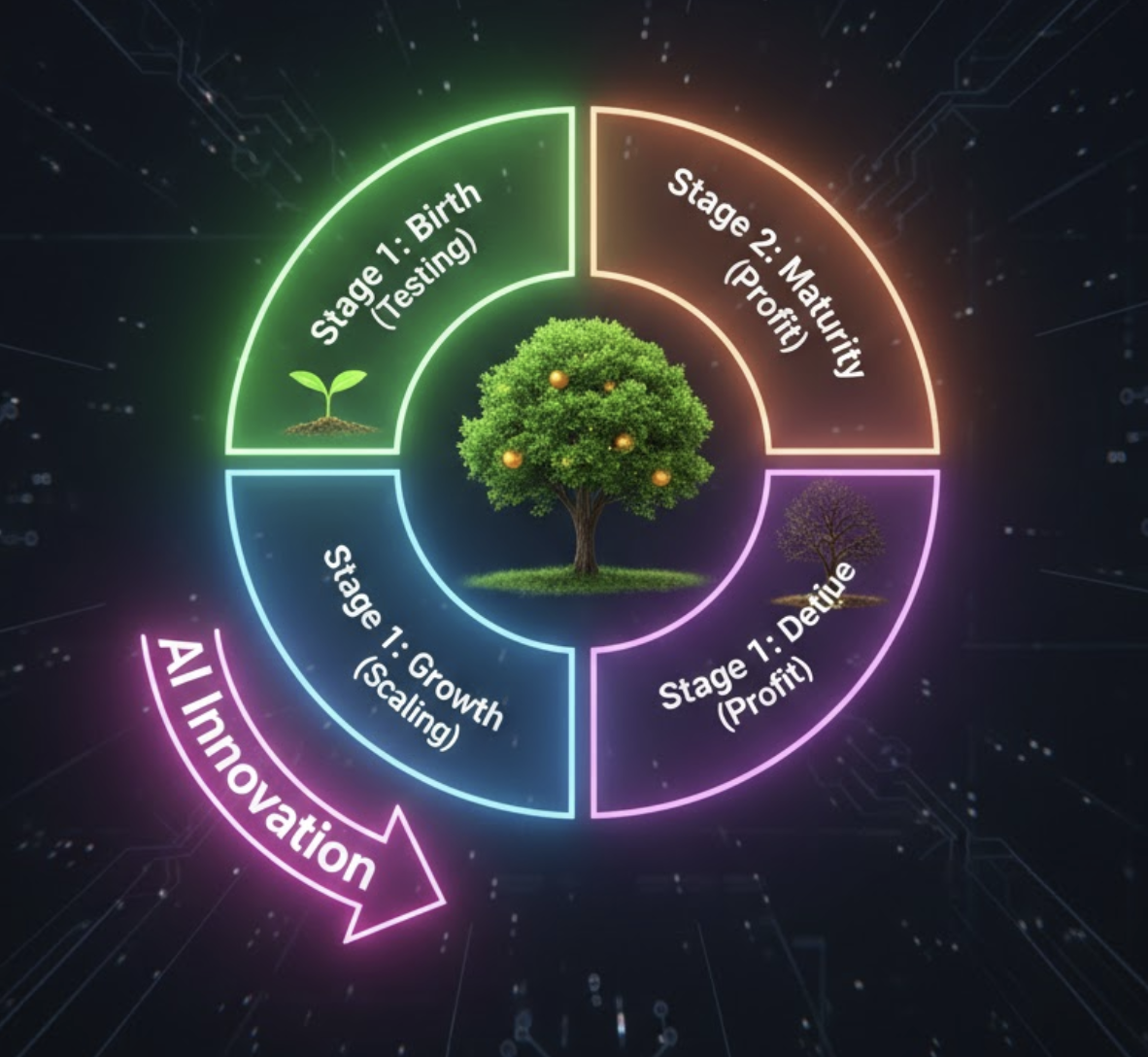
The Lifecycle of a Winning Ad
Even the absolute best concept has a strict shelf life.
It is born in the testing phase. It grows exponentially during the scaling phase. It prints money during the maturity phase. And finally, it dies of ad fatigue.
The biggest mistake most brands make is that they mourn the death of their winner instead of preparing for the birth of the next one.
You must have a continuous pipeline. You must be actively testing next month's winners today.
The Concept Testing Scorecard
Before you scale, actively grade your ad concept on this simple scorecard (from 0 to 10):
Uniqueness (0-10): Have users seen this exact angle before?
Relevance (0-10): Does it speak directly to a current pain point?
Believability (0-10): Is the core claim credible and trustworthy?
Urgency (0-10): Does it make them want to act now?
If your total score is below 25, don't launch the campaign. Go back to the drawing board.
The Automated Ad Pipeline
This is precisely where TryCrush.ai shines.
It automates the entire ad lifecycle. It identifies a fatigue signal before you do. It automatically spins up new variations to challenge the incumbent winner.
It ensures that your "concept pipeline" is never empty, keeping your ad account green.
Stop relying on luck. Start relying on logic.
Decode the code. Find the winning concept. Scale the profit.
Frequently Asked Questions
Common questions about this topic
1What is an ad concept?
2How do you find winning ad concepts?
Written by

Rokas Steponavičius
Founder, CEORokas is the Founder and CEO of TryCrush.ai, an ex-IBM professional turned entrepreneur focused on building AI-driven growth platforms. With a strong background in ecommerce, performance marketing, media buying, and artificial intelligence, Rokas specializes in creating scalable, data-led systems that drive measurable revenue. His mission is to help modern businesses leverage AI to optimize acquisition, conversions, and long-term profitability.
Stop Guessing.
Start Crushing.
AI Ad Manager trained by world-class media buyers to generate your creatives and optimize your ads 24/7.
Learn more
Related articles

The Psychology of the "Winner": How to Identify Unicorn Ads Before Your Competitors
Unicorn ads aren't random; they leave clues. Discover the psychological triggers behind viral creatives and learn how to use predictive analysis to spot winning ads before they generate high ROAS. Don't waste budget on losing creatives.

The "Probation" Zone: What to Do With Ads That Are "Almost" Profitable
Stop killing ads that are "almost" profitable. Discover the "Probation Zone" strategy to identify hidden winners using secondary metrics like Unique Link CTR and Initiate Checkouts. Learn when to grant a stay of execution and when to pull the plug.

The Psychology of the "Perfect" Ad (And How AI Replicates It)
Marketing is about psychology, not just pixels. Discover how AI analyzes emotional patterns to target the "Lizard Brain" and drive conversions. We reveal the 5 core psychological triggers and copywriting frameworks used to create the perfect ad.

Ad Library Guide: How Buyers Find 1000-Day Winning Ads in 2026
An ad library is the ultimate tool for reverse-engineering your competitors' most profitable campaigns. Learn how to filter out failed tests and identify ads that scale for years.