Key Takeaways
- 1Profitable coffee ads focus heavily on health angles and problem-solving rather than generic roasting tropes.
- 2The 90-day mark is the proven winner threshold, with top performing coffee campaigns averaging 104 days active.
- 3Shop Now is the dominant call to action, capturing 49 percent of the successful market share.
- 4High duplicate counts indicate foundational creatives that advertisers relaunch to scale spending.
- 5Day-one margins in coffee are thin, requiring strict CPA monitoring and a focus on subscription lifetime value.
We analyzed over 6,600 active Meta campaigns to reveal the exact structures, hooks, and lifespans of the most profitable coffee ads running today.
Coffee advertisements in 2026 are highly measurable direct-response assets, not vintage posters or generic branding tropes. Winning campaigns rely on specific health angles, longevity metrics, and clear calls to action, driven by continuous creative testing.
The most profitable coffee ads run for months and focus on concrete consumer problems over abstract brand building.
What Makes Coffee Advertisements Profitable in 2026?
Profitable coffee advertising requires surviving the initial algorithmic learning phase and maintaining stable acquisition costs over long periods. We know this because our product, Crush, is an AI Facebook ads platform that tracks exactly what works in the market.
Our platform tracks competitors' campaigns, much like how an expert would search the Facebook ad library, and keeps historical data, including ads that were taken down.
Our ad library tracks 1,880,210 unique Facebook ads, with 437,091 currently active. When we filter this massive dataset, we see that 6,641 tracked ads match the exact term coffee, and 1,109 are active right now.
Media buyers often fail because they treat coffee like a commodity. They try to sell the beans. The advertisers who print money sell the effect. They sell the lack of jitters, the organic certification, or the absence of toxins.
The Proven Winner Threshold for Coffee Ads
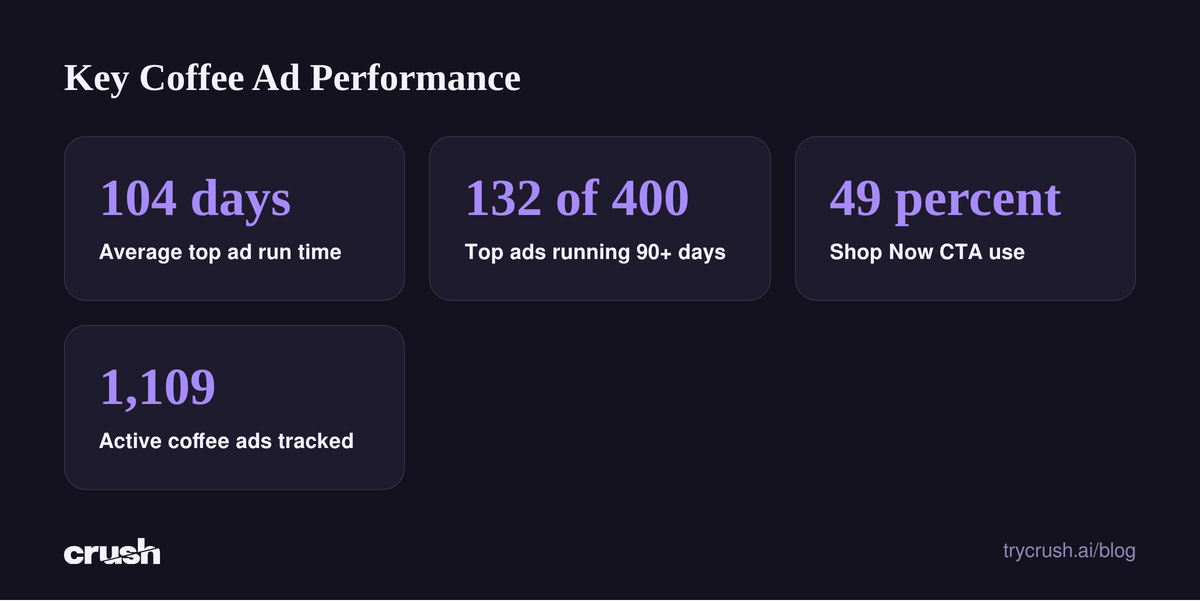
In media buying, longevity is the ultimate truth teller. Among top coffee ads, the average run time is 104 days. Furthermore, 132 of the top 400 ran for 90 or more days. We call this the proven winner threshold.
If a brand spends money on the same creative for over three months, that ad is generating a profitable return on ad spend. Advertisers kill losing concepts in a matter of days.
Among top coffee ads, the average run time is 104 days, and 132 of the top 400 ran for 90 or more days.
Which Call to Action Dominates Coffee Ads?
The Shop Now button is the undisputed king of direct-response coffee marketing. It captures the vast majority of profitable ad spend.
According to our proprietary data and proven call to action examples, the most common CTA buttons on coffee ads are Shop Now at 49 percent, Learn More at 24 percent, and Message Page at 8 percent. The rest are scattered across minor variations.
Matching the CTA to the Marketing Funnel
Using Shop Now indicates a direct push for immediate sales. This typically links straight to a product page or a subscription checkout page. It requires a highly persuasive ad creative to drive an immediate purchase.
Learn More is typically utilized for advertorial funnels. In these funnels, users read an educational article about coffee health benefits before being pitched a product.
The Message Page CTA is highly effective in specific regional markets where conversational commerce dominates consumer behavior.
How Top Advertisers Write an Advertisement for Coffee
Most novice media buyers rely on played-out tropes. They talk about small-batch roasting, fair trade origins, or the freshest morning cup. Whether you are marketing consumer packaged goods or running B2B e-commerce platform ads, generic angles completely fail to stop the scroll.
Often, brands ruin their return on ad spend by overcomplicating their visual identity instead of focusing on direct response. Learning how to add branding to Meta ads that actually convert is essential for standing out without sacrificing performance.
Winning advertisers use pattern-interrupting hooks focused on health, purity, or shocking facts. They manufacture an immediate problem for the consumer.
The Contrarian Health Angle
Take Fabula Coffee as a prime example of successful copywriting. This specific creative ran for 1,291 days and was relaunched twice. Their CTA is Get Offer, but their opening line is incredibly aggressive.
They write: “Did you know that a regular cup of coffee has more chemicals in it than any other product we eat or drink? Fertilizers, fungicides, insecticides, chemicals, and”. This angle works because it positions their specific coffee as the only safe solution to a hidden danger.
The Conversational Commerce Angle
In Asian markets, the approach shifts heavily toward conversational commerce and specific health blends. Sisters Thailand ran an ad for 1,169 days, relaunching it twice. They used the Message Page CTA.
Their opening line translates to a direct, friendly pitch highlighting health benefits: “#ซิสเตอร์คอฟฟี่ กาแฟสุขภาพผสมครีมน้ำมันรำข้าวและพรีไบโอติกส์ เริ่มวันที่ดี ด้วยกาแฟที่ช่วยดูแลสุขภาพกันค่ะ ❌ น้ำตาล ❌ ไขมันทรานส์ ❌ คอเรสเตอรอล 1 กล่องมี 15ซอง”.
This explicitly highlights zero sugar, zero trans fat, and zero cholesterol. Similarly, Goodnuts ran an ad for 875 days and relaunched three times with a very conversational, founder-led opening line: “สวัสดีค่ะ วันนี้แป้งปูนขอมาแนะนำสินค้าใหม่ของแป้งปูนเองค่ะ #ซิสเตอร์คอฟฟี่ กาแฟสุขภาพผสมครีมน้ำมันรำข้าวและพรีไบโอติกส์ เป็นผลิตภัณฑ์ที่แป้งปูนตั้งใจทำมากๆเลยค่”.
Why Longevity and Iteration Beat Expensive Production
Many brands waste thousands of dollars producing cinematic commercials that fatigue within a week on Meta platforms. The data shows that simple, direct concepts last the longest.
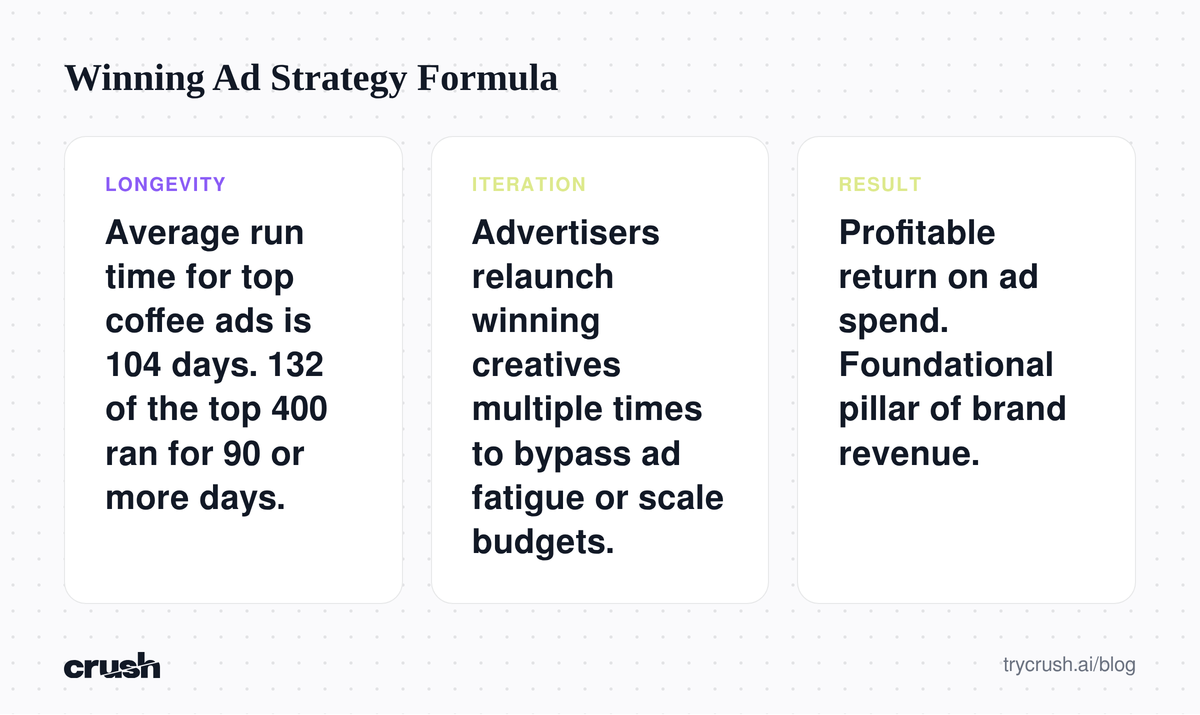
We track duplicate counts in our database. A duplicate count shows how many times an advertiser relaunched the same creative. This is a massive signal of a winning ad. Advertisers do not relaunch losing concepts.
Decoding the Relaunch Strategy
Konesso ran a winning creative for 1,087 days and relaunched it three times with a Shop Now CTA. Kitty Town Coffee ran a successful ad for 717 days, also relaunching three times with a Shop Now button.
When you see a creative duplicated and relaunched multiple times over several years, you have found a foundational pillar of that brand's revenue. Advertisers relaunch to bypass ad fatigue or to aggressively scale budgets in fresh ad sets.
Finding Competitor Data in Real Time
You can research these exact metrics yourself. Our free public ad library lives at trycrush.ai/ad-library and contains millions of Facebook ads across niches.
You can see longevity data and duplicate counts to build a data-driven creative strategy modeled after proven market winners.
A Structural Comparison of Winning Coffee Campaigns
To visualize what a successful coffee ad strategy looks like over time (similar to the performance trends we uncovered for clothing ads in 2026), we compiled the top performers from our tracking database. Notice the correlation between total days active and the number of times the creative was relaunched.
| Brand | Days Active | Relaunches | Primary CTA |
|---|---|---|---|
| Fabula Coffee | 1291 | 2 | Get Offer |
| Sisters Thailand | 1169 | 2 | Message Page |
| Konesso | 1087 | 3 | Shop Now |
| Goodnuts | 875 | 3 | Message Page |
| Kitty Town Coffee | 717 | 3 | Shop Now |
Essential Steps to Launch Your Next Coffee Campaign
Building a profitable acquisition funnel requires strict adherence to direct-response fundamentals. You must abandon the desire to look like a global television commercial and focus entirely on unit economics.
- Start with a contrarian hook. Do not sell the roast profile. Sell the absence of a negative side effect, such as jitters, crashes, or mold toxins.
- Align your CTA with your landing page. If you use Shop Now, send users to a high-converting product page optimized for mobile devices.
- Monitor the 90-day threshold. If an ad cannot maintain a profitable cost per acquisition for more than a few weeks, it is not a scalable winner.
- Calculate your subscriber lifetime value. Knowing your LTV allows you to spend aggressively on day-one acquisition costs, which is critical in a crowded market.
Calculating Lifetime Value for Subscription Models
Most coffee brands operate on a subscription model because the initial day-one margin on a bag of coffee is extremely thin. Say your target CPA is $50, but your first bag of coffee only costs $20.
You are technically losing $30 on day one. You must understand your lifetime customer value (LTV) to sustain these campaigns. If the average customer buys six bags over a year, that $50 acquisition cost becomes highly profitable.
Avoiding Common Mistakes in Coffee Advertisements
Media buyers waste millions of dollars annually by repeating the same structural errors. The Meta algorithm is incredibly smart, but it cannot fix a fundamentally flawed marketing angle.
- Focusing on farmers instead of drinkers. Consumers care about themselves. While ethical sourcing is a nice secondary benefit, it does not stop the scroll. Your primary hook must address the consumer directly.
- Rotating creatives too early. The algorithm needs time and budget to exit the learning phase. Killing an ad after 48 hours because it has not generated a sale is a classic rookie mistake.
- Ignoring the post-click experience. An amazing advertisement for coffee is completely useless if the website loads slowly or the checkout process is complicated.
Iterating on Visual Formats
How do you actually iterate on a winner once it starts to fatigue? You do not change the core message. You change the delivery mechanism.
If your winning ad is a static image of a coffee bag on a kitchen counter, your iterations should include:
- A video version panning across that same counter.
- Bold text overlays featuring a customer review.
This is what we mean when we say our platform can generate ad-creative iterations from a winning reference ad.
How to Scale Winning Creatives Without Burning Budget
Once you find an ad that surpasses the 90-day threshold, your next challenge is scaling your daily spend without breaking your target cost per acquisition. Manual scaling often disrupts the algorithm, throwing your campaigns back into the learning phase.
This is where automation becomes mandatory for modern media buying. Crush fully automatically runs Facebook ads by creating campaigns, scaling winners, and killing losers based on real-time performance data.
Automating the Media Buying Process
By leveraging AI, you eliminate the emotional decision-making that ruins profitable campaigns. The system identifies when a creative is fatiguing and automatically shifts budget to your strongest assets.
You can view our paid plans starting with a trial at trycrush.ai/pricing to see exactly how automation handles campaign management. Scaling requires structural discipline, and automation ensures you capitalize on winning ads without wasting spend on losers.
How We Got This Data
The numbers in this article come from Crush’s ad library: 1,880,210 unique Facebook ads tracked via the Meta Ad Library, 437,091 of them active at the time of writing. Ad examples reference real advertisers and their public ads. Data queried on 2026-09-01. Third-party product facts are attributed inline to their sources.
Frequently Asked Questions
Common questions about this topic
1What is the best call to action for coffee ads?
2How long should a profitable Facebook ad run?
3Why do advertisers relaunch the same creative?
4Should coffee brands use broad targeting on Meta?
5What makes a good hook for a coffee campaign?
About this article
This article was written with AI assistance. Ad examples and ad data come from the Crush ad library.
Written by
Albertas Pocius
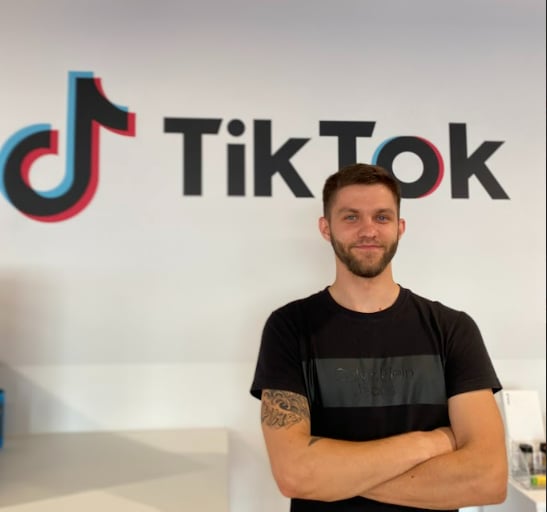
Co-founder, CMOAlbertas is the Co-Founder and CMO of TryCrush.ai, bringing elite-level performance marketing expertise to the platform. With over $50M+ in combined Facebook and TikTok ad spend, Albertas has launched and scaled dozens of projects from zero, driven by a deep obsession with data and experimentation. He has trained 20+ media buyers, consulted 100+ companies, and is widely recognized as one of Europe’s early TikTok pioneers, likely the first to scale campaigns beyond $100K per day. Today, he also teaches advertising strategy at two colleges, shaping the next generation of media buyers.
Stop Guessing.
Start Crushing.
AI Ad Manager trained by world-class media buyers to generate your creatives and optimize your ads 24/7.
Learn more
Related articles
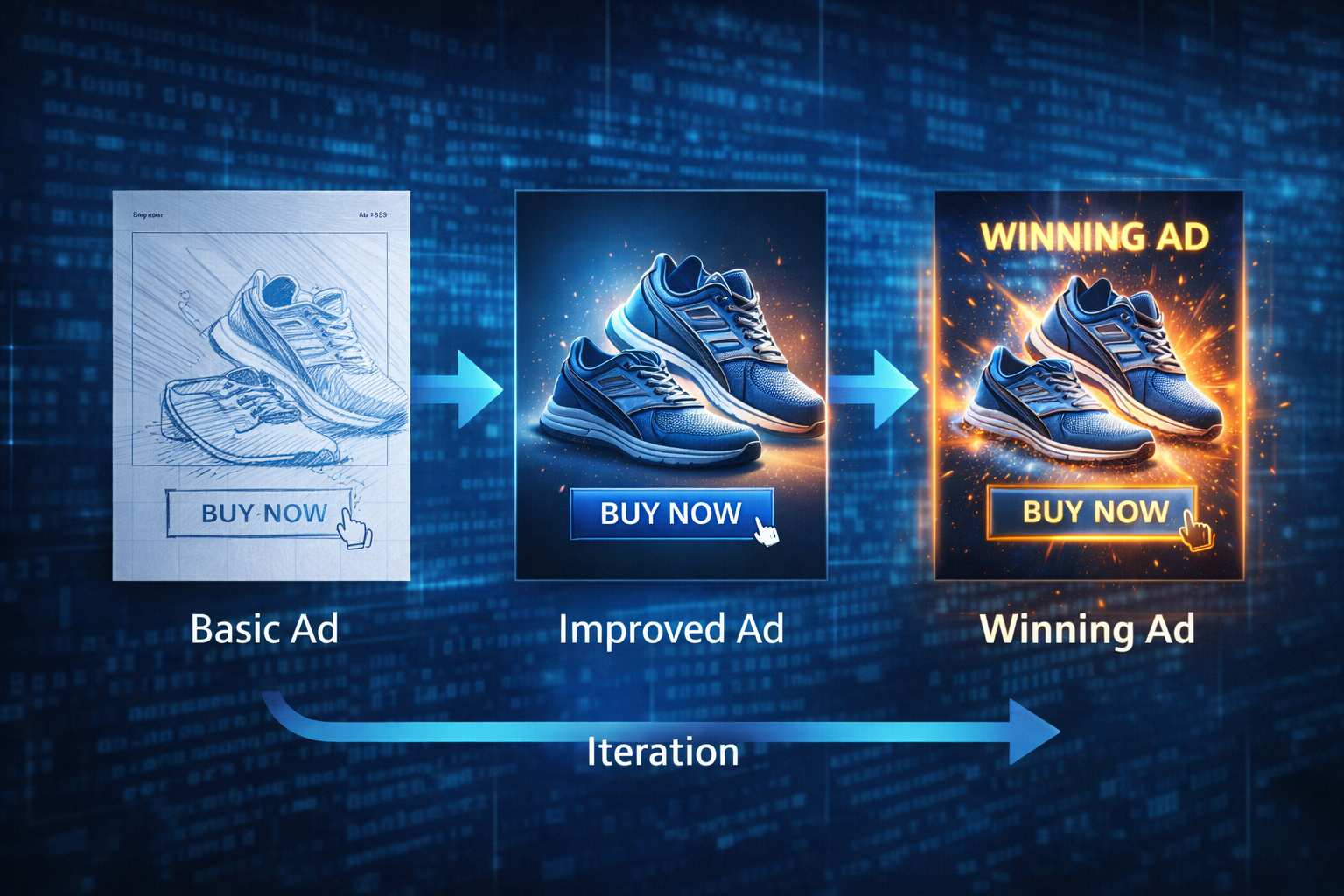
The "Creative Fatigue" Lie: You Don't Need More Ads, You Need Better Iterations
Think you need fresh creative every week? Discover why "Creative Fatigue" is a myth and learn the step-by-step process to iterate existing ads into high-converting winners without filming new footage.
4 Direct Response Ad Examples Proven By Relaunch Data
We analyzed over two million active Facebook ads to find the exact direct response ad examples that advertisers spend money on for hundreds of days.
Creative Strategy in 2026: The Data Behind Winning Ads
Stop guessing what ad creatives work. Learn how to build a data-driven creative strategy based on ad longevity, relaunch velocity, and proven hooks.
Magazine Adverts Examples: 3 Proven Winners For 2026
Magazine adverts examples show marketers how to blend editorial copy with striking visuals. We analyze three digital ads that borrow print tactics to achieve incredible longevity.