Key Takeaways
- 1A true creative strategy relies on quantitative data like ad longevity and relaunch velocity, not just brand aesthetics.
- 2Facebook ads that run for 90-plus days are the ultimate indicator of a profitable marketing creative strategy.
- 3Over 52 percent of successful marketing ads use the Learn More call to action to reduce initial user friction.
- 4Top performing brands use the first two lines of ad copy to filter their exact target audience immediately.
Stop guessing what ad creatives work. Learn how to build a data-driven creative strategy based on ad longevity, relaunch velocity, and proven hooks.
A creative strategy is the data-backed blueprint that dictates what message you show to your target audience to drive profitable conversions. For media buyers, it is not a mood board. It is the exact math behind your ad creative, aligning your offer, hook, copy, and visuals to hit specific performance goals.
What Is Creative Strategy in Performance Marketing?
A creative strategy in performance marketing is a rigid system for testing and scaling ad concepts based entirely on historical data and competitor intelligence. It clearly defines your angles, the different types of ads you deploy, and your messaging hierarchy.
If you ask traditional agencies to define creative strategy, they will show you brand guidelines and color palettes. If you ask a senior media buyer, they will show you cost per acquisition targets and click-through rates.
To fully understand this shift, you must look at what media buying is in 2026 and the emerging role of a creative strategist, who acts as the bridge between media buying and ad design. Developing a creative strategy in 2026 requires systematic iteration, not guesswork. For instance, analyzing the data behind profitable coffee advertisements reveals exactly how specific ad structures and hooks dictate long-term campaign lifespans.
We are operating in 2026, and platform algorithms handle the audience targeting now. Broad targeting is the default. Your ad creative is the only targeting lever you have left to qualify your buyers.
Why Conventional Creative Strategy Frameworks Fail
Most conventional frameworks fail because they rely on assumptions instead of active market data. They guess what the audience wants instead of measuring what they actually click.
At Crush, our platform tracks competitors' Facebook ads via the Meta Ad Library and keeps history, including ads that were taken down. This gives us a transparent view into what actually works and what wastes money.
The Scale of the Modern Ad Ecosystem
Our database reveals exactly how much content advertisers churn through to find a single winner. Crush's ad library tracks 1,691,604 unique Facebook ads, with 492,996 currently active across all industries.
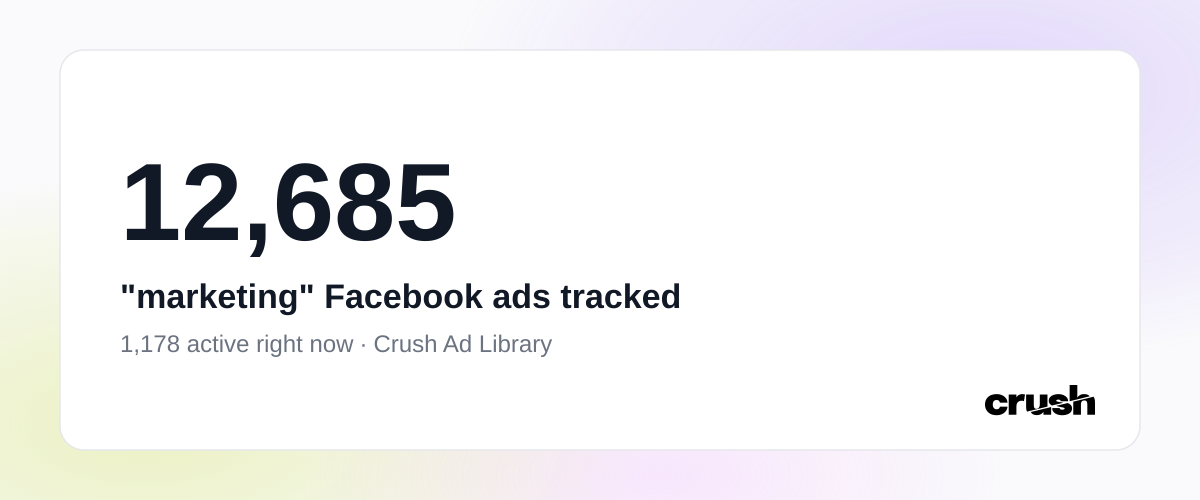
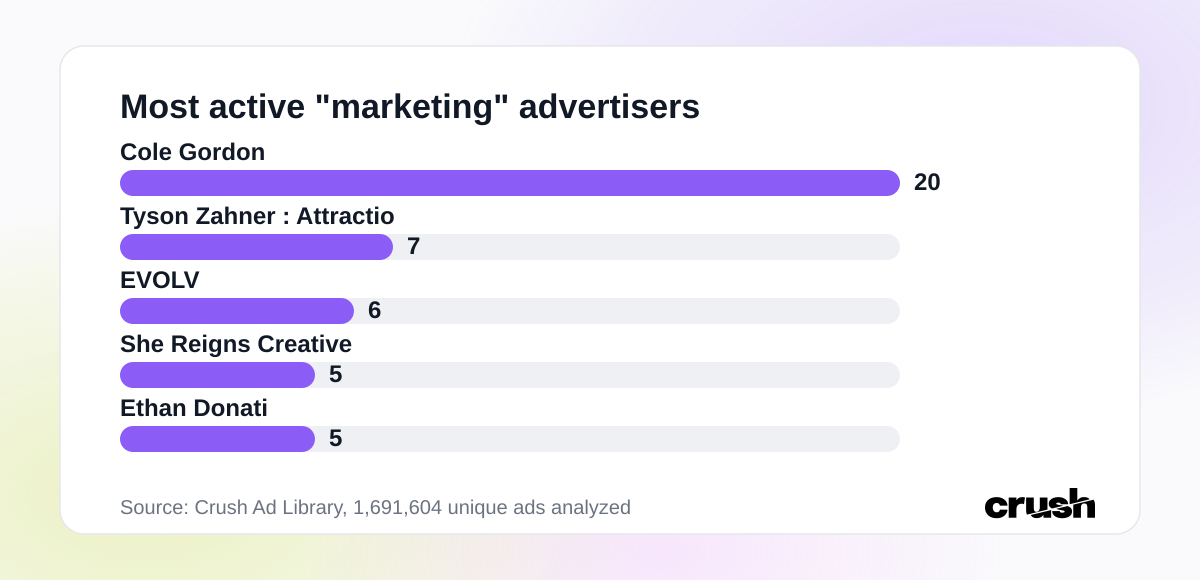
When you look at the B2B and agency space, the numbers get highly specific. We found that 12,685 tracked ads match the exact keyword "marketing", with 1,178 active right now. You can explore this exact data yourself in our free public ad library to see what your competitors are currently testing.
How to Identify a Winning Creative Strategy
You identify a winning strategy by tracking ad longevity and relaunch velocity. Ad platforms punish bad creatives with high costs, forcing advertisers to turn them off rapidly.
If an ad runs for months, it is profitable. No brand burns cash on a losing ad for half a year.
The 90-Day Longevity Rule
Among top marketing ads in our database, the average run time is exactly 87 days. Because most Facebook ads die in their first week, we consider 90 days the absolute threshold for a proven winner.
127 of the top 400 marketing ads in our database ran for 90-plus days, proving that fatigue takes months to set in for truly great creative.
When you build your creative strategy marketing plan, you must look at ads that cross this 90-day threshold. These are the ad formats that sustain scale.
The Relaunch Multiplier
Longevity tells you an ad is profitable. Relaunches tell you it is highly scalable. A duplicate count shows how many times an advertiser re-launched the exact same creative to hit new audiences.
Look at Udemy. They have a current ad running for 182 days. The massive signal is that they relaunched it 118 times. That is the definition of a backbone creative.
Proven Marketing Creative Strategy: What It Looks Like
A proven strategy uses direct hooks, clear calls to action, and copy that filters the audience immediately. If you study SaaS examples of winning ad frameworks, you will see how top software companies scale their user base using exactly these principles.
Let us dive into the data behind winning Facebook ads to see what top performers do differently. We analyzed four massive winners to deconstruct these top-performing Facebook ads and see exactly how they structure their campaigns for long-term scale.
| Brand | Run Time | Relaunches | Call to Action |
|---|---|---|---|
| Swyft Sites | 1652 days | 3 | Learn more |
| Zapier | 840 days | 3 | Learn more |
| JRNY Digital | 744 days | 4 | Shop now |
| Udemy | 182 days | 118 | Buy now |
Dissecting the Opening Hooks
The first three seconds of a video or the first two lines of copy dictate your success. Top brands call out their audience immediately.
- Swyft Sites ran an ad for 1652 days using this exact opening line: "Attn: Coaches who finally want to check the website off the list. We get it. Struggling to build a website by yourself can be time consuming, frustrating, and o".
- JRNY Digital ran their winner for 744 days with a similar direct approach: "Attention DTC brand owners: are you having trouble scaling your ads (without killing ROAS)? 👀 We're looking to partner with serious DTC brand owners that want ".
Selling the Outcome Immediately
Your creative strategy must focus on the ultimate benefit right away. Udemy pushes their subscription by listing the outcomes before the user even clicks to expand the text.
Their massive winner starts with: "Learn thousands of in-demand skills in one subscription. From data, AI, and coding to productivity, marketing and creative skills, learn at your own pace. Subsc".
Call to Action Data: Which Drives the Best Results?
Your call to action dictates user intent and friction. Choosing the wrong button limits your scale and drives up your cost per click immediately.
We analyzed the buttons across our entire dataset of marketing ads to find out what media buyers actually use when they spend real money.
- Learn more: 52 percent of ads.
- Sign up: 11 percent of ads.
- Apply now: 6 percent of ads.
Over half of all successful marketing ads use the Learn more button, proving that low-friction calls to action generate the highest click-through volumes.
Why Low Friction Wins Out
The Learn more button dominates because it requires zero commitment. You are just asking for a click, not a credit card or a phone number.
Once the user lands on your advertorial or landing page, your website takes over the heavy lifting of conversion. Your ad only needs to sell the click, not the final product.
Building Your Own Creative Strategy: 4 Essential Steps
Building your strategy requires moving from competitor research to active deployment. Here is the exact framework top agencies use to scale.
- Define your core offer and unit economics: Know your absolute maximum customer acquisition cost (CAC) before you spend a single dollar.
- Conduct competitor research: Search our ad library for competitors in your niche and filter exclusively for ads running 90-plus days. You can also analyze case studies, such as the data behind profitable coffee campaigns, to extract industry-specific insights.
- Extract proven frameworks: Analyze the precise hooks, text lengths, and copy structures from those proven winners. Just as marketers study magazine adverts examples to learn how to blend editorial copy with striking visuals, you must deconstruct your digital competitors' winning elements. For example, studying high-performing ads for skin care reveals how raw product demonstrations and aggressive offers capture attention in specific niches.
- Generate iterative tests: Create ad-creative iterations from a winning reference ad to test different visual angles against the same proven copy.
Automating the Media Buying Process
Once you have your creatives, the execution must be flawless. Human error in budget pacing and manual audience targeting ruins perfectly good creatives.
Our AI platform fully automatically runs Facebook ads. It creates campaigns, scales winners, and kills losers without manual intervention, allowing you to stop acting as a traditional media buyer and start being an AI architect.
This frees up your time to focus on developing better angles and scripts instead of adjusting budgets by five percent every morning. You can test the platform yourself and view our current pricing plans to see how it fits your workflow.
Deploying a New Creative Strategy: Common Mistakes to Avoid
Even with great research and data, media buyers routinely ruin campaigns during the testing phase. Avoid these specific traps to protect your budget.
Testing Too Many Variables at Once
If you change the hook, the video editor, the body copy, and the headline simultaneously, you learn absolutely nothing. You will never know what actually drove the performance drop.
Isolate your tests completely. Keep the winning video and change the headline. Or keep the winning copy and swap the first three seconds of footage.
Killing Ads Too Early
The Meta algorithm takes time to find the right pockets of users. If you turn an ad off after 24 hours because the cost per acquisition is high, you are making emotional decisions.
Give the machine at least three to five times your target cost per acquisition in spend before making a definitive call on a new creative.
Ignoring the Post-Click Experience
Your creative marketing strategy does not stop at the ad level. If your ad promises a free template and the landing page asks for a paid trial, your conversion rate will drop to zero immediately.
Message match is critical for profitability. The hook in your ad must mirror the headline on your landing page exactly. Never promise something in the creative that the website fails to deliver.
How We Got This Data
The numbers in this article come from Crush’s ad library: 1,691,604 unique Facebook ads tracked via the Meta Ad Library, 492,996 of them active at the time of writing. Ad examples reference real advertisers and their public ads. Data queried on 2026-07-29. Third-party product facts are attributed inline to their sources.
Frequently Asked Questions
Common questions about this topic
1What is a creative strategy?
2How long should an ad run before you kill it?
3Why do advertisers relaunch the same ad multiple times?
4What makes a good hook for a Facebook ad?
About this article
This article was written with AI assistance. Ad examples and ad data come from the Crush ad library.
Written by

Ignas Obulaitis
Head of ITIgnas Obulaitis is the head of IT for TryCrush.ai, leading the platform’s engineering and AI innovation. With a strong background in product-driven development, Ignas has built and scaled complex systems across fintech, SaaS, and AI-focused companies. An ex-IBM engineer and former Head of Development at Fluensure, Ignas combines deep technical expertise with a sharp product mindset to turn ambitious ideas into scalable, production-ready technology.
Stop Guessing.
Start Crushing.
AI Ad Manager trained by world-class media buyers to generate your creatives and optimize your ads 24/7.
Learn more
Related articles
The Data Behind Profitable Coffee Advertisements in 2026
We analyzed over 6,600 active Meta campaigns to reveal the exact structures, hooks, and lifespans of the most profitable coffee ads running today.
Magazine Adverts Examples: 3 Proven Winners For 2026
Magazine adverts examples show marketers how to blend editorial copy with striking visuals. We analyze three digital ads that borrow print tactics to achieve incredible longevity.
Best Products to Dropship in 2026: Proven by Meta Ad Longevity Data
Most dropshipping guides rely on static wholesale catalogs. We rely on active ad spend data to show you exactly which products are surviving profitably on cold traffic.
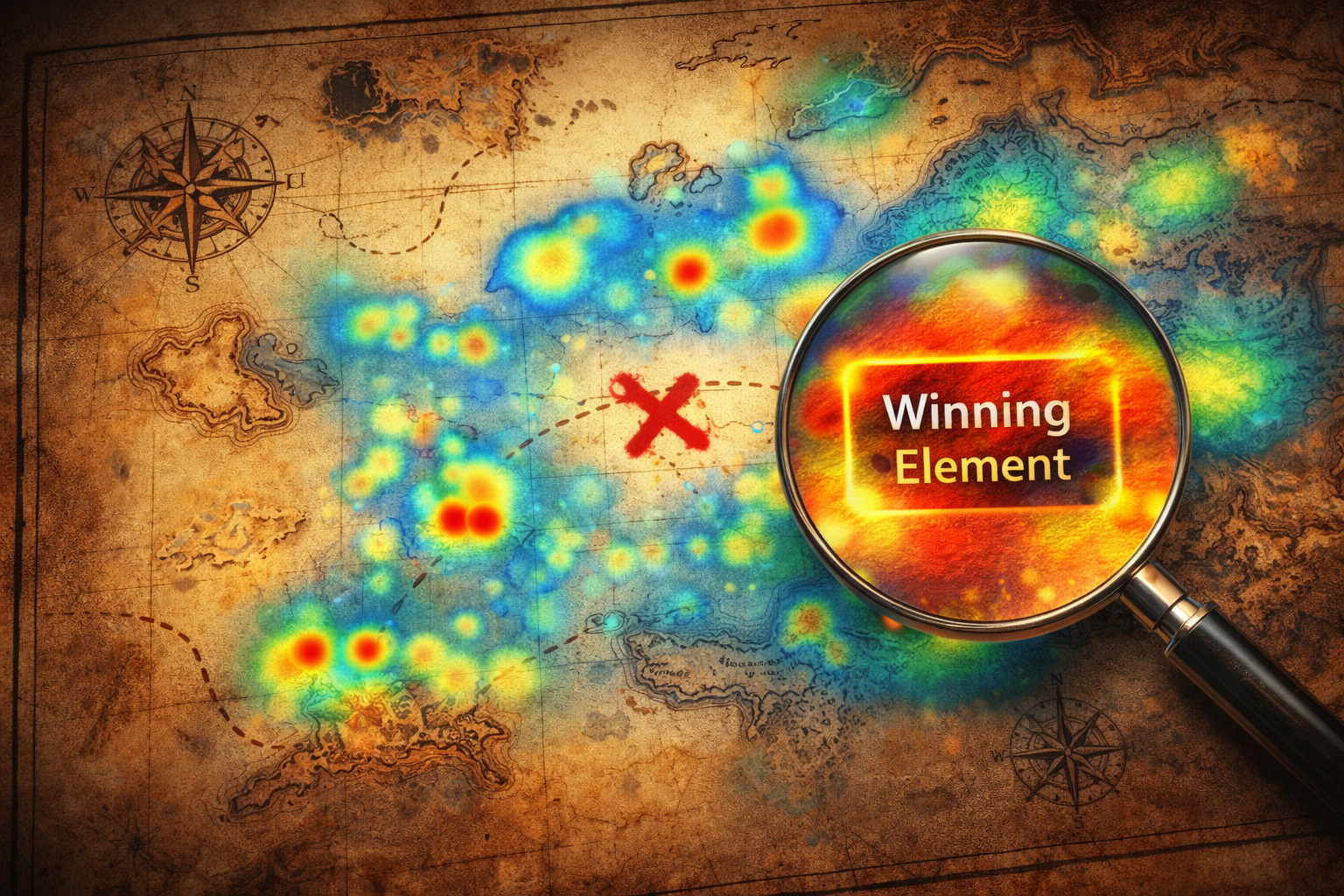
The Psychology of the "Winner": How to Identify Unicorn Ads Before Your Competitors
Unicorn ads aren't random; they leave clues. Discover the psychological triggers behind viral creatives and learn how to use predictive analysis to spot winning ads before they generate high ROAS. Don't waste budget on losing creatives.