
Active· since Jul 15, 2026
- 13
- days running
- 0
- relaunches
Ad copy
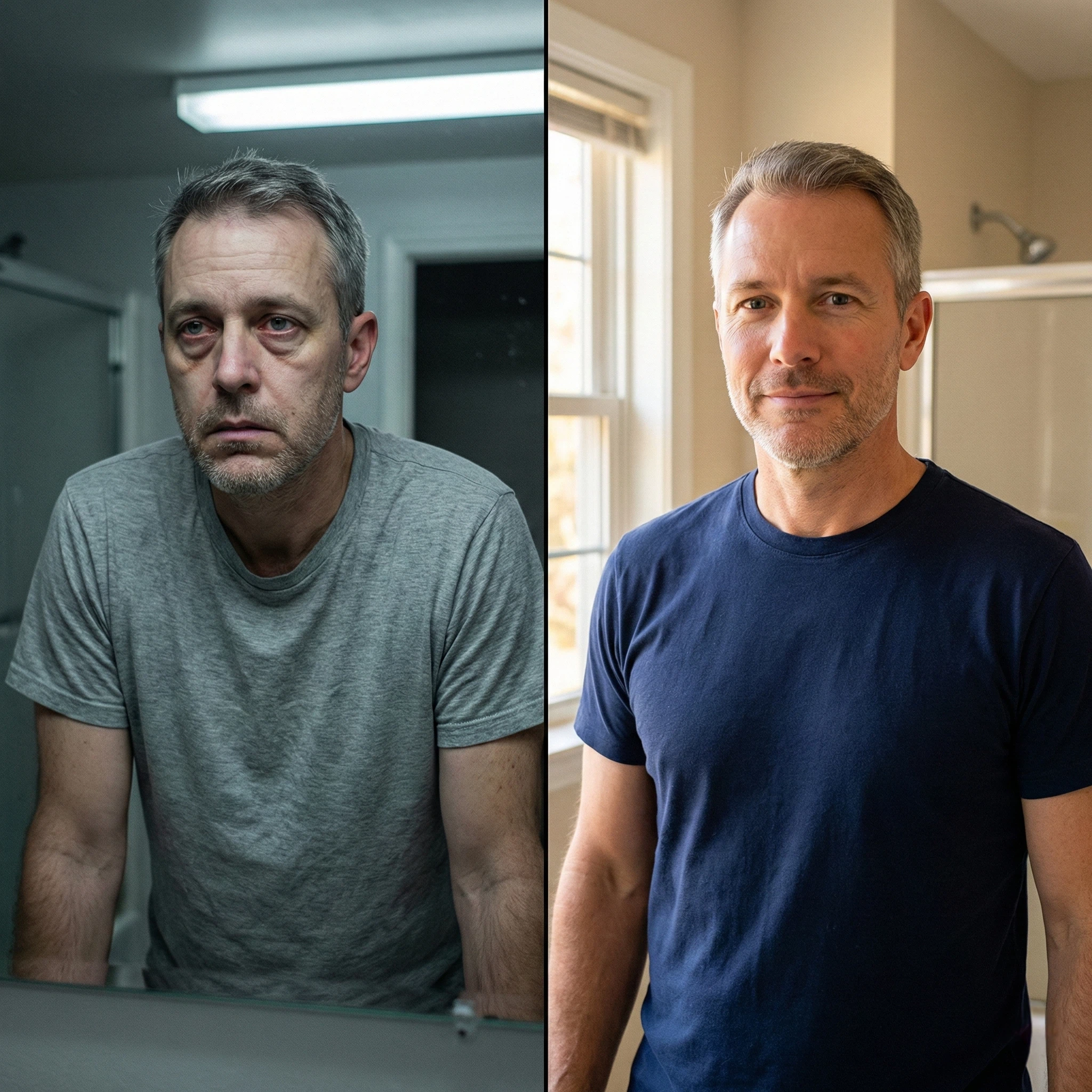
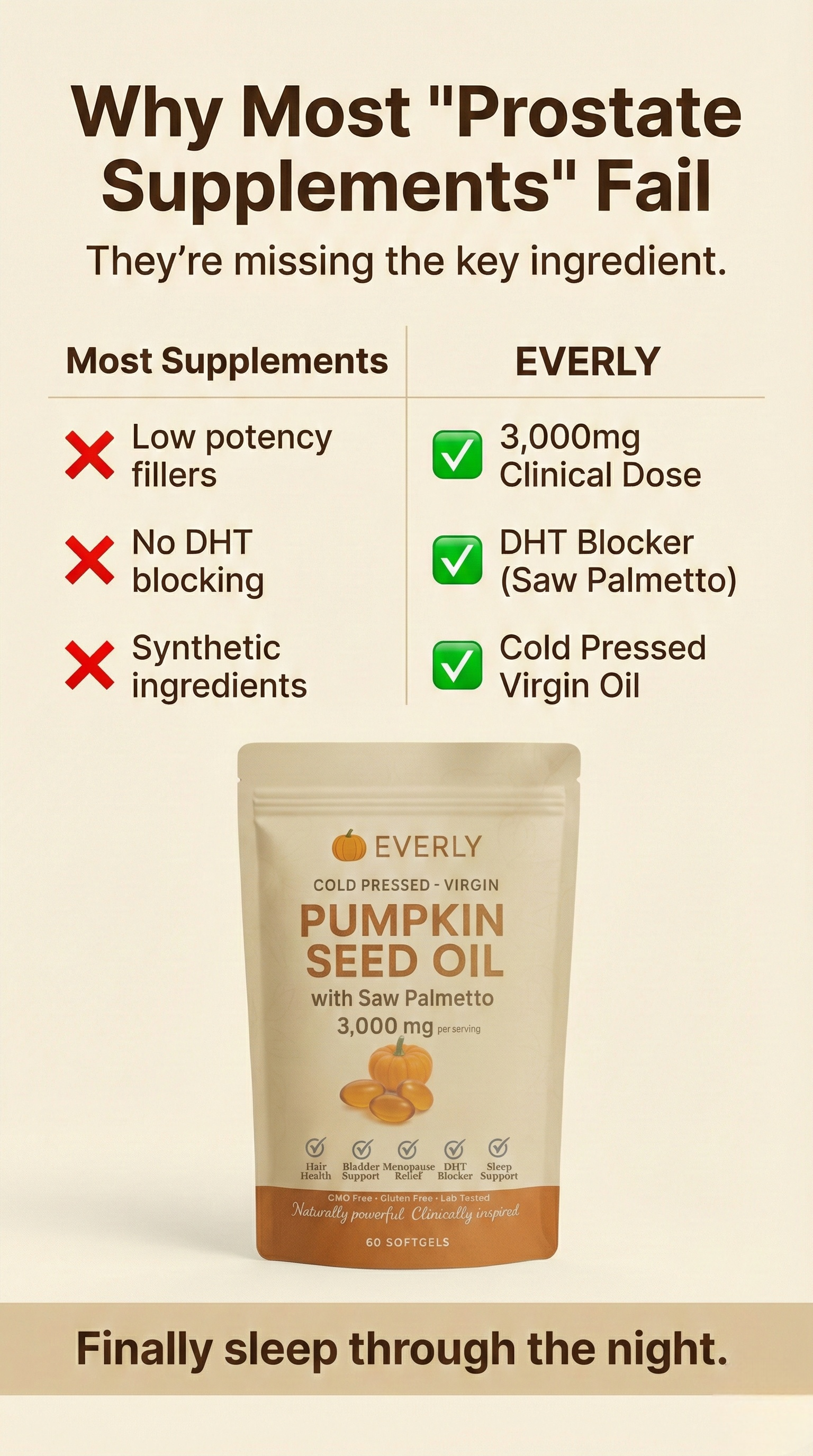
My husband had prostate surgery 8 weeks ago. He'd been managing his bladder issues for 9 years. Quarterly urology visits. A prescription that was adjusted three times. A diet he followed without complaint. A PSA test every six months. He left for his pre-op appointment at 7:30 on a Tuesday morning in the same flannel shirt he'd worn to every doctor's visit since he retired. He came home with a catheter bag strapped to his leg and a face I didn't recognize. He was 64 years old. He took his tamsulosin every night at 9 PM. He cut the caffeine. He gave up the evening beers on the back porch that we'd shared every Friday night for 27 years because the urologist said alcohol irritated the bladder. He did the pelvic floor exercises from the printout they gave him. He tracked every bathroom trip in a small spiral notebook he kept in his back pocket. And he was coded with an enlarged prostate and mildly elevated PSA on a routine exam dated April 14, 2016. No doctor explained to us what was actually causing the prostate to swell until it was too late to do anything but cut. I'm writing this from the recliner in our living room. Gary is asleep on the couch across from me with a pillow between his knees and the catheter bag on the floor next to a plastic basin the hospital sent home with us. The TV is on but neither of us is watching it. The back porch light is on because I forgot to turn it off and I don't want to walk past him to get to the switch because every time I move through the room he startles awake and grabs for the bag. He had a TURP. Transurethral resection of the prostate. They put a scope through the tip of his penis and cut away the tissue that had been squeezing his urethra shut for the past 3 years. He was under general anesthesia for 90 minutes. When he woke up he had a catheter and blood in his urine and a nurse explaining that the burning sensation was normal and would last 4 to 6 weeks. 4 to 6 weeks. He hasn't slept more than 2 hours at a stretch since the surgery. The burning wakes him. The urgency wakes him. The bag needs emptying. He stands in the bathroom doorway at 3 AM holding the doorframe with both hands and breathing through his teeth. Before the surgery he was getting up 6 times a night. After the surgery — which was supposed to fix it — he's getting up 4. The urologist said that's progress. Gary looked at me in the parking lot after that appointment and didn't say a word. He just got in the truck and put both hands on the steering wheel and stared through the windshield. I need to tell you what happened to Gary. Because every time I open Facebook I see another post about another man in his sixties whose prostate problems came out of nowhere and the comments are always the same. That's just what happens when you get older. My doctor said my prostate was fine. Flomax works great for me. If it gets bad enough they can always do the surgery. That's what we thought too. Until I sat on the floor of our bedroom closet 2 weeks after the surgery with Gary's medication bag in my lap and a printout from 2016 that nobody had ever explained to us. So before I tell you the rest of this I want to tell you the part that matters. Gary didn't ignore the warning signs. His doctors managed the symptoms and never once told him what was actually making his prostate grow. If you've ever had your PSA tested or your husband has or your father or your brother please read this entire thing. I know it's long. I know your thumb is hovering over the screen. I know there are a hundred other things you could be doing. 8 weeks ago I would have traded the porch, the truck, the house, all of it, for someone to tell me what I'm about to tell you. Gary has been my husband for 34 years. He worked 31 of those years as an electrician out of IBEW Local 429 and in all 31 years he never once filed a disability claim. He kept his tool belt on the hook by the garage door and his lunch cooler on the counter and his work boots broken in exactly the way he liked them. When the foreman called him for a Saturday job he said yes and filled the thermos before he left. When his knees started bothering him in his late fifties he wrapped them himself and kept going. He was that kind of man. When his urologist told him in March 2020 that his prostate had grown from 35 grams to 58 grams in 4 years and that his PSA had climbed from 2.1 to 4.8 and that the Flomax wasn't holding the line anymore, Gary drove home, sat at the kitchen table, and wrote everything down. He wrote down the foods he was going to avoid. He wrote down when he'd stop drinking water each evening. He wrote down the time he'd take each medication. He put the list on the refrigerator with a magnet from the union hall. He never missed a dose. He never cheated. He never complained about giving up the Friday night beers or the Saturday morning coffee on the porch while he read the Murfreesboro paper. He did everything right. From the day they told him. For 4 years before March 2020 nobody told him there was anything to manage beyond taking the Flomax and waiting. Nobody told us. Gary started getting up to pee in the middle of the night in 2016. He was 56. He said it was just getting older. He'd get up once or twice and come back to bed and I wouldn't even fully wake up. By the end of that year it was 3 times. By mid-2017 it was every 2 hours. The April 2016 exam was the routine annual physical he got every year through the union health plan and his GP pressed on his abdomen and did the digital exam and said "prostate's a little enlarged, pretty normal for your age, PSA is 2.1, we'll keep an eye on it." That's what he told us in the exam room. What was in the chart — the notes we never saw — was "Prostate mildly enlarged on palpation. PSA 2.1 ng/mL. Consistent with early BPH. No intervention at this time. Monitor annually." Mildly enlarged prostate. Early BPH. Monitor annually. That's the medical description of the early stage. The years before it becomes a surgical case. The years a doctor catching it could have actually said something useful about what was driving it. He went back the next April. And the April after that. Every year the same physical. Every year the PSA. Every year he'd ask "doc, everything look alright?" and every year the GP would say "prostate's about the same, PSA is stable, you're doing fine Gary." Gary would shake his hand and walk out to the truck. By 2018 he was getting up 4 times a night. I could hear him in the hallway at 1 AM, 2:30, 4, and then again at 5:15. He'd stand over the toilet for minutes. Sometimes nothing came. He'd come back to bed and stare at the ceiling fan. I'd pretend to be asleep because I didn't know what to say to him. He stopped sleeping through the night entirely by the summer of 2019. In March 2020 his GP finally referred him to a urologist. Dr. Patel. Gary had been asking about the nighttime urination for 2 years by then. The GP had been saying "try limiting fluids after dinner" and "that's common at your age" and "the prostate is a little larger but nothing alarming." Dr. Patel did an ultrasound the first visit. Prostate was 58 grams. Nearly double what it should have been. PSA was 4.8. He looked at the chart, looked at Gary, and said: "How long have you been getting up at night?" Gary said: "Every night for about 4 years." Dr. Patel closed the chart. Then he said: "Your primary care has been monitoring your prostate since 2016. At that point it was mildly enlarged with a PSA of 2.1. Has anyone explained to you what's actually causing this growth?" Gary said no. Just "normal for your age, we'll keep an eye on it." Dr. Patel looked at me. He looked at Gary. He looked at the ultrasound image on his screen. Then he said: "Okay." He prescribed tamsulosin — brand name Flomax — and handed Gary a pamphlet about BPH management. He scheduled a follow-up for 8 weeks. He told us the medication would relax the muscles around the prostate and urethra to improve urine flow. He told us Gary would probably notice a difference within 2 weeks. The drive home from Dr. Patel's office was 22 minutes. Gary didn't say a word for 20 of them. Then as we pulled into the driveway he said: "Did he say 2016?" I said yes. He shut the truck off and we sat there until the motion light on the garage clicked off. That was the beginning of the 4 years. Year one. Tamsulosin 0.4mg every night. Cut the caffeine. No alcohol. No fluids after 7 PM. A bladder diary the urologist gave him that Gary filled out every single day with a golf pencil. He followed every instruction on that sheet without complaint. The nighttime trips went from 6 to 4. Dr. Patel said "that's a good response." But Gary started getting dizzy when he stood up. He didn't tell him. He told me the dizziness was bad enough one morning that he grabbed the kitchen counter and stayed there until the room stopped moving. He also told me — once, in the dark, in bed — that something had changed when we were intimate. He couldn't finish the way he used to. I asked if that was the medication. He said he didn't know. He didn't bring it up again. Year two. The tamsulosin dose was increased. Nighttime trips held at 4 then climbed back to 5. "We may need to add a second medication." But his hair was thinning. Not gradually. Rapidly. He'd never lost hair before — his father had a full head of hair at 80. Clumps in the shower drain. Hair on his pillow. A bald spot forming at the crown that wasn't there 6 months before. His face looked puffy in the mornings. Not swollen. Just puffy. Different. I noticed it before he did. His energy cratered. The man who had worked 10-hour days on ladders and in crawl spaces for 31 years was taking a nap at 2 PM on a Tuesday and calling it "just a slow day." Year three. Dr. Patel added finasteride. "This one actually shrinks the prostate over time." Gary took it without question. Within 3 months the brain fog started. He'd walk into the garage to get a screwdriver and stand there looking at the pegboard unable to remember which one he needed. He'd start telling me something about the news and stop mid-sentence and say "what was I saying?" His mood changed. Not angry. Flat. Like someone had turned the contrast down on the man I married. The worst part was the intimacy. It didn't just change. It stopped. Completely. He told me one night that he couldn't feel anything anymore and that he thought it was the new medication. I looked it up that night. Sexual dysfunction. Reported in up to 8% of men on finasteride. Some studies said higher. Some said it persisted after stopping the drug. I didn't tell him what I'd read. Year four. 2024. Gary had been retired from the IBEW for 18 months. He'd been planning to spend his retirement rebuilding a 1971 Chevelle SS he'd been storing in our neighbor Dale's pole barn since 2006. He'd talked about it for years. Every Christmas I'd buy him a part for it. A set of headers. A carburetor rebuild kit. A dash pad. He'd hold it up and grin like a kid. He went to Dale's barn twice after he retired. Twice in 18 months. He'd come home after an hour and sit on the couch and say he was tired. The Chevelle sat there. The parts sat in the garage in boxes with the packing tape still on. His PSA climbed to 6.9. His prostate was now 74 grams. The finasteride that was supposed to shrink it had slowed the growth but not stopped it. Dr. Patel said "we're running out of medical options here. I think it's time to discuss surgical intervention." Gary came home and sat at the kitchen table and didn't say anything for a long time. Then he said: "They want to put a camera through my penis and cut out part of my prostate." I sat down across from him. He said: "I gave up the beers. I gave up the coffee. I lost my hair. I can't sleep. I can't... do anything in the bedroom anymore. My head feels like it's full of cotton. And now they want to cut." He got up and went to the garage and I heard the door close. The surgery was May 6th. When I brought him home his overnight bag was lighter than when he'd packed it and the bag on his leg was heavier than anything I'd ever carried. I need to tell you what I found 2 weeks after the surgery. I was looking for the post-op instruction sheet in the medication bag the hospital sent home. It's a blue nylon bag with a zipper. Gary kept it on the nightstand. I opened it looking for the wound care page and instead I found his medication bottles. All of them. Organized with rubber bands. The tamsulosin. The finasteride. A bottle of over-the-counter saw palmetto from Walmart that I didn't know he'd been taking. A bottle of generic pumpkin seed oil capsules from Amazon. A bottle of zinc. A bottle of pygeum bark extract. A beta-sitosterol complex from a brand I'd never heard of with 9 ingredients listed on the back. 7 bottles. Gary had been quietly trying to fix this on his own for years. He took the tamsulosin. He took the finasteride. He did everything Dr. Patel told him to do. And on top of that, quietly, on his own, he'd been doing what a man like Gary does. He'd been going to Walmart and scrolling Amazon and standing in the supplement aisle and picking up anything that said "prostate support" on the label and bringing it home and taking it in the morning before I woke up and hoping. And none of it had worked. I sat on the edge of the bed and I cried for a long time. Then I picked up every bottle and carried them to the kitchen table and started looking up what each one actually did. The Walmart saw palmetto. 450mg. The dose used in the clinical research that actually showed prostate benefit was 320mg of a liposterolic extract standardized to specific fatty acids. What Gary had was dried berry powder in a capsule. Wrong form. Wrong concentration. The active compounds that inhibit the enzyme driving prostate growth were never extracted. He was swallowing ground-up berries. The same difference between eating a handful of willow bark and taking an aspirin. The Amazon pumpkin seed oil. The label said 1,000mg pumpkin seed oil. No mention of cold-pressed. No mention of virgin. No processing method listed. I looked up the brand. Heat-extracted. Refined. The capsules were pale yellow. Almost clear. I held one up to the kitchen light and it looked like vegetable cooking oil. Here's what I didn't know then and I know now. Pumpkin seed oil contains a compound called beta-sitosterol. Beta-sitosterol is the specific plant sterol documented in clinical research to inhibit the enzyme — 5-alpha reductase — that converts testosterone into DHT. DHT is the hormone that makes the prostate grow. That makes hair follicles shrink. That drives the entire cascade Gary had been living inside for 9 years. But beta-sitosterol is destroyed by heat. When pumpkin seed oil is extracted using industrial heat — which is how virtually every cheap brand on Amazon produces it — the beta-sitosterol degrades. The oil comes out pale yellow because the phytochemical matrix that gives cold-pressed oil its deep amber-red color has been cooked out of it. The compound the research was built on is no longer in the capsule. Gary had been swallowing pale yellow capsules of heat-processed cooking oil for a year and a half and wondering why nothing changed. The zinc. Modest evidence for prostate health at specific doses. What Gary had was zinc oxide — the cheapest form with the lowest bioavailability. Most of it passed through him without being absorbed. Another $14.99 bottle. Another month of hope. The pygeum bark. Some clinical evidence for reducing urinary frequency. At 100mg of a standardized extract. What Gary had was 500mg of unstandardized bark powder. No extraction. No standardization. No verification of active compounds. Like brewing tree bark tea and hoping it's medicine. The beta-sitosterol complex with 9 ingredients. Proprietary blend listed on the back. Which means they don't have to tell you how much of each ingredient is in it. Each one at a fraction of the dose that any study used. Essentially pixie dust in a capsule with the words "prostate support" in a green font on the label. He bought it 4 months before the surgery. That's when he started staying in the bathroom longer than he needed to because it was the only room where he didn't have to pretend he was fine. 7 bottles. Hundreds of dollars Gary had quietly spent over 3 years trying to do more than just wait for the next bad ultrasound. And not one of them was delivering the specific compound — in a form and concentration that could actually reach the prostate and inhibit the enzyme driving the growth — that the research kept pointing toward. Not one. I was furious. Because there is an entire industry of prostate support supplements and not a single one of them on that table was actually targeting the 5-alpha reductase enzyme with the right compound in the right form at the right dose. They were all working around the prostate while the DHT kept pouring through it like water through a cracked pipe. So I started reading. The way Margaret in Toledo reads when she's angry and can't sleep and the man she loves is on the couch in pain from a surgery that maybe didn't need to happen. I read until 2 AM most nights. PubMed. Urology journals. The Journal of Medicinal Food. Nutrition Research. The European Urology journal. I read a clinical trial from 2009 published in Nutrition Research and Practice that showed pumpkin seed oil — specifically cold-pressed, unrefined pumpkin seed oil — significantly improved urinary symptom scores in men with BPH after 12 months of daily use. I read a Korean randomized controlled trial that combined pumpkin seed oil with saw palmetto and found the combination reduced International Prostate Symptom Scores by 35% compared to placebo over 12 weeks. 12 weeks. Not 12 months. 12 weeks. I read a study in the Journal of Medicinal Food showing that beta-sitosterol — the compound preserved only in cold-pressed extraction — inhibits 5-alpha reductase activity in human prostate tissue. Not in a test tube. In human tissue. The specific enzyme converting testosterone to DHT. The specific conversion that was making Gary's prostate grow for 9 years while everyone said "normal for your age." I read a Cochrane review — the gold standard of medical evidence — that concluded beta-sitosterol significantly improves urinary symptom scores and flow measures in men with BPH. I read about saw palmetto extract — the real extract, not the dried berry powder Gary had from Walmart — and a meta-analysis in the Journal of the American Medical Association showing it improved urinary flow rates and reduced nighttime frequency in men with symptomatic BPH. Then I read about why. Here is what nobody explained to us in 9 years of appointments. Your prostate doesn't just grow on its own. It doesn't enlarge because you turned 55. It grows because of a specific hormonal conversion that happens inside prostate cells. Testosterone — the hormone your body has been producing since puberty — enters prostate cells. Inside those cells, an enzyme called 5-alpha reductase converts that testosterone into a much more potent hormone called DHT — dihydrotestosterone. DHT binds to receptors inside the prostate cell and tells the cell to grow. To multiply. To enlarge. That's why the prostate swells. That's why the urethra gets squeezed. That's why a man starts getting up twice a night and then 4 times and then 6 times and then stands over the toilet at 3 AM with nothing coming out while his wife lies in bed pretending to be asleep. That's what DHT does to the prostate. But that's not all it does. The same DHT that swells the prostate also reaches hair follicles on the scalp. It binds to the same type of receptors and tells the follicle to miniaturize. To shrink. To stop producing hair. That's why Gary's hair started falling out in year 2. Not because of age. Not because of genetics — his father had a full head at 80. Because the DHT that was swelling his prostate was simultaneously killing his hair follicles. The same DHT disrupts kidney filtration signaling and contributes to fluid retention. That's the morning puffiness I noticed in Gary's face before he noticed it himself. The same excess DHT metabolism taxes the liver and adrenal system. That's the 2 PM energy crash. That's the brain fog. That's why a man who wired commercial buildings for 31 years couldn't remember which screwdriver he walked into the garage to get. One hormone. One enzyme. One conversion. Prostate growing. Hair falling out. Face puffy. Energy gone. Brain clouded. Sleep destroyed. And for 9 years nobody said the words "5-alpha reductase" or "DHT overproduction" to us in a way that included what we could actually do about it at the source. Flomax doesn't touch DHT. It relaxes muscles around the prostate and urethra. That's it. The prostate keeps growing. The DHT keeps converting. Flomax is holding the door open while the room behind it fills with water. Finasteride does block 5-alpha reductase — that's exactly what it's designed to do. But it does it systemically, across the entire body, and the hormonal disruption is profound. That's why Gary lost all sexual function. That's why his mood went flat. That's why the brain fog got worse, not better, after they added it. It's a sledgehammer hitting a nail that needed a tap. And it doesn't address the inflammatory cascade DHT triggers through prostaglandin pathways or the oxidative damage in prostate tissue that beta-sitosterol specifically counteracts. When I understood this I put the laptop down and stared at the wall. The cold-pressed pumpkin seed oil in the research wasn't a supplement. It was the specific delivery mechanism for the specific compound that addresses the specific enzyme that was destroying my husband from the inside for 9 years. Beta-sitosterol. Delivered in its intact form through cold-pressed virgin extraction. Combined with saw palmetto extract that provides a second pathway of 5-alpha reductase inhibition. Two natural compounds attacking the same enzyme through complementary mechanisms. Not downstream muscle relaxation. Not systemic hormonal suppression with devastating side effects. Targeted. Upstream. At the enzyme. Where the conversion happens. Where the DHT is born. And the cold-pressing is everything. Here is what I learned that made me understand the color. When pumpkin seeds are pressed without heat — cold-pressed, virgin, first extraction — the oil comes out deep amber to red. Almost the color of dark honey. That color is the phytochemical matrix. The beta-sitosterol. The delta-7-sterols. The tocopherols. The carotenoids. The full constellation of bioactive compounds that 40 years of agricultural research in Styria, Austria — where the world's best pumpkin seed oil has been produced for centuries — identified as the compounds that make the oil medicinal rather than culinary. When those seeds are processed with industrial heat — which is faster, cheaper, and how every budget brand produces pumpkin seed oil — that matrix degrades. The sterols denature. The color fades to pale yellow. The capsule looks like fish oil. And the compound the clinical research was built on — beta-sitosterol — is no longer present at therapeutic levels. That's why Gary's Amazon capsules did nothing. The oil was pale yellow. The beta-sitosterol was cooked out of it. He was swallowing cooking oil in a gelatin shell. I went looking for a cold-pressed pumpkin seed oil with saw palmetto that was actually what the research described. I found forums first. "Tried pumpkin seed oil for my husband's prostate. Nothing." "Bought the bottle from Amazon. Didn't help the nighttime trips." "Wasted money on PSO capsules. Still getting up 5 times." My heart sank. Another dead end? I kept scrolling. Ready to give up. Then I found a comment that changed everything. "The problem isn't pumpkin seed oil — it's what the brands are selling you. Almost every pumpkin seed oil on Amazon is heat-extracted and refined. The beta-sitosterol is destroyed before it reaches the capsule. You're swallowing pale yellow cooking oil and wondering why your prostate didn't shrink. The compound that actually inhibits 5-alpha reductase — beta-sitosterol — only survives cold-pressed virgin extraction. Look at the color. If the softgel is pale yellow, the beta-sitosterol is gone. If it's deep amber-red, it's intact. That's your test. That's the only test that matters." I kept reading. "My husband tried 3 different PSO brands for his BPH. Nothing. Then I found one that was genuinely cold-pressed virgin with saw palmetto included — deep red softgels, 3,000mg per serving, lab tested. His nighttime trips went from 5 to 2 in the first month. His urologist asked what he changed." Someone asked which brand. "Everly. Cold Pressed Virgin Pumpkin Seed Oil with Saw Palmetto. 3,000mg per serving. 60 softgels. Deep red. Lab tested. The only one I found where the color actually matched what the research described." I pulled up their website. Cold Pressed Virgin Pumpkin Seed Oil. 3,000mg per serving. Combined with Saw Palmetto — the actual extract, not dried berry powder. Deep amber-red softgels you can see through and immediately tell the beta-sitosterol is intact. Lab tested. GMO free. Gluten free. 30-day money-back guarantee. But I wasn't going to just order a pouch off the internet and hope for the best. I'm 62 not naive. I'd just watched my husband go through 9 years of medications and supplements and surgeries that treated everything except the thing actually causing the problem. I knew exactly what it looks like when something sounds right but doesn't work. So I called Dr. Patel. Gary's urologist. I told him what I'd found. I asked him straight: "Is this real? Or am I grasping at anything because I can't stand watching Gary suffer anymore?" He was quiet for a long time. Then he said: "Mrs. Millard. The data on beta-sitosterol from cold-pressed pumpkin seed oil combined with saw palmetto extract for BPH management is actually some of the most consistent natural-compound research we have in men's urology. The 5-alpha reductase inhibition. The anti-inflammatory activity through the prostaglandin pathway. The clinical trials showing symptom improvement. The Cochrane review. The evidence is solid. And there are no contraindications with the tamsulosin — in fact the research suggests they work through complementary mechanisms. One relaxes the smooth muscle, the other addresses the hormonal driver." He paused. "I want to tell you something I don't usually tell patients. My training is pharmaceutical. The framework I practice in is the insurance framework. I prescribe what has a billing code and a prior authorization pathway. I don't formally recommend supplements because there's no protocol for it and no liability coverage for it. But the disconnect between what the urology research shows about plant sterols — specifically beta-sitosterol from cold-pressed pumpkin seed oil — and what we actually tell patients in the exam room is something I've been uncomfortable with for a long time." "I take something similar myself. I have for years." Then he paused again. "Mrs. Millard. If Gary had been getting beta-sitosterol from properly cold-pressed pumpkin seed oil combined with saw palmetto during those years before he was referred to me — if the 5-alpha reductase activity had been addressed during that window when his GP was just monitoring annually — there is a real possibility his prostate would never have reached surgical size. The DHT conversion driving the growth would have been attenuated. The inflammatory cascade would have been lower. His symptom progression would have been slower. I can't write that in a chart. But it's what the research supports and you asked me directly." I had to put the phone down. I sat at the kitchen table and I looked across the living room at Gary sleeping on the couch with a catheter bag on the floor and I cried harder than I cried in the hospital waiting room on May 6th. Because Gary's own urologist just told me that my husband might never have needed that surgery if the DHT driving his prostate growth had been addressed during the years his GP noted an enlarged prostate and told him it was normal aging. If anyone had told us. If we'd just known. I ordered Everly that afternoon. When the pouch arrived I sat at the kitchen table. Gary's pill organizer was on the counter. Tuesday. Wednesday. Thursday. Still loaded with the tamsulosin and the finasteride and the stool softener they'd added after surgery. I opened the pouch and shook a softgel into my palm. It was deep amber-red. Like dark honey. I could see the color through the gelatin. I held it up to the kitchen window and it glowed. Then I held up one of Gary's old Amazon pumpkin seed oil capsules from the medication bag. Pale yellow. Almost clear. Like cooking oil. I put them side by side on the counter. That is the difference between cold-pressed virgin extraction and heat-processed refining. One has the beta-sitosterol intact. One had it cooked out before it reached the capsule. One is what the research used. One is what the supplement industry sells you. I put the pale yellow one in the trash. I gave Gary 2 softgels with his dinner. I took 2 myself. Because here's the thing nobody told me either. Women produce testosterone too. Less than men, but it's there. And after menopause — which I've been in for 6 years — estrogen drops. When estrogen drops, the relative ratio of testosterone increases. And some of that testosterone gets converted to DHT through the same 5-alpha reductase enzyme. That's why my hair has been thinning since I turned 57. That's why I've been puffy in the mornings. That's why I have the same 2 PM wall Gary had. The same enzyme. The same conversion. The same cascade. Just at a lower volume. Nobody connected those dots for me either. I didn't expect much from either of us. I'd already watched 7 bottles fail. Week one: Nothing dramatic. Gary said the burning from the surgery was maybe slightly less but he wasn't sure. I noted it without trusting it. Week two: Gary slept 4 hours straight on a Thursday night. He hadn't slept 4 consecutive hours since before the surgery. I woke up at 2 AM and he wasn't in the hallway. I lay there listening. Nothing. I checked the bathroom. Empty. He was on the couch, still sleeping. I stood there in the dark and watched him breathe. Week three: He got up twice that night. Twice. Down from 4-5. He came back to bed the second time and said "huh" and went back to sleep. That was all he said. Huh. My own hair was shedding less. I noticed it in the shower drain. Less hair. Noticeably less. The clumps that had been normal for 5 years were half the size. Week four: I ordered labs through a direct-to-consumer panel. My own DHT — which I'd never had tested before because nobody had ever suggested it — came back lower than the reference range for my age. My hair shedding had slowed dramatically. The morning puffiness in my face was gone. Not reduced. Gone. I stood in the bathroom mirror and I looked like myself for the first time in 3 years. Gary's catheter came out at the 6-week mark. The first night without it he got up once. Once. At 4 AM. He went, came back, and slept until 7. He stood in the kitchen that morning and poured his own coffee and looked at me and said: "That's the first time I've slept through most of the night in 5 years." Then he went to the garage and opened one of the parts boxes for the Chevelle. Week six: Gary's follow-up with Dr. Patel. Post-surgical PSA: 2.4. Down from 6.9 pre-surgery. Residual prostate tissue — what's left after the TURP — showing no regrowth on ultrasound. Urinary flow rate: significantly improved. Dr. Patel looked at the numbers, looked at the post-op recovery timeline, and said: "You're recovering faster than I expected. Symptomatically, this is ahead of schedule. What are you taking?" Gary said: "My wife found something." Dr. Patel nodded. He didn't ask the brand. He said: "Whatever it is, don't stop." I've told everyone I know. My brother Jim — he's 67, been on Flomax for 3 years, getting up 4 times a night, PSA climbing, urologist talking about "next steps." He started Everly 5 weeks ago. Called me last Sunday and said: "Diane, I slept through the night Friday. The whole night. I can't remember the last time that happened. And my hair — I know this sounds crazy but the thin spot on top is filling in. Linda noticed it before I did." Gary's coworker Hank from the IBEW — 61, recently diagnosed with BPH, doctor prescribed Flomax and told him to "wait and see." His wife Rita found me on Facebook after I posted about Gary. She messaged me and asked me to tell her everything. Hank's been on Everly for 6 weeks. His nighttime trips went from 5 to 2. His energy came back. His wife told me on the phone that "he's back in the shop for the first time in months. He's whistling again. He hasn't whistled in a year." My neighbor Carol's husband Bill — 69, been fighting the same battle. High PSA, enlarged prostate, two medications, the same story. She gave him Everly after I told her about it over the fence one afternoon. 3 weeks later she knocked on my door and said: "Diane. Bill slept 6 hours straight last night. He cried. A grown man. He cried because he slept." I'm not a doctor. I'm not a scientist. I'm not selling anything. I'm a 62-year-old wife sitting in a recliner watching my husband put himself back together after a surgery that could have been prevented if anyone had told us what was actually making his prostate grow and what the research says can address it at the source. Here's what I know because I lived it. Over 50% of men over 50 have BPH right now. By age 60 it's closer to 60%. By 70 it's 70%. Most of them are being told it's normal aging. The slightly enlarged prostate is being noted at physicals and followed with "monitor annually." The connection to DHT — the hormone driving the growth — is documented in every urology textbook and missing from the appointment. Flomax does not shrink the prostate. It relaxes smooth muscle. The prostate keeps growing. The DHT keeps converting. The dose escalates. The nighttime trips increase. The hair thins. The puffiness builds. The energy crashes. The brain fogs. And eventually someone says the word surgical. Finasteride blocks the enzyme but at a hormonal cost that destroyed my husband's quality of life for 2 years. The window where you can actually do something meaningful is the years before the urologist starts talking about cutting. The years your chart might already say "mildly enlarged prostate" or "early BPH." The years nobody is telling you about. Beta-sitosterol from cold-pressed virgin pumpkin seed oil combined with saw palmetto extract is one of the most well-documented natural approaches for addressing the 5-alpha reductase enzyme that drives prostate growth, hair loss, and the entire DHT cascade. Gary's own urologist confirmed it. He takes something similar himself. I wish someone had told us in 2016. I wish someone had told my brother Jim. I wish someone had told Hank. I wish someone had told you. And if your prostate or your PSA or your nighttime bathroom trips have ever been discussed at a physical the answer is sitting in your chart right now. You can ask for your records. They have to give them to you. It's federal law. It costs nothing. I can't take back the surgery. Gary can't un-have the catheter or the 6 weeks of recovery or the 2 years of finasteride side effects or the 9 years of nights he lost. The Chevelle is still in Dale's barn with dust on it and the parts are still in boxes in the garage. But he opened one of those boxes last week. And he slept 7 hours straight last night. And this morning he poured his own coffee and walked out to the porch and sat in his chair and read the paper. For the first time in years he looked like the man I married. You can still go forward. Call your GP today — and your husband's GP and your father's and your brother's — and ask about the prostate exam, the PSA number, the after-visit notes. Ask them to explain what "mildly enlarged" means for the next 10 years if nothing addresses the DHT driving it. Ask what 5-alpha reductase is. Watch the pause. Watch the face. And do not wait for that appointment before you do the other thing. Every day the DHT converting in prostate cells goes unaddressed, the gland grows a little more. More tissue. More compression on the urethra. More nighttime trips. More hair follicles miniaturizing. More puffiness. More fatigue. More fog. The growth doesn't pause while you schedule the visit. It compounds. It does what it did to Gary for 9 years while everyone watched a PSA number and called it monitoring. The brand I went with is Everly Cold Pressed Virgin Pumpkin Seed Oil with Saw Palmetto. 3,000mg per serving. Cold pressed. Virgin. First extraction. Deep amber-red softgels you can hold up to the light and see the difference. Combined with Saw Palmetto extract. Lab tested. GMO free. Gluten free. 60 softgels per pouch. 2 softgels every morning with food. Less time than it took Gary to fill his pill organizer on Sundays. try.shopeverly.shop/esl Everly is backed by a 30-day money-back guarantee. Take it for a month and if you don't notice the difference you get every dollar back. Gary used to say: "You don't wait for the breaker to trip before you check the wiring." The breaker's been tripping for 9 years and nobody checked the wiring. The DHT has been converting since 2016 and nobody told us what was driving it. Diane Millard, age 62 Murfreesboro, TN P.S. His pill organizer is still on the counter. It's been 8 weeks since the surgery and I still flinch when I hear him get up at night because for 5 years every sound from the hallway meant he was standing in the bathroom doorway holding the frame and breathing through his teeth. Last Thursday he got up once. Went. Came back. Slept until 6:30. I lay there in the dark and listened to him breathe and for the first time in years the sound didn't make me afraid. A year of Flomax and finasteride and specialist visits costs thousands. A year of watching the prostate grow while the medications manage the symptoms costs Gary the surgery, the catheter, the 6 weeks of recovery, and 2 years of side effects that I won't describe again because he reads over my shoulder sometimes. 2 softgels every morning with food. Backed by a 30-day money-back guarantee. Please. Don't end up here. Don't let someone you love end up here. try.shopeverly.shop/esl P.P.S. I don't work for Everly. I don't get a penny from this. I'm writing this because I've been watching my husband try to get back to himself for 8 weeks and I still wake up at 2 AM and listen for the hallway sounds and for a second I'm back in year 4 when it was every 90 minutes and neither of us slept and neither of us talked about it. If putting this on the internet saves one man from that TURP table — just one — from having a decade of "normal for your age" end in an operating room, then at least something good came from what we went through. Share this with any man over 50. Share this with the wife who's lying awake listening. Share this with the daughter who's noticed her father isn't himself anymore. Tell them to ask about their PSA. Tell them to ask about their prostate. Tell them to look at the color of whatever supplement they're taking and hold it up to the light. The 30-day money-back guarantee means even if you're wrong about this you lose nothing. try.shopeverly.shop/esl
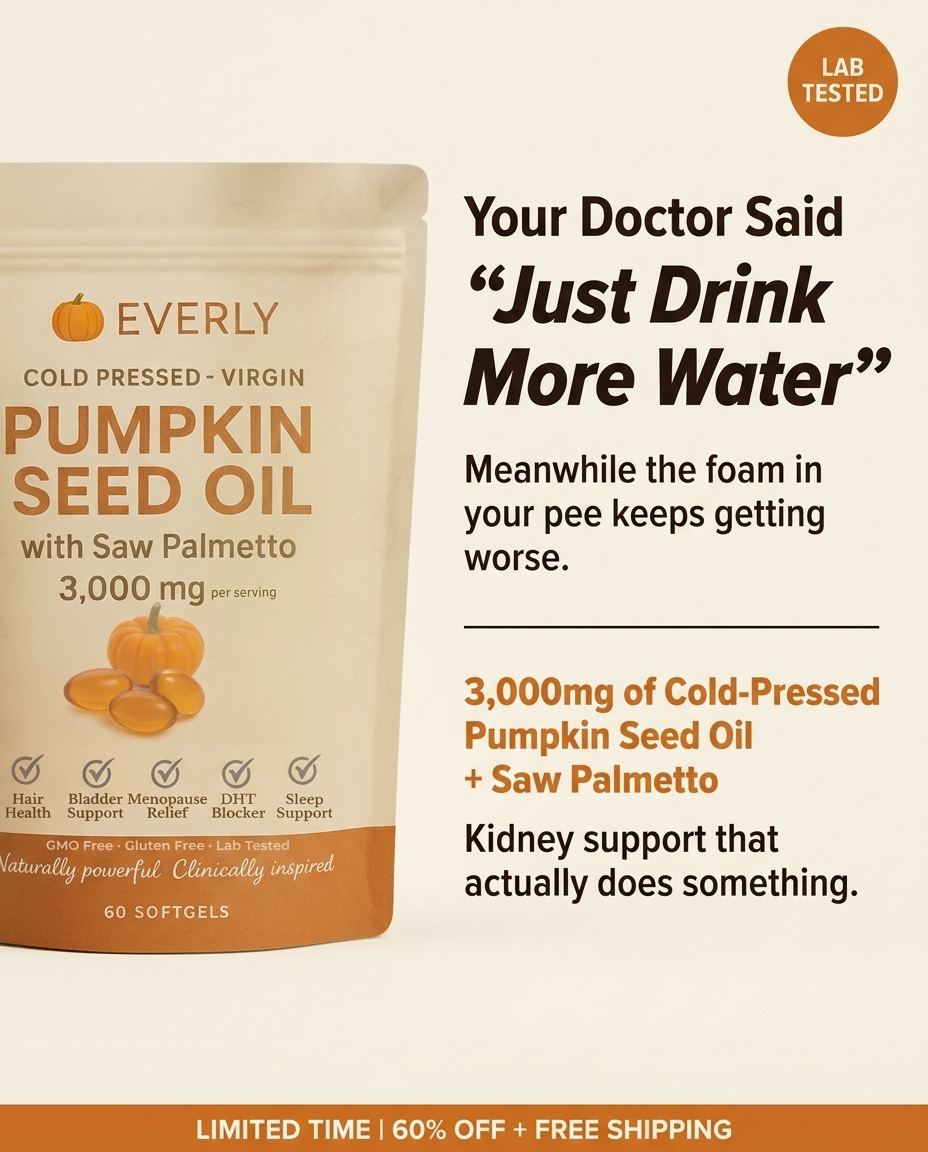
🎃 Natural Support for Your Daily Routine
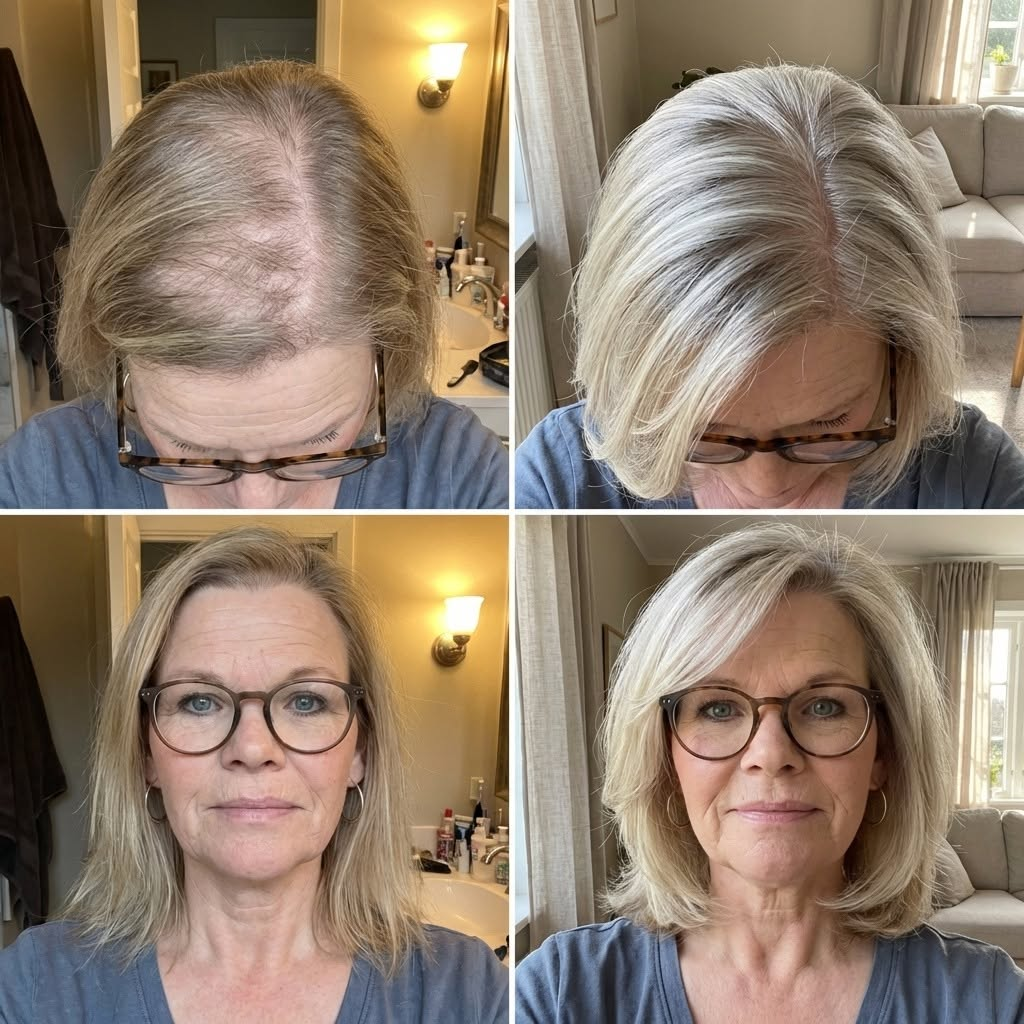
“I’ve been feeling stronger and more balanced since taking Everly Pumpkin Seed Oil. My bladder feels so much calmer, I’m sleeping through the night again, and my hair feels thicker than it has in years. I love how natural it feels — just pure support for my body.”
LEARN MORELike this ad? Make it yours.
Crush rebuilds this exact creative around your product — your brand, your colors, your offer — in about a minute.