
Active· since Jul 13, 2026
- 15
- days running
- 0
- relaunches
Ad copy
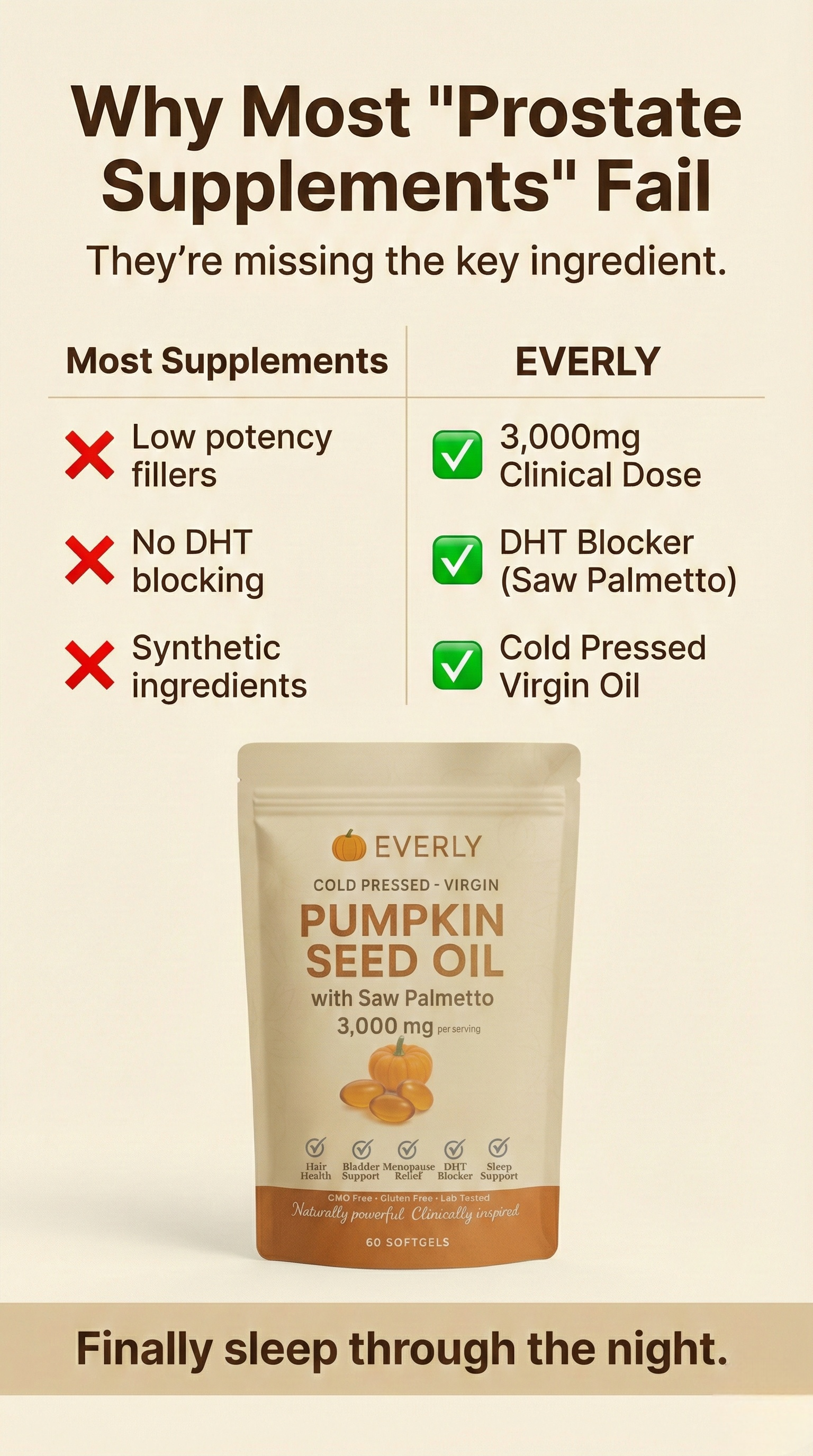
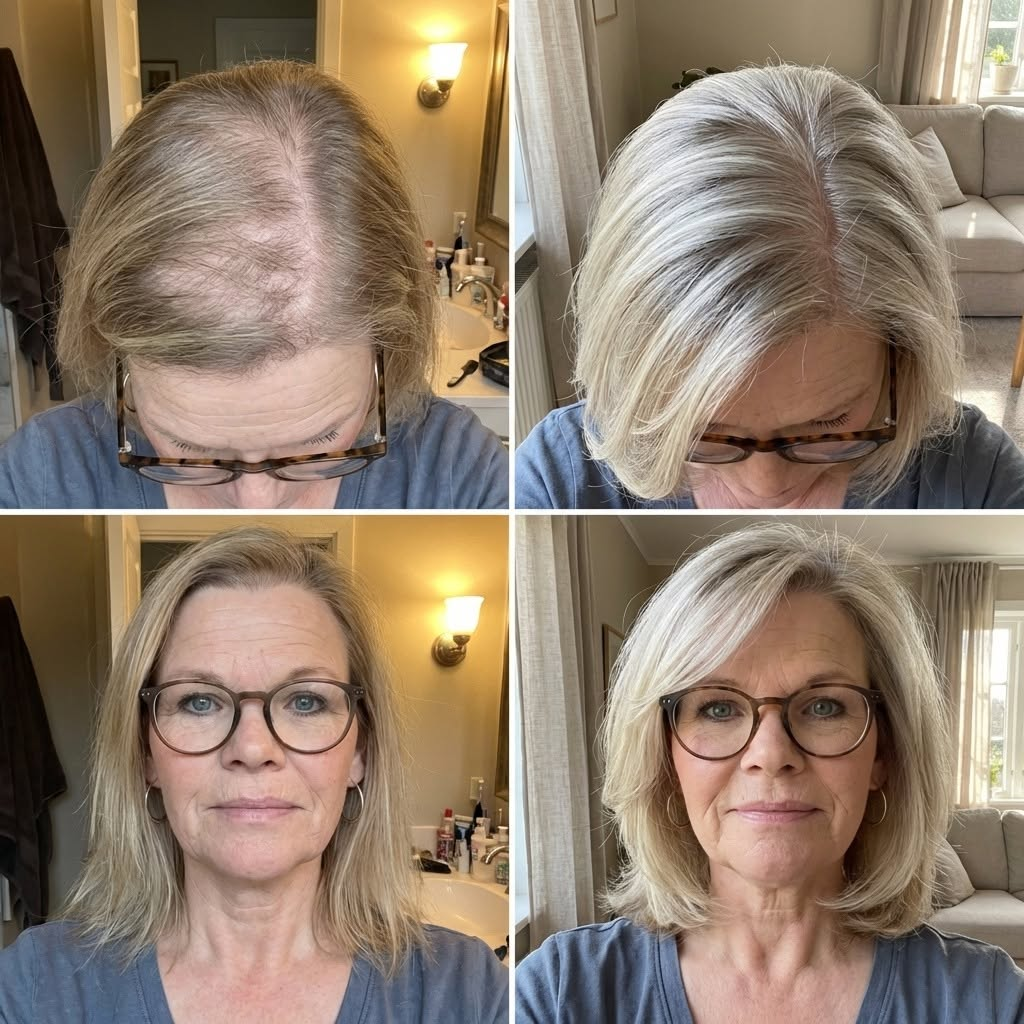
I read a study last month that I wish I could unread. Women who lose more than 100 hairs a day for six consecutive months have a less than 15% chance of returning to their original hair density without addressing the hormonal root cause. Not a 50% chance. Not even 30. Fifteen. That means 85 out of 100 women watching their hair fall out in the shower every morning will never get it back — if they keep doing what they've been doing. The biotin. The collagen. The expensive shampoo. The vitamins with the pretty label. None of it touches the reason the hair is actually falling out. I didn't know that when I started losing mine. I wish someone had told me before I spent fourteen months and over $1,200 on supplements that couldn't have worked because they were never designed to address what was actually happening inside my follicles. But to understand why I was sobbing alone in my bathroom with a fistful of hair at 6 AM on a Tuesday, you have to know what I watched my mother go through first. And what I swore I would never let happen to me. My mother had the most beautiful hair. I don't say that because she was my mother. I say it because strangers would stop her. Dark, thick, past her shoulders well into her fifties. She wore it down nearly every day. It was the first thing people noticed about her, and it was the last thing she lost. It started when she hit menopause. Subtle at first. A little more in the brush. A little more on the pillow. She mentioned it to her OB, who smiled and said it was normal. Hormonal. "It'll stabilize." It didn't stabilize. By the time she was fifty-eight, her part had widened so much she started clipping it to one side to hide it. She bought Toppik — that hair fiber powder — and kept it in her purse. She stopped wearing her hair down entirely. By sixty she'd tried everything. And I mean everything. Biotin. Two different brands for over a year each. Nothing. Collagen peptides in her coffee every morning for fourteen months. Nothing. Nutrafol — $88 a month. Six months. The shedding didn't slow down for a single week. Minoxidil. Made her scalp itch so badly she clawed at it in her sleep. Rosemary oil. Castor oil. Viviscal. Mary Ruth's liquid hair vitamins. An $1,100 PRP injection at a medspa. The hair kept coming out. Fistfuls in the shower. Clumps on her pillow. She found them on the back of her car seat. On her coat. On the couch where she sat every night watching television. She stopped going to the salon. She was too embarrassed. She stopped swimming. The wet hair showed everything. She stopped wearing her favorite black blouse because every hair showed up on the fabric. She bought a wig. She told my father she was just "trying something fun." But she wasn't trying something fun. She was hiding. I found her crying in the bathroom once. Not dramatic crying. The quiet kind. She was holding a section of hair at her temple where the scalp had started to show through, and she was just looking at it. She didn't even know I was there. She never got her hair back. Not once. She spent four years and thousands of dollars on vitamins, serums, injections, and shampoos — and her hair thinned until her scalp was visible from across the room. Every single product she tried did the same thing. Fed the hair. Stimulated the scalp. Claimed to support "healthy hair growth." Not one of them addressed the reason the hair was falling out in the first place. I made a promise to myself watching my mother go through that. If it ever happened to me, I wouldn't waste years feeding a follicle that was being killed from the inside. I'd find out WHY it was dying and I'd stop it there. Then it happened to me. I'm 46. Last year my doctor started me on a GLP-1. The weight came off faster than I expected. I felt incredible. More energy than I'd had in a decade. I was fitting into clothes I hadn't worn since my thirties. Then, about four months in, I was in the shower and I looked down. The drain was covered. Not a few strands. A thick, dark mat of hair sitting on the drain cover, so much that the water was pooling around my feet. I told myself it was one bad day. It wasn't one bad day. Every shower. Every morning. I'd run my fingers through my hair and pull away a clump. Not loose strands. A clump. My brush looked like a small animal had been living in it. My ponytail went from the thickness of a quarter to the thickness of a nickel in less than three months. I started seeing my scalp through my part. I tilted my head under the bathroom light one morning and I could see it. Pink skin. Visible through the hair that used to be so thick I couldn't get a comb through it. I remembered my mother's face in that bathroom mirror. I panicked. I went to my dermatologist. She looked at my scalp with a magnifier, typed something into her chart, and told me it was telogen effluvium — the clinical term for "your hair is shedding because your body went through something major." She said rapid weight loss can trigger it. Common with GLP-1s. Take some biotin. Maybe a multivitamin with iron. It should slow down in six to twelve months. Six to twelve MONTHS. "And if it doesn't?" I asked. She paused. "Then we'd want to look at whether there's an androgenic component." I left that office with a biotin bottle from CVS and a feeling in my chest like I was falling. I took the biotin for three months. Religiously. Every single day with breakfast. The shedding didn't slow down. Not one strand less. I added collagen peptides. Two scoops in my coffee every morning. Nothing. I bought Nutrafol. The one everyone on TikTok swears by. $88 a month. Ninety days. The shedding stayed exactly the same. I ordered rosemary oil and massaged it into my scalp three times a week. Bought a scalp massager. Started sleeping on a silk pillowcase. Every morning. Fistful after fistful. My hairdresser tried not to say anything when I went in for a trim. But I saw her face. I saw her separate the sections and pause, her fingers moving slower, the silence where she used to talk. She finally said it. "Honey, you've lost a lot of density." I know. I know I've lost a lot of density. I can see my scalp. I pull out handfuls every morning. I'm watching my mother's hair loss play out in my own mirror, and everything I'm throwing at it is doing absolutely nothing. I was desperate. That night I sat on my kitchen floor at midnight with my laptop. Not looking up "best vitamins for hair loss" — I'd done that forty times. I was looking for something different. Why wasn't any of it working? Why was my hair still falling out despite taking every supplement that existed? What was actually CAUSING the loss at the follicle level — and was anything actually stopping THAT? I fell down a rabbit hole. A study from a university in Korea. Published in a peer-reviewed journal. 76 men with measurable hair loss. Half took a specific oil. Half took a placebo. Twenty-four weeks. The group taking the oil showed a 40% increase in hair count. Forty percent. Not a "subjective improvement." A 40% increase counted under medical imaging. But the part that made me stop scrolling was the mechanism. The oil didn't "feed" the hair. It didn't "nourish" the follicle. It didn't "support healthy growth." It blocked the hormone that was killing the follicle. DHT. I'd never heard that term from my dermatologist. Not once. Not from the Nutrafol label. Not from the biotin bottle. Not from a single one of the thirty-something products my mother and I had tried between us. DHT. Dihydrotestosterone. The hormone that my body was overproducing — and that was strangling my hair follicles while every supplement I took stood by and watched. I kept reading. I found a thread on Reddit with over 2,000 comments. The title: "Why your biotin isn't working and what actually is." The top comment was from a woman who'd worked in a hair restoration clinic for nine years. What she wrote changed everything I thought I knew about my hair loss. She explained it like this: Your body produces testosterone. Even women. It's normal. But there's an enzyme in your body called 5-alpha reductase. And when that enzyme gets overactivated — by menopause, by rapid weight loss, by GLP-1 medications, by stress, by PCOS, by a hundred things that shift your hormonal landscape — it starts converting more of your testosterone into DHT. DHT flows through the bloodstream and arrives at your hair follicles. And when it gets there, it binds to the receptor on the follicle and does something devastating. It miniaturizes the follicle. Not slowly. Aggressively. It shrinks the follicle like squeezing a garden hose. The opening gets smaller. The blood supply to the root diminishes. The hair that used to grow thick and pigmented now grows thin, fine, almost transparent. Then it stops growing entirely. This is why your ponytail got thinner. This is why you can see your scalp through your part. This is why the shedding won't stop. The follicle isn't "tired." It isn't lacking biotin. It isn't deficient in collagen. It's being choked. DHT is sitting on the follicle, pressing the opening smaller with every passing week, and not a single thing you're putting into your body is doing anything about it. Every supplement my mother ever took — every biotin capsule, every collagen scoop, every Nutrafol pill — was feeding a follicle that DHT was actively strangling. Like watering a plant whose roots are being stepped on. You can water it all day long. It's going to die anyway because the water was never the problem. The pressure on the roots was the problem. And nobody told her. Nobody told me either. The woman from the clinic wrote something else that made my eyes burn. "The follicle miniaturization is reversible. But only within a window. If the follicle is miniaturized for too long — typically 2-5 years of unchecked DHT exposure — it fibroses. The opening closes permanently. At that point, no treatment in existence can reopen it. The follicle is gone." Every month you spend taking biotin while DHT goes unchecked is a month closer to permanent. Every month my mother spent on collagen while DHT went unchecked was a month closer to permanent. She ran out of window. I wasn't going to run out of window. The woman listed the compounds clinically shown to inhibit 5-alpha reductase — the enzyme that converts testosterone into DHT. Block the enzyme, you block the DHT production. Block the DHT, the follicle stops being miniaturized. The squeeze releases. Blood flow returns. The follicle re-enters its growth phase. At the top of the list: pumpkin seed oil. Not pumpkin seeds. Not pumpkin extract. Specifically pumpkin seed oil. Pumpkin seed oil contains a group of compounds called delta-7-sterines — plant-based sterols that bind to 5-alpha reductase and prevent it from converting testosterone to DHT. That's the mechanism. That's what was measured in the Korean clinical trial. That's what produced the 40% increase in hair count. But she warned about something critical. "Most pumpkin seed oil supplements on the market are underdosed, poorly extracted, or cut with fillers. The clinical dose used in the trial was 400mg of cold-pressed pumpkin seed oil daily. Many supplements use heat-extracted oil, which destroys the delta-7-sterines during processing. If the oil was heat-extracted, the active compounds that block DHT are no longer present at meaningful levels. You're taking an expensive cooking oil in a capsule." She said to look for three things: cold-pressed extraction to preserve the active compounds. A minimum of 1000mg daily dose to ensure therapeutic levels. And softgel delivery — because the fat-soluble sterols in pumpkin seed oil need to be suspended in oil to be absorbed properly. A dry powder capsule won't get the compounds into your bloodstream where they need to be. I ordered a bottle that night. Took my first three softgels the next morning with breakfast. I didn't feel anything different that first week. I wasn't expecting to. The DHT doesn't stop overnight. The enzyme doesn't shut off in 24 hours. This wasn't a laxative or a stimulant. This was a hormonal mechanism that needed time to shift. But I counted hairs. Every shower. I'm not kidding. I collected the hair from my drain cover and counted. Week one: 147 average per shower. Week two: I noticed the first shift. Not a dramatic drop. But consistently under 120. And by Friday of week two something else happened that I almost didn't notice. When I ran my hands through my hair during my morning shower, the clumps stopped. Instead of pulling away a thick tangle, I was pulling away loose strands. Individual hairs. Not clumps. That was the first time in five months I didn't feel sick during a shower. Week three: Under 90 hairs. I counted four days in a row to make sure I wasn't imagining it. I wasn't. 87. 82. 91. 78. I called my sister. "Something is different. The shedding is actually slowing down." She was quiet for a moment. "Keep going." Week four: I was in the bathroom doing my hair for work and I looked at my brush. I'd been dreading that brush for five months. Every morning it looked like I'd brushed a cat. This morning there were maybe fifteen, twenty hairs in it. I stared at it. Turned it around. Looked closer. Twenty hairs. I started crying. Standing in my bathroom at 7 AM holding a hairbrush with twenty hairs in it and crying like it was the most beautiful thing I'd ever seen. Because five months ago there were hundreds. Week six: My hairdresser called it. She was washing my hair and she stopped. Ran her fingers along my part. "What are you doing differently?" "What do you mean?" "You have new growth. I can feel it. Little hairs. All along your part line and your temples." I asked her to take a photo. She held up a section near my temple and I could see them. Tiny, soft, baby hairs standing straight up. Dozens of them. All growing from follicles that had been silent for months. The DHT was releasing. The follicles were waking up. Not because I finally found the right vitamin. Because for the first time, something had actually stopped the hormone that was strangling them. Week eight: My ponytail was thicker. Not dramatically. But I could feel it. The elastic wrapped one less time around. The shedding was down to what I'd call normal. Less than 50 hairs in the shower. Some days less than 30. What a healthy head of hair sheds naturally. My scalp wasn't visible through my part anymore. Week ten: I went to see my dermatologist. The one who'd told me to take biotin six months earlier. She looked at my scalp with the magnifier. Long pause. "Your density has improved. Noticeably. What changed?" I told her everything. The DHT. The 5-alpha reductase enzyme. The delta-7-sterines in pumpkin seed oil blocking the conversion. The follicle miniaturization reversing as DHT levels dropped. The clinical trial with the 40% increase in hair count. She listened. Set down the magnifier. "The androgenic pathway is well-documented in the hair loss literature," she said. "I don't typically start there with telogen effluvium because it usually self-resolves. But the mechanism you're describing — phytosterol inhibition of 5-alpha reductase — there is clinical data supporting it." Pause. "Whatever you're doing, continue. You're heading in the right direction." She didn't write a prescription. She didn't recommend minoxidil. She told me to keep going. I walked to my car and sat there for a while. Then I called my mother. "Mom, I found it. I found the thing nobody told us about. The reason none of it worked for you. DHT was strangling your follicles the entire time and every single supplement you took was feeding a follicle that was being choked by a hormone nobody measured. I'm blocking that hormone now. The shedding stopped. I have new growth. My hairdresser can feel it." Long silence. "How long did it take?" she whispered. "Three weeks for the shedding to slow. Six weeks for new growth. I'm at ten weeks now and my ponytail is thicker than it's been since before I started losing." I heard her breathe in. "I spent four years," she said. "Four years pouring biotin and collagen into a system that was fighting against me. Nobody once mentioned a hormone." "Nobody told me either, Mom. Not until I found it myself." That was three months ago. My weight this morning — down 34 pounds total on my GLP-1. Still losing. Still on the medication. And my hair is thicker than it was before I started losing it. Not just "less shedding." Thicker. My hairdresser measured my ponytail circumference eight weeks ago and again last week. A quarter inch wider. New density filling in at the temples, the crown, along the part. I shed less than 40 hairs most showers now. Some days under 20. I don't count anymore. I don't need to. I can feel the difference when I run my hands through it. The scalp that was visible through my part is covered. Completely. Last week I wore my hair down for the first time in eight months. Down. To a dinner with friends. I didn't clip it to the side. I didn't wear it up. I didn't think about Toppik or concealer powder or a hat. I wore it down. Like it was nothing. Like hair was something I didn't have to think about. My friend Janet looked at me across the table and said, "Your hair looks amazing. What did you do?" I told her. She ordered a bottle before we left the restaurant. If you're reading this, you probably see yourself somewhere in my story. You're shedding. More than you've ever shed. The shower drain makes you nauseous. The brush makes you want to cry. You find hair on your pillow, on your clothes, on the back of your chair. Your ponytail is half what it used to be. Maybe less. You can see your scalp through your part. Maybe at your temples. Maybe at your crown. Places where there used to be so much hair you never thought twice about it. You've tried biotin. You've tried collagen. You've tried the expensive hair vitamins with the beautiful packaging. Maybe Nutrafol. Maybe rosemary oil. Maybe a $200 shampoo. Maybe PRP. Nothing has worked. The shedding continues. The thinning gets worse. And you're starting to wonder if your hair is just... gone. It's not gone. Your follicles are still there. They're miniaturized — choked by a hormone called DHT that nobody bothered to mention to you. Every product you've tried has been feeding a follicle that's being strangled from the inside by a hormone that's actively closing it down. That's why the biotin didn't work. That's why the collagen didn't work. You can't grow hair from a follicle that DHT is squeezing shut. You have to stop the squeeze first. Every week you wait is another week of DHT sitting on your follicles. Another week of miniaturization. Another week closer to the window closing permanently. My mother waited four years. You don't have to. Everly Pumpkin Seed Oil Softgels. Cold-pressed to preserve the delta-7-sterines that block 5-alpha reductase at the follicle. 1000mg per serving. Softgel delivery for proper absorption of the fat-soluble compounds. No fillers. No heat extraction. No proprietary blends. The clinical compound. The clinical dose. The delivery method that actually gets it into your bloodstream. Your dermatologist isn't measuring your DHT. There's no standard protocol for it. There's no prescription that blocks it without side effects that scare most women away. The biotin they recommended can't touch it. The collagen they suggested can't touch it. You have to block it yourself. 👉 https://try.shopeverly.shop/esl P.S. The shedding slowed by week two for me. Noticeably. By week three I stopped losing clumps in the shower. By week six I had visible new growth along my part line and temples. I'm at four months now and my hairdresser says my density is better than it was a year ago. Your timeline might be different. But waiting another month on biotin that can't address DHT is another month of miniaturization you can't get back. P.P.S. My sister Michelle started Everly five weeks after I did. She's 52. Post-menopausal hair loss for three years. Tried everything I tried. Four weeks in she texted me one word: "Sprouts." I didn't understand. She sent a photo — tiny baby hairs standing straight up along her entire hairline. Follicles that had been silent for three years, waking up for the first time since DHT shut them down. She called me crying that night. "Why didn't anyone tell us it was a hormone? Why did we waste all that time?" I didn't have a good answer. I still don't. 👉 https://try.shopeverly.shop/esl — Diane
🎃 Natural Support for Your Daily Routine
“I’ve been feeling stronger and more balanced since taking Everly Pumpkin Seed Oil. My bladder feels so much calmer, I’m sleeping through the night again, and my hair feels thicker than it has in years. I love how natural it feels — just pure support for my body.”
LEARN MORELike this ad? Make it yours.
Crush rebuilds this exact creative around your product — your brand, your colors, your offer — in about a minute.