
Active· since May 7, 2026
- 135
- days running
- 0
- relaunches
Ad copy
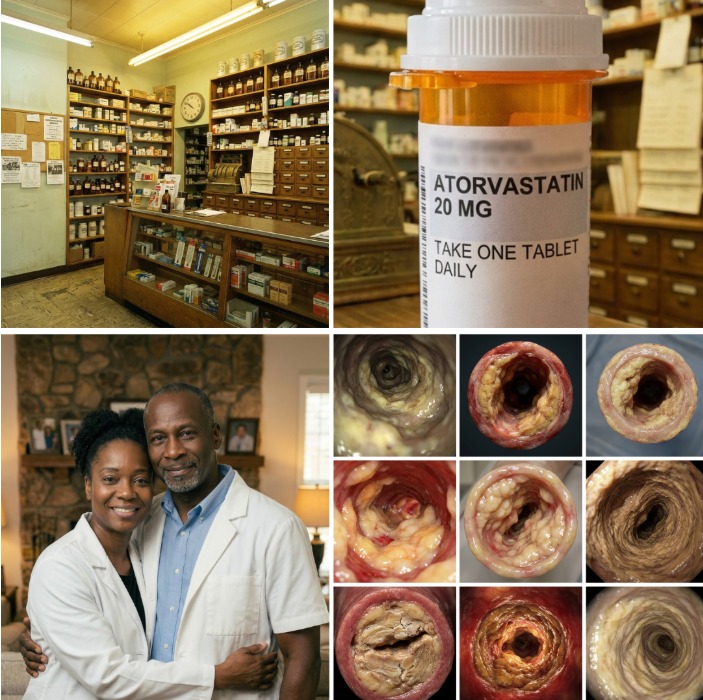
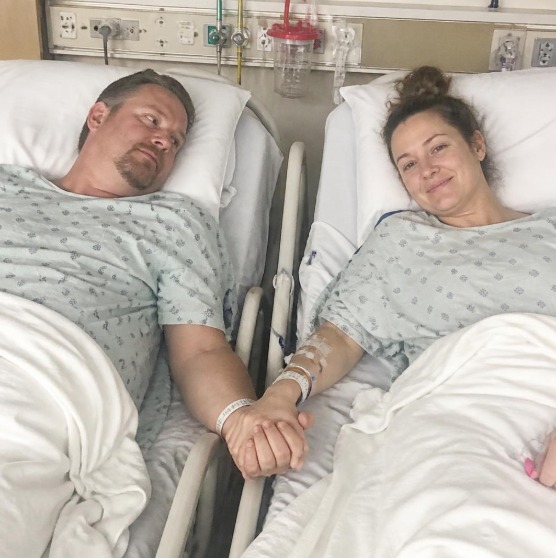
Molecular hydrogen is a SCAM. At least that's what I believed after my husband took it every single day for five months and still had a heart attack at 5:40 in the morning while I slept ten feet away from him. Turns out molecular hydrogen isn't a scam. But the molecular hydrogen my husband was taking? The one with 4,200 five-star reviews on Amazon? The one I ordered for him after spending three weeks reading clinical studies? It was delivering less than a fifth of the dose those studies used. For five months, I thought I was protecting him. I was giving him expensive water. My name is Ruth. My husband Gene is 65. I almost lost him seven months ago. And I need you to hear what happened — because if your husband is taking a hydrogen supplement right now and you think it's working because his numbers dropped a few points, you might be exactly where I was. Watching a disaster happen in slow motion. And not knowing it. --- Gene taught high school shop class for 34 years. Wood shop. Metal shop. The man can look at a broken chair and tell you exactly where the joint failed and why. He's been restoring furniture in our garage since he retired — finds beat-up dressers and end tables at estate sales, strips them down, rebuilds them. His hands are never clean. There's always sawdust in his eyebrows and a coffee ring on whatever piece he's working on. He's the kind of man who builds things. That's not just what he does. It's who he is. His cholesterol had been high for years. LDL of 192 at his worst. His doctor wanted him on Crestor. Gene said no. His brother Eddie had been on Lipitor for eight years. Muscle pain so bad he quit golf — the one thing the two of them did together every Saturday morning for twenty years. Brain fog that Eddie's wife Linda said made him "disappear in the middle of conversations." She'd find him standing in the kitchen staring at the open refrigerator, not sure what he came for. A man who used to run a print shop with thirty employees. And his cholesterol? Still borderline after eight years on the medication. Gene watched his brother shrink. That's the only word for it. A man who used to be the first one on the dance floor at every family wedding — and by year six on Lipitor, he'd sit in the corner nursing a ginger ale and say he was too tired. Last Thanksgiving, Gene and Eddie were in the garage looking at a dresser Gene was restoring. Eddie reached for a drawer pull and his hand was shaking so bad he couldn't grip it. Gene looked at me across the kitchen that night. "I'm not doing that," he said. "I'd rather take my chances." So I became the researcher. That's what wives do. We don't get to say "I'd rather take my chances." We lie awake at 2 AM and find the chances. --- I started with fish oil. Nordic Naturals Ultimate Omega. $47 a bottle. Everyone in my heart health Facebook group swore by it. I stood in the kitchen every morning with two amber soft gels and a glass of water. Gene would take them, wash them down, and head to the garage. Every morning for four months. I bought a home cholesterol monitor. Tested him every two weeks. Kept a notebook by the coffee maker. Week 2: 191. Week 4: 191. Week 8: 190. Week 12: 189. Week 16: 189. Four months. $188. Three points. I posted about it in my group. "Fish oil isn't really moving the needle. Four months, barely any change. What am I doing wrong?" Forty-something comments. "Try krill oil instead." "Are you taking it with food?" "You need the triglyceride form, not the ethyl ester." "Give it more time. It's a marathon, not a sprint." I wanted to scream. My husband's LDL was 189. His father had his first heart attack at 67. Gene was 64. We didn't HAVE a marathon. Then someone in the group mentioned bergamot. "Nature's statin. Dropped my LDL 30 points in two months." I ordered it that night. $38. Citrus Bergamot 500mg. Gene took the bergamot alongside the fish oil. Every morning. Both of them plus his coffee, standing at the kitchen counter in his sawdust-covered work shirt. Three months. LDL: 185. Seven points total. In seven months. With two supplements. I sat at the kitchen table staring at my notebook. All those careful numbers in my handwriting. 192. 191. 191. 190. 189. 189. 187. 186. 185. Seven months of a line that was barely moving. And Gene's doctor's deadline was three months away. --- Then I found molecular hydrogen. It was 11 PM on a Wednesday. I'd been down a PubMed rabbit hole for three hours. The house was dark except for my laptop. Gene was already asleep — I could hear him snoring from the bedroom. I found a clinical trial. A real one. Published in a peer-reviewed journal. A 24-week randomized controlled study showing molecular hydrogen reduced LDL by up to 18.2% and significantly lowered something called oxidized LDL. 18.2%. For Gene, that would mean a drop of almost 35 points. That would put him under 160. Maybe under 150 if it worked as well as the study showed. I read the study twice. Then I read four more. Then I watched a lecture from a cardiologist at a university medical center explaining how molecular hydrogen selectively neutralizes hydroxyl radicals — the specific free radicals that oxidize LDL cholesterol into artery-clogging plaque. It wasn't like the fish oil research. It wasn't like the bergamot claims. This had a specific mechanism. A causal chain. Free radicals attack LDL. Hydrogen neutralizes the specific free radicals that do the attacking. The cholesterol is protected from becoming dangerous. It made sense. More sense than anything I'd read in seven months of looking. I ordered hydrogen tablets from Amazon that night. HydroVital. $28. 4.8 stars. Over 4,200 reviews. "Life-changing." "My doctor was amazed." "Better than any statin." I started Gene on them the next morning. Dropped the tablet in a glass of water. Watched it fizz. Handed it to him. He looked at the glass. Little white chunks swirling around. Some settled to the bottom. "What's this?" "Something new. Just drink it." He shrugged. Drank it. Went to the garage. Every single morning for five months. --- And it seemed to work. Week 2: Gene said he felt "a little sharper." More energy in the afternoons. He'd been dragging after lunch for months — I'd find him asleep in his recliner at 2 PM. That stopped. Week 4: I tested his cholesterol. LDL: 186. Down 6 points from his baseline of 192. More than the fish oil had done in four months. Week 8: LDL: 183. Down 9 points. Week 12: LDL: 181. Down 11 points. I was thrilled. The direction was right. Not as fast as the clinical studies, but the numbers were moving. More in three months than fish oil and bergamot had done in seven. I posted about it in my Facebook group. "Hydrogen tablets are working! LDL down 11 points in 3 months! Best results we've had from anything." Everyone congratulated me. "Keep going!" "Imagine where he'll be at 6 months!" Someone asked which brand. I told them. They ordered it too. I was so relieved. I remember sitting on the porch that evening watching Gene sand a table leg in the garage with the door open, sawdust catching the late sunlight, and thinking: We're going to be okay. I found the thing that works. I was wrong. --- Saturday morning. October 12th. 5:40 AM. I woke up because of a sound. Not a scream. Not a crash. A sound like someone trying to breathe through a wet towel. A low, grinding groan that didn't sound human. Gene was sitting up in bed. Both hands pressed flat against his chest. His face was gray. Not pale — gray. Like something had drained the color from inside him. Sweat pouring down his temples, soaking the neck of his undershirt. "Gene?" He looked at me. His eyes were wide and unfocused. Like a man looking at something behind me that I couldn't see. "Something's wrong." Those were the last words he said for six hours. I called 911 with hands so unsteady I had to dial twice. The operator told me to keep him still, keep him calm, don't give him anything to eat or drink. Don't give him anything to drink. I looked at the kitchen counter as the paramedics came through the front door. Gene's glass of water was sitting there. Next to it, a hydrogen tablet. He'd set them out the night before like he always did. His little routine. Glass and tablet ready so he didn't have to think about it first thing in the morning. He never drank it. The paramedics strapped him to a gurney. I followed the ambulance in my car. Shaking so hard my teeth were chattering in October. At the hospital, they took him straight back. A nurse came out forty minutes later. "Your husband had a heart attack. We're performing an emergency catheterization. They've found a significant blockage in the right coronary artery. They're placing a stent." I sat in that waiting room for three hours. Alone. It was 6 AM on a Saturday. Nobody else was there. Just me and a TV playing the weather forecast with the sound off. And I kept seeing the same image. The glass of water on the counter. The tablet next to it. Five months of mornings. Five months of watching that tablet fizz, watching those little white chunks settle to the bottom, handing Gene the glass, watching him drink it. Five months of thinking it was protecting him. While plaque built in his artery and waited. --- Gene survived. Stent in his right coronary artery. Six days in the hospital. ICU for two. A stack of prescriptions — blood thinners, beta blocker, and the Crestor he'd refused for three years. He didn't refuse this time. Neither did I. When we got home, the hydrogen tablets were still on the kitchen counter. Next to the glass with a ring of dried water at the bottom. I threw them in the trash. Molecular hydrogen was a scam. Just another supplement that promised everything and delivered nothing. Just like the fish oil. Just like the bergamot. Just like every bottle in the cabinet above the microwave — the cabinet I'd been filling for three years with $40 promises that never came true. I was done researching. Done hoping. Done being the wife who stays up until midnight reading studies and tracking numbers in a notebook and thinking she can outsmart a heart attack with Amazon supplements. Gene was alive because of a stent and paramedics and a surgeon. Not because of me. I was done. --- Three weeks later, Gene started cardiac rehab. Twice a week. Monitored exercise. Blood pressure checks. Education sessions. He was exhausted afterward — would come home and sleep for two hours. The man who used to spend eight hours in the garage couldn't walk on a treadmill for twenty minutes without needing to sit down. His hands shook now. Not from the Crestor — too soon for that. From the heart attack. From the medication. From whatever happens to a body that almost dies and then has to relearn how to trust itself. He hadn't been in the garage since October 12th. The dresser he'd been restoring sat in the middle of the floor with one drawer pulled out and a sanding block sitting where he'd left it. I closed the garage door so he wouldn't see it from the kitchen. There was a nurse at cardiac rehab named Claire. Late 50s. Sharp eyes. Quiet. The kind of person who noticed things without announcing that she'd noticed them. During Gene's second week, I was sitting in the waiting area reading a magazine I wasn't actually reading. Claire came out to check something at the front desk. I don't know why I said it. Maybe I needed someone clinical to tell me I'd been stupid so I could stop beating myself up about it. "He was taking hydrogen tablets," I said. "For five months. From Amazon. I thought they were protecting him." Claire stopped walking. Looked at me. Then sat down in the chair next to mine. "Hydrogen tablets. Which brand?" "HydroVital. 4.8 stars. 4,200 reviews." She nodded slowly. Like she'd heard this before. "Can I ask you something? When you dropped the tablet in the water, did it dissolve completely? Or were there pieces left at the bottom?" My stomach tightened. "There were always little white chunks. At the bottom. I'd swirl the glass but they wouldn't dissolve. Gene would just drink around them." "And his LDL — how much did it drop?" "Eleven points in three months." She was quiet for a moment. "Did anyone test his oxidized LDL?" "His what?" I thought about how many times in the past three years someone had said a word to me about cholesterol that I didn't know. Every time, it turned out to be the thing that mattered most. And every time, I'd been measuring the wrong thing. "Oxidized LDL," Claire said. "It tells you whether the cholesterol in his blood is being attacked by free radicals. Whether it's turning into the sticky kind that burrows into artery walls and forms plaque." "No one ever mentioned it. Not his doctor. Not the cardiologist. Not during any of the bloodwork." "They almost never test it. Standard lipid panels don't include it." I felt that tilt again. The same one I'd felt at 6 AM in the waiting room. The floor shifting under a reality I thought was solid. "Ruth, I need to tell you something, and I want you to hear it carefully." I looked at her. "Molecular hydrogen is not a scam." I opened my mouth. She held up her hand. "The research is real. Over 2,000 peer-reviewed studies. The clinical trials showing cardiovascular benefits — cholesterol reduction, oxidized LDL protection — they're legitimate. Published in real journals. Replicated across multiple institutions." "Then why didn't it work for Gene?" "Because most hydrogen products don't deliver what the studies used." She leaned forward slightly. "The studies that showed real cardiovascular results used concentrations of 10 to 12 parts per million. That's the clinical threshold. That's the dose where molecular hydrogen actually neutralizes enough hydroxyl radicals to meaningfully protect LDL from oxidation." I thought about the fizzing tablet. The chunks at the bottom. "Most consumer products — especially the ones on Amazon — test at 2 to 3 parts per million by the time you drink them." She paused. Let that sit. "Hydrogen is the smallest molecule in existence. It escapes through everything — plastic, glass, even metal. If the tablet doesn't dissolve completely and rapidly, the hydrogen escapes into the air before you drink it." I saw Gene's glass in my mind. The white chunks at the bottom that never dissolved. All that hydrogen — the hydrogen that was supposed to protect him — floating up and out of the glass before he ever took a sip. "Those chunks," I said quietly. Claire nodded. "Undissolved material. The hydrogen that should have come from those chunks was released into the air. Gone. Gene was drinking the water, but the therapeutic compound had already escaped." "So he was getting a fraction of what the studies used." "Probably a fifth. Maybe less. And here's the part that matters for Gene's situation specifically — at 2 to 3 PPM, you might get a slight energy boost. Slight mental clarity improvement. And it might — might — move your total LDL a few points." "Eleven points," I whispered. "Right. The total LDL went down a little. And that felt like progress. But total LDL just measures how much cholesterol is in the blood. It doesn't tell you whether that cholesterol is being PROTECTED from oxidation." She looked at me carefully. "Gene could have had an LDL of 181 where every particle was shielded from free radical attack — and his risk would have been very low. Or he could have had an LDL of 181 where most of it was oxidizing into sticky, artery-damaging plaque. Same number on the monitor. Completely different level of danger." "And at 2 PPM, it wasn't protecting the cholesterol." "Not at the clinical threshold. Not meaningfully. The number went down. But the cholesterol that remained was likely oxidizing. Unprotected. Becoming exactly the kind of plaque that ruptures." I stared at the floor. "So for five months, his LDL was dropping. And I was celebrating. And posting about it. And telling other women in my group to buy the same brand." My voice cracked. "And the whole time, the cholesterol he still had was turning into the plaque that caused his heart attack." Claire didn't look away. She didn't soften it. "That's probably what happened. Yes." --- I didn't sleep that night. I lay in bed listening to Gene breathe. Since the heart attack, I listened to him breathe every night. Counting the rhythm. Waiting for a pause that went too long. And I kept seeing those mornings. The tablet dropping into the glass. The fizz. The chunks settling to the bottom. Swirling the glass. Handing it to Gene. Watching him drink it. Believing. For five months. Gene's oxidized LDL at the time of his heart attack was 94. The danger threshold is 60. Ninety-four. While his total LDL was "only" 181. The number I'd been tracking — the one I'd watched go down, the one I'd celebrated, the one I'd posted about in my Facebook group — was the wrong number. The number that mattered was the one nobody tested. And the hydrogen tablets I'd trusted to protect him weren't reaching the concentration to affect it. --- The next week at cardiac rehab, I found Claire in the hallway. "Is there a hydrogen product that actually works? That actually hits the concentration the studies used?" She hesitated. "I shouldn't recommend specific products. That's not really my role here." "Claire. My husband had a heart attack while taking a product I thought was protecting him. I need to know what actually works. Please." She looked around. Lowered her voice. "There's one I've seen make a real difference. A magnesium-based effervescent tablet. Different delivery mechanism than the Amazon brands. It dissolves completely — no residue, no chunks — in under two minutes. The reaction is fast and aggressive, so you drink it while the hydrogen is still being generated. It absorbs through your stomach lining before it can escape." "What's it called?" "PrimeCell H2. It tests at 12 parts per million at the moment of consumption. Six times what the Amazon brands deliver. And the reaction uses elemental magnesium — so you also get 80 milligrams of bioavailable magnesium per tablet. Not the cheap oxide form that passes through you. Actual magnesium your body can use for the enzymes that regulate cholesterol metabolism." "How do you know all this?" She was quiet for a second. "Because my husband was in the same situation two years ago. High cholesterol. Wouldn't take a statin. I'm a cardiac rehab nurse — I knew the research on molecular hydrogen was real. But I also knew from working here that most patients who mentioned hydrogen supplements weren't seeing meaningful results." "What happened?" "A colleague's husband — retired chemist — had tested fourteen hydrogen brands with a dissolved hydrogen meter. Hobby of his. Thirteen of them tested below 3 PPM. One hit 12.3 PPM. PrimeCell. He showed me the spreadsheet. I put my husband on it. Within eight weeks his oxidized LDL had dropped into normal range. His cardiologist was confused. In a good way." I went home that night and ordered PrimeCell. --- Gene was already on Crestor — his cardiologist insisted after the heart attack, and I wasn't going to fight that. Not this time. But I added PrimeCell alongside it. When the package arrived, I dropped the first tablet into a glass of water. The difference was immediate. The fizz wasn't like the Amazon brand — that slow, lazy bubbling with chunks sinking to the bottom. This was aggressive. Violent, almost. The tablet dissolved completely in under two minutes. No residue. No chunks. Nothing settling at the bottom. Just clear water with bubbles racing to the surface. I stared at it. Thinking about five months of chunks. Gene drank it that morning. Didn't comment. Just went to sit in his chair. But on day three, he looked up from his coffee and said something that stopped me. "My head is different." "Different how?" "Clearer. Like there was static and somebody turned it off. I don't know how else to say it." He hadn't said anything like that with the Amazon tablets. Not once. Not in five months. Week one: The fatigue that had weighed on him since the hospital started lifting. He walked to the mailbox and back without stopping. He hadn't done that since October. Week two: Sleeping through the night. The Crestor was already causing a dull ache in his calves — gene mentioned it the way men mention things, casually, like it doesn't bother them. But it was less than what Eddie had described on Lipitor. I couldn't prove the hydrogen was helping with that. But Gene said it felt like something was. Week three: He opened the garage door. I was washing dishes and I heard it — the mechanical grind of the old door going up. I looked out the kitchen window. Gene was standing in the garage. Looking at the dresser. The one with the drawer pulled out and the sanding block sitting where he'd left it on October 11th. He didn't touch it. He just stood there. Hands in his pockets. Looking. Then he picked up the sanding block. Turned it over in his hand. Set it back down. Walked back inside. But he left the garage door open. Week four: His cardiologist ordered bloodwork as part of the cardiac rehab protocol. I drove Gene to the lab. Sat in the car while they drew blood. Stared at the steering wheel and tried not to hope too hard. Two days later, we were in the cardiologist's office. He pulled up Gene's chart on his laptop. Looked at it. Then looked at it again. "Well," he said. And then he was quiet for a long moment. "Gene. Your total cholesterol is 174. Down from 226 at discharge." He scrolled. "LDL: 118." Then he stopped scrolling. Leaned toward the screen. "I ran an oxidized LDL panel as part of your recovery workup." I held my breath. "Your oxidized LDL is 41." Down from 94 at the time of his heart attack. Forty-one. The cardiologist turned his chair to face us. "These are exceptional numbers. Especially the oxidized LDL. I don't often see this kind of improvement at four weeks, even with aggressive pharmaceutical therapy." "We added something," I said. "Molecular hydrogen. A specific brand. High concentration." He looked at me. I could see the automatic skepticism. A supplement. Right. Then he looked at the numbers again. He looked at them for a while. "Whatever you've added," he said carefully, "don't change anything. Don't stop." I nodded. Gene put his hand on my arm. Squeezed once. Didn't say anything. He didn't need to. --- That was five months ago. Gene's last bloodwork: LDL 112. Oxidized LDL 36. Inflammation markers down 68%. His cardiologist is talking about reducing the Crestor dosage. Not increasing it. Reducing. Gene is in cardiac rehab three times a week. Last Tuesday he walked a mile without stopping. His color is back. The gray is gone. And two weeks ago, on a Saturday morning, I woke up to a sound. Not the sound from October 12th. Not the grinding groan that lives in my nightmares. The whine of a belt sander. I walked to the kitchen window. The garage door was open. Gene was standing at his workbench. Sanding the drawer front of the dresser he'd left in October. Sawdust in his eyebrows. Coffee ring on the wood. Hands steady. I stood at that window for a long time. Didn't say anything. Didn't need to. --- I think about those five months every single day. Five months of 2 PPM hydrogen tablets. Five months of watching the LDL number creep down and thinking we were safe. Five months of celebrating in my Facebook group — telling other women to buy the same brand — while Gene's arteries were quietly filling with oxidized plaque that nobody was measuring and a $28 Amazon supplement wasn't concentrated enough to stop. If I'd known about concentration. If I'd known about oxidized LDL. If I'd known that a 4.8-star product with 4,200 reviews could be delivering a fifth of the clinical dose. Would the heart attack have happened? I don't know. But I think about it every morning when I drop that PrimeCell tablet in Gene's water and watch it dissolve completely. No chunks. No residue. Just aggressive fizzing and then gone. That's what 12 PPM looks like. 2 PPM has chunks at the bottom and a husband in the ICU. --- I'm writing this because I see you. In my Facebook group. In the comments. In the heart health posts. "Started hydrogen tablets! LDL down 8 points!" "Feeling more energy already!" "This is so much better than statins!" And I want to grab you through the screen and say: WHICH hydrogen tablets? What concentration? Have you tested your OXIDIZED LDL? Because I was you. Posting those exact updates. Feeling that exact relief. And my husband had a heart attack anyway. Not because molecular hydrogen doesn't work. Because the product I chose didn't deliver enough of it to protect him. If your husband is taking hydrogen tablets right now — any brand — ask yourself: Does it dissolve completely? No chunks? No residue at the bottom? Does it dissolve fast — under two minutes? Does it deliver 10+ PPM concentration? Does it include bioavailable magnesium — not cheap magnesium oxide? Is it third-party tested with published results? If you can't answer yes to every single one, you might be exactly where I was seven months ago. Watching a number go down on a home monitor and believing you're safe. While the measurement that actually predicts heart attacks goes untested and unprotected. PrimeCell H2 is the only hydrogen supplement that independent testing — fourteen brands, dissolved hydrogen meter — showed hitting clinical concentration. 12 PPM. Magnesium-based. Complete dissolution. Third-party verified. It comes with a 90-day money-back guarantee. If you don't see improvement, full refund. No questions. I wish a guarantee could undo a heart attack. It can't. But it can remove every reason to not try the thing that might prevent one. Gene is alive because a stent worked and paramedics arrived in eight minutes and a surgeon was brilliant. But Gene is RECOVERING — numbers improving, energy returning, oxidized LDL plummeting, standing in his garage with sawdust in his eyebrows — because we finally found hydrogen that delivers what the clinical studies actually used. Not 2 PPM Amazon water with chunks at the bottom. 12 PPM. Complete dissolution. Clinical threshold. That's the difference between a supplement that lets you believe you're doing something and a supplement that's actually protecting your husband's heart. I learned that difference in an ICU waiting room at 6 AM on a Saturday morning. You don't have to learn it that way. 👉 https://shop.getamalahealth.com/pch/ch/sp P.S. — Gene took hydrogen tablets every day for five months. His LDL dropped 11 points. We celebrated. His oxidized LDL — the number that actually predicts plaque rupture — was 94. Catastrophically high. Nobody tested it. He had a heart attack anyway. The Amazon tablets were delivering 2 PPM. Clinical studies used 10-12 PPM. We were giving him a fifth of the therapeutic dose and calling it protection. PrimeCell delivers 12 PPM. Gene's oxidized LDL dropped from 94 to 36 in four weeks. Same molecule. Different concentration. That's the difference between a number on a screen and a husband who's still here. P.P.S. — PrimeCell is a small company. They sell out regularly — I've seen it twice since we started ordering. I keep two bottles in the house now because I will never run out of this. If you click and they're in stock, don't wait. I almost lost my husband because I trusted a $28 Amazon supplement with 4,200 reviews to protect his heart. After a $47,000 hospital bill, a stent, and six days in the ICU, the cost of PrimeCell isn't the cost of a supplement. It's the cost of knowing what's actually reaching his cells. 👉 https://shop.getamalahealth.com/pch/ch/sp
Fix Yourself at the Cellular Level
High Cholesterol, Statin Side Effects, Numbers That Won't Budge? PrimeCell H2 Targets The Oxidative Damage Medications Can't Touch.
LEARN MORELike this ad? Make it yours.
Crush rebuilds this exact creative around your product — your brand, your colors, your offer — in about a minute.