
Inactive· since Aug 13, 2026
- 27
- days it ran
- 0
- relaunches
Ad copy
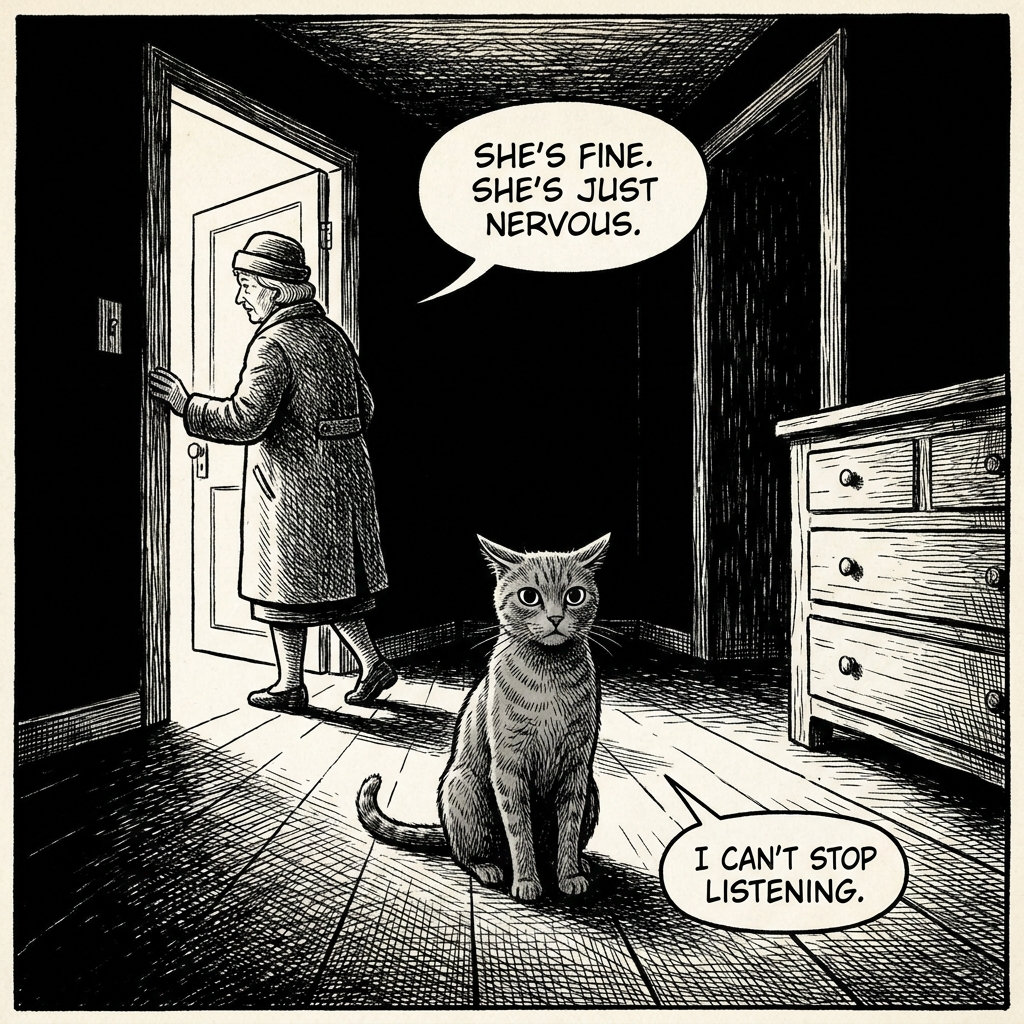
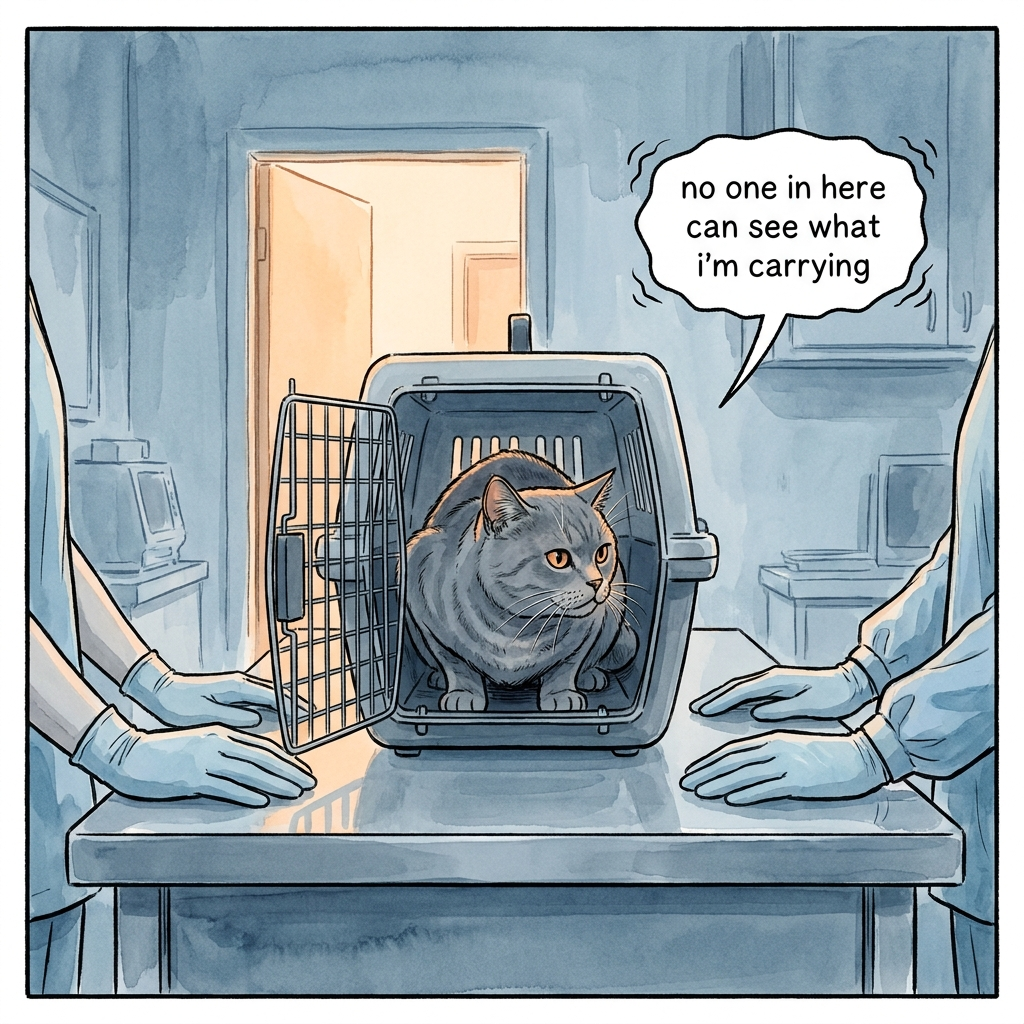
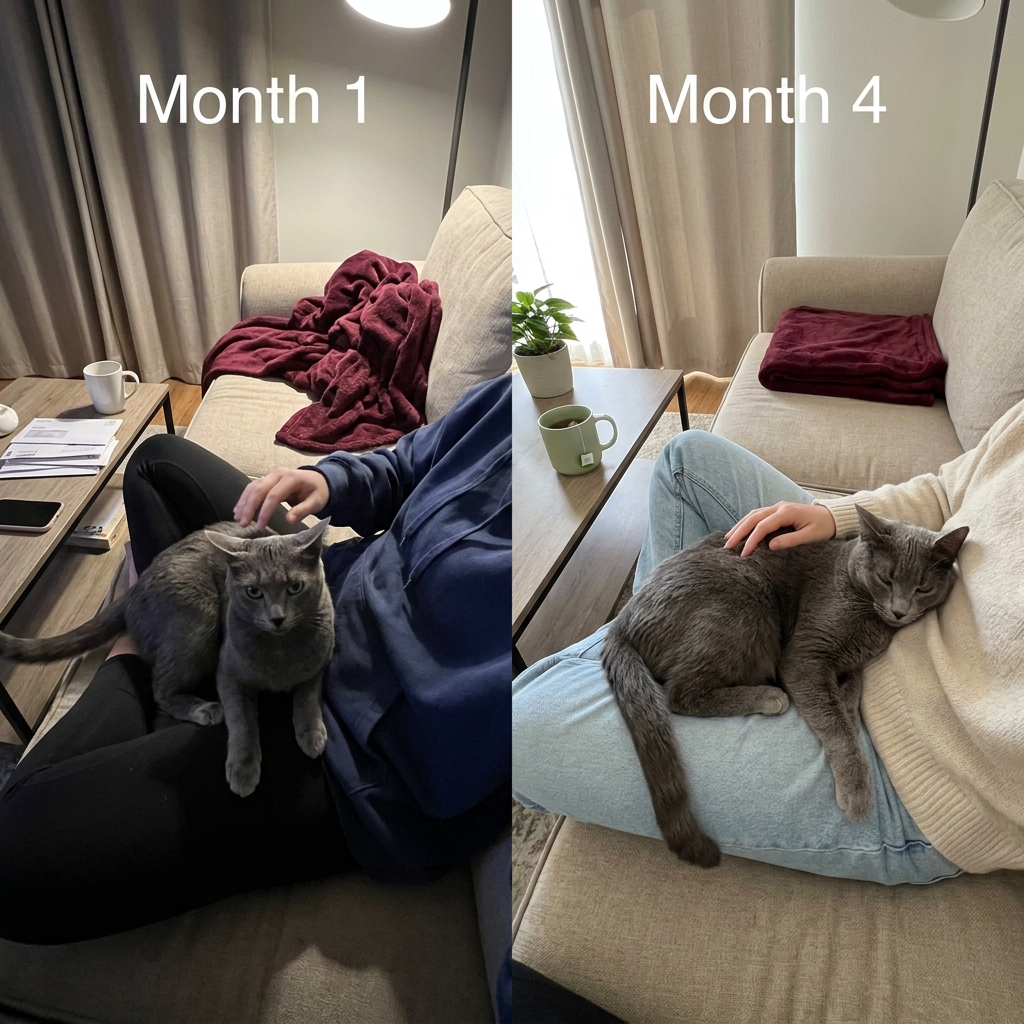
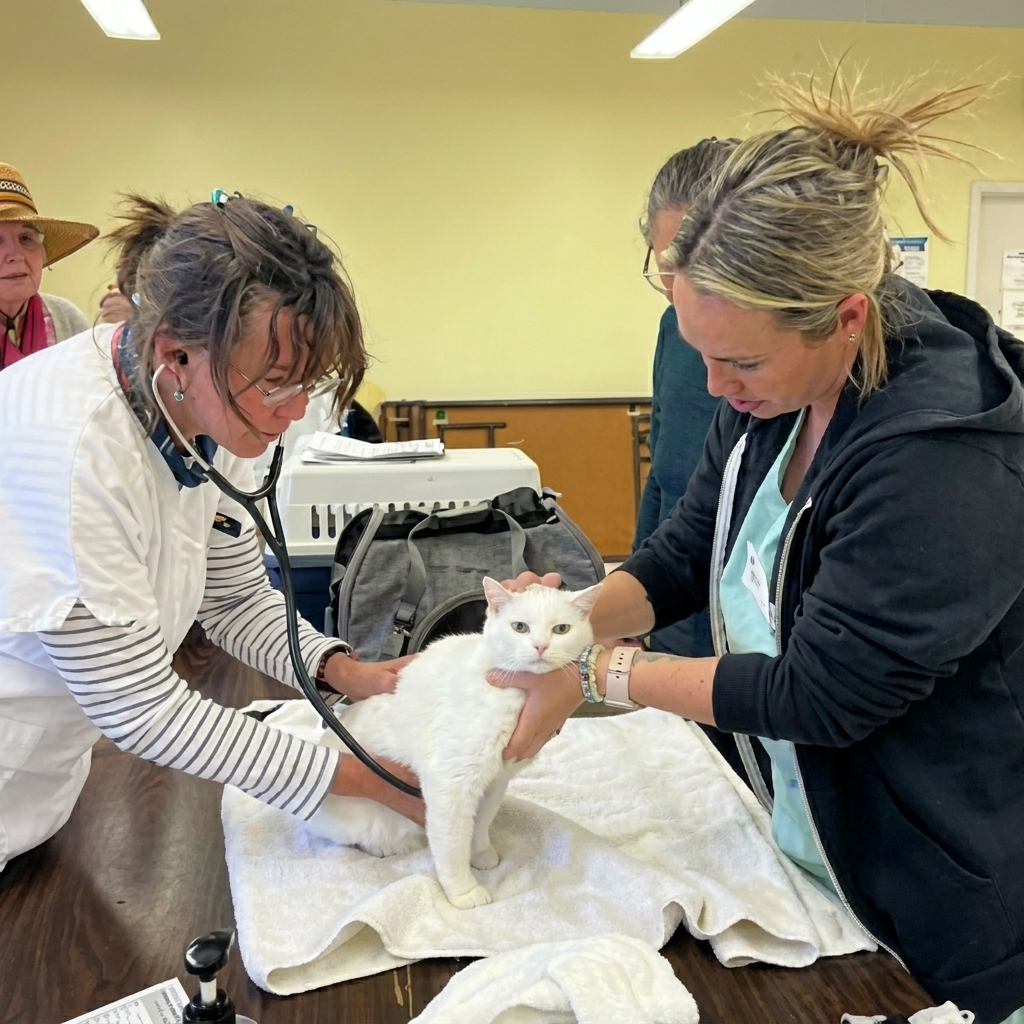
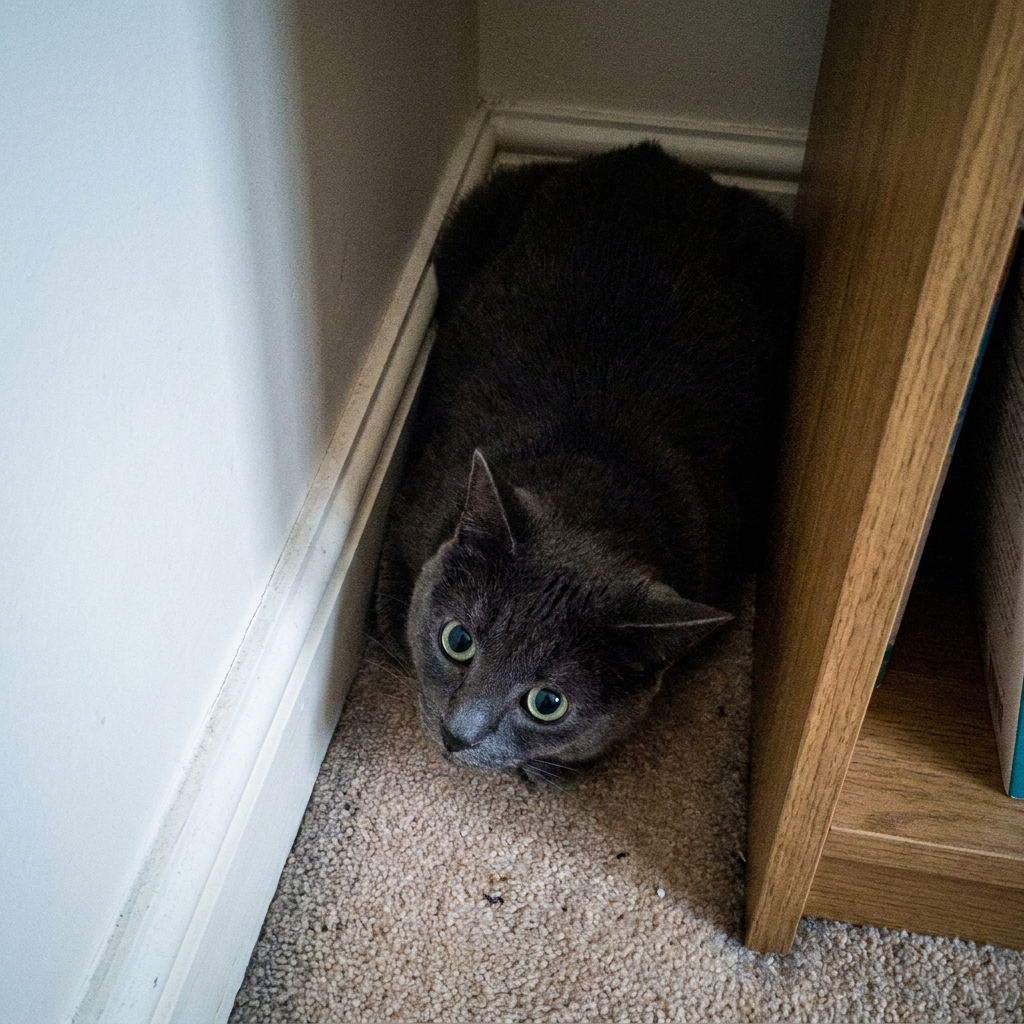
Four things a frightened cat does before she bites you. And the fifth thing, which is that she stops doing any of them. I'm going to describe five signs. Most people can name one of them. By the end of this you'll be able to read all five, and you'll know which one your cat is on — which matters more than anything else I could tell you, because they are not a severity scale. They are a sequence. I'm Dr. Demitro. Small-animal veterinarian, twenty-two years, northern Colorado. For twelve of those years I got this backwards in my own exam room. And then I got it backwards in my own house, with my own cat, for four more. SIGN ONE. The tail. Not a wag. Not a slow sway. A hard flick or thump at the tip while you're stroking her, or while she's watching something out of a window. This is the earliest signal a cat gives you and almost nobody knows it means anything at all. Most people read it as pleasure — she's happy, look, her tail's going. It is the opposite. It's the first line of a sentence that ends badly, and you have a lot of time at this stage. SIGN TWO. The skin ripple. A twitch or shudder through the fur near the base of her tail while she's being touched. It looks like she's shivering. It means the input has stopped being pleasant. SIGN THREE. The freeze. She stops. The purr pauses — not stops, pauses, for a beat. She goes stiff in your lap. Her head comes up. This is the one owners consistently misread as she's settled. She hasn't settled. Settled cats are loose. She has locked up. SIGN FOUR. The growl, the hiss, the flattened ears, the open mouth with no sound. This is the one everybody knows, and here's what almost nobody has been told about it: every single one of those is a defensive signal. Not one is an attack signal. A cat who intends to hurt you doesn't announce it. She's silent and she's already moving. Flat ears, a growl, a wide-open mouth with nothing coming out — that's an animal shouting stop in the only language she has. You are not being threatened. You are being warned. Those are opposite things. SIGN FIVE. Nothing. That's the fifth sign. There is no fifth behaviour. The fifth sign is the absence of the first four. She just goes. No tail, no ripple, no freeze, no growl. Hand to hand, no runway. And everybody reads that as the aggression getting worse. It isn't. It's the warnings getting more expensive than they're worth. Growling costs a frightened cat something real — it broadcasts her position to the thing she's afraid of. She only pays that price because it's cheaper than fighting. So if growling stops producing distance, she stops paying for it. And she skips to the option that always works. If she's showing you signs one through four, that is the good version. That is a cat still talking to you. If you're at sign five, the conversation ended some time ago and nobody told you it was ending. Now — here's what makes them stop working, and this is the part I need to be honest about, because it's my profession's fault and it was mine. The standard advice, when a cat growls at you, is some version of: don't back down, don't reward it, establish yourself, spray bottle, clap. Every bit of that suppresses the warning and leaves the fear exactly where it was. She learns the growl doesn't work. So she stops growling. The cat gets quieter and the danger goes up, and both things happen at once, and it looks like progress for about a week. I clapped at my own cat once, in year two of this, to break up a growl. I have thought about that single clap more than almost anything else in my career, because I have known since veterinary school that growling is a distance-increasing signal. I could have written a paragraph on it in an exam. I did it anyway, because somebody told me backing off rewards aggression and I had no reason to question it. Six weeks later she took the back of my hand with no warning at all. Now the other half. Why the signs appear in the first place — because it isn't temperament. A cat's stress response is built to spike, then come down. Something moves in the grass and everything switches on: heart rate, pupils, muscles. Then nothing happens, and it switches off. Forty times a day. You never see any of it, because the coming-down part is invisible. The coming-down is the system. Not a break from it. Some cats lose it. Not the spike — the reset. And once that's gone, she isn't a frightened cat anymore. She's an animal braced permanently at a low level, with no headroom left. Which means she doesn't arrive at any moment starting from zero. She arrives already three-quarters full. Same hand. Same hallway. Same eight strokes that were nothing a year ago — now landing at the top of a tank that started nearly full. She isn't overreacting to you. She's reacting normally, from a starting point you can't see. Here's how you check whether that's what you've got. Ask yourself: when did it start? Almost every owner I've ever asked can answer immediately. The move. The second cat. The baby. The building work. The year she turned seven. Almost nobody says she's always been like this. Temperament doesn't have a start date. A threshold does. And there's one more thing that gave it away, once I finally looked properly. When I went back through my own case files — every aggression case where the workup came back clean — almost none of those cats were only aggressive. Overgrooming. Night vocalising. Hiding. Spraying. Litter box avoidance. A second cat they'd stopped tolerating. Different presentations, same file, over and over. And I had written every one of those other things down in my own notes and never once put them together. Four exits. One thing behind them. That's not a study and I'm not going to dress it up as one. It's a pattern in my own records that took me twelve years to notice. WHAT I'D DO, IN ORDER First: rule out pain. Bloods, thyroid, kidneys, urine, blood pressure, a proper dental exam, and a slow palpation of every joint. Pain makes cats aggressive and it is the single most missed cause there is. A treatable medical problem is a far better outcome than this one, and if anyone tells you to skip the workup — including me — stop listening to them. Second: stop punishing the warning. No spray bottle. No clapping. No scruffing. No standing your ground to prove a point. When she gives you signs one through four: stop moving. Don't stare — staring is a threat. Turn side-on, blink slowly, leave the room. You're not losing. You're proving her right about the one thing she needs to be right about, which is that saying stop works. Third: lower what she's carrying. Because rationing your own behaviour only manages the top of the meter. It doesn't touch where she starts from, and where she starts from is the actual problem. That's four separate things, and they hold each other up: She's scanning a room where nothing is happening. Her day-night rhythm has been flattened by years of indoor light with no real dusk. Her stress load has been climbing since whatever your start date was. And she physically cannot settle — cannot lie down and stay down. Pull one lever and she responds to a quarter of it. Which is exactly why single-ingredient calming products give you a fraction of a result and a lot of disappointment — not because they're frauds, but because arithmetic. And read the back of anything in that aisle. It'll tell you when to give it. Before travel. Before the storm. Before the vet. Fireworks. Moving house. Every one of those has a start and a finish. She doesn't have an event. She has a level. You can't fix a level with something formulated for a moment. So: four ingredients, one for each. Ashwagandha — KSM-66 extract, the form with the most published research behind it. Works on the underlying stress load. Slow on purpose; it took a year to build. L-theanine — the green tea molecule. Takes the edge off hypervigilance without sedating. Valerian root — supports the transition from alert into actual rest. Melatonin — low, daily, restoring the light-dark rhythm indoor living quietly flattens. Those two are the sleep half, and a cat who doesn't sleep starts tomorrow with today's arousal still loaded. That's exactly how headroom disappears over months. Gentle doses, daily rather than before a trigger. You're not putting out a fire. You're bringing a level down. I'll be straight about what I can't tell you. Most of the mechanistic work on these compounds comes from human and rodent research. It's solid science, but the feline-specific literature is thinner than I'd like and thinnest of all for ashwagandha. That's why the doses sit well below any threshold associated with reported adverse effects in companion animals, and why the full dosing rationale ships in the booklet. Email us and we'll send the formulation document to your vet's office directly. And it's drops, not a chew. My own cat wouldn't eat a chew — wouldn't approach one — and a great many won't. A formula she refuses is a formula at zero dose no matter what's in it. These go into the food she already eats, suspended in MCT oil that's nearly odourless to a cat. She tastes her dinner. Not the drops. WHAT RECOVERY LOOKS LIKE, AND WHY IT WILL WORRY YOU The warnings come back first. If you're at sign five, the earliest thing you will see is more growling. Every owner I've had at that stage has contacted me around week two convinced it's got worse. It hasn't. That's the runway returning. She's telling you again — earlier, from further away — instead of going straight to your hand. That is the single best thing that can happen and it looks exactly like the worst thing. Then the sequence unwinds backwards. Growl before swat. Freeze before growl. Tail flick before freeze — until you're back at sign one, which is where a cat is supposed to live. Sleep changes first, usually week one. Then the distance — she stops leaving the room when you enter it. Then she starts it: comes to you, gets in your lap uninvited. That usually lands around week four. Full effect on the underlying load is about week four, because that's how long the ashwagandha needs. Anyone promising faster doesn't understand what's being moved. In a survey of 1,283 verified customers after 30 days of daily use: 89% showed less stress behaviour by week four. 82% reported their cat sleeping through the night by week three. 94% stopped considering a prescription. One dropper. Into the food she already eats. Once or twice a day. That's the entire change. Nothing else moves. Ninety days. If she isn't calmer, sleeping better, more herself — email [[email protected]](mailto:[email protected]) and we send every dollar back. No returning the bottle. No form. No proving anything. Within 48 hours. $34.95. Less than the workup. And if she has drawn blood more than once, or there are children in the house — see a veterinary behaviourist. Alongside this, not instead of it. I'm not going to pretend a supplement is the whole answer for a cat who is putting someone in danger, and anyone who tells you otherwise is selling you something they shouldn't. My cat sleeps on the end of my bed now. Not on my chest — she's older, she gets warm. She flicks her tail when she's had enough. I stop. That's the whole arrangement, and it took me sixteen years of practice to learn it, and it was written on her tail the entire time. — Dr. Demitro, DVM P.S. If your cat used to growl and doesn't anymore, and someone told you that was progress — please read sign five again. The fear doesn't leave when the growl does. Only the warning leaves. And the warning is the entire distance between you and a puncture wound. P.P.S. One question, ten seconds, free. Not how bad is she. What does she do first? If you can list a sequence — tail, then stiff, then growl — she's still talking to you and you have room to work with. If your honest answer is nothing, she just goes — you don't have an aggressive cat. You have a cat who stopped telling you. Getting that back is what recovery actually looks like, and it's the first thing you'll see.
Like this ad? Make it yours.
Crush rebuilds this exact creative around your product — your brand, your colors, your offer — in about a minute.