
Inactive· since Jul 29, 2026
- 24
- days it ran
- 0
- relaunches
Ad copy
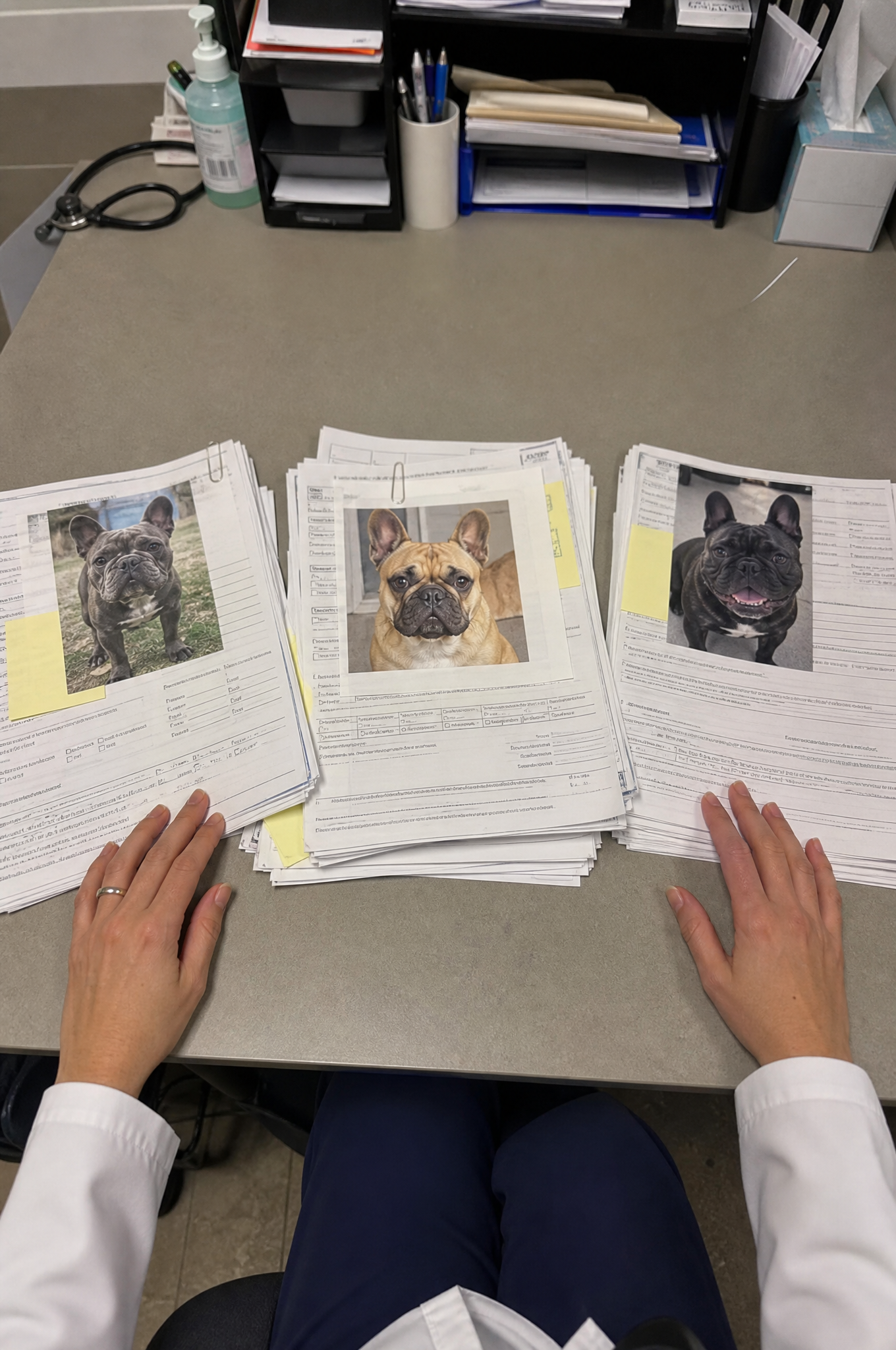
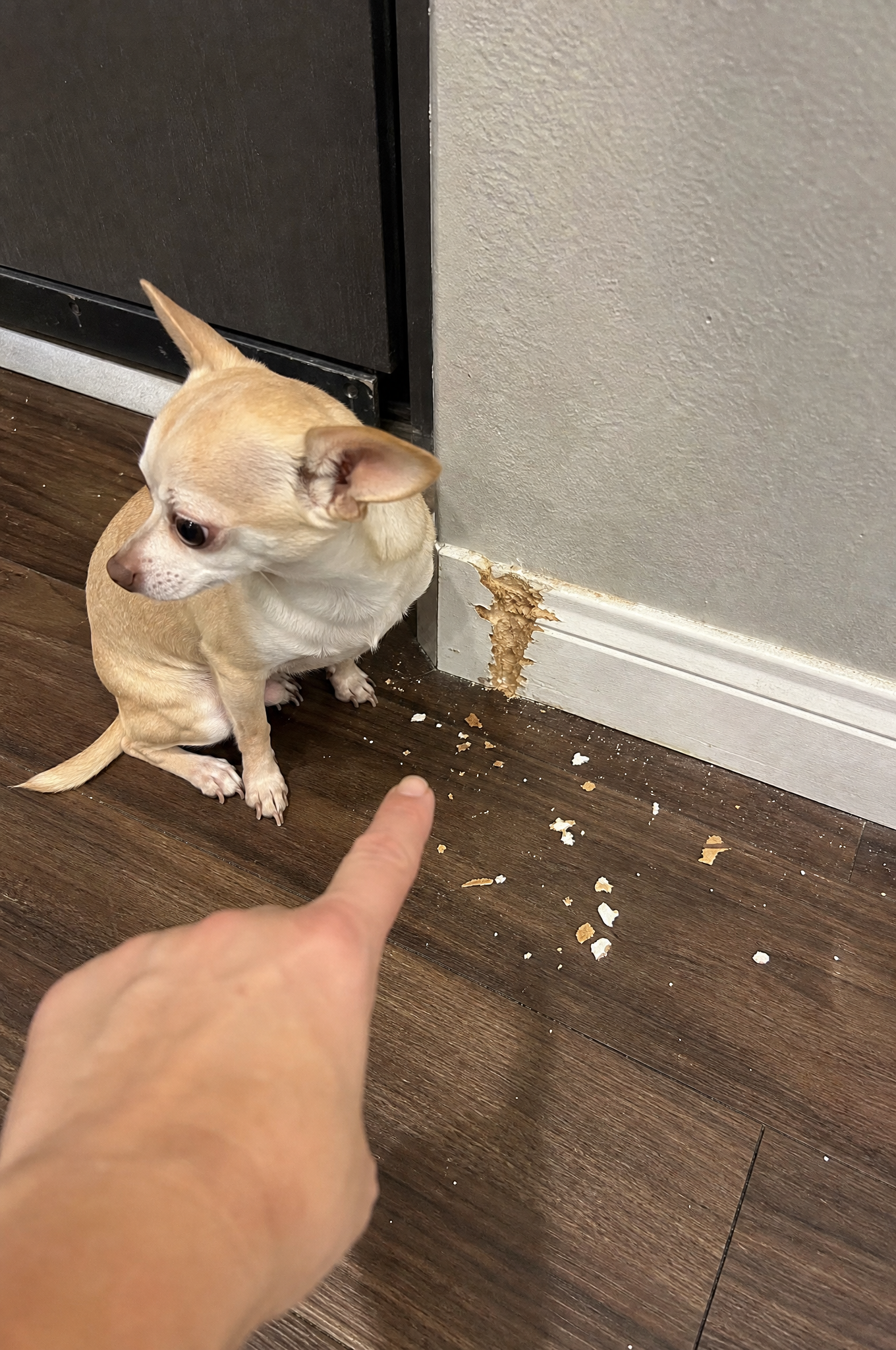
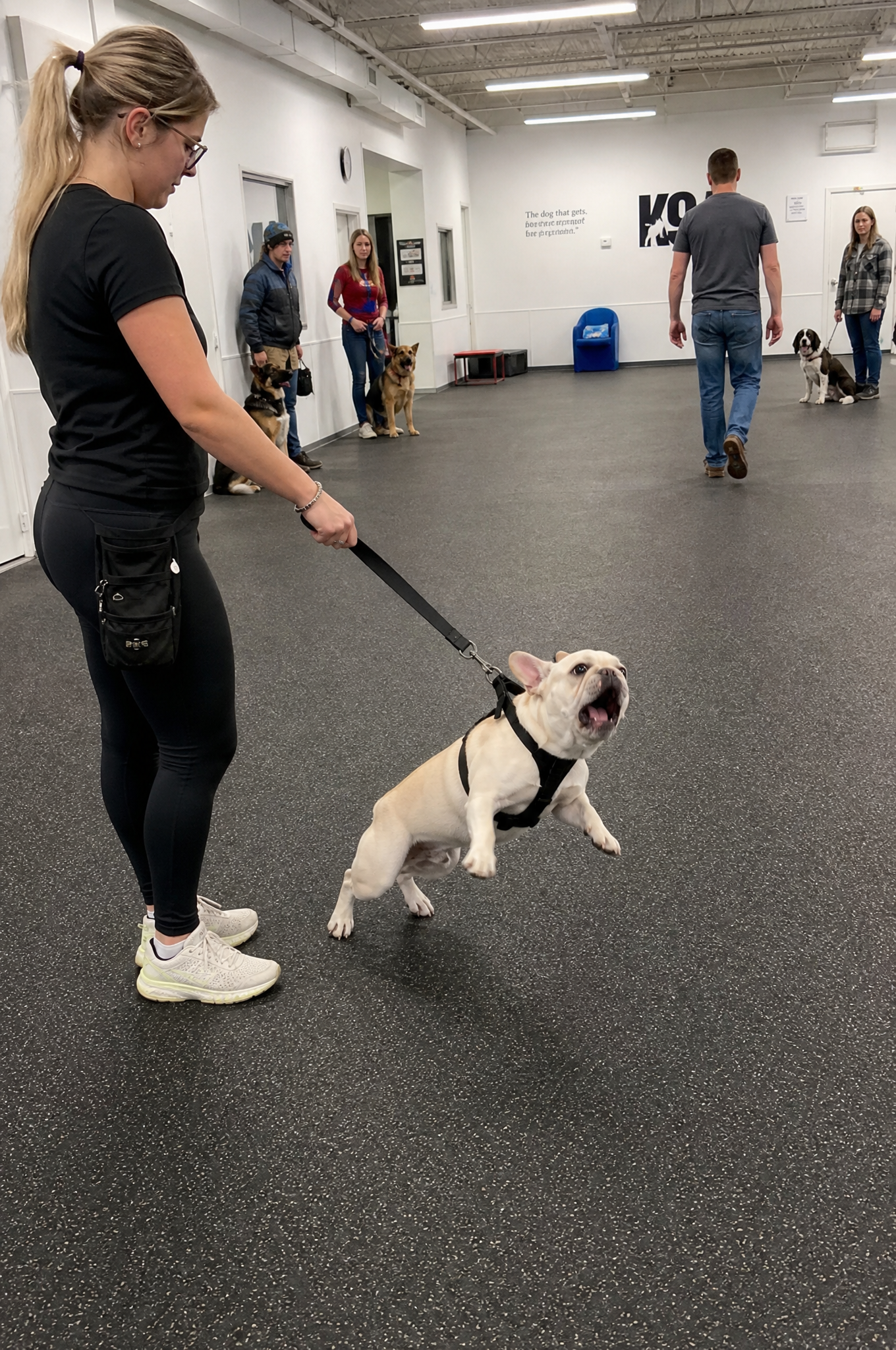
I've spent 12 years working with French Bulldogs without e-collars, without medication, and without telling a single owner their dog is just "too stubborn to train." When I see what generic trainers are telling Frenchie owners, I cannot believe what I'm hearing. I've worked in canine behavior and breed-specific training for over 12 years. The first 5 years, I trained everything. Labs, Shepherds, Goldens, Doodles, Huskies. Standard obedience. Standard methods. Standard results. Then I started getting French Bulldogs. And everything I thought I knew fell apart. In my first year working with Frenchies, I saw something that kept me up at night. French Bulldog owners coming in with dogs that were physically healthy, genetically sound, deeply loved, and completely impossible to live with. Separation anxiety so severe the dog had screamed, howled, and shaken for hours after the owner went to the grocery store. Owners watching helplessly on their Furbos from the parking lot, unable to make themselves drive away. Potty training that worked perfectly for months and then completely unraveled the moment it rained. Dogs that would stand at the back door, look outside, look back at their owner, walk to the nearest rug, and go. Selective hearing so consistent it had owners genuinely wondering if something was wrong with their dog neurologically. Perfect in the living room with treats. Completely deaf the second the front door opened or the doorbell rang or the fridge door opened. And the "death scream." That sound. The one that starts the moment you pick up your keys. The high-pitched yodel that neighbors have knocked on walls about. That landlords have sent letters about. That owners have built their entire daily schedule around trying to prevent. Every single owner said the same thing. "My trainer told me to ignore it. My vet suggested we look at anxiety medication. We've tried everything. We're just managing it." Managing it. That word. In 12 years of working with dogs, I have never heard a word that caused more damage than "managing." You don't manage a problem that has a solution. You solve it. And the reason nobody was solving it was that every trainer, every vet, every YouTube video, and every obedience class these owners had paid for was using methods designed for a completely different kind of brain. Generic dog training doesn't fix what's actually happening inside a French Bulldog. It only suppresses the symptoms. Here's what your trainer probably hasn't told you about why your Frenchie acts the way it does. There's a concept that most dog trainers have never been taught and most Frenchie owners have never heard. And the real cause behind every behavior problem your French Bulldog has is not stubbornness. It's not small dog syndrome. It's not that you're too soft or too inconsistent or not firm enough. It's biology. Specifically, it's what your French Bulldog was actually bred to be for hundreds of years before they ended up on your couch. French Bulldogs were bred purely for companionship. Not to herd. Not to retrieve. Not to guard. To sit with one person, bond with that person completely, and be so deeply connected to that human that the relationship itself became their entire world. For generations, the French Bulldogs who were selected and bred were the ones with the biggest personalities. The most stubbornness. The most determination to be heard and acknowledged. The most intense and exclusive attachment to their person. That is the brain sitting in front of you right now. Not a dog that wants to follow a command because you gave it. A dog running a constant calculation about whether your request is worth the effort at this particular moment. A dog whose bond to you is so total that your absence doesn't register as an inconvenience. It registers as an emergency. When that drive, that enormous depth of attachment and personality, has a structure that makes sense to it, the dog is calm. Settled. Capable of being left alone. Capable of walking past a dog on the street without losing its mind. When it doesn't, the brain doesn't idle. It alarms. It screams when you leave because your absence feels like the most important relationship in the world has vanished without explanation. It stands at the back door in the rain and refuses to go because a dog with a low-slung belly, a brain wired for comfort, and a lifelong history of getting its own way has decided that wet grass is not a reasonable request and that decision is final. It hears its name perfectly inside the house and goes completely deaf the second something more interesting exists in the environment, because a companion brain with no impulse control framework hasn't been taught how to choose you over the world. It plants its feet on walks and goes completely boneless, because a breed with a low center of gravity and a deep stubborn streak has learned that resistance works and nobody has ever changed that calculation. That's the screaming. That's the rain refusal. That's the selective hearing. That's the potty regression. That's the separation anxiety. That's the leash battle. One neurological profile. Manifesting in different behaviors at different times across their entire life. And here's the part that made me furious on behalf of every owner who walked through my door. Every mainstream training method makes this worse. "Ignore the bad behavior and it will stop." This works on breeds with low persistence. A French Bulldog was bred to have a personality so strong it fills a room. They do not extinguish behavior through being ignored. They escalate it. Until eventually the owner breaks and reacts, at which point the Frenchie's brain has just confirmed that persistence pays and the behavior locks in deeper than before. "Use corrections. Be firmer. Be the alpha." French Bulldogs are extraordinarily sensitive dogs wrapped in a tough looking outside. Correction-based training doesn't produce obedience in this breed. It produces shutdown. The dog that goes quiet after a harsh correction is not a dog that has learned. It's a dog that has stopped trusting. And a companion breed built for deep emotional attachment, pushed hard enough with correction-based methods, doesn't come back from that the way a working breed does. "Just tire them out. More exercise." French Bulldogs have a compromised airway. You cannot out-exercise a Frenchie even if you wanted to, and more walks in the heat create health risk, not calm behavior. The problem was never excess energy. The problem is a brain with no off-switch installed, and running the body harder does nothing to install one. "Try anxiety medication." This is where the system completely fails the dog. Because the medication doesn't settle the brain. It suppresses it. The screaming stops. The owner thinks the problem is solved. But the dog isn't calm. The dog is chemically subdued. There is a difference between a dog that has learned to feel secure and a dog whose nervous system has been blunted by medication. One is training. The other is the Frenchie who used to do the full-body wiggle when you got home and doesn't anymore. So the behavior keeps escalating. The methods keep failing. The owner keeps paying. And the dog keeps getting worse. And here's what nobody tells you about where this goes if you don't address the actual cause. It doesn't plateau. It always progresses. First, the separation anxiety escalates. What starts as a whine when you pick up your keys becomes a scream when the door closes. The scream becomes scratching at the door frame. The accidents that happen when you leave become a pattern. The dog who used to settle within 15 minutes of your departure stops settling at all. You start building your entire day around not leaving. Then the potty training unravels. One rain-day accident becomes a preference. The preference becomes an expectation. The dog who was fully house-trained for months starts going inside on any day that isn't perfect outside. You buy more enzymatic cleaner. You replace rugs. You stop letting them roam the house freely. Then the selective hearing spreads. What started as ignoring you at the door starts becoming ignoring you on walks, in the yard, near other dogs, near guests. Every command becomes negotiable depending on what else is happening in the environment. Then the owner's life shrinks. They can't leave the house without guilt and dread. They can't have people over without managing the chaos. They've stopped going out for more than an hour because of what they might come home to. The dog they got for companionship has become the thing the entire household is organized around surviving. I watched this progression happen again and again in my first years working with Frenchies. And every single time, the owner had done everything they'd been told. They'd been consistent. They'd been patient. They'd spent the money. And none of it worked. Because every method they'd been given was designed for a brain their dog doesn't have. That's when I understood that the problem wasn't the owners. It wasn't the dogs. It was the method. And that's when I built something different. I spent years developing a system from scratch. Not adapting generic obedience for a flat-faced dog. Not repackaging Labrador training with a French Bulldog on the cover. Building a complete behavioral framework engineered specifically for how a French Bulldog brain processes information, makes decisions, and stores patterns. The core principle is this. A French Bulldog's chaos is not a stubbornness problem. It's a communication problem. The brain in front of you is running on a completely different system to the one every mainstream training method was designed for. And until you speak the language that system understands, you are typing in a language your dog does not read. The French Bulldog brain runs on "What's in it for me?" and deep attachment. Every behavior, every decision, every refusal is evaluated through one filter: does this serve me, or does it not? Generic training tries to override that filter with authority. With corrections. With repetition. With the assumption that the dog will eventually accept a blocked path and comply. A French Bulldog never truly accepts a blocked path. They reassess it. They wait it out. They find another angle. They outlast you. They have been bred for generations to have a personality strong enough to fill a room, and they will not abandon their assessment of a situation just because you would like them to. What works is changing what their brain calculates as the most rewarding option. Not suppressing what they want. Not punishing what they choose. Making the behavior you want the behavior that pays best according to their own internal logic. When you do that, the Frenchie brain doesn't resist. It complies willingly, because compliance has become the highest-value decision available. That's how you fix the screaming when you leave. Not by ignoring it. By building the security framework that stops the panic triggering before you even close the door. Specific departure rituals that the brain learns to pattern-match with safe return. Independence exercises that make alone time something familiar instead of terrifying. The Frenchie who screams for four hours doesn't need to be toughed out. The Frenchie who screams for four hours needs a brain that understands that you always come back. That's how you fix the rain refusal. Not by standing on the back step negotiating. By building an outside routine so structured and so consistently rewarding that the wet-grass calculation shifts. The rain is no longer the most important factor. The routine is. That's how you fix selective hearing. Not by repeating commands louder. By making yourself worth more than the environment, according to your Frenchie's own calculation, so they choose to listen even when the whole world is happening around them. I want to tell you about one French Bulldog. Because what happened is what I see when owners finally address the right problem with the right approach. Her name was Cleo. A 3-year-old cream Frenchie, 22 pounds, the kind of dog that strangers stopped to take photos of on the street. Her owner, Marcus, had spent over $2,200 in two years trying to manage her. Marcus lives in a two-bedroom apartment in Nashville, Tennessee, on the third floor of a building with thin walls and a property manager he described as "very attentive to noise complaints." Marcus had two specific problems that were destroying his quality of life. The first was what happened every single time he left the apartment. Cleo would start the moment he touched his keys. A low whine, building through the hallway, building into a full scream by the time the elevator doors closed. A scream his neighbors on both sides had mentioned. A scream his property manager had put in writing after the second formal complaint. Marcus had tried leaving calmly. He'd tried sneaking out. He'd tried long goodbyes and he'd tried no goodbye at all. He'd tried a frozen Kong, a DAP diffuser, a calming collar, three different calming supplement brands, a specially designed anxiety wrap, and a camera system he'd installed so he could watch her scream from his office parking garage, which he described as "something I deeply regret purchasing." None of it had made the slightest difference. The second problem was the potty training. Cleo had been fully house-trained for almost seven months. Then Nashville had a wet spring. And Cleo, with her low belly and her strong opinions, decided that going outside in the rain was not something she was willing to do. Marcus would take her downstairs to the small grassy area behind the building. She would stand on the path, stare at the wet grass, look up at him, and wait. He'd wait. She'd wait longer. He'd wait more. She'd eventually sit down on the dry path, look at him with complete patience, and wait for him to give up and take her back upstairs. Where she would then go on the bathroom mat. Every time. Marcus had replaced the bathroom mat three times. He'd bought enzymatic cleaner in bulk. He'd set alarms through the night to take her out and he was getting five hours of sleep. He came to me after his property manager sent a formal written notice. Third noise complaint in four months. He had sixty days to resolve it or begin the process of rehoming Cleo. Marcus sat across from me and said the sentence I've heard more times than any other in 12 years. "I love her more than I've ever loved a dog. But I'm about to lose my apartment because of her. And she hasn't done anything wrong. She's just being a Frenchie." She's just being a Frenchie. That sentence right there. Because he was right. Cleo hadn't done anything wrong. Cleo was doing exactly what Cleo was built to do. Bond completely to one person. Panic when that person disappears without explanation. Make independent decisions about outdoor conditions based entirely on her own comfort preferences. Hold her position and not give up. The problem was that nobody had ever given Cleo's brain the framework that made those drives work for her life instead of against it. I asked Marcus what Cleo was like when she wasn't screaming or refusing to go outside. His face changed completely. "She's unbelievable. She has this thing where she waits for me to sit down on the couch and then slowly, very slowly, like she thinks I won't notice, she climbs onto the armrest and then onto my shoulder. Just sits on my shoulder like a parrot. And if I ask her to move she gives me this look. Like I've said something offensive." "She sounds like a Frenchie." Marcus laughed for the first time since he'd sat down. "She's the most Frenchie Frenchie I've ever met." "Do you want to keep her?" "More than anything. But I cannot keep living like this." "What if the screaming stopped?" He stared at me. "I've spent $2,200 and nobody could do that." "Nobody tried to fix it. Everyone tried to cover it. The Kong, the diffuser, the collar, the wrap, the camera. None of it addressed why Cleo's brain treats your departure as an emergency." I explained what was actually happening. The companion bond where your absence triggers genuine panic. The brain with no framework for understanding that departure always ends in return. The off-switch that was never installed because nobody had ever installed one. "Cleo isn't anxious in the clinical sense," I told him. "Cleo is a dog built for deep one-person attachment, in a world that requires her to be alone sometimes, with no framework for why that's okay. Her brain fills your absence with an alarm because alarm is what a companion brain does when the most important thing in its world disappears without explanation." "So what do I do?" "We build the framework. Specific departure rituals that Cleo's brain learns to associate with safe return. Independence exercises that teach her alone time is not a crisis. A settled routine that gives the attachment drive a structure it can rest inside, instead of a void it has to fill with screaming." Marcus agreed to try. We worked through the system over six weeks. Week one, we started with the departure ritual. Not sneaking out. Not a long emotional goodbye. A specific, identical sequence every single time Marcus left. Same words. Same order. Every time. Because a Frenchie brain is a pattern-recognition machine, and once it categorizes a sequence as "this always ends with him coming back," the panic loses its trigger. By day five, Cleo's scream at departure had shortened from the elevator to the front door. By day nine, it stopped at the door. Marcus called me from his car on day ten. He was whispering. "I'm watching the camera. She's on the couch. She's just lying there. I've been gone fourteen minutes and she is just lying there." Week two, we added the Weatherproof Potty Routine. It rained on a Tuesday morning in Nashville. Properly rained. The kind of rain that makes the grass wet and the path shiny and that Cleo had been refusing to go near for three months. Marcus followed the routine. Cleo walked off the path and onto the wet grass. Marcus sent me a text at 7:14 in the morning. All it said was "she went outside." Then two seconds later: "in the rain." Then: "i need a minute." Week three, the separation window extended. Twenty minutes. Then forty-five. Then an hour and a half. Marcus went to a coffee shop on a Saturday morning and worked for two hours and came home to Cleo on the couch, who raised her head, snorted a couple times, and went back to sleep. He sat on the kitchen floor. Cleo climbed into his lap. "She's not even desperate to see me. She was just fine." That was the goal. Not a dog that survives being left alone. A dog that understands that alone is simply something that happens sometimes. Unremarkable. Nothing to report. Week four, Marcus's neighbor on the left knocked on his door. Marcus braced. "I just wanted to check," the neighbor said, "because I haven't heard anything in over a week. Is everything okay with your dog?" Everything was okay. Week six, the property manager sent a formal note. Not a complaint. A written confirmation that the noise issue appeared to have been resolved. Marcus sat down one night and added up what he'd spent on Cleo over two years. DAP diffusers, two of them: $110. The anxiety wrap: $45. The camera system: $180. Three different calming supplement brands: $195. A specific calming collar a trainer had recommended: $32. A consultation with a veterinary behaviorist who recommended medication: $275. Three months of the prescribed medication before Marcus stopped it because Cleo had stopped being Cleo: $140. Two sessions with a trainer who told him to ignore the screaming until it stopped, which it did not: $240. One session with a different trainer who said some dogs were simply "high-anxiety breeds" and that Marcus should consider whether apartment living was appropriate: $130. Enzymatic cleaner and three replacement bathroom mats: $117. Two noise complaint admin fees from the building: $100. The extra dog walker he'd hired four days a week because he was too anxious to leave Cleo alone, which had not reduced the screaming at all but had cost him steadily for six months: $640. $2,204. Plus three formal complaints. One written notice threatening his tenancy. And three months of Cleo lying quietly in the corner not climbing on his shoulder because the medication that was supposed to help her had taken away the parrot impression and the offended look and the slow-motion couch climb she thought he wouldn't notice. $2,204 on methods that covered the symptoms while the actual cause, a French Bulldog brain with no framework for the life it was living, was never once mentioned. Not by a single vet, trainer, or behaviorist in two years. They told him what to buy. What to plug in. What to dose. What to accept. Nobody told him why it wouldn't work. The why is the brain. Six weeks of the right system with the right approach: $37. Cleo is more settled on $37 and the right framework than she ever was on three months of medication and $2,204 worth of things that addressed the noise while the reason for the noise continued unchecked. Because the medication muffled the alarm. The system dismantled the reason the alarm was going off. When I looked at how French Bulldogs were being handled across the training industry, I assumed somebody had already built what I could see was needed. They hadn't. Every training program I reviewed was generic obedience with a flat-faced dog on the cover. Same treat-lure methods designed for dogs who want to please. Same correction protocols designed for breeds that accept blocked paths. Same "ignore the behavior" techniques designed for dogs with low persistence, applied to a breed that has never once in its history accepted "no" as a final answer. Same failure rate. So I built The Complete Frenchie Guide. Every protocol inside it is engineered for how a French Bulldog brain actually works. The Confidence Method for separation anxiety, which builds the security framework that stops the panic triggering before you even pick up your keys. Not a diffuser. Not medication. Not a frozen Kong and a prayer. A specific set of departure rituals and independence exercises that teach the Frenchie brain that your absence is not an emergency because it always ends the same way. The dog that screamed for four hours does not need to be toughed out. It needs a brain that finally understands you always come back. The Weatherproof Potty Routine, which addresses the rain refusal not through bribery or persistence but through a structured sequence so consistent and so rewarding that the wet-grass calculation shifts. Because the refusal is not stubbornness. It is a preference that was accidentally reinforced every time you stood on the back step negotiating and eventually gave up. You can reverse that in 10 days. The Calm Protocol, which does not command your Frenchie to relax. It teaches their brain that doing nothing is the highest-paying job in the house. So they stop pacing. Stop shadowing you to every room. Stop treating every sound through the window as a situation requiring their personal management. The "What's In It For Me" command and recall system, which doesn't ask your French Bulldog to listen because you said so. It makes listening to you the highest-value option available according to their own calculation, so they choose it even when the front door is open and there is a dog across the street. The Potty Training Mastery system for puppies and the Adult Regression Reset for dogs who were trained and then stopped being trained, because this happens with Frenchies and it is completely fixable when you address the right cause. The IVDD and Airway Protection Blueprint, because French Bulldogs are genetically prone to back problems and most owners find out the hard way that couch jumping, collar use on walks, and certain handling habits are cumulative risks they didn't know they were taking. This bonus alone could save you a five-figure emergency vet bill. The Wrinkle, Fold and Itch Bible, because yeast infections in the face folds, ears, and tail pocket are the most common and most expensive health issue Frenchie owners face after behavior problems, and almost all of them are preventable with the right routine installed early. All of it, plus a lot more. All of it designed for the dog that is actually in front of you. I made it digital so you get instant access and can start tonight from your device, not in three weeks when a trainer has an opening in their schedule. I share this because I've spent years watching the same progression destroy the same families with the same dogs. Frenchie owners told their dog is "just a high-anxiety breed" and to look at medication, while the medication removes the personality they fell in love with. Owners told to be more consistent and firmer, while the firmness creates a dog that shuts down instead of one that learns. Owners who feel like they're failing. Like they chose the wrong breed for their life. Like their dog is broken. They're not failing. The methods are failing them. The standard training industry treats every dog like a Labrador. But French Bulldogs have a companion brain with an intense attachment drive and zero built-in impulse control, and that combination does not respond to any of those methods. It needs something designed from the ground up for how it actually works. That's what The Complete Frenchie Guide is. The only system I've found in 12 years that trains the dog that's actually in front of you instead of the dog the industry assumes you have. Plus it has a 90-day money-back guarantee so if you implement the training and your Frenchie isn't dramatically better, you pay nothing. You've spent long enough doing what you were told with nothing to show for it. It's time to train your Frenchie the right way. https://pawpowa.com/pages/complete-frenchie-guide P.S. Marcus spent $2,204 over two years on diffusers, medication, calming supplements, and trainers who told him some dogs just weren't suited to apartment living. Six weeks of a $37 guide fixed what none of it could, because for the first time something addressed why Cleo's brain was alarming instead of trying to muffle the alarm. The medication had stopped the screaming by stopping everything else too. The shoulder-parrot routine. The offended look. The slow-motion couch climb. The system got the screaming to stop and left Cleo completely intact. Don't spend two years and $2,204 covering a problem that has a solution. Get the guide. Start tonight. https://pawpowa.com/pages/complete-frenchie-guide P.P.S. If your Frenchie is under 2 and the screaming and the rain refusal and the selective hearing have just started, you are in the best position possible. The patterns aren't locked in yet. The neighbors haven't filed a complaint yet. The medication conversation hasn't started. Begin now. Before the screaming gets louder. Before the potty accidents become the new normal. Before a trainer tells you that your dog is just a high-anxiety breed and some Frenchies are simply like this. Cleo is proof. One owner tried every generic method for two years and spent $2,204 and three months watching his dog disappear under medication. Then he tried $37 and got his dog back in six weeks. The difference isn't the money, it’s the method. Start today. https://pawpowa.com/pages/complete-frenchie-guide
Like this ad? Make it yours.
Crush rebuilds this exact creative around your product — your brand, your colors, your offer — in about a minute.