
Active· since Aug 4, 2026
- 46
- days running
- 0
- relaunches
Ad copy
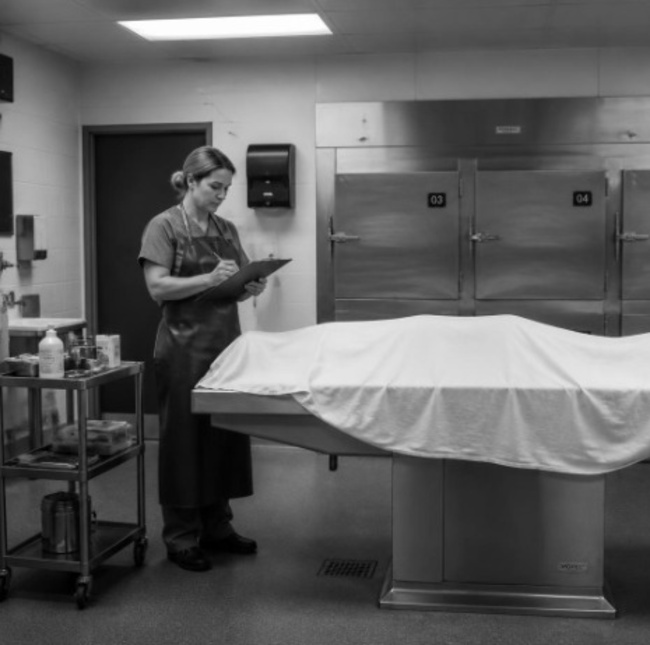
When coroners examine the brains of people who "just got a little forgetful," they all find the same thing. Not what the medical chart says. Not what the doctor told the family. Not "mild cognitive decline consistent with age." Something else entirely. A healthy brain has a specific weight. A specific color — pale gray-pink, with clearly defined folds and grooves. The tissue is firm. The connections between regions — you can see them, physically, the white matter tracts that carry signals from one area to another — are intact and dense. When I hold a healthy brain, it holds together. It has structure. You can feel the density — decades of connections built and maintained and used. A brain that has been burning from the inside looks different. And once you've seen the difference, you can never unsee it. The tissue is darker. Not uniformly — in patches. Like something has been scorching it from the inside, area by area, over years. The folds are narrower. The grooves between them are wider — the tissue pulling away from itself, shrinking. In some areas the connections have simply dissolved. The white matter tracts that should be dense and continuous are thinned. Frayed. Like wiring with the insulation burned off. And the cavities inside the brain — the ventricles — are swollen with fluid, filling the space where tissue used to be. The brain is smaller than it should be. Lighter than it should be. And it looks older — sometimes decades older — than the body it came from. I've held the brain of a 56-year-old man that looked like it belonged to someone in his late seventies. I've held the brain of a 62-year-old woman whose tissue was more degraded than a 78-year-old's I'd examined the week before. And in every single case, the medical chart attached to the body said the same thing. "Mild cognitive decline consistent with age." "Some memory concerns — normal for patient's age group." "Patient reports occasional word-finding difficulty — reassured." Reassured. I know because I examined over 5,000 of them in 28 years as a county medical examiner. And I was never — not once — allowed to put what I actually found into the official record. My name is Ellen Marsh. I retired seven weeks ago. And I'm about to say something that could cost me my pension review, my professional reputation, and every relationship I still have in the county forensic system. My husband told me to let it go. My former colleagues will call me a disgrace. But I'm 59 years old. I've been carrying this for over two decades. And six months ago, the thing I'd been documenting in other people's brains started happening inside my own house. To the person I love most in the world. I want to tell you about the case that changed everything. The one that taught me what happens when you try to tell the truth in this system. His name was Thomas Whitfield. He was 74. I met his family three days before I opened him. Standard protocol — next-of-kin interview, medical history collection, personal effects. His grandson came with his daughter. The boy was maybe twelve. He sat in the chair across from my desk holding a wooden chess piece — a knight — turning it over in his hands the entire time. "Grandpa taught me chess," he said. Not to me. To the knight. "Every Sunday after church. He'd set up the board and let me play white because white goes first and guests should always go first." He turned the piece over again. "Even after five years of Sundays, he still called me his guest." The daughter filled in the rest. Thomas had been a high school math teacher for 31 years. Coached the chess team for 19 of them after school. His former students — adults now, with children of their own — still emailed him math problems they couldn't solve. He'd email back the solution within an hour. Every time. Well into his seventies. She told me about the holiday schedules he organized without being asked. The grandchildren's birthdays he remembered without a calendar. The Tuesday evening FaceTime calls where he'd help with homework — patient, precise, never rushing. The last two years were different. He'd start a sentence and trail off mid-thought. Lost his car in the Costco parking lot — the same Costco he'd been going to for twenty years. Called his daughter by his late wife's name twice in one week. "And the sleep," his daughter said, almost as an afterthought. "The last year or so. Three in the morning, every night. He'd just be up. Sitting in the kitchen. I'd call sometimes and he'd answer on the first ring. Three AM." I noted it in the margin of my intake form. Moved on. His doctor had called it aging. Stress. Maybe early mild cognitive impairment — "but nothing alarming. Nothing that warrants intervention." The grandson hadn't said anything else during the interview. But as they were leaving, he stopped at the door. Looked back at me. Still holding the knight. "Are you going to find out what happened to him?" I told him yes. That's my job. Thomas died of a cardiac arrhythmia on a Wednesday afternoon. Collapsed in his garden. That same grandson found him. He came to my table on Friday. I made the standard examination. Heart, lungs, liver — the full protocol. Cause of death was clear. The arrhythmia was straightforward. Then I opened the cranium. What I found did not match the chart. The chart said "mild cognitive decline consistent with age." Mild. Consistent. Thomas Whitfield's brain had lost an estimated 15% of its volume. The frontal cortex — the region responsible for word retrieval, complex reasoning, the very functions his family described losing — was severely degraded. The tissue was darkened in patches across both hemispheres. White matter connections were thinned throughout. The ventricles were enlarged, swollen with fluid where tissue should have been. This was not mild. This was not consistent with his age. I'd examined brains of people ten years older in far better condition. Something had been burning through Thomas Whitfield's brain for years. Slowly. Silently. While his doctor told his daughter it was nothing alarming. I documented everything. The volume loss. The tissue degradation. The white matter thinning. The ventricular enlargement. I noted that the chronic neurological deterioration may have been a contributing factor to the cardiac event — because the same damage that destroys brain tissue also degrades the nervous system that regulates heart rhythm. I filed the report on a Monday. By Wednesday I was in Dr. Renner's office. Chief medical examiner. He had my report open on his desk. He didn't raise his voice. He never did. "Ellen. This supplemental finding on the Whitfield case." "Yes." "You've documented neurological deterioration as a contributing factor to a cardiac arrhythmia." "The tissue supports it. The vagal tone degradation —" "I'm not questioning your observations." He closed the report. "I'm questioning whether this office benefits from speculating about neurodegenerative contributing factors in a clear-cut cardiac death." "It's not speculation. The tissue —" "The tissue tells you what happened. It doesn't tell you when or why. And it doesn't tell you whether earlier intervention would have changed the outcome." He leaned back. "Thomas Whitfield was a patient in this county's medical system for over forty years. He saw his physician regularly. His cognitive concerns were noted, assessed, and monitored appropriately. If your supplemental finding stands, it implies that four decades of medical oversight failed to identify a progressive neurological condition." "It implies exactly that." "And you're comfortable with the liability that creates? For the physicians? For the system?" "I'm comfortable with documenting what I found." He looked at me for a long time. "Dr. Marsh. You're a talented examiner. Your work is meticulous. But supplemental findings that create retroactive liability for the medical system are not within the scope of this office's mandate. We document cause of death. We do not audit the quality of care that preceded it." He stood up. Walked to the door. "Revise the supplemental. Remove the contributing factor language. The neurological findings can remain as incidental observations. Not causal." "Incidental." "Incidental." "A man's brain lost 15% of its volume while his doctor said nothing alarming. And I should note that as incidental." "You should note it in whatever way does not imply that this office is second-guessing clinical decisions made by living physicians about living patients." He opened the door. "This is not a pattern I want to see again." That sentence. Every coroner I've ever spoken to about this has heard some version of it. Not a threat. Not a command. A boundary. Cross it and find out. I went back to my office. Revised the report. Changed "contributing factor" to "incidental finding." Reduced four paragraphs of documented neurological devastation to a single line. "Incidental finding: age-related cerebral changes noted." Age-related. Thomas Whitfield's brain was 15% smaller than it should have been. The tissue was burned in patches. The connections were dissolving. His grandson sat in my office holding a chess knight from a man who couldn't remember how the pieces moved anymore. Age-related cerebral changes. I thought about the boy in the doorway. Are you going to find out what happened to him? I found out. And then I erased it. I drove home that evening and sat in my car in the driveway for a long time. Then I went inside and started the log. I bought a plain notebook. Black cover. No label. And I started recording what the official reports would never say. Date. Age of the deceased. Condition of the brain tissue. Estimated tissue age versus chronological age. What the medical chart said. What I actually found. The first entry was Thomas Whitfield. The second was three days later. A woman, 61. Chart: "Patient reports occasional forgetfulness — within normal range." Brain tissue consistent with someone 15 to 20 years older. Frontal cortex darkened. White matter thinning throughout. By the end of the first year I had 47 entries. By year five — just over 300. By the time I retired seven weeks ago, that notebook had over 1,100 entries. Over 1,100 people whose brains were decades older than their bodies. Over 1,100 families told "mild cognitive decline consistent with age" while something burned through their person's brain year after year after year. Every single one had the same thing in their chart. Normal for age. Nothing alarming. Reassured. Now I need to tell you about David. David is my husband. We've been married 33 years. He's 63. Retired electrical engineer — 36 years designing industrial power systems for manufacturing plants. David is the kind of man who holds entire systems in his head. Not metaphorically. Literally. He could look at a wiring schematic for a factory — hundreds of connections, dozens of junction points, six different voltage pathways — close his eyes and see the whole thing. Point to the fault without opening them. I watched him do this for forty years. It was the thing about him that amazed me most. Not because I didn't understand intelligence — but because his was a specific kind. Spatial. Architectural. He didn't just remember information. He held structures. Complete systems, all at once, in perfect detail. One Saturday afternoon, maybe three years ago, our granddaughter Sophie was sitting with him at the kitchen table. She was seven. David had a wiring diagram spread across the entire surface — something from a consulting project. Sophie asked him what all the lines meant. He lit up. Got the colored pencils from the junk drawer. Drew her a simple circuit — battery, switch, lightbulb. Explained it in words a seven-year-old could follow. She asked how electricity knows where to go. He drew arrows. She asked what happens when it goes to the wrong place. He drew a little explosion with a smiley face. She looked up at him. "Grandpa, how do you remember all of it?" He smiled. "I just see it, sweetheart. Like a picture. It's all right there." Like a picture. It's all right there. I was standing in the doorway watching them. And I remember thinking — that's him. That's the core of who he is. The man who sees the whole picture. Every Saturday morning for 33 years, David made my coffee before I woke up. French press. Specific ratio — he'd measured it once, in our first year of marriage, and never deviated. Heated the mug with hot water first so the coffee wouldn't cool too fast. Had it on the counter by the time I came downstairs. He never mentioned it. I stopped thanking him somewhere around year five. It just existed — the way the foundation of a house exists. You stop noticing it. Because it never fails. People ask how I did this job for 28 years. How I came home from the table and functioned like a normal person. The answer was always David. I spent my days documenting how people end. He reminded me, every evening, every Saturday morning, every time he held Sophie and explained something with a patience I'd lost years ago, that people also live. The precision in him was the counterweight to the damage in my work. Without it, I don't think I would have lasted 28 years. I think the notebook would have become my whole world. I need to tell you when I first noticed something was wrong. And I need to tell you that I noticed later than I should have. Which is the part that still keeps me up. Because I knew better. I had the notebook. I knew exactly what the early signs looked like. And I still almost missed them in my own house. The first thing was the words. David had always been precise with language. Engineers are. When he described a problem, he used the exact term. Not an approximation. Not "the thing." The word. "The capacitor." "The relay." "The junction box." Forty years of precision. About two years ago, I noticed the pauses. We were in the garage — David at his workbench, the same bench where he'd built and repaired things for thirty years. He reached toward the shelf and stopped mid-motion. His eyes moved slightly. Like he was scanning for something that should be right there. "Can you hand me the... the thing. The measuring thing." The tape measure. Hanging on the same hook it had hung on for a decade. A word he'd used ten thousand times. I told myself it was nothing. Retirement adjustment. He wasn't exercising his brain the same way. He'd sharpen back up. That's what I told myself. A medical examiner with a notebook full of this exact pattern — and I told myself it was nothing. Then came the 3AM wakeups. David started waking at three in the morning. Every night. I'd feel him turn over. Turn back. Lie still. I'd hear his breathing — shallow, awake, staring at the ceiling in the dark. "Can't sleep?" "I'm fine. Go back to sleep." The first night, I told myself it was nothing. The second night, I felt uneasy. By the third night, I was lying beside him with my pulse in my throat. Because I knew what three in the morning meant. In my notebook, sleep disruption — specifically waking between 2 and 4 AM — appeared in the charts of over 70% of the cases where I found severe brain tissue degradation on the table. Seventy percent. The most consistent correlating symptom I'd tracked across my entire career. Thomas Whitfield's daughter had mentioned it during the family interview. Three in the morning. Every night. His daughter said it almost as an afterthought. I'd written it in the margin and moved on. Now I was lying next to it. I want to tell you that I acted immediately. That my 28 years of expertise kicked in and I responded with precision. I didn't. I lay there in the dark next to him at 3:17 AM and I bargained. With the evidence. With the pattern. With everything I knew. Maybe it's stress. Maybe it's the retirement adjustment. Maybe he's just getting older. I sounded exactly like the charts. Normal for his age. Nothing alarming. And I thought about a woman named Patricia who sat in my office four years ago. Her husband had died of a stroke at 67. She told me he'd been waking at three in the morning for two years. His doctor said anxiety. I opened his brain and found the tissue of an 85-year-old. Patricia's face. David's breathing. The same hour. The same reassurance. The same fire. The woman who had spent years documenting brains telling a different story than the chart was lying in her own bed writing the same chart for her own husband. In her own head. At 3 o'clock in the morning. Then the Saturday coffee stopped. I came downstairs one morning and the kitchen was cold. The French press was in the cabinet. The mug was on the drying rack, dry. No coffee. No warm cup on the counter. No evidence that anyone had been there before me. David was in the living room. Holding the newspaper. I'm not sure he was reading it. "No coffee this morning?" He looked up. And I saw it — the two-second pause. The scanning. "I... I must have forgotten." Forgotten. Thirty-three years. Not one missed Saturday. And he forgot. I stood in that kitchen for a full minute. I've held thousands of brains. I've documented damage that would terrify most people. I've written clinical descriptions of tissue destruction that represented decades of someone's mind quietly disappearing. None of it prepared me for standing in my own kitchen realizing that the man who remembered every Saturday for 33 years had stopped remembering. That was the morning I stopped bargaining. I did what I do. I applied my training. I made a chart. Dated entries. Cognitive observations. Sleep patterns. Word-retrieval frequency. Task completion. I monitored David the same way I'd document findings at work — precise, dated, clinical. And I selected interventions with the care of someone who had spent 28 years understanding what happens to brains. Ginkgo biloba — the standardized extract with clinical trial data, not the cheap capsules from the drugstore. Omega-3s — high-EPA formulation, the one shown in studies to support neural membranes. Lion's mane mushroom — the real extract, not the diluted version most brands sell. I wasn't guessing. I wasn't grabbing random bottles off a shelf the way most people do when they're scared. I was selecting compounds with published evidence, at clinically relevant doses, from verified sources. I knew more about neurological supplementation than David's doctor. For three weeks, I felt in control. I was ahead of this. I tracked everything. Week one — too early for change. Week two — maybe a slight improvement in morning alertness, hard to tell. Week three — the 3AM wakeups continued. Every night. I noted it. Circadian disruption persistent. No response to current protocol. By week six I adjusted. Increased the omega-3 dosage. Added phosphatidylserine. Added a B-complex with methylated folate. Read four more papers. Refined the protocol. Week ten. Nothing had changed. David was still losing words. Still waking at 3AM. Still pausing mid-sentence with that searching look. The fog that settled over him by afternoon was getting worse — and it was getting worse faster now than when it started. And the Saturday coffee never came back. I noticed something else during those weeks. David had started organizing things. Not cleaning — organizing. Lining the remote up parallel to the table edge. Squaring the newspaper to the exact corner of the counter. Straightening the shoes in the hallway until they were perfectly aligned. I'd watch him spend two minutes adjusting a stack of mail until every edge was flush. He couldn't hold a wiring schematic in his head anymore. But he could make sure the salt shakers were exactly three inches apart. I sat at my desk one night staring at my tracking chart — three months of careful daily observations — and something cracked inside my professional confidence. Three months. Every compound absorbed. Every compound circulating. And all of it stopping at the same wall that had protected David's brain his entire life — including, it turned out, from the things trying to save it. That was the night I went to the closet. Not the bedroom closet. The one in my home office. The one with the box I hadn't opened in years — the box I'd brought home when I stopped trusting the official files to hold the truth. I pulled it down. Set it on my desk. Opened it. Photographs. Hundreds of them. My private archive — the images that never made it into the official reports. Every brain I'd recorded in the notebook, I'd also photographed. High resolution. Labeled with date, age, and the chart's official description. I spread them across my desk. Twenty-eight years of brain tissue. And I did something I'd never done before. I lined them up chronologically. The early cases on the left. The recent cases on the right. Same age range — all 55 to 70. All labeled "mild cognitive decline consistent with age" by their physicians. All showing damage far beyond what the charts described. But when I laid them side by side, I saw something I'd missed in the one-at-a-time pace of the work. The damage was getting worse. Not just case by case — across the population. The brains from my last five years showed more extensive burning than the brains from my first five. The darkened patches were larger. The grooves were wider. The shrinkage was more pronounced. Whatever was causing this was accelerating. Not just inside individual brains — across everyone. I sat there at midnight staring at a desk covered in photographs of damaged brains and felt something I hadn't felt since the Whitfield case. Not grief. Not guilt. Clarity. I wasn't looking at isolated cases. I was looking at an epidemic that nobody was measuring. Because nobody was looking. I picked up the phone and called Kenji Hayashi. Kenji is a neuropathologist at Kyoto University. We met at an international forensic pathology conference in Vienna in 2009. He's one of the foremost brain tissue researchers in Japan. We'd maintained a professional correspondence for years — he'd published extensively on the specific pattern of brain tissue damage I'd been documenting in my notebook. It was 11PM my time, early afternoon in Kyoto. "Kenji. I'm looking at my photographs. I need you to help me understand what I'm seeing." I described the pattern. The chronological progression. The acceleration. He listened without interrupting. Then he was quiet for a long time. "Ellen. I must ask you something and I need you to answer as a scientist. Not as a wife." "Go ahead." "The supplements you selected for David. The ginkgo. The omega-3. The lion's mane. You chose them with great care. You dosed them correctly. You gave them adequate time." "Yes." "And you know why they failed." It wasn't a question. "I know why they failed." "Say it." "They can't cross the barrier." "No. They cannot." He paused. "You are the most informed wife I have ever spoken with. You understand the mechanism. You can describe the damage. You selected the best available interventions with more precision than most clinicians." He paused again. "And I must tell you — nothing you have given him has reached his brain." I looked down at my desk. At the photographs. At the burned tissue in image after image. At David's face in the framed photo on the corner of my desk — sharp eyes, the trace of a smile, the man who held systems in his head. "The blood-brain barrier is not a flaw in human design," Kenji said. "It is protection. The most sophisticated filtration system in the body. It keeps toxins and foreign compounds out of the brain. Without it, the neural environment would be exposed to everything in the bloodstream and would fail within hours." "I know what the barrier is, Kenji." "I know you do. But I need you to hear the implication. The barrier that protects David's brain also traps the fire inside it." Traps the fire inside it. I looked at the photographs again. Every one of those brains had been behind a barrier. Protected. Sealed. And burning. "The free radicals damaging his neurons — hydroxyl radicals, the most destructive species in the body — are generated inside the brain. Behind the barrier. And the barrier that keeps toxins out also keeps your treatments out. The ginkgo is absorbed in his gut. The omega-3 reaches his bloodstream. The lion's mane stimulates nerve growth factor in his peripheral system. All useful. None of them can pass through the barrier to reach the neurons that are being destroyed." "It is like watching a fire burn inside a sealed room through a window," he said. "You have every tool. Every compound. Every piece of knowledge. And you cannot reach the fire because the wall will not let you through." "And there is one more thing you must understand," he continued. "The fire does not burn at a constant rate." "What do you mean?" "When a neuron is damaged by the radical, the dying cell releases more of them. Which damage the neighboring neurons. Which release more. It is a cascade. The fire creates its own fuel. Every year there is more damage because the damage itself generates more of the radicals that caused it." He let that settle. "This is why the decline accelerates. You have seen it in your notebook — the early years are slow. A few connections lost. Barely noticeable. Then the fire reaches a threshold where it begins feeding itself. What took eight years of slow burning can advance more in the final two years than in the previous eight combined." I thought about David. The pauses that started as two seconds and were getting longer. The fog that was thickening faster now than when it began. The fire was feeding itself. "Then what puts out the fire?" I said. "The only thing small enough to pass through the wall." He pulled up something on his screen. "In Japan we have studied this for over twenty years. The radical that drives the damage is generated inside cells. Behind membranes. Behind the barrier. In locations that no conventional antioxidant can reach." "Vitamin C cannot reach it. Vitamin E cannot reach it. Ginkgo cannot reach it. They are too large. They circulate in the bloodstream — but they cannot penetrate the barrier." "There is one molecule that can." He showed me a diagram. Two small circles bonded together. "Molecular hydrogen. H2. The smallest molecule in existence. So small it passes through cell membranes the way water passes through sand. Into every cell. Every neuron. Including behind the barrier where the fire is burning." "And it is selective," he continued. "This is the critical distinction. Most antioxidants neutralize all free radicals — including the ones your body needs. Your immune system uses certain free radicals for signaling. A conventional antioxidant is like extinguishing every flame in a house because one room is burning. You stop the fire. But you also stop the furnace, the stove, the water heater. Everything." "Molecular hydrogen only targets the destructive radical. The one causing the damage. It converts it into water — harmless water — and leaves every beneficial radical untouched. The immune signaling stays intact. Only the fire goes out." I thought about the three bottles on my kitchen counter. The ginkgo. The omega-3. The lion's mane. Three months of precise dosing. Every capsule absorbed somewhere in David's body. Not one of them had ever reached the fire. "How much research?" "Over 2,000 peer-reviewed papers. More than 80 registered clinical trials. Published in journals your colleagues read — Nature Medicine, the Journal of Clinical Biochemistry and Nutrition. Japanese hospitals have used hydrogen therapeutically for years. This has more published evidence than many pharmaceuticals your husband's doctor would prescribe." "Why hasn't anyone told me this?" He was quiet. "Because it is too simple. Because there is no patent on hydrogen and therefore no company with the resources to market it the way a drug is marketed. And because most physicians in the West have never read the research. It is not taught in their medical schools. So it does not exist in their vocabulary." "But it exists in yours." "It has existed in mine for twenty years. I take it myself every morning." "A neuropathologist. Twenty years." "Yes." I thanked him. Ended the call. And did what I always do — I went to find it myself. I found a hydrogen water generator on Amazon that night. Good reviews. $180. Two-day shipping. I ordered it immediately. It arrived Thursday. I set it up on the kitchen counter. Filled the tank. Pressed the button. Watched the bubbles rise through the water. I gave David the first glass. Then another the next morning. And the next. For two weeks. Nothing. No clarity. No change in the fog. No improvement in the 3AM wakeups. Not a flicker. I was confused. The research was clear. The mechanism was sound. Kenji took it every morning. Why wasn't it working? One evening I stood over the machine and watched. Really watched. The cycle finished. I poured the water into a glass slowly, holding it up to the kitchen light. Tiny bubbles. Rising to the surface. Reaching the air. Vanishing. I watched for thirty seconds. The bubbles slowed. Stopped. By the time I set the glass down, the water looked like water. Whatever had been in it was in my kitchen air now. Not in the glass. I was watching David's treatment evaporate in real time. I ordered a dissolved hydrogen meter from a lab supply company. The kind of thing you do when you've spent 28 years measuring things for a living. I generated a fresh glass and tested it immediately. 1.2 parts per million. The number confirmed what I'd seen with my eyes — the hydrogen was leaving faster than David could drink it. I tried drinking it faster. Standing over the machine, glass in hand, drinking the moment the cycle finished. 1.8 parts per million. The clinical studies used 10 to 12. I was delivering a fraction of a therapeutic dose. David's brain was getting almost nothing. Two weeks wasted. I called Kenji back. "The generator," I said. "It's not working. The concentration is barely measurable." He didn't sound surprised. "This is the problem I should have warned you about more clearly. Hydrogen escapes through almost anything — the plastic tank, the tube, the air above the water. By the time you pour it, most is already gone. The machines generate it. But they cannot hold it." "What about the bottled hydrogen water I've seen online?" "Worse. Shipped in plastic or aluminum. Sitting on shelves for weeks. Almost no hydrogen left by the time it reaches a customer." "Then what actually delivers it?" "Tablets. Magnesium-based effervescent tablets. You drop the tablet in water and drink immediately while the reaction is still happening. The hydrogen generates in your stomach — behind your stomach lining. Absorbs directly into your bloodstream. No time to escape. No container problem. The full concentration reaches your cells." "And crosses the barrier." "And crosses the barrier. Because it is already the right size. No conversion needed. The molecule is simply small enough to pass through the wall that blocks everything else." "What concentration?" "This matters greatly. Most hydrogen tablet products I have tested deliver 2 to 3 parts per million — better than machines, but still below the clinical threshold. The studies showing neurological and cardiovascular results used 10 to 12 parts per million or higher." "What do you use?" "A company called PrimeCell. They use magnesium-based technology. 12 parts per million at the moment of absorption — the highest concentration I have tested across dozens of products. And each tablet delivers 80 milligrams of bioavailable magnesium — not magnesium oxide, which passes through the body largely unabsorbed. Actual bioavailable magnesium. Required for over 300 enzymatic processes, including oxidative stress regulation." He gave me the specifics. PrimeCell H2, made by Amala Health. Third-party tested with published certificates of analysis. Made in the USA. "One more thing, Ellen. You will notice something quickly. Within 15 to 20 minutes. Mental clarity. A lifting. The fire that has been burning in the brain — when it is dampened, you feel it. The fog thins. It is not subtle." "For David?" "For David. And for you. Twenty-eight years of chemical exposure in your work. Your brain has its own burden." I ordered PrimeCell that night. While the hydrogen water machine sat on my counter, useless. The bottle arrived three days later. I checked the certificate of analysis — 12 PPM verified. Third-party tested. Heavy metal screening clear. I checked it the way I check everything. Then I dropped the first tablet in a glass of water. Watched it fizz. The magnesium reaction. I knew the chemistry — metallic magnesium reacting with water to produce hydrogen gas and magnesium hydroxide. The science was sound. The delivery method was different from anything I'd tried. I gave the glass to David. "Drink this." "What is it?" "Something different. Not the machine water. Just try it." He drank it. Sat down. Went back to the paper. I set a timer on my phone. Professional habit. Nineteen minutes. David put the paper down. Looked around the room. Looked at me. "Huh." "What?" "I don't know. Something just... cleared." I didn't respond. I was watching his eyes. They were different. Focused. Present. The slightly distant quality that had settled over them — the look I'd been dreading because I'd read it in chart after chart attached to brains that told a different story — was thinner. "Do you want to go for a walk?" he said. He hadn't suggested a walk in four months. "Yes." We walked. He talked. Full sentences. No pauses. No searching. He told me about a wiring problem from an old project — a fault in a three-phase system he'd solved twenty years ago. He described it in complete technical detail. The vocabulary was back. The precision was back. One walk. One glass. Nineteen minutes. I started taking it myself the next morning. Kenji was right. Something lifted within twenty minutes that I hadn't realized was there. A heaviness behind my eyes I'd been blaming on 28 years of autopsies. It thinned. Like someone cleaned a window I'd forgotten was dirty. By the end of week one, David was sleeping through the night. Not gradually. The 3AM wakeups stopped. I'd wake from habit, reach over, feel him breathing — steady, deep, asleep. The symptom I'd tracked in 70% of my notebook cases. The same symptom Thomas Whitfield's daughter mentioned like an afterthought. Gone. I lay in the dark that first full night listening to my husband breathe. And I thought about every family who'd sat across from me over 28 years. Every husband. Every wife who described the 3AM wakeups that no doctor could explain. Who listed the symptoms I recognized — the fog, the word-finding, the dimming — while the chart said normal for age. I'd documented what was happening to their brains on my table. I'd written "incidental finding: age-related cerebral changes" because I was told to. And now I was lying next to the proof that it wasn't age-related. That the fire could be reached. That it was treatable. Week two — the word-finding sharpened. David still paused occasionally. But the pauses were shorter. The substitutes were closer. And sometimes — more and more often — the exact word came without any hesitation. "Capacitor" instead of "the round thing." "Junction box" instead of "the thing on the wall." Week three, I came home from an errand and smelled coffee. I stopped in the hallway. Stood there. When I walked into the kitchen, the French press was on the counter. Steam rising from a mug — my mug, the blue one, heated with hot water first. Exactly the way he'd made it for 33 years. David was reading the paper at the kitchen table. He didn't look up. "Your coffee's getting cold," he said. I picked up the mug with both hands and turned toward the window so he wouldn't see my face. He never mentioned the gap. The weeks of cold kitchens and empty counters. Whether he knew it had stopped and then started again, or whether the thread just picked back up — I don't know. I didn't ask. Some things you don't examine. You just hold the mug and let the warmth reach your hands. Week four, Sophie came for dinner. She brought a diagram from a science fair project. Something about circuits. David spread it across the table. Got the colored pencils. Sophie watched him work for a while. Then said: "Grandpa, is the picture back?" David looked at the diagram. Then at Sophie. Then at the colored pencils in her hand — the same ones he'd used to draw her that first circuit three years ago. "Yeah," he said quietly. "I think it is." I left the room. Sat on the stairs. Put my head in my hands. The picture. Like a picture. It's all right there. It was back. Because something had finally reached the place where it was disappearing. Something had crossed the wall. Dampened the fire that had been feeding itself for years. Let his brain do what it was designed to do. At his next checkup, David's doctor ran the standard cognitive screening — the one he'd scored borderline on six months earlier. 94th percentile. Higher than his baseline from three years prior. The doctor looked at the results. Looked at David. "These scores are excellent. Whatever you're doing — don't stop." He didn't ask what David was doing. Didn't ask what changed. Just noted the improvement and moved on. David has been taking PrimeCell for five months. One tablet in water every morning. He makes two glasses now — one for me, one for himself. Before the coffee. The fog is gone. The words are sharp. He finished a consulting project last month that required holding a seventeen-junction wiring schematic in his head. He did it without notes. He sleeps through the night. Every night. The organizing stopped. I noticed one morning — the remote was at an angle on the couch cushion. The newspaper was folded crookedly on the counter. His shoes were kicked off at odd angles in the hallway, the way they'd always been before. He didn't need to line things up anymore. The architecture was back. Last week he was on the floor with Sophie, building something from her electronics kit. She asked how a transistor works. He explained it in three sentences a seven-year-old could understand. She said "cool" and snapped the piece into place. He looked up at me. Grinned. I hadn't seen that grin in two years. The grin of a man who knows things and enjoys knowing them. The grin of a man whose mind is fully his. I'm taking it too. The heaviness I'd blamed on 28 years of autopsies is gone. My sleep is better than it's been in a decade. I'm 59 and I feel sharper than I did at 45. I'm retired now. I don't hold brains anymore. I don't write reports. I don't sit across from families and say "incidental finding" when I know what the tissue actually showed. But I think about them. Every day. I think about Thomas Whitfield. His grandson holding a chess knight in my office, asking me if I was going to find out what happened. I found out. And then I erased it because I was told to. I think about the notebook. The families who were told "normal for age" while the fire burned through their person's brain year after year. And I think about every husband and wife who watched the fog settle over the person they loved and were told there was nothing to do. There is something to do. There was always something to do. It's just that nothing anyone offered could reach where the damage was happening. Until this. If you're reading this, I know where you are. The fog is settling. Over you, or over someone you love. The words that used to come easily now take a beat too long. The sharpness that defined them — or defined you — is dimming. Not fast. Not dramatically. Slowly. The way a bulb dims so gradually you don't notice until one day the room is dark and you can't remember when the light changed. Your doctor says it's normal. Aging. Stress. Nothing alarming. His doctor kept saying normal for your age. I keep thinking about the men on my table whose doctors said the same thing. Nothing your doctor has ever given you — not one pill, not one supplement, not one recommendation — can cross the blood-brain barrier. Think about that. Every treatment stops at the wall. Every supplement you've tried — every ginkgo, every fish oil, every brain vitamin, every nootropic from the health food store — was absorbed in your gut, entered your bloodstream, and stopped there. All of them working on the surface. While the fire burned behind the wall, in the neurons, in the cells that hold your memories and your words and your sleep and your self. Every supplement I gave David worked everywhere except the one place it mattered. Nothing got through. One thing gets through. The smallest molecule in existence passes through the barrier that blocks everything else. That is not marketing. That is physics. Into every neuron. Behind the wall. To the fire. And once it's there, it puts the fire out. Selectively. Without touching the radicals your body needs. Without side effects. Without interfering with any medication. Turning the destructive ones into water and leaving everything else intact. PrimeCell H2. One tablet in water. 12 parts per million — the concentration used in clinical research. Plus 80 milligrams of bioavailable magnesium. Third-party tested. Made in the USA. 90-day money-back guarantee. If the fog doesn't thin, if the sleep doesn't change, if the clarity doesn't return — every penny back. No questions. You're standing where I stood six months ago. One path leads to the same place my notebook leads. The fog thickens. The words get harder to find. The 3AM wakeups don't stop. The fire feeds itself — every year faster than the last. The person you love — or the person you are — fades so slowly that you keep calling it aging until one day it isn't aging anymore. And by then the fire has burned through what you can't get back. I documented over 1,100 brains that went down that path. Every one of their families was told the same thing. Normal for age. Nothing to worry about. Another path is the one David is on. The fog lifts. The words come back. The sleep comes back. The picture comes back. You feel the clarity return in the first twenty minutes and you watch it build, week by week, into something you'd stopped believing was possible. I chose the second path. David is sleeping through the night and building circuits with his granddaughter because I chose the second path. The 90-day guarantee means you risk nothing. Nothing except the days you spend waiting while the damage compounds where nothing else can reach. David didn't run out of time. Because I found the one thing that could cross the wall. Don't let the fire burn while you wait. — Dr. Ellen Marsh, MD County Medical Examiner (Ret.), 28 years https://track.getamalahealth.com/5548c06d-d9c3-4785-b466-fec64a6fdb28 P.S. — You'll feel it within 20 minutes of your first glass. Not the long-term benefit — that builds over weeks. What you'll feel first is the clarity. The fog thinning. David felt it at nineteen minutes. I felt it at twenty. I'd spent two weeks giving him water from a $180 machine that delivered almost nothing. The first glass of PrimeCell did more in nineteen minutes than that machine did in fourteen days. That first glass tells you immediately whether this is real. It is real. P.P.S. — If you're the wife reading this — if you've been watching your husband lose words and sleep and sharpness — I need you to hear something. You are not imagining it. The doctor may say normal for his age. You know better. You've been watching the man, not the chart. Trust what you've been seeing. Order it. Hand him the glass. You might be the difference between the husband who fades and the husband who comes back. I was. The coffee came back. The grin came back. The picture came back. But only because I stopped waiting for his doctor to figure out what I already knew. P.P.P.S. — David's doctor saw his cognitive scores jump from borderline to the 94th percentile and said "whatever you're doing, keep doing it." He didn't ask what changed. Didn't investigate. Didn't adjust the protocol for the next patient walking in with the same fog. That's the system. They notice when it works. They don't ask why. You don't have to wait for the system to catch up. The research exists. 2,000 peer-reviewed papers. David's scores exist. My notebook exists. The proof is there for anyone willing to look. P.P.P.P.S. — PrimeCell is a small company. They sell out. Kenji warned me — he's had trouble ordering from Japan twice when stock ran low. I keep two bottles in the house now. If you're watching the fog settle — over someone you love, or over yourself — check availability now. They have a buy 3 get 3 free deal that I use to stock up. Every day without this is another day the damage builds where nothing else can reach. P.P.P.P.P.S. — For the men reading this about yourselves: this is not a women's supplement. This is not your wife's shelf. David takes it. Kenji takes it — a neuropathologist for twenty years. The fog doesn't care about your gender. Neither does the fire. Neither does the molecule that puts it out. Drop the tablet in water. Drink it. Set a timer for twenty minutes. Decide for yourself. P.P.P.P.P.P.S. — 90-day money-back guarantee. If the fog doesn't lift, every penny back. David's doctor never offered a guarantee on the diagnosis of "normal for your age." Neither did the $180 hydrogen machine that sat on my counter for two weeks doing nothing. Neither did any supplement I spent three months carefully selecting that never reached his brain. PrimeCell guarantees it because they've seen what happens when the molecule actually reaches the fire. Don't forget about the guarantee.
Fix Yourself at the Cellular Level
PrimeCell H2 is a next-generation molecular hydrogen tablet formulated to support your body's natural antioxidant defenses — helping you feel sharper, more energized, and more like yourself.
LEARN MORELike this ad? Make it yours.
Crush rebuilds this exact creative around your product — your brand, your colors, your offer — in about a minute.