
Inactive· since Aug 19, 2026
- 28
- days it ran
- 0
- relaunches
Ad copy
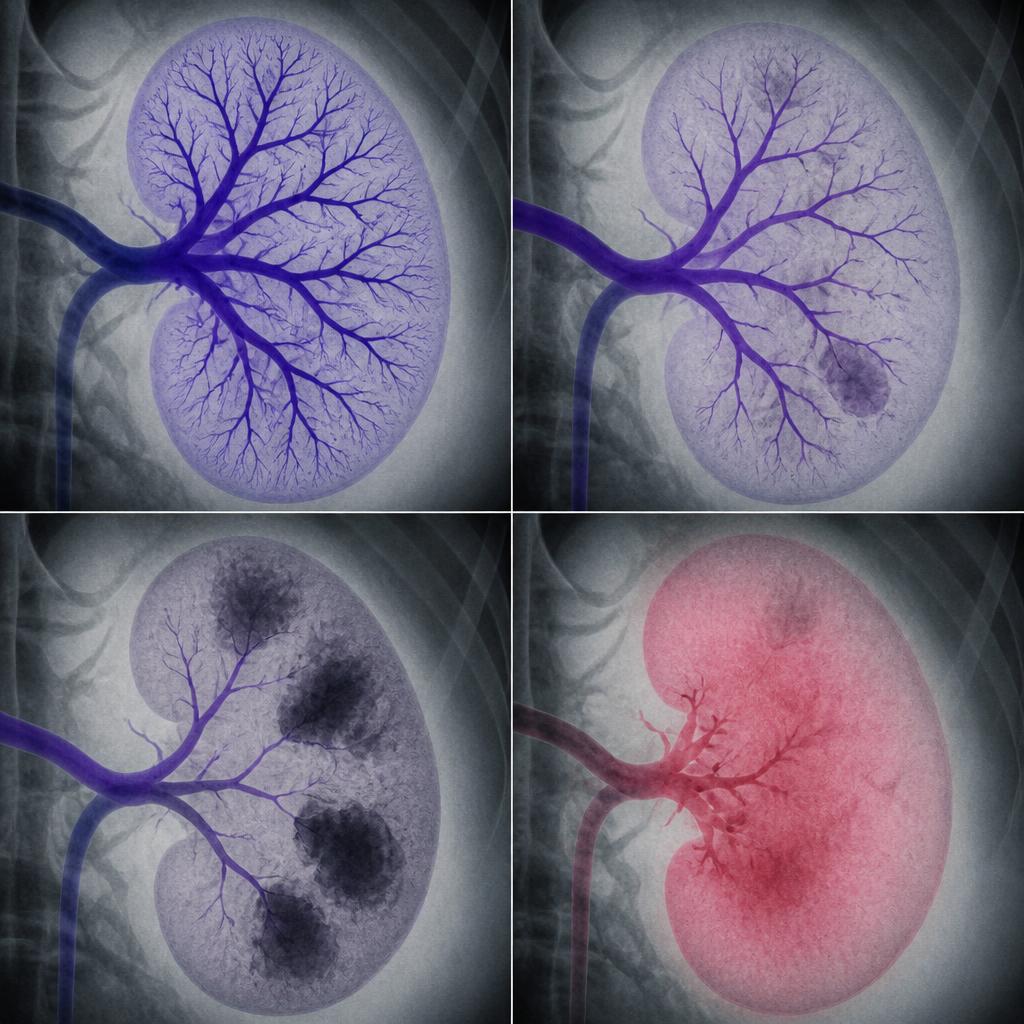
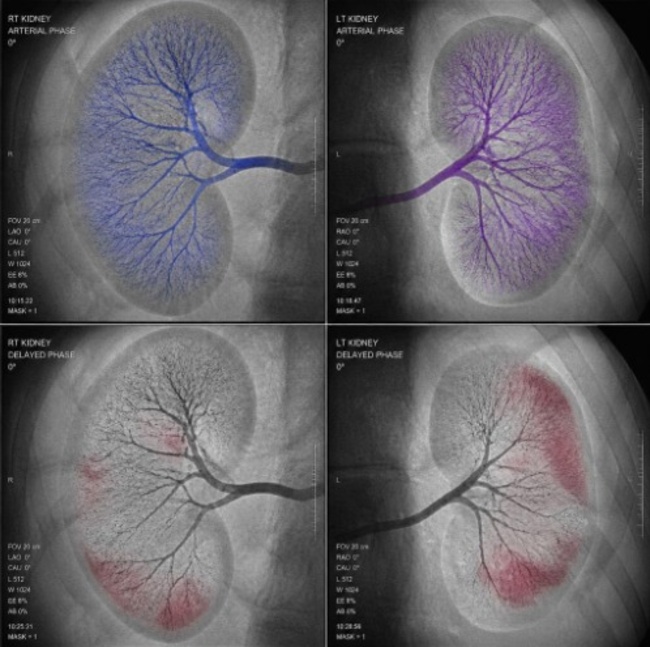
I don't give a f*ck if this upsets you. I am going to say something that nobody with Type 2 diabetes wants to hear. I have been a board-certified endocrinologist for twenty-four years. I have prescribed Metformin to more patients than I can count. I prescribed it to my own father. He took it faithfully for fourteen years. Never missed a dose. Never questioned me. His A1C was 6.1 the morning he collapsed on a gymnasium floor and died at sixty-four. Six years ago, I started taking it myself. Last October, sitting alone in an exam room designed for my patients, I stared at five specialist reports that showed my own body doing the exact thing I watched kill my father — while every number on my chart read managed. My name is Elaine Hartwell. I am fifty-eight years old. I am writing this because I found what my training never gave me and I do not care what my colleagues say about it. If you have Type 2 diabetes, or someone you love does, please read the entire thing. I know it is long. I know you are scrolling. I know you have heard a thousand promises about blood sugar. Fourteen months ago I would have given anything for someone with my credential to sit me down and tell me what I am about to tell you. Nobody did. My father was diagnosed with Type 2 diabetes at fifty. A1C of 7.3. Fasting glucose 148. He was a high school principal in a small town outside Richmond. Big man. Played basketball in college. Coached his school's team until his knees gave out at forty-five. I was in my second year of fellowship when I wrote his first Metformin prescription. I remember the weight of it. My father sitting in my apartment kitchen, his reading glasses on, holding the prescription slip like a report card. He looked at me over his glasses and said, "Is this going to fix it, Elaine?" I said, "It's going to manage it, Dad. We'll manage it together." Fourteen years. We managed it together. He walked three miles every morning. Cut his carbohydrates. Lost twenty-two pounds the first year and kept it off. He ate the Mediterranean protocol I recommend to every patient who sits in my exam chair. He came to see me every three months. Not because his doctor required it. Because I was his doctor and I was his daughter and he did what I told him to do. His A1C came down to 6.5. His fasting glucose stabilized at 122. His blood pressure held steady with a low-dose ACE inhibitor added at year three. By every guideline I had helped write, he was managed. My father was a success story in my own practice. Managed. That word again. The feet started at year nine. He mentioned it at Thanksgiving dinner — a tingling in his toes, both sides, worse at night. I told him it was probably positional. I told my own father that his bilateral neuropathy was probably positional because his A1C was 6.5 and neuropathy at that level didn't match my training. By year eleven the tingling had become numbness. He stepped on a nail in his garage and didn't feel it. My mother found the blood trail on the kitchen floor. I ordered nerve conduction studies. Measurable peripheral neuropathy. Both feet. Right worse than left. His A1C was 6.4. The kidney function started declining at year twelve. I had been tracking his creatinine because that is what I do. It had been climbing quietly. His eGFR dropped from 86 to 71 over three years. I referred him to nephrology. They said early stage 2 diabetic nephropathy. His A1C at that appointment was 6.3. The retinal specialist found dot hemorrhages in both eyes at year thirteen. His A1C was 6.2 — the best reading he had ever had. His best reading. While his feet were going numb and his kidneys were failing and his eyes were bleeding. And then, on a Tuesday morning in February, fourteen years after I wrote his first prescription, his heart stopped. He was walking into the school gymnasium to watch a basketball practice. The same gym where he had coached for twenty years. His principal's badge was still clipped to his shirt when the paramedics arrived. Acute myocardial infarction. Massive. The kind that doesn't give you a second chance. He was sixty-four years old. His A1C at his last quarterly appointment — six weeks before the gym floor — was 6.1. The best number he had ever recorded. I stood in the ICU hallway in the hospital where I had completed my training and I looked at the chart and I saw the number and I understood for the first time that the number had never been the point. The number had been perfect. My father was dead anyway. I did not grieve the way normal people grieve. I grieved the way a doctor grieves when the protocol she built killed the patient she loved most. I grieved with my face in the research. I read his chart backward. Every lab, every note, every A1C, every fasting glucose for fourteen years. All of them in range. All of them managed. All of them telling me everything was working while five organs deteriorated underneath. And then I put it away. Because I was a practicing endocrinologist and I had patients the next morning and the protocol was the protocol and what else was I supposed to do? Six years later, at my annual physical, my own fasting glucose came back at 142. My A1C was 7.1. I was fifty-two years old. My father had been diagnosed at fifty. I did what I would tell any patient to do. I started Metformin. I followed my own protocol. Diet. Exercise. Monthly monitoring. I lost fifteen pounds. I was disciplined. I was thorough. I was everything a physician should be about her own disease because I had watched what happened when the disease won. My A1C came down to 6.4. My fasting glucose stabilized at 118. My internist was pleased. My numbers were managed. Managed. Last September — six years into my own treatment — I ordered a comprehensive workup on myself. Not because anything felt wrong. Because my father's fifty-eighth birthday was approaching and I had not been able to stop doing the arithmetic. He died at sixty-four. I was fifty-eight. Same disease. Same protocol. The results came back over two weeks. Five specialist reports. I read each one alone in my office after my last patient had gone home. The podiatrist found measurable peripheral neuropathy in both feet. Right worse than left. I had been sleeping with my feet outside the covers for four months because the tingling woke me at 2 AM. I had blamed new shoes. The nephrologist found my eGFR had dropped from 88 to 72. Three years of quiet decline. Same trajectory as my father's kidneys at the same stage. She used the phrase early stage 2 diabetic nephropathy. Nobody had flagged it because my A1C had read managed and a creatinine of 1.08 does not trigger a referral in the guideline I had signed off on. The ophthalmologist found small dot hemorrhages in both retinas. Early background retinopathy. I had been squinting at charts for six months. I had blamed my reading glasses. The hepatologist found grade 2 fatty liver on ultrasound. My ALT had been running at 48 for two years. My colleague had said keep an eye on it. Nobody kept an eye on it. My cardiologist found elevated coronary calcium. Not alarming by itself. Alarming when you add it to the other four. I sat in my office on a Friday evening with all five reports spread on my desk and I understood something I had spent twenty-four years refusing to understand. Every drug in my father's protocol — and mine — had been treating a downstream measurement. Metformin was managing glucose output. The ACE inhibitor was managing blood pressure. The eventual statin they added was managing lipids. Not one of them had touched the thing that was doing this to five organs at the same time. The same thing. In my feet. In my kidneys. In my eyes. In my liver. In my coronary arteries. One mechanism. Five targets. Zero medications addressing it. I sat at my desk that night until 1 AM doing something I had not done since fellowship. I opened PubMed and I searched for the mechanism. Not the management guidelines. Not the drug dosing papers. The mechanism. What I found was not hidden. It sat in journals I had access to for twenty-four years. Diabetes Care. The Journal of Clinical Endocrinology. Circulation. Hyperglycemia — even controlled hyperglycemia — generates hydroxyl radicals. The most destructive free radical the body produces. More destructive than superoxide. More destructive than hydrogen peroxide. The one radical the body has no dedicated enzyme to neutralize. These radicals burn. That is not a metaphor. That is the chemistry. They attack cell membranes. They destroy mitochondria. They shred the lining of blood vessels. They degrade nerve sheaths. They damage the filtering units in kidneys. They break down the tiny blood vessels in the retina. Five organs. Same burn. And Metformin — the drug I prescribed my father, the drug I prescribe myself, the drug I have prescribed to three thousand patients — lowers the glucose number on the chart. It does not stop the radicals the glucose already created. It does not extinguish the burn. It moves the fuel. The fire keeps going. My father's A1C was 6.1 on the morning he died on a gymnasium floor. The number was perfect. The burn had been eating through his arterial walls for fourteen years. I closed my laptop at 3 AM. I sat in my kitchen. I could not sleep. I understood at that moment that I had prescribed the exact protocol that failed my father to three thousand other people. Every one of them walking around with the same burn grinding through the same organs while I smiled at the same number and called it managed. Two months later, a patient walked into my office who should not have been in the numbers she was in. Her name was Margaret Dao. Sixty-eight. Type 2 diabetic for fifteen years. She had been my patient for four years after transferring to me following a hospital admission for uncontrolled glucose. Her A1C at intake had been 7.8. She was on Metformin, an ACE inhibitor, and a statin. I pulled her chart before she walked in. I expected to add another medication. Her A1C was 5.5. Her fasting glucose was 91. Her eGFR — which had been declining steadily for three years — had climbed back to 84. I stared at the chart. I pulled up the previous twelve months of labs. The trajectory was unmistakable. Steady, consistent improvement across every marker. Not the kind of improvement you see from diet. Not the kind you see from exercise. Something else. I looked at her across the exam room. "Margaret. What are you doing?" She was quiet for a moment. Then she said, "My son David. He works in Tokyo. He is a biochemist. He has been telling me to try something for two years. I finally listened." I asked her what her son had sent her. She said, "I think you need to hear it from him. He can explain it better than I can. He is visiting next month. Would you come to dinner?" A board-certified endocrinologist. Twenty-four years of practice. Three thousand patients. And I said yes to a dinner invitation from a sixty-eight-year-old woman because her A1C was impossible and everything I had been trained to prescribe had failed in my own body. I did not tell my husband where I was going. I did not tell my colleagues. I drove to Margaret's home on a Saturday afternoon in January. A small house with a vegetable garden in the side yard and shoes lined up neatly inside the front door. David Chen was sitting at the kitchen table. Late thirties. Wire-rimmed glasses. Quiet in the way scientists are quiet — not shy, just precise. He had been a biochemist at Keio University in Tokyo for eleven years, studying oxidative stress and metabolic disease. He had published in journals I read. Margaret poured tea. I sat across from her son. He had a glass of water, a small tablet in a foil packet, and five sugar cubes arranged in a row on the table. He did not start with a pitch. He did not start with a product. He started with the disease. "Dr. Hartwell, your medication — the Metformin you prescribe, the Metformin you take yourself — what does it do?" "It reduces hepatic glucose output. Improves peripheral insulin sensitivity." "Correct. It moves the sugar. That is all it has ever done." He tapped the five sugar cubes. "Now let me show you what happens to the sugar your medication cannot reach." He pointed to the first cube. "This is your feet." He pointed to the second. "Your kidneys." The third. "Your eyes." The fourth. "Your liver." The fifth. "Your heart." "The glucose that stays in your blood — even the amount that remains after Metformin does its job — generates something. A radical. The most destructive radical the human body produces. It does not break down on its own. Your body has no dedicated enzyme to neutralize it." He picked up one of the sugar cubes. Held it between his fingers. "This radical burns. It attacks the membrane of every cell it touches. In your nerve endings — that is the tingling in your feet. In your kidney's filtering units — that is the decline in your eGFR. In your retinal vessels — that is the bleeding behind your eyes. In your liver cells. In your arterial walls." He set the cube down. "Same radical. Same burn. Five organs. Your five specialists each told you they are treating five different problems. They are treating one problem. And your medication has never touched it." I could not speak. I had read the mechanism papers two months ago at 1 AM in my kitchen. But hearing it said out loud — plainly, by a scientist with published credentials, while sitting at his mother's table with five sugar cubes lined up like the five specialist reports on my desk — was different. The abstraction became concrete. "Your father," he said gently. Margaret had told him. "Fourteen years on the same medication. His A1C was excellent. The burn was never addressed. Not once." I nodded. My throat was tight. "Now," David said. He picked up the foil packet. Tore it open. Took out a small white tablet. "Watch." He dropped the tablet into the glass of water. It began to fizz. Not violently — steadily. Fine bubbles streaming from the surface of the tablet as it dissolved. "The molecule dissolving in this water right now does something your Metformin has never done. Something no diabetes medication in any pharmacy has ever done." He waited. The glass continued fizzing. "It finds the radical — the specific one creating the burn in all five organs — and it converts it." "Into what?" He held up the glass. The tablet had nearly dissolved. The water was clear, alive with tiny bubbles. "Water." He said it the way a scientist says something obvious. "The most destructive molecule your body produces becomes the most harmless substance on earth. The burn becomes water. Your body flushes it out. The burning stops." I stared at the glass. At the last traces of fizz. "What is the molecule?" "Hydrogen. Two atoms. H2. The simplest, smallest molecule in existence." He set the glass down. "The Japanese call it suiso. It means essence of water. There are volcanic springs in the highlands north of Tokyo where the water comes out of the ground naturally saturated with dissolved hydrogen. The geology creates it — volcanic rock, mineral beds, natural pressure. The women in these highland villages have been bringing their husbands to bathe in this water for generations. The men work their land into their eighties and nineties. The diabetes rate in these communities is essentially zero." He paused. "Scientists spent twenty years trying to understand why. They tested the soil. The food. The genetics. Nothing explained it. Then they tested the water. The hydrogen was there. Dissolved. Invisible. Doing what it does — finding the radical, converting it to water — in every cell of every person who drank from those springs." "There are now over two thousand peer-reviewed studies on molecular hydrogen. Published in the same journals you read, Dr. Hartwell. In Japan, hospitals use it as part of the standard protocol for metabolic patients. Not as an alternative. As medicine. An entire country looked at the same research your country has and built a treatment around it." He looked at me. "Your country read the same papers and prescribed another Metformin." I sat at Margaret's kitchen table for two hours. David answered every clinical question I had. The selectivity — hydrogen targets only the most destructive radical, leaves beneficial free radicals untouched. The penetration — the smallest molecule in existence crosses every cell membrane, enters mitochondria, reaches nerve endings, reaches kidney filtering units, reaches the interior of arterial walls. Places no supplement, no medication, no dietary change has ever been able to reach. He showed me the research on his laptop. Studies from Japan, Korea, Germany, the United States. Clinical trials in diabetic patients. Mechanism papers in journals I recognized. Not wellness blogs. Not influencer testimonials. The real science. He pulled up a study published in Frontiers in Endocrinology. Over a thousand diabetic patients. Multiple hospitals. Propensity score matched. The kind of study design I teach my residents to trust. "These patients kept their conventional diabetes medication," David said. "Nobody stopped anything. They added hydrogen therapy on top of what they were already taking. Six months. The results." He turned the laptop toward me. "The patients who added hydrogen saw their A1C drop nearly twice as much as the patients on medication alone. Their fasting glucose dropped twice as far. Their insulin resistance improved four times more. And their beta cell function — the cells in the pancreas that produce insulin — recovered at four times the rate." He paused. Let me read the numbers myself. "And here is the part that made my mother agree to try it. The patients on hydrogen therapy had fewer side effects than the patients on medication alone. Not more. Fewer. Less hypoglycemia. Less nausea. Less dizziness. The molecule that was putting out the burn was also reducing the collateral damage from the medication." I stared at the screen. A thousand patients. Published in a peer-reviewed journal. Not a pilot study. Not a hypothesis. A clinical observation across multiple hospitals showing that hydrogen, added to conventional medication, doubled the improvement while reducing side effects. "There is another study," he said. He pulled it up. Randomized, double-blind, placebo-controlled — the gold standard. Published in Nutrition Research. "Six patients with impaired glucose tolerance — pre-diabetes — drank hydrogen-rich water for eight weeks. In four of six patients, their oral glucose tolerance test completely normalized. Not improved. Normalized. As if the impairment had never existed." Four of six. Not improved. Normalized. I sat with that for a long time. "And the magnesium," he said. He picked up the foil packet and turned it over. "Every tablet generates hydrogen through a reaction with elemental magnesium. Which means every dose delivers both — the hydrogen for the burn, and bioavailable magnesium for the three hundred enzymatic processes your body needs it for. Including the specific enzymes that regulate glucose metabolism." He looked at me with the patience of a man who has explained this to his own mother first. "75% of Americans are magnesium deficient. Has anyone checked yours?" Nobody had. In six years of treating my own diabetes. In twenty-four years of treating three thousand patients. I had never once ordered a magnesium panel. I drove home. I did not tell my husband where I had been. I ordered hydrogen water bottles that night. Five-star reviews. Fast shipping. First result. I want to tell you this part because it matters and it cost me six weeks. By day three, I felt something. A lift in the afternoons. The fog that usually settled over me by 3 PM — the one I had been blaming on menopause, on stress, on just being fifty-eight — it thinned out. Like someone turned up the lights in a room I had stopped noticing was dim. I thought: this is real. This is working. It was not working. Not the way it needed to. Six weeks later I ran my own labs. Fasting glucose: 116. Barely changed from 118. A1C: 6.3. Down one-tenth of a point. My eGFR had not moved. I called David. "The hydrogen water is not working." "I know," he said. And then he explained what I — a board-certified endocrinologist — had not known, and what the five-star reviews had never mentioned. "Hydrogen is the smallest molecule in existence. Smaller than water. Smaller than oxygen. It escapes through almost anything — plastic, metal, even glass over time. By the time a hydrogen water bottle ships to your home, sits in a warehouse, and reaches your kitchen, the majority of the hydrogen has escaped. What you have been drinking for six weeks is water with a trace of what you need. Enough to feel something small. Not enough to stop the burn." He was precise. Clinical concentrations used in the studies were 10 to 12 parts per million. The bottles I had been drinking tested at 2 to 3 parts per million at best by the time they reached a consumer. A fraction of the therapeutic dose. "The only delivery method that achieves clinical concentration is an effervescent tablet taken immediately as it dissolves. The hydrogen generates in your glass and absorbs through your stomach lining before it can escape. No time to lose concentration. No shipping loss. No shelf decay." "Which one?" I asked. "PrimeCell. Made by a company called Amala Health. 12 parts per million. Magnesium-based effervescent tablet. Third-party tested. Certificate of analysis published for every batch." He paused. "It is what I sent my mother two years ago. It is the reason her A1C is 5.5." I ordered PrimeCell that evening. The first morning I dropped a tablet into a glass of water at my kitchen counter. Watched it fizz. The same fizz I had watched at Margaret's table — fine, steady, the hydrogen dissolving into the water. I drank it immediately. The way David had told me to. Twenty-two minutes. That is when I felt it. Not the subtle lift from the water bottles. Something different in kind. A clarity behind my eyes — sharp, immediate, like a window shade going up in a room I had been living in for years without realizing the lights were dimmed. My husband looked at me across the kitchen and said, "You look awake." I was awake. For the first time in years, I was awake by 6 AM without coffee and I recognized the feeling as something I had lost so gradually I had forgotten it existed. Now careful. Because this matters and I have already been fooled once. That twenty-minute feeling is not the blood sugar benefit. The burn takes weeks to slow and shows up on bloodwork, not on a kitchen counter. That fast clarity is the simpler gift — hydrogen crossing the blood-brain barrier, reaching cells that no supplement has ever reached before. It means the molecule is alive and in your body. It is not proof the burn has stopped. The proof would come on paper. Week one. The afternoon crash disappeared. I had been napping in my office between afternoon patients for three years. Not because I was lazy. Because my body shut down at 2:30 PM every day without fail. By day six I read four journal articles in one sitting after lunch without my eyes glazing over. Week two. The tingling in my feet quieted. Not gone. Quieted. I had been sleeping with my feet outside the covers for four months. That week I pulled the sheet over them and slept through the night. Week three. My home blood pressure cuff readings, which had been sitting at 134 over 84 for two years, dropped to 124 over 78. I had not changed a single medication. Week four. I ran my own lipid panel. Triglycerides down 54 points. I ran it twice because I did not believe it. Week six. Fasting glucose: 102. Moving in the right direction for the first time in six years. Not fast enough to celebrate. Fast enough to keep going. Week eight. Fasting glucose: 96. Down from 118. Consistent. Not a one-day reading. Five consecutive mornings under 100. I had not seen that pattern in my own chart since before my diagnosis. Week ten. I ordered the A1C. The number that reflects three months of glucose — the number that cannot be gamed by a single good week. A1C: 5.8. Down from 6.4. I read it three times. Week twelve. I ran the full panel. Everything. A1C: 5.6. Not quite Margaret's 5.5. Close enough to make me understand how she got there. Fasting glucose: 89. eGFR: 81. Climbing back from 72. My nephrologist repeated the test. Same number. Liver enzymes: normal range. ALT back to 22 from 48. Triglycerides: down 71 points from where I had started. I sat in my office at 7 PM staring at my own labs on my screen and I understood that I was looking at a reversal I had not seen in an endocrinology chart in twenty-four years of practice. I printed the results. Walked down the hall. Put my discharge panel next to my twelve-week panel on my colleague's desk. Dr. Catherine Yun. Endocrinologist. Eighteen years of practice. Someone I had trained. She read them. Looked at me. Back at the results. "Elaine. What happened?" I told her. Margaret's kitchen table. The five sugar cubes. David. The burn. The springs. The molecule that converts the most destructive radical in the body into water. The hydrogen water bottles that did not work. The concentration gap. PrimeCell. All of it. She listened for thirty minutes without interrupting. When I finished she was quiet. Then she said, "I have not been trained on this. But I want to see this in my own patients. These numbers do not argue with it." She has been running it with eleven of her diabetic patients for the past two months. She called me last week. Seven have moved out of diabetic range. Three have had their Metformin dosages reduced by their primary care physicians. I am still on Metformin at a reduced dose. My own physician and I are monitoring the taper together. I did not quit cold — I learned from my father that doing things correctly matters more than doing them fast. I ate pasta with my husband last week for the first time in six years. One bowl at a restaurant where we used to eat before my diagnosis. My glucose the following morning was 93. My last A1C two weeks ago was 5.5. I came within one specialist report of watching myself follow my father's exact trajectory. Five organs showing the same pattern. Same disease. Same protocol. Same burn underneath that nobody was addressing. The difference between my father's ending and mine is one molecule. The one that converts the burn into water. He did not have it. I do. I am writing this because I still have my practice. I still have my husband. And I have watched every complication in my body begin to reverse. I have watched a colleague I trained look at my labs and say the word I waited twelve months to hear. Improving. Not managed. Improving. I am also writing this because I know the truth about what my profession is doing. I did not sit at that kitchen table because I wanted to. I sat there because everything my medical school and my board certification and my twenty-four years of practice had taught me about how to treat this disease had failed me. It failed my father first. Then it failed me. I prescribed Metformin to three thousand patients. Every one of those prescriptions followed the guidelines. Every one passed peer review. Every one was the correct standard of care. And not one of them addressed the burn that was quietly destroying the same five organs in every single patient. If your husband, your father, your mother, or you are a Type 2 diabetic and you have been told your A1C is managed while your body is quietly falling apart — please listen to what I am telling you. The burn is what is killing you. Not the number on the chart. Metformin lowers the number. That job matters. I am not telling you to stop your medication. But Metformin does one job and there are two jobs to do. It manages the glucose output. It does not stop the burn the glucose already created. It does not convert the radical. It does not repair the damage the burn has already done to your feet, your kidneys, your eyes, your liver, and your heart. Your medication covers the first job. Nobody is covering the second. In the largest clinical study I have seen on this — over a thousand patients — the ones who added hydrogen to their existing medication saw twice the improvement of those on medication alone. They did not choose between their pills and the molecule. They added it. Both jobs covered. Both fronts addressed. And they had fewer side effects, not more. Cutting the bread does not cover the second job. I watched my father do that for fourteen years. It did not stop what was coming. Oz*mpic does not cover it. Same idea. Different lever. Neither one converts the radical. There is one molecule I know of that does the second job — the job your medication was never designed to do. Hydrogen. H2. The simplest molecule in existence. Selective — it targets only the destructive radical and leaves beneficial ones untouched. Small enough to penetrate every cell, cross the blood-brain barrier, enter the mitochondria where the damage is actually happening. The burn becomes water. Your body flushes it out. The burning stops. And your Metformin keeps doing the first job while the hydrogen does the second. PrimeCell. Made by Amala Health. 12 parts per million of clinical-grade molecular hydrogen — the concentration used in the studies, not the trace amounts in water bottles. Plus bioavailable magnesium through the effervescent reaction. Third-party tested. Made in the USA. One tablet in a glass of water every morning. That is the whole protocol. Drink it immediately while it fizzes. That is when the hydrogen concentration is at its peak. 90-day money-back guarantee. If your numbers do not move, you pay nothing. The system that trained me did not give this to my father when he needed it. It did not give it to me until a sixty-eight-year-old patient sat me down at her kitchen table and her son showed me what the most destructive molecule in my body looks like when it becomes the most harmless substance on earth. It is reaching you now. https://track.getamalahealth.com/5548c06d-d9c3-4785-b466-fec64a6fdb28 P.S. — My father was a Type 2 diabetic managed on Metformin for fourteen years before he died of a heart attack at sixty-four. His A1C at his last appointment was 6.1 — the best number he had ever recorded. It did not save him because nobody was addressing the burn underneath the number. The burn that was grinding through his arterial walls for fourteen years while every chart entry said managed. I prescribed that medication. I watched those numbers. I signed off on those charts. I did everything my training told me to do and it was not enough because my training never once mentioned the radical that was actually destroying him. Please do not let someone you love walk the trajectory my father walked. The 90-day guarantee means you are risking nothing except another season of what is already happening. P.P.S. — You will feel it working within twenty minutes of your first glass. Not the blood sugar benefit — that takes weeks and shows up on bloodwork, not on a kitchen counter. What you will feel is clarity. A lift behind the eyes. The feeling of your brain coming back online. That is hydrogen crossing the blood-brain barrier — something Metformin has never done and never will, because Metformin molecules are too large to cross that barrier. If you have tried supplements before and felt nothing, that is because they never reached the cells where the damage is happening. This is different. You will know it is different the first time you drink it. But remember what I learned the hard way — the feeling is not the proof. The proof comes on paper. Run your labs. P.P.P.S. — About your Metformin. Do not stop it. I mean that. Start PrimeCell alongside your medication — that is exactly how the largest study on this was conducted. Over a thousand patients kept their conventional treatment and added hydrogen on top. The combination worked better than either alone. After your numbers start moving — and you can see them on your own home glucose monitor within weeks — bring the results to your doctor. Let the numbers make the case. My colleague Dr. Yun is working with eleven patients right now, all of them still on their medication, all being monitored monthly. Three of their primary care physicians have voluntarily reduced the Metformin dosage based on the improved labs. That decision came from their doctors, not from them. That is how you do this correctly. P.P.P.P.S. — For the woman reading this whose husband is the one with the diagnosis. I know what it looks like from your side because I lived on both sides — I was the doctor watching my father disappear, and now I am the patient whose husband watched her disappear. The burn works the same in men as it does in women. PrimeCell is not a men's product or a women's product — it is a human product. If your husband is the one with the high blood sugar, give him the glass. If his doctor keeps saying his numbers are fine while something in him dims year after year — trust what your eyes have been seeing. The doctor watches the chart. You watch the man. You are closer to the truth than the chart is. P.P.P.P.P.S. — PrimeCell is a small company and they sell out. The effervescent tablet manufacturing process is specialized — not every facility can produce at 12 parts per million — and the third-party testing adds time to every batch. I tried to reorder after my first month and waited nine days for a restock. I now keep two boxes in my house. They have a Buy 3 + Get 3 Free right now — three months for you, three for whoever you thought of while reading this. If your bloodwork is coming up in the next 30 to 60 days and you want to walk into that appointment with real numbers instead of the same managed conversation you have been having for years — check availability now. Do not forget about their 90-day money-back guarantee. https://track.getamalahealth.com/5548c06d-d9c3-4785-b466-fec64a6fdb28 ~ Dr. Elaine Hartwell, MD, FACE, age 58, endocrinology
Fix Yourself at the Cellular Level
PrimeCell H2 is a next-generation molecular hydrogen tablet formulated to support your body's natural antioxidant defenses — helping you feel sharper, more energized, and more like yourself.
LEARN MORELike this ad? Make it yours.
Crush rebuilds this exact creative around your product — your brand, your colors, your offer — in about a minute.