Arthritis Support Community
 Facebook ad: “Feel Like Yourself Again”
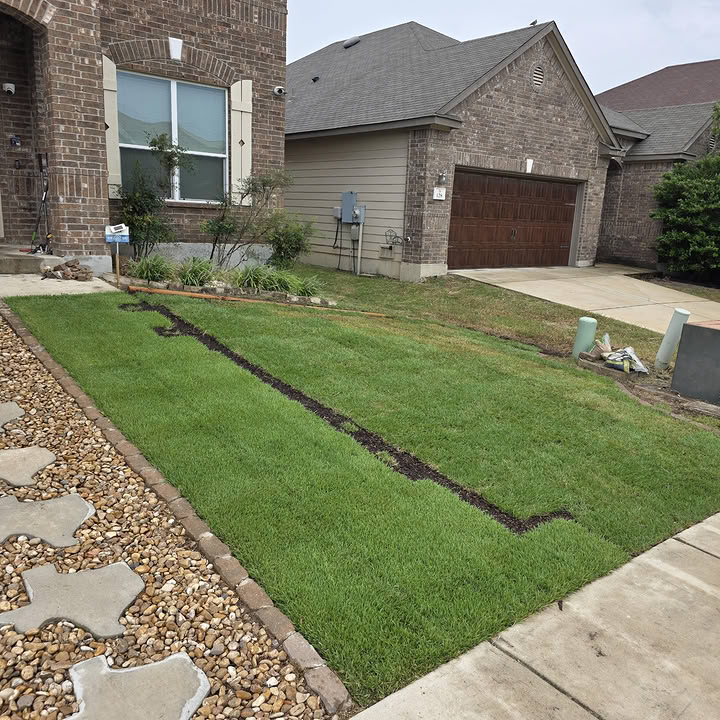
Running for 21 days since October 9, 2026. Crush last saw it on October 30, 2026.
Run by Arthritis Support Community on Facebook. Crush is not the advertiser and does not verify its claims. See this ad in Meta's Ad Library(opens in a new tab)
Make your own version of this ad
Crush makes it, launches it in your own Meta ad account, scales the winners and pauses the losers.
About this ad
- Meta Ad Library ID
- 1139013368797077
- Platforms
- Facebook, Instagram, Audience Network, WhatsApp and Threads
- Relaunches
- 0
Ad text
Third Sunday in a row the third pew from the back on the right side was empty. I'm the choir director at Grace Methodist on Park Avenue in Aiken, South Carolina. Have been for 21 years. I sit up front facing the congregation during the sermon because my husband Tom is in the choir loft and somebody has to give the bass section the cue to stop fidgeting during the prayer. So I see everyone. Every Sunday. Every pew. The third pew from the back on the right side belonged to Bill and Carolyn Henderson. Belonged. Past tense. That's how I'd already started thinking about it after just three Sundays, which tells you something about how a pew works in a church like ours. You don't reassign a pew. The pew waits. Even when the man who sat in it isn't coming back. Bill Henderson died on a Tuesday in July. He was 62. He had a heart attack in his own backyard while he was seeding the lawn. Carolyn told me later he'd come in for water around 11 in the morning and he'd gone back out and she'd looked out the kitchen window 20 minutes later and he was on the ground next to the spreader. The paramedics said he was gone before he hit the grass. His cholesterol numbers had been fine. That's the part nobody knows what to do with. His LDL was 96. His total was under 180. He'd been on Lipitor for nine years. Carolyn told everyone at the visitation that he'd just been at the cardiologist in May and they'd said his numbers looked great. His numbers looked great and he died in his backyard with a bag of Scotts Turf Builder half open beside him. My name is Margaret. I'm 59 years old. I was born in Aiken, raised in Aiken, went to Converse College in Spartanburg for two years and came right back to Aiken and married Tom Whitley in 1989 and we have been here ever since. I direct the choir on Sunday and I teach piano lessons out of my front room three afternoons a week. We have one son, Davis, who works for the railroad in Savannah. I've been to a lot of funerals in 21 years at Grace Methodist. Bill Henderson's was the fourth one in 18 months for a man under 65 who'd been on cholesterol medication for years and was supposed to be fine. Let me say that again because the first time I wrote that sentence out for myself on a yellow legal pad last October, I had to put the pen down. Four men. Under 65. On cholesterol medication. With good numbers. Dead. Walter Pickens, 61. Lipitor for 11 years. Cardiac arrest in the driveway of his daughter's house in Columbia after Christmas dinner. Ronnie Bledsoe, 58. Crestor for 7 years. Found in his garage in March, sitting at his workbench with a screwdriver in his hand. Steve McClellan, 63. Some generic statin I never wrote down the name of. Collapsed during a Sunday morning service at the Baptist church across town, which we heard about that same afternoon. And Bill Henderson. 62. Lipitor for 9 years. Backyard. July. I am not a doctor. I am not a scientist. I direct the choir at a small Methodist church in Aiken County. But I'm telling you, by Bill's funeral I had four widows in my contact list and the youngest of them was 56 years old and none of these men were supposed to die. The fourth Sunday after Bill's funeral, Carolyn came back to church. She walked in through the side door during the prelude and she sat down in the third pew from the back on the right side and she put her purse next to her on the wood and she folded her hands in her lap and she stared at the back of the head of the woman in front of her for the entire 80 minutes. After the postlude Tom was breaking down music in the loft and I went down the aisle and I touched Carolyn's shoulder and she looked up at me with her eyes already wet and she said "Margaret, can we get coffee. Just us. Not the casserole crowd. Just us." I said yes. We went to the Aiken Brewing Company on Laurens Street that Wednesday at 2 in the afternoon because it's quiet then. She was already at a corner booth when I got there. She had a manila folder in front of her on the table. I sat down across from her and the waitress came and we both ordered coffee and Carolyn waited until the woman walked away and then she pushed the manila folder across the table to me. "I need you to look at this with me," she said. "I've been looking at it alone for two weeks and I can't anymore." I opened the folder. It was Bill's medical records. The cardiologist's office had given them to her after the funeral because she'd asked. The top sheet was the May visit. The one where Bill had been told he looked great. Carolyn pointed at a number on the page with her finger. "Look at his LDL." "Ninety six." "Look at his total." "One seventy nine." "They told him he was fine, Margaret. They told him he was a model patient. They told him to keep doing what he was doing. He died eight weeks later." She started to cry. Quietly. The way Methodists cry. Without making it about themselves. "There's something else in there," she said. "Flip to the back." I flipped. There were three pages stapled together. The header said "Oxidized LDL Panel." It was a separate test result, not from Bill's regular cardiologist, but from a clinic in Augusta that Carolyn had paid out of pocket for back in February when Bill had been complaining about feeling foggy in the mornings. Bill's regular cardiologist had told him the foggy feeling was just from being 62. Bill had paid $340 of his own money for this specialty panel because he didn't believe the regular doctor. The number on the panel was high. I didn't know what it meant. I'm a choir director. Carolyn said "Bill's regular doctor never looked at this. Bill brought it to the May appointment and they told him oxidized LDL isn't something they test for and they told him not to worry about it. They told him his regular numbers were fine. They sent him home." I sat with that for a minute. "What did the Augusta clinic say." "They wanted him to come back for a follow up. He hadn't done it yet. He kept saying he would. We were going to schedule it after the Fourth of July." The coffee came. Carolyn drank hers black. I put two sugars in mine because I needed something to do with my hands. "Margaret. I need you to take this folder home and read it. I need someone who isn't me to read it. I've read it 60 times and I keep hoping the numbers will say something different and they don't." I took the folder home. I read it that night at my kitchen table from 8 PM until almost midnight, with Tom asleep in the recliner in the den and the choir music for Sunday on the piano in the next room. I'm going to tell you what I learned, in plain words, the way I learned it, because I'm a choir director and not a scientist and the only way I could get through it was to write it out on the yellow legal pad in language I could understand. Cholesterol by itself is not what kills you. I know that sounds wrong. Stay with me. Your body makes cholesterol because your body needs cholesterol. Every cell in your body uses it. Your brain is mostly cholesterol. Your hormones are made from it. It's not a poison. It's a building material. The problem isn't the cholesterol existing. The problem is what happens to the cholesterol on its way through your bloodstream. When cholesterol gets damaged by oxidation, which is what happens when it interacts with something called free radicals, the cholesterol changes. Picture a piece of metal turning to rust. Picture an apple slice turning brown on a counter. That's oxidation. It happens to cholesterol the same way it happens to everything else. Oxidized cholesterol is what sticks to your artery walls. The regular cholesterol, the kind they measure on the panel at your annual physical, can be at 96 like Bill's was. It can be at 80. It can be wherever the doctor wants it to be. But if the cholesterol you do have is oxidized, it's sticking. It's building up. And nobody is measuring it. And the worst part. The part that took me three reads of the article Carolyn had clipped to the back of the folder to understand. The more cholesterol that gets stuck on the artery wall, the more the body keeps making to replace it. It's a cycle. Your body sees that there's a shortage in the blood, because the cholesterol keeps disappearing into the wall. So it makes more. The new cholesterol comes through. Some of it gets oxidized. Some of it sticks. The shortage continues. The body makes more. That's why your number doesn't come down. That's why the Lipitor works for a while and then it doesn't. That's why Bill Henderson had an LDL of 96 and died in his backyard with a bag of fertilizer next to him. I sat at my kitchen table at almost midnight and I put my head in my hands and I thought about Tom in the recliner in the next room. Tom is 62. Same as Bill was. Tom has been on Pravastatin for 12 years. Tom's regular cholesterol numbers are great. I had a thought that night I have not been able to shake. I thought I had been watching the wrong number for 12 years. I went back to the folder. In the back, behind the oxidized LDL panel, was a printout from a website. Carolyn must have printed it months earlier and stuck it in there. The website was about a compound called emblicanins. Emblicanins come from a fruit called amla. Indian gooseberry. Grows in India. Used for thousands of years in their traditional medicine. The research on emblicanins, the article said, was about protecting cholesterol from oxidation. Helping keep the cholesterol in its useful form. So less of it ends up in the form that sticks. The article didn't say it would lower a number. It said something more useful than that. It said that if less cholesterol was getting oxidized, less would get stuck on the artery walls. And if less was getting stuck, the body's replacement cycle could start to ease. And if the cycle started to ease, the number could come down on its own, not because something forced it, but because the body wasn't being asked to make replacement cholesterol anymore. That was the part that got me. Not because something forced it. Tom's Pravastatin forces his number down. But it doesn't do anything about the oxidation. It doesn't break the cycle. It just makes the surface number look pretty for the May appointment. The same way Bill's Lipitor did. The article mentioned a company called Auniva. They make a capsule with a standardized amla extract. The website was auniva.co/amla/33. I didn't order anything that night. I'm a Methodist choir director. I don't order supplements at midnight on a Wednesday. But I couldn't sleep. Tom woke up in the recliner around 1 in the morning and he came into the kitchen and he saw me sitting at the table with the manila folder and the yellow legal pad and he sat down across from me without saying anything and he waited. I told him about Bill. About the panel. About the oxidation. About the four men in 18 months. He listened the whole way through. Then he said "Maggie. Why didn't you tell me you were worried." I said "I don't know how to tell you I'm worried about something that nobody at your doctor's office is worried about." He said "Then tell me what you want to do." I said "I want to order the amla. I want you to take it. I don't want to argue with Dr. Greer about your Pravastatin yet. I don't want to do anything dramatic. I just want to give your body something that helps with the part Dr. Greer isn't measuring." He said "Okay." That was the whole conversation. Tom is a man of few words. He's been that way for 37 years and that's one of the reasons I married him. I ordered three bottles the next morning at 7:15 from my kitchen counter while the coffee was brewing. Free shipping. They came on Saturday. Tom started taking two capsules with breakfast on Monday. Week one. Nothing to report. He felt fine. He felt the same. Week two. He came into the kitchen one morning and he said "Maggie, I think I'm sleeping better." I didn't say anything. I just nodded. Sleep isn't cholesterol. But I wrote it on the legal pad. Week four. Tom mowed both the front and the back yard in one Saturday, which he hadn't done in two years. He usually split it across Saturday and Sunday because by the time he finished the front he was wiped out. That Saturday he just kept going. He came inside afterward and he drank a glass of water and he said "huh." That was the whole thing. Huh. I wrote it on the legal pad. Week six. He told me his fingers felt warmer in the mornings. He'd been complaining about cold fingers for years. The Pravastatin. He'd read somewhere that it can affect circulation. Doesn't matter why. The fingers were warmer. Week 10 we did bloodwork. I'd asked Dr. Greer back at Tom's checkup in September if we could include an oxidized LDL panel. He told me it wasn't standard. I told him we'd pay out of pocket. He said fine. The results came back two weeks later. Tom's regular numbers were better than they'd been the previous September. His LDL was 84. His HDL was up 6 points. His triglycerides were down. His oxidized LDL was down by close to a third from the baseline panel I'd had him do before he started the amla. I'm not going to put the exact numbers on this page because I'm not a doctor and I don't want anyone reading this to think the same thing will happen for them. I'm telling you what we saw in our own house with our own bloodwork. Dr. Greer called the house himself when the panel came back. He said "Margaret, what is Tom doing differently." I told him. He was quiet for a long time. Then he said "Send me the link to the brand." I sent it. He didn't say anything else about it. But three weeks later at Bible study, Patty Wexler, whose husband Hal is one of Dr. Greer's patients, told me that Dr. Greer had asked Hal at his last appointment if he'd ever heard of amla. That's all I know about that. What I know is this. The third pew from the back on the right side at Grace Methodist is no longer empty. Carolyn comes every Sunday. She started taking amla too, about six weeks after Tom did. She said she'd lived 41 years with a man who had bad cholesterol numbers and she figured she'd inherited the air in that house and she might as well do something about it. She sits in the third pew and she listens and she sings the hymns and last month at the Christmas Eve service she stayed afterward and she helped me put the candles back in the boxes. When we were folding the last of the felt risers she said "Margaret. I keep thinking about Bill in the yard. And I think about it less than I used to. And I don't know if that's because time is doing what time does or if it's because I'm taking something that's making me feel less afraid of being next." I didn't have an answer for her. But I thought about it the whole drive home. I think it's both. I think time does what time does. And I think when you finally feel like you're doing something for the part of your body that nobody at the doctor's office is doing anything about, the fear gets a little quieter. That's all I can tell you. I'm a choir director in Aiken, South Carolina. I'm not telling you Auniva Amla is going to do for you what it did for Tom. I'm telling you that there's a question your doctor isn't asking about your cholesterol. Whether yours is the kind that's sticking or the kind that isn't. And I'm telling you that the research on emblicanins and oxidation is real, and you can read it the same way Carolyn and I did, sitting at a kitchen table with a yellow legal pad and a cup of coffee. I'm telling you that Auniva ships free and it's made in the USA and it's two capsules a day and that's the whole protocol. I'm telling you they have a 90 day money back guarantee. Three full 30 day bottles. Send the empties back if nothing happens for you and you get every dollar. The risk is on them, not on you. Here's where you go. 👉 auniva.co/amla/33 P.S. The third pew from the back on the right side at Grace Methodist on Park Avenue in Aiken, South Carolina is full again. Carolyn sits in it every Sunday and she sings the hymns and she doesn't stare at the back of the head of the woman in front of her anymore. She looks at me up front. She nods on the right notes. When you've been watching empty pews for a year and a half, a pew that has a person in it again is the kind of thing that makes you sit down in your car after church and cry for a minute before you drive home. I don't know if amla brought Carolyn back to that pew or if time did or if something else did. I just know the pew isn't empty. P.P.S. The 90 day guarantee is on all three bottles, not just the first. Auniva knows what I learned at my kitchen table, which is that the oxidation cycle doesn't break in a week. It takes time for less cholesterol to get stuck. It takes time for the body to stop making replacement cholesterol. It takes time for a number to come down on its own instead of being forced. They want you to have the full 90 days because that's how long the body actually needs. If nothing's changed for you at the end of three months, you ship the empties back to the address on the bottle and you get every dollar. That's how they do it. Look at the bottle yourself if you don't believe me. P.P.P.S. There were four men under 65 with good cholesterol numbers in our church and our town in 18 months. Four. I'm not telling you that to scare you. I'm telling you because the number on the May panel was not the number that mattered for Bill Henderson, and if you're a wife reading this and your husband has been told for years that his numbers are fine, you might want to ask the question that nobody at his doctor's office is asking. You might want to read what Carolyn put in the folder. You might want to give his body something that supports the part of the picture nobody is looking at. The risk is 90 days and your money back if nothing happens. The other risk is a bag of Scotts Turf Builder. 👉 auniva.co/amla/33
Where the ad sends people
auniva.co
Feel Like Yourself Again
"This actually worked, thank you so much." - Emily T.
Learn more: auniva.co(opens in a new tab)