
Active· since Apr 3, 2026
- 169
- days running
- 0
- relaunches
Ad copy
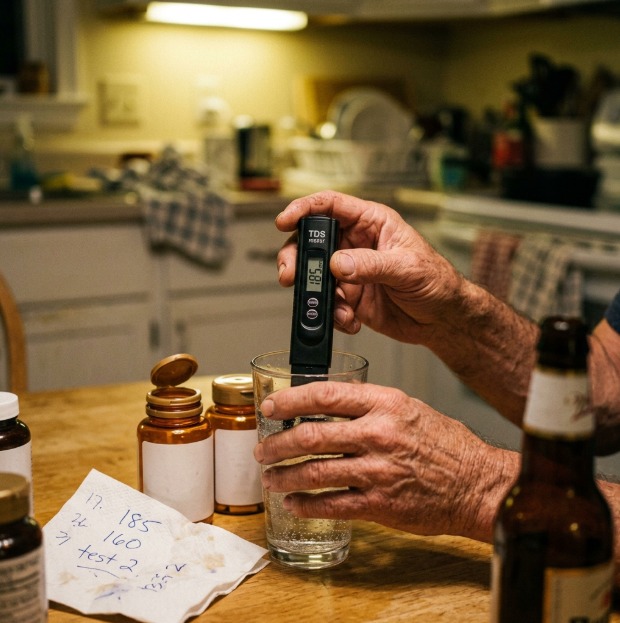
I'm going to lose it if one more person in my Facebook group tells me fish oil "takes time to work." It's been four months. FOUR MONTHS of $47-a-bottle Nordic Naturals fish oil. Tom's LDL went from 194 to 191. Three points. Three points in four months. Sixteen weeks. $188. And every time I post about it — every single time — someone says "give it more time" or "try a higher dose" or "make sure it's the triglyceride form, not the ethyl ester form." I DID all of that. We tried every form. Every dose. Every brand people recommended. And I'm sitting here with a $188 receipt and an LDL of 191. My husband Tom is 63. His LDL has been above 190 for three years. His father died of a heart attack at 71. On Lipitor for nine years. His cardiologist had called his numbers "excellent" at his last checkup — four months before the heart attack that killed him. So when Tom's doctor pulled up his chart last year and said "Tom, it's time to start Atorvastatin," my husband looked at me across the exam room and I saw it in his face. He was thinking about his father. About the muscle pain that started six months after the prescription. About watching a man who used to rebuild carburetors in the garage grip the kitchen counter just to stand up in the morning. About the fog. His father — a mechanical engineer for 38 years — forgetting the word for "wrench." About the checkup four months before the heart attack where his doctor smiled and said "your numbers look perfect, keep doing what you're doing." "No," Tom said. Dr. Patel looked at me like I was supposed to overrule him. "Give us six months," I said. "Let us try to bring it down naturally." She hesitated. Then nodded. "Six months. But if the numbers don't improve, we need to have a serious conversation." I walked out of that office and felt the weight of what I'd just agreed to. Six months. To fix something his doctor said only a statin could fix. With nothing but whatever I could find on the internet and in supplement aisles. I didn't sleep that night. --- I started with fish oil. Because that's what everyone recommends. Every Facebook group. Every health blog. Every "natural cholesterol" article on Google. Nordic Naturals Ultimate Omega. $47. Two soft gels twice a day. "Clinically shown to support healthy cholesterol levels." I tracked everything. Bought a home cholesterol monitor. Tested Tom every two weeks. Week 2: 193. Down 1 point. Week 4: 192. Week 8: 191. Week 12: 192. Week 16: 191. Four months of religiously taking fish oil. Four months of me standing in the kitchen every morning with two amber capsules and a glass of water, watching Tom swallow them. Three points. I posted about it in my group. "Fish oil isn't working. 4 months, barely any change. What am I doing wrong?" Forty-seven comments. None of them helpful. "Try krill oil instead." "Are you taking it with food? Has to be with food." "You need the triglyceride form, not ethyl ester." "Try adding CoQ10." "Try bergamot." "Red yeast rice worked for my husband." So I tried them. All of them. --- Bergamot was next. $38 a bottle. Citrus Bergamot 500mg. The Facebook groups swore by it. "Dropped my LDL 40 points in 8 weeks!" "Better than a statin!" "Nature's cholesterol miracle!" Three months on bergamot. Tom's LDL: 188. Down 6 points from 194. Six points in three months. Not nothing. But not enough. Not even close. Then red yeast rice. $29 a bottle. "Nature's statin." That phrase should have been a warning. Three weeks in, Tom woke up at 4 AM with pain in his thighs so bad he couldn't straighten his legs. I sat on the edge of the bed rubbing his quads while he stared at the ceiling. "This is what Dad described," he said quietly. "This is exactly what he said the Lipitor felt like." I threw the red yeast rice in the trash that morning. Because of course it caused muscle pain. It IS a statin. Monacolin K — the active compound in red yeast rice — is chemically identical to lovastatin. The supplement industry just doesn't have to tell you that. We'd been giving Tom an unregulated statin. For three weeks. And nobody in any Facebook group had mentioned this. I was furious. --- CoQ10 was next. Because everyone said the muscle pain from the red yeast rice meant Tom was CoQ10 depleted. $65 a month for ubiquinol. The "active form" that's "better absorbed." Two months. No change in cholesterol. His energy was maybe slightly better. Hard to tell. $130 spent. LDL still at 188. I had a spreadsheet by now. Color-coded. Every supplement. Every dose. Every test result. Every dollar. Five months in. Four supplements tried. $450+ spent. Tom's LDL: 188. Down 6 points from where we started. We had one month left before Dr. Patel's deadline. I couldn't sleep. I'd lie in bed doing math in my head. 194 minus 6 is 188. We needed 150. That's 38 more points. In one month. With supplements that had moved the needle 6 points in five months. It wasn't going to happen. I started preparing myself to lose the argument. To sit in that exam room and watch Tom take the prescription pad from Dr. Patel and know that we'd failed. That he was going to end up on the same drug that destroyed his father. --- Then I found molecular hydrogen. Not from a Facebook group. Not from a blog. From a research paper. I was up at 1 AM — which was normal by then — and I'd fallen down a PubMed rabbit hole reading about oxidative stress and cholesterol. And I found a study that changed how I understood everything. A 24-week randomized controlled trial. Participants taking molecular hydrogen experienced an 18.5 mg/dL reduction in total cholesterol and up to an 18.2% reduction in LDL. 18.2%. If that held for Tom — 18.2% of 188 — that was 34 points. That would put him at 154. But more importantly, the study measured something I'd never heard of: oxidized LDL. I spent the next three hours reading. And here's what made me sick: LDL cholesterol isn't inherently dangerous. Your body makes it on purpose. Your brain needs it. Your hormones depend on it. The problem is when LDL gets OXIDIZED by free radicals. Specifically, by hydroxyl radicals — the most destructive free radicals in your body. When LDL oxidizes, it changes structure. Becomes sticky. Your immune system flags it as a foreign invader. White blood cells gorge on it until they become foam cells — trapped inside your artery walls. That's plaque. Statins lower the AMOUNT of LDL. But they don't stop the OXIDATION. So even on a statin — even with "perfect" numbers — the LDL that remains can still oxidize. Still become sticky. Still build plaque. That's why Tom's father died. LDL of 94. "Excellent" numbers. Nine years on Lipitor. Nobody tested his oxidized LDL. Nobody checked whether the cholesterol he DID have was being attacked by free radicals. They just watched the number go down and called it a success. While the plaque built quietly in his arteries. I sat in my living room at 3 AM with tears running down my face. Because it all made sense. Every failed supplement. Every wasted dollar. Fish oil doesn't stop oxidation. Bergamot doesn't stop oxidation. CoQ10 doesn't stop oxidation. Red yeast rice is just an unregulated statin — it lowers the amount but doesn't protect what's left. We'd spent five months and $450 fighting the wrong war. The problem was never the amount of cholesterol. It was the oxidation. And molecular hydrogen — H2 — was a selective antioxidant that specifically targets hydroxyl radicals. The exact free radicals that oxidize LDL into plaque. I ordered hydrogen tablets from Amazon the next morning. --- Brand one. HydroHealth. $34. 4.7 stars. Over 3,000 reviews. "Best hydrogen supplement on the market!" "Noticed a difference in my energy within days!" "My doctor was amazed at my blood work!" I gave them to Tom every morning. One tablet in a glass of water. Watched it fizz. Handed it to him. Week 1: Nothing. Week 2: Maybe slightly more energy? Hard to tell. Week 3: Tested his cholesterol. LDL: 186. Two points. In three weeks. Better than the fish oil. But barely. I went back to the Amazon listing. Searched through the 1-star reviews I'd ignored the first time. "Tested this with a hydrogen meter. Barely registers." "Dissolved it and tested — less than 2 PPM. Clinical studies use 7-12 PPM minimum." "This is expensive flavored water." My stomach dropped. I ordered a second brand. AquaH2. $42. Fewer reviews but they seemed more specific. People posting actual numbers. Three weeks on AquaH2. LDL: 186. Same as the first brand. Zero change. I was done. I was ready to give up. To call Dr. Patel and say we failed and ask for the prescription. Tom saw it on my face. That night after dinner he put his hand on mine and said, "Hey. We tried." I couldn't look at him. --- Then something happened that I almost missed. Tom's old college roommate, Gary, came to visit for the weekend. Gary had retired two years earlier from Dow Chemical. Forty-one years as a research chemist. After dinner, Tom mentioned his cholesterol. The supplements. The frustration. He said it casually — he'd mostly made peace with the statin. Gary set his beer down. "What brands did you try?" "Of what?" "The hydrogen tablets. Which ones?" I pulled up my Amazon order history. Showed him. He squinted at my phone. Scrolled through the product pages. "Diane, these are garbage." I blinked. He must have seen my face because he softened. "I'm sorry. I don't mean — look. I test supplements. It's a hobby. I have a dissolved hydrogen meter — I've been testing these products since I retired because my wife takes about fifteen supplements and I wanted to know which ones were real." He went to his bag and came back with a small device. "You have any of these tablets left?" I got both bottles from the kitchen. He dropped one HydroHealth tablet into a glass of water. Waited for it to dissolve. Put the meter in. "1.8 PPM." He wrote it on a napkin. Dropped an AquaH2 tablet. Waited. Tested. "2.1 PPM." He looked at me. "The clinical studies that showed real cardiovascular results — the ones you probably read — they used concentrations of 10 to 12 parts per million. These tablets are delivering less than a quarter of that." I stared at the napkin. 1.8. 2.1. "So we've been..." "Taking expensive water. Yeah. Most hydrogen supplements on the market are. The hydrogen molecule is the smallest thing that exists — it escapes through plastic, through metal, through glass. By the time most products reach you, the concentration has degraded to almost nothing." "But the reviews —" "Placebo. Energy boost from magnesium traces. Or just people who don't test. Nobody's walking around with a dissolved hydrogen meter, Diane. They take the tablet, they feel something or they don't, and they leave a review based on feelings." He took a drink of his beer. "But there's something else. Something that matters more for Tom's situation specifically." He pulled out his phone. Scrolled to a photo. A spreadsheet. "I've tested fourteen hydrogen supplements over the past year. Different brands. Different formats — tablets, drops, machines, ready-to-drink pouches." He turned the phone toward me. Fourteen rows. Brand name. Format. Claimed concentration. Tested concentration. Dissolution time. Residue. Magnesium content. Eleven of the fourteen tested below 3 PPM. Two tested between 4 and 6 PPM. One tested at 12.3 PPM. "That one," he said, pointing to the last row. "That's the only one that hit clinical threshold." I looked at the brand name. PrimeCell H2. "What makes it different?" "It's a magnesium-based effervescent tablet. Most hydrogen products use a weak chemical reaction that generates a little H2 and then the gas escapes before you drink it. PrimeCell uses elemental magnesium — the reaction is violent and fast. Complete dissolution in about 90 seconds. You drink it while it's still generating hydrogen, so the H2 gets absorbed through your stomach lining before it can escape." He tapped the spreadsheet. "12.3 PPM at the moment of consumption. That's six times what these Amazon brands deliver. It's the only product I've tested that consistently hits the clinical threshold." "And the magnesium?" "That's the other thing. The reaction releases 80 milligrams of bioavailable magnesium per tablet. Not magnesium oxide — the cheap stuff that passes straight through you. Actual, bioavailable magnesium. Your body needs magnesium for over 300 enzymatic processes, including the specific enzymes that regulate cholesterol metabolism." He paused. "Tom's been fighting a two-front war with single-front weapons. Oxidative stress on one side. Magnesium deficiency on the other. Up to 75% of Americans are magnesium deficient. Every supplement you tried — every one — was ignoring the foundational mineral his body needs to even metabolize cholesterol properly." I sat there looking at that spreadsheet. Fourteen brands. Thirteen failures. One that worked. And we'd been giving Tom two of the failures for six weeks. "Why didn't anyone tell us this?" I asked. Gary shrugged. "Because nobody tests. The supplement industry is self-regulated. You can put whatever you want on a label. And most consumers buy based on Amazon reviews and star ratings." I thought about all the 5-star reviews I'd read. "Changed my life!" "Energy through the roof!" "Doctor was amazed!" For products delivering 1.8 PPM. --- Gary left on Sunday. I ordered PrimeCell H2 that night. It arrived three days later. The tablets were different. Larger. More substantial. When I dropped one in water, the reaction was immediate — aggressive fizzing, complete dissolution in under two minutes. The Amazon brands had taken forever and left chalky residue at the bottom of the glass. Tom drank the first one Tuesday morning. I didn't say anything. I didn't want to get his hopes up. I'd gotten his hopes up too many times. But by Thursday, he said something that made me stop washing dishes. "My head feels different." "Different how?" "Clearer. Like the static turned off." He hadn't said anything like that with any of the other supplements. Not the fish oil. Not the bergamot. Not either hydrogen brand from Amazon. I waited. Week 1: Tom said the heaviness in his legs was better. He'd been having this low-grade ache for months — we'd attributed it to age. It was fading. Week 2: His energy was different. Not jittery. Stable. He started going for walks again in the evening. He hadn't done that in over a year. I tested his cholesterol. LDL: 176. Down 12 points from 188 in two weeks. More than fish oil had done in four months. More than bergamot had done in three. I didn't tell Tom the number. I didn't want to jinx it. Week 4: LDL 164. 24 points in four weeks. I started crying at the kitchen table. Tom walked in and saw the monitor. "What is it?" I turned the screen toward him. He stared at it. "164?" I nodded. He sat down across from me. Didn't say anything for a long time. "What's different about this one?" he finally asked. "Everything," I said. Week 6: LDL 151. Week 8: LDL 143. Forty-five points in eight weeks. After five months and $450 of supplements that moved the number 6 points. I called Dr. Patel's office and scheduled the follow-up bloodwork. --- Tom sat in the exam room while the phlebotomist drew blood. I sat in the chair by the door with my hands folded in my lap, pretending I wasn't terrified. The results came back in 48 hours. Dr. Patel walked in with her laptop. Pulled up the chart. She looked at the screen. Then at Tom. Then at the screen again. "Well," she said. And then she just sat there for a moment. "Tom. Your LDL is 141. Down from 194 at your last visit." She scrolled. "I also ran an oxidized LDL panel since you mentioned the hydrogen research your wife found." She turned the laptop toward us. "Your oxidized LDL is 38. That's well within healthy range. And your hs-CRP — that's the inflammation marker — dropped from 4.1 to 1.4." She closed the laptop halfway. "What have you been taking?" Tom looked at me. I explained. The research on oxidative stress. Molecular hydrogen. The failed brands. Gary's testing. The difference between 2 PPM and 12 PPM. The magnesium co-delivery. She listened. Took notes. Didn't interrupt. When I finished, she was quiet. "I'm not going to pretend I'm deeply familiar with the molecular hydrogen research," she said. "But these numbers are speaking for themselves. Your LDL is better than what I typically see with statin therapy at this stage. And the oxidized LDL — that's the measurement I wish more patients were getting." She looked at Tom. "I see no clinical reason to start Atorvastatin at this time." Tom's jaw tightened. He nodded once. We didn't speak in the elevator. When we got to the car, he turned to me. "You saved my life." "Gary saved your life." "No." He took my hand. "You did. You stayed up until 3 AM reading studies. You tracked every number. You didn't give up when the fish oil didn't work. When the bergamot didn't work. When the Amazon tablets didn't work. You kept going." I squeezed his hand and looked out the window because I was about to lose it. "Your dad deserved someone like that too," I said quietly. Tom didn't answer. He just held my hand tighter. --- That was five months ago. Tom's last test: LDL 137. Oxidized LDL 34. No medication. He walks two miles every evening now. Plays with the grandkids on the floor — something he'd stopped doing because of the leg aches he thought were "just aging." He rebuilt the carburetor on his '72 Chevy last weekend. Spent six hours in the garage. Came in covered in grease and grinning like a kid. I watched him from the kitchen window and thought about his father. Standing in that same garage, 15 years ago, too weak to hold a wrench. Foggy. Aching. "Controlled" numbers and a heart that was quietly filling with plaque nobody was measuring. That's not Tom's future anymore. --- I'm writing this because I know exactly where you are right now. You've got a kitchen cabinet that looks like mine did. Fish oil. Bergamot. CoQ10. Maybe a bottle of red yeast rice you threw out after the muscle pain. Maybe a hydrogen supplement from Amazon that you're still taking because you're not sure what else to do. You've spent hundreds of dollars. Maybe more. You've tracked the numbers. You've posted in Facebook groups. You've tried everything people recommended. And your LDL is still above 180. Maybe above 200. And every time you see that number, your chest tightens. Because you're thinking about your father. Your mother. Your brother. Someone you love who did everything their doctor told them — took the medication, watched the numbers come down — and still had the heart attack. Still had the stroke. Still died. Here's what I wish someone had told me nine months ago: Fish oil doesn't stop cholesterol oxidation. Bergamot doesn't stop cholesterol oxidation. Red yeast rice is an unregulated statin that blocks production but doesn't stop oxidation — and causes the same muscle pain. CoQ10 supports energy but doesn't address oxidative stress on LDL. And most molecular hydrogen products — the ones with thousands of 5-star reviews on Amazon — are delivering 2-3 PPM when you need 10-12 PPM for clinical results. They're expensive water. I know this because a retired research chemist tested fourteen brands with a dissolved hydrogen meter. Thirteen failed. The concentration was a fraction of what the clinical studies used. One hit 12.3 PPM. PrimeCell H2. Magnesium-based effervescent tablet. You drop it in water. It dissolves in under two minutes — completely, no residue. You drink it while the reaction is happening so the hydrogen absorbs through your stomach lining before it can escape. 12 parts per million of therapeutic-grade molecular hydrogen. Plus 80 milligrams of bioavailable magnesium — the foundational mineral most Americans are deficient in and that your body needs for the enzymes that regulate cholesterol metabolism. Both fronts. One tablet. One glass of water. I tried two Amazon brands that did nothing. PrimeCell dropped Tom's LDL from 188 to 141 in eight weeks. Same person. Same diet. Same lifestyle. Different hydrogen. That's the difference between 2 PPM and 12 PPM. --- You're standing where I stood nine months ago. One path leads to the prescription pad. The statin. The same medication that Tom's father took for nine years with "excellent" numbers — while plaque built silently in his arteries because nobody was testing oxidized LDL. The muscle pain that steals your mornings. The fog that takes words you've known your whole life. And the quiet terror that never fully goes away, because you've seen the evidence — medication doesn't always prevent the thing it's supposed to prevent. Every time Tom forgets a word. Every time his legs ache. Every time I hear about someone who had a heart attack on a statin — I'd wonder. Is this it? Is this how it started for his father? The other path leads to what actually worked. Addressing the oxidation directly. With a hydrogen supplement that actually delivers clinical concentration. Watching the numbers change. Feeling the clarity return. Verifying with bloodwork. Proving it to yourself — and then proving it to your doctor. PrimeCell H2 comes with a 90-day money-back guarantee. If it doesn't work for you — if you don't see improvement, if you don't feel the difference — you get a full refund. No questions asked. You risk nothing except the supplements that aren't working anyway. I chose the second path. Tom's LDL went from 194 to 137. His oxidized LDL is 34 — well below the danger threshold. His doctor sees no reason for medication. And he's in the garage right now. Rebuilding things. With hands that don't ache. A mind that doesn't fog. And a heart that isn't quietly filling with plaque while a doctor somewhere smiles at a number on a screen. His father deserved to know this. He didn't get the chance. You still have time. 👉 https://shop.getamalahealth.com/pch/ch/sp P.S. — When I first ordered PrimeCell, I didn't know about the 90-day guarantee. I wish I had — it would have saved me the guilt of spending more money after wasting so much on supplements that didn't work. If it doesn't work, you get your money back. That's more than Amazon offered me for the two brands that did nothing. Most people buy at regular price, but right now there's a promotion with significant savings. That's how I was able to order three months' supply up front — which is what I'd recommend, because you want to give it the full 8 weeks to see the blood work results. The only issue: PrimeCell is a small company. They sell out regularly. I've seen people in my cholesterol support group wait weeks for it to come back in stock. If you click the link and it's available, I wouldn't wait. Tom's father spent 9 years on Lipitor. LDL of 94. "Perfect" numbers. Dead at 71 from the heart attack his medication was supposed to prevent. Tom's been on PrimeCell for 5 months. LDL 137. Oxidized LDL 34. No medication. Rebuilding carburetors in the garage. Same family. Same genetics. Different approach. The difference was stopping the oxidation — not just lowering the number. 👉 https://shop.getamalahealth.com/pch/ch/sp
Fix Yourself at the Cellular Level
High Cholesterol, Statin Side Effects, Numbers That Won't Budge? PrimeCell H2 Targets The Oxidative Damage Medications Can't Touch.
LEARN MORELike this ad? Make it yours.
Crush rebuilds this exact creative around your product — your brand, your colors, your offer — in about a minute.