Luke Harris
Luke Harris Facebook ad: “This tool would have saved me $37,000 in timber”
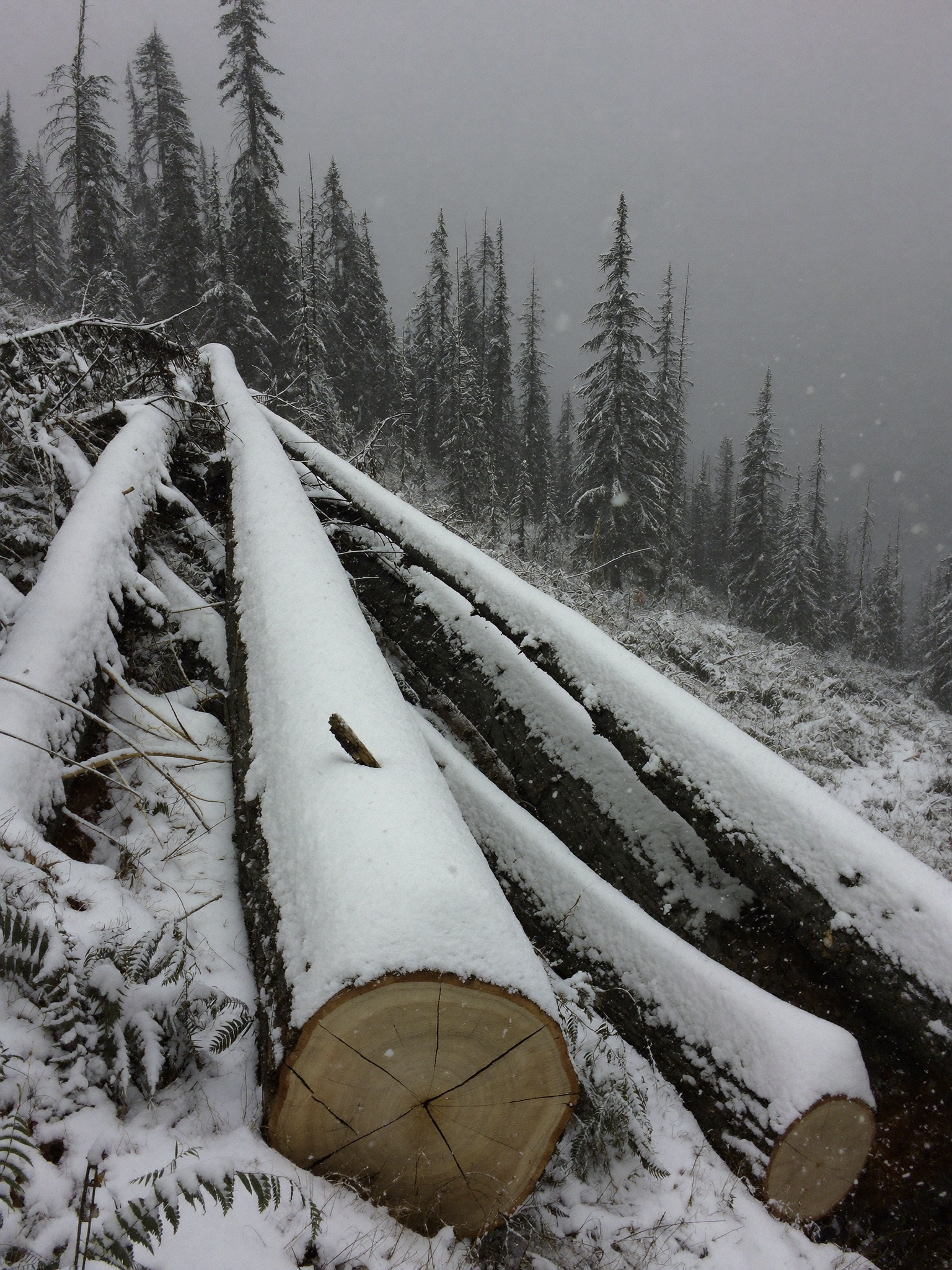
Ran for 2 days, from February 20 to February 22, 2026, the last day Crush saw it.
Run by Luke Harris on Facebook. Crush is not the advertiser and does not verify its claims. See this ad in Meta's Ad Library(opens in a new tab)
Want an ad like this for your product?
Crush makes new ad images for your product from this ad: your logo, your product photo, your offer.
Trials from $19.95 USD, then $79.95 USD a month. Cancel anytime.
About this ad
- Meta Ad Library ID
- 1239397737724092
- Platforms
- Facebook, Instagram, Audience Network, Messenger and Threads
- Relaunches
- 0
- Niche
- Jewelry & Watches
Ad text
When your son turns down a software engineering career in Portland to come home and log timber, and you find him standing beside a dead processor on a mountainside at 2 AM with 900,000 board feet of felled timber on the landing and a snow line dropping down the ridge at four hundred feet per hour, the last thing you want is for him to believe he picked the wrong life. Let me tell you what happened. We log about 4,500 acres of private and state timber in the Oregon Coast Range. West of Corvallis, where the Willamette Valley ends and the mountains start climbing into Douglas fir forests so thick the sun doesn't reach the ground for nine months of the year. Third generation. My grandfather started cutting timber here in 1951 with a crosscut saw, a Caterpillar D4, and the kind of stubbornness that lets a man fall three hundred foot trees by hand and drag them down a mountain behind a machine that weighs less than most of the logs. My dad bought the first mechanized feller buncher in the county in 1978 and tripled the production. I've been running the operation since I was twenty five, the year my dad's back finally surrendered to forty years of chainsaw vibration and ground that is never level and never dry. My son Wyatt went to Oregon State. Computer science with a minor in mechanical engineering. Graduated with honors. Had a position at a software company in Portland before his senior project presentation was scheduled. Starting salary and stock options package that would've had him making more at twenty four than this logging operation has netted in any year except the two we cut old growth allocation on the state contract. He took it. Worked there two years and two months. Called me on a Wednesday evening in November, sitting in his car in the parking garage of his office building in the Pearl District after a ten-hour day writing code for a supply chain optimization platform that would save his company's clients an average of 3.2% on shipping costs, and said, "Dad, I spend my days optimizing systems that move boxes. I want to move logs. I want to come home." He was on the mountain by Friday morning. Didn't wait for his project sprint to close. Told his team lead the truth, that he'd spent two years writing code to make shipping containers move more efficiently and realized the only thing he wanted to move was timber down a mountain in the Coast Range the way his grandfather had, except with better equipment and smarter systems. Drove the ninety minutes southwest from Portland, watched the city disappear and the Willamette Valley farmland disappear and the foothills rise into the Coast Range, the road narrowing from four lanes to two to one and a half, the pavement turning to gravel turning to dirt, the Douglas fir closing in overhead until the sky was a narrow strip between the treetops, and was standing on the landing before I'd finished the morning equipment check. Spent his first week mapping every road, every landing, every skid trail on the operation using GPS equipment and LiDAR data he'd obtained from the state forestry office. Built a three-dimensional terrain model of all 4,500 acres showing slope grade, soil type, drainage patterns, and road condition at every point. Found that our main haul road had a section where the drainage culvert was undersized by forty percent, which meant every heavy rain backed up water against the road fill and was slowly undermining the foundation. Calculated that the road would fail within two more wet seasons, and when it did it would take out the only access to 1,200 acres of our best timber ground. Had the culvert replaced and the road rebuilt with proper drainage before the first rain. Structural analysis applied to a dirt road on a mountainside. That's Wyatt. Sees the system. Models the failure. Fixes it before it fails. Here's what you need to understand about logging in the Oregon Coast Range. The Coast Range is not like any other timber country in America. It's not the flat pine plantations of the South. It's not the rolling hardwood hills of the Appalachians. It's steep, wet, and dark. The mountains rise from the valley floor to two thousand, three thousand feet in ridges so sharp and tight that the logging roads switchback five times to gain a thousand feet of elevation. The slopes where the timber grows run thirty to fifty degrees, steep enough that a man walking uphill has to grab brush with his hands and a machine working the slope has to dig its tracks into the soil just to hold position. The timber is Douglas fir, Western red cedar, and hemlock, trees that grow to two hundred feet tall and six feet in diameter in the old growth stands and that even in managed second growth reach a hundred and fifty feet in thirty to forty years because the Coast Range gets seventy to a hundred inches of rain per year and the growing conditions are, by the standards of timber production, essentially perfect. And it rains. From October through June, it rains. Not the thunderstorms of the Midwest or the Gulf. Oregon rain. A steady, persistent, low-pressure drizzle that falls from a sky the color of dishwater and doesn't stop for weeks at a time. The kind of rain that doesn't seem heavy until you realize your shirt is soaked through and you can't remember when it wasn't. The ground is permanently wet. The moss grows on everything. The mud is bottomless. And the logging roads, which are dirt and gravel carved into the mountainside, turn into rivers of mud that can strand equipment, strand trucks, strand an entire operation on a ridge with no way down until the road dries enough to hold weight, which in the Coast Range between October and June is a theoretical concept rather than a practical expectation. The logging season has a window. Not like a crop harvest window. A road window. The state and federal timber contracts specify that logging operations must cease when ground conditions deteriorate to the point where equipment causes unacceptable soil disturbance, which means when the mud gets deep enough that the machines tear up the mountain instead of just working on it. And the private timber owners have their own road restrictions, because a logging truck loaded with 40,000 pounds of logs on a mud road on a thirty percent grade is the kind of calculation that keeps insurance adjusters awake at night. In practice, the window runs from roughly late May through early November, depending on the year. Some years the fall rains hold off and you can cut into December. Some years the rain comes early and you're shut down by October. And some years, the year I'm about to tell you about, the season doesn't end with rain. It ends with snow. Snow in the Coast Range is rare below two thousand feet. But when it comes, it doesn't come gently. A cold air mass dropping out of the Gulf of Alaska can push the snow level down to a thousand feet in hours, and when it does, every logging road above that elevation becomes impassable. Not difficult. Impassable. Snow on a thirty percent grade dirt road means trucks can't climb, trucks can't descend, and any equipment on the mountain above the snow line stays there until it melts. And if the temperature stays below freezing, the snow packs, the road surface freezes, and the melt can take weeks. Last November, we were in the final push of the season. Cutting a unit of second growth Douglas fir on a ridge at about 2,200 feet elevation. Good timber. Sixty year old trees running thirty to thirty six inches in diameter. Clean stems, small knots, high lumber recovery. The state forester had estimated the unit at 1.4 million board feet. We'd felled and processed about 500,000 board feet and had it decked on the landing, ready for trucks. Another 900,000 board feet was felled and lying in the unit, waiting for the processor to buck it into log lengths and the skidder to drag it to the landing. Then the National Weather Service updated the extended forecast on a Monday afternoon. A deep trough was dropping out of the Gulf of Alaska, pulling a cold air mass south along the coast. Not a typical fall rain event. A cold event. Snow levels forecast to drop from 5,000 feet to 1,500 feet by Wednesday evening. Then to 1,000 feet by Thursday morning. Accumulations of eight to twelve inches above 2,000 feet. Temperatures below freezing for at least a week. No melt window in the ten-day outlook. Our landing was at 2,200 feet. The main haul road crossed 1,800 feet at the upper switchback. Every foot of road above 1,500 feet would be under snow by Thursday. The road would be gone. The timber would be stranded on the mountain. And 900,000 board feet of felled timber lying on the ground in the Coast Range for weeks or months doesn't just sit there waiting. It deteriorates. Stain fungi penetrate the sapwood within days of felling if the logs aren't bucked and transported. Blue stain, brown stain, the fungi that feed on the sugars in fresh-cut wood and discolor it permanently. Stained lumber is downgraded at the mill. What was structural grade Douglas fir worth $600 per thousand board feet becomes utility grade worth $280. Or stud grade. Or pallet stock. The longer the logs sit, the deeper the stain, the lower the grade, the smaller the check. Two days to process 900,000 board feet of felled timber and get it to the landing before the snow closed the road. Tight. Extremely tight. The processor can buck about 120,000 board feet per day in good conditions. The skidder can drag about the same. Two days of perfect production from both machines would give us maybe 480,000 board feet, just over half. We'd lose some. But we'd save the majority if both machines ran clean. Monday evening, Wyatt was running the processor on the slope above the landing, working in the last gray light of a November afternoon that ends at 4:30 PM in the Coast Range. The processor is a Ponsse Scorpion, a tracked machine with a hydraulic boom and a processing head that grabs a felled tree, delimbs it, measures it, and bucks it into precise log lengths in a single automated sequence. The processing head is where the money is made. It turns a felled tree into logs that have value. Without the processing head, a felled tree is just a tree lying on the ground becoming stain stock. At 4:15 PM, the processing head stopped rotating. The rotator drive on the Ponsse processing head has a hydraulic motor that turns the head around the longitudinal axis of the log, allowing the head to position the tree for optimal delimbing and bucking regardless of how the tree fell. The motor drives through a planetary gearbox that reduces the speed and multiplies the torque. A mounting bolt on the rotator gearbox housing had worked loose from the constant shock loading of processing sixty-year-old Douglas fir. Every time the processing head grabs a tree, the rotator absorbs a torsional shock. Every time the delimb knives hit a limb stub, the impact reverberates through the rotator housing. Thousands of shock cycles per day. The bolt had backed out far enough to let the gearbox housing shift on its mount, the rotator lost alignment, the planetary gears bound, and the processing head locked in position with a thirty-two inch fir stem clamped in the feed rollers and the head stuck at forty five degrees, unable to rotate, unable to complete the delimbing sequence, unable to buck. Not a motor failure. Not a gearbox failure. A single mounting bolt. Seat it, torque it, and the housing realigns, the gears mesh, and the head rotates. Wyatt had the bolt. He always had the bolt. The month he moved home, he inventoried every critical fastener on the processor, the feller buncher, the skidder, the loader, and all three log trucks. Built the inventory in a database architecture because two years of software engineering had made that the only organizational framework his brain would accept. Every bolt had a unique identifier, a failure mode, a mean time between failure estimate calculated from the manufacturer's maintenance data cross referenced with the actual operating hours logged in the machine's onboard computer, and a replacement schedule that automatically generated work orders to his phone. The rotator gearbox bolt had been flagged for inspection at 4,000 operating hours. The machine was at 3,840. One hundred and sixty hours early. Shock loading doesn't follow maintenance schedules. The bolt sat in a pocket between the rotator gearbox housing and the processor head frame. Less than two inches of clearance. Gearbox casting on one side. Head frame structural member on the other. Delimb knife actuator cylinder mount bolted across the top. Hydraulic supply and return lines for the feed roller motors bundled along the bottom. And every surface was covered in the substance that makes working on logging equipment in the Oregon Coast Range different from working on any other machinery in any other industry on earth. Moss. Not moss as an accent. Not moss as a detail. Moss as a structural condition. In the Coast Range, moss grows on every surface that stays wet for more than a few weeks, which is every surface, all the time, for nine months of the year. It grows on the machine frames. It grows on the boom joints. It grows on the hydraulic fittings. It grows inside the gaps between components where water collects and light doesn't reach. It grows on bolt heads. It grows in hex recesses. It grows on the threads of bolts that haven't been removed in a season. And when it grows on a bolt head inside a tight pocket on a processing head that operates in constant rain on a mountainside, it creates a layer of organic material that is simultaneously spongy and slippery and that bonds to the metal surface with a tenacity that suggests the moss considers the bolt part of the forest floor and intends to reclaim it. Combine the moss with the mud. Coast Range mud is not like other mud. It's a clay-and-organic-matter compound created by decades of decomposing fir needles, hemlock bark, and alder leaves mixing with the mountain clay in a perpetual rain bath. It's dark brown, almost black. It smells like the forest floor because it is the forest floor, liquefied. It coats everything the moss doesn't reach, and in most places it coats the moss too, creating a layered substrate of mud over moss over metal that makes every bolt head into an archaeological excavation. You have to scrape through the mud to find the moss to find the bolt, and by the time you've found it your tool is coated in the same compound and your fingers are numb from the cold rain that hasn't stopped since October. Wyatt could see the bolt hole. Could start the bolt a half turn with his mud-and-moss-coated fingertip. He spent four and a half hours on it alone before he came down to the landing. Four and a half hours. On the processing head. On a thirty-five degree slope. In the rain that had been falling since 2 PM and that was getting colder by the hour as the cold air mass pushed south, the rain shifting from the typical Oregon drizzle to something heavier and sharper that stung when it hit exposed skin and that told anyone who'd worked in the Coast Range for more than a few seasons that the snow wasn't far behind. In the dark, because November dark in the Coast Range at 2,200 feet under a cloud deck starts at 4:30 and is absolute by 5:00. His headlamp the only light on the mountain. The Douglas fir canopy above blocking even the faint glow of the clouds. The sound of rain on his hard hat and rain on the machine and rain on the fir boughs and the occasional crack of a widow maker, a dead limb, falling somewhere in the unit, because widow makers fall when the wind picks up and the wind was picking up ahead of the front. That's Wyatt. At Oregon State, he once spent thirty six continuous hours debugging a machine learning algorithm that his advisor said was producing acceptable results, because Wyatt found a training data bias that was invisible in the aggregate output but that manifested as a systematic two percent error on a specific category of inputs, and a two percent error compounding over ten million transactions was $40 million in client losses that nobody would notice until they did. Same inability to accept a known flaw makes a son who will work on a processing head on a mountainside in the dark in the rain for four and a half hours while the temperature drops and the snow line descends and widow makers crack in the canopy above him. He walked onto the landing at 9 PM. Hands black with the mud-and-moss compound that coats everything in the Coast Range, the mixture so thick on his gloves that the gloves had doubled in weight. A gash across three knuckles where the delimb knife cylinder mount had caught his hand, the wound packed with mud and moss and fir bark fiber that sealed the cut the way the forest seals everything, by growing over it. Rain running down his hard hat, off his chin, into the collar of his rain gear where it had been pooling for hours. His headlamp throwing a cone of light through the rain that illuminated the falling drops like static on a screen. Voice level. Measured. The voice he used in code review when a critical bug had been found in production and the incident commander was on the call and showing anything other than systematic calm would make the room worse. "Rotator gearbox mounting bolt. I can thread it. Can't get a tool behind the frame member to torque it. Everything is moss and mud." I was at the processor in fifteen minutes. Hiked up the skid trail to the machine, boots sliding on the slope, rain in my face, headlamp cutting a tunnel through darkness that was so complete it felt solid. Full socket set in a waterproof bag. Every extension and adapter I owned. Tried everything Wyatt had tried. Tried things from thirty four years of logging in the Coast Range that software engineering in Portland doesn't teach. Standard ratchet. Handle hit the processor head frame member before the socket reached the bolt. And the ratchet mechanism was already packed with the mud-moss compound that had worked into the pawl assembly through the reversing switch and turned the ratchet into a device that felt like it was full of wet carpet. Stubby ratchet. Got into the pocket. Couldn't reach the bolt depth. Short by two inches. The chrome surface was coated in moss that made it feel like gripping a wet sponge. Flex head ratchet. Flexed into the delimb knife cylinder mount the instant I loaded it. No engagement. The flex joint was packed with mud and wouldn't hold its angle, floating uselessly in the wet organic material. Deep socket on a long extension. Extension too wide for the gap between the gearbox and the frame member. Would not enter. Wobble socket on a shorter extension. The wobble, combined with the moss layer on every surface, meant the socket couldn't find the bolt hex. The moss had grown into the hex recess, filling it with a spongy green mat that the socket compressed but couldn't penetrate. Socket bounced on the moss like pressing a wrench into a pillow. Three attempts. Each time I had to stop, dig the moss out of the hex with a pick, try again, and watch the socket slide off the wet surface underneath. Universal joint adapter. Torque went everywhere. The joints were packed with mud-moss compound and moved like they were set in wet felt. Couldn't feel the bolt. Couldn't feel the tool. Could only feel the universal joint wandering through organic material while rain ran down my forearm into the pocket and made everything wetter. Crow foot wrench. Wrong profile. Body hit the gearbox casting before the jaws reached the bolt. Cut my forearm on the delimb knife cylinder mount. Scraped both wrists raw on the frame member. Pinched my thumb between the gearbox and the hydraulic fitting, the mud cushioning the pinch just enough that it didn't break the skin but compressed the joint hard enough that my thumb was useless for the next two days. The rain washed the mud out of every wound as fast as the forest packed it back in, so my cuts alternated between bleeding freely in the rain and being sealed by the mud, a cycle of exposure and coating that the Coast Range performs on every injury with the patient indifference of a system that has been reclaiming things for millennia. Wyatt stood beside me through every attempt. Handing tools up to the processing head in the rain, organizing the sequence despite the mud that made every tool look the same, a dark brown shape indistinguishable from every other dark brown shape. The way he organized a debugging session, systematic, each variable isolated, each failure documented, each tool tested and eliminated before advancing. Ratchet. Extension. Stubby. Flex. Wobble. Universal. Crow foot. All tested. All failed. All returned to the waterproof bag coated in mud and moss that I'd have to clean before I could use them again, if I could use them again, because the Coast Range compound eats tools the way the forest eats everything, by covering it, colonizing it, and absorbing it back into the mountain. None of them worked. By midnight, we had eight combined hours on one bolt. And the rain was changing. Not heavier. Colder. The drops that had been hitting my hard hat with the soft sound of Oregon rain were beginning to hit with a sharper sound, a crystalline edge that every Coast Range logger recognizes as the transition point. Not quite sleet. Not quite snow. The sound of precipitation that can't decide what it wants to be, which means the snow level is right here, right at your elevation. In an hour, maybe two, the rain would turn to snow and the road below us would begin to freeze and the window would close. That's when Wyatt stepped down from the processing head. Stood on the slope in the rain, feet braced against a stump, headlamp illuminating the falling precipitation in a cone of light that now showed individual drops crystallizing, the water turning to ice in real time in the beam of his headlamp. And that's when I saw it. Not in his face. Wyatt doesn't show things on his face. He learned that in the tech world, where the standup meeting reads your face for certainty and the product manager reads it for commitment and showing doubt at the wrong time delays a sprint and delays a sprint delays a release and delays a release costs the kind of money that makes stock options worthless. I saw it in his hands. They were at his sides, but the fingers were moving. Not clenching. Not fisting. Moving the way they move on a keyboard, a micro-motion, the physical habit of a man whose hands have spent two years solving problems through keystrokes and whose fingers now, when the problem has no keyboard and no solution, run the only motion they know. Typing on nothing. Debugging the air. A father reads these things. A father who has watched his son trade a keyboard for a chainsaw reads them like a log scaler reads a tree, not by the bark but by the grain. He'd turned down Portland. Walked away from the tech salary and the stock options and the career path that had him on track for a senior engineer position by twenty eight. Left the apartment in the Pearl District where the coffee was good and the restaurants were better and nobody's hands were ever cold and wet and black with mud at midnight on a mountainside. Left the woman he'd been seeing, a UX designer who understood product launches and sprint deadlines and never asked him to explain why he drove ninety minutes into the Coast Range every November to help his father move logs. Left because he believed these mountains and this timber and these roads his grandfather had carved into the ridges were worth more than any codebase he would ever write. Because he believed his hands and his mind and his willingness to stand on a processing head in the rain in the dark could keep this operation cutting timber for one more generation in an industry where the number of independent family logging operations drops every year as the big timber companies bring in their own crews and the equipment gets more expensive and the regulations get tighter and the young people move to Portland or Seattle or Bend or anywhere that doesn't require you to spend six months a year on a mountainside in the rain doing the most dangerous job in America. And here he was. Eight hours into a bolt he couldn't turn. Watching his father bleed on the same one. Nine hundred thousand board feet of felled Douglas fir lying on the mountain. And the rain turning to ice crystals in his headlamp beam while the snow level dropped four hundred feet per hour toward the road that was the only way off this ridge. Called the Ponsse dealer in Eugene. "Everyone's trying to get off the mountain before this cold event. Our tech is on a call at an operation near Mapleton. He might be free Wednesday." The snow was coming Tuesday night. Called two mobile mechanics who worked on logging equipment. First one was already on a machine at a landing north of us near Falls City, same storm, same panic. Second one was in Roseburg, south side of the range. Said he could maybe get up Thursday if the road was open. The road wouldn't be open Thursday. That's when the headlights came grinding up the haul road in low range, and the old International with the faded Stihl chainsaw sticker on the bumper and thirty four years of Coast Range mud permanently embedded in the paint that no car wash in Oregon could remove because the mud had become the paint, pulled onto the landing. Earl Gustafson. Seventy eight years old. Logged the Coast Range for fifty three years before his knee replacements and his son's ultimatum that if he fell off one more piece of equipment on a mountainside they were taking his truck keys, and he believed them because his son was the only person in the family more stubborn than he was, a trait he recognized as inherited and therefore irrefutable. Still drove the logging roads every cutting season to check the landings and read the timber and sit at the log deck and tell anyone within earshot that everybody was leaving too much stump height or too much trim on their logs. Somebody at the mill scale told him we were sitting. He drove onto the landing the way old Coast Range loggers drive onto landings, reading the mud, reading the slope, feeling the road under the tires, knowing which ruts will hold a truck and which ones will swallow it, fifty three years of mountain driving encoded in his right foot and his steering hands. Stepped out into the rain without putting on rain gear because old Coast Range loggers don't put on rain gear for the same reason fish don't put on wetsuits. Looked at the processor on the slope above. Looked at the rain turning to crystals in his headlamp. Looked at the tools in the waterproof bag, every one of them dark brown with the mud-moss compound. Looked at Wyatt. "Beavers?" he asked, squinting at the orange Oregon State logo on Wyatt's hard hat, barely visible under the mud and the rain. "Computer science and mechanical engineering. Two years writing software in Portland. Came home last fall." Earl nodded. The slow nod of a man who has watched young people leave the Coast Range for five decades, most of them to Portland, and counts the ones who come back the way a log scaler counts rings on a stump, each one a year of growth that's not guaranteed. "Software people always know what's wrong with the system. Just don't always carry what fits inside the machine." Walked back to his truck. Came back with a flat steel tool. About 15 inches long. Thin as a ruler. Socket fitting on one end. Square drive on the other. Housing dark with the permanent patina of Coast Range work, a layer of mud and oxidation and fir pitch that had been applied and worn and reapplied over years until the tool's surface was the color of the forest floor itself, a dark brown-black that said this tool had lived its entire life in the rain. A wrap of electrical tape knotted around the middle where the original grip had been eaten away by the mud and moisture, because Coast Range loggers fix everything with electrical tape and choker cable and the specific kind of persistence that keeps a man cutting timber on a mountainside in the rain for half a century. "Offset extension wrench," he said. "Fellow I used to sell cedar to, runs a shake mill over near Siletz, he gave me one of these back in 2013. I've used it on every machine I've worked on for ten years. Doesn't matter if it's packed with mud, doesn't matter if the bolt is grown over with moss, doesn't matter if every surface on the machine feels like the inside of a compost pile. Goes in. Seats. Turns. On a processor in the Coast Range in November, that's the only sermon I know." He hiked up the skid trail to the processor the way old Coast Range loggers hike, leaning into the slope, boots finding the solid ground by instinct, seventy eight years old and climbing a thirty five degree slope in the rain in the dark with the unhurried authority of a man who has been going up mountains since before the interstate was finished. Angled the socket end into the pocket between the gearbox housing and the frame member. Past the delimb knife cylinder mount. Under the hydraulic lines. Into the recess where the bolt sat in its bed of moss and mud and impossibility, and he scraped the moss cap off the hex with his thumbnail, the casual precision of a man who has been excavating bolt heads from forest floor material since before Wyatt's father was born. Socket slid in. Found the hex through the mud. Seated. He looked at Wyatt. "Your processor. Your bolt." Wyatt took the drive end. Applied rotation. Steady. Measured. The same incremental, verified input he used deploying code to production, one commit at a time, no rushing, no forcing, trusting the mechanism to execute what his hands were telling it. The bolt turned through the moss in its threads with a soft, organic resistance, the sound of metal advancing through a living substance. Bolt seated. Housing realigned. Gears meshed. Head rotated. Forty five seconds. Forty five seconds for a bolt we'd spent eight hours fighting. On a mountainside. In the rain. With the precipitation turning to ice in the headlamp beams. Wyatt held the tool. Turned it over in his mud-black hands. Felt the internal chain transfer the rotation from one end to the other. Ran his thumb along the housing, his fingers finally still, no longer typing on nothing, finally holding something that had given them a problem they could solve. "Chain driven parallel transfer. One to one ratio. Zero arc required at the output." Earl was leaning against a stump on the slope, rain running off his bare head because he'd never put on his hard hat because old Coast Range loggers have a relationship with gravity that is based on mutual respect rather than protective equipment. "Son, I've been calling it the only tool that works on a wet mountain for ten years. That's the first time anybody told me the engineering." Processor was running by 12:30 AM. We ran the rest of the night. Into Tuesday. The processor bucking felled timber on the slope, the skidder dragging logs to the landing, the rain turning steadily colder, the first snow mixing with the rain by dawn, the flakes melting on the warm machine surfaces but sticking to the cold ground around us. Wyatt ran the processor for fourteen straight hours, cutting through the felled timber with a systematic efficiency that I'd never seen, processing each tree in the optimal sequence he'd mapped that first morning using the terrain model on his laptop, minimizing skidder travel distance, maximizing the number of logs per drag, the software engineer's instinct for optimization applied to a mountainside full of felled Douglas fir with the snow level dropping. I ran the skidder. Coordinated the truck loading on the landing. Brought Wyatt food at 4 AM. He ate it in the cab without stopping the boom, one hand on the processing head joystick, the other holding a sandwich. Brought him coffee at 8 AM. He drank it watching the snow line descend on the ridge opposite us, calculating the rate of descent against the remaining board footage and the hours of daylight and the truck turnaround time with the involuntary mathematical precision of a man whose brain optimizes systems whether he asks it to or not. He processed that timber the way he debugged code, like every tree was a function and every log was an output and leaving an unprocessed variable on the mountain was a bug he would not ship. I think he proved something that night. Something about the difference between optimizing shipping containers on a screen in Portland and standing on a machine on a mountainside processing Douglas fir in the rain while the snow descends. I think he proved it. But we didn't finish. The snow arrived Tuesday evening. Right on forecast. The rain transitioned to heavy wet snow by 4 PM. Three inches on the ground by 6 PM. The haul road became impassable by 8 PM, the last loaded truck sliding sideways on the upper switchback and having to be chained up by the driver and me while Wyatt kept processing on the slope above, the boom still moving, the processor head still cutting, snow accumulating on the cab roof and the tracks and the felled timber. By midnight, eight inches of snow on the ground and the temperature at 24 degrees. The road was frozen. The landing was frozen. The skid trail was a sheet of ice. We shut down at 1 AM when the skidder lost traction on the slope and slid fifteen feet sideways before the tracks dug into frozen ground. We still had about 400,000 board feet of felled timber lying on the mountain. In the unit above the landing, on the slope, under the snow. Trees that had been felled and were waiting for processing. Trees that would now lie under snow and ice for weeks while the stain fungi penetrated the sapwood and the grade dropped and the value fell. The snow stayed. Temperatures remained below freezing for eleven days. The road didn't open for three weeks. When we finally got back up the mountain in December, the logs that had been lying unprocessed showed stain penetration on 80% of the sapwood. The mill downgraded the lumber two full grades. What should have been structural select Douglas fir at $620 per thousand board feet was graded as utility at $290. Final damage on those 400,000 board feet: roughly $33,000 in lost lumber value from the grade reduction, plus an additional $4,000 in road repair costs from the freeze-thaw damage to the haul road surface. Thirty seven thousand dollars total. From one bolt we couldn't turn for eight hours on a Monday night while the snow line dropped. That weekend, after the snow melted enough to get off the mountain, Wyatt ordered the same tool Earl had brought. Ordered six. One for the processor. One for the feller buncher. One for the skidder. One for the loader. One for each log truck. One for the landing toolbox, mounted on a steel bracket he welded from a piece of equipment strap with the part number etched below it and sealed in marine-grade clear coat because Coast Range moisture will eat any other label material before Christmas. Eighty nine dollars each. Adapters not included, runs a standard half inch square drive, you use your own sockets. Since then, we've used them more times than either of us can count. Three times on the processor. That same rotator gearbox bolt again the following season, same failure mode, same shock-load fatigue. A feed roller drive bolt buried behind the roller housing in a space Ponsse apparently designed assuming loggers in the Coast Range have fingers that don't exist in three dimensions and that aren't covered in moss. A measuring wheel calibration bolt recessed behind the processor head frame where the manual says to remove the entire processing head, a full-day job with a crane that Wyatt did in forty minutes on the slope without removing a single panel. Twice on the feller buncher. Saw motor mounting bolt wedged between the felling head housing and the boom pivot bracket. Tilt cylinder pin bolt crammed behind the head frame in a gap packed with mud and fir bark until the bolt was essentially composted into the machine. Once on the skidder. Grapple cylinder pin bolt buried behind the mainframe and the hydraulic manifold where mud and moss had created a permanent ecosystem. Once on the loader. Heel rack pivot bolt recessed behind the loader frame where rain water collects and moss grows a mat so thick you'd swear the bolt was planted there intentionally. Once on my truck. Starter bolt on the old Cummins that sits between the block and the bellhousing in a space Dodge apparently designed to remind loggers that the mountains aren't the only things trying to defeat them. And three weeks ago, a young guy who'd just started contract logging on a small timber sale south of us near Alsea called the landing. First year as an operator. Twenty three years old. His feller buncher's saw drive bolt had backed out mid-cut. Saw wouldn't engage. Timber half felled. Snow in the ten-day. His voice was steady but underneath it was the sound of a twenty three year old standing on a mountainside in the rain watching his first timber sale lose money by the hour because a machine he couldn't fix was sitting on a slope while the season closed around him. Wyatt didn't ask a question. Pulled the wrench off the landing toolbox. Said "Which unit" and was in his truck before the kid finished the sentence. Drove over. Forty minutes of logging road, mud and gravel, the kind of road only a Coast Range truck can navigate. Bolt seated in under ninety seconds. The young man stood on the landing in the rain watching the feller buncher's saw spin up, the sound of the hydraulic motor engaging echoing off the ridge across the valley. Looked at the tool. Then at Wyatt. Then up at the timber on the slope, standing, waiting, still worth cutting. "How does every logger in the Coast Range not have one of these?" Wyatt texted him the link from his truck before he pulled off the landing. Clean. No speech. Engineer's efficiency, push the fix, move to the next issue. He ordered three that night. Here's what nobody tells you when your child gives up their career to come home. This equipment isn't built for a mountainside in the rain. It's engineered in climate-controlled facilities and tested in dealer service bays by technicians who charge $225 an hour and are booked solid during the exact two-week window when every logging operation in the Coast Range is trying to get the last timber off the mountain before the snow closes the roads and the stain fungi eat the grade and the season ends and your entire year's revenue, your entire year's margin, is determined by whether the processor runs and the head rotates and the logs get bucked and the trucks get loaded before the snow level drops below the switchback and everything above that line belongs to the mountain until spring. Every bolt that matters is buried behind a gearbox, a frame member, or a cylinder mount. Every bolt that matters is packed with mud and grown over with moss. Every breakdown during the fall push is a race between your toolbox and the snow line. And every hour you can't fix it is another hour your son stands on the slope in the rain, fingers moving on nothing, silently processing the distance between the career he left in Portland and the one that just stopped him with a bolt he can see but cannot turn while the snow crystals form in his headlamp beam and the road freezes and 400,000 board feet of Douglas fir begins its slow conversion from structural grade to stain stock. But when you've got something that reaches into those impossible pockets. Something thin enough to slide past the gearbox and the frame and the cylinder mount and the hydraulic lines. Something with a chain drive inside that transfers real torque without needing swing room or an arc. Something that works through mud, works through moss, works in the rain, works when every surface on the machine has been colonized by the forest and the bolt head is buried under a layer of living material that's been growing since the last maintenance and the socket bounces on it like pressing a wrench into a wet sponge. Those "pull the processing head, call the dealer, wait for the tech" breakdowns become forty-minute slope fixes. And slope fixes mean the processor runs. The head rotates. The logs get bucked and dragged and decked and loaded before the snow takes the road. And your kid sees the problem solved. Sees the timber moving. Sees that the decision to come home, the company he walked away from, the code he stopped writing, the future he traded for rain gear and chainsaw oil and the chance to keep his grandfather's timber operation cutting in the Coast Range for one more generation, all of it was right. It's called the PRO Offset Extension Wrench. About 15 inches long. Half an inch thick. Chain drive inside transfers rotation where ratchets can't swing. Adapters not included, runs a standard half inch square drive, you use your own sockets. Eighty nine dollars. Less than the fuel for one round trip to the landing. Less than fifteen minutes of dealer service labor. Less than a quarter of one percent of what those eight hours cost us when the snow came. I'm not going to tell you this tool will save your season. But there's going to come a night. Probably the worst night of the last push of the year. When your son climbs down from the processor in the rain with mud to his elbows and a bolt he can't reach. Or your daughter radios from the feller buncher on the slope above. Or you're standing on the processing head yourself, bleeding from your knuckles, reaching into some pocket packed with moss and mud that mocks every ratchet and socket and extension in your toolbox, while the rain turns to ice in your headlamp and everything, the timber, the grade, the road, the money, the kid who chose this life over the one that was waiting for him in a city where it rains the same rain but nobody has to work in it, all of it comes down to one bolt in one impossible space. When that night comes, you either have the tool or you don't. We didn't. Now we do. Every machine. Every truck. Every toolbox on the operation. Mounted, labeled, and exactly where you can grab it at midnight when the snow line is dropping and one bolt is all that's standing between you and getting the timber off the mountain before the road closes. Link's below. I hope you never need it the way we did.
Where the ad sends people
thesavary.com
This tool would have saved me $37,000 in timber 👆
Savary
Shop now: thesavary.com(opens in a new tab)