Luke Harris
Luke Harris Facebook ad: “This tool would have saved my harvest”
Ran for 5 days, from February 12 to February 17, 2026, the last day Crush saw it.
Run by Luke Harris on Facebook. Crush is not the advertiser and does not verify its claims. See this ad in Meta's Ad Library(opens in a new tab)
Want an ad like this for your product?
Crush makes new ad images for your product from this ad: your logo, your product photo, your offer.
Trials from $19.95 USD, then $79.95 USD a month. Cancel anytime.
About this ad
- Meta Ad Library ID
- 1485020209713273
- Platforms
- Facebook, Instagram, Audience Network, Messenger and Threads
- Relaunches
- 1
- Niche
- Food & Beverage
Ad text
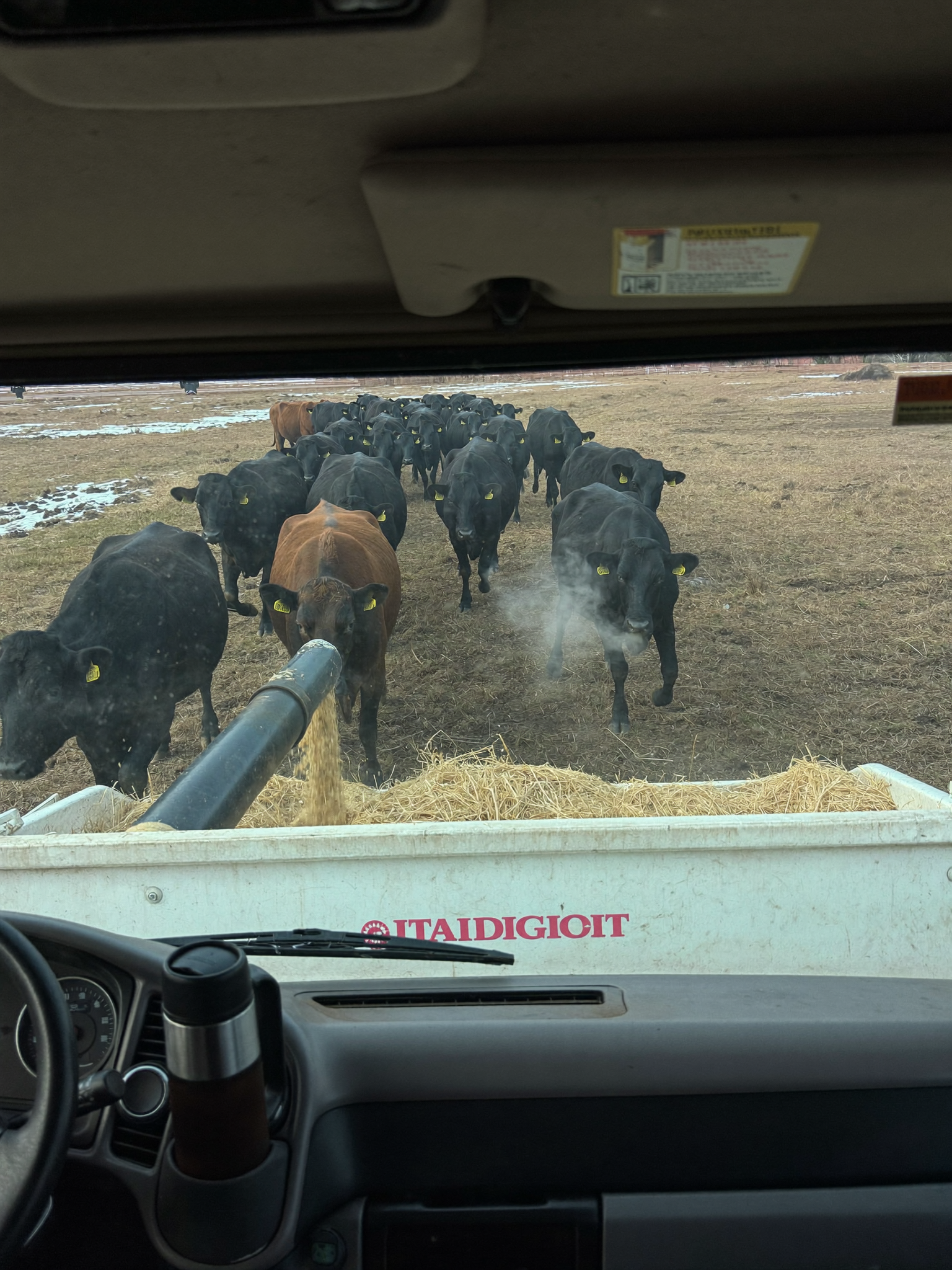
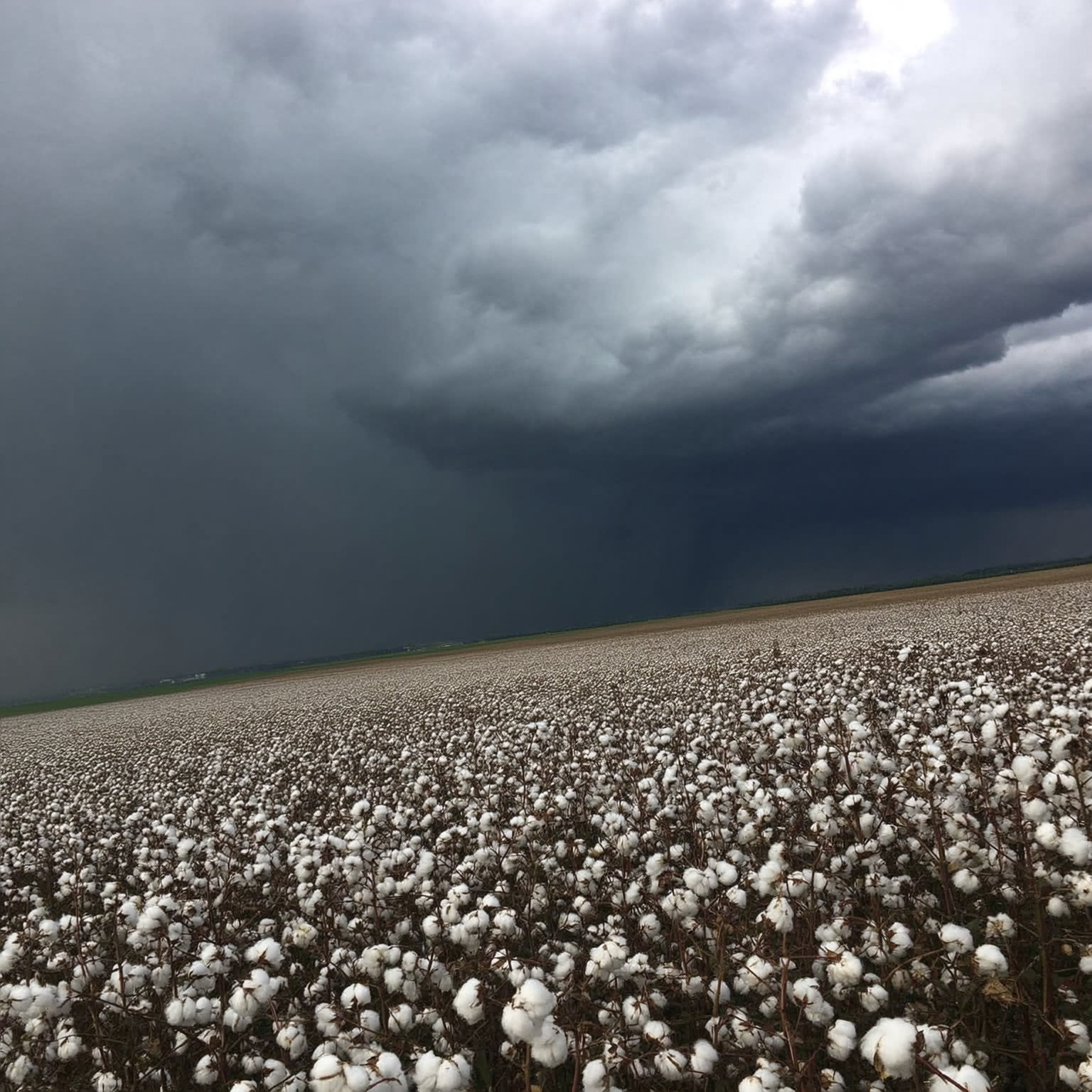
When your son turns down a six-figure engineering job to come home and farm, and you watch him kneeling in a cotton field at 3 AM unable to reach a bolt that's about to cost you $27,000, the last thing you want is for him to believe he chose wrong. Let me tell you what happened. We farm about 2,600 acres of cotton and peanuts in southwest Georgia. Down below Albany where the red clay turns sandy and the summers don't end until November. Third generation. My grandfather cleared his first fields here in 1957 with a borrowed tractor and a handshake lease. My dad doubled the acreage. I've been running it since I was twenty-three. My son Tyler went to Georgia Tech. Mechanical engineering. Graduated with honors. Had an offer from a defense contractor in Huntsville before his senior design project was even graded. Starting salary that would've made his grandfather fall out of his chair. He took the job. Worked there eighteen months. Called me on a Thursday evening in January and said, "Dad, I sit in meetings about systems I'll never touch. I want to work on things that matter. I want to come home." He was in the shop that Saturday morning. Didn't unpack his apartment first. Just drove straight to the farm, opened the hood on the module builder, and started diagnosing a hydraulic leak we'd been chasing for two months. Found it in forty-five minutes. That's Tyler. Thinks in systems, solves in minutes. Last October, the cotton was ready. Grades were running strong — good staple length, excellent micronaire, color grade 21. Yield monitors were showing we'd been averaging over 1,100 pounds of lint per acre. Best crop I'd seen since 2017. Then the tropical forecast updated Tuesday morning. A system had organized in the Gulf. Not a hurricane. Worse for cotton — a slow-moving tropical depression tracking north, forecast to stall over south Georgia. Three to five inches of rain starting Thursday. Maybe more. Extended models were showing the system could sit on us through the weekend. If you've never grown cotton, let me tell you what rain does to an open boll. Cotton is the only crop that's worthless the moment it gets wet in the field. The fiber absorbs water. The boll rots. The lint turns gray and stained. The grade collapses. What was worth eighty-five cents a pound becomes worth forty. Or nothing. And it doesn't recover. Corn can dry down. Soybeans can wait. Cotton that gets rained on in an open boll is damaged permanently. Two days to pick the remaining 720 acres before the rain arrived. Tight. Very tight. But doable if both pickers ran clean. Tyler on the older 7760. Me on the CP690. Sunup to well past sundown. No stops except to dump modules and refuel. Wednesday morning, Tyler was picking in the dark, 4:30 AM, trying to get ahead of the clock. At 5:15, the front row units on his picker jammed. The row unit driveline had a universal joint retaining bolt that had sheared from fatigue. Without it, the U-joint had walked out of its yoke, the driveline disconnected, and the spindles on three row units stopped turning. Picker was dragging cotton stalks through without stripping the bolls. Leaving lint on the plant. Not a total failure. A single bolt. Tyler had the replacement. He'd built a parts inventory the week he moved home. Used a database program he'd written himself — searchable by machine, system, bolt size, and torque spec. Every critical fastener for both pickers, the module builder, the peanut combine, and all three tractors, all catalogued on his laptop with backup copies on his phone. Engineer's instinct. He couldn't help it. The bolt sat in a channel between the row unit gearbox housing and the picker bar frame. Less than an inch of clearance. Gearbox casting on one side. Picker bar cross-member on the other. Spindle drive belt guard covering the top. A grease line routed along the bottom. Tyler could see the bolt hole. Could start the bolt a half turn with his fingertip. He spent four hours on it alone before he came to find me. That's Tyler's threshold. Four hours before he'll admit a problem beat him. At Georgia Tech, he once spent an entire weekend debugging a control system that his professor said couldn't be fixed without replacing the board. Tyler fixed it. Rewrote the firmware from scratch. Same stubbornness that makes a good engineer makes a maddening son. He walked into the equipment barn at 9 AM. Hands black with grease. A cut across the back of his right hand. Voice steady. Controlled. The way he talks when he's already processed the frustration and moved past it into something colder. "Row unit driveline U-joint bolt. I can touch it. I can't turn it." I was at his picker in ten minutes. Full toolbox, headlamp, extra extensions. Tried everything Tyler had tried. Tried a few things from thirty-five years of picking cotton that he hadn't encountered yet. Standard ratchet. Handle hit the picker bar frame before the socket seated on the bolt. Stubby ratchet. Fit into the gap but couldn't reach the bolt depth. Short by almost two inches. Flex head ratchet. Flexed into the belt guard the instant I applied torque. No purchase. Wobble socket on a long extension. Wobble killed any chance of engaging the bolt head square. Socket slipped off twice. Third time, it knocked the bolt out of position. Universal joint adapter. Torque went in three directions at once. Couldn't feel what the bolt was doing. Working completely blind. Crow foot wrench. Profile was wrong for the space. Jammed against the gearbox casting before it reached the bolt. Cut my forearm on the belt guard bracket. Scraped both wrists raw on the gearbox housing. Pinched my index finger between the cross-member and the grease line fitting hard enough that the nail turned dark by lunchtime. Tyler handed me tools like he was running a test protocol. Sequential. Methodical. Already eliminated. Ratchet. Extension. Stubby. Flex. Wobble. Crow foot. None of these work. Next variable. None of them worked. By 1 PM, we'd spent a combined eight hours on one bolt. That's when Tyler stepped back from the row unit. Wiped his hands on his jeans. Slowly. Deliberately. Put his hands in his pockets. Leaned against the basket frame of the picker. Looked out across the field. And that's when I saw it. Not in his face. Tyler doesn't show things on his face. He shows them in his stillness. The way he goes quiet. The way his jaw sets. The kind of thing only a father reads. He'd turned down a career most people would build a life around. Walked away from a salary that would've paid off his student loans in three years. Left a city where his friends were, where his girlfriend was, where the future was mapped out and comfortable. Because he believed his mind and his hands and his willingness to solve anything could keep this farm running for another generation. And here he was, eight hours into a bolt he couldn't turn, watching his father fail at the same one. Cotton bolls white as snow in every direction. And a tropical system spinning slowly toward us across the Gulf. Called the John Deere dealer in Tifton. "We're stacked up through next week. Everyone's trying to get picked before the rain. Best we can do is maybe Tuesday." The rain was coming Thursday. Called two mobile mechanics. One was picking up parts in Valdosta. Wouldn't be available until Friday. The other one's wife said he was on a job in Cordele and wouldn't be back until dark. That's when the dusty green Ford pulled off the farm road onto our turn row. Vernon Cobb. Eighty-three years old. Grew cotton in Terrell County for fifty-seven years before his daughter made him stop climbing on equipment. Still drove to the gin every day during picking season to sit on the bench and watch the modules come in. Somebody running a boll buggy told him we were sitting. He walked across the turn row the way old cotton farmers walk — unhurried, watching the plants, reading the field out of habit even though it wasn't his field or his crop. Looked at the row unit. Looked at the gap. Looked at the tools lined up on the picker platform like a failed experiment. Looked at Tyler. "Georgia Tech?" he asked, squinting at the faded gold GT logo on Tyler's cap. "Mechanical engineering. Eighteen months at Raytheon. Came home last year." Vernon nodded slowly. "Engineers see everything that's wrong with a machine. Just don't always have the tool that fits what they see." Walked back to his truck. Came back with a flat steel tool. About 15 inches long. Thin as a steel rule. Socket fitting on one end. Square drive on the other. Housing worn to a dull shine from years of use. Red shop rag tied around the handle where the original grip had worn off. "Offset extension wrench," he said. "My nephew who custom picks cotton down in the Panhandle around Lubbock sent me one of these back in 2014. I've used it on every machine I've touched since." He angled the socket end into the channel between the gearbox housing and the picker bar frame. Slid past the cross-member. Cleared the belt guard. Threaded it past the grease line. Smooth and precise, like he was parking a trailer in a tight barn. Socket clicked onto the bolt head. Solid. He looked at Tyler. "Your picker. Your bolt." Tyler took the drive end. Applied rotation. Measured, controlled force. No sudden movement. Same precision he used debugging firmware — incremental, deliberate, trusting the mechanism. The bolt seated. U-joint locked in. Driveline engaged. Forty-five seconds. Forty-five seconds for a bolt we'd spent eight hours fighting. Tyler held the tool in both hands for a long moment. Turned it over. Felt the chain inside transfer the rotation from one end to the other. Ran his engineer's eye along the housing, already understanding the mechanism before I could explain it. "This is a chain drive. One-to-one torque transfer. Zero arc requirement." Vernon laughed out loud. "Boy, I've been using it for ten years and never said it that pretty. But yes. That's exactly what it does." Both pickers were rolling by 2 PM. We ran the rest of Wednesday. All of Wednesday night. Through Thursday. Tyler picked by instrument lights and GPS until 2 AM Thursday. I brought him a plate at midnight. He'd already made three more passes before I got back to my picker. Brought him coffee at 4 AM. He drank it without stopping. He picked that cotton like a man running a proof. Like the field was an equation and every row was a variable he refused to leave unsolved. I think he proved what he needed to prove. But we didn't finish. The rain arrived Thursday evening. Earlier than the models predicted. First bands came through around 5 PM. Light at first. Then steady. Then heavy. By Friday morning, two inches on the ground and more falling. We still had 190 acres left. My best ground. River bottom field along Chickasawhatchee Creek. Deepest topsoil on the farm. Consistently our highest-yielding cotton. Also the lowest elevation and the last to drain. The rain sat for six days. Four and a half inches total. By the time the field dried enough to get a picker through it, the cotton was ruined. Bolls had absorbed water, fiber was stained and discolored. Bark and leaf trash stuck to everything. What we picked graded so low the gin almost rejected it. Final damage on those 190 acres: roughly $27,000 in lost lint value, grade penalties, and reduced gin turnout after the classer's report came back. From one bolt we couldn't reach for eight hours on a Wednesday morning. That weekend, Tyler ordered the same tool Vernon had used. Ordered seven. One for each picker. One for each tractor. One for the peanut combine. One for the module builder. One for the shop wall, mounted on a custom bracket he welded himself from scrap angle iron with the part number laser-etched below it. Eighty-nine dollars each. Since then, we've used them more times than either of us can count. Three times on the pickers. That same row unit driveline bolt again mid-season. A moisturizer pad adjustment bolt buried behind the basket frame. A picker drum bearing retainer recessed behind the row unit housing where you'd normally have to pull the entire row unit to access it. Twice on the peanut combine. Digging blade depth-stop bolt wedged between the vine lifter frame and the digger shank housing. Shaker drive tensioner bolt crammed behind the shaker pan in a space that Amadas apparently designed as a practical joke. Once on the module builder. Tramper cylinder pin bolt buried between the sidewall and the hydraulic manifold. Four-hour teardown without the tool. Tyler did it in twenty minutes. Once on the spray rig. Boom valve fitting recessed behind the center section frame on our Hagie. Would have been a boom removal. Took twelve minutes. Once on Tyler's truck. Oil pan drain plug on his old Duramax that sits behind the front differential crossmember in a gap that Chevy apparently designed for mechanics with wrists made of rubber. And two weeks ago, a young guy who'd just taken over his grandfather's peanut ground east of us called the shop. First year farming on his own. His combine's elevator drive bolt had backed out mid-harvest. Peanuts drying in the windrow. Rain in the five-day forecast. Twenty-four years old and his voice was shaking. Tyler didn't ask questions. Grabbed the wrench off the shop wall. Said, "Send me a pin. I'm on my way." Drove over. Bolt seated in under a minute. The kid stood there staring at the tool. Then at Tyler. Then back at the tool. "Where do you even find something like this?" Tyler pulled out his phone, typed the link into a text message, and sent it to the kid's number. Clean. No explanation necessary. Engineer's efficiency. The kid ordered four that night. Here's what nobody prepares you for when your child gives up their career to come home. This equipment isn't designed for the field. It's designed for climate-controlled dealer bays with diagnostic computers, hydraulic lifts, and technicians who charge $210 an hour and are booked solid for the exact ten days when your entire annual income is hanging on plants that will be ruined the moment it rains. Every bolt that matters is recessed behind a gearbox, a frame member, or a guard. Every harvest breakdown is a race between your toolbox and the radar. And every hour you can't fix it is another hour your son stands there, hands in his pockets, silently measuring the distance between the career he left and the one that just stopped him cold with a bolt he can see but cannot turn. But when you've got something that reaches into those impossible gaps. Something thin enough to slide past the casting and the guard and the frame. Something with a chain drive inside that transfers real torque without needing swing room or an arc. Those "pull the row unit, call the dealer, wait a week" disasters become thirty-minute field fixes. And field fixes mean your kid sees the problem solved. Sees the machine running. Sees that the decision to come home, the career he walked away from, the future he bet on this place — all of it was right. It's called the PRO Offset Extension Wrench. About 15 inches long. Half an inch thick. Chain drive inside transfers rotation where ratchets can't swing. Eighty-nine dollars. Less than the fuel it takes to pick a single field. Less than twenty minutes of dealer labor. Less than one third of one percent of what the rain cost us on the river bottom ground. I'm not going to tell you this tool will save your harvest. But there's going to come a morning. Probably the worst morning of the tightest window of the season. When your son walks in at dawn with grease on his hands and a photo of a bolt he can't turn. Or your daughter calls from the cab in the middle of the night. Or you're standing there alone under a work light, bleeding from your knuckles, reaching into some gap that mocks every tool in your box, while the radar fills in from the south and everything — the crop, the weather, the money, the future, the kid who chose this life over the one that was handed to them — all of it comes down to one bolt in one impossible space. When that morning comes, you either have the tool or you don't. We didn't. Now we do. Every machine. Every truck. Mounted, labeled, and exactly where you can find it at 3 AM when the rain is twelve hours out and one bolt is all that's standing between you and getting the crop in. Link's below. I hope you never need it the way we did.
Where the ad sends people
thesavary.com
This tool would have saved my harvest 👆
Savary
Shop now: thesavary.com(opens in a new tab)