Luke Harris
Luke Harris Facebook ad: “If you bale hay, you need this”
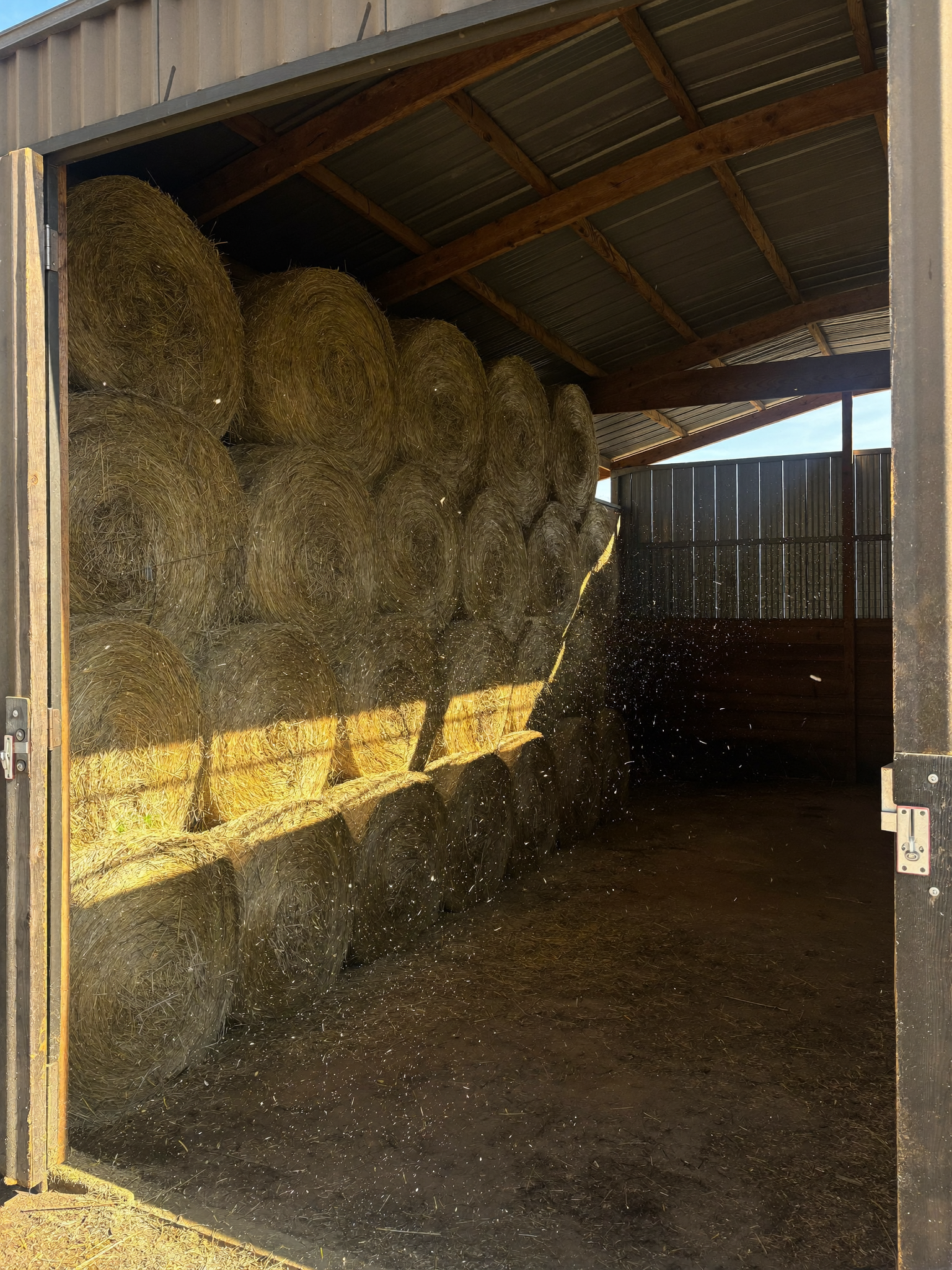
Ran for 3 days, from February 20 to February 23, 2026, the last day Crush saw it.
Run by Luke Harris on Facebook. Crush is not the advertiser and does not verify its claims. See this ad in Meta's Ad Library(opens in a new tab)
Want an ad like this for your product?
Crush makes new ad images for your product from this ad: your logo, your product photo, your offer.
Trials from $19.95 USD, then $79.95 USD a month. Cancel anytime.
About this ad
- Meta Ad Library ID
- 1574772553730140
- Platforms
- Facebook, Instagram, Audience Network, Messenger and Threads
- Relaunches
- 0
Ad text
When your son walks away from a civil engineering career in Omaha to come home and ranch, and you find him kneeling beside a dead baler at midnight with 260 acres of meadow hay on the ground and a blizzard warning posted for forty eight hours out, you don't want him calculating the load rating on the bridge he left half designed. Let me tell you what happened. We run about 12,000 acres of native grass and 620 head of mother cows in the Nebraska Sandhills. North of Thedford, where the grass covered dunes roll like a frozen ocean in every direction and the valleys between them hold sub-irrigated meadows so green and flat they look like someone laid carpet between the hills. Fourth generation. My great grandfather homesteaded here in 1908, filed on a section and a half of sand and grass that the county assessor told him wasn't worth the filing fee. Built a sod house in a valley between two dunes and discovered that the water table sat six feet below the meadow floor, feeding the roots of native grasses that grew thick and nutritious without a drop of irrigation or a pound of fertilizer. Just sun and sand and water rising from below. My grandfather expanded through the Depression buying land nobody else wanted because nobody else understood that the Sandhills weren't wasteland, they were the largest grass-stabilized dune system in the Western Hemisphere and the meadows between the dunes were the most productive native hay ground in North America. My mother ran the ranch alone for eleven years after my father's heart attack, through the drought of 2012 when the meadows shrank and the dunes showed sand for the first time in her memory. I took over at twenty eight when her back finally surrendered to forty years of throwing hay bales onto flatbed trucks in January wind that cuts through Carhartt like it's made of paper. My son Tanner went to the University of Nebraska. Civil engineering. Graduated magna cum laude. Had a position at a structural engineering firm in Omaha before his capstone presentation was scored. Starting salary and relocation package that would've put him in a downtown apartment designing bridges and overpasses and parking structures for a city of half a million people who drive over his work every day without knowing his name. He took it. Worked there two years and four months. Called me on a Tuesday night in January, sitting in his truck in the parking garage of his apartment building after a twelve hour day running structural analysis on a highway interchange expansion that would take four years to build and that he would drive past every morning watching other people pour the concrete he'd designed, and said, "Dad, I spend my days calculating loads on structures I'll never stand on. I want to stand on something that's mine. I want to come home." He was in the meadow by Thursday morning. Didn't wait for his project deliverables to close out. Told his project manager the truth, that he'd spent two years designing load paths through reinforced concrete and realized the only structure he wanted to understand was the one his great grandfather had built on a section of sand that everyone said was worthless. Drove the four hours northwest from Omaha, watched the buildings disappear and the corn disappear and the irrigated circles disappear until there was nothing but grass and sky and the rolling dunes of the Sandhills rising on the horizon like the spine of something ancient, and pulled into the ranch yard before I'd finished morning chores. Spent his first week inspecting every structure on the ranch with the systematic discipline of an engineer conducting a load capacity survey. Corrals. Loading chute. Hay barn. Equipment shed. Windmill towers. Found the hay barn's center ridge beam had a stress fracture at the third purlin connection that had been flexing under snow load for at least two winters. Calculated the remaining cycles before failure. Sistered a new beam alongside it with through bolts and steel gusset plates he fabricated in the shop. The barn would have collapsed under the next heavy snow. Would have taken three months of stacked hay with it. Maybe $40,000 in feed value. He fixed it in a weekend. Structural engineer's reflex. He couldn't look at a beam without calculating its remaining life. That's Tanner. Sees the load. Finds the failure point before it fails. Here's what you need to understand about Sandhills hay. The Sandhills are not like any other ranch country in America. The hills themselves are sand dunes, some of them three hundred feet tall, stabilized by a carpet of native grass that holds the sand in place. If the grass dies, the sand moves. The entire ecosystem depends on the grass staying rooted. You don't plow the Sandhills. You don't plant the Sandhills. You graze the grass on the hilltops with cattle, and you cut the native hay in the meadows between the dunes. The meadows are the heart of the operation. They're flat, low areas between the dune ridges where the Ogallala Aquifer, the massive underground water formation that lies beneath most of western Nebraska, rises close enough to the surface that the roots of the native grasses reach it without irrigation. The water comes up. The grass grows down to meet it. The result is meadow hay, a mix of native warm season and cool season grasses, prairie sandreed, switchgrass, big bluestem, indiangrass, sedges, that grows thick and nutritious in these valleys and produces hay so rich in protein and digestibility that cattle ranchers across the Midwest will pay premium prices for it. Sandhills meadow hay is the ranch's survival. The cattle graze the hills in summer, but from November through April, roughly half the year, the cows eat hay. Everything you feed them comes from those meadows. Every bale you don't put up in summer is a bale you have to buy in winter at whatever price the market demands. And if a blizzard comes early and catches hay on the ground, the snow buries it, the melt soaks it, the freeze thaw cycle turns it to compost, and you're buying hay from South Dakota at $200 a ton delivered to feed cows through a Sandhills winter that runs from October to April and doesn't apologize. First cutting comes off in late June or early July. Second cutting, if the moisture and the growth allow it, comes in September. The second cutting is the critical one. It's the hay that gets you through the back end of winter, March and early April, when the first cutting is gone and the grass hasn't started yet and the cows are thin and calving and every bale matters. Last September, the second cutting was the best I'd seen in five years. The August rains had been perfect, just enough to push one more flush of growth without waterlogging the meadows. The hay was thick, green, standing eighteen inches tall in the valley floors. Tested at 12% protein on the standing sample. Premium native hay. The kind of hay that means your cows go into calving season in condition and your calves hit the ground strong and your vet bills stay low and the whole year works. We'd cut 260 acres on Monday. Raked it into windrows Tuesday. Moisture was dropping fast in the September sun and the dry Sandhills air. Testing at 16% Tuesday evening. Would be ready to bale by Wednesday afternoon. Then the National Weather Service updated the forecast Tuesday night. A major early season blizzard was developing in Wyoming and tracking northeast. Not a dusting. Not a manageable snow. A full plains blizzard with sustained winds of forty to fifty miles per hour, temperatures dropping from the fifties into the teens, and eight to fourteen inches of heavy wet snow. Blizzard warning posted for Thursday evening through Saturday morning. In the Sandhills, a blizzard doesn't just bring snow. It brings wind. And wind in the Sandhills doesn't just blow, it scours. Fifty mile per hour wind across a sand dune landscape picks up sand from every exposed face and drives it horizontally through the air like a natural sandblaster. Every surface, every machine, every exposed piece of equipment collects a layer of fine quartz sand that infiltrates everything. After a Sandhills blizzard, you'll find sand inside sealed toolboxes, inside cab ventilation systems, inside hydraulic reservoir caps that were supposedly airtight. The sand gets in because the sand always gets in. It's what the Sandhills are made of. And if that blizzard caught 260 acres of hay lying in windrows, the hay was gone. Buried under a foot of wet snow. Frozen solid. Then, when the snow melted, soaked through. Then frozen again. Then thawed into a gray rotting mat of what used to be feed. You don't recover hay from under a September blizzard in the Sandhills. You bush hog it back into the ground and pretend it was a cover crop. Two days to bale 260 acres. Tight. Very tight. But doable if both balers ran clean and Tanner and I could split the ground. Him on the John Deere 569. Me on the old Vermeer 504N. No stops. No breakdowns. No problems. Wednesday afternoon at 2 PM. Moisture dropped to 14.2%. Go time. By 6 PM, we'd baled 80 acres between us. Running hard. Windrows feeding clean. Bales dropping tight and heavy. On pace to finish by Thursday noon if nothing stopped us. At 11:40 PM Wednesday night, Tanner's baler stopped picking up hay. The pickup reel on the John Deere 569 has a drive assembly with a gearbox that transfers power from the PTO through a series of shafts and chains to the pickup fingers that sweep the windrow off the ground and feed it into the bale chamber. A mounting bolt on the gearbox input shaft bearing housing had worked loose from the constant torsional vibration of three seasons of baling. Every revolution of the pickup is a load cycle. Every heavy windrow section increases the torque spike. Every clump of meadow grass, which is thicker and more fibrous than tame hay and wraps around the pickup teeth like rope, sends a shock load through the drivetrain that the bolt absorbs. Thousands of cycles per cutting. The bolt had backed out far enough to let the bearing housing shift, the input shaft lost alignment, the gearbox bound up, and the pickup reel stopped turning with a full windrow of native hay jammed under the baler and the tractor idling in the dark. Not a gearbox failure. Not a shaft failure. A single mounting bolt. Seat it, torque it, and the bearing realigns, the shaft engages, and the pickup turns. Tanner had the bolt. He always had the bolt. The month he came home, he inventoried every critical fastener on both balers, the mower conditioner, the rake, the windmill pump jacks, and the livestock handling equipment. Built the inventory in a structural inspection format because two years of civil engineering had made that the only organizational framework his brain would accept. Every bolt had a load rating, an inspection interval, and a fatigue life estimate based on the cyclic loading he'd calculated from the PTO speed and the baler duty cycle. The pickup gearbox bolt had been flagged for replacement before next season. It failed three weeks early. Torsional fatigue doesn't follow maintenance schedules. The bolt sat in a pocket between the gearbox input housing and the baler frame cross member. Less than two inches of clearance. Gearbox casting on one side. Frame member on the other. The pickup cam track bolted across the top. PTO driveline shield and a bundle of grease lines for the pickup bearing bank running along the bottom. And everything was full of sand. Sand is the specific obstacle that makes working on machinery in the Sandhills different from working on machinery anywhere else in the country. It's not like dust. It's not like dirt. It's fine quartz silica, the same material they make sandpaper from, and it's everywhere. It blows in from the dunes constantly, a fine haze that you stop noticing after a few years but that never stops accumulating on every surface, in every crevice, on every bolt head and in every thread. Sand gets between a socket and a bolt head and the socket won't seat. Sand gets in a ratchet mechanism and the pawl grinds instead of clicking. Sand gets in your eyes and between your teeth and under your nails and into cuts on your hands where it feels like someone packed the wound with ground glass. On a baler that's been running in a Sandhills meadow all day, every surface is coated in a compound of native grass dust, dried meadow pollen, grease, and sand. The combination creates something that is simultaneously abrasive and adhesive, a gritty paste that coats bolt heads so sockets can't seat cleanly and fills hex recesses until they feel like they've been packed with cement. It eats chrome plating off sockets in a single season. It turns smooth-operating ratchets into grinding, skipping tools that feel like they're full of gravel. Because they are. Tanner could see the bolt hole. Could start the bolt a half turn with his fingertip, feeling the sand grit in the threads like turning a screw into wet concrete. He spent four hours on it alone before he came to find me. Four hours. Under the baler. In the Sandhills night, which in September means temperatures dropping through the forties into the thirties, the Milky Way bright enough overhead to cast shadows on the meadow floor, and a wind out of the north that was already picking up, the leading edge of the system, carrying the first fine dusting of sand from the exposed dune faces that always precede a weather change. The sand was already in the air. Already coating every surface. Already getting into the gap where the bolt waited. That's Tanner. At the University of Nebraska, he once spent an entire weekend recalculating the shear load distribution on a bridge deck connection detail that his team had already submitted, because he'd found a bolt pattern that reduced the peak stress by seven percent. Nobody asked him to do it. The client didn't require it. The code didn't demand it. But the bridge would carry school buses and he wouldn't sign a drawing that he knew could be better. Same refusal to accept a result he hasn't verified personally makes a son who will lie under a baler in the Sandhills dark for four hours with sand grinding into every cut on his hands before he walks across the meadow to find his father. He walked into the barn at midnight. Hands raw and red from the sand and the cold. A gash across two knuckles on his right hand from the pickup cam track, the wound packed with sand that made the cut look gray instead of red. Grass dust in his hair, on his neck, ground into the creases of his forearms. The fine sand coating his face in a layer so thin it was only visible when the barn light caught it, like a mask made of ground glass. Voice level. Measured. The tone he used presenting a structural analysis that showed a member was under capacity, delivering bad news without inflection because the numbers don't change regardless of how you feel about them. "Pickup gearbox bearing bolt. I can thread it. Can't get a tool behind the cross member to torque it. Everything is full of sand." I was at his baler in five minutes. Full socket set, headlamp, every extension and adapter I owned. Hand warmers in my gloves because the temperature had dropped to 36 degrees and every chrome tool felt like a bar of ice and the sand on the metal made it worse, adding grit to the cold so every surface felt like frozen sandpaper. Tried everything Tanner had tried. Tried things from thirty two years of baling hay in the Sandhills that civil engineering school in Omaha doesn't cover. Standard ratchet. Handle hit the baler frame cross member before the socket seated. And the ratchet mechanism was already crunching with sand, the pawl grinding instead of clicking. Stubby ratchet. Got into the pocket. Couldn't reach the bolt depth. Short by two inches. And the chrome was coated in sand-grease compound that made it feel like gripping a piece of rough stone. Flex head ratchet. Flexed into the cam track the instant I loaded it. No engagement. The flex joint was packed with sand and wouldn't hold its angle. Deep socket on a long extension. Extension too wide for the gap between the gearbox and the cross member. Would not enter the space. Wobble socket on a shorter extension. The wobble, combined with the sand coating on every surface, meant the socket ground against the bolt hex without seating. The sand acted like a shim between the socket walls and the bolt flats, preventing full engagement. Three attempts. Each time the socket sat high on the sand layer and skated off. Universal joint adapter. Torque scattered in every direction. The adapter joints were full of sand and moved like they were packed with grit, which they were. Couldn't feel the bolt. Couldn't feel the tool. Could only feel the universal joint grinding uselessly while somewhere above us the North Star sat in a clear sky that wouldn't be clear for much longer. Crow foot wrench. Wrong profile. Body hit the gearbox casting before the jaws reached the bolt. Cut my palm on the pickup cam track. Scraped both forearms raw on the cross member. Pinched my thumb between the gearbox and the grease line fitting. Every cut and scrape immediately filled with sand, the fine silica packing into the wound like someone had designed a system specifically to ensure that every injury received its own personal application of ground glass. You don't feel it at first because your hands are numb from the cold. You feel it later. For days. Tanner stood beside me through every attempt. Handing tools in order. Methodical. Already knowing the result. The way he handed drawing sets during a design review, organized, sequential, each option tested and documented and eliminated before advancing to the next. Ratchet. Extension. Stubby. Flex. Wobble. Universal. Crow foot. All tested. All failed. All documented. None of them worked. By 4 AM Thursday, we had eight combined hours on one bolt. And above us, the sky was changing. The Milky Way was gone, swallowed by a high overcast that had crept in from the northwest while we worked. The stars were disappearing west to east, the cloud deck advancing like a curtain being drawn across the ceiling. The wind had shifted northwest and picked up. Steady now. Cold. Carrying sand and the smell of weather, that particular metallic smell the air gets ahead of a plains storm system, the smell of pressure dropping and moisture rising and something large and heavy coming down from Wyoming. That's when Tanner stood up from the baler. Pulled off his gloves. Looked north. And that's when I saw it. Not on his face. Tanner doesn't show things on his face. He learned that in the engineering office, where the project manager reads your face for certainty and the client reads it for confidence and showing doubt at the wrong time costs a contract. I saw it in his hands. They hung at his sides, open, palms out, the posture of someone who has tried everything and arrived at the end of what he can do. A father reads these things the way an engineer reads a stress map, not by the number on the screen but by where the color changes from blue to red. He'd turned down Omaha. Walked away from the firm. Left the salary and the career path that had him on track for a project engineer position by thirty. Left the apartment downtown where the heat worked and the water was clean and the floors didn't creak and nobody tracked sand onto every surface. Left the woman he'd been seeing, a water resources engineer who understood CAD files and deadlines and never asked him to explain why he drove four hours to the Sandhills every September to bale hay. Left because he believed this grass and this sand and these meadows that his great grandfather had homesteaded were worth more than any bridge or overpass he would ever design. Because he believed his hands and his mind and his willingness to lie under a machine in the freezing Sandhills dark could keep this ranch running for one more generation in a landscape where the number of family operations drops every year as the big ranches consolidate and the young people move to Omaha or Lincoln or Denver or anywhere that doesn't require you to spend half the year feeding cows in wind that makes your eyes water and sand that makes your hands bleed. And here he was. Eight hours into a bolt he couldn't turn. Watching his father bleed on the same one. Two hundred and sixty acres of premium meadow hay lying in windrows with the stars disappearing and the wind shifting and a blizzard warning for tomorrow evening that would bury every bale they hadn't made under a foot of snow. Called the John Deere dealer in North Platte. "Everyone's trying to finish ahead of this storm. First available service tech is Monday." The blizzard was coming Thursday evening. Called two mobile mechanics. First one was already at a ranch near Valentine doing the same panic baler repair ahead of the same storm. Second one was south of the river near Broken Bow. Said he'd try to get up Friday. The blizzard would have been there for twelve hours by then. That's when the headlights came bouncing down the meadow trail from the county road. Harlan Keech. Seventy six years old. Ranched 8,000 acres of Sandhills grass and meadow in Cherry County for fifty one years before his hip replacement and his wife's declaration that she'd rather be a widow than a nurse and if he didn't stop climbing on balers at his age she was going to arrange both. Still drove the meadow roads every cutting season, checking the windrows, reading the grass, smelling the air, doing the thing old Sandhills ranchers do when the hay is down and the weather is coming, which is drive and watch and remember every cutting they've ever made and measure this one against all of them. Somebody at the Thedford sale barn told him we were sitting. He drove his truck across the meadow the way old Sandhills men drive across meadows, slow, reading the ground, feeling the dune slope under the tires, knowing without thinking where the wet spots are and where the sand is firm and where the meadow edge rises onto dune and soft sand will swallow a tire. Fifty one years of driving this landscape encoded in his right foot on the accelerator. Walked to the baler. Looked at the gap. Looked at the tools laid in the meadow grass, every one of them coated in the gray-brown sand-grease compound that covers everything in the Sandhills. Looked at the bolt pocket with a penlight he carried in his shirt pocket, the lens already scratched from years of sand. Looked at Tanner. "Huskers?" he asked, squinting at the red N on Tanner's cap, barely visible under the grass dust and the sand. "Civil engineering. Two years at a firm in Omaha. Came home last spring." Harlan nodded. The slow nod of a man who has watched young people leave the Sandhills for five decades and knows exactly what the sand takes from the ones who stay and exactly what it gives. "Engineers always know what'll hold and what won't. Just don't always carry what gets in between." Walked back to his truck. Came back with a flat steel tool. About 15 inches long. Thin as a ruler. Socket fitting on one end. Square drive on the other. Housing pitted and frosted from years of Sandhills sand, the particular matte texture that quartz silica gives to any metal surface it contacts long enough, like the tool had been sandblasted, which, in a way, it had been, continuously, for years. A wrap of baling twine knotted around the middle where the original grip had been sanded smooth by the same abrasive forces that had textured everything else, because Sandhills ranchers fix everything with baling twine and fence wire and the particular brand of stubbornness that keeps a person ranching sand dunes for half a century. "Offset extension wrench," he said. "Fellow I used to buy bulls from, runs a ranch up in the hills north of Mullen, he gave me one of these back in 2015. I've used it on every piece of equipment I've touched since. Doesn't matter if it's full of sand, doesn't matter if it's cold, doesn't matter if every bolt on the machine feels like it's been set in concrete. Goes in. Seats. Turns. Out here, that's the only three words that matter." He stepped to the baler the way old Sandhills ranchers step to every machine they've ever worked on, with the unhurried authority of a man who has been fixing things in this landscape since before the interstate was paved. Angled the socket end into the pocket between the gearbox housing and the cross member. Past the cam track. Under the driveline shield. Through the grease lines. Into the counterbore where the bolt sat in its bed of sand and grease and impossibility. Smooth and deliberate, seventy six years old, hands rough as the dune faces from half a century of sand and wind and wire and cold, the socket finding the bolt head through the grit with the certainty of a man who has been locating things by feel in places too tight to see for longer than Tanner has been alive. Socket seated on the bolt head. Through the sand. Through the grit. Solid. He looked at Tanner. "Your baler. Your bolt." Tanner took the drive end. Applied rotation. Steady. Measured. The same incremental, calibrated force he used torquing a high-strength bolt on a bridge connection, controlled input, verified output, trusting the mechanism to transfer what his hands were giving it. No sudden movement. No forcing. The sand ground between the bolt threads and the housing as the bolt advanced, a faint gritty sound like turning a screw into wet sand, which in the Sandhills is not a metaphor. Bolt seated. Bearing realigned. Shaft engaged. Gearbox caught. Pickup turned. Forty seconds. Forty seconds for a bolt we'd spent eight hours fighting. Under the Sandhills sky. In the meadow. With the stars gone and the wind building from the northwest. Tanner held the tool. Turned it over in his sand-raw hands. Felt the internal chain transfer the rotation from one end to the other with zero loss, zero arc, zero swing. Ran his thumb along the housing, reading the load path the way he read a structural drawing, tracing the force from input to output and verifying the transfer was clean. "Chain driven parallel transfer. One to one torque ratio. Zero arc required at the output. No swing clearance needed." Harlan was leaning against the baler wheel, arms crossed, hat tipped back. "Son, I've been calling it my hay saver for nine years. That's the first time anyone told me the math." Baler was running by 4:30 AM. We ran all day Thursday. Into Thursday evening. The wind building all afternoon, the temperature dropping through the forties, the sky pressing lower, the first snow beginning to mix with the sand in the air by 4 PM, tiny ice crystals and quartz grains together, the Sandhills' particular welcome for a blizzard, abrading and freezing at the same time. Tanner baled without stopping. I baled the south meadows. We communicated by radio, short transmissions, field reports, bale counts, moisture readings, the clipped efficiency of two people working against a clock that was visible in the sky. I brought Tanner food at noon. He ate it on the tractor seat without stopping the baler, one hand on the wheel, the other holding a sandwich. Brought him coffee at 6 PM. He drank it standing beside the tractor in the wind, watching the snow thicken, then climbed back in and kept baling. He baled that hay the way he engineered a structure, like every windrow was a load path and every bale was a connection and leaving the system incomplete was a failure he would not sign his name to. I think he proved something that day. Something about the difference between designing a bridge on a screen in Omaha and building something real in a landscape made of sand and grass and wind, with your own hands, on your family's ground, against a deadline written in the sky. I think he proved it. But we didn't finish. The blizzard arrived Thursday evening, right on forecast. Wind hit fifty miles per hour by 8 PM. Temperature dropped from 42 at 4 PM to 18 by midnight. Snow came horizontal, mixed with sand from the dune faces, a white and tan curtain that reduced visibility to zero and made the air feel like it was made of frozen grit. By Friday morning, fourteen inches of heavy wet snow on the ground and drifts running six feet deep in the meadow draws. We still had 90 acres of hay lying in windrows. Our best meadow. The deep valley between the two tallest dunes on the ranch, the one my great grandfather had filed on first because the grass there grew taller than anywhere else he'd seen, fed by the water rising from below through thirty feet of clean sand. The meadow that had sustained this ranch through the drought of 2012 when every other meadow shrank. The meadow that consistently produced the highest protein hay on the operation. The blizzard buried it. Fourteen inches of wet snow lying directly on the windrows, packing the hay flat, soaking through, freezing solid by Friday night when the temperature bottomed at 6 degrees. Then Saturday's sun started the melt. Then Saturday night froze it again. Then Sunday melted it again. Five days of freeze thaw cycle on hay that was lying on the ground when the snow hit. When we finally got back to the meadow ten days later, the windrows were gray. Matted flat. Mold growing in the center of every row where the moisture had been trapped. The leaves were gone, shattered by the freeze thaw, blown away by the wind. What was left was stems and fiber. We baled it because you always bale it. But the lab results came back at 5.2% protein. Bedding quality. Not worth feeding. Final damage on those 90 acres: roughly $19,000 in lost hay value when you calculate premium meadow hay at $85 per round bale versus the $15 per bale we got selling it as low grade bedding to a feedlot south of the river, plus the fuel and twine we burned baling hay that wasn't fit to feed, plus the cost of the replacement hay we had to buy in February at $210 a ton delivered from a dealer in South Dakota who knew we were short and priced accordingly. Twenty three thousand dollars total. From one bolt we couldn't turn for eight hours on a Wednesday night while the blizzard organized in Wyoming and moved toward us. That weekend, after the snow melted and the meadows drained, Tanner ordered the same tool Harlan had brought. Ordered six. One for each baler. One for the mower conditioner. One for the rake. One for the feed truck. One for the shop wall, mounted on a steel bracket he welded from angle iron with the part number engraved below it and coated in two layers of clear enamel because Sandhills sand will abrade any other label material to illegibility before the first cutting of the next season. Eighty nine dollars each. Adapters not included, runs a standard half inch square drive, you use your own sockets. Since then, we've used them more times than either of us can count. Twice on the balers. That same pickup gearbox bolt again the following season, same failure mode, same vibrational fatigue, because the physics of the Sandhills don't change and the sand doesn't stop and the bolt will always be the weak point. A bale chamber plunger bearing bolt buried behind the chamber wall and the frame rail in a space that John Deere apparently designed assuming ranchers in the Sandhills have fingers made of tungsten carbide and immune to abrasion. Three times on the mower conditioner. Curtain rod adjustment bolt wedged between the conditioner housing and the tongue frame. Gearbox drain plug recessed behind the skid shoe bracket in a gap packed solid with sand and grass until the bolt had essentially been geologically buried. PTO shield bolt crammed behind the driveline guard where the service manual says to remove the entire guard assembly, a three hour teardown that Tanner did in twenty minutes in the meadow between windrows. Once on the hay rake. Wheel arm pivot bolt buried behind the rake frame and the hydraulic cylinder mount. Would have been a field teardown. Took twelve minutes. Once on the feed truck. The old flatbed's hydraulic bale bed has a pivot pin bolt recessed behind the bed frame rail and the hydraulic cylinder clevis in a gap that fills with hay chaff and sand and ice until, by February, the bolt is essentially a fossil embedded in sedimentary deposit. Once on the windmill. Pump jack gearbox bolt recessed behind the jack frame on the number seven windmill that waters the south pasture. Would have been a crane job to pull the jack assembly. Tanner did it standing on a stepladder in forty mile per hour wind. Once on my truck. Starter bolt on the old 7.3 Powerstroke that sits between the block and the bellhousing in a space Ford apparently designed as a philosophical argument against self sufficiency. And last month, a young woman running her first year on her family's meadow hay ground west of us called the shop. Twenty three years old. Took over from her grandfather who'd ranched the same ground since 1971. Her baler's knotting mechanism tension bolt had backed out mid-run. Twine cutting instead of tying. Bales falling apart in the field. Second cutting ready. Freeze in the ten-day. Her voice was controlled but underneath it was the sound of a twenty three year old standing in a Sandhills meadow watching her grandfather's hay fall apart on the ground because a bolt she could see was a bolt she couldn't reach. Tanner didn't ask questions. Grabbed the wrench off the shop wall. Said "Which meadow" and was in his truck before she finished the sentence. Drove over. Twenty miles of Sandhills ranch roads, sand and grass, no gravel, the kind of road only a Sandhills truck can navigate. Bolt seated in under a minute. The young woman stood in the meadow watching the knotter tie, the bales holding, the hay staying together. Looked at the tool. Then at Tanner. Then back at her baler, running the way it was supposed to run. "How does nobody out here know about this?" Tanner texted her the link from his truck before he pulled out of the meadow gate. Clean. No speech. Engineer's efficiency, solve the load case, close the file. She ordered four that night. Here's what nobody tells you when your child gives up their career to come home. This equipment isn't built for a Sandhills meadow. It's engineered in climate controlled facilities and tested in clean dealer bays by technicians who charge $195 an hour and are booked three weeks out during the exact four day window when your entire winter's hay supply is either made or lost depending on whether you can get the baler running before the blizzard that's building in Wyoming crosses the state line and buries everything you haven't baled under a foot of snow. Every bolt that matters is buried behind a gearbox, a frame rail, or a guard. Every bolt that matters is full of sand. Every breakdown during cutting season is a race between your toolbox and the sky. And every hour you can't fix it is another hour your son stands in the meadow in the dark, hands raw, palms open, looking north at a sky that's losing its stars one by one while the wind shifts and the temperature drops and he silently measures the distance between the career he left in Omaha and the one that just stopped him with a bolt he can see but cannot turn while the blizzard organizes and the hay lies waiting and everything he came home to save sits on the ground between him and a sky that does not negotiate. But when you've got something that reaches into those impossible pockets. Something thin enough to slide past the gearbox and the frame and the guard and the driveline shield. Something with a chain drive inside that transfers real torque without needing swing room or an arc. Something that works through sand, works in the cold, works when every bolt on the machine feels like it's been set in concrete and every surface is coated in grit and the ratchet grinds instead of clicking. Those "call the dealer, haul it to town, wait for the tech" breakdowns become twenty minute meadow fixes. And meadow fixes mean the baler runs. The hay comes off the ground. The barn fills. And your kid sees the problem solved. Sees that the decision to come home, the firm he walked away from, the career he left, the future he traded for baling twine and sand and the chance to keep his great grandfather's meadows putting up hay for one more generation, all of it was right. It's called the PRO Offset Extension Wrench. About 15 inches long. Half an inch thick. Chain drive inside transfers rotation where ratchets can't swing. Adapters not included, runs a standard half inch square drive, you use your own sockets. Eighty nine dollars. Less than a single round bale of premium meadow hay. Less than fifteen minutes of dealer service labor. Less than half of one percent of what those eight hours cost us when the blizzard came. I'm not going to tell you this tool will save your cutting. But there's going to come a night. Probably the worst night of the tightest window of the year. When your son walks across the meadow at midnight with sand in his cuts and a bolt he can't reach. Or your daughter calls from the tractor in the dark. Or you're under the baler yourself, bleeding from your knuckles, reaching into a gap packed with sand that mocks every ratchet and extension and crow foot in your toolbox, while the stars disappear and the wind shifts and everything, the hay, the weather, the cattle, the winter, the money, the kid who chose this life over the one that was waiting for him in a city that doesn't know what the Sandhills are, all of it comes down to one bolt in one impossible space. When that night comes, you either have the tool or you don't. We didn't. Now we do. Every baler. Every truck. Every toolbox on the ranch. Mounted, labeled, and exactly where you can grab it at midnight when the stars are going out and one bolt is all that's standing between you and getting the hay off the ground before the sky falls. Link's below. I hope you never need it the way we did.
Where the ad sends people
thesavary.com
If you bale hay, you need this 👆
Savary
Shop now: thesavary.com(opens in a new tab)