
Inactive· since Mar 17, 2026
- 16
- days it ran
- 1
- relaunches
Ad copy
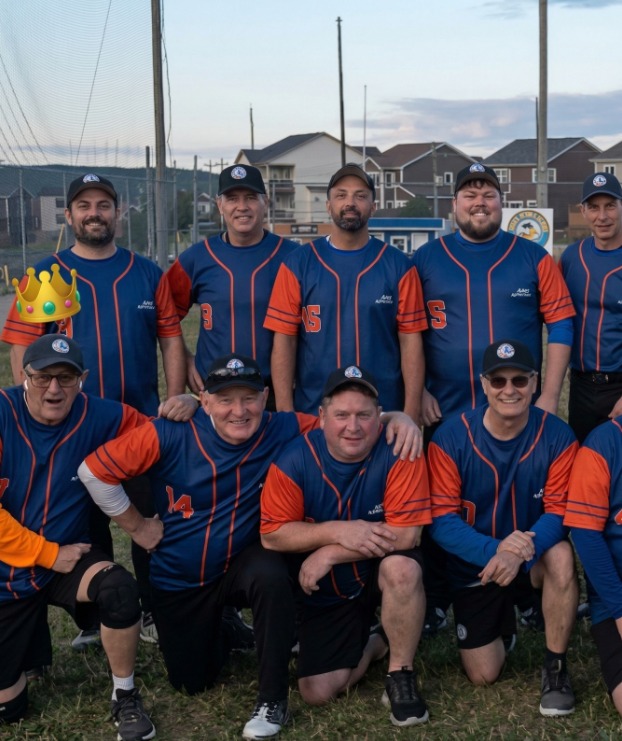
My phone buzzed at 3:17 in the morning. I almost didn't look. But when you're 59 and your sleep is already broken, you reach for the phone before your eyes are fully open. It's just what you do. Group text. Our softball team chat. From Walt. Walt plays second base on our Thursday night recreational league. The youngest guy on the team is 43. We are not a young squad. We are a collection of men who have collectively decided that getting older doesn't mean getting off the field. But Walt is different from the rest of us. Walt is 81 years old. And at 3:17 AM on a Thursday morning, he'd gotten up for his middle-of-the-night bathroom trip, and sent us all a text that read: "Well guys, just up to do my middle of the night pee. I have been laying in bed for the past half hour thinking about tonight's game and thinking about the great bunch of guys I am allowed to play with. I really appreciate the way you guys treat me as an equal and not just an old fart. You know there are a couple of songs I often think of, one is Don't Let The Old Man In, the other When Did I Get Old. The first I like, the second I do not. It's you guys that keep me living by the first one. Except for you guys, I would not be playing ball, no daily walks no light weights. There would be no reason to do those things. It's all of you who keep me going and give me the reason to get out of bed in the morning. All of you should take pride in knowing that there is one old fart you help keep going every day. I don't know if I will get another year in the league or not. Shit, I don't buy GREEN bananas any more. But I do know, this will be the year of ball play I will remember. All because of 14 great people. I will do my best to contribute to the team but, some days are better then others. Now.....I got that off my chest, I will try to go to la la land again." I put my phone on the nightstand and stared at the ceiling for a long time. Not because the message was sad. It wasn't sad. It was the most alive thing I'd read in years. An 81-year-old man, awake at 3 AM, so full of gratitude for being allowed to PLAY that he couldn't sleep. Writing in the dark with his thumbs. Misspellings and all. Raw, unpolished, real in a way that nothing on the internet is anymore. And here I was. Fifty-nine years old. Lying in the dark dreading the alarm. Dreading it because I already knew what the first twenty minutes of the morning would look like. The same thing they'd looked like every morning for three years. Roll to the edge of the bed. Swing my legs out. Sit there for a second. Not because I'm savoring the quiet — because I'm negotiating with my own knees to hold my weight when I stand. Walk to the bathroom. Both hands on the railing going down the stairs because the first descent of the day sounds like someone stepping on a bag of chips. Every step a crunch. Try to open the childproof cap on my Atorvastatin. First attempt fails because my fingers are too stiff. Second attempt I use the heel of my palm against the counter like I'm cracking a walnut. Third attempt it opens and the pills scatter everywhere because I overcorrected. One morning last month, my nine-year-old grandson was staying over. He walked into the kitchen while I was running my hands under hot water, trying to get my fingers to cooperate enough to make him breakfast. He watched me for a minute and said: "Papa, why are your hands mad at you?" I laughed it off. But I thought about that question for three days. My hands weren't mad at me. Something was wrong with me. And I'd been accepting it, adapting around it, shrinking my life to fit inside whatever my body would tolerate on any given morning. The way you do when decline is slow enough that you mistake it for normal. And then Walt — 81, twenty-two years older than me — sends a text at 2 AM about being too excited about LIFE to sleep. Something was wrong with this picture. And it wasn't Walt. I spent the next two weeks watching him more carefully than I ever had. Here's what I noticed: Walt gets to the field early. Not first-to-arrive early. Ritual early. He's already stretched and loose by the time the rest of us pull in, groaning out of our trucks, rubbing our lower backs, complaining about the humidity or the traffic or whatever we use to explain why we move like men made of rust. Walt moves with this deliberate, steady energy — not fast, not slow. Like a man whose body cooperates with him instead of arguing with him at every turn. He fields grounders at second base and his hands are SOFT. Quick. Sure. The kind of hands you trust. I've seen 60-year-olds on the team with worse hands than Walt has at 81. He doesn't grunt when he bends down. I want you to think about that. I grunt getting out of my truck. I grunt picking up a bat. I grunt tying my cleats. Walt bends at the waist, gloves a ground ball, fires to first, and stands back up like it cost him nothing. Like his body owes him no explanation and he owes it no apology. One Thursday after a game, I caught him by his truck in the parking lot. He was unlocking his cooler — Walt always brings a cooler, always has something cold for whoever wants it, this is just who he is. "Walt. Can I ask you something and I want you to actually answer me." He looked up. "Shoot." "How are you doing this at 81? The walks, the weights, the games, the way you move. My doctor's got me on Atorvastatin. My knees sound like gravel. My hands are stiff every morning. My grandson asked me why my hands were mad at me. I've got a medicine cabinet that looks like a CVS aisle and I'm 59 and you're out here at 81 fielding ground balls with soft hands. What's the secret?" He closed the cooler. Leaned against his tailgate. Looked at me the way you look at someone when you're deciding how much to tell them. "You want the real answer or the short answer?" "I've got nowhere to be." He smiled. Then he said something I wasn't expecting. "Five years ago I couldn't have been on this team. Couldn't have played. Could barely get out of my truck." Walt is not a man who rushes a story. He's 81. He's earned the right to take his time. "I was on Atorvastatin for seven years," he said. "My doctor put me on it when I was 69. Total cholesterol was up. He said the numbers needed to come down, handed me the prescription. I filled it that same day. Because that's what you did. That's what everybody did." "The numbers came down. He was happy. I was happy. Everything looked fine on paper." He paused. Looked at his hands for a second. "But somewhere around year three, my knees started. Then my hips. Then this deep ache in my legs that would hit every afternoon and just... stay. Like a guest that wouldn't leave. I'd get out of bed in the morning and the first ten minutes were just me standing in the kitchen waiting for my body to release enough to walk to the coffee maker." "I told my doctor. He looked at my chart. Said my cholesterol was excellent. Said some muscle stiffness was a known side effect. Said the benefits outweigh the risks." Walt said that phrase — benefits outweigh the risks — the way a man says something he's heard too many times from someone who never had to live with the risks. "By year five," he said, "I stopped playing ball. Couldn't run the bases without my legs seizing up. Stopped the daily walks because they hurt more than they helped. Stopped the weights. Just... stopped." "My wife said something that scared me more than any doctor ever has. She said: 'If you give up the ball, you're giving up. Period.'" "She was right. Without the team, without the field, without those Thursday nights — there was nothing pulling me forward. Just a recliner and a television and a body that shrinks a little more every week until one day you don't bother getting out of the chair at all." He looked out across the empty field. The lights were still humming. "I was 76 years old. And I was terrified. Not of dying. Of having no reason to stay alive." "So what changed?" I asked. He reached into his cooler. Handed me a water. Took one himself. "A buddy of mine. Known him since our forties. He'd been on Crestor for years — same story, same stiffness, same benefits-outweigh-the-risks speech from his doctor. He called me one day and said he'd found something. Said it wasn't a drug. Said he couldn't explain it right over the phone but that I needed to look into it." "I told him I'd tried everything. Fish oil. Red yeast rice. Berberine. Garlic capsules. Bergamot extract. A counter full of supplements that my wife counted one night — she got to fourteen bottles and stopped. I told him: I've tried everything and nothing works and my legs ache and I'm tired of spending money on things that don't do what they promise." "He said one thing: 'Walt, I know. But this is different. Look at the mechanism.'" "I didn't even know what that word meant in this context. Mechanism. But I looked it up." He took a long drink of water. Set the bottle on the hood of his truck. "And then I couldn't stop reading." What Walt explained next — leaning against his truck at 9 PM on a Thursday — was something no doctor had ever told either of us across a combined forty-plus years of checkups, bloodwork, and prescription renewals. "Here's what they never told me," he said. "And I say this as a man who trusted his doctor completely for seven years while his legs were falling apart." "LDL cholesterol — the number my doctor was obsessed with — is not inherently dangerous. Your body makes it on purpose. Your brain needs it. Your cells need it to build their membranes. It transports nutrients. Repairs tissue. It's a delivery truck. Not a bomb." "The problem isn't how much of it you have. The problem is what happens to it inside your body." He picked a twig off the ground. Snapped it clean in half. "Free radicals — unstable molecules from stress, processed food, pollution, normal aging — they attack your LDL particles. They OXIDIZE them. Change their structure. And oxidized LDL is a completely different substance than regular LDL." "Regular LDL floats through your bloodstream doing its job. Oxidized LDL embeds in your arterial walls. Triggers inflammation. Recruits immune cells that form plaque. That plaque becomes the blockage. The blockage becomes the heart attack." "Not cholesterol. OXIDIZED cholesterol. That's the actual threat." He looked at me directly. "For seven years, Atorvastatin lowered my total number. Did exactly what it was designed to do. But it never once touched the oxidation process. The thing actually creating the danger kept running completely unchecked." "My doctor was watching the smoke alarm. Nobody was checking for the fire." "Then why didn't anything else work either?" I asked. "You said you had fourteen bottles on the counter." Walt nodded like he'd been waiting for exactly that question. "Because everything I tried was working in the wrong place," he said. "Fish oil works in the bloodstream. Plant sterols work in the gut. Berberine in the digestive tract. None of them — not a single one — can reach inside the cells where the oxidative damage is actually happening. None of them can penetrate arterial walls. None of them can get inside mitochondria — the energy factories inside your cells — where the real destruction accumulates year after year." "I spent years mopping the floor while the roof was leaking." Then he said the part that made me grip my water bottle tighter. "When your cells are under constant oxidative attack, your body goes into emergency mode. One defense mechanism? Produce MORE cholesterol to shore up the damaged cell membranes. It's trying to protect itself." "More oxidative stress — more cholesterol production. More cholesterol under those conditions — more gets oxidized. More oxidation — more arterial damage. More damage — more stress." "A vicious cycle that feeds itself. And no statin on earth breaks it. No fish oil breaks it. No supplement I ever took broke it. Because none of them addressed what was actually spinning the wheel. They were all aimed at the exhaust. The engine kept running." "So what breaks it?" I asked. And this is where Walt went from a man I respected to a man I believed. Because he didn't say "I found this product." He didn't give me a pitch. He explained what he found the same way you'd explain something to a friend you actually care about — slowly, clearly, making sure every piece connects. "Have you ever heard of molecular hydrogen?" he asked. I hadn't. "Neither had I. That's the first thing that bothered me. If it worked, why hadn't I heard of it? Why wasn't it at the health food store next to the bergamot that didn't work and the fish oil that made my wife threaten divorce over the burps?" "Then I looked at who was actually studying it." Japanese researchers have been publishing on molecular hydrogen for decades. Over 2,000 peer-reviewed studies. More than 80 registered clinical trials. Published in the same journals cardiologists reference when choosing which medications to prescribe. Not health blogs. Not supplement company marketing pages. The same class of evidence that put the statin on your doctor's prescription pad — except it's pointing somewhere your doctor hasn't looked yet. In Japan — one of the longest-lived populations on earth, some of the lowest cardiovascular death rates in the world — hydrogen-enriched water sits on convenience store shelves the same way green tea does. An entire country figured this out years ago. "The research explains everything that failed before it," Walt said. Molecular hydrogen is what scientists call a selective antioxidant. Every other antioxidant Walt had tried — turmeric, green tea extract, Vitamin C, Vitamin E — they're non-selective. They neutralize ALL free radicals. Including the ones your body actually needs. Your immune system uses certain free radicals to signal danger, trigger healing, coordinate defense. Carpet bomb everything and you disrupt the essential systems alongside the destructive ones. Hydrogen doesn't do that. It targets ONLY the most destructive free radicals — hydroxyl radicals and peroxynitrite. The exact ones responsible for oxidizing LDL cholesterol. The exact ones spinning the vicious cycle. It neutralizes those specific radicals and converts them into water. Harmless water. Leaves everything beneficial completely intact. Smart missile. Not carpet bomb. "But here's the part that made everything click," Walt said. "Hydrogen is the smallest molecule in existence. Smaller than water. Smaller than oxygen. So small it penetrates every cell, every tissue, every organ — including crossing the blood-brain barrier. Almost nothing else can do that." "Your fish oil can't get there. Your plant sterols can't get there. Your berberine, your red yeast rice, your oatmeal — none of them reach inside the cells where the oxidative damage has been building for years." "It's like spraying water on the outside of a burning building and wondering why the fire won't go out. Every supplement I'd ever taken was standing outside. Hydrogen goes through the walls. Into every room. To the source." "And when oxidative stress drops — when the cycle finally breaks — your body stops overproducing cholesterol as an emergency defense. Naturally. Without blocking a single enzyme. Without stealing anything your muscles need to function." A 24-week randomized controlled trial — the gold standard of clinical research — showed hydrogen tablets reduced total cholesterol by 18.5 mg/dL. LDL down up to 18.2%. HDL — the protective cholesterol, the one that actually guards your arteries, the one statins never improve — up 8%. Cholesterol-to-HDL ratio improved by 7.2%. Not by suppressing production. By addressing the oxidative stress corrupting it at the source. There was a second piece. And this one explained why two years of discipline and fourteen bottles hadn't moved Walt's numbers. Every hydrogen tablet works through a chemical reaction with elemental magnesium. Which means every dose delivers molecular hydrogen AND bioavailable magnesium simultaneously. "Up to 75% of Americans are magnesium deficient," Walt said. "Three out of four. I was almost certainly one of them for years and not a single doctor ever checked." "Magnesium is required for over 300 enzymatic processes — including the specific enzymes that regulate cholesterol metabolism AND the enzymes responsible for muscle function and nerve signaling." He looked at me. "Muscle function. Nerve signaling. The exact things my legs needed to carry me around the bases. The exact things your hands need to open a jar of peanut butter without running them under hot water first." "Without adequate magnesium, those enzymes physically cannot function. Doesn't matter what else you're taking. Fish oil. Bergamot. A statin. If the foundational mineral the machinery depends on is missing, the machinery can't run." "I was running a car with no oil in the engine. Premium gas, clean air filter, new tires — doesn't matter. No oil, the engine seizes." Two fronts. Oxidative stress destroying the cholesterol. Mineral deficiency sabotaging the regulation. Every treatment for seven years had been aimed at one front with the wrong weapon. "Hydrogen addresses the oxidation," Walt said. "Magnesium restores the foundation. Both fronts. One tablet. One glass of water. Every morning." He reached into the back seat of his truck and came back with a box. Set it on the hood between us. PrimeCell H2 from Amala Health. 12 parts per million of therapeutic-grade molecular hydrogen — up to eight times the concentration of most hydrogen products on the market. Most commercial tablets deliver 1 to 1.5 PPM. The clinical studies showing cardiovascular results used concentrations of 8 PPM and higher. That gap isn't cosmetic. It's the difference between a therapeutic dose and expensive fizzy water. Plus 80mg of bioavailable elemental magnesium per tablet. Not cheap magnesium oxide that passes straight through your gut unused. Absorbable magnesium that actually reaches the 300-plus enzymes depending on it. "I keep extras at home," Walt said. "Fourteen guys on this team. You're not the first one I've handed this to." Both fronts. One tablet. One glass of water. Walt leaned against his truck — a man who five years ago couldn't walk to the end of his driveway, an 81-year-old who plays second base every Thursday and sends 2 AM texts because he's too full of life to sleep — and he told me what the first weeks looked like. "The first thing that changed was the mornings." "About a week in — day six, day seven — I woke up and just stood up. No ten-minute negotiation with my own legs. No standing in the kitchen waiting for the stiffness to release enough to reach the coffee maker. I just stood up. The way you do without thinking. The way I used to before the drug took it from me." "I stood in my kitchen at 5 AM and realized I was already walking. Already moving. No fight. No negotiations. I didn't know whether to laugh or cry so I just made the coffee." By week three, the deep ache that had been his daily companion for four years was fading. Not all at once. Like someone slowly turning down the volume on a sound he'd gotten so used to he forgot it was there. By week six he was walking to the end of his street and back without stopping. First time in years. By month two he was back in the yard with the light weights. His wife watched from the kitchen window the first time. Came outside wiping her eyes. He tapered off the Atorvastatin with his doctor — bloodwork monthly, dose reduced over eight weeks. Ran a full panel at three months completely off the drug. "I was terrified," he said. "Seven years on a statin. My cholesterol was 276 when I started. I was convinced it would rocket straight back up." Total cholesterol at three months, completely off Atorvastatin: 204. On the drug it had been 211. LDL: 128. On the drug: 131. HDL — the protective cholesterol, the one that actually guards your arteries, the one the statin never once improved in seven years: up 11 points. Triglycerides: down 40 points. His numbers were BETTER off the drug than they were on it. Better without the fourteen bottles. One tablet in a glass of water. "But here's what actually mattered," he said. "My legs stopped seizing. My knees stopped aching. The stiffness that had been stealing my mornings for four years — gone." "Atorvastatin blocks the same biochemical pathway that produces CoQ10 — the energy molecule your muscles need to function. Your heart needs it to beat 100,000 times a day. Your legs need it to run bases. Your hands need it to grip a bat and field a grounder. For seven years that drug was starving my muscles of the fuel they needed to fire." "That's not a side effect. That's the mechanism. That's what the drug DOES as part of how it works. Sixty percent of long-term statin users quit because of muscle symptoms. Sixty percent. And every one of their doctors writes the same thing in the chart: benefits outweigh the risks." He looked back at the field. The lights were shutting off, one bank at a time. The parking lot was nearly empty now. Just two men and a box on the hood of a truck. "The benefit was a number on a chart. The risk was me. Sitting at home at 76. Legs failing. No more walks. No more weights. No more field. Watching the clock." He picked the box up and put it in my hands. "Take it home. Try it. That's all I'm asking." I drove home that night and dropped the first tablet in a glass of water before I went to bed. Day five. I woke up and swung my legs off the bed the way I always do — bracing for it. The stiffness that usually needed ten minutes and the stair railing and the crunch-crunch-crunch before my knees would cooperate. It was still there. But quieter. Like someone had turned the dial down a few notches while I slept. I stood up. Took the stairs. No railing. Didn't even think about it until I was already at the bottom and realized what I'd done. By week two, the peanut butter jar opened on the first try. My hands were cooperating in the morning without the hot water ritual. I caught myself making a fist at my desk at work — just opening and closing my hand — because I could. Because it didn't cost me anything. By week three, my grandson was staying over again. Saturday morning. He wanted pancakes. I stood at the stove flipping pancakes with a spatula and my wrist didn't ache. My fingers didn't lock around the handle. I flipped a pancake and caught it clean and he laughed and said "do it again Papa" and I did it again. Three times. Because my hands let me. I stood at that stove for a long time after he went to watch cartoons. Just holding the spatula. Looking at my hand. Thinking about the morning two months earlier when he'd asked me why my hands were mad at me. They weren't mad anymore. By week four, something happened at the Thursday game that I didn't notice until it was over. I'd jogged to first base. Not trotted. Not shuffled. Jogged. The way you run when your body isn't warning you to stop. I hadn't jogged to first in two years. I didn't decide to do it. My legs just went and my brain didn't have to override them. My wife said I looked different. She couldn't put her finger on it. I could. The heaviness was gone. That low-grade fog I'd been blaming on stress and age and broken sleep — lifting. Like someone had wiped a window I didn't know was dirty. At ten weeks I got bloodwork. LDL: down 33 points. Total cholesterol: down 41 points. HDL: up for the first time in two years. Triglycerides: nearly cut in half. My doctor looked at the panel. Looked at me. Looked back at the panel. "Whatever you changed — don't stop." He didn't reach for the prescription pad. First visit in two years he didn't reach for it. Now. I know what you're thinking. Because I thought every one of these things standing in that parking lot holding a box I didn't ask for from an 81-year-old man I wasn't sure I believed yet. "I've tried everything and nothing works." So had Walt. Fourteen bottles. Years of real discipline. Numbers barely moved. Not because the effort was wrong — because the target was wrong. Everything he tried worked downstream — in the gut, in the bloodstream — while the oxidative stress spinning the vicious cycle burned inside the cells where none of it could reach. "Sounds like another supplement making big promises." Over 2,000 peer-reviewed studies. More than 80 clinical trials. Gold-standard randomized controlled research showing real cholesterol results. Published in the same journals cardiologists use to choose which drugs to prescribe. Walt didn't take a marketer's word for it. He read the research. Then he lived it. For five years. Then he played second base at 81 and handed a box to his teammate in a parking lot because he keeps extras specifically for moments like that. "My doctor says I need the statin." Walt's doctor said the same thing for seven years while his legs were seizing and his mornings were disappearing. The statin hit its number every single time. The oxidation driving the actual danger kept burning underneath, untouched. Walt's numbers came back better once he addressed what the statin was ignoring. That's the difference between managing a measurement and solving the problem underneath it. I keep coming back to something Walt wrote in that 2 AM text. "There would be no reason to do those things." That's the line that matters. Not the cholesterol number. Not the statin side effects. Not the bloodwork. The reason. Walt has a reason to get out of bed. His team. The field. Thursday nights under the lights. The daily walks that keep his legs ready. The light weights that keep his body in the game. The fourteen guys who treat him like an equal and not just an old fart. But the reason only works if the body cooperates. And for five years on Atorvastatin, his body was being quietly dismantled by a drug that looked great on paper while draining the cellular fuel he needed to stay in the fight. PrimeCell gave him his body back. One tablet. One glass of water. Every morning before the sun comes up. It's giving me mine back too. My grandson doesn't ask why my hands are mad at me anymore. He asks me to flip pancakes. I jog to first base on Thursday nights. I take the stairs without the railing. And when my phone buzzes at 3:17 AM with a text from an 81-year-old man who can't sleep because he's too grateful to be alive — I understand him now. In a way I couldn't have understood two months ago. Walt doesn't buy green bananas anymore. But he buys batting gloves. He buys softball cleats. And he drops a tablet in a glass of water every single morning. shop.getamalahealth.com/pch/sp P.S. — After I started taking PrimeCell, three other guys on the team asked what was different. They noticed I was moving faster. Bending easier. Not wincing when I stood up from the bench between innings. I told them. One of them — Mike, 62, been on Crestor for six years — had morning stiffness so bad his wife had to open his pill bottles for him. Three weeks on PrimeCell, he told me his wife noticed he'd stopped groaning when he got out of bed. He didn't know he'd been groaning. His body had been hurting so long he'd stopped registering it. Five of us on the team are taking it now. Walt just smiles. He doesn't push. When a man plays second base at 81 with soft hands and legs that don't quit, the proof walks itself onto the field every Thursday. P.P.S. — You'll feel it before your bloodwork shows it. The first thing is the mornings. That stiffness you've accepted as "just getting older" — when it starts to ease, you'll notice. When your hands close without a fight for the first time in years, you'll notice. When you stand up and just walk — no negotiation, no ten-minute warmup, no stair railing — you'll notice. That's not placebo. That's the smallest molecule in existence reaching cells that haven't had real support in years. Somewhere your statin has never been. Somewhere your fish oil was never small enough to reach. The cholesterol numbers follow in the weeks after. But that first morning your body just cooperates? That's your body telling you: finally. Something that actually gets where it needs to go. P.P.P.S. — PrimeCell has a 90-day money-back guarantee. Numbers don't improve, every penny back. No questions. No forms. No conditions. Compare that to the statin on your counter — lifetime commitment, guaranteed CoQ10 depletion, muscle symptoms in 60% of long-term users, and a doctor who adjusts the dose when the complaints get loud enough. One product stands behind its results. The other one just keeps refilling. P.P.P.P.S. — PrimeCell is a small company and they sell out regularly. Walt warned me — said he tried to reorder once and had to wait over a week for a restock. His exact words: "My legs don't wait 11 days." If your next blood panel is in 30 to 60 days and you want to walk in with real numbers instead of hope — check availability now. Not next week. Now. Every day that vicious cycle keeps spinning is another day you're further from the field. Walt didn't wait. Don't wait. P.P.P.P.S. — Don’t forget about their 90-day money-back guarantee. No risk. Click the link. shop.getamalahealth.com/pch/sp
PrimeCell H2
PrimeCell H2 is a next-generation molecular hydrogen tablet designed to selectively neutralize the most damaging free radicals in your body - at the cellular level, right where aging actually happens.
LEARN MORELike this ad? Make it yours.
Crush rebuilds this exact creative around your product — your brand, your colors, your offer — in about a minute.