
Inactive· since Feb 21, 2026
- 3
- days it ran
- 0
- relaunches
Ad copy
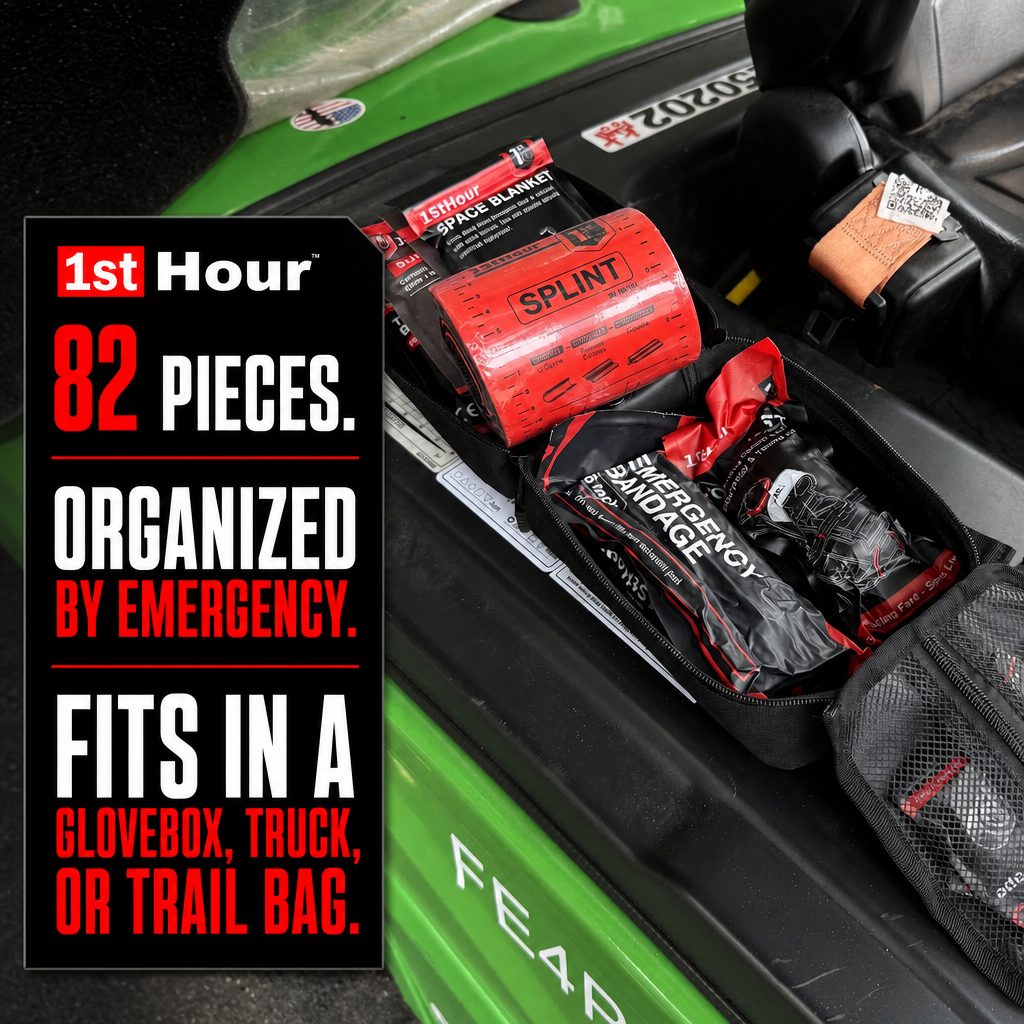
My husband came home from a barbecue, walked straight past me and the baby, went into the garage, and dumped our entire first aid kit onto the concrete floor. Then he just stood there staring at it like it had betrayed him. That was the night everything changed. Three hours earlier, he'd been standing by a cooler at my brother's barbecue talking to a guy named Marcus. Marcus was an off-duty paramedic. Someone had mentioned that Jake—my husband—had just finished building our deck. Marcus asked if he had a first aid kit in the garage. "Of course," Jake told him. "Got a nice one from Costco." Marcus got quiet for a second. Then he told Jake about the Little League game. It was a Tuesday evening. Marcus was there watching his nephew play. A father in the stands stood up to cheer, lost his balance, and fell backwards off the aluminum bleachers. There was a piece of rebar sticking out of the ground behind the stands. It went through his thigh. Marcus said the screaming lasted about forty seconds. Then the man went pale and stopped making noise entirely. That's when Marcus knew the femoral artery was hit. He sprinted to the concession stand screaming for a first aid kit. Someone handed him a white plastic box with a red cross on it. He popped it open and his stomach dropped. Bandaids. Gauze pads the size of drink coasters. Tiny scissors that couldn't cut through a t-shirt. Antiseptic wipes. A CPR mask. "I needed a tourniquet," Marcus told him. "I needed trauma shears. I needed something designed to stop catastrophic bleeding. What I got was a box designed for splinters and bee stings." He did what he could with his belt. The ambulance took nine minutes. The man died at the hospital four hours later. He had a six-year-old son on that field. Jake told me all of this standing in the garage at 11 PM with our first aid kit scattered across the floor. I was holding our three-week-old son. And I remember looking down at that kit—the one we'd bought when we moved in, the one that made us feel like responsible adults—and seeing exactly what Marcus had described. Bandaids. Tiny gauze. Alcohol wipes. A cheap pair of scissors I could barely get my fingers through. Nothing for severe bleeding. Nothing for the injuries that actually kill people before an ambulance arrives. "This is what we have," Jake said quietly. "This is what I'd grab if something happened to you. Or to him." He looked at the baby. I didn't sleep that night either. Not because of the newborn. Because I couldn't stop doing the math. Jake had spent the drive home researching on his phone. He read me the numbers while I nursed our son in the dark at 2 AM. Exposed femoral artery? You have about three minutes before blood loss becomes unsurvivable. Average ambulance response time in America? Eight minutes in urban areas. Up to fourteen in rural zones. That's not a gap. That's a death sentence. And here's what nobody tells you: The bleeding that kills people is not the bleeding that regular first aid kits are designed for. Those kits handle minor wounds. Cuts that sting but don't threaten your life. Scrapes that need cleaning. But arterial bleeding? The kind where blood is pulsing out with every heartbeat? The kind that can empty your body in minutes? That requires completely different equipment. Equipment that isn't in 99% of the first aid kits Americans keep in their homes, their cars, their garages. Jake called Marcus the next day. "What would you have needed?" he asked. "If you could go back to that Little League game with the right gear, what would have saved that man?" Marcus didn't hesitate. Tourniquet. A real one, not some rubber band nonsense. Something that can actually occlude an artery. Trauma shears. Heavy duty. The kind that can cut through denim, leather, a seatbelt if needed. Because you can't treat a wound you can't see. Compressed gauze. Enough to pack a deep wound. Chest seals. Pressure bandages. The tools that medics actually use when someone is bleeding out. "That's what we carry on the rig," Marcus said. "That's what they teach combat medics. Because that's what stops the bleeding that kills people." Jake asked him why regular first aid kits don't include this stuff. Marcus laughed. But it wasn't funny. "Because nobody thinks it'll happen to them. Those kits are designed to make people feel prepared. Not to actually prepare them." I heard that sentence from the other room and it hit me harder than anything else. Because I was that person. I had felt prepared. I'd seen that red cross on the box in our garage and thought, we're covered. I'd packed a little first aid pouch in my hospital bag for the birth. I had one in the diaper bag already. All of it useless for the one scenario that actually kills people. Jake spent the next two weeks trying to piece together his own trauma kit. Bought components separately. Watched YouTube videos from combat medics. Read military field manuals. It was expensive. Confusing. He wasn't sure if he was getting the right stuff or wasting money on things he'd never know how to use. Then he found the Trauma First Aid Kit Pro. Fifty dollars. Everything Marcus described. Tourniquet. Trauma shears. The components that actually stop life-threatening bleeding. All in a compact pouch he could attach to his range bag, throw in the truck, clip to a hiking pack. He bought three. One for the garage. One for the car. One for the hiking bag. I didn't ask why. I already knew. But here's the part Jake doesn't think about—the part that keeps me up at night. I'm the one home alone with our son forty hours a week. I'm the one who uses the kitchen knives every day. Who carries the baby up and down stairs. Who will be in the car with him more than anyone. I'm the one driving four hours through rural Pennsylvania to my parents' house, where cell service disappears for thirty-mile stretches. If something happens in this house—to my son, to a neighbor's kid, to me—I'm the first responder. Whether I want to be or not. And until three weeks ago, my entire plan was a plastic box of bandaids and a 911 call. I ordered my own kit. One for my car. One for the diaper bag. Because here's what I think about now: I think about the eight minutes between a 911 call and an ambulance. I think about my son learning to crawl soon. Then walk. Then run. The bike. The skateboard. The camping trips we've already started planning. I think about Jake in the garage with the table saw. The circular saw. The nail gun. I think about all the moments where something could go wrong. Not dramatic, movie-scene wrong. Tuesday-evening, Little-League-game wrong. Just an ordinary day that turns catastrophic in two seconds. And I think about having the ability to do something other than watch. That's what this is really about. Not being helpless. Not standing there with a box of bandaids while someone you love bleeds. Not waiting for an ambulance that might not make it in time. I'm not a paramedic. I'm not a nurse. I'm a new mom who worries about everything and just learned that the one thing I should have been worried about was the one thing I'd never even considered. But I know what's in my kit now. And I know the difference between being prepared and just feeling prepared. The Trauma First Aid Kit Pro is available right now for fifty dollars. That's less than a tank of gas. Less than dinner for two. Less than the first aid kit you probably already own that can't do the one thing that actually matters. I don't know you. I don't know what your life looks like. But I know that somewhere in your daily routine, there's an eight-minute window where you might be the only thing standing between someone you love and a tragedy. A father at a Little League game had a family who loved him. A six-year-old who needed him. Two hundred people around him. And not a single one of them had what it took to save him. I hope you never need this kit. But if you do, you'll have it. And that makes all the difference.
Read If You're Married
Prepare for emergencies with the Tacright Trauma First Aid Kit, designed for rapid response in critical situations. This compact and durable kit includes all the essential tools needed for trauma care, making it perfect for outdoor enthusiasts, tactical professionals, and anyone who values safety an...
LEARN MORELike this ad? Make it yours.
Crush rebuilds this exact creative around your product — your brand, your colors, your offer — in about a minute.