
Inactive· since Jun 8, 2026
- 68
- days it ran
- 0
- relaunches
Ad copy
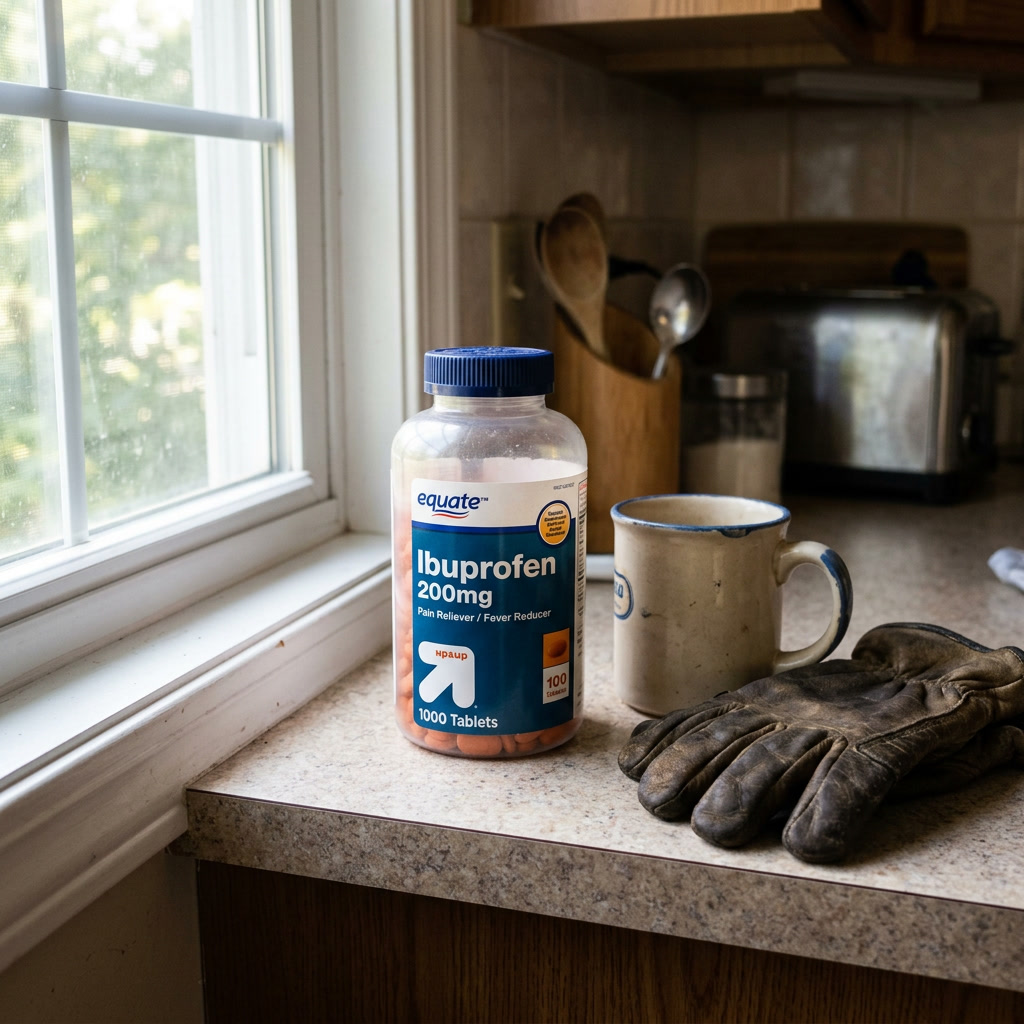
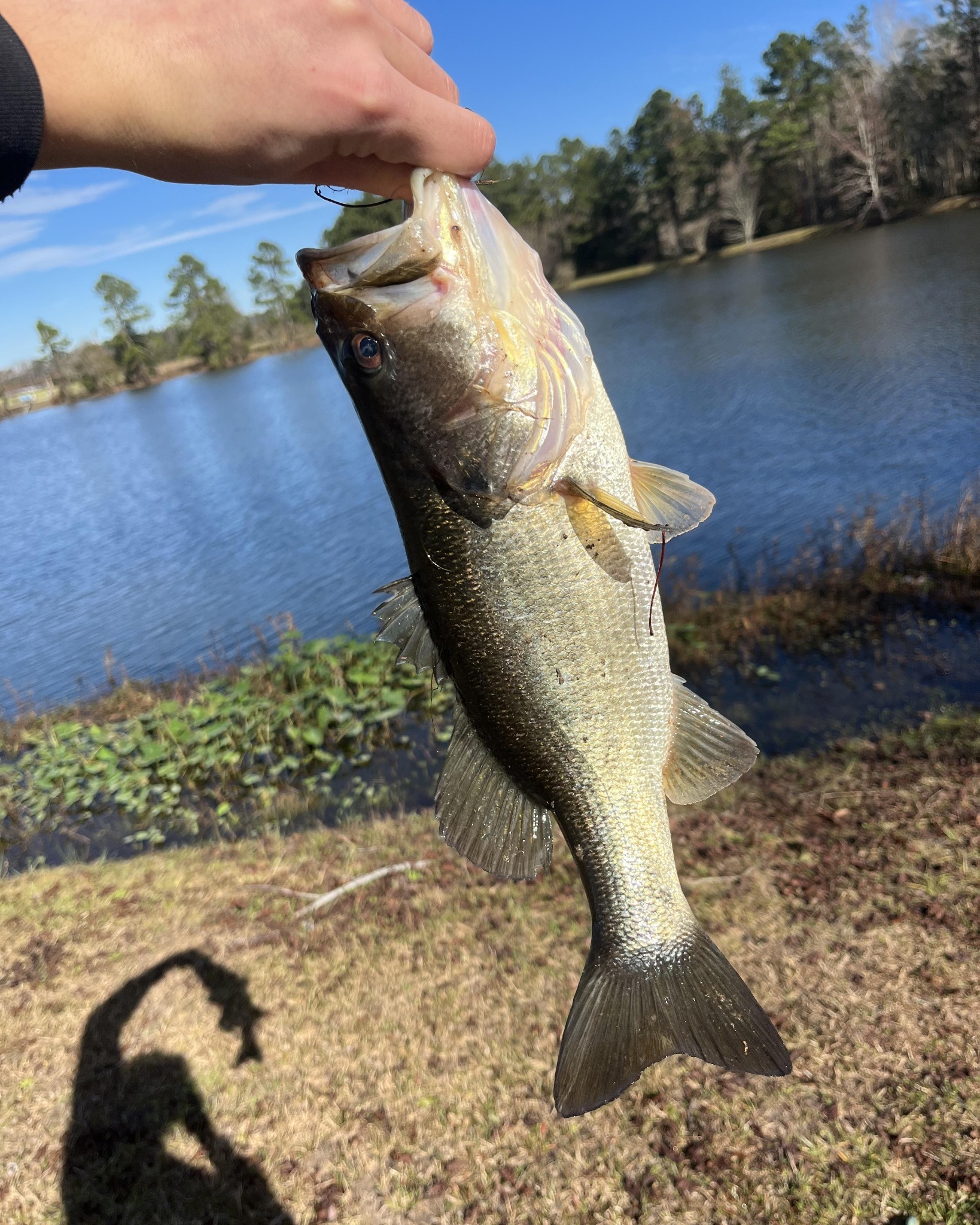
My brother-in-law told me on the drive home that I'd been switching hands on my fishing rod all day. He waited until we were back on Highway 84, about 20 minutes outside of Valdosta, when the sun was starting to go orange over the pines and there was nowhere else for the conversation to go. He just said it. Quiet. Eyes on the road. "You been switching hands all day, Earl. You know that, right?" And I just sat there with my hand on the door handle and watched the trees go by. I didn't know what to say. Because I had been switching hands. And I knew I had been switching hands. I'd just been pretending he hadn't noticed, the way you pretend a man doesn't notice the gray in your beard or the way you take the stairs slower than you used to. We've fished the Withlacoochee River every April for 38 years. Same stretch of water. Same little put-in off the dirt road past the cypress stand. Same coffee in a steel thermos. We started when we were both 23 years old, before he married my sister Joyce, before either of us had kids, when the rods were cheap and the boat was a 14-foot aluminum thing we paid 400 dollars for off a guy in Quitman. 38 years. And this was the first one I'd had to put the rod down twice before lunch. My name is Earl Massey. I'm 61 years old. I was a journeyman electrician for 39 years, mostly residential and light commercial, all over south Georgia and north Florida. I retired 2 years ago. My wife Diane and I live in the same brick ranch on the south side of Valdosta we bought in 1988. Two kids, both grown, both out of state. A grandson in Tallahassee I see about every other month. I'm telling you about the rod because the rod is where it became real. The truth is I'd been feeling it for years. The slow stiffness in the mornings. The way my right shoulder would lock up if I slept on it wrong. The way my hands felt heavy and full of sand around 4 in the afternoon, even on days when I hadn't done anything to deserve it. I blamed it on the trade. You bend conduit for 39 years, you crawl through attics in Lowndes County in July, you fish wires through walls with one arm above your head for an hour straight, and your body keeps a ledger of all of it. I told myself this was the bill. I told myself this is what a man my age pays for the work he did. And to be honest with you, I don't think I'm entirely wrong about that. The trade took something. Anybody who's done it for that long would tell you the same. But I think I've been hiding behind that explanation for longer than was fair, and the rod was the moment I had to admit it. Wayne, my brother-in-law, is 64. He's a retired logistics manager from a tile distribution warehouse in Lake Park. He's a quiet man. He doesn't make a thing out of things. He'll let you stew in your own nonsense for years without saying a word, and then one day he'll pick a moment and say one sentence and that one sentence will land in your chest like a small stone. That afternoon in the truck was one of those moments. He didn't follow it up. He didn't lecture me. He just said it and then we drove the rest of the way home with the radio on low, and when we pulled into my driveway he just said, "I'll see you next Saturday, brother," and drove off. I sat in my own truck for about 5 minutes before I went inside. Diane was on the porch reading a paperback. She looked up and said, "How was the fishing." And I said, "Fishing was fine." And she looked at me a little longer than she usually does and then went back to her book without saying anything else. She knew. She'd been knowing for a while. I want to back up and tell you about the years before the rod, because the years before the rod are the actual story. The rod is just the place I finally stopped lying to myself. The first time I really noticed my hands was in the spring of 2021. I was on a job down in Lake City rewiring an old farmhouse the new owners wanted brought up to code, and I was working a pair of needle-nose pliers up inside a junction box, doing a little maneuver I'd done 10,000 times before, and I just couldn't get my fingers to do what they always had. My grip was off. The pliers slipped twice. I had to step down off the ladder and shake my hand out for a minute. I remember thinking, "huh." Just that. Just "huh." And then I went back up the ladder and finished the job. But you start noticing things once you've noticed them once. Suddenly I noticed it everywhere. The way I struggled to open the spaghetti sauce jar Diane handed me at dinner. The way I'd flex my fingers in the truck at red lights without meaning to. The way I started reaching for things with my left hand when I'd been right-handed for 6 decades. I went to my regular doctor about a year later. Dr. Cleveland. Been seeing him for 16 years. He's a fine man. He listened. He had me move my hands around. He pressed on my shoulder. He said, "Earl, this is wear and tear from your line of work. We're going to see some of this. There's not much we can do about it." He told me to take ibuprofen if it got bad. He told me to consider seeing a physical therapist if it kept getting worse. He told me, "You're 60 years old. You did 39 years of trade work. This is what we'd expect." I left that appointment and I sat in the parking lot for a while. Same way I sat in my driveway after the fishing trip. I wasn't angry at him. I knew he wasn't wrong. But there was something about the conversation that didn't sit right, and it took me a long time to figure out what it was. It was this. He told me what I had. He didn't tell me what was actually happening. And there's a difference. I let it ride for a while after that. I tried to be honest with myself about what I could and couldn't do. I stopped doing some of the things I used to do. I stopped helping my buddy Ronnie haul gravel for his driveway projects. I let Diane open the jars. I sold the recliner with the manual lever because I couldn't yank it back the way I used to, and I bought one with a remote. And the rod kept getting heavier every April. The day after Wayne called me out in the truck, my sister Joyce called me. That was no coincidence. Joyce and Wayne talk about everything, and I know that, and they know I know that. Joyce is 57. She and Wayne live in Hahira, about 20 minutes north of me. She's the kind of sister who has been keeping tabs on me my whole life and is not going to stop now just because I'm in my 60s. She called around 10 in the morning on a Sunday. I was in the garage trying to organize a drawer of fittings. I picked up. She said, "Wayne told me about the fishing trip." I said, "Yeah." She said, "Earl." That's all she said. Just my name. The way only an older sister can say it. Where the entire conversation is contained in one word. I didn't say anything for a minute. Then I said, "I know, Joyce." She let that sit for a minute, and then she said, "I want to talk to you about something. Not now. Come over for dinner Tuesday. I'll feed you." I went over Tuesday. Joyce makes a roast that has been the same roast since our mother died in 2007. She made it for me that night. We sat at her kitchen table with the same tablecloth our mother used to use, and Wayne sat across from us not saying much, and Joyce told me about something she'd been doing for the last 4 months. She'd been having issues of her own. Different from mine, but the same family. She said her hands would ache in the mornings to where she couldn't grip her toothbrush properly. Her knees were starting to talk to her on the stairs. Her right hip had been bothering her for over a year. Her doctor had told her some version of the same thing mine told me. Aging. Wear. Take an Advil. Consider PT. She'd started reading. She'd gone down a road I hadn't gone down yet. She'd been reading about inflammation, and oxidative stress, and what actually happens to the body's tissues year after year that nobody at the regular doctor's office really wants to slow down and explain to you. I want to tell you what she told me at her kitchen table, because it was the first time anybody had explained to me what was actually going on. She said, "Earl. Think of your joints like the wiring on an old house." That got my attention right there. She said, "When wiring goes bad, it's usually not because of one big thing. It's because of years of small things. Heat. Moisture. Friction. Little bits of corrosion building up at the connections." I nodded. She said, "Your body works the same way. Your joints, your shoulders, your hands. They're connections that have to keep working smoothly. And year after year, your body is dealing with all this oxidative stress. Stress, processed food, environmental stuff, just living. It builds up. It's like rust forming inside your body. Slowly. Quietly. At the connections." She said the word "rust" and I felt something in my chest tighten up. Because I've been pulling rusted wire out of old houses for 39 years. I've spent my whole life seeing what corrosion does to a connection. The way it makes everything stiff. The way the conductor gets brittle. The way the signal doesn't move through it the way it's supposed to. She said, "Your body is making inflammation in those places to try to deal with the oxidative stress. But when there's more rust than your body can handle, the inflammation just becomes a constant. That's what stiffness is. That's what soreness is. That's what 'my hands hurt by 4 PM' is. It's not just wear. It's a system that's been overloaded with oxidative stress for years, and your body is doing its best to manage it but it can't keep up." I sat there with my fork in my hand. I said, "So what are you doing about it." She said, "I started taking a pomegranate supplement." Now I'll be honest. The first thing I thought was, "pomegranate." Like the juice. Like the stuff at the grocery store that's 7 dollars a bottle and has more sugar in it than a Coke. I said something to that effect, probably not as polite as I'm putting it now, and Joyce just smiled at me and said, "Earl, that's not what this is." She got up and walked over to the kitchen counter and came back with a small brown bottle. She set it down in front of me. It said Alevia. Organic Pomegranate Extract. She said, "It's a concentrated extract. From the peel and the rind. The peel has more of the active compounds than the juice does. The juice is mostly sugar. The extract is the part that actually has the science behind it." She told me she'd been taking 2 capsules a day for about 4 months at that point. I asked her if she thought it was doing anything. She thought about it for a few seconds before she answered, which is one of the things I love about my sister. She doesn't oversell anything. She said, "It took about 5 weeks before I felt anything I could put my finger on. But the mornings are different now, Earl. The hands aren't gripping the toothbrush the same way they used to. The stairs aren't a conversation anymore. I went on a 2 mile walk with Wayne last Saturday and didn't have to sit down halfway through it. I'm not going to tell you it's a miracle, because I don't talk like that. But something has shifted, and I've been watching what I do and what I eat for years and the only new thing I've added is this." I looked at the bottle. I looked at Wayne, who hadn't said anything in about 20 minutes. Wayne said, "She's right, Earl. Something's different with her. I see it." That carried weight, coming from Wayne. Wayne does not say things he hasn't thought about. I went home that night with a bottle of Alevia in my passenger seat. Diane was already in bed. I sat at the kitchen table and I read the back of the bottle. Then I went into my office and I sat at my computer for about 2 hours and read about pomegranate, the same way I'd watched Joyce read for 4 months. I won't pretend I followed every bit of the science. I'm an electrician, not a chemist. But the pattern was clear enough to follow. Pomegranate, and specifically the concentrated extract from the peel, contains compounds called punicalagins. They are some of the most studied antioxidant compounds in the natural world. Researchers have looked at them in human trials going back decades. The thing they keep coming back to is that punicalagins seem to have a unique ability to help the body manage oxidative stress in tissues that have been worn down by it. That's the rust Joyce was talking about. There's been clinical research looking at pomegranate in people with joint discomfort, specifically. In one trial of 60 women dealing with knee issues, a pomegranate peel extract taken twice a day for 8 weeks was associated with reductions in pain markers and improvements in symptoms. In another study of patients dealing with joint inflammation, pomegranate extract was associated with improvements in disease activity scores and reductions in multiple inflammation markers in the blood. The way the researchers describe it is that pomegranate's punicalagins help quiet down some of the inflammatory signaling pathways that have been running at a high level for years. They also support the body's own antioxidant defenses, which are what's supposed to be neutralizing the oxidative stress in the first place but get overwhelmed over the decades. When I read that, I thought about Dr. Cleveland telling me, "This is what we'd expect at your age." I thought, no. This is what we expect because nobody is doing anything about the underlying load. Not because the body can't be supported. The body has been doing what it's always done. The support system just got buried under decades of oxidative load. I started taking 2 capsules of Alevia Pomegranate every morning with my coffee. Joyce was right that it took a while. The first 2 weeks I didn't notice anything I could put my finger on. I'm a skeptical man by nature. I'm an electrician. I don't believe a thing is doing something until I can measure it. So I waited. Around week 4, I started to notice my mornings. That's the only place I can pinpoint it starting. The way my hands felt when I first got out of bed and walked to the bathroom. They felt looser. Not like a 23-year-old's hands. I'm not going to lie to you and say they felt like a 23-year-old's hands. But they felt like hands that weren't already mad at me before I'd done anything to upset them. By week 6, the 4 PM heavy feeling was different. I'd been so used to it I'd built my day around avoiding it. I'd schedule the things I wanted to do for the morning and just kind of let the afternoon be a wash. But around week 6 I noticed I was still moving around at 5, 6 in the evening. I went out and worked on the garage drawer organizing for an hour after dinner one Tuesday and I sat down on the porch afterward and Diane looked at me funny. She said, "You feel okay, Earl?" I said, "Yeah. Yeah, I feel okay." I didn't tell her about the Alevia yet. I wanted to give it more time. By week 8, I went fishing. Wayne and I went out on a Friday morning on the same stretch of the Withlacoochee. Same put-in. Same coffee in the same steel thermos. Same boat. Different month, but the same everything else. I held the rod in one hand all morning. I didn't switch once. I didn't have to. We caught about 6 spotted bass between us, which is a good morning by our standards. Around 11 we pulled up under a stand of cypress and ate the sandwiches Diane had packed. Wayne looked over at me halfway through his sandwich, and he didn't say anything at first. He just looked at me. Then he said, "Earl." I said, "Yeah." He said, "I've been watching you all morning." I said, "I know you have." He said, "You haven't switched hands once." I said, "I know I haven't." He nodded a couple times. Took another bite of his sandwich. Then he said, "Whatever you're doing, brother, keep doing it." We didn't say anything else about it. We didn't have to. Wayne and I have known each other for 38 years and there are some things you don't have to talk about. I'm 4 months in on Alevia Pomegranate now. I want to be clear about what I'm saying and what I'm not saying. I'm not saying this fixed me. I'm 61 years old and I did 39 years of electrical work and there are some things about my body that aren't going back to where they were. My right shoulder is still not what it was at 35. I still take the stairs the way a 61-year-old man takes the stairs. But the daily cost of being in this body is different than it was 6 months ago. The mornings are not a negotiation anymore. The afternoons are not a wall I have to crash through. The rod stays in my right hand the whole morning. I went out to the garage last Sunday and rewired the lights in the back room. Just a small job. Took me about 2 hours. I haven't done a job like that since I retired because I didn't want to find out I couldn't do it anymore. I finished it and I sat down on my workbench stool and I drank a beer and I thought about all the years I'd been telling myself this was just the bill. The bill was real. The trade did take something. I'm not going to be 30 again. But there was more in the tank than I knew. Diane could see it. Joyce could see it. Wayne saw it from across a boat on the river. The body had been doing its best the whole time, with a load it had been carrying for too long. Some of that load, it turns out, you can help it carry. If anything in this rings any bells for you, or for somebody you love, I'd just say take a look at it. Alevia Pomegranate is 2 capsules a day. Made in the USA. The active compounds are from the peel of the fruit, which is where the punicalagins actually are. It comes with a 90-day money-back guarantee, which means if you give it an honest run and it's not the right fit for you, you ship the bottle back to them and they refund every penny. Joyce had told me about the guarantee that first night at her kitchen table, and Wayne had nodded across the table when she said it, and I think that was part of why I didn't argue with her as hard as I could have. A man my age has been sold a lot of nothing over the years. The guarantee was the part that made it feel like the people behind the product were actually betting on it, instead of just betting on me. I'm betting on it too now. The rod stayed in my right hand. 👉 https://alevia.com/pom/5 P.S. I went back to Dr. Cleveland for a regular checkup last month. He asked me how I was doing. I told him about the pomegranate. I told him about my sister. He listened. He didn't argue with me. He wrote the name of the product down on a little pad of paper he keeps in his pocket. He didn't say it was a cure. He didn't say it was anything. He just wrote it down. And then he said, "Earl, you look like you're moving better than the last time I saw you." That's the closest thing to a high five I've ever gotten from a doctor. P.P.S. Wayne started taking it about a month after I did. He'd been quiet about why for a while but I finally got it out of him last Saturday. His left knee had been getting worse for about 3 years and his doctor had been talking about an injection. Wayne has not let anybody inject anything into his knee yet, and now he says he doesn't think he's going to need to. He told me that on the boat, in the same voice he uses to tell me about the weather. Wayne does not exaggerate. P.P.P.S. About that 90-day guarantee. It's not a marketing line. It's a real return policy. If it doesn't work for you, you ship the bottle back to Alevia and they refund you the full price. Every penny. No fight. I lost count of the things I've bought over the years from companies that wouldn't take back a stick of gum once you opened the wrapper. Alevia stands behind theirs. That meant something to me. It should mean something to you. P.P.P.P.S. The other thing I'd say is don't wait. I waited too long. I waited through 2021. I waited through 2022. I waited through a doctor's appointment that I left sitting in a parking lot. I waited through 38 years of fishing trips until I got called out on the drive home from one of them. The body doesn't ask you to wait. The body just keeps carrying the load. Give it some help carrying it before you've waited so long you've forgotten what it felt like not to have to. 👉 https://alevia.com/pom/5
Like this ad? Make it yours.
Crush rebuilds this exact creative around your product — your brand, your colors, your offer — in about a minute.