
Inactive· since May 20, 2026
- 27
- days it ran
- 1
- relaunches
- 10,975
- EU reach
Ad copy
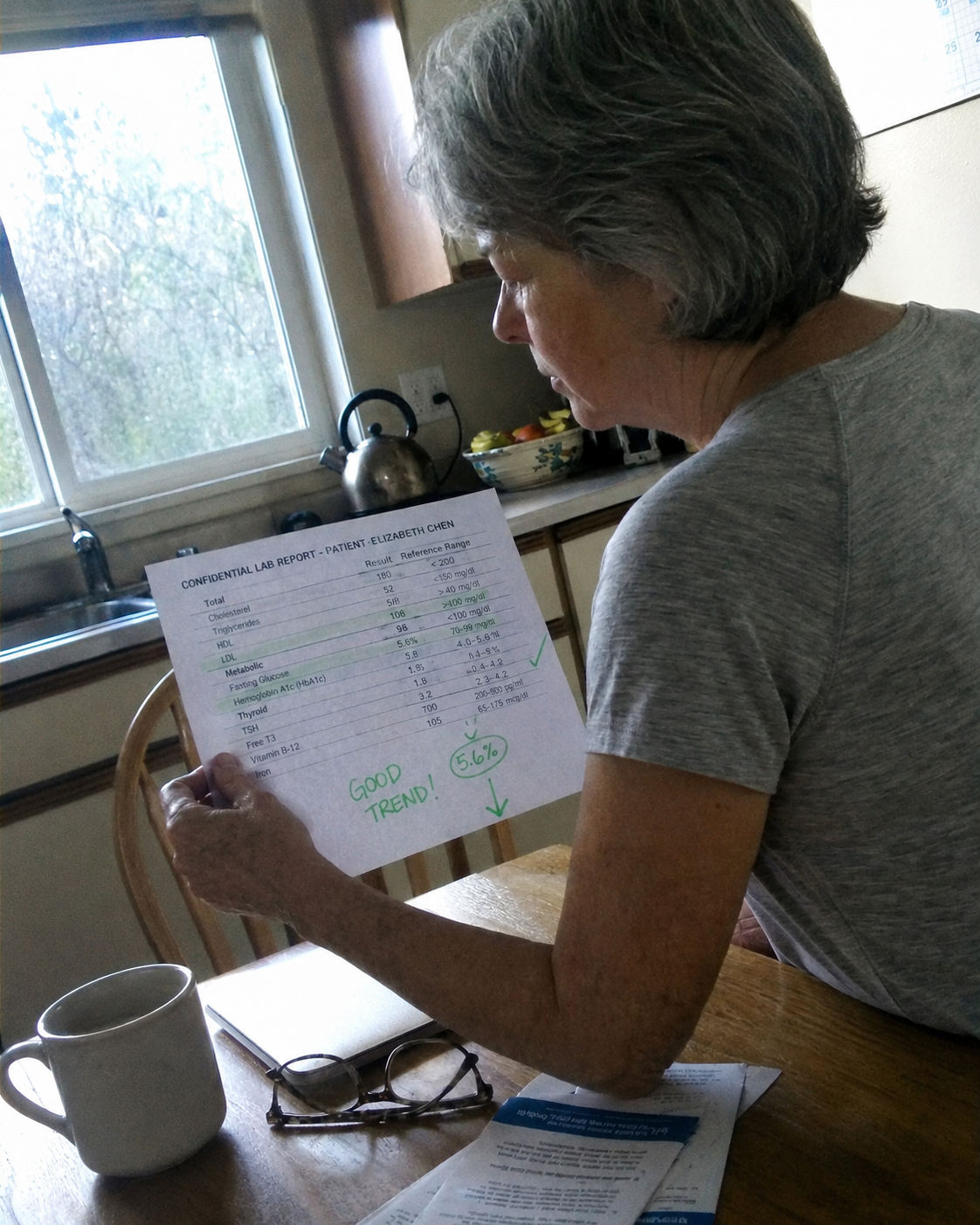
The Woman Behind Me at the Pharmacy Said One Sentence That Changed How I Saw My Husband. I was at the pharmacy picking up my husband's blood pressure medication on a Thursday afternoon in March. There was a line. There's always a linea at our pharmacy on Thursdays. The woman behind me was maybe my age, late fifties, holding a small white paper bag and a set of car keys. She wasn't in a hurry. She was just standing there the way you stand when you've been standing in pharmacy lines for years. We didn't speak at first. You don't, usually. You just wait your turn and look at your phone and try not to make eye contact with the people whose prescriptions you can see on the counter. But the woman in front of me was having some kind of insurance problem, and the pharmacist was on the phone with someone, and the line wasn't moving. So the woman behind me sighed a small sigh. Not annoyed. Just tired. And I turned around and gave her the half-smile you give a stranger when you're both standing in the same waiting. She smiled back. "How long have you been picking up his pills?" she asked. I blinked. I didn't know how she knew it was for someone else. I must have looked confused because she nodded at my purse. "You've got two prescription bags already in there. Nobody picks up three at once for themselves." She was right. I had Carl's blood pressure medication. His cholesterol medication. And a little tube of cream for the dry patch on the back of his hand he'd been complaining about for a month. "Twelve years," I said. "For the blood pressure. The cholesterol one is newer." She nodded the way you nod when somebody's just told you something you already knew the shape of. "Mine was on his for nineteen before he passed." I didn't know what to say to that. You never know what to say to that. She must have seen me searching, because she waved her hand a little. "Oh, don't. It was three years ago. I'm fine. I just notice things now." The line moved. The woman in front of me finished her insurance argument and walked off muttering. The pharmacist called my name. I picked up Carl's three prescriptions, signed the little screen, paid the copays. When I turned around to leave, the woman was still there, waiting her turn. I don't know why I stopped. Something about the way she'd said "I just notice things now." I stepped out of the way of the next person in line and stood near the magazine rack, pretending to look at a copy of Reader's Digest. When she finished her transaction, she walked over to me. Like she'd been expecting me to wait. "Can I ask you something?" I said. "Of course." "What did you notice? After he passed. What did you wish you'd seen earlier?" She looked at me for a long moment. Not surprised by the question. Just thinking about how to answer it. "He was doing everything right," she said. "That's the part that bothers me." "He took every pill on the schedule his doctor gave him. He cut out the salt. He cut out the steaks. He walked three miles every morning before the heat. He went to every appointment. His numbers on paper were perfect. Truly perfect. His doctor used to hold the printout up and say you're doing better than men twenty years younger than you." "And he still kept getting smaller. Quieter. Tireder. His hands stopped working the way they used to. He'd reach for his coffee and miss the handle by half an inch and laugh about it. We all laughed about it." "He'd come in from his walk and sit in his recliner and not get up for three hours. He'd say he was just resting his eyes. We all said he was just resting his eyes." "His paperwork said one story. His body was telling a different one. And nobody — not his doctor, not me, not him — looked up from the paperwork long enough to listen to the body." She paused. Looked at the prescription bag in her hand. A small one. Probably for herself now. "I'm not telling you to do anything different. Your husband isn't my husband. I'm not a doctor and I'm not trying to scare you. I just notice things now that I didn't notice before." "When you go home today, look at him. Not the way you usually look at him. The way you'd look at him if you were a stranger meeting him for the first time. See what a stranger would see." "That's all." She squeezed my arm, gently, the way old women squeeze arms. And she walked out the automatic doors and was gone. I sat in my car in the pharmacy parking lot for ten minutes. I didn't turn the engine on. I just sat there with three prescription bags on the passenger seat and her voice in my head. The paperwork said one story. The body was telling a different one. I thought about Carl. Carl is 67. We've been married 41 years. He retired four years ago from the school district where he taught American history for thirty-three years. His numbers are good. His doctor tells him his numbers are good every six months. His blood pressure is managed. His cholesterol is managed. He goes for his checkups. He takes his medications. He eats the way he's supposed to eat. He has lost weight on purpose, kept it off, walks our neighborhood twice a day with our dog. By every measurement that gets written down on a chart, Carl is doing everything right. And yet. I don't think I'd noticed how rarely Carl laughs anymore. I don't mean the polite laugh he gives when our daughter tells a story on the phone. I mean the real laugh. The one that used to come up from his chest at the dinner table when our son said something quick. The one he used to do when we watched old movies and the same scene got him every time. I hadn't heard that laugh in maybe two years. Maybe longer. I'd been so focused on his numbers — the blood pressure, the cholesterol, the weight, the steps on his pedometer — that I hadn't been looking at him. I thought about his hands. Carl used to be able to open any jar in our kitchen. The pickle jars I couldn't open. The peanut butter jars our daughter's husband couldn't open. Carl would walk into the kitchen, take the jar, give it one easy twist, hand it back. Last week he asked me to hand him a different jar than the one I was holding because he didn't want to bother with the lid on the one I had. I hadn't even registered it at the time. I'd just handed him the other jar. I thought about his evenings. Carl used to read for two hours before bed. History books, mostly. Civil War. He was working on a manuscript about a regiment from our state for ten years. He hasn't opened that manuscript in a year and a half. He says he'll get back to it. He doesn't. He sits in his chair after dinner and watches whatever is on and falls asleep before nine. I'd been telling myself this was retirement. This was age. This was what 67 looks like. But Carl had been 65 when he retired and he'd been finishing chapters of that manuscript every weekend. Something had shifted in the last two years. And I'd been so busy filling prescriptions and tracking numbers that I'd forgotten to ask him what. I started the car. I drove home. Carl was in his recliner. The TV was on. He was asleep. It was 3:30 in the afternoon. I stood in the doorway and I looked at him the way the woman at the pharmacy had told me to. The way a stranger would. And I saw a man who was smaller than my husband had been three years ago. Quieter. Tireder. Gentler in a way that wasn't softness — it was diminishment. His numbers were perfect. His body was telling a different story. That night, after Carl went to bed at 8:45, I sat at our kitchen table with my laptop and started reading. Not in a panicked way. In a I have permission to look at this now way. I read for about three hours. I'm not going to pretend I became an expert in three hours. I read general articles about aging, cardiovascular wellness, cellular energy, antioxidant balance. I read about what happens to circulation in your sixties and seventies even when your bloodwork looks fine on paper. I read about how the body changes in ways that don't always show up on the standard lab panel. I'm a retired second-grade teacher. I'm not a doctor and I have never pretended to be one. But I figured out enough that night to know that there's a category of things going on inside the body that the standard "are your numbers in range" conversation doesn't really address. Things that are about the body's general resilience. The way the cells handle stress. The way the small blood vessels keep doing what small blood vessels are supposed to do. The kinds of things that aren't on a standard chart. One thing kept coming up. Beetroot. Specifically the compounds inside beetroot called betalains. I read that beetroot has been studied for decades for its support of cardiovascular wellness and antioxidant balance. Nothing dramatic in the literature. Nothing miraculous. Just decades of quiet study about a vegetable that seems to support the body in ways that complement what medications do, not replace them. I'd had beetroot before. Roasted, in salads. My grandmother used to pickle them. But I'd never thought of it as something you could take as a supplement. The next morning, I called Carl's doctor's office before Carl was awake. I asked the nurse if she'd be willing to take a question for him. She said of course. I told her I'd been reading about beetroot supplements and I was wondering if it would be alright for Carl to add one to his routine alongside his current medications. She put me on hold. She came back about four minutes later. She said the doctor said it was a reasonable thing to consider, that beetroot has been studied for circulatory wellness, and that he had no concerns about Carl adding it to his current regimen as long as we let the office know. That meant a lot to me. I didn't want to do anything behind Carl's doctor's back. I didn't want to be the wife on the internet ordering things and slipping them into her husband's morning routine. I wanted his doctor in the loop. His doctor was in the loop. Finding the right brand was the harder part. I'm going to be honest about this because I want you to understand what I learned. Not all beetroot supplements are the same. Most of them are processed with high heat, which is fast and cheap. The compounds inside beetroot — the betalains — are heat sensitive. A lot of what makes the root worth taking in the first place doesn't survive the standard processing. I spent a Sunday afternoon reading labels and processing descriptions before I found one that did it the slow way. Rosabella. They cold-press at low temperatures. It takes longer. It costs more. But what ends up in the capsule is closer to what's actually in the beet. I noticed the color the moment I opened the first bottle. A deep, dark crimson. That color is the betalains. That's what the cold-pressing preserves. I told Carl that night. I didn't make a speech about it. I just put the bottle on the kitchen counter next to his other vitamins. I said: "I read about this. I checked with Dr. Patel's office. He said it's fine to add. I'd like you to try it for ninety days." Carl looked at the bottle. He picked it up. He turned it over and read the label. He's a careful man. He doesn't take things he doesn't understand. He said: "Why?" I said: "Because I think your numbers are good but I don't think you've been yourself for a couple of years. And I think we've been treating the numbers and not the man." He didn't say anything for a long moment. Then he set the bottle down on the counter and said: "Alright." That was it. 41 years of marriage and sometimes that's all that needs to be said. I'm going to be careful about what I tell you next because I want this to be honest. I'm not going to tell you Carl felt it in seventeen minutes. I don't think it works like that. I'm not going to tell you anything dramatic happened in week one. It didn't. What I can tell you is what I noticed over the course of about three months. Some of it was small. The afternoon nap got shorter. Then it got rarer. Then for stretches it didn't happen at all. He started taking the dog on the longer route again — the one that loops through the park instead of the one that just goes around the block. He didn't announce it. I just noticed his walk was taking forty-five minutes instead of twenty. In about week six, he opened a pickle jar without asking me first. I almost cried in the kitchen. I didn't say anything. I just took the pickle. About two months in, he came down for breakfast one morning and said: "I think I'm going to look at the manuscript this weekend." He looked at it. He worked on it for four hours. He's been working on it on Saturdays again ever since. His doctor saw him at his regular checkup about a month after that. He told Carl his bloodwork was in better shape than it had been in years. He told Carl whatever he was doing, keep doing it. He didn't make a big deal of it. Neither did Carl. But on the way home from the appointment, Carl reached over and held my hand at a red light. He didn't say anything. He just held my hand. Carl doesn't do that very often. He hadn't done it in maybe a year. I want to be careful about what I'm claiming here. I am one woman. Carl is one man. I am not a doctor and I have not pretended to be one in any of what I've just told you. Beetroot wasn't the only thing that changed. Carl was still on all his medications. He was still walking. He was still eating the way he was supposed to eat. The only thing I added was two capsules in the morning with a glass of water. I don't know with certainty what did what. What I know is that I added one thing and a lot of small things started shifting in the same direction. And the man in my kitchen on Saturday mornings is more like the man I married than he's been in a long time. That's the honest version. I don't know if you'd been reading this if you didn't see something of yourself or your husband in it. If you have — if you've been telling yourself that your husband's numbers are good and so this is just what aging is — I'd ask you to do what the woman at the pharmacy asked me to do. Look at him today the way a stranger would. Not the way you've been looking at him. The way a stranger meeting him for the first time would see him. See if he looks like he's been getting smaller, quieter, tireder while his numbers stayed the same. If you see what I saw, then talk to his doctor. Always start there. Whatever you decide to try alongside what he's already doing should be a decision his doctor is in the loop on. If his doctor is open to it, beetroot is a reasonable thing to look at. It's been studied for decades. It's not exotic. It's just been processed badly by most of the brands selling it. Rosabella is the one I tried because their cold-pressing means the betalains actually survive into the capsule. P.S. Two capsules with a glass of water in the morning. That's the whole protocol. Don't change anything else. Not his medications. Not his diet. Not his routine. Just add this and pay attention to what you notice. P.P.S. Talk to his doctor or his pharmacist before he starts. This is the first step, not a footnote. If he takes any prescription medication — especially for blood pressure, cholesterol, or his heart — the conversation with his doctor matters more than anything I could tell you. P.P.P.S. Rosabella has a 90-day money-back guarantee. If you're not satisfied for any reason, every penny back. No questions asked. That's a sensible policy for a supplement. It gives you the time you actually need to see whether it helps. P.P.P.P.S. Rosabella is a small operation. They harvest and bottle on their own schedule. I keep an extra bottle in the house now. They have a multi-bottle option I went with myself. Worth a look. P.P.P.P.P.S. I never got the woman at the pharmacy's name. I've been back three times hoping to see her. I haven't. If she's reading this somewhere — thank you. You said one sentence to a stranger in a pharmacy line and you gave me back a piece of my husband I hadn't realized I'd been losing. I hope someone says the same thing to you someday. https://track.tryrosabella.com/cdc16426-3e48-40a7-9fad-21098084f6cf DISCLAIMER Individual experiences vary. These statements have not been evaluated by the FDA. This product is not intended to diagnose, treat, cure, or prevent any disease.
Support stamina and heart health every day
LEARN MORELike this ad? Make it yours.
Crush rebuilds this exact creative around your product — your brand, your colors, your offer — in about a minute.