
Inactive· since Mar 6, 2026
- 13
- days it ran
- 9
- relaunches
Ad copy
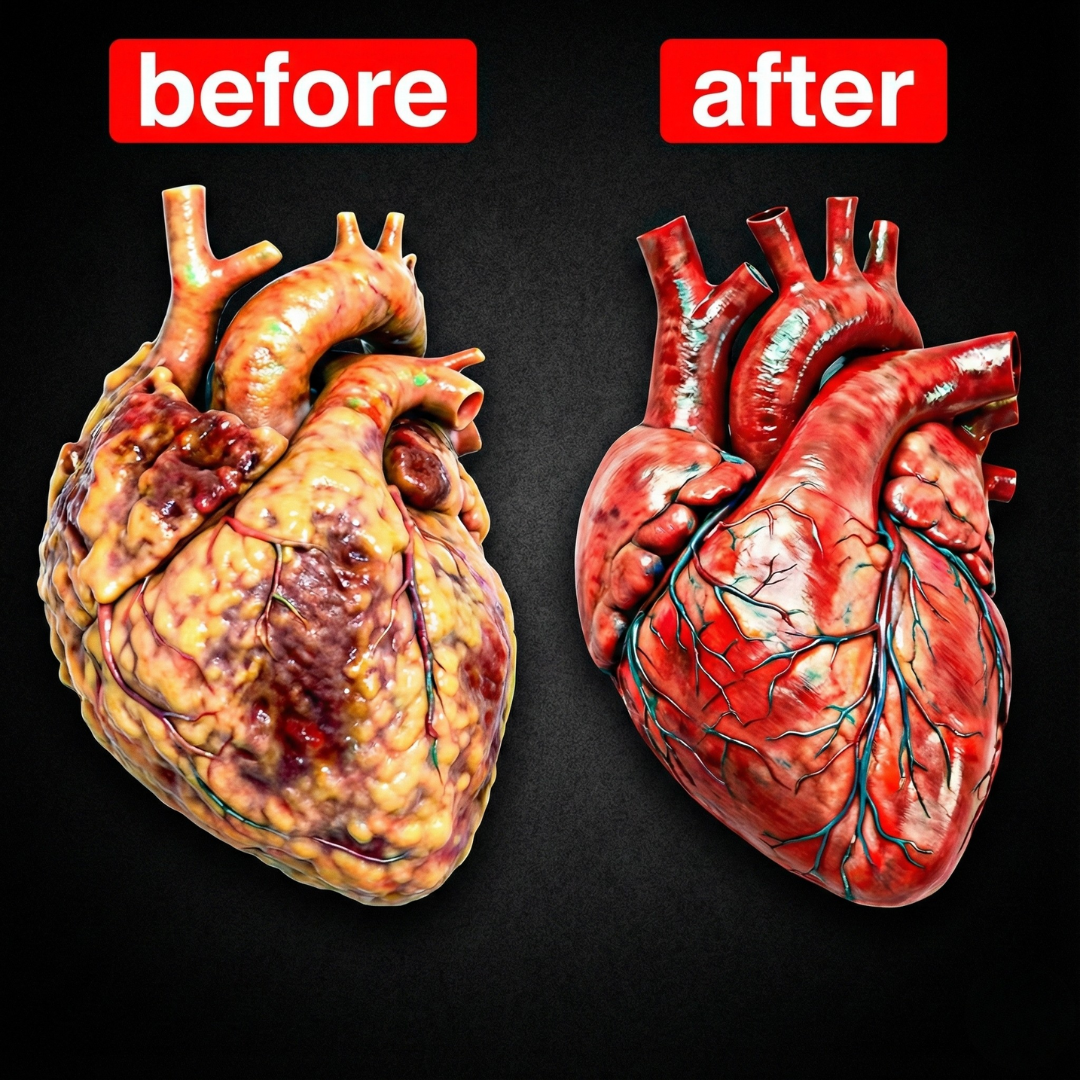
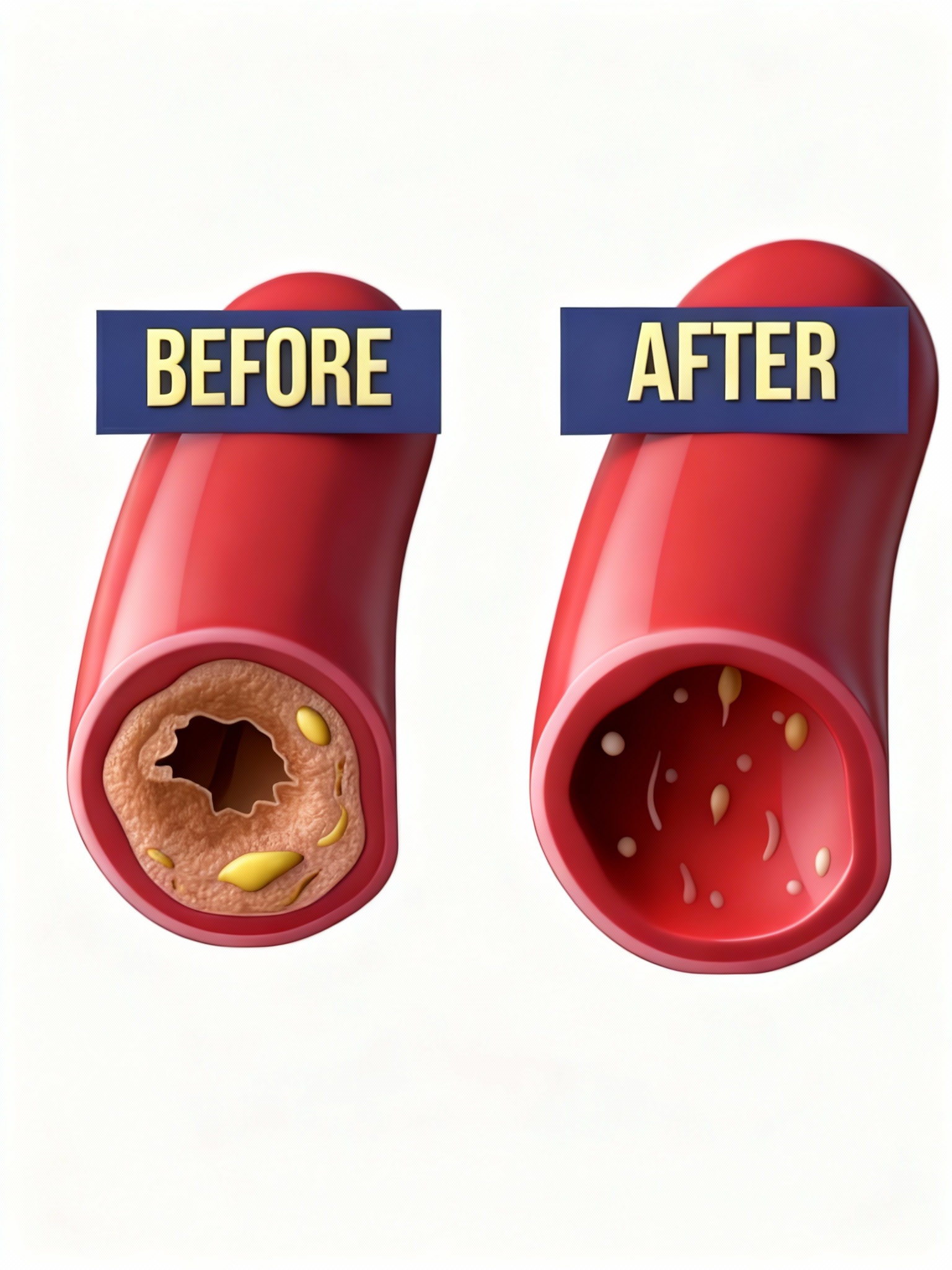
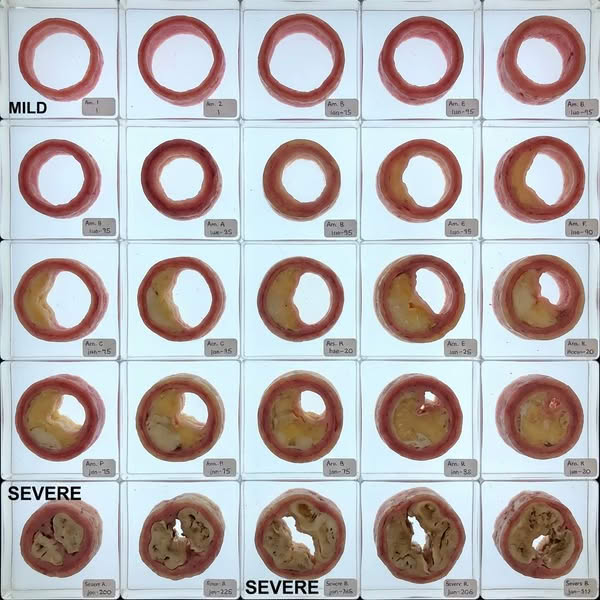
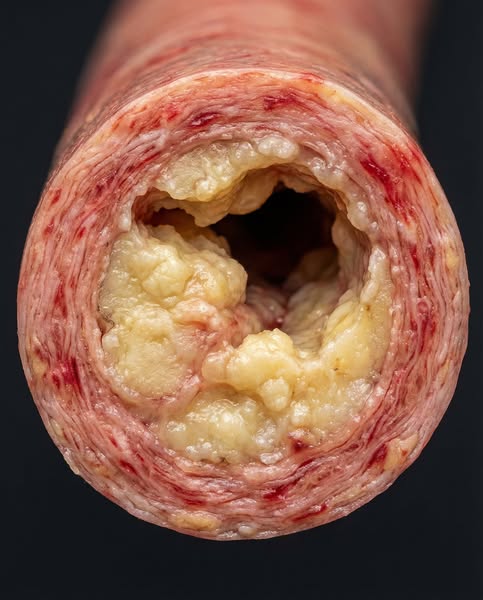
Your blood pressure reading is the last thing to change. By the time it hits 148, your blood vessels have been deteriorating for a decade. Your doctor sees the number and reaches for a prescription. A cardiologist sees the decade of damage underneath it. And the medication your doctor wants to prescribe fixes the number without touching the damage. My blood pressure came back at 148 over 95. My doctor didn't hesitate. "We've watched this long enough. I'm writing you a prescription for Lisinopril." Eight minutes. That's how long the appointment lasted. He checked the number, said it was too high, wrote the script, and told me to come back in six weeks. But my wife works in medical billing and she wouldn't let it go. "Your doctor checks your blood pressure," she said. "That's a number on a screen. A cardiologist checks your blood vessels. Those are two different things. Before you fill that prescription, I want someone looking at what's actually happening inside." The cardiologist spent an hour with me. Not eight minutes. He ran tests I'd never heard of — arterial stiffness assessment, pulse wave velocity, endothelial function. He checked things my primary doctor had never checked in twenty years of annual physicals. When he came back with the results, he wasn't smiling. "Mr. Harmon, your blood pressure reading says 148 over 95. That tells me one thing — the pressure is elevated. But these tests tell me something your blood pressure reading can't." He turned the screen toward me. Graphs. Color-coded charts. Numbers I didn't understand. "This is your arterial stiffness score. It measures how rigid your blood vessel walls have become — how much they've lost the ability to expand and contract with each heartbeat." He pointed at a range on the chart. "A healthy man your age should be here." He pointed at another range. Much higher. "You're here. I normally see this range in my patients who are 75 years old. You're 57." I stared at him. "But my doctor said the blood pressure was the problem. If we bring the number down—" "The number is the last thing to change," he said. "Your blood vessels have been deteriorating for years — probably more than a decade — before your blood pressure reading started climbing. The reading your doctor is reacting to? That's the end of the process. Not the beginning." He let that settle. "Think of it this way. Your blood pressure didn't jump to 148 overnight. It crept up. 130. 136. 140. 144. 148. Over years. Your doctor watched it climb and said 'let's keep an eye on it' until the number crossed a threshold. Then he reached for a prescription." "But what was happening inside your blood vessels during those years? The decline was already well underway long before the number moved. The stiffness I'm measuring today didn't start when your reading hit 148. It started a decade before that. Maybe longer." "Your blood pressure reading is the surface," he said. "What I'm seeing underneath it is ten years ahead of what that number suggests." I felt sick. "So what does the medication do?" He was direct. "Lisinopril inhibits an enzyme called ACE. This forces your blood vessels to relax through a chemical pathway. Your blood pressure reading drops. 148 becomes 128. Your doctor says 'looking good, keep taking it.'" He paused. "But it doesn't restore your blood vessel function. It doesn't reverse the arterial stiffness. It doesn't address the reason your vessels lost the ability to relax on their own. The number on the cuff improves. The condition of your blood vessels — what I'm seeing on these scans — continues to decline." He looked at me. "The medication is like repainting a house with a crumbling foundation. From the outside, everything looks fine. The number looks fine. But the structure underneath keeps failing." And then my father's face flashed in my mind. He'd been on blood pressure medication for twelve years. Started with Lisinopril — the same medication sitting on my doctor's prescription pad right now. The cough came within two months. Dry. Hacking. Woke him up at 2 AM. Interrupted every conversation. Made him sound sick when he wasn't. They switched him to Amlodipine. The cough stopped. But his ankles swelled so bad he couldn't wear his own shoes anymore. Bought slip-ons two sizes up because his feet were too swollen for anything else. And the fatigue. That was the worst. This was a man who built our back deck with his own hands. Coached my baseball team. Fixed the car in the driveway on weekends. By 60, he was falling asleep at the dinner table. Couldn't stay awake past 7 PM. Lost interest in everything he used to love. Just... existing. Going through the motions of a life that didn't feel like his anymore. He died at 69. Heart attack. While taking the medication that was supposed to protect his heart. Twelve years of managed numbers. Twelve years of side effects. And it didn't save him. I told the cardiologist. He was quiet for a moment. "That's unfortunately common," he said. "The medication managed his reading for twelve years. But the arterial stiffness — the root cause — continued to progress the entire time. His numbers looked controlled. His blood vessels were still declining underneath. That's the gap the medication can't close." There it was. What I'd felt my whole life but couldn't articulate. My father's numbers were perfect for twelve years. And he still died of the thing they were managing. Now a doctor was telling me why. "So what do I do?" I asked. "Is the medication the only option?" He said I had two paths. Path one: start the Lisinopril. The number drops. The reading looks better at every checkup. "But the arterial decline continues underneath," he said. "And over time, the dose typically needs to increase. Maybe a second medication added. The number stays controlled. The foundation keeps crumbling." Path two: actually address why my blood vessels are failing. "How?" I asked. He explained it like this: Your blood vessels aren't rigid pipes. They're muscular. The smooth muscle in your arterial walls is supposed to relax and contract with every heartbeat — expanding to let blood flow through, then recovering. The molecule that tells those muscles to relax is called nitric oxide. When you're young, your body produces nitric oxide efficiently. Your vessels are responsive. They open when they need to. Blood flows without excessive force. Pressure stays in a healthy range. But as you age — starting around 40 and accelerating through your 50s — your body's ability to produce nitric oxide declines significantly. By your late 50s, you're producing a fraction of what you made at 30. "When that signal weakens," he said, "the smooth muscle in your arterial walls stays partially constricted. All the time. Your vessels are narrower. Stiffer. Blood has to push through a tighter space. That's what high blood pressure IS — not a disease in itself, but a signal that your vessels have lost the molecule they need to function." "That's why your reading crept up over years," he said. "Not because something attacked you. Because the raw material your vessels depend on was slowly depleting. And no amount of salt reduction or exercise fully compensates — because those are accelerants, not root causes." "Blood pressure medication forces the vessels open through a chemical override," he said. "The reading drops. But it doesn't restore nitric oxide production. It doesn't rebuild the signal. Your body becomes dependent on the chemical override instead of recovering its own function." He looked at me. "Your father was on that override for twelve years. His numbers were managed. His vessels kept stiffening. The medication was managing him. It wasn't healing him." Managing. Not healing. That's what my father was for twelve years. "Is there a way to actually restore the nitric oxide?" I asked. He said the best natural source of the raw material your body needs is dietary nitrates — and the richest source of dietary nitrates is beetroot. I almost laughed. "Beetroot? My doctor wants me on Lisinopril and you're telling me about beetroot?" He pulled up research on his screen. "Your body converts dietary nitrates from beetroot into nitric oxide. It's the same target the medication aims at — but instead of chemically overriding your vessels every 24 hours, dietary nitrates actually restore your body's ability to produce nitric oxide naturally. You're rebuilding the signal, not replacing it." He said the research on concentrated beetroot and blood pressure is substantial. Peer-reviewed. Replicated. But the dose matters enormously — and most supplements on the market don't deliver it. But here's the problem: You can't just eat beets. To get a therapeutic dose of dietary nitrates, you'd need to consume 3-4 whole beets every single day. That's not sustainable. So I started looking for concentrated beetroot supplements. Most were garbage. Stuffed with fillers and rice flour, with barely any actual beetroot. Weak doses that couldn't move the needle. I flipped over the first bottle I tried — the highest-rated one on Amazon. Other ingredients: rice flour, magnesium stearate, silicon dioxide, gelatin. More filler than beetroot. Maybe 200 milligrams of actual beet powder. At that dose, you're not getting enough dietary nitrates to meaningfully impact nitric oxide production. The math doesn't work. Second brand — the one from the TV commercials. Six weeks. Nothing. Numbers didn't budge. Third brand — "clinical strength" from a supplement store. Most expensive one they had. Four weeks. Still 147/94. I was running out of time. My follow-up with my primary doctor was three weeks away. He was going to ask if I'd filled the prescription. After the third brand failed, I found Rosabella Beetroot. 1300mg of pure organic beetroot powder per serving. No fillers. No rice flour. No additives. One ingredient. I started taking it daily. Two capsules every morning. Never filled the Lisinopril. First two weeks: I checked my blood pressure every morning. Same chair. Same arm. Same time. Hovering around 145/93. Small drop from my baseline. Could be noise. I wasn't trusting it yet. Week three: 139/87. Checked it three times. 138/86. 140/88. 139/87. Consistent. Below where I'd been stuck for months. This wasn't noise anymore. Karen noticed before I said anything. Not the numbers — she didn't know I was tracking. She noticed the heaviness was lifting. "You seem different," she said one night. "Less... tired." She was right. The low-grade fatigue I'd been dragging through every evening for years — I realized it was fading. Week four: 134/83. Checked it again. 133/82. 135/84. All below 140/90. Out of Stage 1. I sat at the kitchen table and put my head in my hands. Not from stress. From relief. Week five — the day before my follow-up with my primary doctor. 132/82. Stable. Consistent. Below 140/90 for over a week straight. At the appointment, the nurse wrapped the cuff. Pumped it up. Waited. 132/82. She typed it in. Routine for her. For me? Everything. My doctor walked in. Pulled up my chart. Stopped. "132 over 82." He looked at the previous visit. 148/95. Then today. 132/82. "You started the Lisinopril?" "No." His head came up. "No?" "I found something else. Organic beetroot supplement. 1300 milligrams per serving. Pure — no fillers, no additives. High-dose dietary nitrates." Long silence. "What's it called?" "Rosabella." He pulled it up. Read the label. One ingredient. Organic certification. Another silence. "If this holds, we can revisit the Lisinopril conversation. I want to see you back in eight weeks. If you're still below 140 over 90, we'll hold off on medication and monitor quarterly." I walked out of that office. Sat in my car. Called Karen. "132 over 82." She gasped. "Tom—" "No medication. He said if it holds, quarterly monitoring. No Lisinopril." "You did it." "I did it." Two weeks later I went back to my cardiologist. He ran the arterial stiffness tests again. He looked at the results. Then at me. "Your arterial stiffness has improved measurably since your last visit. Not just the reading — the vessel function. This is what restoration looks like. Not management." Not management. Restoration. That was five months ago. My blood pressure this morning? 122/76. Normal range. Stable. No medication. No Lisinopril. No cough. No swelling. No fatigue. No eight-minute prescription renewals. My cardiologist says my arterial stiffness is now within normal range for my age. Not the range of a 75-year-old. The range of a 57-year-old. Last month Karen and I hiked a trail we used to do years ago. Seven miles. Elevation gain. I wasn't winded. Wasn't heavy. Wasn't thinking about blood pressure for the first time in years. She took a photo at the overlook. Me with my arms out. Grinning. My cardiologist told me that if I'd gone the medication route — Lisinopril managing the number while the arterial decline continued underneath — I'd be following the same trajectory he sees in most of his patients. "Your father's story isn't unusual," he said. "It's the standard outcome when you manage the reading without addressing the cause." My father managed a number for twelve years. His vessels kept failing underneath. He died on the medication. I fixed the cause. In five months my blood vessels are healthier than they've been in a decade. --- If you're reading this, you're where I was. Your blood pressure is high. Your doctor wants you on medication. Maybe he's already written the prescription. Maybe you've been putting off filling it. Maybe you're already taking it and wondering why you still feel terrible. Here's what nobody told me until a cardiologist sat down for an hour and explained it: Your blood pressure isn't the disease. It's the last symptom of a disease that started a decade before the number moved. Your blood vessels have been losing the ability to produce nitric oxide — the molecule that keeps them open and flexible. That depletion has been progressing silently for years. The reading your doctor is reacting to is the end of that process, not the beginning. Medication forces the number down. It does not restore nitric oxide. It does not reverse arterial stiffness. It manages a reading while the foundation continues to crumble. My father proved where that path leads. Concentrated beetroot provides the dietary nitrates your body converts into nitric oxide. Not a chemical override. Actual restoration of the molecule your blood vessels lost. But the dose matters. Most beetroot supplements are rice flour padded with a dusting of beet powder. At 200 milligrams, the math doesn't work. Rosabella is 1300 milligrams of pure organic beetroot powder. One ingredient. No fillers. The dose that matches what the research actually studied. And it comes with a 90-day money-back guarantee. You risk nothing. Track your blood pressure. Same chair. Same arm. Same time every morning. When the numbers start dropping — consistently, measurably, week after week — bring the results to your doctor. That's what I did. My doctor saw 132/82 where he expected 148/95. He didn't argue. He didn't push the prescription. He said "if this holds, we'll monitor quarterly." Numbers don't argue. Don't wait until the medication path is the only path left. Don't follow the same road my father followed for twelve years. He managed a number. I fixed the cause. --- The supplement I use is Rosabella Beetroot. Here's why it worked when three other brands didn't: 1. 1300mg of Pure Organic Beetroot (Not Filler-Padded Capsules) Most supplements pad their capsules with rice flour, magnesium stearate, silicon dioxide, and cheap binding agents. You might get 200mg of actual beetroot powder. Maybe less. Rosabella is 1300mg of organic beetroot powder per serving. No fillers. No binding agents. No cheap padding. One ingredient. That's the dose that delivers enough dietary nitrates to actually restore nitric oxide production. 2. One Ingredient (What the Label Says Is What You Get) Flip over most beetroot supplement bottles. Count the "Other Ingredients." Four. Five. Six fillers listed. More filler than beetroot. Flip over Rosabella. One ingredient: organic beetroot powder. That's the entire list. 3. Organic Certified, Made in the USA Not mystery sourcing. Not overseas manufacturing. Organic certified. Made in the USA. You know what you're taking and where it came from. 4. 90-Day Money-Back Guarantee (You Risk Nothing) Try Rosabella for up to 90 days. Track your blood pressure weekly. Same chair. Same arm. Same time. If you don't see improvement — if you're not satisfied for any reason — full refund. No questions asked. --- You're being pressured. Your doctor wants you on medication. Maybe immediately. Maybe with the tone that says "I've been patient long enough." You have two paths. One: Fill the prescription. Start the medication. Accept you had no other option. Watch the number come down while you wonder what's happening underneath. Hope the side effects aren't as bad as the ones you've seen someone else endure. Two: Try a supplement that's actually what it claims to be. Track your numbers honestly for 90 days. Bring results to your doctor. Let the numbers speak. My doctor saw 132/82 where he expected to see 148/95. He didn't push medication. He didn't lecture. He said "keep going." My cardiologist saw arterial stiffness improving for the first time — not managed, actually improving. My father never had that option. Nobody explained the root cause to him. Nobody told him about nitric oxide depletion. He took the pills he was told to take and endured the side effects for twelve years. He died on the medication. I chose a different path. Five months in, my numbers prove it works. Don't follow his. — Tom Harmon P.S. — I saw consistent blood pressure improvement by week three. My doctor agreed to hold off on Lisinopril at week five. My cardiologist confirmed arterial stiffness improvement at week seven. Your timeline may vary — but the 90-day guarantee means you risk nothing finding out. P.P.S. — My father spent twelve years on blood pressure medication. Managed numbers. Declining health. Died at 69 on the pills. A cardiologist showed me what the medication was doing — and what it wasn't doing. Five months later, my blood vessels are healthier than they've been in a decade. No medication. Just the molecule my body was missing. https://get.tryrosabella.com/beetroot/subtxt/sp
Support stamina and heart health every day
"I've only started useing this product less than a week, honestly it has given me more energy and I feel more alert. Before taking this product I noticed I was feeling tired and not motivated at all, so I have to give it a great rating 5 stars. I reccomend it."
LEARN MORELike this ad? Make it yours.
Crush rebuilds this exact creative around your product — your brand, your colors, your offer — in about a minute.