Will to Heal LLC
Will to Heal LLC Facebook ad: “Beyond Bouncing Back: The Psychology of Resilience”
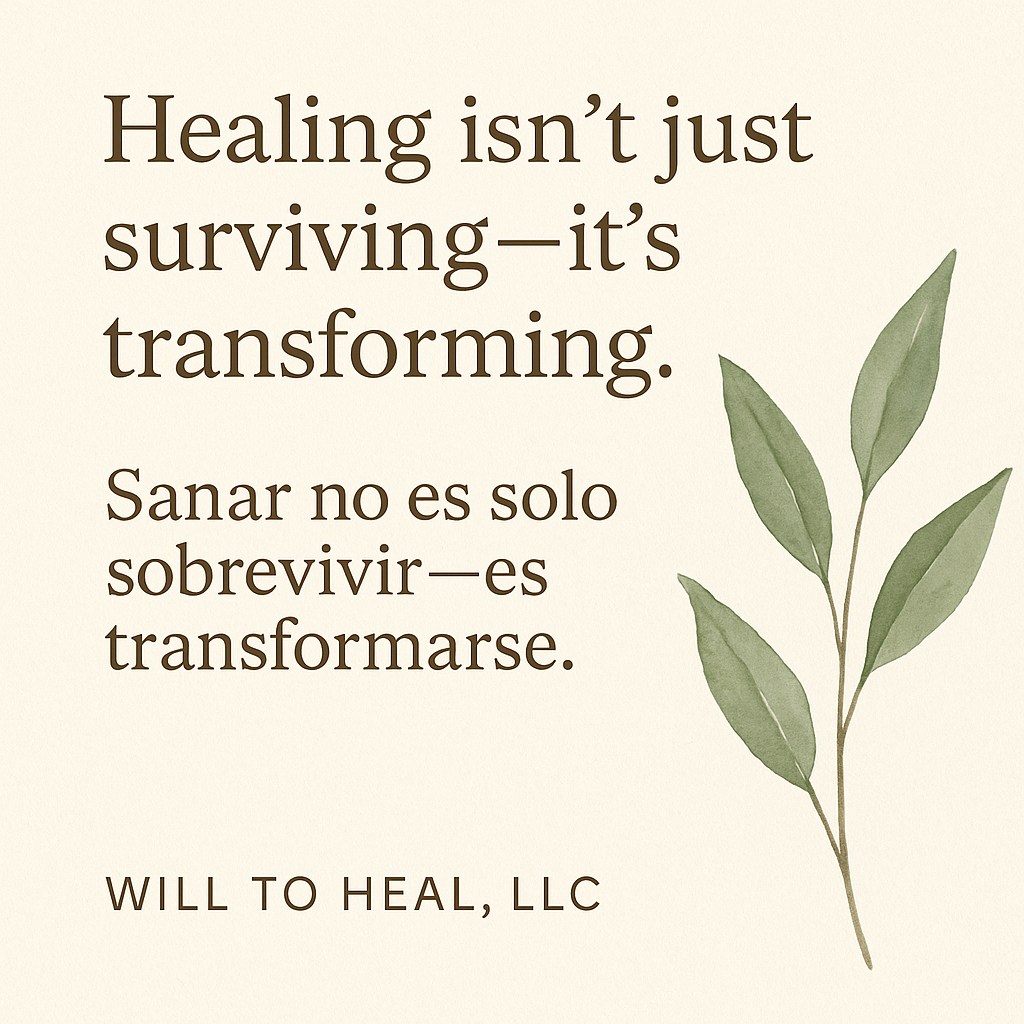
Ran for 4 days, from May 12 to May 16, 2026, the last day Crush saw it.
Run by Will to Heal LLC on Facebook. Crush is not the advertiser and does not verify its claims. See this ad in Meta's Ad Library(opens in a new tab)
Want an ad like this for your product?
Crush makes new ad images for your product from this ad: your logo, your product photo, your offer.
Trials from $19.95 USD, then $79.95 USD a month. Cancel anytime.
About this ad
- Meta Ad Library ID
- 1329023239406131
- Platforms
- Relaunches
- 0
- EU reach
- 148
Ad text
🌿 Beyond Bouncing Back: The Psychology of Resilience (Spanish translation following English) Resilience isn’t just “getting over it.” It’s the ongoing process of adapting—mentally, emotionally, and spiritually—to what life throws at you. Psychologists define resilience as the ability to adapt well to adversity, trauma, tragedy, or stress. It’s not about avoiding pain or pretending to be strong. It’s about responding to pain in a way that transforms it into growth. 🧠 What’s Really Happening in the Mind People who show higher resilience aren’t born with special armor—they build it over time. Here’s what’s happening beneath the surface: Emotional Regulation: Resilient people learn to feel without becoming consumed. They can recognize their emotions and respond instead of react. Cognitive Reframing (CBT Principle): This concept comes directly from Cognitive Behavioral Therapy—one of the most researched and effective psychological treatments. It teaches that by changing the way we think about an experience, we also change how we feel and respond to it. Self-Efficacy: Resilience grows when we take small, consistent actions that reinforce a sense of control and competence. Flexibility: They adjust their coping tools as life changes. What helped last year may not help today—and that’s okay. Meaning-Making: They transform pain into purpose, allowing hardship to deepen wisdom rather than define identity. 💪 The Science Behind It Research consistently shows that people who practice resilience habits experience: Better mental health and recovery after trauma or loss Greater sense of mastery and control over life circumstances Lower stress hormone levels and improved immune response Stronger adaptability to new demands and transitions Resilience literally reshapes the brain—building new neural pathways that support regulation, problem-solving, and hope. 💬 How to Build Resilience You don’t have to be unbreakable—you just have to begin. 1. Develop a support system: Safe, supportive people are essential. Healing doesn’t thrive in isolation. 2. Reframe challenges (CBT in practice): Try to look for the lesson or opportunity within the hardship. “What can I learn from this?” is far more empowering than “Why is this happening to me?” 3. Focus on what you can control: You can’t change everything, but you can choose how you respond. 4. Practice self-care: Rest, reflection, movement, and mindfulness replenish the mind and body. 5. Set small goals: Progress—even in inches—creates momentum. 6. Reflect and learn: Every setback carries insight. Reflection transforms mistakes into mastery. 🌱 Faith, Spirituality, and Psychology When I hit rock bottom, I didn’t bounce back—I rebuilt. For me, connection to the Divine became my anchor, and psychology became my map. Scientific studies show that people who maintain a spiritual or faith-based connection—whether that’s to God, the Divine, nature, or a higher purpose—tend to have better emotional recovery, stronger coping skills, and greater overall well-being. That connection reminds us we’re not walking this journey alone—and that meaning exists even in our hardest moments. Resilience is not about staying the same. It’s about being reshaped—wiser, softer, stronger, and more grounded in truth. 🕊️ Keep building. Keep becoming. Will to Heal ™️ LLC #Resilience #HealingJourney #FaithAndPsychology #TraumaRecovery #Mindfulness #CBT #Boundaries #MentalHealthAwareness 🌿 Más Allá de “Reponerse”: La Psicología de la Resiliencia La resiliencia no se trata solo de “superarlo.” Es el proceso continuo de adaptarse—mental, emocional y espiritualmente—a lo que la vida nos presenta. Los psicólogos definen la resiliencia como la capacidad de adaptarse bien ante la adversidad, el trauma, la tragedia o el estrés. No se trata de evitar el dolor ni de fingir fortaleza, sino de responder al dolor de una manera que lo transforme en crecimiento. 🧠 Lo Que Realmente Sucede en la Mente Las personas con alta resiliencia no nacen con una armadura especial—la construyen con el tiempo. Esto es lo que ocurre bajo la superficie: Regulación Emocional: Las personas resilientes aprenden a sentir sin dejarse consumir. Reconocen sus emociones y responden en lugar de reaccionar. Reestructuración Cognitiva (Principio de la TCC): Este concepto proviene directamente de la Terapia Cognitivo-Conductual, uno de los tratamientos psicológicos más investigados y eficaces. Enseña que al cambiar la forma en que pensamos sobre una experiencia, también cambiamos cómo sentimos y respondemos ante ella. Autoeficacia: La resiliencia crece cuando tomamos acciones pequeñas y constantes que refuerzan una sensación de control y competencia. Flexibilidad: Ajustan sus herramientas de afrontamiento a medida que la vida cambia. Lo que funcionó el año pasado puede no funcionar hoy—y eso está bien. Creación de Significado: Transforman el dolor en propósito, permitiendo que las dificultades profundicen la sabiduría en lugar de definir la identidad. 💪 La Ciencia Detrás de Todo Las investigaciones muestran consistentemente que las personas que practican hábitos de resiliencia experimentan: Mejor salud mental y recuperación tras el trauma o la pérdida Mayor sensación de dominio y control sobre sus circunstancias Niveles más bajos de hormonas del estrés y mejor respuesta inmunológica Más capacidad para adaptarse a nuevas demandas y transiciones La resiliencia literalmente remodela el cerebro—creando nuevas rutas neuronales que apoyan la regulación emocional, la resolución de problemas y la esperanza. 💬 Cómo Construir Resiliencia No tienes que ser inquebrantable—solo necesitas comenzar. 1. Desarrolla un sistema de apoyo: Las personas seguras y comprensivas son esenciales. La sanación no prospera en el aislamiento. 2. Reformula los desafíos (TCC en práctica): Busca la lección u oportunidad dentro de la dificultad. “¿Qué puedo aprender de esto?” es mucho más poderoso que “¿Por qué me está pasando esto?” 3. Enfócate en lo que puedes controlar: No puedes cambiar todo, pero sí puedes elegir cómo responder. 4. Practica el autocuidado: El descanso, la reflexión, el movimiento y la atención plena recargan la mente y el cuerpo. 5. Establece metas pequeñas: El progreso, aunque sea en centímetros, crea impulso. 6. Reflexiona y aprende: Cada tropiezo trae consigo una enseñanza. La reflexión convierte los errores en maestría. 🌱 Fe, Espiritualidad y Psicología Cuando toqué fondo, no me recuperé de golpe—me reconstruí. Para mí, la conexión con lo Divino se convirtió en mi ancla, y la psicología en mi mapa. Los estudios científicos demuestran que las personas que mantienen una conexión espiritual o basada en la fe—ya sea con Dios, lo Divino, la naturaleza o un propósito superior—tienden a tener mejor recuperación emocional, mayores habilidades para afrontar el estrés y un bienestar general más fuerte. Esa conexión nos recuerda que no caminamos solos, y que incluso en los momentos más difíciles, existe un sentido más profundo. La resiliencia no se trata de permanecer igual. Se trata de transformarse—más sabio, más compasivo, más fuerte y más arraigado en la verdad. 🕊️ Sigue construyendo. Sigue creciendo. Will to Heal ™️ LLC #Resiliencia #Sanación #FeYPsicología #RecuperaciónDelTrauma #AtenciónPlena #TCC #Límites #SaludMental