
Inactive· since Jul 16, 2026
- 58
- days it ran
- 0
- relaunches
Ad copy
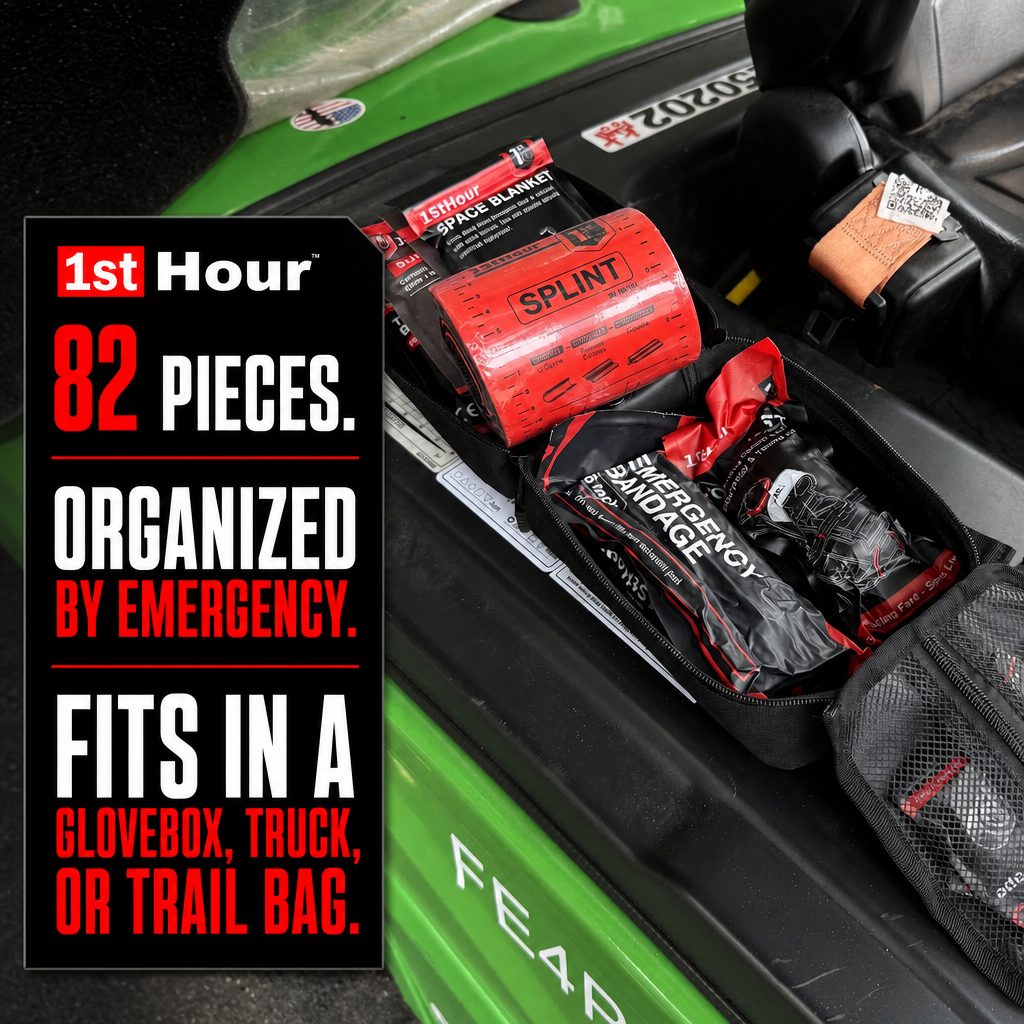
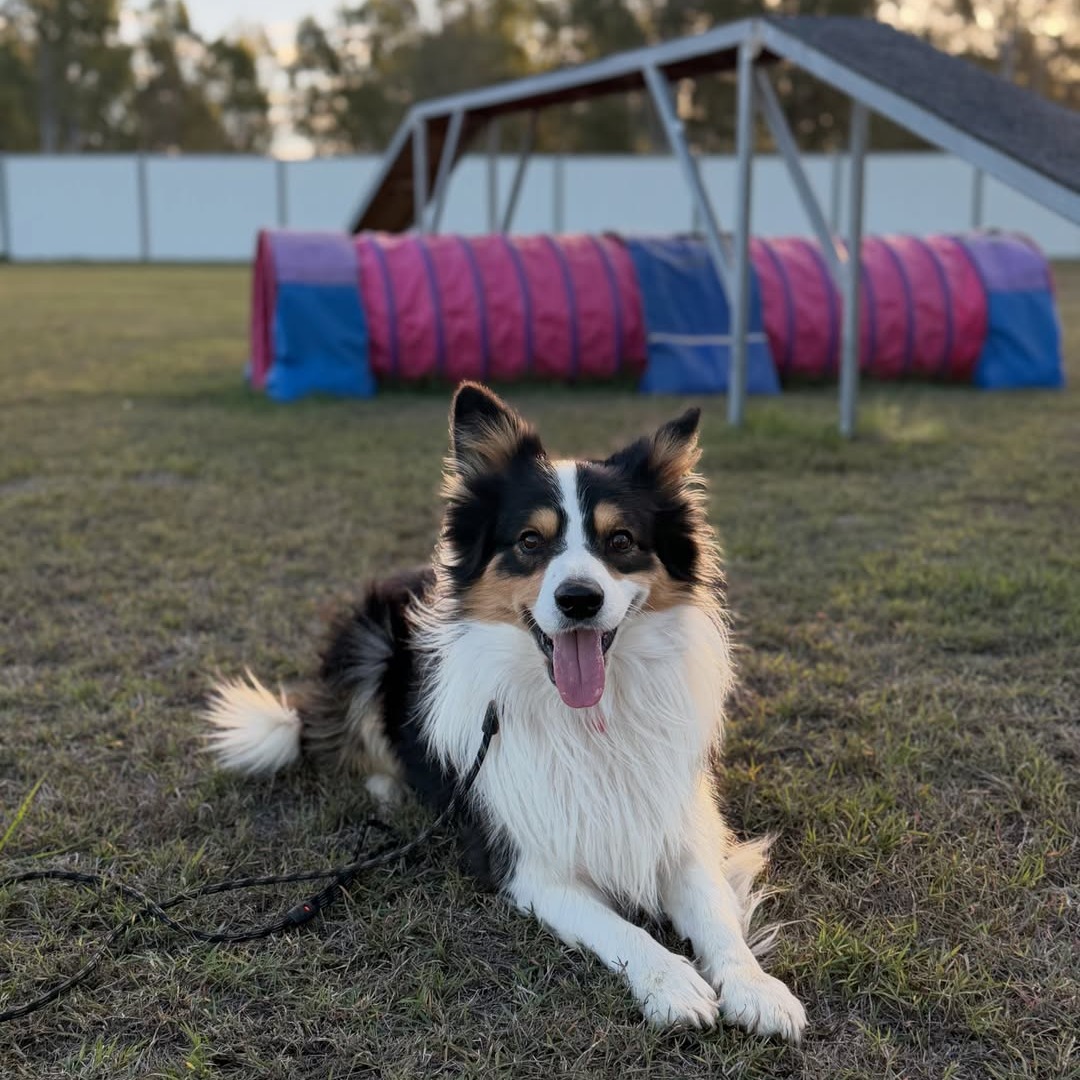
We tied a dog leash around a man's arm on our agility field, and it did not hold. I packed the club's first aid bag. It was a red leash. Six feet, flat nylon, brass clip on the end. I want to tell you about Curtis first, because if I start with the bag I will not get through this. Curtis is seventy one. He has set bars at our trials for as long as I have been in this sport, and that is nineteen years now. If you run agility you already know exactly who he is, because every club has one. He is the one out there in the dark before sunup with a headlamp on, and he is still there at four in the afternoon loading the trailer after everybody else has gone to dinner. This was the third weekend of July. County fairgrounds, outdoor trial, two rings, hot enough that we were running the little dogs early and hiding under the canopies by ten. Sunday teardown. Everybody wants to be on the road. Our A frame is old. Plywood and steel, folds on a long hinge, and it takes four people to walk it up the trailer ramp. Curtis was on the low end, where the weight is. He always took the low end. The hinge pin let go. The panel came down and the plate on that hinge, which has a sheared bolt sticking out of it about an inch, raked his arm from up near his armpit down past his elbow. Here is the part I did not expect. It did not run. It pumped. It came out in time with something, and you could see the time. And I ran for the bag. Because I am the one who packs the bag. You have to understand what was in it, and I need you to understand that I chose every single thing in there myself, over about six years. Rolls of vet wrap, blue and green. Styptic powder. A tick key. Benadryl. Nail clippers. A cold pack. Bag balm. Small gauze pads for a torn pad on a back foot. A triangular bandage, and the reason there is a triangular bandage in a dog kit is so you can tie a hurt dog's mouth shut while you work on him. I had built a trauma kit. It was a trauma kit for a dog. There was a drugstore box in the trailer too. Over a hundred pieces. I counted them later, and it was band aids, alcohol wipes, and eleven of those little packets of ointment. Somebody yelled for a belt. Nobody at an agility trial is wearing a belt. We are all in running shoes and athletic pants because we sprint for a living out there. So somebody grabbed a leash off the fence. We tied it above the wound. Two half hitches, pulled as hard as two people could pull. It slipped. We pulled it tighter and it cut down into his arm and it still did not stop the pumping. Then we wrapped him in vet wrap. Roll after roll, and I handed them over as fast as I could tear the wrappers. Vet wrap stretches. That is the entire point of it. It is made to hold a bandage onto a dog's leg without sticking to the fur. It cannot press an artery closed. It just went red and kept going red. Nine of us. Nine adults with a combined couple hundred years in dog sports, on our knees around a man, and the best thing we had was a leash. The ambulance took twenty four minutes. Volunteer department, and the truck came from the county seat. I want to tell you what the medic did, because it took me three weeks to understand it. He cut our leash off with a pair of shears and never said one word about it. He put a black strap high up on Curtis's arm, above everything, and there was a little rod on it, and he turned the rod maybe three times. That was it. It stopped. I have timed a lot of things in my life. That was about ten seconds. Curtis had three surgeries. He kept the arm. He has nerve damage that is not coming back and he cannot grip with that hand, which means he cannot set bars, which if you know him is the actual injury. Now here is where it gets to me. Three weeks later we are at the next trial and I am walking the course. Eight minutes. Everybody out there, all of us doing that thing we do, walking it with our hands out, running the sequence with our arms because our dogs are back in the crates. I am counting my steps to the weaves. I am deciding where I need to be when Bix comes off the dogwalk. I am rehearsing what I will do if he takes that off course tunnel, because he wants that tunnel, and I know he wants it, so I decide it now. And I just stopped. Right there in the middle of the course with twenty people walking around me. Nineteen years. Six course walks a weekend, thirty weekends a year. The whole sport is built on one idea, and it is the first thing anybody teaches you. You walk it because in twenty eight seconds there is no thinking. There is only what you already decided. You do not rise to it. You fall to whatever you rehearsed. We rehearse everything. Every mistake a dog can possibly make, we have already walked it. I had never once walked the four minutes where a person bleeds. What I found out after that is what I am actually writing this for. Turns out this has been studied to death. Peer reviewed work, through the National Institutes of Health, sitting there the whole time. Here is the number I have not been able to get back out of my head since. Take everybody who dies of an injury. Fifty nine percent of them might still be alive, if somebody had done first aid in the stretch of time before the ambulance rolled up. Twenty four minutes, in our case. Now, I did not need a study to tell me a leash does not work. Nine of us proved that on the grass in front of everybody. What I needed the reading for was the other half of it. Because I had been carrying an assumption around for three weeks without looking at it, and the assumption was that the leash failed because of us. Wrong knot. Wrong hands. Panic. That is not why. A flat strap that you pull with your arms cannot get tight enough to close an artery, and it cannot stay there once you let go. It was never going to. There is no version of me who ties it better, and there is no version of you who does either, and that is the part I want you to actually hear, because I spent three weeks blaming nine good people for it. Look at what the medic did again. He did not tie anything. He turned a rod. That is the whole difference and it is a machine, not a talent. The strap goes around. Then a little rod twists, and the twisting multiplies what a person's hands can do, and then it locks there and it does not care how strong you are or how scared you are. Your hands are not enough. The rod is. You either have one in your bag or you are going to use a leash. The kind he used works 92% of the time. I want to sit in the ugly part for a second though. Six years I packed that bag. I chose every item in it myself and I was proud of it. I would have told you, out loud, that it was a good bag. And every choice in it was made for a thirty pound animal who was going to be fine. That is not a bad person. That is just somebody who never walked it. And that is where the last excuse died, the one I had been saving. I am not trained. Trained to do what. Twist a rod? So I ordered the 1stHour kit. Eighty two pieces in one pouch. Shipping was free, it came out of a warehouse in New York, and it was on my porch the next morning, which honestly made me angry, because it meant it could have been on my porch any morning of the last nineteen years. I opened it in the van. I did not even go inside. It is heavier than it looks. Not heavy. Dense, like everything in there is a real thing. The pouch is stiff black nylon with a sealed lining, and the zipper is the kind that does not fail on you. And nothing in it is cheerful. My dog bag is blue and pink vet wrap and a squeaky toy in the bottom. This is not that. This is a serious object and it does not pretend to be anything else. I sat in the driver's seat and read the tourniquet's instructions off its own package. Took me a minute and a half. I have one in the ring bag now. People asked about it at the next trial, the way agility people ask about anything new in your bag. Our club voted and bought five. So let me ask you the question I have to live with. If it had been your club, on your field, on a Sunday teardown, what would you have tied around his arm? You would have grabbed a leash. I know you would have, because I did, and I am the one who packs the bag. Our club owns an electronic timing system. Infrared eyes up on tripods. It cost us one thousand nine hundred and sixty dollars and we argued about it across two meetings before we voted it through, and its entire job is to measure a dog to the hundredth of a second. Curtis had about four minutes. Nobody in that building could spend one of them. The thing that spends them costs fifty nine ninety five. That is the whole choice, and there is not a third option. You keep a bag with a muzzle bandage in it, or you keep the one thing that holds. Sixty dollars is not a conversation you have to have with anybody first. You already know how to do the hard part. Deciding it before it happens is the only thing our sport has ever taught. Our club ordered five more that Monday. Two more clubs in our region did the same. The link below is the only place they sell it. EDITED: Curtis came to the July trial. He cannot set bars, so he sits at the gate with the clipboard and calls the running order, and he is louder about it than he strictly needs to be. His arm works about sixty percent and that is where it stays. EDITED AGAIN: My inbox has been something else. Handlers I have never met, from clubs three states over, and the question is always the same one. What was actually in that bag. It was a dog bag. That is the entire answer. Nine of us on that field were carrying a trauma kit for an animal and nothing at all for a person. If you are reading this on a Friday night with the van already loaded for the weekend, you are exactly who I am talking to. P.S. Arlene called me about a week after. She did not ask about the leash, or the trailer, or whose fault the hinge was. There was only one thing she wanted from me. Was he on the ground a long time. I said twenty four minutes. She said okay, and then she went quiet for a while, and then she asked me to send her a picture of the kit. She bought two that night. One for the truck and one for the kitchen. P.S.S. For the club the math was not hard. Five kits is two hundred forty five dollars, which is forty nine each. We spend more than that on ribbons for one weekend. And if you go buy the pieces one at a time you are past a hundred and fifty for one kit before you are done. P.S.S.S. Eighty two pieces. Waterproof, sealed inner lining, which matters when it lives in a trailer in July. Five year shelf life. Instructions printed right on every item. Thirty days to send it back, no questions. Get one for the trailer and one for whatever you drive. Don't sit on it for three weeks like I did.
Why First Aid Kits Kill
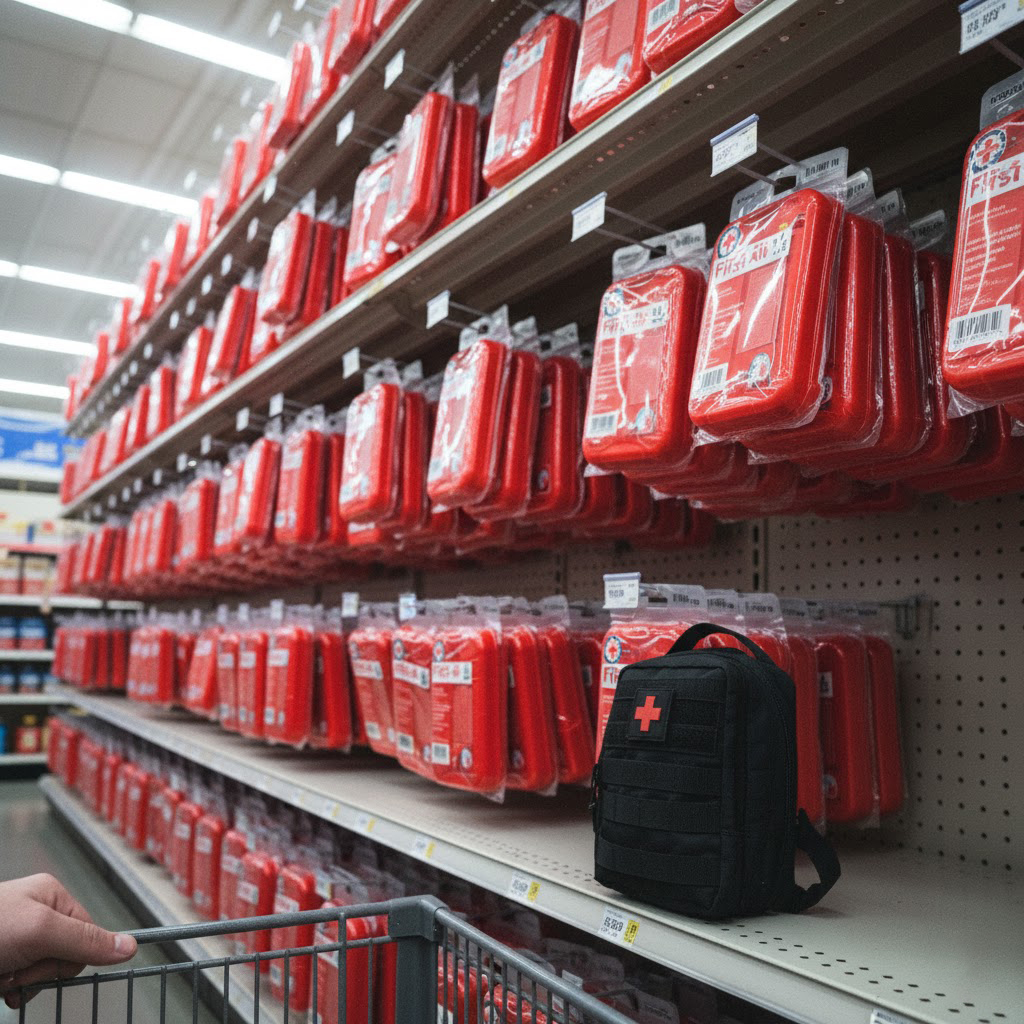
Prepare for emergencies with the Tacright Trauma First Aid Kit, designed for rapid response in critical situations. This compact and durable kit includes all the essential tools needed for trauma care, making it perfect for outdoor enthusiasts, tactical professionals, and anyone who values safety an...
LEARN MORELike this ad? Make it yours.
Crush rebuilds this exact creative around your product — your brand, your colors, your offer — in about a minute.