Dr. Greg D Raymond
Dr. Greg D Raymond Facebook ad: “Don't Stop Drinking. Just Clean Your Liver Daily”
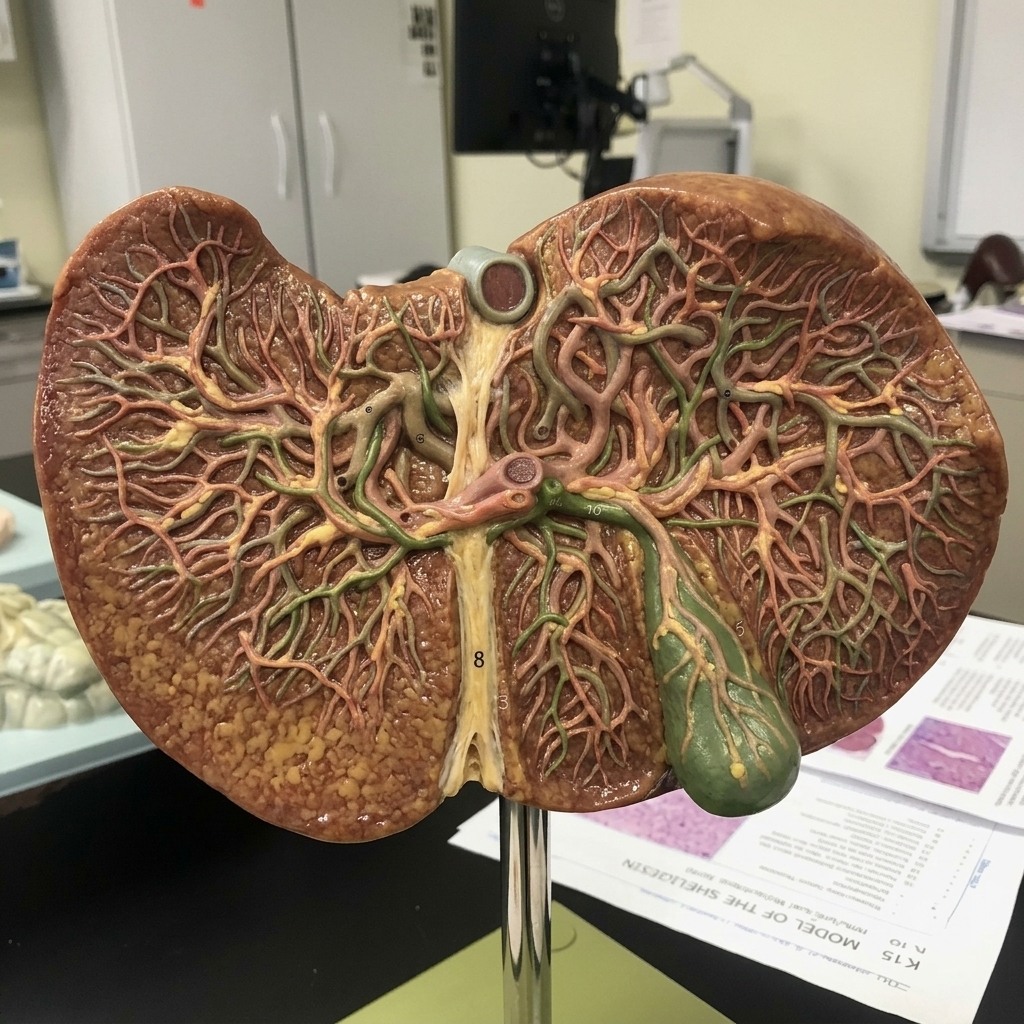
Ran for 90 days, from July 3 to October 1, 2026, the last day Crush saw it.
Run by Dr. Greg D Raymond on Facebook. Crush is not the advertiser and does not verify its claims. See this ad in Meta's Ad Library(opens in a new tab)
Want an ad like this for your product?
Crush makes new ad images for your product from this ad: your logo, your product photo, your offer.
Trials from $19.95 USD, then $79.95 USD a month. Cancel anytime.
About this ad
- Meta Ad Library ID
- 1343164454439586
- Platforms
- Facebook, Instagram, Audience Network, Messenger and Threads
- Relaunches
- 0
Ad text
Hey guys! 👋 Functional medicine practitioner here and I want to address something I see being debated in these groups constantly, which is the idea that you have to stop drinking to fix your liver. You don't. For most moderate drinkers with elevated enzymes and fatty liver, stopping is not the answer. Giving your liver what it actually needs to process what you're drinking is the answer. And those are completely different things. I know that goes against everything your doctor has probably told you. It goes against everything these groups typically say. But after 12 years of working with patients on liver health specifically, the most consistent thing I see is this: people who stop drinking and do nothing else see their numbers improve a little and then plateau. People who support the liver's actual processing and clearing capacity see their numbers normalize, and they often do it without stopping at all. Let me explain why that is. When you drink, your liver converts the alcohol into a byproduct that is roughly 30 times more toxic than the alcohol itself. A liver that is functioning well clears that byproduct quickly and efficiently. The damage doesn't come from the alcohol. It comes from a liver that can't keep up with the clearing. Now here's what most people don't know. That clearing capacity is determined by the state of the liver, not just by how much you're drinking. A liver that has gone years without the specific support it needs to keep up with what alcohol leaves behind is a slow liver. It cannot clear the acetaldehyde fast enough. So it acumulates. And that accumulation is what drives the elevated ALT and AST, the bloating after meals, the puffiness in the mornings, the afternoon exhaustion, all of it. The damage isn't from the alcohol. It's from the acetaldehyde your liver never fully cleared. It cannot process and export its own stored fat the way it's supposed to. And that slowness is what drives the elevated ALT and AST, the bloating after meals, the puffiness in the mornings, the afternoon exhaustion, all of it. Stopping drinking removes the incoming source of the problem. It doesn't fix the organ that was already behind. Which is why the numbers improve a little and stop. The load decreased but the liver still can't do its job properly. This is the conversation nobody is having. Not whether to stop drinking. Whether the liver has what it actually needs to function. When you give it those things, the numbers move. I have patients who have brought ALT down from the 80s and 90s to inside normal range in 8 weeks without stopping drinking. Not every patient. But enough that it has fundamentally changed how I approach this. The question I ask now isn't are you drinking, it's does your liver have what it needs to process what you're drinking. What that comes down to in practice is two things that most people have never heard discussed together, and I'll keep this in plain terms. The first is silymarin from milk thistle at the grade that actually reaches liver cells. What it does specifically is protect the liver cell membrane from the oxidative damage alcohol causes during processing, and it supports glutathione production, which is what your liver uses to neutralize the acetaldehyde before it accumulates. Without enough of it that byproduct keeps building up and damaging cells even hours after your last drink. The problem is almost every American milk thistle supplement uses a testing method that inflates the purity number on the label without the actual compound behind it. The formulation in the clinical research on liver-related mortality is a European pharmaceutical grade, and those studies showed roughly a halving of liver-related death rates versus placebo. What most people are buying has no meaningful relationship to that compound. The second is something most people in these groups have never heard of, and honestly it took me a while to come across it too. It's called pueraria extract, from a root that has been used in traditional medicine across Asia for centuries, specifically for supporting the body's ability to process alcohol. What it does at a biological level is increase the activity of the specific enzyme that converts acetaldehyde into something harmless. Your liver already has this enzyme. The problem is it gets overwhelmed and slows down. Pueraria helps it keep up. When that conversion happens faster, less acetaldehyde accumulates, less damage happens per drink, and the liver has a real chance to stop falling further behind. It is in my opinion the most underused compound for this specific problem and the reason I think a lot of people who try milk thistle alone see partial results and nothing more. And then the liver enzymes start moving, and they keep moving rather than plateauing, because you're not just reducing the load, you're restoring the function. By 8 weeks most patients I'm working with see meaningful normalization. Some hit full normal range. And they're still drinking. A lot of my patients ask me directly: can I still have a glass of wine with dinner while I'm doing this. The answer is yes. That's kind of the whole point. You're giving your liver what it needs to handle what you're drinking. The wine isn't the problem if the liver has what it needs to process it properly. For the large group of moderate drinkers who have elevated enzymes and have been told the only option is permanent abstinence, that is simply not true, and the reason that conversation keeps being framed that way is that conventional medicine has no other tool to offer. They can't prescribe you the right grade of milk thistle. They can tell you to stop. So they tell you to stop. You don't have to accept that framing. There is a third option and it works better for more people than anyone is telling you. The hard part, and this is what I spent a long time on before I had a specific answer for patients, is finding a formula that actually has both at the right grade and the right dose at the same time. I tested probably 7 or 8 different formulas over about two years. Most of them had one thing done right and cut corners on the others. A few had the right ingredients on the label at doses so low they couldnt move anything. One had European grade milk thistle but no pueraria at all. Getting both right in one product took longer to find than I expected. Thats what I wanted to say. Sorry it got long. 🙏 EDIT: getting a lot of DMs asking what formula specifically so I'll just put it here rather than answering individually. After going through everything I mentioned above, the one I landed on and now point my patients to is Happy Liver by Ritual Labs. It has the European pharmaceutical grade silymarin at 90% purity and pueraria extract, the two compounds I described, plus inositol and a concentrated curcumin extract as supporting compounds. All four at doses that actually do something rather than trace quantities that look good on a label. I want to be clear that I have zero affiliation with this company. No commission, no discount code, nothing. I recommend it because after two years of testing I couldnt find anything else that got all four right without compromising on at least one of them, and I got tired of sending patients away with a general description and watching them come back with the wrong thing. I just think more people should know this exists. They're not on Amazon, their site only, and from what my patients tell me it goes in and out of stock so I'd look sooner rather than later.
Where the ad sends people
rituallabs.shop
Don't Stop Drinking. Just Clean Your Liver Daily
Your liver processes everything - alcohol, medications, junk food, environmental toxins. Happy Liver provides daily protection with clinical doses of Milk Thistle, Turmeric, Pueraria, and Inositol
Learn more: rituallabs.shop(opens in a new tab)