
Inactive· since Aug 11, 2026
- 22
- days it ran
- 0
- relaunches
Ad copy
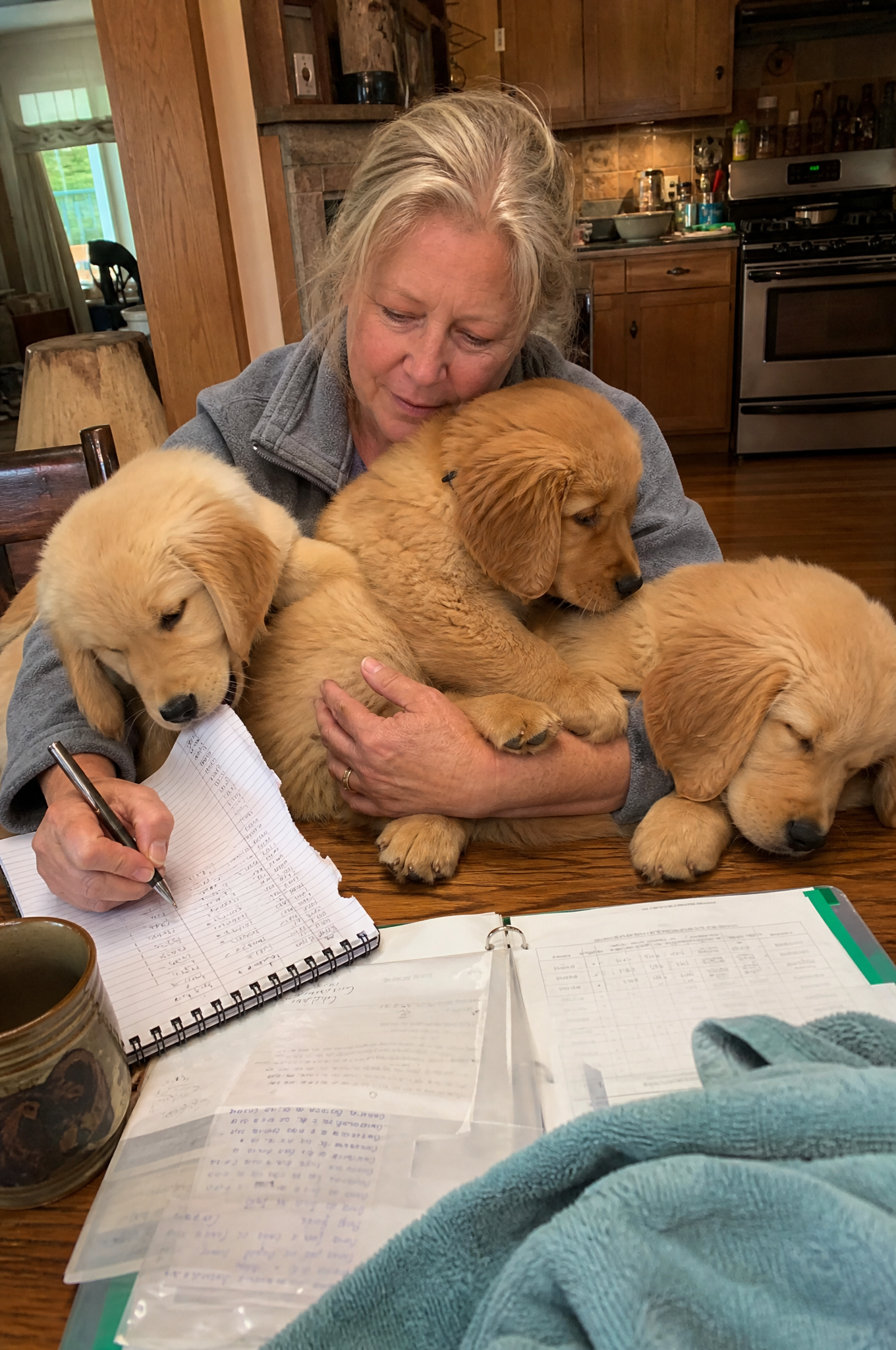
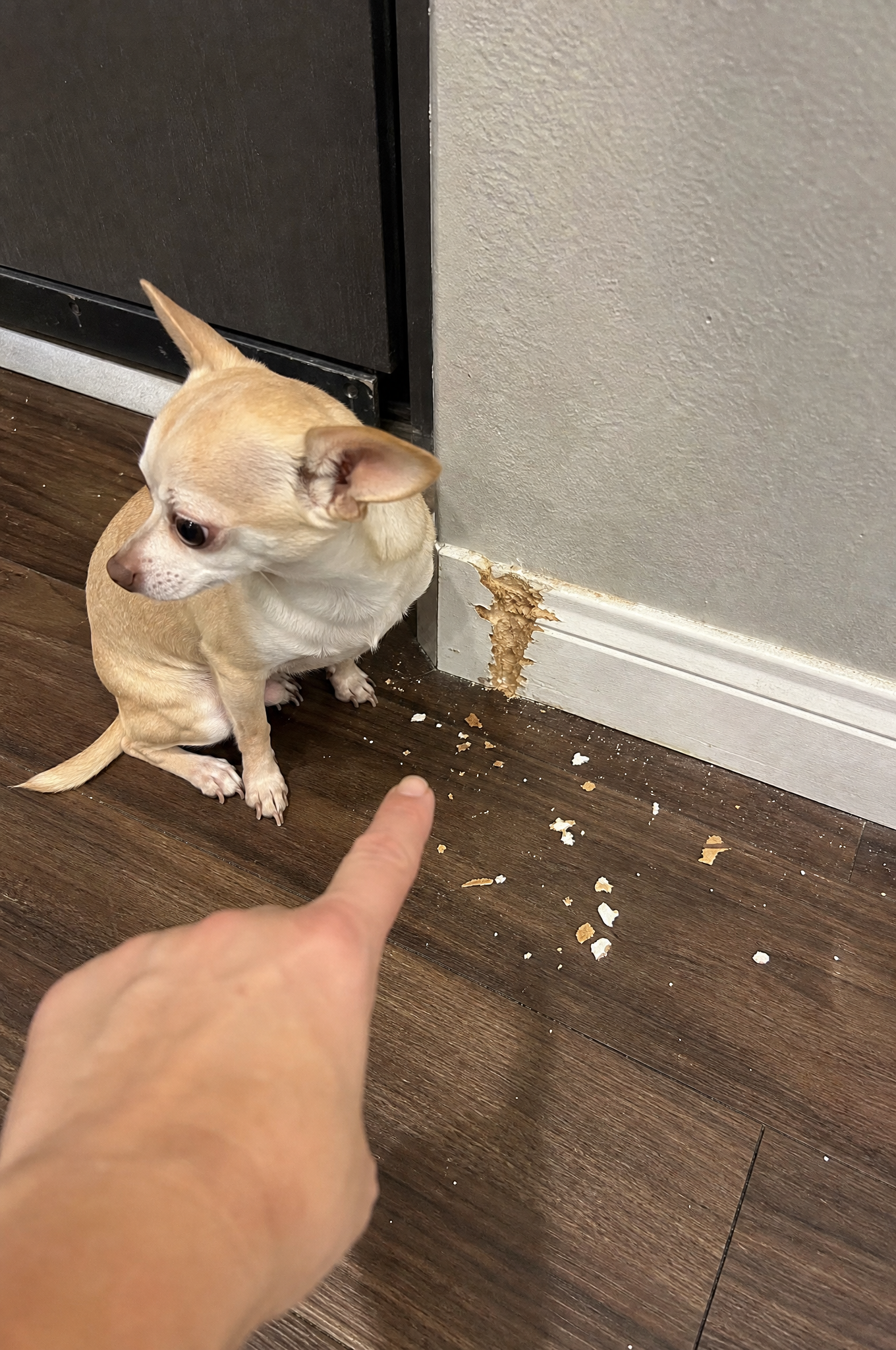
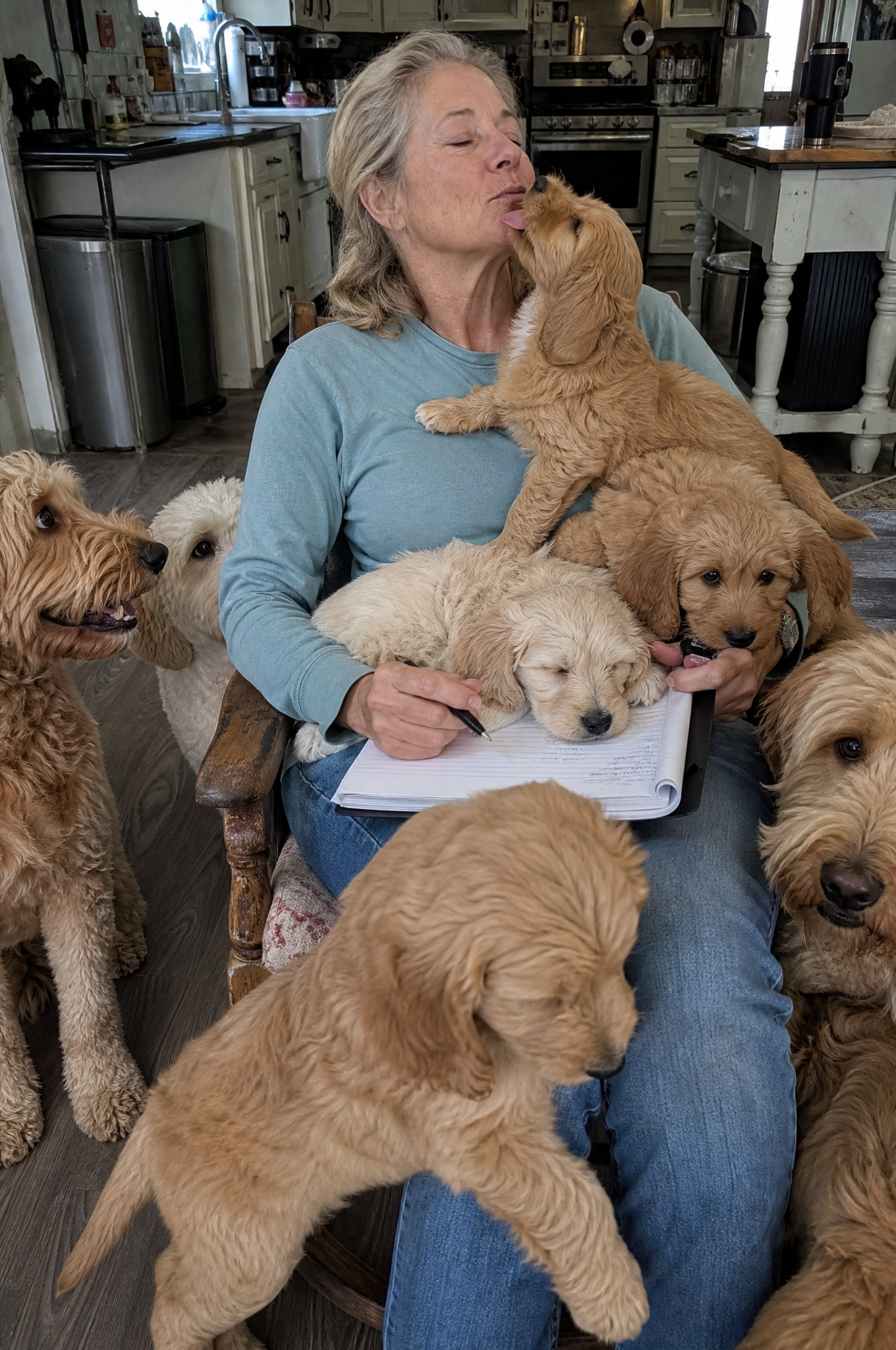
I've been breeding Goldendoodles for 18 years, and last Tuesday at a 6-month checkup call, an owner said something that made my blood boil. I follow up with the owners after they take a pup home. Every single one. Six weeks after they go home, then at 12 weeks, then at 6 months. I have made these calls for 18 years and I know, before I dial, almost exactly what I'm going to hear. At 6 weeks, the call goes like this. Everything is perfect. She's brilliant. She learned her name in 2 days. She follows me everywhere. She's already sitting for treats. I had no idea puppies were this smart. We are absolutely obsessed with her. My husband said she's better than he expected. The kids are in love. I think we got the best one. I smile. I ask about sleep and potty progress and whether she's eating well. I write my notes. I hang up. And I make a note in my calendar for 12 weeks. Because at 12 weeks, the call goes like this. Something has changed. She's not as responsive as she was. I say her name and she looks at me and then goes back to what she was doing. The sitting for treats thing still works sometimes but not always. She jumped on my mother last week and left a bruise. She's pulling on the leash so hard I can barely hold her. She barked at the neighbor's dog for about 15 minutes yesterday and nothing I tried made it stop. My husband said maybe we need a trainer. Is this normal? I tell them yes. I tell them what to expect. I explain that the dual drives are starting to activate, the Poodle intelligence and the Retriever social drive waking up at the same time. I explain that this is totally normal and that this is the real dog arriving. Some of them hear me. Some of them have already Googled "why is my Goldendoodle ignoring me" and found 17 conflicting answers and ordered a bag of calming chews and booked a spot in a group obedience class that starts on Tuesday. I write my notes. I hang up. And I make a note in my calendar for 6 months. Because at 6 months, those calls are very different. The class didn't work. She was great in the hall and came home and forgot everything. The trainer said to be more consistent. We've been consistent for 3 months and she's worse not better. She jumps on every person who comes through the door, 45 pounds now and climbing quickly. The pulling on walks has gotten so bad my wrist hurts every morning. The selective hearing is the worst, she won't respond to her own name outside now. The crying when we leave has gotten us 2 noise complaints already. My husband is at his limit. We've spent $1,200 and nothing has changed. I don't know what to do anymore. We're so lost. We’re not sure if this is the right dog for us. 9 out of 10 times, that's how the checkup calls go. And I've been taking those calls for 18 years. The thing is, it's never the dog's fault, and honestly it's not the owner's fault either. My name is Barbara Holloway. I breed F1B Goldendoodles from a small property outside Chattanooga, Tennessee. I have been doing this since 2006. My dogs come from health-tested lines going back 5 generations. I know every dog I have ever placed. I know their parents. I know their grandparents. I know what they are capable of when they are understood. And I know exactly what the 6-month crisis call sounds like. I want to tell you about 2 families who took puppies from the same litter in the spring of 2022. A male and a female. Brother and sister. Same mother, same father, same 8 weeks in my home before they went out into the world. The male went to a family in Murfreesboro. A couple in their 30s, 2 young kids, a nice house with a yard. They named him Walter. They were prepared and enthusiastic and they loved him completely from the first day. The female went to a single woman in Nashville. Her name was Diane. She was 41, worked in marketing, lived alone in a townhouse near Germantown. She named the puppy Ruby. She had waited 2 years to get a Goldendoodle and she had done her research and she was ready. Six-week calls. Walter: brilliant, perfect, the kids are obsessed, he's already sitting for cheese. Ruby: incredible, smarter than I expected, she learned her name in 3 days, I think she might be exceptional. I smiled. I wrote my notes. Twelve-week calls. Walter: he's started ignoring us sometimes. Still great with the kids but he doesn't always come when we call him. He jumped on my mother-in-law and she almost fell. He's pulling on the leash already at 30 pounds. We signed up for a group class at PetSmart that starts next week. Ruby: she had 4 accidents this week. She's been doing so well and then it just stopped. She jumped on a guest so hard she left scratches on his arms. She's started this pacing thing in the evenings where she can't settle, just walks room to room to room. I ordered some calming chews someone in a Facebook group recommended. Is that okay? I told both of them the same thing. What was happening. Why it was happening. What to expect. I'm not sure either of them fully listened to me. Six-month calls. I called Walter's family on a Tuesday afternoon in October. His owner, a woman named Lisa, picked up on the third ring. She sounded tired and exhausted, more than usual. Walter had been through 6 weeks of group obedience at PetSmart. $119. He'd been great in class and come home and stopped responding to commands outside the training room. The instructor had said to be more consistent. They had been consistent. Walter had been consistently unimpressed. They'd hired a private trainer named Brett who came to the house on Saturdays. $150 a session for 4 sessions. $600. Brett had said Walter needed firmer handling and more exercise. They'd added a second walk every day, bringing the total to nearly 2 hours. Walter's energy remained the same but now he pulled even harder on the leash. At 55 pounds and climbing, Lisa was losing the physical battle every time. The jumping had gone from a nuisance to a liability. 55 pounds of Goldendoodle launching into the chest of every person who walked through the front door. Lisa's mother had stopped visiting after Walter knocked her backward into the hallway wall. The selective hearing had become worse. Outside, with any distraction present, Walter would not respond to his own name. Lisa could stand 3 feet from him and he would not hear her because whatever was happening inside his brain at that moment was running so loud and so fast that her voice couldn't break through. The separation anxiety had started around month 3. Whining when they left. Then howling. Then chewing. First a shoe. Then a baseboard. Then a section of door frame near the front door. Her husband had started referring to their house as "Walter's house" in a condescending tone. "I love him," she told me. "But I don't know how much longer we can keep doing this the way we're doing it. We've spent over $1,200 and nothing has worked. Is there something wrong with him? Can we bring him back?" There was nothing wrong with him. I told her what I always tell them. Walter is not a Golden Retriever. He is not a Poodle. He is a specific genetic cross with a specific neurological profile that none of those methods were designed for. Every method you've tried was designed for a dog with one drive. Walter has 2. A Poodle brain that treats every blocked path as a puzzle to solve around, and a Retriever social drive so powerful that no correction can override it. Until you work with both drives instead of against them, nothing will stick. She was quiet for a moment. "Why didn't anyone tell me this before I spent $1,200?" I didn't have a good answer for her. I called Diane about Ruby the same week. Diane picked up on the first ring. She sounded different. "Ruby is wonderful," she said. "I mean genuinely wonderful. She comes when I call her. She greets people at the door without jumping. She settles on her mat in the evenings. She walks on a loose leash. My neighbor Sandra actually stopped by last week to say she'd noticed how calm things had been." I had my notebook open. I stopped writing. "What did you do?" "I found a guide. About 6 weeks ago. I'd been struggling, honestly, around the 3-month mark things started going sideways and I didn't know what to do. I found it in a Goldendoodle forum. Someone had posted about it. I read what they said and ordered it that night." "What guide?" She told me. I wrote it down and looked it up that evening and ended up ordering it. I sat at my kitchen table reading it for 2 hours and felt something I do not often feel after 18 years of breeding. The feeling that someone had said, more clearly and more concisely than I had ever managed to say, everything I had been trying to tell owners for nearly 2 decades. Because here is the truth I have been trying to communicate since 2006, in my own words, on my own printed sheets, to every family that has walked out of my property with one of my puppies. A Goldendoodle is not a Golden Retriever. A Goldendoodle is not a Poodle. A Goldendoodle is a cross that produces a specific neurological profile, and the combination of those 2 parent breeds creates something that behaves fundamentally differently from either one on its own. The Poodle side gives them the 2nd highest intelligence ever measured in a domestic dog. A problem-solving brain that was designed to analyze, calculate, and find alternative pathways around any obstacle. When a Poodle brain encounters a blocked path, it doesn't stop. It innovates. It routes around. It finds another way. That is what Poodles were bred to do for hundreds of years. The Retriever side gives them one of the most powerful social drives in any domestic breed. The need to reach, greet, touch, and connect with every person and every dog isn't enthusiasm. It isn't excitement. It is a genetic drive as hardwired as a Border Collie's need to herd. It was selected for over generations of breeding dogs whose entire purpose was to work closely with humans, respond to their proximity, and stay engaged with them all day. Neither parent breed was selected for impulse control. The Poodle was bred for intelligence and sensitivity. The Retriever was bred for social bonding and enthusiasm. Neither line was ever selected for the ability to contain the energy that builds when those 2 drives collide. That is the dog you have. Not a stubborn dog. Not a difficult dog. Not a dog that doesn't love you or doesn't want to cooperate. A dog running 2 genetic drives simultaneously with zero impulse control, living in a domestic environment, being trained with methods designed for dogs that have one drive and a natural pause between stimulus and response. Goldendoodles don't have that pause. The stimulus hits, both drives fire, and the dog is gone before the owner can even give a command. And here is the thing that has made me angry on behalf of owners for 18 years. Nobody is telling them this. Not the PetSmart class. Not the private trainer charging $150 a session. Not the vet who says "Goldendoodles are just high-energy" and sends them home with a suggestion to walk more. Not the YouTube channel with 2 million subscribers whose methods were designed for Labradors and applied to every breed with a "works for all dogs" stamp. Not one of those sources is explaining that the brain they are trying to train is running 2 competing programs at full power with no brakes, and that every generic method being applied to it was designed for a brain that works completely differently. And so the pattern repeats. Six weeks: perfect. Twelve weeks: cracks. Six months and beyond: constant crisis. And somewhere in that progression, between the Tuesday afternoon group class that worked in the hall and the Saturday morning when the trainer says to be more consistent, the owner starts to think.. There is something wrong with their dog. That they got a difficult one. That Goldendoodles are just like this and you manage it. I have heard some version of that on hundreds of these 6-month calls. And every single time it is wrong. Because I know the dog. I know the bloodline. I know what that same genetic profile looks like in a home where the approach is right. I have placed brothers and sisters from the same litter and watched one thrive and one struggle, and the variable was never the dog. The variable was always whether the owner understood what they actually had. Let me tell you what the failed approach looks like in practice. Because I have heard it described so many times I could recite it in my sleep. The group obedience class. Usually around $119 for 6 weeks. The dog performs beautifully in the training hall. Comes when called. Sits on command. Walks on a loose leash in the practice space. The owner texts their friends from the parking lot. We turned a corner. They get home. The doorbell rings the next morning. The dog launches at the front door with 55 pounds of force, shrieking at a pitch that makes the neighbor's kid cry, and ignores every command given during those 45 seconds of complete chaos. The owner goes back to the class. The instructor says to be more consistent. The owner has been more consistent than any person I have ever spoken to. Consistency is not the problem. The method is the problem. The private trainer. Usually $120 to $175 a session. 4 to 6 sessions. The trainer comes to the house, which feels more promising because now they are seeing the real environment. The trainer watches the dog ignore 3 commands in a row while a squirrel runs across the yard and says the owner needs to turn their back when the dog jumps. Use a firmer voice. Never repeat a command. The owner turns their back. The dog jumps on their back. Because the Poodle brain treats the turned back as a new puzzle and finds another angle. The owner uses a firmer voice. The Retriever drive interprets the raised voice as engagement and the dog gets more excited. The owner says each command exactly once. The dog doesn't hear the command because both drives are firing and the brain has no bandwidth left. The trainer says the dog needs more exercise. More mental stimulation. A puzzle feeder. 2 walks a day. The owner adds the second walk. The dog pulls on both walks instead of one. The puzzle feeder is solved in 6 minutes and then the pacing resumes. Every week the walks get longer and the dog gets fitter and stronger and harder to hold. The board-and-train. $1,200 for 10 days. The dog comes home transformed. For 5 days. Then something happens. The doorbell. A guest. Another dog on the walk. And the transformation disappears because the facility had suppressed the behaviors without addressing the drives underneath. The drives were never addressed. They came home with the dog. The calming chews. 3 brands across 12 months. $200 to $400 total. The dog eats them happily because they taste like treats and is jumping on the FedEx driver 20 minutes later. The chews address surface-level arousal. They do not address a Poodle-cross brain running 2 competing drives with no off-switch in a modern living room. By the time I make the 6-month call, the average family I speak to has spent between $800 and $2,500 and is in the same place they would have been if they'd spent nothing, except now they are also exhausted, frustrated, financially strained, and increasingly convinced that their dog is the problem. The dog is never the problem. I placed 16 puppies in 2022. By the time I made my 6-month calls, 5 families were in crisis. One had already contacted me about returning the dog. One was on their third trainer. 7 were managing. Not thriving. Managing. Building their lives around the dog's chaos rather than addressing the chaos. 4 were doing well. I looked at what those 4 families had in common. Not money. Not experience with dogs. Not the amount of time they had to dedicate to training. All 4 had found a way to understand what they actually had before they tried to train it. All 4 had some foundation in why a Poodle-cross brain processes information differently from single-drive breeds. All 4 were working with the dual drives rather than fighting them. One of them was Diane. The other 12 families had been given the same generic advice that had been failing Goldendoodle owners since group obedience classes existed. That night after I spoke to Diane, I ordered the guide. I read it and then called my husband into the kitchen and said: this is what I have been trying to write down and give to people for 18 years. Because it explains the dual-drive collision that produces every Goldendoodle behavior problem. The way this brain processes every interaction through 2 competing drives simultaneously. Not disobedience. Not stubbornness. A Poodle brain problem-solving around every obstacle while a Retriever drive floods the nervous system with an overwhelming need to reach and engage with every stimulus. Both firing at full power with no impulse control to manage either one. Generic training tries to answer that with your turned back. Your correction. Your treat. Your firmer voice. And a Goldendoodle brain does not experience your turned back the way a single-drive breed does. The Poodle side experiences it as a puzzle. A new angle to work. A blocked path to route around. The Retriever side doesn't even notice because the social drive is already locked on the stimulus and nothing short of the stimulus disappearing will release it. Your turned back does not produce compliance. It produces a more creative approach to the same goal. The guide explains how to feed both drives instead of fighting the output. How to give the Poodle brain a problem to solve and the Retriever drive a job to do at the same time, so the short-circuit that causes the jumping and the pulling and the selective hearing never fires in the first place. It explains the Doodle Brain Hack. Whatever behavior gets a reaction, even a negative reaction like yelling or pushing, becomes a rewarding game for a Poodle-cross brain. So you flip the pattern. Make calmness the only behavior that pays. Make chaos invisible. Their genius brain rewires fast. It explains the Threshold Pause. Not trying to stop the door chaos after it starts. Installing impulse control at every door, every transition, every time. Before the door opens, the dog sits and makes eye contact. The reward is the thing they wanted anyway, the door opening. The Poodle brain categorizes the pattern in 2 or 3 days and it becomes automatic. It explains the brain games that replace the 2-hour walks. Because you cannot out-exercise a Goldendoodle. Every mile you add conditions a fitter athlete who needs more tomorrow. But 15 minutes of structured mental work, a towel burrito, a scatter feed, a scent trail, burns as much mental energy as a full mile of walking and actually lowers the heart rate instead of raising it. The brain shifts from chaotic scanning mode into focused problem-solving mode. The Poodle drive gets fed. The nervous system downregulates. And the dog settles because the brain is satisfied, not because the body is exhausted. It explains the settling protocol that installs the off-switch. Because Goldendoodles are never born with the ability to just relax. Their working-dog DNA tells them to always be "on," the Poodle side scanning for problems, the Retriever side scanning for people. Neither drive has a natural off position. The guide teaches you how to manually install it using a specific mat as the dog's designated clock-out zone. Rewarding the deep sigh. The hip roll. The chin on the floor. Building a genuine ability to settle that no medication can replicate. It explains the Eye-Contact Lottery that rewires the value system. Random treats throughout the day whenever the dog makes eye contact without being asked. Reprogramming the brain so that checking in with you becomes the most profitable habit in their life. So that on a walk, when a trigger appears, the impulse to look at you competes with the impulse to lunge, and gradually, day by day, looking at you starts winning. It explains the leash walking protocol built for a brain that outwits the stop-and-wait method in 4 minutes flat, using direction changes and earned sniff rewards instead of corrections that create fear-based reactivity in a breed that is too emotionally sensitive for punishment. It explains doorbell desensitization where you ring your own doorbell 10 times a day until the sound becomes meaningless. Separation anxiety protocols designed specifically for the Retriever drive's genetic need to stay near you. Counter surfing solutions. Jumping and biting resets. Recall training that hacks the Poodle's value calculator so they come to you even when there's a squirrel. It covers grooming, because I have been trying to get owners to understand the coat maintenance for 18 years. The brushing frequency. The correct tools. The line-brushing technique that prevents the painful matting that leads to the groomer's "shave down" guilt. The way most owners don't realize their Doodle's coat is matted until the groomer hands them back a shaved dog and says "I can't work with mats this bad anymore." The guide has an entire bonus section on mat-free grooming that every Goldendoodle owner needs before they need it. It covers diet and sensitivity because Goldendoodles have notoriously fragile stomachs and the chronic diarrhea and the panic-inducing midnight emergency vet trips are preventable with the right protocol. And free monthly updates with new brain games, all delivered instantly so you can start training tonight. I sent the link to Lisa in Murfreesboro the week after I found it and she got it straight away. She called me on a Tuesday morning 3 weeks later. Walter had stopped jumping on guests. The pulling on the leash had decreased by more than half. She had taken him on a walk that morning and he had checked in with her twice on his own. Not because she called him. Because he chose to. "Barbara," she said. "He checked in with me. He just looked up at me and came back and kept walking. He's never done that before." He was always capable of it. He just needed someone to give his brain the right instructions. I now include the Complete Goldendoodle Guide with every puppy I place, new or old. Not a printed sheet of my own notes. Not a list of YouTube channels. Not a recommendation to find a good trainer. The guide every time. Because after 18 years and over 300 placements I know what the 6-month crisis call sounds like and I know that most of it is preventable if the owner understands what they have before they start trying to fix it. If you own a Goldendoodle, either young or old, and you're struggling more times than you'd like to admit. Your dog is not broken. Your dog is not difficult. Your dog is not the problem. And you're not a bad owner. Your dog is running 2 genetic drives simultaneously, a Poodle problem-solving brain and a Retriever social drive, with zero impulse control and no off-switch, in a living room, being trained with methods designed for dogs that have one drive and a natural pause between stimulus and response. And until someone explains that to you in a way that gives you something to actually do with the information, you will keep spending money on the wrong methods and making the same argument with your partner and bracing for impact every time the doorbell rings and standing at the back door wondering what is wrong with you or your dog or both. Nothing is wrong with either of you. You were just never given the right operating manual. I found it 2 years ago. I have given it to every family that has walked out of my property with one of my puppies since. And I am writing this so that every family who did not buy from me, who bought from someone who did not include this, who is currently 6 months in and making the calls I have been making for 18 years, can find it too. The Complete Goldendoodle Guide is just $37. It includes the full Doodle Brain Hack system built for a brain running 2 competing drives with no impulse control. The Threshold Pause that installs impulse control at every door. The brain games that drain mental energy in 15 minutes instead of 2-hour walks that build fitter athletes. The settling protocol that installs the off-switch no Goldendoodle is born with. The Eye-Contact Lottery that rewires the value system so checking in with you becomes the most profitable habit in their life. The leash walking protocol for a brain that outwits stop-and-wait. The doorbell desensitization. The separation anxiety protocol designed for the Retriever drive's need to stay near you. The recall system that hacks the Poodle's value calculator. The jumping and biting reset. The counter surfing solutions. Plus 4 free bonus guides. The Mat-Free Doodle Guide for grooming without the "shave down" guilt. The Doodle Diet and Sensitivity Guide for their fragile stomachs. The Doodle Anxiety and Independence Guide for curing the "Velcro Dog." The Doodle Jumping and Biting Reset for severe landshark behavior. Plus free monthly updates with new brain games and behavior exercises for life. It comes with instant access so you don't have to wait and can read it on any device instantly. Plus it has a 90-day money-back guarantee, so if you follow the guide and your Goldendoodle doesn't improve, you pay nothing. I have been making 6-month calls for 18 years. The families who are thriving are the ones who understood what they had before they tried to train it. The families who are in crisis are the ones who were never told. You are reading this. Now you know. 👉 https://thedoodleway.com/pages/goldendoodle-guide Barbara Holloway Chattanooga, Tennessee Goldendoodle Breeder, 18 years P.S. Lisa in Murfreesboro spent over $1,200 on methods designed for a brain Walter doesn't have. The group class that worked in the hall. The private trainer who said to turn her back. The board-and-train that lasted 5 days. 6 months in she called me and said she didn't know how much longer they could keep doing this the way they were doing it. 3 weeks after I sent her the guide Walter was checking in with her on walks voluntarily. The jumping had stopped. The pulling had halved. The selective hearing was breaking. The dog that was running their household with 2 unchecked drives for 6 months was the same dog the whole time. The only thing that changed was that someone finally gave his brain the right instructions. Don't spend 6 months finding out the hard way what costs $37 to know from the beginning. 👉 https://thedoodleway.com/pages/goldendoodle-guide P.P.S. If your Goldendoodle is past the puppy stage and you are reading this recognizing everything I have described, I want to be clear about something. It is not too late. I have seen this breed transform at 2 years old. At 4 years old. At 7 years old. The dual drives don't stop being redirectable. They stop being as easy to redirect. That is the difference. Every month the wrong patterns are practiced, they lock in deeper. Every month the right patterns aren't started, the window narrows slightly. But the window is still open. The brain is still a Poodle-cross brain. It still problem-solves. It still categorizes patterns. It still rewires fast when given the right input. Start today. 👉 https://thedoodleway.com/pages/goldendoodle-guide
Like this ad? Make it yours.
Crush rebuilds this exact creative around your product — your brand, your colors, your offer — in about a minute.