
Inactive· since Jul 10, 2026
- 27
- days it ran
- 2
- relaunches
Ad copy
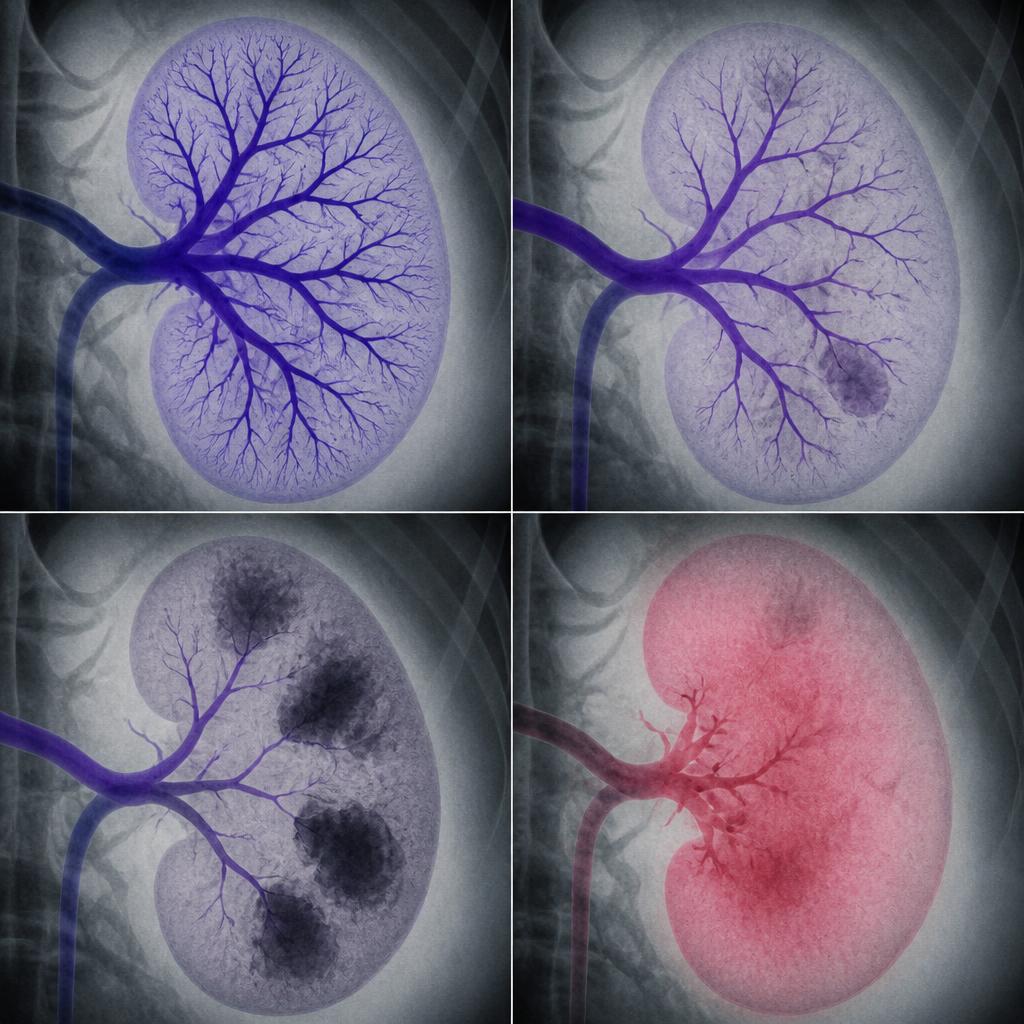
I'm a nephrologist. I can tell you exactly how kidney disease ends. I've walked hundreds of families through it. Last year I watched it start happening to my wife. Molecular hydrogen is the reason I didn't have to walk her through it too. We found it after three years of her numbers declining at every single checkup. Nothing prepared me for what it would mean. My name is Thomas Brennan. I've been a kidney specialist for 22 years. I've watched kidney disease take everything from people. Their energy. Their independence. Their dignity. And for three years, I watched it start taking from my wife. Every morning I walk into my clinic and counsel patients through the same trajectory I'm watching happen at home. I explain GFR decline curves. I talk about when to start preparing for dialysis. I answer the question every spouse asks — "How much time do we have before it gets bad?" I answer it calmly. Professionally. With 22 years of experience behind every word. Then I drive home to Katherine. Last October I sat with a patient named Gerald. Seventy-one years old. GFR at 31. His wife was in the chair next to him holding his hand. I pulled up his chart and walked them through what Stage 3b looks like. What Stage 4 looks like. What the dialysis conversation looks like when we get there. His wife asked me: "Is there anything we can do to stop it? Not slow it down. Stop it." I gave her the answer I've given hundreds of families. "We can manage the rate of decline. We can protect what's left. But reversing kidney damage at this stage is very difficult." She nodded. She'd heard it before. You could see it on her face. I drove home that evening and Katherine asked me how my day was. I said fine. I couldn't tell her that Gerald's GFR trajectory — 68, 61, 54, 45, 38, 31 — was almost identical to hers. I couldn't tell her I'd just rehearsed her future with a stranger's wife. Your expertise doesn't save anyone. It just means you can see the ending before it arrives. Katherine had been a reading tutor at Garfield Elementary for eleven years. Every Tuesday and Thursday morning she sat with second-graders who were behind and read with them one-on-one. She kept a shelf of books in her car. She knew every child's reading level, their favorite characters, which ones needed a snack before they could focus. The brain fog took that from her. It started small. Losing her place mid-paragraph. Rereading a line without realizing she'd already read it. Then one Thursday she was reading with a boy named Marcus — seven years old, just learning to sound out longer words — and she stopped mid-sentence. The word "envelope" was right there on the page and her brain couldn't find it. She stared at the letters. Nothing came. Marcus looked up at her. "Ms. Katherine? Are you okay?" She smiled and told him she was fine. Finished the session. Walked to her car and sat in the parking lot for twenty minutes. She called the school that Friday and said she needed to take a break. She never went back. That was nearly three years before the molecular hydrogen. Nearly three years of that shelf of children's books still sitting in the back seat of her car. Her kidney function had started declining quietly. Annual checkup at 53. "Your GFR is a little lower than we'd like, let's recheck in six months." Then 72. Then 68. Then 61. Then 54. Stage 3a. The conversation changed. Her doctor wanted to start her on Losartan. An ARB. For kidney protection. I advised against it. Not after 22 years of watching what happens. The dizziness. The muscle cramps that wake people from sleep. The potassium levels that spike without warning — I've admitted patients to my unit for hyperkalemia from the same class of drugs. And the kidney function? It still declines. Just slower. Slow enough for doctors to write "stable" in the chart while the trajectory never changes direction. I've watched hundreds of patients go from Stage 2 to Stage 3 to Stage 4 on these medications. They don't reverse anything. They manage the speed of the decline. And we call that success. By November Katherine was wearing compression socks to bed. She'd set three alarms between midnight and 5 AM — not to wake up, but because she was already awake and needed to remember to drink water between bathroom trips. One morning I came downstairs at 6 and found her sitting at the kitchen table with her shoes off, ankles so swollen she couldn't get them on. She'd been dressed and ready to leave for her morning walk for forty minutes. She was just sitting there, staring at her shoes. The bowl on the counter where she'd always kept oranges was empty. She'd cleared it out when her nephrologist told her to cut potassium. The yogurt was gone too. She measured protein at every meal like an equation she kept failing. "I'm doing everything they told me," she said one night, sitting on the edge of the bed. "I cut the sodium. I gave up every food I love. I walk every morning. And every time they test me, it's worse. How is it worse?" She looked at me. And I saw something I'd seen in hundreds of patients' eyes but never in my wife's. She was asking me how much time she had. I didn't answer. Because I knew. And I couldn't say it. That's when she started digging. Not casually. Obsessively. Three months of late nights at the kitchen table with her laptop and a legal pad full of notes. The first thing she found was research on antioxidants for kidney protection. NAC. Turmeric. CoQ10. Clinical papers showing they reduced oxidative markers. She ordered all three. Took them every day for two months without missing a single dose. Her next labs came back. GFR: 53. One more point down. She sat at the kitchen table staring at the printout. Two months of pills. Three different supplements. Another point gone. She went back to the research. Found molecular hydrogen. Different from traditional antioxidants — selective, targeted, the smallest molecule in existence. Studies from Japanese universities showing kidney protection at the cellular level. She ordered a case of hydrogen water. Glass bottles. Expensive. Drank one every morning for six weeks. For the first time in months, she let herself believe she'd found the answer. The science was different. The molecule was different. This wasn't another antioxidant — this was targeted. Next labs: GFR 52. She stood at the kitchen counter holding the lab printout in one hand and a bottle of hydrogen water in the other. Poured the rest of the case down the sink. Then she did something different. Instead of looking for the next thing to try, she started asking why everything was failing. She was at the kitchen table past midnight when she found it. A paper from a research university in Tokyo. She read it twice. Then sat back in her chair. The antioxidants — the NAC, the turmeric, the CoQ10 she'd choked down for two months — were too large molecularly to reach the kidney's filtering units. They worked in the bloodstream. On the surface. They never even got close to where the damage was happening. She looked at the three bottles still sitting on the counter. Two months. Ninety dollars. None of it had crossed the barrier. Then she read the section on hydrogen and her hands tightened on the edge of the table. Hydrogen IS small enough. It CAN cross the barrier. But it escapes through any container — plastic, glass, metal. By the time she'd been drinking it, most of the hydrogen was already gone. 2 to 4 parts per million. The studies showing results used 10 to 12. Six weeks. Forty dollars a case. And she'd been drinking water with a memory of hydrogen in it. She brought the paper to me on a Tuesday night. Turned her laptop toward me and said, "I think I know why none of it worked." I read what she'd found. The science was legitimate. But I needed more than a paper. I needed someone I trusted to tell me if this was real. Katherine's next labs were eight weeks away. I had that long to find an answer. That fall, at a regional nephrology conference in Chicago, I found Dr. James Adler — a colleague in renal research I'd known for fifteen years — and told him what Katherine had found. His response surprised me. "Tom, how long have you been prescribing ARBs for kidney protection?" "Twenty-two years." "And how many patients have you reversed?" I didn't answer. He knew. "Your wife is right. You're treating the pressure. Nobody's treating the fire." He pulled a cocktail napkin across the bar and drew on it. Small circles. Dozens of them. "Your kidneys have about a million of these. Glomeruli. Tiny filters. Every day they clean about 50 gallons of blood. But hydroxyl radicals — the most destructive free radicals the body produces — are scarring those filters shut. One by one. Month after month." He drew Xs through half the circles. "Once a filter scars closed, it doesn't reopen. GFR drops because fewer filters are working. Creatinine climbs because the waste has nowhere to go. That's what's happening to Katherine. That's what's happening to every patient you've ever watched decline." I looked at those Xs and saw Gerald. Saw the woman from room 4 last March whose daughter sat in my office and asked if her mother would need a machine to stay alive. Saw the man who looked at me and said, "Did I do this to myself?" and I told him no because it was easier than the truth. Twenty-two years of charts I'd annotated with the word "stable" while those filters closed one by one underneath. I'd been writing "stable" and calling it medicine. Adler tapped the napkin. "Losartan reduces the pressure flowing through those filters. Less pressure, less strain. But it does nothing to stop the hydroxyl radicals from destroying them. You're turning down the water pressure on a faucet with a clogged filter. The filter is still clogging. You just slowed down how fast." He set the pen down. "Your wife found the right molecule. Hydrogen is the only thing small enough to cross the glomerular basement membrane and neutralize hydroxyl radicals at the source. The problem isn't the science. It's the concentration." "Katherine tried hydrogen water," I said. "Six weeks. Nothing moved." "Same problem she found in that paper. Concentration drops to nothing before it reaches the stomach. You need a delivery method that generates hydrogen at the point of consumption. Magnesium-based effervescent tablets. Drop one in water, drink immediately while it's still reacting. Generates in the stomach. Absorbs through the stomach lining. No time to escape. Full concentration. 10 to 12 parts per million." Right molecule. Right research. She just needed the right delivery. I flew home with that napkin in my jacket pocket. And then something happened in my clinic that made all of it real. Robert. I'd been treating him for two years. The most frustrating patient on my panel. GFR at 42 and falling — 67, 61, 55, 49, 45, 42. Every quarter, another two or three points down. But Robert wouldn't follow the protocol. Wouldn't cut sodium. Wouldn't limit protein. Every time I pulled up his food diary, there it was — his wife's Sunday pot roast with gravy, her biscuits, her macaroni and cheese. More sodium in one meal than I recommended for his entire week. I'd counseled him a dozen times. His answer was always the same: "Doc, my wife's been making that dinner for forty years. I'm not asking her to stop now." I was preparing to have the conversation. Not the dialysis conversation — the other one. The "I can't keep treating you if you won't follow the plan" conversation. Then his quarterly labs came back. GFR: 58. I refreshed the screen. Checked the patient ID. Ran the panel again. I pulled up his chart. Two years of steady, unbroken decline. And now sixteen points in the opposite direction. In the patient who wouldn't follow a single dietary recommendation I'd given him. My compliant patients — the ones who'd given up their oranges and their yogurt and their pot roast, the ones measuring protein and setting alarms to drink water, taking every medication exactly as prescribed — were declining two to three points per quarter. Robert, who did none of that, had just gained sixteen. I looked at him. "Robert. What changed?" He reached into his bag and pulled out a box. Effervescent hydrogen tablets. Magnesium-based. 12 parts per million. "My daughter," he said. "She's been after me about my kidneys for two years. Ordered these off the internet. Told me if I won't follow your diet, at least take this." He shrugged. "Figured, what's one more pill." Called PrimeCell H2. The variable that mattered was the one I'd never once tested for. Not in 22 years. Not in a single patient. After Robert left I sat in my office with the door closed. Pulled up my active patient list. Forty-three names. Scrolled through them slowly. Every single one declining. Every single one on the medications I'd prescribed. Every single one annotated with the word "stable." I'd spent my entire career managing the speed at which people's kidneys failed and calling it treatment. I'd given Gerald's wife the same answer I'd given hundreds of wives — "We can manage the rate of decline" — and I'd believed it was the best I could offer. It wasn't medicine. It was a slower version of the same ending. I called Katherine that evening. Told her about Robert. About the chart. About the non-compliant patient who'd just posted better numbers than every compliant patient on my panel. Getting her to try one more supplement was hard. After the NAC. After the turmeric. After the hydrogen water she'd poured down the sink. "Thomas," she said, "if I see one more thing that claims to help kidneys I'm going to lose my mind." But I'd seen Robert's chart. And I had a napkin in my jacket pocket with a million tiny filters crossed out. And I had forty-three names on a screen, every one of them declining under my care. And for the first time in three years, I understood why nothing was working — not for Katherine, not for Gerald, not for any of them. We'd been treating the pressure. Nobody was treating the fire. So she agreed to try it for 30 days. Week one: The swelling in her ankles started easing. Not gone, but softer. And for the first time in over a year, she slept through the night without a single bathroom trip. Week two: Energy more stable through the afternoon. The 2 PM wall pushed back. "I don't feel like I'm dragging myself through the second half of every day anymore." Week three: Brain fog lifting. Words coming easier. She described it as "someone turned the lights back on in a room I'd been sitting in for three years." Day 23: Her nephrologist called. By three months, the full picture came in. GFR: 52 up to 67. Her nephrologist paused. Then said: "Whatever you're doing, keep doing it. Your creatinine is 0.9. It was 1.3 three months ago. I don't see reversals like this at Stage 3." Three years of decline. First time a doctor told her to keep going. Last month Katherine called Garfield Elementary. Asked if they still needed a reading tutor on Tuesdays and Thursdays. They did. She told me about the first morning back. Walking into the school and smelling floor wax and construction paper. Finding the reading room at the end of the hall. The same small table by the window. Marcus was sitting there. Taller now. Legs almost reaching the floor. He had a chapter book open in front of him — not the picture books she'd left him with. The shelf of those was still in the back seat of her car. He was past them. He looked up. "Ms. Katherine! You came back!" She sat down next to him. He showed her what he was reading. She asked him to read a page out loud and he did — every word, no stumbling, no sounding out. Then he asked her to read one. She picked up the book. Read a full page. Every word. No hesitation. No searching. No blank space where a word should be. She didn't know from a lab report that her kidneys were working again. She knew from the sound of her own voice reading clearly to a child who'd waited three years for her to come back. She told me about it on the drive home and had to pull over because she was crying too hard to see the road. Sarah, a nurse practitioner on my unit: "Eight weeks in. My GFR went from 58 to 69. And the fatigue I'd blamed on twelve-hour shifts — it was my kidneys the whole time. Gone." I called Gerald's wife last month. His GFR had dropped to 28 since I'd seen him. I told her I had a different answer to her question now. She cried. I understood why. The swelling. The exhaustion. The fog. The nights she couldn't sleep through. The words she couldn't find. I used to treat those as five separate symptoms in my patients. Chart them individually. Address them one by one. They're not five problems. They're one system failing because the filters are scarring shut. Address the scarring and every downstream symptom resolves. I've seen it in Katherine. I've seen it in Robert. I've seen it in Sarah on my unit. It's the same pattern every time. Stop the hydroxyl radicals from reaching the filters. The damage stops. The kidneys start working. And everything downstream — the energy, the swelling, the clarity, the sleep — comes back. But only with the right molecule. The right concentration. The right delivery. That is PrimeCell H2. Molecular hydrogen. 12 parts per million — clinical-grade concentration. Magnesium-based effervescent tablet. Drop it in water, drink immediately. Third-party tested. GMP-certified. One tablet a day. My wife has been on PrimeCell H2 for seven months. GFR holding at 71. Creatinine at 0.8. Ankles normal. Sleeping through the night. Reading with second-graders on Tuesdays and Thursdays. Eating oranges again. Last week she told me: "You didn't just bring me a supplement. You gave me my life back. Not just my kidneys. My life." Buy 3 boxes, get 2 free. $17.99 per box. Free shipping. 90-day money-back guarantee. If the numbers don't improve, full refund. No questions asked. They sell out regularly. If it's in stock, order now. Three months from now, you could have the lab results to prove it. Your filters need protecting. ~ Dr. Thomas Brennan, MD, Nephrology, 22 years https://track.getamalahealth.com/5548c06d-d9c3-4785-b466-fec64a6fdb28 P.S. I still have Katherine's lab report from when her GFR was 54. I keep it next to the napkin from that hotel bar in Chicago — the one with a million tiny circles, half of them crossed out. Two pieces of paper that changed everything. PrimeCell H2 helped Katherine the way it helped Robert — the patient whose daughter ordered him a box off the internet because he wouldn't follow a single thing I told him to do, and who got better results than every patient who did. It works the same for men and women — kidneys don't care about gender, they care about oxidative damage. It can help you too. https://track.getamalahealth.com/5548c06d-d9c3-4785-b466-fec64a6fdb28
Fix Yourself at the Cellular Level
PrimeCell H2 is a next-generation molecular hydrogen tablet formulated to support your body's natural antioxidant defenses — helping you feel sharper, more energized, and more like yourself.
LEARN MORELike this ad? Make it yours.
Crush rebuilds this exact creative around your product — your brand, your colors, your offer — in about a minute.