
Inactive· since Jan 19, 2026
- 22
- days it ran
- 0
- relaunches
Ad copy
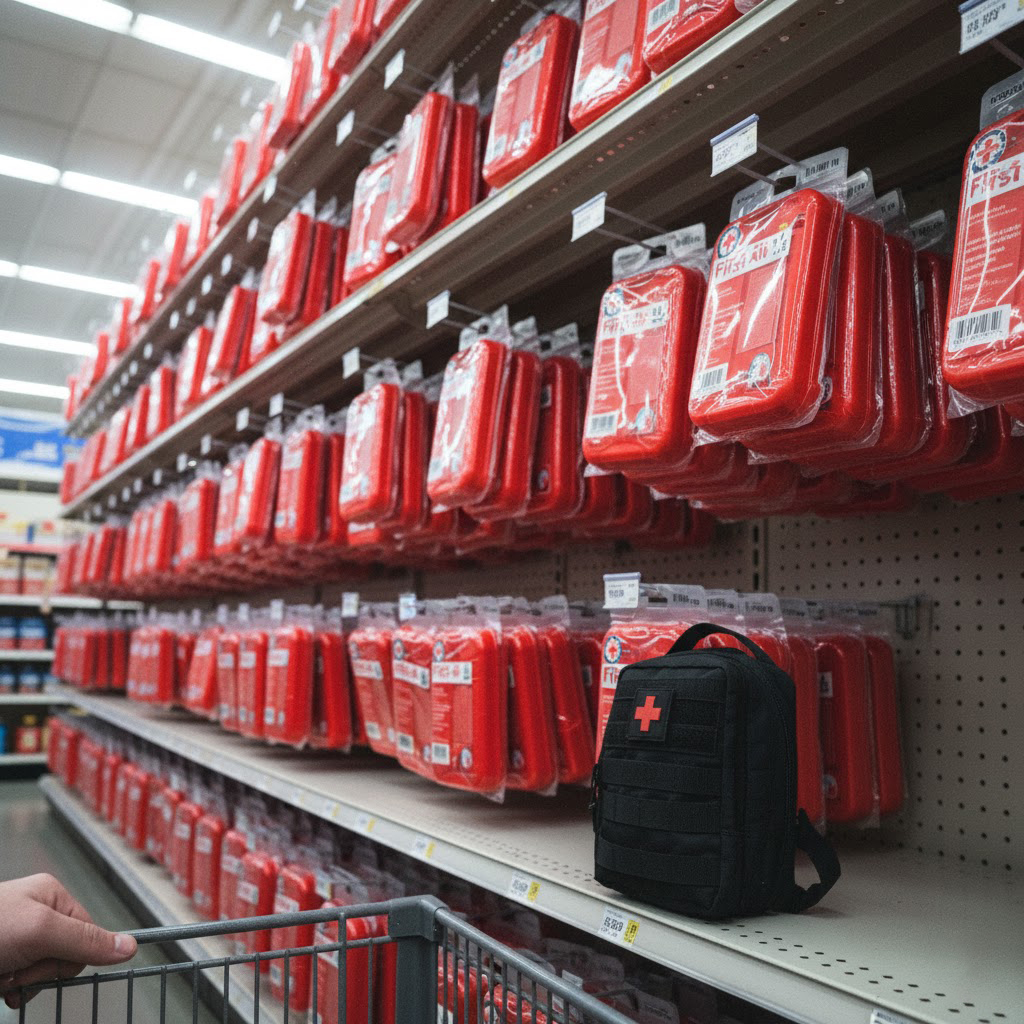
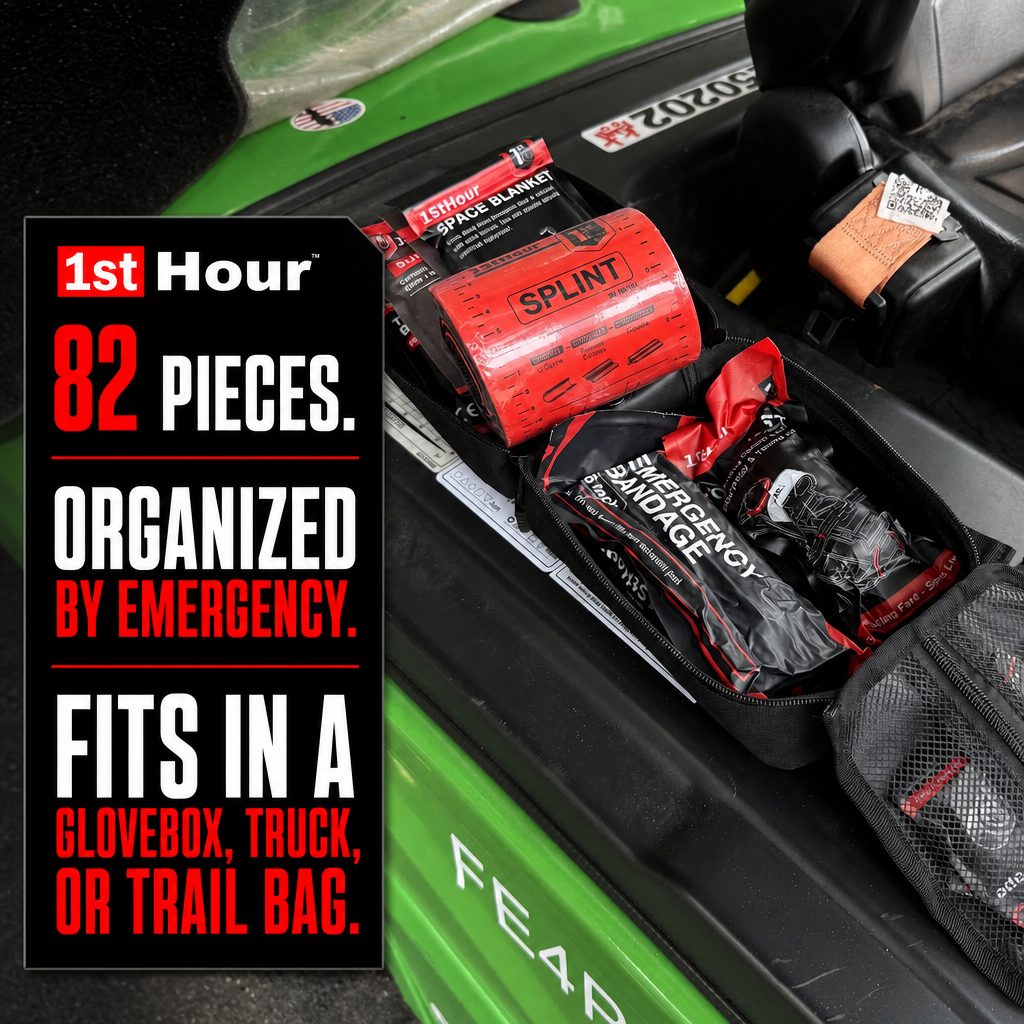
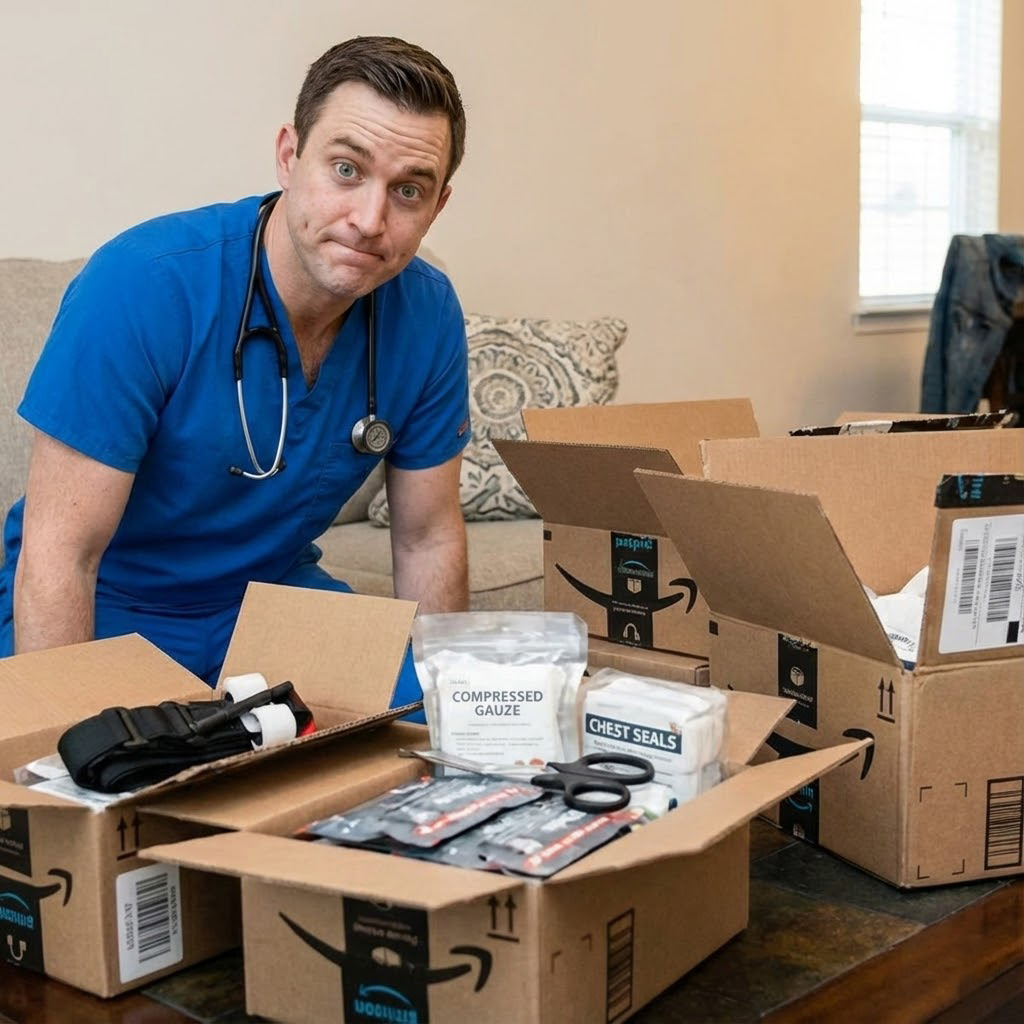
My brother's an ER nurse and when he saw all my Amazon packages for "building a trauma kit," he asked me one question that made me feel ridiculous: "Why are you paying retail prices for individual items when complete kits cost less?" I stared at him. Then at the pile of boxes on my dining room table. Then at my laptop with seventeen browser tabs still open. I didn't have an answer. It had started three weeks earlier when I decided our family needed a real trauma kit for our cars. Not a basic first aid kit. Something serious. Something that could handle a real emergency. I'd done my research. Read articles. Watched videos. Joined forums. Everyone said the same thing: build your own kit so you know exactly what's in it and don't waste money on pre-made junk. Made sense. So I made a list. A comprehensive, carefully researched list based on recommendations from multiple sources. Tourniquet. Pressure bandage. Trauma gauze. Chest seal. Trauma shears. Gloves. Tape. Israeli bandage. Emergency blanket. Fourteen items total. Then I started shopping. The tourniquet alone had seventeen different options on Amazon. Prices from $12 to $38. Reviews were all over the place. Some said certain ones were counterfeit. Others said the expensive ones were overpriced. I spent two hours just researching tourniquets. Then I had to do the same thing for every other item. Which trauma gauze? Which brand of chest seal? Which size pressure bandage? Every item required its own deep dive into specifications, reviews, and comparisons. I'd sit down at 9 PM to "quickly order supplies" and look up at 1 AM, still comparing hemostatic gauze options. My wife asked what I was doing one night. "Building our trauma kit," I said. "Still?" It had been a week. But I wanted to get it right. This was life-saving equipment. I couldn't just grab the cheapest option or trust a random brand. After twelve days of research, I finally placed my orders. Eight different orders. Three from Amazon. Two from medical supply sites. One from a tactical gear store. Two from specialty first aid retailers. Some items shipped together. Most didn't. The packages started arriving over two weeks. I opened each one as it came, cross-referencing with my list, making sure I'd ordered the right specifications. Then came the moment my brother walked in and saw the dining room table covered in boxes. He picked up one of my packing slips. Looked at the price. Picked up another. "How much have you spent so far?" I pulled up my spreadsheet. I'd been tracking everything. "Two hundred and sixty-three dollars. But I'm not done yet. Still waiting on the chest seals and the emergency blanket." My brother went quiet. Then he asked that question that made my stomach sink. "Why are you paying retail prices for individual items when complete kits cost less?" "They don't," I said automatically. "Pre-made kits are either cheap junk or super expensive professional ones." He pulled out his phone, searched for something, and showed me. A complete Trauma First Aid Kit. Everything I had on my list. Professionally assembled. Fifty dollars. I stared at the screen. "That can't be right." "Why not?" "Because I've spent... I've spent over $260 and I'm not even done." He scrolled through the product description. Listed every component. They were all there. "But the quality—" "Is probably the same stuff you bought," he said. "Maybe better, because they're buying in bulk and know which suppliers are legitimate." I felt sick. Not because my brother was being mean. He wasn't. He was genuinely confused why I'd done it the hard way. I was sick because I suddenly realized what I'd actually been doing for three weeks. I'd been researching, comparing, ordering, tracking, and spending a fortune because everyone online said that was the "smart" way. Build your own kit. Don't trust pre-made options. Do the research. But nobody mentioned that doing all that research myself meant: Paying retail price for every single item instead of bulk pricing. Spending dozens of hours comparing options I barely understood. Risking counterfeit items because I couldn't tell the difference. Placing multiple orders with multiple shipping costs. And potentially still missing something because I was working from internet lists instead of professional standards. I pulled up my spreadsheet again and really looked at it. $23 for a tourniquet. $31 for trauma gauze. $18 for a pressure bandage. $27 for chest seals. $8 for shears. $12 for an Israeli bandage. Individual retail prices for everything. Plus shipping. Plus the time cost of researching each item. Plus the mental load of tracking eight different orders. I'd spent three weeks and $263 doing something that was apparently available, complete and professional, for $50. My brother could see me processing this. "The DIY approach makes sense if you're a professional who needs specific items or custom configurations," he said. "But for a standard trauma kit? You're just paying more and working harder." The worst part was I'd felt so RESPONSIBLE doing it this way. So thorough. So careful. I was being the prepared, thoughtful person who didn't just grab the first thing I saw. But I'd been so focused on not getting ripped off by a pre-made kit that I'd ripped myself off instead. I looked at all the boxes on my table. Half of them were still sealed. I hadn't even opened them yet because I was waiting for everything to arrive so I could assemble the kit all at once. Three weeks of work. $263 spent. And I still didn't have a functional trauma kit in my car. I returned everything I could. Some items wouldn't take returns on medical supplies. I ate that cost. Then I ordered the complete Trauma First Aid Kit my brother had shown me. It arrived in four days. When I opened it, everything was there. Organized. Ready to use. Not scattered across eight boxes that I had to assemble myself. Not requiring me to figure out the best way to pack it. Just complete. Professional. Done. I put it in my car trunk that day. And then I realized something that made the whole experience even more frustrating: My wife had asked me two weeks into this project, "Can't you just buy a complete one?" And I'd explained why that wouldn't work. Why I needed to build it myself. Why that was better. But it wasn't better. It was just more expensive, more time-consuming, and more complicated. The myth that DIY is always cheaper had cost me $263 instead of $50. The myth that pre-made kits are all junk had cost me three weeks of research time. The myth that "doing it right" meant doing it myself had kept a trauma kit out of my car for almost a month. I think about all the people doing exactly what I did. Sitting at their computers at midnight, comparing trauma gauze options they don't fully understand. Placing multiple orders, tracking multiple shipments, spending retail prices for individual items. Feeling responsible and thorough because they're "doing the research." Not realizing that they're paying more money for more hassle and potentially ending up with a less complete kit than if they'd just bought one that was professionally assembled. The DIY advice isn't wrong for everyone. If you're a medical professional who needs specific configurations, it makes sense. If you're putting together specialized kits for unique situations, build away. But for most people who just need a solid, complete trauma kit in their car or home? Building it yourself is the expensive, complicated option disguised as the smart one. Nobody talks about this because the DIY community is loud and passionate. They share their builds. They compare components. They debate specifications. And it all sounds so expert and thorough that you feel like you're doing it wrong if you don't follow that path. But I spent $263 and three weeks learning that sometimes the "expert" path is just the hard way. A complete Trauma First Aid Kit with professional components costs about what I used to spend on a single component when I was building my own. Fifty dollars. The difference isn't just money. It's time. It's mental energy. It's the confidence of knowing a professional assembled it with the right components instead of wondering if you ordered the correct specifications. It's having the kit in your car NOW instead of three weeks from now when you finally finish researching and assembling. If you've been down the path I went down—browser tabs open, comparison shopping, trying to figure out which trauma gauze is legitimate—I need you to stop and ask yourself my brother's question: Why are you paying retail prices for individual items when complete kits cost less? There's no good answer. Unless you need something custom, you're just making it harder and more expensive than it needs to be. Get a professionally assembled Trauma First Aid Kit. Put it in your car. And spend your time and money on literally anything else instead of what I did. Because the goal isn't to become an expert in trauma supply procurement. The goal is to have a trauma kit when you need one. And the fastest, cheapest, simplest way to do that is to let someone else do the assembly work. Don't learn this the way I did, staring at $263 worth of boxes and realizing you could have been done weeks ago for a fraction of the cost.
Read If You Need Quality Emergency Gear
Prepare for emergencies with the Tacright Trauma First Aid Kit, designed for rapid response in critical situations. This compact and durable kit includes all the essential tools needed for trauma care, making it perfect for outdoor enthusiasts, tactical professionals, and anyone who values safety an...
LEARN MORELike this ad? Make it yours.
Crush rebuilds this exact creative around your product — your brand, your colors, your offer — in about a minute.