Arthritis Support Community
 Facebook ad: “Feel Like Yourself Again”
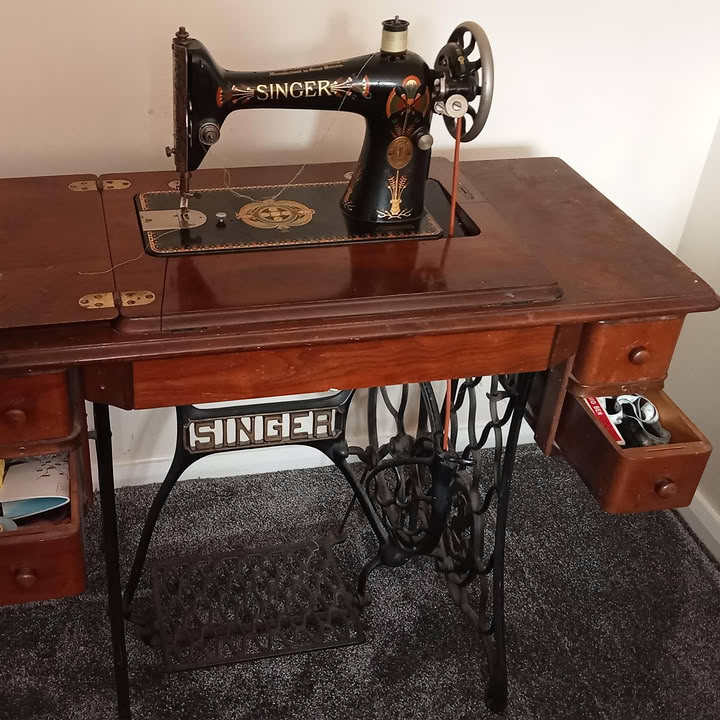
Ran for 14 days, from October 9 to October 23, 2026, the last day Crush saw it.
Run by Arthritis Support Community on Facebook. Crush is not the advertiser and does not verify its claims. See this ad in Meta's Ad Library(opens in a new tab)
Make your own version of this ad
Crush makes it, launches it in your own Meta ad account, scales the winners and pauses the losers.
About this ad
- Meta Ad Library ID
- 1405585481711639
- Platforms
- Facebook, Instagram, Audience Network and Threads
- Relaunches
- 0
Ad text
I hid my hands under the fellowship hall table and told Pastor Ken I couldn't do it. The lie sat between us like a plate of cold coffee. I've been sewing since I was 7 years old. My mother taught me on a Singer she got from her mother. I taught 32 years of first graders how to hold their scissors before I retired. I started the quilt ministry at Northside Baptist Church almost 7 years ago. And there I was, 58 years old, hiding my hands under a folding table like a kid who hadn't done her homework. Pastor Ken didn't push. He's a good man. He said, "Marlene, we'll figure something out. Don't you worry about it." But we weren't going to figure something out. Not really. Because I was the one who did the hard corners. I was the one who taught the newer ladies how to bind an edge. I was the one whose Singer could stitch a straight line at 3 in the morning, and had, plenty of times. And I couldn't hold a needle anymore. That's the truth I couldn't say out loud in a room full of people who counted on me. My name is Marlene Boudreau. I live in Lafayette, Indiana. My husband Wayne passed 4 years ago this April, an aneurysm at 62, in a hospital hallway before they could even get him into a room. I have one daughter, Stacia, and she lives up in Fort Wayne with her two little ones, Emmett and Ruby. I taught first grade at Miller Elementary for 32 years. I retired at 55 because Wayne wanted us to have some time together before the road got too long. We got 8 months. The quilt ministry was something I started the summer after I lost him. My daddy was a Korean War veteran. He came home in 1954 and never talked about any of it. Not once. Not to my mother, not to me, not to the pastor who buried him. He died in 2016 wrapped in a hospital blanket that had a piece of masking tape on the corner with somebody's initials on it. I remember sitting in the funeral home the day after and telling my sister that a man who spent 14 months in a hole in the ground in Korea deserved to die under something better than a blanket with tape on it. That's how the ministry started. That's what it was for. Veterans. Real quilts. Handmade. Cotton batting. Every one of them signed on the back by the woman who made it. We do 40 to 50 a year. Not much, in the big scheme of things. But every one of them goes to a veteran who's fighting for something. Rehab. Chemo. Recovery. Sometimes just old age in a nursing home in Kokomo where the walls are painted the color of dishwater and nobody comes to visit anymore. You put a quilt on that man's bed, and he'll cry. I've seen it. My hands started going about 3 years ago. At first it was nothing. Threading a needle at 6:30 in the evening instead of the 3 seconds it used to take. A twinge when I opened a jar of pickles. A stiffness in the morning that used to walk itself off by the time I got the coffee started. I told my doctor, Dr. Beauchamp. Nice man. Kids in college. He looked at my hands and moved them around and told me it was arthritis, and I was in my 50s, and that's what happens. He said, "Take some Aleve. Wear compression gloves at night. Stay warm." I did all of it. The Aleve tore up my stomach and gave me heartburn so bad I slept on three pillows. The gloves helped for about a week and then didn't. I bought a paraffin wax dipper from Diane's Nail Salon downtown and did the whole hot wax thing every night for 6 weeks straight, and my hands were softer, but they still hurt. I tried turmeric capsules from the Kroger on Sagamore Parkway. I tried fish oil. I tried collagen powder from the Amish store out on Route 25. I tried an infrared heating pad my daughter Stacia sent me for Christmas. I tried CBD cream. I tried epsom salt soaks that made the whole bathroom smell like a hospital. Nothing. By last fall I couldn't unscrew the lid off my coffee creamer without running it under hot water first. I couldn't open the mail without a letter opener. I couldn't hold a pen for more than a few minutes without the writing going shaky. And I couldn't sew. I could still cut fabric. I could still lay out a pattern. I could still baste the layers together with pins the size of small nails, because those didn't hurt so much. But the actual stitching, the fine work, the binding, the tiny in and out motion my mother had taught me to love when I was 7 years old on the back porch of her house in Frankfort, Kentucky, that was gone. My Singer sat covered on a table in my sewing room. I could hear it accusing me every time I walked past. Pastor Ken called me in February. He was excited. Fort Knox had reached out to the association we work with. They were hosting a Wounded Warrior ceremony over Memorial Day weekend, at the base, and they'd asked if any local quilt ministries could provide quilts for 40 servicemen and women who'd be honored that day. 40 quilts. Before Memorial Day. He said, "Marlene, this is what we've been building toward. Can we do it?" I said yes without thinking. I hung up the phone. I sat on my kitchen stool. I looked at my hands. Then I cried. 40 quilts in 12 weeks. With 6 women in the ministry, plus me. That was doable if I was pulling my weight. That was the number that only worked if I was making 7 or 8 of those myself. And I could barely thread a needle. I didn't sleep that night. I didn't sleep much for the next 4 or 5 nights either. I kept thinking about my dad. About the men I'd seen cry when I put a quilt on their bed. About Pastor Ken calling this "what we've been building toward." And I kept looking at my hands. The next Wednesday night was the ministry meeting. I got there early to set up the coffee. I remember the fluorescent light in the fellowship hall was flickering, and Doris Vandekamp had brought her banana bread, and everything smelled like coffee and Pledge and warm bread. Pastor Ken came in to say hello. He always did. I asked if I could talk to him for a minute after everyone left. I sat across from him at 8:47 that night and I told him I couldn't do it. I told him my hands were done. I told him I could still cut and pin, but I couldn't do the stitching, and I wouldn't be able to make the 8 quilts I was supposed to make, and I was so sorry. I hid my hands under the table the whole time. He was so kind. He said we'd figure it out. He said God provides. He said maybe the ceremony could be moved or the number could be reduced. But I knew. 40 servicemen were expecting 40 quilts. If we came up short, we came up short. And I would know I was the reason. Her name was Piper. 22 years old. From Kokomo. Nursing student at IU Health Arnett's clinical program. Her grandpa was Roy Whitecotton, Vietnam vet, one of the 40 who'd be getting a quilt at the Memorial Day ceremony. Piper started coming to the ministry that spring to help write out the little cards we tuck into the corner of each quilt with the veteran's name and years of service. Roy couldn't write anymore because of tremors, so Piper was doing his. She showed up the Wednesday after I told Pastor Ken I was quitting. Nobody knew but Ken. I hadn't been able to say it out loud to the ladies yet. Piper sat across from me at the folding table and asked if I could help her spell "Iowa" because Roy had spent basic training there and it was going in his card. I told her how. Then she watched me pick up a spool of thread and put it down without threading it. She watched me flex my fingers under the table. She watched me the way nursing students watch. Not staring. Just seeing. She said, "Miss Marlene, is your arthritis getting worse?" I told her the whole story. I don't know why. Something about the fluorescent light and the fact that this girl was 22 years old and had already spent a summer working in a nursing home and had seen everything. She listened. When I was done, she said something I didn't expect. She said, "It's not really about the joints. Not the way people think it is. It's about what's feeding the joints." I said, "What?" She said, "The cells in your joints, they need cellular energy to work. To maintain the cartilage. To keep the joint lubricated. To manage the inflammation your body is throwing at them. And that cellular energy has to come from somewhere." "Where?" I asked. "Your mitochondria," she said. "Your body's cellular energy system. And when those aren't working the way they used to, your joints are one of the first places you feel it. Because the cells in there stop getting what they need to do their job." I remember I said, "I don't know what a mitochondria is." She laughed. She wasn't laughing at me. She was 22 and thrilled that someone was actually asking her something from school. She said, "Think of it like this. Imagine you're building a house. You've got the lumber delivered. You've got the crew. You've got the nails. But the job site has no power. The saws don't work. The drills don't work. The lights are out. So nothing gets built. You've got everything you need except the one thing that makes it all run." She said, "That's what happens to your joints. All the raw materials are there. But without cellular energy, the cells can't do the maintenance work. They can't manage the inflammation. They can't hold the cartilage together. They can't keep the joint lubricated. And it shows up as pain. Stiffness. Hands that don't work anymore." I sat there and I felt something loosen behind my sternum. Because for 3 years, every single person had told me my joints were the problem. My knees. My hands. My wrists. The joints themselves. Take a pill for the joints. Wrap the joints. Warm the joints. Rub the joints. Nobody had said the words "not enough energy." Nobody had said the words "the joints aren't the source." I said, "So what do you do about that?" She said, "Have you heard of amla?" I said, "No." She pulled her phone out. She said, "It's a berry. From India. My clinical instructor talked about it in one of our lectures on inflammation. It's not new. Ayurvedic practitioners have been using it for thousands of years. But there's real research now on what it actually does inside your cells." She said, "Amla contains compounds called emblicanins. And what those seem to do is help activate something called AMPK, which is one of the main pathways your body uses to support mitochondrial function." "Say that again slower." "AMPK. It's like a switch. When it's active, your mitochondria can start producing cellular energy more efficiently. The way they did when you were younger. And when your mitochondria are working better, cellular energy can flow back to the cells that need it. Including the cells in your joints." "And those cells can actually do their job again?" "They can start doing their maintenance work again. Managing inflammation. Supporting cartilage. Working with the natural repair processes your body already has. It doesn't override anything. It doesn't force anything. It just helps support what your body is already trying to do underneath all this." She said, "And there's another piece. Amla has one of the highest antioxidant profiles that's ever been measured in a food. Which matters because oxidative stress is what wore your mitochondria down in the first place. It's what wears them down in everybody. So you're not just supporting the mitochondria. You're helping protect them while they recover." I said, "Why hasn't my doctor told me any of this?" She said, "Because it's a supplement. Not a drug. Doctors are trained in drugs. There's a whole other world of things that support the body's own systems, and unless a doctor takes the time to look into it, they don't know." She said, "My mom takes one every day. I got her onto it about a year ago. She's a bookkeeper. Her hands were going the same way yours are. She's back to typing. She's back to doing her cross stitch." She pulled up a website on her phone. She said, "It's called Auniva. Auniva Amla. Made in the USA. My mom gets it from auniva.co/amla/33. There's a 90 day guarantee. If it doesn't do anything for you, you send it back and they refund you." I wrote it down on the back of one of Roy's cards. auniva.co/amla/33 I didn't sleep well that night either. But this time it wasn't the same kind of not sleeping. It was the kind where you feel something starting to shift. I ordered a bottle at 6:22 in the morning. Free shipping. It arrived on my doorstep 3 days later in a plain brown box. Two capsules a day. That's what the label said. I took the first two with my coffee, and I sat on the couch, and I waited for something to happen, and of course nothing did. Because that's not how any of this works. Week 1, I didn't notice anything. I want to be honest about that because I've read too many of these stories where the person feels a bolt of lightning on day 3, and I don't trust those. I didn't feel anything for the first 7 or 8 days. Then somewhere around day 10, I got out of bed one morning and I made it to the coffee pot before I noticed my hands weren't hurting. I stood in the kitchen holding my coffee mug and I looked at my hands and I thought, huh. That was it. Just huh. Week 2, I buttoned my blouse on Sunday morning without cursing. Anyone who has hand trouble knows exactly what I'm talking about. Little buttons. Little holes. Little fingers that won't cooperate. It had turned into a 12 minute ordeal that had me half in tears every Sunday morning trying to be presentable for church. That Sunday, I buttoned the whole thing in under a minute, and I didn't even notice until I was halfway to the car and realized I hadn't fought with anything. Week 3, I threaded a needle on the first try. I sat down at my kitchen table on a Tuesday afternoon and I pulled a spool of white thread out of my basket and I threaded a size 8 sharp on the first attempt. I sat there and I stared at it. Then I threaded another one just to make sure. Then I called my daughter Stacia and I cried into the phone for 4 minutes without saying anything, and she thought something bad had happened. Week 4, I uncovered the Singer. I took the sheet off. I plugged it in. I ran a scrap of cotton through it for 45 seconds and then I turned it off, and I went out to the porch, and I sat there for an hour just breathing. Because it wasn't over. My hands weren't perfect. They still got tired. They still got stiff sometimes when the weather changed. There were still things I couldn't do the way I could when I was 45. But they worked. They worked enough. Week 5, I stitched my first quilt binding in 8 months. I did it in one sitting. 3 hours at the machine. Small breaks. A cup of tea. Then back at it. When I stood up my back hurt because I'd been hunched over. But my hands were fine. Week 6, I made 2 whole quilts. Week 7, I made 2 more. By the end of week 10, I had finished all 8 that I was supposed to make. The ministry finished 34 of the 40. Doris Vandekamp did an extra one on her home machine to get us to 35. Marion Prather at Grace Baptist over in West Lafayette heard we were short, and her ministry sent us 5 more of theirs to add to ours. We had 40 quilts by Memorial Day weekend. The ceremony was at Fort Knox on a Saturday morning. 88 degrees. Not a cloud. Roy Whitecotton was in a wheelchair on the front row. Piper was standing behind him. Roy was 78 years old and he'd served 2 tours in Vietnam and lost most of his hearing to a mortar round, and he cried when they laid the quilt across his lap. Piper looked at me across the crowd and she smiled. I stood there in the back in the shade of a big oak tree and I looked down at my hands. They were tired from the drive. They were tired from carrying the box of quilts. They weren't the hands of a 25 year old. They weren't even the hands of a 45 year old. But they had made 8 quilts in 10 weeks. They were mine again. If you are reading this and any of it sounds like you, I want you to hear something. Your joints are probably not the source of the problem. They're where you feel it. But they're not where it started. Somewhere underneath all of it, your cells are asking for the energy they used to have. And when they don't have it, everything downstream starts to slow down. Your hands. Your knees. Your hips. The little things that used to be automatic. Auniva Amla is not a drug. It is not a painkiller. It is not going to knock anything out. What it does, based on the research, is help support the pathway your body uses to make cellular energy. That's it. The rest is your body doing what it already knows how to do, once it has what it needs. It comes in a 30 day bottle. Made in the USA. Two capsules a day. Free shipping. And they back it with a 90 day money back guarantee. If you take it for a full 3 months and you feel nothing, you send it back and they refund you. Not "we'll consider it." A refund. That's the promise. You can find it here. 👉 auniva.co/amla/33 P.S. I was standing in a fellowship hall in Lafayette, Indiana at 8:47 on a Wednesday night in February, hiding my hands under a table, telling my pastor I was done. I want you to remember that if you are hiding your hands. Or your knees. Or whatever it is that's holding you back from something that used to be easy. There is a lot of life left. And a lot of it is still yours if you can get the underneath of things working again. P.P.S. About the guarantee. I want to make sure this lands, because I almost didn't order the bottle for exactly this reason. I had spent hundreds of dollars over 3 years on things that didn't work. Turmeric that did nothing. Fish oil that did nothing. A paraffin wax kit from Diane's that did nothing. Not one of those things came with a refund. You bought them. You tried them. That was that. Auniva says you have 90 full days. You take it. If it doesn't do anything for you, they send your money back. That is a different kind of promise than anything I'd been offered before. P.P.P.S. Piper told me last month that they're having trouble keeping bottles in stock because word is getting around. I don't know if that's true or not. All I know is what happened for me. If you're going to try it, don't wait 3 more years like I did to make the first move. Order the bottle. Take it for a month. See what happens with your hands, or your knees, or whatever it is. See if the underneath of things starts to shift. 👉 auniva.co/amla/33
Where the ad sends people
auniva.co
Feel Like Yourself Again
"This actually worked, thank you so much." - Emily T.
Learn more: auniva.co(opens in a new tab)