
Inactive· since Jun 3, 2026
- 63
- days it ran
- 2
- relaunches
- 16,648
- EU reach
Ad copy
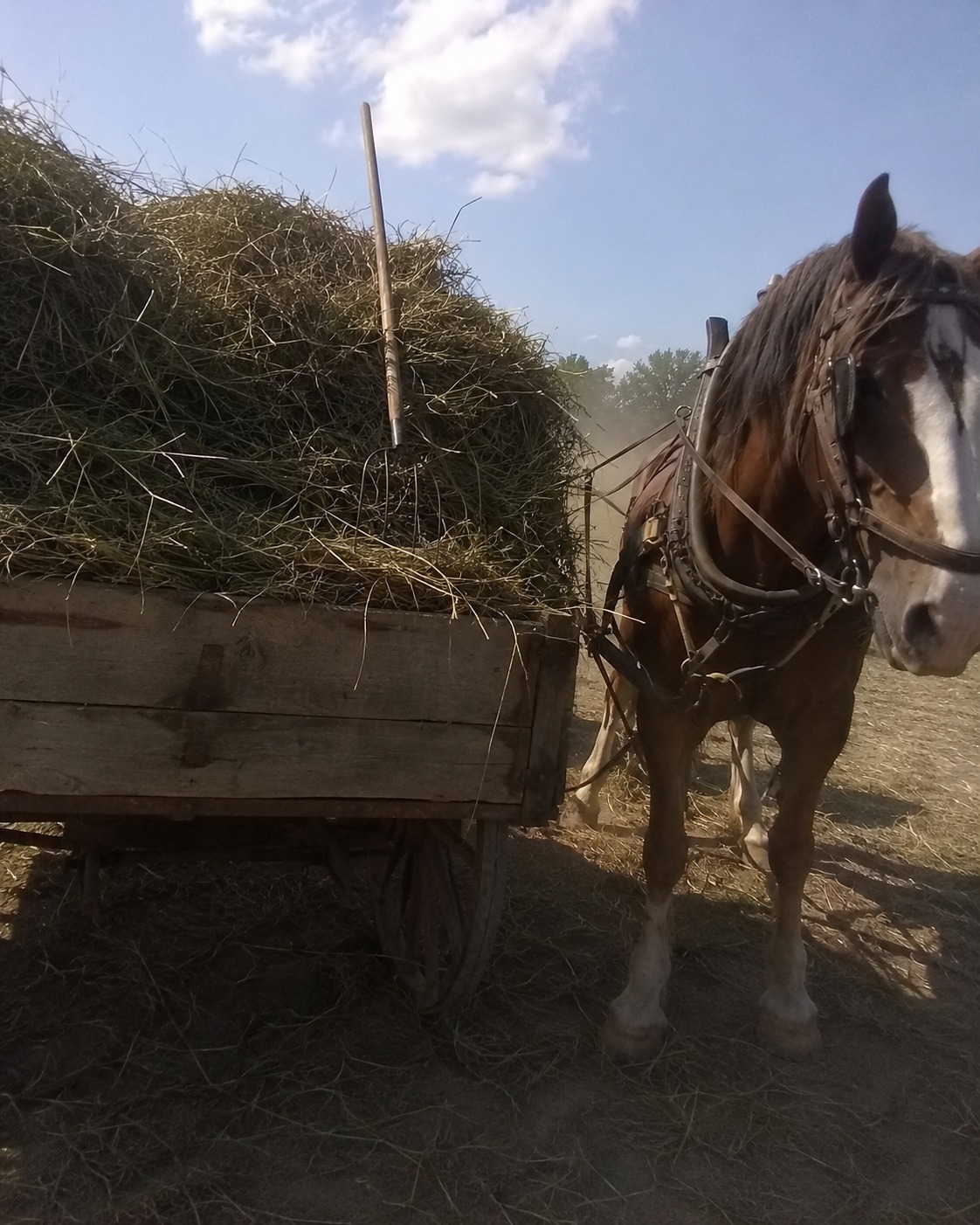
My son married into a community where the eighty-year-olds still bring the harvest in by hand. That was the day I saw what the years had quietly taken from my husband. My son Greg fell in love with a woman named Sarah. Sarah is Plain. Old Order — a farming valley about three hours from us, where the fields are worked with horses and the day ends when the light does. When Greg told us he was marrying her and moving out to that valley, I won't lie to you. I had a good cry about it, and not all of it was the happy kind. A mother pictures a certain life for her boy, and that life usually has a phone in it she can call. But Greg was certain, and Sarah was gentle and bright, and so my husband Dean and I started driving out there to be part of their world a few times a year. It was on one of those visits — a harvest day, of all things — that I finally saw the thing about Dean I'd been refusing to see for years. Let me tell you about Dean first. Dean is sixty-seven. And for a long stretch of our marriage, the biggest worry in our house was his heart. About eight years back, at a routine physical, his cholesterol came up higher than the doctor liked. It scared him. His own father hadn't made it past sixty, and Dean was not going to go the same way if he could help it. So Dean did what Dean does, which is take a thing seriously and not let go. He overhauled how he ate. He started walking every single morning. He worked with his doctor, did everything that good man asked of him. And he got his numbers right back where they were supposed to be, and he kept them there, year after year, like a job. His doctor was thrilled with him. "You're doing everything right, Dean," he'd say at every visit. "Keep it exactly there." And Dean did. That was the strange part of what came next. Because somewhere in those same years — while his heart numbers stayed right where the doctor wanted them — the rest of Dean started going quiet. Not sick. I want to be careful to say that. Nothing you could circle on a chart. He just started... dimming. The morning walk that used to set him up for the day started wearing him out instead. He'd come back and need to sit before he could face breakfast. He got slower in the afternoons. He'd sink into his chair after supper and be asleep before the dishes were dry. He used to be a man who whistled while he worked in the yard. The whistling stopped. The little projects — the birdhouse, the garden fence, the thousand small fixes a house always needs — started piling up undone. He'd look at them through the window and not get up. Here was a man who'd done everything right for his heart for eight years. And the life seemed to be leaking out of him anyway. We did the sensible thing about it, the way we always had. Dean told his doctor, plainly, that everything looked good on paper but he felt like the get-up-and-go had drained out of him. And the doctor was honest with him. He ran the full workup — the send-away panels, the whole set. And it all came back good. Better than good, for a man who'd been guarding his heart for the better part of a decade. He told Dean his numbers were right where they should be and his heart was in fine shape, and that some of the slowing-down comes with the years. Keep walking, keep eating well, come back if anything changes. He wasn't dismissive. He was, if anything, proud of how Dean had managed himself. He just didn't have a next thing to hand us. And he was decent enough not to invent one. So we'd come home with the best report you could ask for. And I'd watch my husband fall asleep in his chair before the news was over. There was a whole layer of what was happening to Dean that no panel was measuring. Nobody had a tool for it. That was the thing I'd lie awake turning over. Now back to that harvest day. I have never seen anything like an Old Order harvest. The whole community comes. Wagons and horses and men in the fields and women at long tables and children underfoot everywhere. The work is done the old way — by hand, by back, by team. And here is the thing that stopped my heart. The men out in those fields, pitching and hauling and keeping the wagons moving — a great many of them were Dean's age. Older. Men in their seventies, with long gray beards and faces like old saddle leather, working through the heat of the day like the work was nothing at all. Upright. Easy. Lit from the inside. And there was my Dean. He went out to help, because that's who he's always been. He took a pitchfork and worked alongside them for a little while, proud as anything. And then I watched him slow. I watched him stop, and lean on the fork, and press a hand to the small of his back, and look for a place to sit in the shade. A man younger than half the men in that field, sitting down while they kept on. And I saw on his face that he was seeing it too. An older man left the wagons and came and sat down beside Dean in the shade. This was Samuel. Sarah's grandfather. Eighty-two years old, hands like fence rails, still bringing in his own hay. He didn't make a thing of Dean sitting down. He just sat, and the two of them watched the harvest move across the field, and after a while Samuel said something I have turned over in my mind ever since. He told Dean about the spring that fed his farm. A spring his great-grandfather had found, that had given clean water for over a hundred years. And the reason it still gave, he said, was that every generation kept the channel clear. You don't just take the water, he said. You tend the way it flows. "A man's the same," Samuel said. "You can guard the well all you want. But if the channel silts up, the water can't get where it's needed. You've got to keep things flowing, not just keep them safe." He wasn't selling a thing. He wasn't accusing anybody of anything. He was just an old farmer telling a younger man the one thing he knew for certain. Keep the channel clear. Dean was quiet the whole drive home. So was I. It was our daughter Lauren who carried it the rest of the way. Greg's sister. She'd been at that harvest too, and she'd watched her father sit down in the shade with the same ache in her chest that I had. I need to be careful how I tell you this part, because Lauren was careful with me. The first thing she said was, "Mom, I'm not a doctor. I teach high school chemistry. Nothing I'm about to say is medical advice. Promise me you'll run all of it past Dad's actual doctor before he does anything." I promised. Lauren has never lost the habit of reading the real thing instead of the noise. She'd started reading after the harvest, she said. About the ordinary wear the years put on a body, underneath the numbers — down at the level of the cells, where no routine panel looks. And about a growing body of research on molecular hydrogen and cellular wellness. Quiet research. Not flashy. Just a steady interest in something very small. "Molecular hydrogen is the smallest molecule there is, Mom," she said. The idea, as best she could put it, was that it might support the body's natural antioxidant balance, and support healthy circulation, and support healthy cellular energy. I thought about Samuel on that bench. Keep the channel clear. Keep things flowing, not just safe. That was the layer nobody had a tool for. "I'm not telling you it's a miracle," Lauren said. "I'd never do that to you. I'm telling you what I read, and I'm telling you to ask Dad's doctor, and then the two of you decide." So that's exactly what we did. And it's the part I'd most want you to copy. Before Dean put one new thing in his body, we made two phone calls. I called our pharmacist first — same fellow for twenty years, who doesn't sugarcoat anything. I told him exactly what I was looking at. And I asked whether there was any reason it'd be a problem alongside everything Dean was already doing. He looked into it and told me there was nothing he'd be concerned about as an addition to Dean's routine. Then Dean brought it to his own doctor at his next visit. He said it plainly: "I'm thinking of adding this. Not instead of anything you've got me doing. On top of all of it. That sensible?" The doctor said it sounded reasonable. And that adding it to whatever else he was already doing — not replacing any of it — was a fine thing to try. Two careful people, both saying the same thing, before we spent a dime. That was the green light I'd been waiting for. The one Lauren had read about, and the one we landed on, is called PrimeCell H2. It's a rapid-dissolve tablet. You drop it into a tall glass of cool water. It dissolves and releases the hydrogen. And you drink it fresh, right away. Lauren was firm about that part. Cool water, fresh, drunk in the moment. Hydrogen is the smallest molecule there is, she said. It escapes the second it's exposed to heat or left sitting out. So you don't mix it and walk away. You drink it right then. One tablet. One glass. Once a day. And I want to be clear about what we did and didn't change. We didn't change a single other thing. Same doctor. Same appointments. Same morning walks, same careful meals, same everything that good man had Dean doing for his heart. We just added the glass of water to the morning, next to the coffee, and got on with our lives. And I'll say this plainly, because I know how the harvest part might sound: the Plain folk don't use this. This was no old country secret. It was my chemistry-teacher daughter, reading at her kitchen table at night, the way she always has. The harvest just opened my eyes. The reading came after. Now I have to be honest with you, because honesty is the only thing worth anything in a story like this. Nothing happened the first morning. Or the third. Dean grumbled that he was "drinking fizzy water to keep up with eighty-year-olds" and I nearly let him quit twice. I can't tell you which week it turned. I truly can't. But somewhere in there, I came downstairs one morning and heard a sound I hadn't heard in years. Whistling. From the backyard. Dean was out there with the birdhouse he'd been meaning to finish for two summers, humming and whistling and making a happy mess of sawdust. At an hour when he used to still be working up the nerve to face the day. I stood at the kitchen window with my coffee and watched him a long while. I didn't want him to catch me at it. The second thing happened a few weeks on, back out in the valley. There was another gathering — a building going up, the whole community pitching in. And Dean didn't stay by the tables with me and the women. He went out to the work. I watched my sixty-seven-year-old husband carry boards and pass tools and keep pace, more or less, with men who'd done this kind of thing every day of their lives. He had to rest. He's no young man and he never will be again. But he was out there. Upright. In it. Lit from inside, a little, the way those old men had been lit at the harvest. Samuel caught my eye across the yard and gave me a small nod. Just one. Like he'd known the channel could be cleared all along. The third thing is the smallest, and it's the one that undid me. It was the morning walk. I noticed, one ordinary day, that Dean had come back from his loop and not had to sit down. He'd come in, hung up his jacket, and gone straight on with the morning. The walk that used to take everything out of him had quietly gone back to being the thing that set him up for the day. I can't prove to you any of it was the tablet. I won't pretend I can. We were doing a hundred things right, the things his doctor told him, the things he'd guarded his heart with for eight years. Maybe one of them finally caught. Maybe it was the one we added. But we'd been doing all those other right things for years while the life only kept leaking out of him. And somewhere after the glass of water, quietly, it came back up. That's the honest version. It's the only one I'll give you. At Dean's next visit, the doctor went through everything. He said Dean's heart was in fine shape, his numbers were right where they should be, and to keep doing exactly whatever he was doing. The same good report he'd given for years. I didn't say a word about any of it. I just took Dean's hand on the way out to the truck. I've thought a lot about why the life came back into my husband. And the most honest answer I have is that I don't fully know. So I'll just tell you what the product is for, plainly. PrimeCell supports healthy circulation. It supports healthy cellular energy. It supports the body's natural antioxidant balance. That's not a promise about your husband, or his heart, or anyone's. It's not a promise about anything. It's just what it's for. Some people notice something in the first week or two. Others take a lot longer. Some, I'd imagine, don't notice much at all. Bodies are different. Dean's is just one body, with one story. And this is something you do consistently, over time. The cellular processes it supports build up gradually, not overnight. It isn't a pill you reach for on a worn-out afternoon. It's a glass of water you drink every morning whether you feel anything that day or not. It's the thing Samuel was talking about on that bench. Not just guarding the well. Keeping the channel clear, a little every day. So here's what I'd tell you, if you were sitting at my kitchen table. If the man you love — or you yourself — has done everything right, guarded the numbers, watched the heart, walked the walks and eaten the careful meals, and the life still seems to be quietly leaking out, and the reports keep coming back good, and the doctor has run out of next things to hand you: First, talk to your doctor or your pharmacist. Both, if you can. Especially if you're already taking something for your cholesterol, your blood pressure, or your heart. Ask them the same plain question I asked. Is this a sensible thing to add to what we're already doing? And they may well say yes — then it really is just a tablet and a glass of cool water in the morning. Added to everything else you're already doing, not replacing any of it. Then give it a few weeks. Don't watch it like a pot. Just set the glass next to the coffee and let his body keep its own time. Be patient with him. He's been patient with you for a long while. That's the whole of it. That's what an old farmer on a bench, and a chemistry teacher at a kitchen table, between them did for me. And I'd be a poor sort of person not to pass it on. P.S. Greg and Sarah are settled into the valley now, and we've stopped counting the visits. Dean and Samuel have become a sort of unlikely pair — a retired city man and an old Plain farmer, sitting on a bench at the edge of a field, talking about water and weather and the right way to keep a thing flowing. I make myself useful at the tables and watch the two of them out there and I don't have the words for what it's worth to me. P.P.S. I keep a spare box of it in the cupboard now. PrimeCell is a small company and they've sold out before, and I don't care to get down to the last few tablets and have to think about it. I'd rather it just be there in the morning, next to Dean's coffee. P.P.P.S. Here's exactly what I'd do, in order. Call your doctor or pharmacist first and ask if it's a sensible thing to add to what you're already on. If they say yes, drop one tablet into a tall glass of cool water in the morning and drink it right away while it's fresh. Don't change anything else you're doing — just add this on top of it. Then give it a few weeks. Some people notice something in the first week or two. Others take longer. Some bodies take their own sweet time. Be patient. P.P.P.P.S. PrimeCell H2 has a 90-day money-back guarantee. If you're not satisfied for any reason at all, every penny back, no questions asked. I think that's a sensible policy for a supplement. It gives you enough time to actually see whether it does anything, instead of deciding in a week. I'd take the full ninety days before making up my mind. P.P.P.P.P.S. Dean finished the birdhouse. It's crooked and the roof leaks a little and the wrens moved in anyway, which he takes as the highest possible compliment. He's already talking about building Sarah and Greg a proper one for the valley. I came out the other morning and he was whistling over the sawdust, and I just stood in the doorway and let him whistle. That's not a headline. It's just a small quiet thing. But the small quiet things are the ones worth telling someone about. https://track.getamalahealth.com/5548c06d-d9c3-4785-b466-fec64a6fdb28 The people and events depicted in this ad are illustrative and not based on any specific individual. Individual experiences vary. These statements have not been evaluated by the FDA. This product is not intended to diagnose, treat, cure, or prevent any disease.
Fix Yourself at the Cellular Level
PrimeCell H2 is a next-generation molecular hydrogen tablet formulated to support your body's natural antioxidant defenses — helping you feel sharper, more energized, and more like yourself.
LEARN MORELike this ad? Make it yours.
Crush rebuilds this exact creative around your product — your brand, your colors, your offer — in about a minute.