
Active· since Apr 5, 2026
- 163
- days running
- 0
- relaunches
Ad copy
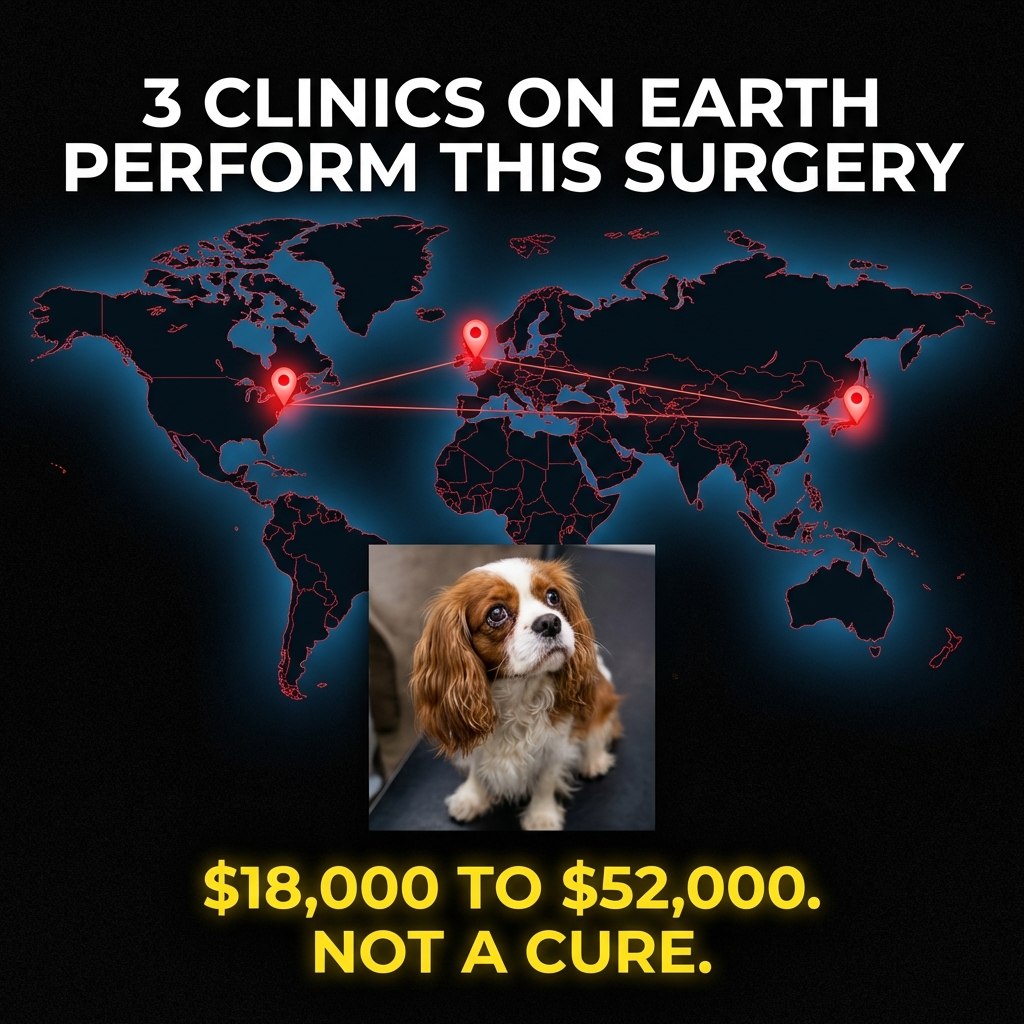
There are only three clinics on the planet that will perform open-heart surgery on a dog. Three. In the entire world. The cost is $18,000 to $52,000. The waitlist is months long. Most dogs do not qualify. And even if yours does, it is not a cure. It is a repair that buys time. If you own a Cavalier King Charles Spaniel, this is the last stop on a road your dog is already on. And nobody is telling you about the first stop because there is no money in it. My name is Dr. Nathan Cole. I am a board-certified veterinary cardiologist in Charlotte, North Carolina. I have practiced for 17 years. I have referred dogs to those three surgical clinics. I have sat across from owners who mortgaged their homes to pay for it. And I have watched owners who could not afford it say goodbye to their best friend on a Tuesday afternoon because no one told them there was anything they could do five years earlier. I am done watching that happen. Over 90% of Cavalier King Charles Spaniels develop a condition called mitral valve disease by age 10. Not "are at risk." Not "some of them." Over ninety percent. It is the single most predictable disease in all of veterinary medicine. If you own one, your dog will almost certainly develop it. That is not me being dramatic. That is the published research. Here is what is happening inside your dog right now. Your Cavalier's heart has a valve called the mitral valve. It opens and closes with every single heartbeat, keeping blood moving in one direction. In Cavaliers, the collagen holding that valve together is genetically defective. Weaker than virtually any other breed. The leaflets thicken. They warp. They stop closing. Blood starts leaking backward through the valve. Every beat. Your dog's heart has to work harder to push the same amount of blood. So it grows. The bigger it gets, the more the valve stretches open. The more it stretches, the worse the leak gets. This cycle does not slow down. It does not reverse. It only accelerates. And by the time your vet puts a stethoscope on your dog's chest and hears a murmur, that cycle has been running for months. Sometimes years. Let me be blunt about what happens next. Stage B1: your vet hears a murmur. You start monitoring. $385 to $560 per year just to watch it get worse. Stage B2: the heart is visibly enlarged on imaging. Medications begin. $1,700 to $2,500 per year. Stage C: congestive heart failure. Emergency visits. A stack of daily medications. Oxygen cages. $4,000 to $8,000 per year. Every year until the end. And if your dog is one of the rare cases that qualifies for open-heart surgery? $18,000 to $52,000. One shot. Three clinics in the world. No guarantee. That is the road. Stage by stage. Dollar by dollar. And nobody mentions it until you are already on it. But the money is not even the worst part. The worst part is what it does to you. The 2 AM panic when you hear coughing from the bedroom. Counting her breaths while she sleeps because your vet told you to track the respiratory rate. Sitting in your car after the appointment because you cannot drive while you are crying. Googling "how long do Cavaliers live with heart failure" at midnight and wishing you hadn't. The constant, grinding weight of watching the dog you love deteriorate and knowing that every single day you are one step closer to a conversation you are not ready to have. That is what Stage C feels like. And it starts the moment you hear "murmur." So why am I telling you this? Because there is a window before all of that. A window where your Cavalier's valve is degenerating but no stethoscope on earth can hear it yet. A window where your vet says "she sounds perfect" and you drive home believing it. That window is where this story either becomes a crisis or stays manageable. Your vet is not lying to you. They genuinely cannot hear it yet. But the absence of a murmur does not mean the absence of disease. In Cavaliers, it never has. The veterinary system has a protocol for what to do after the murmur. It does not have one for before. There is no billing code for "your dog's breed guarantees this condition, let's get ahead of it." The system waits for damage, then responds. Since 2014, when the ACVIM last updated their cardiac staging guidelines, cardiology has learned things that general practice has not caught up with yet. A GP vet updates cardiac knowledge every 3 to 5 years. A cardiologist reads new research every single week. We now know that valve degeneration starts years before it is audible. We know specific nutrients can support valve tissue during that silent window. CoQ10 in the ubiquinol form. Not ubiquinone, which is what you will find in 90% of products on Amazon, with 70 to 80% lower absorption. Ubiquinol supports mitochondrial energy production in the cardiac cells that are already working overtime to compensate for a failing valve. Omega-3 fatty acids. Hawthorn berry extract. D-Ribose. Magnesium. This is not guesswork. This is what the current research on MVD specifically points to. And here is what will make you angry. Most "heart health" products for dogs are built around taurine and L-carnitine. Every bestseller on Amazon. Every recommendation in every Facebook group. Taurine and L-carnitine support DCM. Dilated cardiomyopathy. A completely different heart condition where the muscle weakens. Your Cavalier does not get DCM. Your Cavalier gets MVD. The valve degenerates. Different structure. Different mechanism. Entirely different nutritional needs. CavalierHealth.org writes that most commercial heart products contain "unnecessary ingredients, such as taurine and L-carnitine in sizeable quantities, and way too little quantities of CoQ10 and no D-Ribose." You have been sold the wrong solution for the wrong problem. And nobody corrected it because nobody was paying attention to the difference. Let me tell you about a Blenheim named Lucy. Lucy's owner Sarah called my office when Lucy was 5. No symptoms. No cough. No lethargy. Sarah had been scrolling through a Cavalier group at midnight and stumbled on someone's post about the cost of heart failure treatment. The numbers terrified her. She called her vet the next morning. Her vet listened to Lucy's chest and said, "She sounds wonderful." Sarah did not feel wonderful. She booked a cardiologist appointment anyway. I ran an echocardiogram. Lucy had early valve leaflet thickening. Subtle but measurable. No murmur. Her regular vet would not have caught it for another year, maybe longer. I started Lucy on the healthy heart support chews I now recommend to every single Cavalier owner who walks through my door. One chew per day. Twelve months later, her echo was stable. At 24 months, still stable. No progression. I am not promising you a miracle. MVD is genetic. The collagen defect is baked into this breed and nothing erases it. These are nutritional support chews, not a replacement for your vet or prescribed medications. But I have treated thousands of Cavaliers. And this is the one thing I reliably see help delay progression and give owners something they did not think was possible: peace of mind. Not lying awake counting breaths. Not dreading the next appointment. Not wondering whether you should have done something sooner. One chew a day and the knowledge that you started before the system told you to. No matter what stage your Cavalier is at right now, whether you have never heard the word murmur or you are already deep into treatment, this is what I tell every owner who sits across from me. Three clinics in the world do open-heart surgery on dogs. You do not want to need them. The $52,000 bill is the end of a road that starts with silence. With a valve that is degenerating right now while your vet says "she sounds fine." You cannot change the genetics. But you can change when you start. Whether your Cavalier has a murmur or not, her valve needs support. That is just the breed. One chew. Every day. Starting now. weston-animal.co/products/h-chews P.S. Three clinics. $52,000. Months-long waitlist. That is the end of the road nobody tells you about. The beginning is one chew per day while your vet still says "she sounds fine." Over 90% of Cavaliers develop mitral valve disease. The breed is the diagnosis. Start now: weston-animal.co/products/h-chews P.P.S. Do not go to Amazon and search "heart supplement for Cavalier." You will find 50 products loaded with taurine and L-carnitine. Those are for DCM, a completely different condition than what your Cavalier gets. Your dog needs CoQ10 in ubiquinol form, omega-3, hawthorn, D-Ribose, and magnesium. The right ingredients for the right disease: weston-animal.co/products/h-chews
Like this ad? Make it yours.
Crush rebuilds this exact creative around your product — your brand, your colors, your offer — in about a minute.