
Active· since Apr 5, 2026
- 162
- days running
- 0
- relaunches
Ad copy
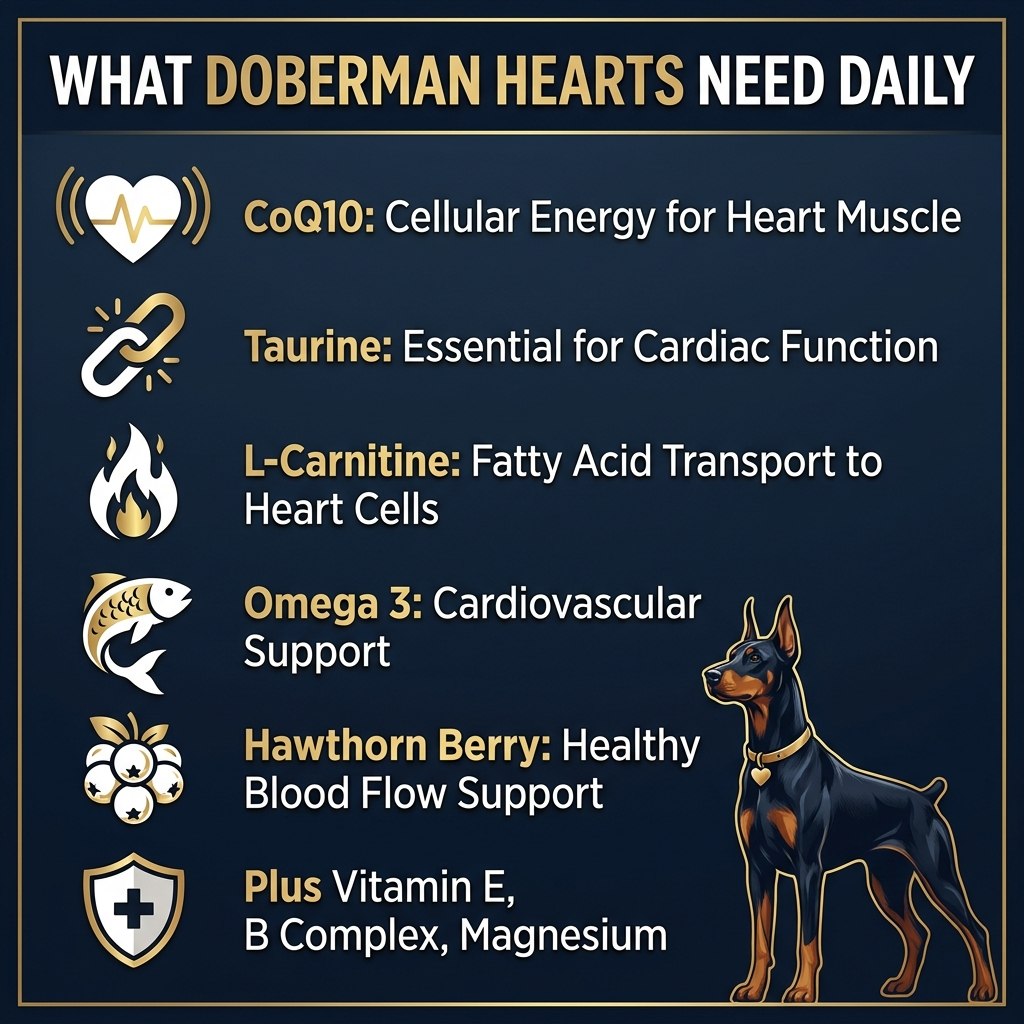
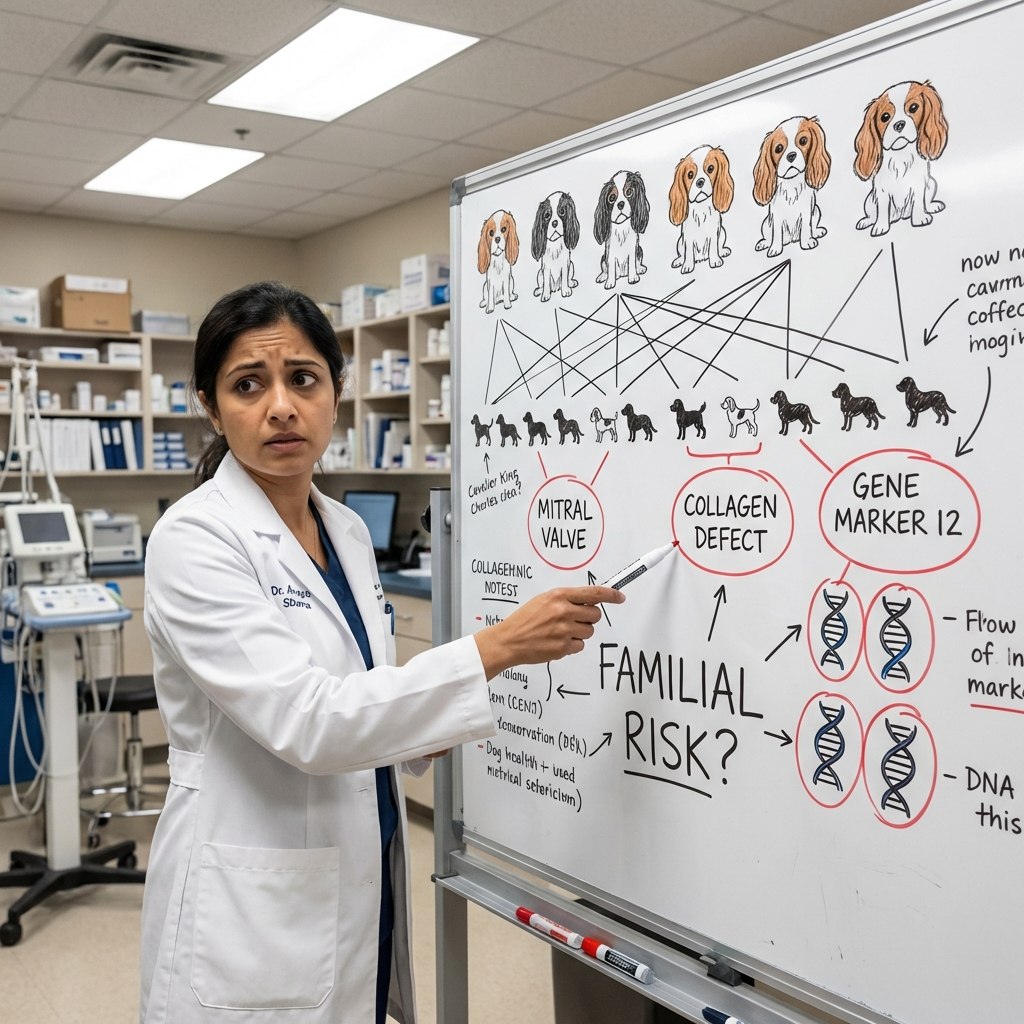
Every Cavalier alive today descends from six dogs. If you own a Cavalier, that single fact explains more about your dog's future health than anything your vet has ever told you. And I need about five minutes to explain why. My name is Dr. Emily Sato. I'm a veterinary cardiologist at a university teaching hospital in Philadelphia. I also hold a graduate degree in canine genetics. I have spent 14 years studying one question: why do certain breeds develop heart disease at rates that would be considered an epidemic in any other species? The answer, for Cavaliers, starts with those six dogs. In the early 1900s, breeders wanted to recreate the toy spaniels you see in old British paintings. Flat faces. Large round eyes. Silky coats. Sweet, docile temperaments. They selected from a tiny pool of dogs that had those traits and bred them together, generation after generation. The breed we know today, the Cavalier King Charles Spaniel, was formally recognized in 1945. The entire breed traces back to roughly six foundation dogs. That is an incredibly narrow gene pool. And when you narrow a gene pool that severely, you don't just lock in the traits you want. You lock in everything else those dogs carried. Those six dogs carried a defect in the collagen that forms the mitral valve of the heart. Every generation since has inherited it. Every single one. What That Means For Your Dog Right Now Your Cavalier's heart has four valves. The mitral valve sits between the left atrium and the left ventricle. It opens and closes with every heartbeat to keep blood flowing forward. In a healthy dog, the valve leaflets are thin, flexible, and seal tightly. In Cavaliers, the collagen holding those leaflets together is genetically weaker. Over time, the leaflets thicken and deform. They stop sealing properly. Blood starts leaking backward through the valve with every beat. The heart compensates by working harder. It enlarges. The bigger it gets, the more the valve stretches. The more it stretches, the worse the leak. It is a cycle that only moves in one direction. Over 90% of Cavaliers develop this condition, called mitral valve disease, by age 10. Not "are at risk." Develop it. Research shows it is nearly universal in the breed. That is not bad luck. That is six dogs. Why Your Vet Has Not Explained This Your vet almost certainly has not explained any of this to you. Not because they are hiding something. Because the veterinary system does not have a protocol for what to do before the murmur shows up. It has a protocol for what to do after. The protocol is: listen with a stethoscope. If no murmur, say "she sounds great." If murmur, grade it. Monitor. When the heart enlarges, start medication. When heart failure arrives, manage it. That protocol is good medicine. I am not telling you to ignore your vet. But a stethoscope cannot detect early valve degeneration. By the time a murmur is audible, the valve has often been deteriorating silently for months or years. Your vet is catching the middle of the story. Not the beginning. And the beginning is where you still have options. The Real Cost Stage B1, early murmur, monitoring only: $385 to $560 per year. Stage B2, heart enlarging, daily medication: $1,700 to $2,500 per year. Stage C, congestive heart failure: $4,000 to $8,000 per year. Every year. And that is just the financial cost. The real cost is what it does to you. The panic at 2 AM when you hear coughing. Counting her breaths while she sleeps. Sitting in the vet parking lot trying not to cry. Watching the dog you love slowly get worse and knowing you can only manage it, not fix it. That weight starts the day you hear "murmur." I watch owners carry it every week in my practice. I am telling you this because what happens before the murmur is the part you can still influence. What Changed Since 2014 In the years since 2014, when the ACVIM last updated their cardiac staging guidelines, we have learned that valve degeneration begins long before it is audible. Mitochondrial energy production in cardiac cells drops before clinical signs appear. Oxidative stress on the valve tissue is cumulative. And specific nutrients can support the valve during that silent window. CoQ10 in the ubiquinol form. Not ubiquinone, which is what most products use, with 70 to 80% lower absorption. Ubiquinol supports energy production in the cardiac muscle cells that are already working overtime. Omega-3 fatty acids. Hawthorn berry extract. D-Ribose. Magnesium. Most Heart Products Are For The Wrong Condition The majority of "heart health" products for dogs are built around taurine and L-carnitine. Those ingredients support DCM, dilated cardiomyopathy, a condition where the heart muscle weakens. That is not what your Cavalier has. Your Cavalier has MVD. The valve degenerates. Different structure. Different mechanism. Different needs. CavalierHealth.org writes that most commercial heart products contain "unnecessary ingredients, such as taurine and L-carnitine in sizeable quantities, and way too little quantities of CoQ10 and no D-Ribose." Wrong ingredients for the wrong condition. Chester Chester's owner Marcus brought him to me at age 4. No symptoms. Running, playing, stealing shoes. Marcus was an engineer. He had read about the six foundation dogs in a genetics article and it bothered him enough to book a cardiology appointment on his own. His vet had never suggested one. I ran an echocardiogram. Chester had early mitral valve changes. Subtle leaflet thickening. No murmur. His regular vet would not have caught it for another year, maybe two. I started Chester on the healthy heart support chews I now recommend for every Cavalier I see. One chew per day. At 12 months, his echo was stable. At 24 months, still stable. No progression. I am not promising you a miracle. MVD is genetic. It traces back to six dogs and nothing erases that. These are nutritional support chews, not medication. They do not replace your vet or any prescribed treatment. But I have treated thousands of Cavaliers over 14 years. And this is the one thing I reliably see help delay progression and give owners back something they thought they had lost: peace of mind. Not checking her breathing every hour. Not dreading the next vet visit. Just one chew a day and the knowledge that you started before the system told you to. No matter what stage your Cavalier is at, whether you have never heard the word murmur or whether you are already managing one, this is what I recommend to every owner who sits across from me in my office. Six dogs built this breed. You cannot change that. The narrow gene pool. The weak valve collagen. That is written into every Cavalier ever born. But what you do between now and the first murmur is not written yet. That part is yours. Whether your Cavalier has a murmur or not, her valve needs support. That is just the breed. One chew. Every day. Starting now. weston-animal.co/products/h-chews P.S. Six dogs. One gene pool. One valve defect. Over 90% affected by age 10. Your vet's stethoscope catches the middle. You can start at the beginning. One chew per day: weston-animal.co/products/h-chews P.P.S. Before you search Amazon for "Cavalier heart supplement," know this: most of those products are loaded with taurine and L-carnitine. Those are for DCM. Your Cavalier gets MVD. Completely different condition. She needs CoQ10 in ubiquinol form, omega-3, hawthorn, D-Ribose, and magnesium. The right ingredients for the right condition: weston-animal.co/products/h-chews
Like this ad? Make it yours.
Crush rebuilds this exact creative around your product — your brand, your colors, your offer — in about a minute.