Margaret Holloway
Margaret Holloway Facebook ad: “Read this if the scratching won't stop”
Running for 82 days since July 12, 2026. Crush last saw it on October 2, 2026.
Run by Margaret Holloway on Facebook. Crush is not the advertiser and does not verify its claims. See this ad in Meta's Ad Library(opens in a new tab)
Want an ad like this for your product?
Crush makes new ad images for your product from this ad: your logo, your product photo, your offer.
Trials from $19.95 USD, then $79.95 USD a month. Cancel anytime.
About this ad
- Meta Ad Library ID
- 1497958098756012
- Platforms
- Facebook, Instagram, Audience Network, Messenger and Threads
- Relaunches
- 0
Ad text
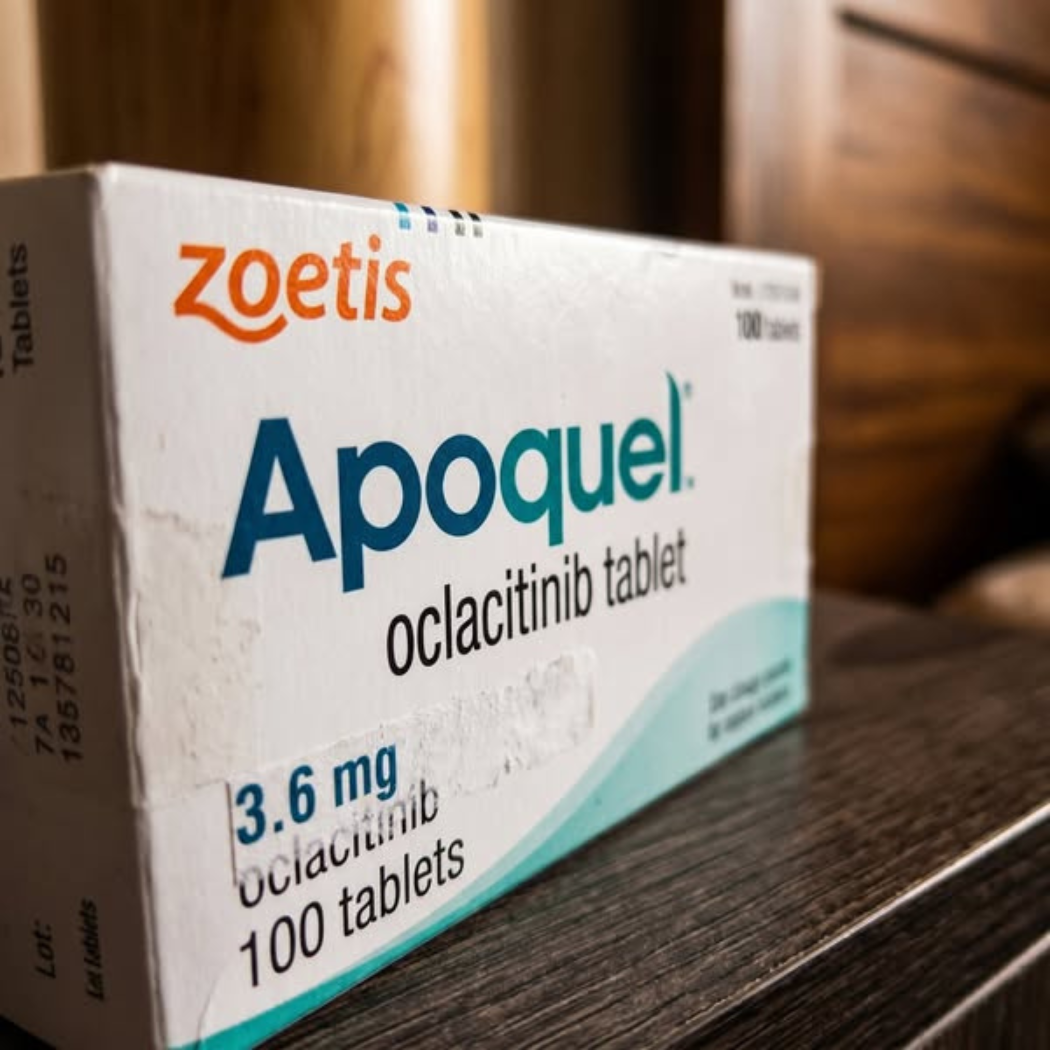
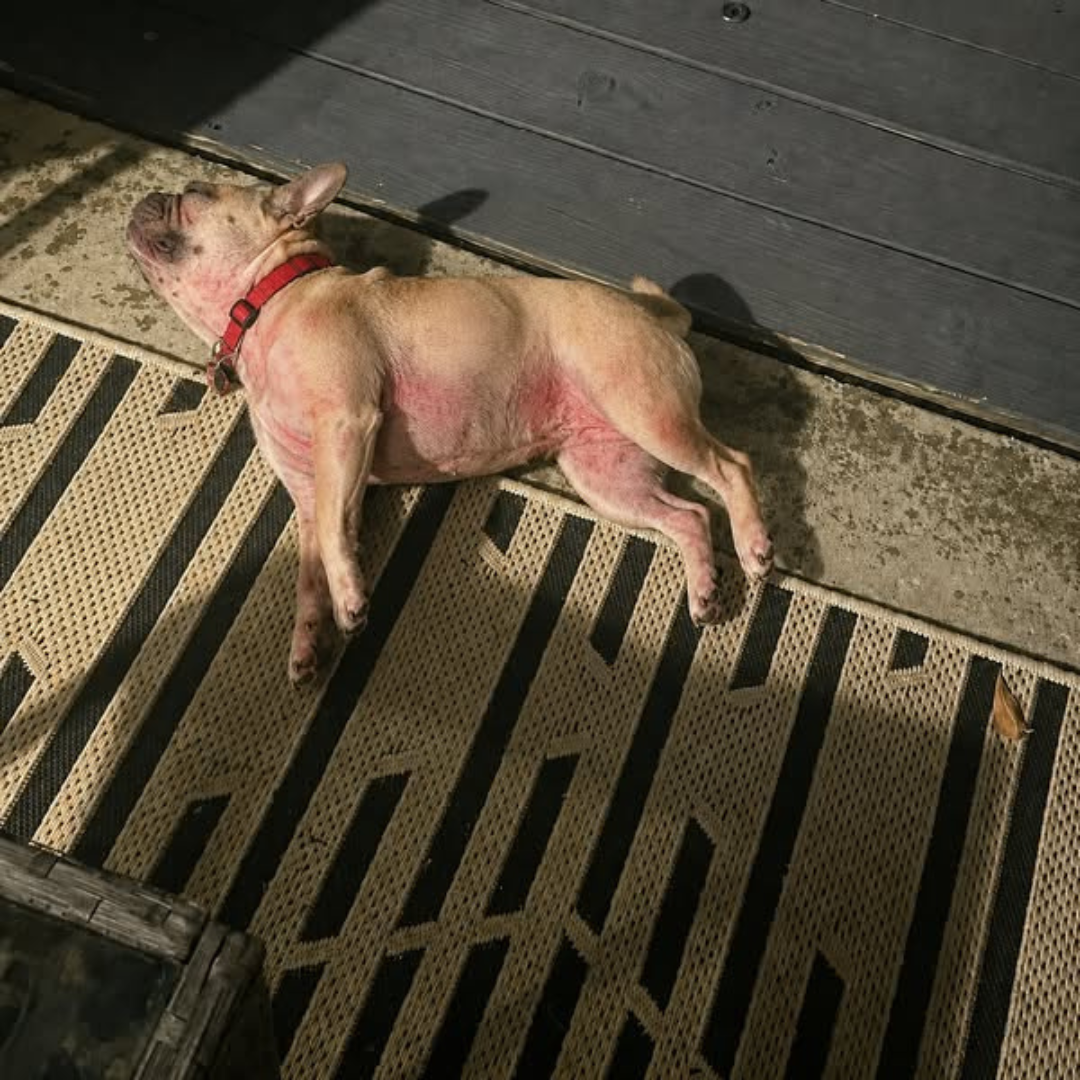
I'm going to say something nobody who owns a dog with allergies wants to hear, and I don't give a f*ck if it upsets you. Apoquel isn't going to save your dog. Cytopoint isn't going to save your dog. Steroids aren't going to save your dog. None of it is going to work. I know, because I tried the lot. Every drug. Every injection. Every medication. For two years. And my dog died anyway. Six years old. Paw licking. Because I spent two years treating an allergy problem that was never an allergy problem. And the worst part? My other dog started doing the same thing. Same itching. Same paw licking. Same slow decline. And I nearly let it happen again, because I was still listening to the same rubbish that killed my first dog. I'm done being polite about this. If your dog's scratching and you're in here asking what treatment to try next, you're wasting time your dog hasn't got. Read this whole post. Every word. Because the answer's in here — and it is NOT another treatment. I'm Margaret. I'm 44. I live just outside Harrogate with my husband David and our two dogs. Well. We used to have two dogs. Max was a six-year-old Lab. Energetic. Demanding. The sort of dog who'd want feeding ten times a day. Lily's a three-year-old Frenchie. Cute. Stubborn. Follows me from room to room like a silent shadow. Two completely different dogs. But they had the same problem. They both scratched. Every single day. For Max, it started about two years ago. He'd eat his breakfast — dry kibble — and then ten minutes later he'd be scratching himself raw. His ears. His bottom. Like his skin just switched on and said "go." I asked the vet about it. "Seasonal allergies. Very common in Labs. Let's start him on Apoquel. It works fast and most dogs do really well on it." So we started Apoquel. For the first fortnight, it was like a miracle. Max stopped scratching. He slept through the night. He'd come in from outside and just... lie down. I thought: finally. Sorted. Then the scratching came back. But this time it was different. Instead of scratching after walks, he was scratching constantly. Morning. Night. 3am, when I'd hear that wet sound of him licking his paws, and I'd lie there in the dark, too tired to get up. I posted in a Facebook group for dog allergies. "Dog was great on Apoquel for a few weeks. Now the scratching's back. Same dose. What do I do?" Everyone had a suggestion. "Ask your vet to increase the dose." "Try Cytopoint injections instead. Works differently." "Switch to a raw diet. Kibble's the problem." So I tried. I tried a higher Apoquel dose. Cytopoint injections at £75 a shot. Raw diet. Hypoallergenic diet. Salmon. Kangaroo. I spent over £600 in four months trying to work out what Max was reacting to. Max still scratched. And then Lily started doing it too. She'd been fine on dry food. No scratching. No issues. But I'd switched her food to match Max's — thinking if he needed it, maybe she should too. Within a fortnight, Lily was scratching too. Not like Max. But chewing her paws three or four times a day. Waking up at 2am to scratch her ears. I was checking her ears every single day. In the morning before my own tablets. When I got home. Middle of the night, when I'd hear that awful sound and jump out of bed to check she wasn't scratching her ear. I was exhausted. But more than that, I was terrified. Because Max was getting worse. His coat started looking dull. Old. Like he'd aged years in weeks. He started smelling different too. Like corn chips. He lost weight. I could feel his ribs when I stroked him. He stopped playing. Stopped running to the door. He even stopped demanding his food. He'd just... sleep all day. My baby was disappearing in front of me. I took him to the vet's. "Has anything changed recently?" "He's been on Apoquel for four months. It worked at first. Now the scratching's back as bad as before." The vet nodded. "Sometimes the dose needs adjusting as the seasons change. Let's add Cytopoint alongside the Apoquel. It works on a different pathway." I started him on it that day. Week one: still scratching. Week two: still scratching. Week three: I rang the vet, crying. "The Cytopoint isn't working. He's still scratching constantly. His skin looks worse. What do I do?" "Bring him in. Let's run some bloods." I brought him in the next day. They ran a full allergy panel. Skin-prick test. Blood draw to check for food and environmental triggers. The results came back a week later. The vet rang me at work. "Margaret, we ran everything. The results came back and it could be a million different things — dust mites, grass, mould, something in his food. We just can't pinpoint it." I felt the floor go out from under me. "What? How am I supposed to help him if I don't know what's wrong?" "That's unfortunately how allergies work in dogs. We can't always find the source. What we can do is manage the response. Let's move him onto an immunotherapy programme. Monthly injections. It won't cure the allergy but it should reduce how severely his body reacts." "How long until we see results?" "Two to three months. Sometimes longer." I went home and started him on the immunotherapy shots that month. £180 a month. Month one: still scratching. Month two: still scratching. Month three: I rang the vet, crying. "The shots aren't working. He's still scratching and his skin's turned red. What do I do?" "Give it more time. These things take time." More time? I was sitting on the bathroom floor at 11pm, trying to wrap a hot spot on his thigh that had been bleeding for three days straight. He kept pulling away from me. "Please, Max. Please just let me help you." He turned his head away. Over the next fortnight, Max got worse. He stopped eating. He lost another pound. His ribs were showing. His eyes looked sunken. I was watching my child waste away. And then one night, I came home from work and found him lying in the corner of our bedroom. He'd scratched a hot spot open on his bottom. There was blood on the bed. On the carpet. He was unconscious but still alive. I grabbed my keys and drove to the emergency vet. They took him straight through. Forty-five minutes later, the vet came out. "The infection has spread. He's septic. His body is shutting down trying to fight what started as a skin infection." I couldn't breathe. "Can you save him?" "We can try. IV antibiotics. But I need to be honest with you — at this stage, the prognosis isn't good. And even if we get him through this, his quality of life going forward..." She stopped. I knew what she wasn't saying. I went home and sat on the bathroom floor where I'd been wrapping his bandages for three months. I couldn't sleep. At 6:47am, my phone rang. "Margaret, I'm so sorry. Max passed about twenty minutes ago. We did everything we could." I don't remember much after that. David drove me to the surgery. I paid the bill. £2,400. We drove home in silence. I couldn't stop thinking: I saw it. I SAW IT. For TWO YEARS, I watched Max scratch. First on Apoquel. Then on Cytopoint. Then on immunotherapy injections that did nothing. Then on the bathroom floor, bleeding through his bandages. And everyone told me it was normal. It was just allergies. "Some dogs just don't respond as well." "Give it more time." But it wasn't about time. His body was screaming for help. And by the time I understood what that meant, the infection had already taken him. The worst part? Lily was doing the exact same thing. Licking her paws three or four times a day. A hot spot forming on her shoulder. Coat going dull. I knew what was coming. Lily was going to die the same way Max did. And I couldn't let that happen. So I tried everything else first. I changed her bedding. Still scratched. Tried a calming collar. Still scratched. Sprayed the house with antifungal spray. Still scratched. It wasn't the house. It wasn't stress. It was something inside her that nothing I was doing was fixing. I spent the next two weeks obsessively researching. I joined every dog allergy Facebook group. I read every Reddit thread about itching and skin infections. I watched YouTube videos from holistic vets and practitioners. And I kept seeing the same terrifying pattern. Dog scratches → Apoquel prescribed → seems to work → wears off → dose increased → scratches again → coat thins → hot spots develop → infections follow → skin gets infected → dog passes away. The scratching wasn't just scratching. It was the first warning sign. And I'd watched it play out for two years without ever understanding what it meant. Then, buried in a Reddit thread at 1am, I found a comment that stopped me cold. Someone wrote: "My dog scratched for four years. Tried every medication. Every steroid. Finally tried liquid collagen. Scratching stopped in four weeks." Liquid collagen? I'd tried collagen chews with Max — they'd done nothing. But I'd never seen anyone talk about liquid. I googled: "liquid collagen for dog itching." There were articles. Studies. Forum posts. All saying the same thing: collagen deficiency can cause chronic itching in dogs. I didn't understand the science. I didn't know how it worked. I just knew: other people's dogs stopped scratching when they gave them liquid collagen. That was enough for me. I went straight out and bought a liquid collagen supplement for dogs. £26. Thousands of reviews. "Supports skin and coat health." It arrived two days later. I started giving it to Lily every day, mixed into her food. Week one: still scratching. Week two: still scratching. Week three: still scratching. Week four: I was sitting on my front step crying, watching Lily sleep in the shade. She'd lost another half-pound. Her coat looked worse. I was watching the same thing happen all over again. My neighbour, Mrs. Adams, came out to water her plants. Mrs. Adams is 73. She's a retired vet. Ran a small-animal practice for 30 years before she retired five years ago. She's lived next door to us since we moved in two years ago. She saw me crying and came over. "Margaret? Love, what's wrong?" I told her everything. About Max. About the scratching. About the hot spots that kept coming back. About how Lily was doing the same thing, and how terrified I was of losing her too. "I found something online about liquid collagen helping with itching," I said, showing her the blue bottle. "I've been giving it to her for four weeks but it's not working. She's still scratching. I don't know what to do." Mrs. Adams took the bottle from my hand and looked at it. Her face changed. "Oh, love. This is rubbish. No wonder it's not working." She sat down next to me on the step. "Can I tell you something? Something I learned in 30 years of practice?" I nodded, wiping my eyes. "You were right. The itching's from a collagen deficiency. But this supplement?" She held up the bottle. "This isn't real collagen. Or at least, not enough of it." "What do you mean?" She settled back. "Let me explain what's actually happening. Around the age of two or three, a dog starts producing less collagen. Some dogs lose more than others. And without enough collagen, the skin goes thin. Irritants get in. The body's got no defence, so it sends the itch signal. That's why Lily's scratching. Not because she's broken. Because her skin stopped getting what it needed to stay strong." "So the allergies aren't actually the problem?" "The allergies are just what's getting through. Fix the collagen, you fix the skin. Fix the skin, you stop the itch." I thought about all those trips to the vet's. All those Apoquel refills. Nobody had ever once mentioned her collagen was low. "But I bought collagen chews and liquids? They didn't work." Mrs. Adams sighed. "That's the lie the whole industry's built on. Yes, the big supplement companies all add collagen. But here's what they don't tell you: they make it using heat extrusion — pressed at high temperatures to form the chew shape. Those temperatures destroy the very peptides that make the collagen work. Real collagen needs to be cold-pressed to stay intact. The collagen's technically on the label. But by the time it reaches Lily's mouth, its structure's already been demolished." "So it's not enough?" "Not even close. And most liquid collagens? They don't work either. They haven't got the carrier hyaluronic acid the liquid needs to actually reach the skin. Without it, it's just like the chews." My stomach dropped. "So Lily was getting collagen every day, but..." "But her skin wasn't getting any of it. And then — and this is the part that makes me furious — those liquids with hyaluronic acid everyone recommends? They're even worse than you think." "How?" "Because they use cheap sources of hyaluronic acid with heavy metals and toxic fillers. The industry's unregulated. People can sell whatever they like." I felt sick. "So the collagen was making it worse. Every single day." "Every single day. And Max's skin was getting worse with every bottle. I'm sorry, love. I know that's hard to hear." "But I tried to fix it. I bought good liquid collagen. They said no fillers on the site." She looked at the blue bottle again. "This bottle? I had it tested. Sent it to a lab. You know what we found? The HA in this bottle comes from a cheap, unregulated source. Heavy metals. Toxic fillers. The label says hyaluronic acid. What's actually in here?" She paused. "You don't want to know." "What?" "And the amount that actually reaches the skin was basically zero. So Lily isn't getting pharmaceutical-grade collagen to her skin. She's getting maybe a fraction of it. That's why it's not working. And every day you give her this, her skin's getting thinner and thinner. Just like Max's did." Mrs. Adams stood up. "Wait here." She went into her house and came back a minute later with a bottle. "This is what we used at the practice. Canbloom. Over my 30 years I tested dozens of brands. Sent them to labs. Most were contaminated, underdosed, or had cheap HA that did nothing. This is the only one that passed." I took the bottle from her. "How's this different?" "203mg of real collagen per dropper. Label says 200mg — so they actually over-deliver. 95–98% bioavailability. No contamination. No fillers. And it's cold-pressed. Pure hyaluronic acid, checked before every batch goes out. They're the real deal." "And this'll stop the scratching?" "If we're not too late — if her skin isn't too far gone — yes. One dropper a day, mixed into her food. Within four to six weeks, her skin barrier should rebuild. The scratching should stop. And her skin should start to heal." "And if we are too late?" Mrs. Adams looked at me with sad eyes. "Then at least you'll know you tried. But Margaret, you can't overdose collagen. It's not a drug. If she gets more than she needs, her body just uses what it can. No toxicity risk. No side effects. No danger." "So there's no harm in giving it to her?" "None. Zero." She handed me the bottle. "Start her on this today. And Margaret? Don't blame yourself for Max. The vets should have known. The supplement companies should be honest. But here's the thing — a rescue vet fixes the root cause, because they can't afford to manage symptoms forever. In private practice, managing the symptoms is the business model. Same training. Different incentives." I started Lily on Canbloom that day. For the first few days, nothing changed. She still scratched. I was terrified it wasn't going to work. That I was too late. That Lily's skin was already too far gone, just like Max's. But then, around day six, I noticed something. She only scratched twice that day, instead of the usual three or four. Week two: she scratched once. Week three: no scratching. I couldn't believe it. I kept waiting for it to come back. But it didn't. By week four, Lily hadn't scratched once. And I noticed other things changing too. Her ear was clear. No blood, no smell. The hot spot on her shoulder started closing. She gained weight. Not a lot, but enough that I couldn't feel her ribs any more. She started playing again. Chasing her toys. Running to the door when I grabbed her lead. The corn-chip smell was gone. The paw-licking that kept me up at night — gone. I couldn't believe it. My child was coming back to me. I took her to the vet's six weeks later. I was so scared. What if her skin was already too damaged? What if I was too late? The vet rang me two days later with the results. "Margaret, I've got good news. Lily's skin inflammation markers have improved significantly." I started crying right there on the phone. "Improved?" "Yes. Whatever you're doing, it's working." "It's collagen. Real pharmaceutical-grade liquid collagen with pure hyaluronic acid." There was a pause. "Well. Keep her on it. I've never seen a dog with this history improve like this." That was four months ago. Lily hasn't scratched once since week three. Her skin's clear. Her coat's beautiful. Her eyes are bright. She plays. She's happy. She's healthy. And I think about Max every single day. Don't let that be your story. Don't watch your child deteriorate for months while you try different medications that won't work. Don't wait until it's too late. Start pharmaceutical-grade liquid collagen today. https://canbloomstore.com/products/canbloom-premium-liquid-collagen EDIT: A lot of people have messaged saying they bought Canbloom and their dog didn't improve like Lily did. I asked where they'd bought it, and they said either "Amazon" or one of the big online pet shops. I always buy direct from the website. They have a direct warning about counterfeits, and they ONLY sell from their own site. I'm sorry — I forgot to add the link. Here it is: https://canbloomstore.com/products/canbloom-premium-liquid-collagen P.S. The Amazon liquid collagen I gave Lily for four weeks had basically zero bioavailability. Cheap HA with heavy metals. Her skin kept breaking down while I was giving it to her. The scratching carried on. Her body was still failing. Four weeks on Canbloom and the scratching stopped completely. Six weeks and her inflammation markers improved for the first time. Don't waste time on supplements that don't work. Your dog's skin can't wait. https://canbloomstore.com/products/canbloom-premium-liquid-collagen P.P.S. Max scratched for two years before his skin failed. The scratching wasn't "just allergies" — it was the first warning sign his collagen was running out and his skin barrier was breaking down under constant strain. I thought I had time. I didn't. If your dog scratches more than once a day, start pharmaceutical-grade liquid collagen today: https://canbloomstore.com/products/canbloom-premium-liquid-collagen — Margaret Holloway, Harrogate
Where the ad sends people
canbloomstore.com
☝️Read this if the scratching won't stop
Canbloom
Learn more: canbloomstore.com(opens in a new tab)