The Healthy Pet Parent
The Healthy Pet Parent Facebook ad: “Fast Relief for Itchy Ears and Skin”
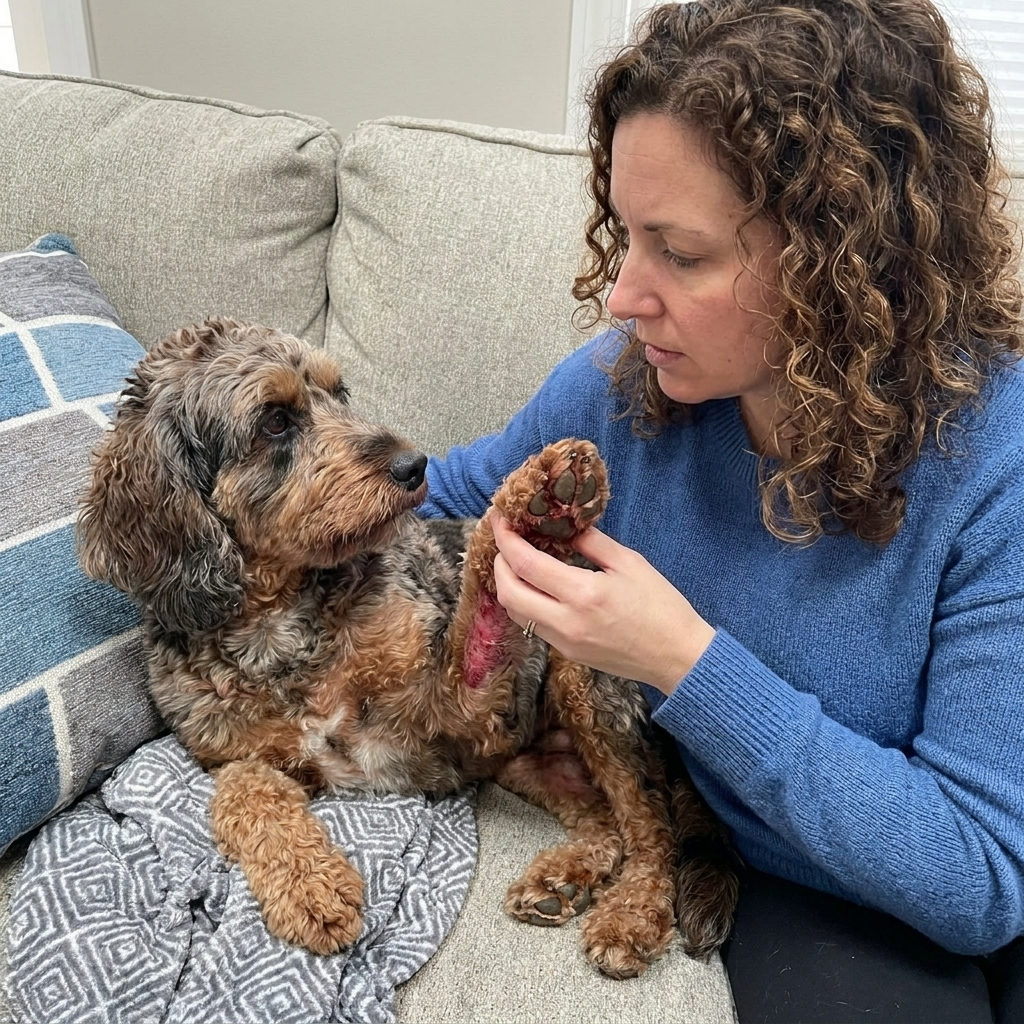
Ran for 11 days, from May 6 to May 17, 2026, the last day Crush saw it.
Run by The Healthy Pet Parent on Facebook. Crush is not the advertiser and does not verify its claims. See this ad in Meta's Ad Library(opens in a new tab)
Want an ad like this for your product?
Crush makes new ad images for your product from this ad: your logo, your product photo, your offer.
Trials from $19.95 USD, then $79.95 USD a month. Cancel anytime.
About this ad
- Meta Ad Library ID
- 1507638247604622
- Platforms
- Facebook, Instagram, Audience Network, Messenger and Threads
- Relaunches
- 1
Ad text
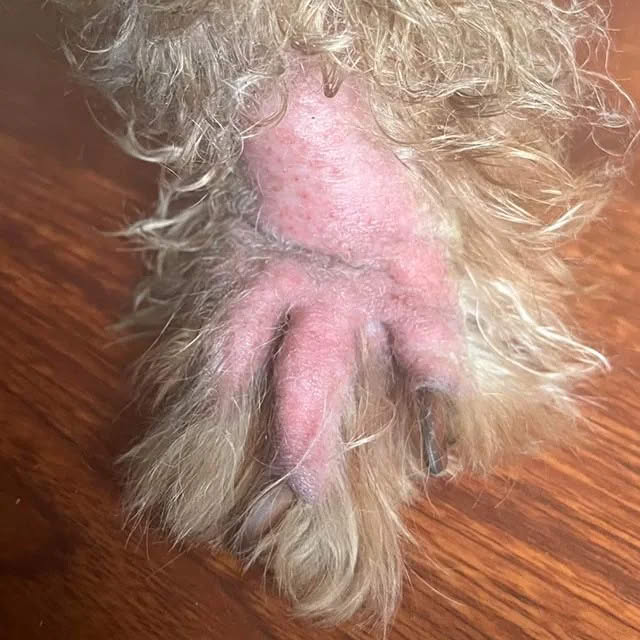
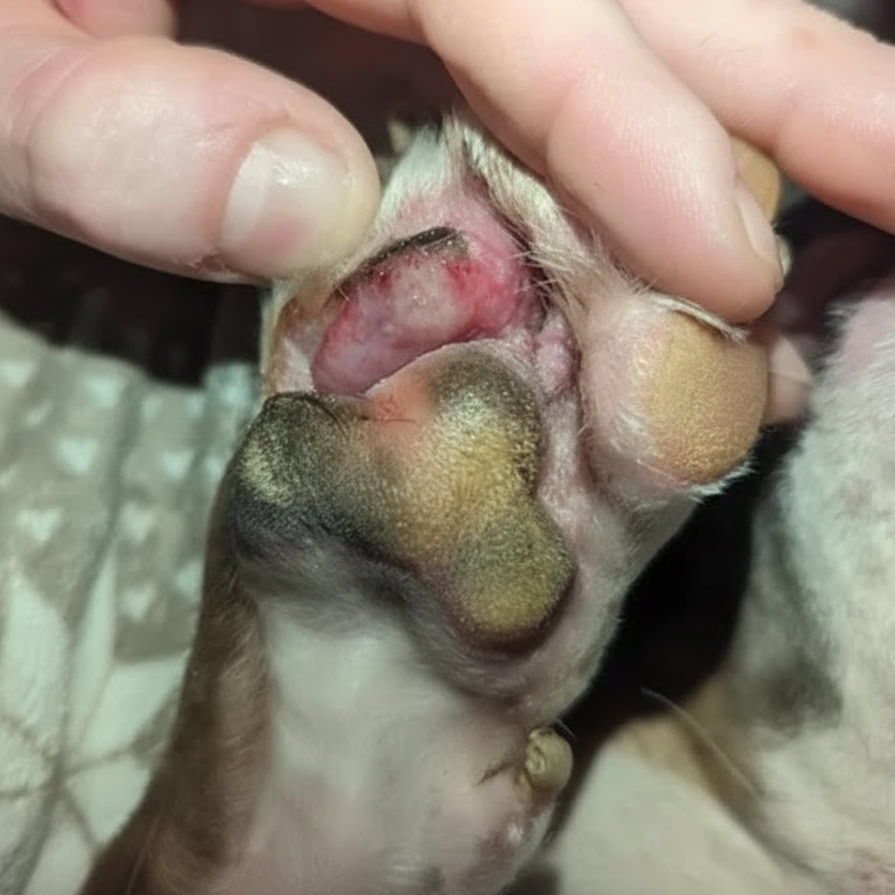
He's been scratching for two years, and my vet kept saying it was "just allergies." But this is what my Cockapoo's belly looked like after eating his "vet-approved" kibble. What I saw on his skin explained why nothing I'd tried for two years had worked, and it led me to the one thing that actually calmed him down. Let me show you what happens to my dog when he eats the food my vet recommended. This is Murphy. He's a six-year-old Cockapoo. The kind of dog people stop on the street to coo at. The kind of dog who used to sleep through the night without licking himself raw. The kind of dog my vet told me had "a sensitive constitution" — and then handed me a £62 bag of hypoallergenic kibble. I fed him that kibble for eight weeks. No treats from the table. No bits of cheese. By the book. Then I lifted his belly fur and took a photo. His skin was raw and red. Brown stains on both front paws from where he'd been licking. A bald patch behind his left ear the size of a 50p coin. Eventually the flare-ups would calm down for a few days. So if you only look at him on a "good day," everything seems fine. No reason to worry, the vet says. But these flare-ups cause real damage. To his skin barrier. To his ears. To his sleep. And to mine. The scary part is that most of us have no idea how bad it's getting because we get used to it. The 3am scratching becomes background noise. The licking becomes "just what he does." If I hadn't taken that photo, I'd have never seen how bad his belly really was. The longer it goes on, the worse it gets. We're talking about chronic ear infections. Atopic dermatitis. The kind of skin damage that puts dogs on Apoquel for the rest of their lives. And if "vet-approved" kibble does this, imagine what most treats and chews are doing. So what can you actually do to stop these flare-ups? I'm going to tell you exactly that. But first, you need to understand why your vet probably never told you this. My name is Sarah. I'm 47. I live in Manchester. And for two years, I did everything by the book. Hypoallergenic kibble. Oat shampoo. Paw wipes after every walk. No grain. Then no chicken. Then no beef. I cut things out one by one. I kept a food diary. I skipped his birthday cake. My partner thought I'd lost the plot. And at every check-up, it was the same conversation. "He's doing okay, Sarah. The skin barrier is still inflamed. If we don't see clear improvement in three months, we'll need to start him on Apoquel." Three months. Again and again. Meanwhile, Murphy was still waking me up at 3am. Still chewing his paws to death. Still smelling like a corn chip when his feet got warm. My friend's Lab ended up on Apoquel for life. He gained weight. He developed lumps. The vet said it was unrelated. She wasn't so sure. Murphy was being lined up for the same path. And I knew where it led. I'd seen women on Reddit posting before-and-after photos of their dogs after switching from kibble + Apoquel to a chew. The results looked unreal. I assumed they were edited. I assumed it would be different for my dog because I was already doing everything right. I was wrong. Two years of "doing everything right" — and his belly looked the same as theirs had on day one. That's when I understood. The vet was looking at one symptom at a time. The kibble. The shampoo. The shot. I was managing the surface. Nothing was touching what was actually happening underneath. But why was Murphy reacting like this when I'd cut every common allergen out of his diet? I started reading. Not blog posts. Veterinary dermatology journals. Studies on what actually drives chronic skin inflammation in dogs. And I found the answer in something nobody had ever told me. The problem isn't just what he's eating. It's what's missing from it. Skin inflammation in dogs is driven by an imbalance between two types of fats: omega-6 and omega-3. Omega-6 fats are pro-inflammatory. Omega-3 fats are anti-inflammatory. A healthy dog needs a ratio of around 5:1. Most modern kibble — including the £62 hypoallergenic kind — runs at 20:1 or worse. That's because it's loaded with chicken fat, sunflower oil, and corn oil. Cheap to source. Long shelf life. And it leaves your dog's body in a permanent low-grade inflammatory state. The result shows up on the skin: itching, licking, hot spots, brown paw stains, ear infections that won't quit, bald patches that take months to grow back. This is the omega imbalance. It's been studied for decades in human dermatology. It's been studied in dogs too. And it's the reason a dog can be on the most expensive hypoallergenic kibble on the market and still be miserable. Cutting allergens won't fully fix it. You can swap kibble. You can change shampoo. You can do every avoidance trick in the book. But if the inflammation fuel is still in the bowl, you're not addressing the underlying mechanism. Apoquel doesn't fix it either. It blocks the itch signal. It doesn't repair the imbalance. It doesn't calm the inflammation at the source. The flare-ups are still happening — your dog just can't feel them as much. And when you stop the drug, they come straight back. Often worse. That's why so many dog mums follow every single thing the vet says and still hear the same sentence at every visit. "He's improving. Just not fast enough." What I discovered next is something I wish I'd known two years earlier. Specific omega-3 fatty acids — EPA and DHA — have been shown to calm the inflammation that drives canine skin disease from the inside. Not "omega-rich" in vague marketing terms. The actual fats: EPA, DHA, and α-linolenic acid in the right ratios. They quiet the inflammatory signal at the source. They support the skin barrier so it can heal. They give the immune system permission to stop overreacting. Real veterinary studies support this. But my vet never mentioned it. And I quickly understood why. You can't patent a fatty acid. There's no money in telling dog mums they can rebalance their dog's skin from the inside, naturally. There's money in selling £62 kibble and a lifetime Apoquel prescription. So I ordered an allergy chew. That was my second mistake. Bestseller on Amazon UK. Thousands of reviews. £35 a bag. Six weeks later, Murphy looked exactly the same. I switched brands. The leading one. The one with the famous TV-vet endorsement. Same result. I almost gave up. I almost concluded that allergy chews were just another scam. But instead of giving up, I asked a different question. Not "do allergy chews work" — but "why is this allergy chew not working?" What I found made me angry. Most allergy chews wave the word "omega" on the front and then quietly fill the chew with flaxseed oil — and nothing else. Flaxseed contains α-linolenic acid (ALA), a plant-based omega-3. That sounds great until you read the science. Dogs convert ALA into the actually-useful EPA and DHA at a rate of less than 5%. Cats can't convert it at all. Which means a chew built only on flaxseed is delivering maybe a fifth of what it claims, and almost none of the EPA and DHA your dog's skin actually needs. It's like advertising a steak dinner and serving a side of broccoli. But that's not even the biggest problem. The biggest problem is the dose. Most chews list a number that sounds impressive on the front of the bag — "rich in omega!" — without telling you how much is actually in each chew. By the time you read the small print, you find out two chews contain 30 mg of EPA. A therapeutic dose for a medium dog is closer to 500 mg per day. Your dog is getting maybe 5-10% of what he actually needs. You think you're giving him a therapeutic dose. He's getting a sprinkle. And it gets worse. The biggest UK allergy chew brand — the one most dog mums try first — quietly changed its formula in 2024. Hundreds of women on Trustpilot have said the same thing: "it stopped working after the recipe change" and "the new version is rubbish, I want the old one back." On top of that, dozens couldn't cancel their subscription. They had to call their bank. You think you're protecting your dog. You may be funding a brand that's already moved on from caring whether the chew actually works. Three months. £100 wasted. And Murphy's belly was no better. But I also felt something I hadn't felt in months. Hope. Because if the problem wasn't allergy chews — but the type of fat, the dose, and the formulation — then there might be a version that actually works. That's when I found Nutripet. Real, named omega-3s. Not "omega blend." EPA and DHA from salmon oil — the actual pre-formed fats your dog can absorb and use immediately. Plus α-linolenic acid from flaxseed and linoleic acid in the right ratio to support the skin barrier without feeding the inflammation. A therapeutic dose per serving — not a token sprinkle. Brewer's yeast for the B-vitamins and beta-glucans that support coat health from the inside. UK-formulated. Vet-developed. And the thing every other chew was missing: the right fats, in the right amounts, in a chew dogs actually want to eat. That's what every other allergy chew was getting wrong. I ordered it. My next vet visit was in five weeks. This was the last thing I was going to try before I caved on Apoquel. The bag arrived on a Tuesday. Murphy got his first chew that evening. (He inhaled it. Good sign.) That night, something was different. The 3am scratching didn't happen. I told myself it was a coincidence. By the end of week one, the licking had noticeably reduced. He was still doing it — but not constantly. By week two, the brown stains on his paws were starting to fade. Not gone. Lighter. By week three, he slept through the night. Both of us did. By week four, I lifted his belly fur to take another photo. The redness was gone. The bald patch behind his ear had hair growing back. He hadn't licked his paws raw in over a week. Same dog. Same house. Same walks. Same everything — except the chew. I went to the vet appointment. She examined him. Then she looked at me. "Sarah, what did you change?" I told her everything. She said his skin barrier was the best it had been since she'd first met him. She said we could hold off on Apoquel. That was four months ago. Murphy's belly is still calm. He's still sleeping through the night. So am I. This is what you need to understand. If allergy chews didn't work for your dog before, it wasn't your fault. It was the wrong fats. The wrong dose. The wrong delivery. And often, the wrong company — one that changed its formula and trapped you in a subscription you couldn't cancel. The science behind omega-3s and skin inflammation is real. But only if the EPA and DHA are pre-formed, the dose is therapeutic, and the ratio actually supports the skin barrier instead of fighting it. Nutripet is the only chew I found that does all three correctly. It's UK-formulated. It's vet-developed. The cancel button is one tap, no phone calls, no "are you sure?" loops. And there's an honest 60-day money-back guarantee — no small print, no exclusions. If you've tried allergy chews before and given up, try the version that's actually formulated to work. You might be surprised by what happens. See if Nutripet is still in stock. — Sarah, Manchester Murphy's mum Former Apoquel-resistor P.S. Many dogs see the first changes within days — usually less scratching at night. The skin and coat improvements come over the next two to four weeks. P.P.S. There's a 60-day money-back guarantee. If your dog's symptoms don't improve, you get your money back. No "did you fill in this form?" loops. P.P.P.S. This batch is selling faster than usual after a recent piece in the dog-mum Reddit threads — worth checking availability before you close this tab.
Where the ad sends people
nutripetlabs.com
Fast Relief for Itchy Ears and Skin
Help your pet find relief from allergies, itching, and skin irritation with NutriPet Allergy + Itch Relief. Vet-friendly formula for dogs and cats. $39.95.
See details: nutripetlabs.com(opens in a new tab)