
Inactive· since Jun 8, 2026
- 5
- days it ran
- 0
- relaunches
Ad copy
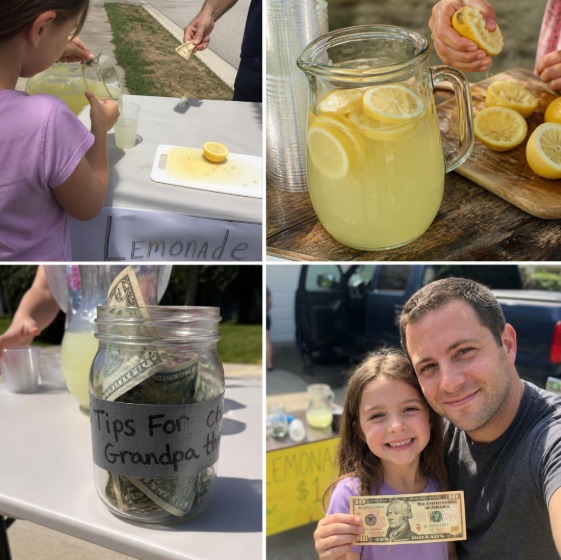
I stopped my truck for a lemonade stand and a 10-year-old girl told me something between pouring my cup and making change that I still haven't been able to shake. That was six months ago. It was a Saturday. Late morning. I was driving to the hardware store for a headlight bulb — one of those nothing errands you forget about by noon. There was a folding table set up on the corner of Maple and Dorset. A hand-markered sign taped to the front: FRESH LEMONADE $1. Behind the table: a girl. Maybe ten. Hair pulled back. Serious face. Sitting up straight like she was running a real operation, not playing store. I almost didn't stop. But something about the way she was sitting there — alone, organized, patient — reminded me of the way my daughter sets up her homework. Like this was important work and she intended to do it right. I pulled over. Got out. Walked up. "One lemonade, please." She poured it carefully from a glass pitcher into a plastic cup. Handed it to me with both hands like she was passing a test. I took a sip. It was good. Really good. Tart and cold and not too sweet. I pulled out my wallet. Handed her a ten. Her eyes went wide. "It's only a dollar." "Keep the change." She looked at the bill. Looked at me. Then she said — and I swear she said it like a sommelier defending a wine list — "It's real lemons. I squeeze them myself. Not the powder stuff like the other kids use." I laughed. She didn't. She meant it. I noticed a second jar on the table. Mason jar. Duct-taped label I couldn't read from where I was standing. Half full of crumpled ones and fives. Separate from the cash box where she kept the lemonade money. "What's the jar for?" She glanced at it like she'd been waiting for someone to ask. "It's for my grandpa. He had a heart attack." The way she said it — not sad, not dramatic, just factual, the way kids report things they've absorbed but don't fully understand. "I'm sorry to hear that. Is he okay?" "Yeah. He's home now. He doesn't push me on the tire swing anymore though." She paused. Looked at the jar. Then brightened. "But he played catch with me on Tuesday. First time since the hospital. So he's getting better." She went back to straightening her cups. I stood there holding my lemonade and feeling something I couldn't name yet. A truck pulled into the driveway behind the stand. Dark blue pickup. A man got out — late thirties, work boots, sunglasses pushed up on his head. He had two grocery bags in one hand and a case of water under the other arm. He saw me standing at the table and his posture shifted the way any dad's would — friendly but alert. Stranger talking to his kid. "Dad! He bought lemonade. He gave me TEN DOLLARS." He set the bags down. Looked at me. I could see him deciding I was fine. "Hey man, thanks. She's been out here since nine." He smiled. "You'd think she was running a franchise." "She told me it's real lemons." "It is." He looked at her. "Lily, you tell everyone that?" "It's important, Dad." He laughed. I laughed. She didn't. She was already pouring herself a cup from the pitcher, moving on. I should have left. I had my lemonade. I had my headlight bulb to buy. But something about that mason jar with the duct-tape label kept me standing there. "She told me about your dad," I said. Quieter now. "I'm sorry. Hope he's doing alright." Chris — I didn't know his name yet, but that's what it was — stopped smiling. Not a dramatic shift. Just the way men rearrange their face when something they carry gets touched by a stranger. "Yeah. Appreciate that. It was bad. Scared all of us pretty good." He glanced at Lily. She wasn't listening. She was counting the money in her jar, lips moving. "Family history," he said. "His dad went the same way. We always kind of knew it was a possibility, we just thought the medication would..." He trailed off. Shrugged the way you shrug when the alternative is saying something you're not ready to say to a stranger. "What was he on?" I don't know why I asked. I wasn't a medical person. I didn't ask strangers about their fathers' prescriptions. But something was pulling at me. "Lipitor. Eleven years. Never missed a dose." He shook his head. "Model patient. That's what his cardiologist called him." I didn't respond right away. "And he still had a heart attack?" "LDL was 91 at his last checkup. Ninety-one. Doctor was thrilled." Chris looked at me. "Tell that to the paramedics." I felt the ground tilt a little. Because Lipitor was the name on the bottle on my dad's bathroom counter. Same orange prescription bottle. Same nightly ritual — pill out of the bottle, glass of water, back to the recliner. Seven years. And every six months: "Your numbers look great, Ray." I didn't say any of this to Chris. I just stood there on a sidewalk in front of a lemonade stand, holding a cup of real lemonade, doing math I'd never done before. Chris's dad. LDL of 91. Eleven years of perfect compliance. Heart attack. My dad. Sixty-three. Seven years on the same drug. "Numbers look great." And the stiff hands. And the garage that went quiet. And the energy that dies by two in the afternoon. And the way he rubs his knuckles at dinner and doesn't say anything. And the recliner indent that gets deeper every year. And the doctor who keeps saying everything's fine while the man in the chair keeps getting smaller. I'd been calling it aging. For seven years I'd been calling it aging because a doctor I see for fifteen minutes every six months told me that's what it was. A 10-year-old girl was sitting ten feet from me raising money in a mason jar for a man whose perfect numbers almost killed him. And my dad was at home, in his chair, with the same perfect numbers and the same pill and the same doctor saying the same thing. I thanked Chris. Shook his hand. Dropped another twenty in Lily's jar — she looked at me like I'd just bought the whole stand. Drove home. Didn't get the headlight bulb. I couldn't stop thinking about it. Not Lily. Not the lemonade. Not even Chris. The math. My dad: 63. Lipitor for seven years. Every checkup: "numbers look great." And every year a little less of the man who used to be in the garage before sunrise. Who built the deck on our first house. Who taught me how to change a tire in a gas station parking lot when I was fifteen and too embarrassed to admit I didn't know how. Now his hands were stiff by morning. He rubbed his knuckles under the table at dinner and thought nobody noticed. He sat in his recliner at 2 PM and didn't get up until my mom brought him dinner. He stopped going to the hardware store. Stopped starting projects. The table saw in the garage had a layer of dust on it that I could write my name in. I visited on Sundays. Every Sunday for two years — same scene. He was in the same chair, in the same position, watching the same channel. Like the week hadn't happened. Like nothing moved between my visits except the indent getting deeper. I never said anything. He never said anything. My mom never said anything. We all agreed — silently, the way families agree on things they don't want to look at — that this was just what 63 looked like. Then Chris said "LDL was 91" and "tell that to the paramedics" and the agreement fell apart. That night I did something I'd never done before. I sat down at my kitchen table with my laptop and typed: "can you still have a heart attack on statins" I wasn't looking for a supplement. I wasn't looking for an alternative. I was looking for someone to tell me Chris's dad was a fluke — an outlier, bad luck, a one-in-a-million thing that had nothing to do with my father. I didn't find that. What I found instead kept me up until 3 AM. I found forums. I found Reddit threads. I found Facebook groups. And I found the same story — not once, not twice, hundreds of times. Different names. Different cities. Different statins — Lipitor, Crestor, Atorvastatin, Rosuvastatin. But the same story. A man — always a man at first, in these groups, because that's who ends up on the pills — on medication for years. Numbers look good. Doctor is pleased. And the man is disappearing. Hands don't work the way they used to. Brain loses words mid-sentence. Energy dies before the day's half over. Falls asleep in the recliner with his glasses still on and the TV still going because his body quit at 7:30 PM and nobody told his brain. And the wives. God, the wives. "His doctor keeps saying the numbers look great and I keep watching the man I married turn into someone I have to take care of." "He held a glass with both hands yesterday because one wasn't enough." "I asked if he wanted to walk to the park and he said he was tired. It was 10 in the morning." I read those posts and saw my mother. Not the women writing them — my mother. The one who puts my dad's dinner on a tray and brings it to his recliner because he doesn't come to the table anymore and she doesn't make a thing of it because that's how she loves him. Quietly. Without complaining. Without naming what she's watching. I joined five groups. I searched every subreddit I could find. I read for days. Not one sitting — days. Every night after work, at my kitchen table, with a feeling in my stomach that got worse the more I read. And in those groups I saw every supplement claim on earth. Fish oil for inflammation. Red yeast rice as "nature's statin." Bergamot for cholesterol. CoQ10 capsules — ironically, to replace what the statin was draining. Turmeric golden milk. Alkaline water. Kidney detox tea. Cranberry capsules. Somebody was always pushing something. Every thread had a guy who'd found the answer. None of it ever came with a mechanism that made sense. It was always: "This worked for me." Never: "Here's why." "Try fish oil." Why? "It's good for your heart." How? "I don't know, it just is." "My husband's been on bergamot for a year." Results? "His doctor says his numbers are about the same." So it didn't work? "Well, he FEELS better." Does he? "I think so." I almost gave up. I started to think there was no real answer — just noise and desperation and people selling each other hope in capsule form because the alternative was accepting that the doctor was right and this was just what aging looked like. Then one night I saw a post that stopped me. I almost scrolled past it. It was long. No pictures. No links. No affiliate code. No "DM me for info." Just a woman writing about her husband. Her husband had family history. Heart attacks and high cholesterol going back three generations. His grandfather died at 59. His father had a triple bypass at 61. He'd been on statins since his early fifties — not optional, his cardiologist said. Non-negotiable. She watched the same thing the other wives watched. The hands. The fog. The fatigue. The doctor visits where the chart looked great and the man looked like he was aging in fast-forward. But this woman didn't just describe what happened. She described why. She'd gone down the same rabbit hole I was in. But she'd gone deeper. She'd found the studies. She'd read the research. And she laid it out in the post like she was explaining it to herself — clear, plain, no jargon she didn't define first. What she wrote changed how I understood everything I'd been watching happen to my dad. She started with the test they never run. The standard cholesterol panel — the one my dad gets every six months, the one that says "numbers look great" — measures total LDL. Just the amount. How much is floating around. But total LDL isn't what causes heart attacks. OXIDIZED LDL is. Regular LDL cholesterol is a transport vehicle. Your body makes it on purpose. Your brain is 60% cholesterol. Your cells need it. It moves through your bloodstream doing essential work. But when that LDL gets attacked by free radicals — from stress, processed food, inflammation, the normal wear of being alive — it oxidizes. Changes structure. Becomes sticky. Starts embedding in artery walls. Triggers inflammation. Builds plaque. And that plaque can rupture at any moment. That's what causes the heart attack. Not cholesterol. Oxidized cholesterol. And here's what stopped me cold: the standard lipid panel doesn't measure oxidized LDL. It never has. The number can look perfect — 91, in Chris's father's case — while the oxidation builds underneath like termites in a foundation. The house looks fine from the outside. The structure is being eaten alive. Chris's dad had an LDL of 91 and a heart attack. That wasn't bad luck. That was a test measuring the wrong thing. Then she explained the trade-off. The one nobody tells you about. Statins work by blocking an enzyme called HMG-CoA reductase. That's how they lower cholesterol production. It works. The number drops. The doctor is happy. The chart looks great. But that same enzyme — the one the statin shuts down — also produces CoQ10. Coenzyme Q10. The energy molecule your mitochondria use to power every cell in your body. Your heart needs it to beat 100,000 times a day. Your muscles need it to grip and lift and move. Your brain needs it to think clearly. Statins can reduce your body's CoQ10 production by up to 40%. Forty percent. Of the molecule your heart depends on. Depleted. By the drug prescribed to protect it. The stiff hands. The brain fog. The crushing fatigue by mid-afternoon. The man who used to build things now sitting in a recliner because his body gave out before lunch. That's not aging. That's not "getting older." That's cellular energy being systematically drained by the very drug that's supposed to be keeping him alive. And the doctor keeps saying "numbers look great" because the number IS great. The test they run says everything's fine. The test they DON'T run — the one that measures oxidized LDL — would tell a completely different story. And the side effects they dismiss as aging are the drug doing exactly what it does: lowering cholesterol production by shutting down the pathway that also produces the energy your body can't function without. My dad. Seven years. "Numbers look great." Hands that can't open a jar. A garage that went dark. A man who falls asleep in his chair at 2 PM and nobody questions it because we've all been told this is normal. It's not normal. It was never normal. Then she got to what she did about it. She explained that most of the supplements people throw at cholesterol — fish oil, red yeast rice, bergamot, plant sterols — don't address the core problem. Fish oil primarily affects triglycerides and barely touches LDL. Red yeast rice is essentially an unregulated statin — same mechanism, same CoQ10 depletion, just without the quality control. Bergamot is wildly inconsistent — some people see results, most don't, and nobody can explain why. None of them address the oxidation. None of them replace the CoQ10. They're patches on the same broken approach — lower the number and hope for the best. She found something different. Molecular hydrogen. I'd never heard the term in my life. I almost skipped past it — sounded like something from a chemistry textbook, not a Facebook group. But she'd earned my attention by that point. Everything else she'd written had checked out. So I kept reading. She explained it the way you'd explain it to someone who didn't finish college chemistry. Which was good, because I didn't finish college chemistry. Molecular hydrogen is the smallest molecule that exists. Not one of the smallest. THE smallest. And because it's that small, it does something almost nothing else can — it crosses cell membranes. Gets inside the mitochondria. Crosses the blood-brain barrier. It goes where the damage is actually happening, not just where the bloodstream can carry it. That alone would have been interesting. But it's what it does when it gets there that stopped me. It's a selective antioxidant. And I had to look that up too. What it means is — it targets the specific free radicals that oxidize LDL. The hydroxyl radicals. The ones that take normal, functional cholesterol and turn it into the sticky, destructive kind that embeds in artery walls and builds plaque. It goes after those. Specifically those. Without shutting down the beneficial molecules your body actually needs. Every other approach I'd read about in these groups either blocked a pathway and hoped for the best, or threw a general antioxidant at the problem like a fire extinguisher spraying foam at an entire building when only one room was on fire. This was different. This went into the room. She mentioned the research — not in a "trust me" way, but in a "go look it up yourself" way. Over 2,000 published studies. 81 clinical trials. A study in the Journal of Lipid Research that showed an 18.2% LDL reduction and an 8% HDL increase. A meta-analysis from 2025 — eight randomized controlled trials, 357 patients — that confirmed the lipid improvements across the board. I checked. She was right. The studies were there. Not on some wellness blog. In actual research databases. This wasn't turmeric tea with a testimonial. This was a molecule with a paper trail. And then she mentioned something I hadn't expected. She said all molecular hydrogen tablets are made with magnesium — it's the actual chemical reaction that produces the hydrogen gas. So every tablet delivers both. Molecular hydrogen AND magnesium. The mineral that 75% of adults don't get enough of. The one involved in over 300 processes in your body, including cardiovascular function. The one nobody tests for, nobody talks about, and almost everybody is deficient in. Two things in one glass of water. The hydrogen targeting the oxidation the statin ignores. The magnesium filling a gap the doctor never checks. I sat back in my chair. It was 1:30 in the morning. My kitchen was dark except for the laptop screen. And for the first time in a week of reading — a week of noise and dead ends and supplement claims with nothing behind them — something actually made sense. Her husband had been taking it for four months when she wrote the post. His LDL had come down. His HDL had gone up. His hands were working again. He was back in his workshop. She didn't claim a miracle. She didn't sell anything. She just said: for the first time, the mechanism made sense. And the results followed. I read her post three times. She didn't recommend a brand. She didn't link to anything. She just laid out what she'd found, what her husband was taking, and what the results had been. That was it. So I had to find it myself. I started on Amazon. Searched "molecular hydrogen tablets." A bunch came up. I started reading labels, checking concentrations, comparing what was actually in each one. And that's when I realized — the woman in the post had mentioned something I'd glossed over the first time. She said the concentration matters. The PPM — parts per million — of dissolved hydrogen in the water after the tablet reacts. Most of the cheap ones on Amazon were putting out barely measurable levels. You'd be drinking water with a trace of hydrogen and a prayer. I went back to her post. Read it again. She'd been specific: look for high-PPM tablets, clinical-grade magnesium, and a company that actually references the research instead of just slapping "antioxidant" on the label and calling it done. I spent another two hours cross-referencing. Reading reviews. Checking which brands cited actual studies versus which ones just used the word "science" in their marketing and hoped nobody checked. I found a company called Amala Health. They made a tablet called PrimeCell. What stopped me was the concentration. 12 PPM. I'd been looking at tablets all night — most of them were sitting at 2, 3, maybe 4 PPM. A few claimed 8 and the reviews said otherwise. PrimeCell was at 12. One of the highest I could find on the market. Clinical-grade magnesium. Not the bargain-bin oxide that passes through your system without absorbing — the real thing. It wasn't that their website laid the whole mechanism out for me. They didn't need to. I'd already done a week of that myself. What mattered was that the product matched what the research said was necessary — high concentration hydrogen, quality magnesium, actual bioavailability. Everything I'd pieced together from Chris's driveway to Reddit threads to a woman's Facebook post at 1 AM pointed at one thing: get enough hydrogen into the body to actually reach the oxidation, and fill the magnesium gap at the same time. PrimeCell was built to do exactly that. I ordered two bottles. Not with confidence. I want to be honest about that. After a week of reading every supplement claim on the internet, I wasn't a believer. I was a son who'd run out of reasons to keep calling it aging. A son who couldn't unhear "LDL was 91, tell that to the paramedics." A son whose father was in a recliner right now, at this very moment, with perfect numbers and hands that couldn't hold a screwdriver. I ordered it because doing nothing felt worse than trying something that — for the first time — came with an explanation I could follow from start to finish. I drove to my parents' house on a Sunday. Brought the tablets and a story I'd been rehearsing in the car about a lemonade stand and a man named Chris and a little girl named Lily who knew more about real ingredients than the doctors did. I didn't tell that story. I just gave my mom the box. "One tablet. Glass of water. Every morning. It dissolves in about 90 seconds." She looked at the box. Looked at me. Didn't ask what it was. "For your dad," I said. She nodded. That was it. No questions. No skepticism. No "let me ask his doctor." She'd been watching Ray longer than I had. She'd been watching longer than anyone. She didn't need me to explain why. She just needed someone to hand her something and say: try this. She started the next morning. Put the glass in front of him at the kitchen table. He didn't ask what it was. He just drank it. That's how my parents work — she puts something in front of him and he doesn't argue. Three weeks later my mom called me on a Tuesday afternoon. "What is that water you had me give your father?" I froze. "Why? What happened?" "He's in the garage." I didn't say anything for a second. "Michael. He's in the garage. He's fixing the screen door. He hasn't been in that garage since last spring." I sat down. Because I couldn't stand up while she said that. "And his hands, Michael. He was holding the screwdriver with one hand. Not two. Just one. Like it was nothing." I drove over on Sunday. Different scene. For the first time in two years — a different scene. Ray wasn't in the recliner. He was in the kitchen. Standing at the counter. Slicing tomatoes from my mom's garden and telling her she was growing the wrong variety and he'd been saying so for years and she never listened. "You look good, Pop." He looked at me. Set the knife down. Flexed his fingers. "I don't know. I feel alright. My hands don't hurt as much." His hands. Two weeks later he drove to Lawson's Hardware for the first time in months. Came home with lumber and a new set of drill bits. Building a raised planter for my mom's tomatoes. The "wrong variety" tomatoes he suddenly cared enough to build something for. He was in the garage every Saturday. Not all day — two hours, three hours. But in there. Sawdust on his shirt. Music on. The table saw that had my name written in its dust was clean. Seven weeks after my mom started putting that glass in front of him, I got my dad to go in for bloodwork. His doctor called with the results. I was sitting at the kitchen table with my parents. I asked my dad to put it on speaker. LDL: down. Not by a trivial amount. Down. HDL: up. The protective cholesterol — the one that seven years of Lipitor never moved — was up. Triglycerides: dropped. The doctor was quiet for a moment. Then he said: "Ray, I don't know what you changed. But your numbers are moving in the right direction. Keep doing what you're doing." He didn't ask what it was. He didn't need to. My dad hung up. Looked at me. Looked at the glass of water still sitting half-finished on the counter. "Order me more of that." I told him everything. Chris. Lily. The lemonade stand. The mason jar. The Facebook post. The oxidized cholesterol. The CoQ10. Everything. He sat there for a long time. My mom was standing at the sink with her back to us. She wasn't washing anything. She was just standing there, listening, with her hand over her mouth. Then my dad said: "I've been telling your mother I'm just getting old." He looked at her back. "She never believed me." My mom turned around. Her eyes were red. "No," she said. "I didn't." I drove past the corner of Maple and Dorset a few weeks later. I don't know why. I wasn't going to the hardware store. I didn't need anything on that side of town. I just drove there. The card table was gone. The sign was gone. The mason jar was gone. But Lily was in the yard. And there was a man in a lawn chair beside the driveway — older, moving carefully, watching her the way grandfathers watch grandchildren when they've recently been reminded that watching is a privilege. He got up when she ran to the side of the house. Followed her. Not fast. But steady. On his own feet. Under his own power. And then I heard it — the creak of a chain. The swing. He was pushing her on the tire swing. I didn't stop. I didn't need to. I just drove past with the window down and heard her laughing and thought about my dad in his garage with sawdust on his shirt and my mom standing at the sink with her hand over her mouth and a glass of water on the counter that changed everything. A 10-year-old girl knew the difference between real lemons and the powder before any of us did. She just thought it was about lemonade. I'm not a doctor. I'm not a health expert. I sell insurance. I drive a truck that needs a new headlight bulb I still haven't bought. But I know what I watched happen to my dad for seven years. And I know what happened in seven weeks when someone finally addressed the thing the pill was never designed to address. I'm not telling you to stop your medication. That's between you and your doctor. I'm not promising a miracle. I'm a guy who stopped at a lemonade stand and couldn't stop thinking about it. But if someone you love is on a statin — if his hands are stiff in the morning, if he's rubbing his knuckles at dinner and pretending he's fine, if his energy disappears by mid-afternoon and his doctor keeps saying "numbers look great" — the numbers might not be the whole story. They weren't Chris's father's whole story. They almost weren't my dad's. If you've been watching someone slow down and sit more and do less and you've been calling it aging because the doctor calls it aging — maybe it's not aging. Maybe it's the drug quietly draining the cellular energy he needs to function while a number on a chart stays excellent. Maybe the test they run every six months is measuring the wrong thing. Maybe it always was. PrimeCell. One tablet. One glass of water. 90 seconds. Molecular hydrogen and magnesium — two things your body already needs, delivered in a way that actually gets where it needs to go. The hydrogen targets the oxidative stress that the statin ignores and the supplements can't reach. The magnesium fills the mineral gap nobody's testing for. Over 2,000 published studies. Not by shutting your body down. By giving it what it needs to work. My dad's grip came back. His mornings came back. His garage came back. His numbers moved in a direction they hadn't moved in seven years. A girl named Lily is pushing lemonade on a street corner because she figured out early that real ingredients matter more than shortcuts. She was right. She was right about all of it. https://track.getamalahealth.com/5548c06d-d9c3-4785-b466-fec64a6fdb28 P.S. — If you're the wife reading this — the one who brings dinner to the recliner and doesn't say anything, the one who watches the doctor smile at a chart while the man behind the chart disappears — you're not imagining it. You've been watching something real. The doctor has been watching the number. You've been watching the man. You're closer to the truth than the chart is. I needed a lemonade stand and a stranger in a driveway to see what my mother has been seeing for seven years. I'm telling you now so you don't need your own lemonade stand. P.P.S. — Here's what I'd tell you to do: drop one tablet in water. Wait 90 seconds for it to dissolve. Drink it. Set a timer for 20 minutes. You're going to feel something shift — a clarity, a lightness, like someone turned off static you didn't know was playing. My dad felt it by day five. My mom felt it the first afternoon — she started taking it too after she read the research. That's not placebo. That's the smallest molecule in existence crossing your blood-brain barrier for the first time. Something your statin has never done and never will. The cholesterol improvement takes weeks to show up on bloodwork. But that first-day shift? That's his body telling you: finally — something that actually reaches where the damage is happening. P.P.P.S. — PrimeCell has a 90-day money-back guarantee. If the numbers don't improve, every penny back. No questions asked. In seven years of Lipitor, nobody ever offered my dad a refund when the drug took his grip, his energy, and his garage. Nobody offered to give back the years he spent in a chair while his doctor said "excellent numbers." The system doesn't do refunds. PrimeCell does. Think about what that tells you about who's confident in their product and who's just confident in their prescription pad. P.P.P.P.S. — PrimeCell is a small company. They sell out. I learned this the hard way when I tried to reorder my dad's second bottle and had to wait 8 days for a restock. I keep two bottles in the house now — one for my dad, one for me. Because after what I learned about oxidative stress, I started taking it too. My mom keeps her own supply. She's not waiting to be one of those women in the Facebook groups. They currently have a buy 3 get 2 free deal I used to stock up. If your husband's next bloodwork is in 30 to 60 days and you want him to walk into that appointment with real numbers instead of the same managed decline — check if they have stock today. Not next week. Now. Every day on the statin is another day of CoQ10 depletion. Every day without addressing the oxidation is another day the cycle spins. Chris's father had eleven years. Don't let your husband have another month. P.P.P.P.P.S. — The mechanism doesn't care about gender. If you're on a statin yourself and your own grip has been fading, your own fog has been thickening, your own energy has been dying before dinner — this is for you too. You don't need a husband to have a reason. You just need hands that work and a brain that's clear and a body that runs on something other than a depleted tank. P.P.P.P.P.P.S. — Last Sunday I went to my parents' house. My dad was in the backyard. He'd finished the planter. My mom's tomatoes were in it — the "wrong variety," planted in rows, already staked and tied off because he'd been out there all morning. He was sitting on the back step with a cup of coffee. One hand. Steady. No tremor. Just a man holding a cup the way men hold cups when their bodies still work. My mom was next to him. Neither of them were talking. They didn't need to. They were just sitting there in the morning, the way they used to before seven years of a recliner and a pill and a doctor who watched the wrong number. P.P.P.P.P.P.P.S. — Do not forget about their 90-day money-back guarantee. https://track.getamalahealth.com/5548c06d-d9c3-4785-b466-fec64a6fdb28
Fix Yourself at the Cellular Level
PrimeCell H2 is a next-generation molecular hydrogen tablet formulated to support your body's natural antioxidant defenses — helping you feel sharper, more energized, and more like yourself.
LEARN MORELike this ad? Make it yours.
Crush rebuilds this exact creative around your product — your brand, your colors, your offer — in about a minute.