
Inactive· since Jul 28, 2026
- 44
- days it ran
- 2
- relaunches
Ad copy
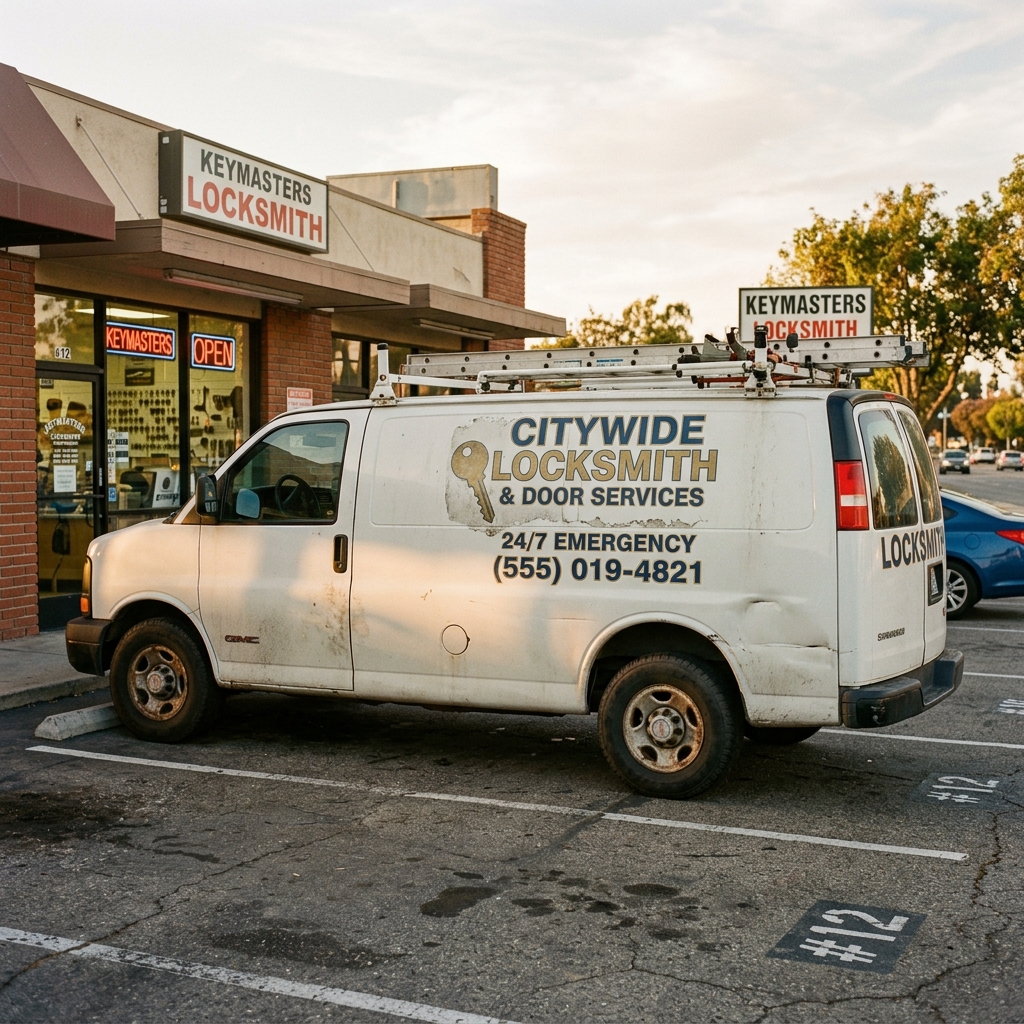
I watched my husband forget how to cut a key last Tuesday. Not a fancy key. Not a high-security commercial cylinder or a transponder fob with a chip in it. A house key. A regular brass house key for a regular front door. Ray has been a locksmith for 34 years. He cut his first key in 1991 in the back of his uncle's shop on Monroe Street when he was 23 years old and his uncle slapped him on the back and said "kid, you're a natural." He's cut, by his own estimate, somewhere north of 200,000 keys in his life. Houses. Cars. Padlocks. Mailboxes. Filing cabinets. The kind of work where your hands stop thinking and just do. And last Tuesday afternoon, in the shop he owns on Reynolds Road in Toledo, Ohio, I watched him fumble with a blank for 20 minutes while a woman named Linda waited at the counter. Linda is one of our regulars. She manages a small apartment building on Heatherdowns and we cut her tenant keys all the time. She came in with a worn-out original and asked for two copies. Five-minute job. She knows it's a five-minute job because she's stood at that counter probably 40 times in the last decade. Ray took the original. Walked over to the duplicator. Clamped the blank in the vise. Then his hand started shaking. Not bad. Not a tremor anybody would notice from across the room. But I saw it because I've been watching his hands for a long time now. Watching them in ways he doesn't know I'm watching. He couldn't get the alignment right. The blank kept slipping a little when he tightened the vise. He'd loosen it. Reposition. Tighten again. The original wouldn't sit flush in the guide. He pulled it out and looked at it like the key had betrayed him. I was at the desk pretending to do paperwork. I wasn't doing paperwork. I was watching my husband of 31 years lose 20 minutes of his life to a key that should have taken five. Linda was patient. Linda is always patient. She made small talk about the weather and her grandkids and how the salt trucks already came out last weekend even though there wasn't really enough snow to need them. Ray made small talk back. Smiled. Cracked a joke about getting old. The blank shrieked against the cutter wheel and the brass dust fell on the mat. When he finally handed her two keys, he held them out and his hand was shaking enough that the keys clinked against each other. She didn't say anything about it. She paid in cash. Told him to say hi to Mark, our son. Walked out into the gray November afternoon. Ray stood at the counter for a second. Then he turned around and walked into the back room and shut the door. I waited five minutes. Then I followed him. He was sitting on the metal stool we keep next to the blank rack, the one with the duct tape wrapped around one of the legs because it cracked four years ago and we never replaced it. He had a clipboard in his hand. He was pretending to inventory the rack. Counting blanks. Writing numbers down. His handwriting was barely readable. "Ray." "I'm fine." "Ray." "Linda was fine. Linda's been coming here forever. She doesn't care if it takes me a minute." "It took you 20 minutes." He set the clipboard down on the workbench and he didn't look at me and he said, very quietly, "I know it took me 20 minutes, Carol." I sat down on the milk crate across from him. We sat there for a while. The shop was empty. Outside on Reynolds Road a truck downshifted at the light and a kid on a skateboard rolled past the window. He said, "My hands don't do what I tell them to anymore." I didn't say anything. I just let him talk. He'd been holding this in for a long time. He said, "It started maybe two years ago. Little things. I'd drop a key in the parking lot bending down to lock the van. I'd miss the slot on a deadbolt the first try. Some mornings my knuckles felt like they had glass in them and I couldn't make a fist until I'd had two cups of coffee. I figured it was the cold. Or the years. Or all the times I jammed my fingers reaching into a lock cylinder. I figured every locksmith my age has hands like this." He said, "But it's getting worse, Carol. It's not just stiff. It's slow. My hands are slow. My fingers don't know where they are. I drop pins. I drop keys. I drop the springs out of the cylinder when I'm rekeying. I cut a brass blank on Friday and didn't even notice my finger was bleeding until I saw it on the cutter." I listened to my husband admit, out loud, for the first time in 34 years, that his hands were leaving him. Then he picked up the clipboard and pretended to count blanks again. I want to tell you about Ray for a minute, because if you don't know him, the rest of this doesn't land. Ray is 58 years old. He's not a tall man. He's about 5'9", with a barrel chest he got from his father and a head of gray hair he keeps cut close because if it gets too long it goes wild. He wears the same kind of shirt every day, navy or olive work shirt with his name stitched on the chest, jeans, brown work boots. He drives a 2008 GMC service van with our shop logo on the side and a dent in the back panel from when he backed into a dumpster in 2014 and never bothered to fix. He is the best locksmith in Lucas County. I don't say that as his wife. I say that because that's what other locksmiths say. He gets calls from guys 30 years younger than him asking how to handle a job. He's gone into 90-year-old apartment buildings downtown and rekeyed master systems that the previous locksmith left in such a tangled mess nobody else would touch them. He can listen to a tumbler and tell you what year the lock was made. His hands. His hands are his whole life. And his hands were leaving him. After we closed up the shop that Tuesday, I drove home in my own car and I cried in the parking lot of the Kroger on Glendale before I went in to pick up a rotisserie chicken for dinner. Just sat in the driver's seat with the engine off and cried for about 10 minutes. Not loud. Just steady. Because here's what nobody tells you about being married to a tradesman. When his body starts to go, his identity goes with it. Ray isn't Ray without his hands. He's spent 34 years being the man who can open anything, fix anything, cut anything. He's the guy people call at 11pm when they're locked out of their car in a Speedway parking lot. He's the guy old ladies in our neighborhood trust to come into their houses alone. If his hands stop working, who is he? A retiree? A guy who used to be something? He's not ready for that. He's 58. He has at least 10 good years of work in him. His father worked until he was 79. Ray's plan, the plan he's had since he was 30, is to work until 70 and then sell the shop to Mark, our son, and consult part-time and teach Mark the things you can only learn from being in this for 40 years. That plan was disappearing. I was watching it disappear in real time. I went into the Kroger. Bought the chicken. Bought a six-pack of Yuengling because Ray likes one with dinner on Tuesdays. Bought a bag of those frozen rolls that you can put in the oven for 12 minutes. In the checkout line, a woman behind me tapped me on the shoulder. "Carol?" It was Janelle. Ray's sister-in-law. Married to his younger brother Doug. They live up in Sylvania about 20 minutes north. We see them at Thanksgiving and on the Fourth of July and at the occasional family birthday, but we don't talk much in between. Janelle is a hairdresser. She's worked at the same salon on King Road for almost 30 years. She was buying a half gallon of skim milk and a pack of those fiber bars Doug eats. "Carol, hey. You look like you've been crying. You okay?" This is the thing about Janelle. She doesn't have a filter. Some people that drives crazy. I've always loved it about her. I told her I was fine. She raised an eyebrow at me. I told her, fine, Ray's been having a rough time with his hands and I'd just had a rough day at the shop. She set her milk down on the conveyor belt and she looked at me and she said, "His hands? Like, stiff hands? Achy?" I said yeah. Stiff. Slow. Shaky some days. Knuckles that feel like glass. Janelle nodded slowly. She said, "Come outside with me a minute. I want to tell you something." We walked out to the parking lot. It was cold. The wind was coming off the lake the way it does in November and the parking lot lights were already on at 5:30pm. She told me that for the last six or seven years, her own hands had been getting bad. Hairdresser hands. You stand on your feet eight hours a day and your fingers are gripping shears and a blow dryer and a round brush from 9am to 7pm. Her knuckles had swollen up. Her grip strength was so bad she couldn't open a jar of pickles without her husband. She'd started dropping shears. She'd started canceling appointments because she couldn't manage a full day on the floor. She'd been to two different doctors. The first one shrugged and told her it was normal wear from her job. The second one prescribed an anti-inflammatory that wrecked her stomach so badly she had to stop after three weeks. She thought she was going to have to retire at 58. From the only career she'd ever had. "And then?" I said. She smiled. Her hands were holding the milk jug by the handle, in a regular grip. She made a fist in front of me and opened it. Made a fist and opened it. "Look at that," she said. "I haven't been able to do that in five years." She told me about something her friend Marcia at the salon had been taking. An old fruit from Ayurvedic medicine. Indian gooseberry. Amla. I'd never heard of it. Janelle told me Marcia had been taking it for about eight months and her hands had completely turned around. Marcia is 61 and was about ready to hang up her cape and retire. Now she's training new stylists. So Janelle had tried it. Started in February. By Mother's Day she could open the jar of pickles. By the Fourth of July she could grip a round brush all day without aching. By Halloween she was working full eight-hour Saturdays and going home and still having enough left over in her hands to play with her granddaughter's dollhouse on Sunday. She told me the brand she'd ended up settling on after some trial and error. Alevia Amla. She said her son, who is in his second year of pharmacy school at the University of Toledo, had looked into it for her before she ordered it. Made sure it wasn't some scam. He told her amla was actually one of the more well-studied botanicals in the research literature, especially for inflammation and joint comfort. We stood in the Kroger parking lot for another 15 minutes. She told me everything she'd learned from her son. I'm going to try to explain it the way she did, because she explained it the way her son explained it to her, which means she explained it in plain English instead of doctor talk. The reason hands like Ray's and Janelle's start to hurt isn't really about the joints themselves wearing out, although that's part of it. It's about what's happening at a much smaller level. Inside every cell in your body, there are these tiny structures called mitochondria. They're the part of the cell that makes energy. When you're younger, you have a lot of mitochondria and they're all running clean. As you get older, especially if you've put your body through 30 plus years of physical work, the mitochondria start to slow down and the cells around your joints start running on less and less energy. When cells don't have enough energy, they can't do their housekeeping. They can't clean up the inflammatory junk that builds up in joint tissue. They can't keep the cushiony tissue around the knuckles properly maintained. So the joints get stiff. The grip weakens. The fine motor control goes. It's not just "you're getting old." It's that the engines inside your hands are running on less fuel. Janelle told me that amla, the actual fruit and the compounds in it, has been studied for its effect on something called AMPK. AMPK is like the master switch for cellular energy. When it's active, your mitochondria work harder and cleaner. Research suggests that amla's compounds, including emblicanins, can help support that signaling pathway. That can show up, over weeks and months, as better grip, less morning stiffness, and the kind of finger comfort that lets you button your own shirt again. It also happens to be one of the most antioxidant-dense fruits ever measured. Which matters because oxidative stress is one of the main things wearing down the cells in joint tissue in the first place. So you're hitting it from two directions. Less wear and tear from oxidative damage, and better energy production in the cells that are trying to recover. Janelle said her son told her the way to think about it is like trying to deliver lumber to a job site with no power. You can have the best framer in the world and a beautiful pile of lumber. If there's no power on site, no saws run, no nail guns work, the framer just stands there with sore hands. Doesn't matter how good he is. The work doesn't get done. Your cells are the same way. You can have all the right nutrients and the right rest and the right everything else, but if the mitochondria aren't producing enough energy at the cellular level, the maintenance work in your tissues doesn't happen. Amla helps support the power. That's it. That's the whole story. She said her son had told her something that stuck with me. He said amla is sometimes called "the nurse" in Ayurvedic tradition. Not the surgeon. The nurse. It doesn't barge in and force a change. It supports the body in doing what the body is already trying to do. I drove home that night with the chicken and the beer and the rolls and a folded receipt in my purse where Janelle had written down the website. alevia.com slash amla slash 33. Ray came in the door at 6:40 and washed his hands at the sink for a long time before sitting down at the table. He didn't say anything about the shop. I didn't either. I waited until after dinner. After the dishes. After he'd gone out to the garage to bring in the last of the firewood. I sat at the kitchen table with my laptop and I read everything I could find about amla. The research. The Ayurvedic background. The user reviews. The Alevia company page, where they explain that it's made in the USA, two capsules a day, comes with a 90-day money-back guarantee. I ordered a bottle. Free shipping. It arrived four days later in a brown padded mailer that I picked up off the porch on a Saturday morning while Ray was still asleep. I didn't tell him. Not yet. I knew my husband. If I came at him with a bottle of pills and a sales pitch, he'd dig in. He'd tell me he was fine. He'd tell me locksmiths have always had bad hands. He'd refuse to take them out of pride. So I put the bottle on the counter next to my own vitamins. The B12 I take. The magnesium I take for sleep. I left it sitting there like it was mine. Two days later, at breakfast, he picked it up. "What's this?" "Something Janelle told me about. She says it's been helping her with her hands." "Janelle's hands are bad?" "She told me they were almost ready to make her quit cutting hair." He turned the bottle around. Read the back. Read the front. "You taking these?" "I'm thinking about it. Two a day. She says it took her about two months to really notice." He set the bottle back down. "I might try one." That's how it started. I want you to understand. There was no sit-down conversation. No intervention. No "Ray, you need help." He took one capsule that Tuesday morning at breakfast because his sister-in-law had told his wife about it. That was the door. He took them every day after that. Two with breakfast. I watched the bottle go down a couple capsules at a time. Three weeks in, on a Wednesday morning, he was buttering toast at the counter and he stopped and looked at the butter knife in his hand and said, "Huh." I said, "What." He said, "My thumb didn't ache when I picked this up." That was the first thing. The second thing happened the next Friday. He came home from the shop and walked in and held up his right hand and made a fist. Closed it. Opened it. Closed it. Opened it. He said, "Carol, my hand isn't slow today." I didn't make a big deal of it. I just said, "That's good, honey." Five weeks in, he cut 14 keys for a property manager on a single Saturday morning. Came home and ate a sandwich and went back out to finish a rekey on a triplex in West Toledo. Twelve hour day. Sixty year old hands. He came home tired but not sore. He sat in his recliner and watched the Buckeyes game and his hands rested on the armrests and they didn't shake. Seven weeks in, Mark came over for dinner. Mark works with Ray three days a week. He's been quietly worried about his dad for about a year, the way grown sons quietly worry. Halfway through dinner Mark said, "Dad, what are you doing different?" Ray said, "What do you mean." Mark said, "You're working faster. You're not stopping to shake your hands out every 20 minutes. Yesterday you cut the BMW transponder in like four minutes. Last summer that would've taken you 15." Ray looked at me across the table. He smiled. He said, "Ask your mother." Three months in, we drove up to Sylvania for Doug and Janelle's anniversary dinner. Janelle hugged me at the door and held my hand and said, "How's he doing?" I said, "He's back." That's the only word that fits. He's back. The man I married 31 years ago. The one whose hands could do anything. Last Tuesday, exactly four months after I watched him struggle for 20 minutes with Linda's key, Linda came back into the shop to get a new key cut for a tenant who'd moved in. Ray took the original. Walked to the duplicator. Clamped the blank in the vise. Pulled the trigger on the cutter. Four and a half minutes start to finish. Two keys. Brass dust on the mat. His hand steady. Linda paid in cash. Told him to say hi to Mark. Walked out into the February sun. Ray stood at the counter and he looked at me and he smiled the smile he used to smile when he was 30 years old and showing off for me. If you've read this far, I'm guessing you know somebody whose hands are leaving them. Maybe it's your husband. Maybe it's your dad. Maybe it's you, reading this on your phone in the morning because your knuckles aren't ready to grip a coffee cup yet. If that's where you are, I'll tell you what I told my own sister last weekend when she called me crying about her own husband's hands. Alevia Amla isn't magic. It isn't a cure. It isn't going to undo 35 years of physical work on a workbench. But it gave my husband his hands back. It's two capsules a day. Made in the USA. Free shipping. And they back it with a 90-day money-back guarantee, which means if you take it for three months and your hands don't feel any different, you send the empty bottle back and they refund you. Every penny. I don't know what else to tell you. I'm not a doctor. I'm a 57-year-old woman who works the front desk of her husband's locksmith shop in Toledo, Ohio, and I watched my husband come back to life. If you want to try it, here's where Janelle sent me. 👉 alevia.com/amla/33 P.S. The thing that gets me most isn't the keys. It isn't the work. It's that Ray came up behind me last Sunday morning while I was making coffee and he put his arms around me and his hands rested on my hands at the counter and I could feel him holding me. Really holding me. Not the loose, half-numb way he'd been holding me for the last two years. Holding me like he used to. I almost cried into the coffee maker. P.P.S. About the guarantee. I want to make sure you actually heard this. 90 days. Three full months. That's longer than Janelle needed to know it was working. That's longer than Ray needed. You take it for 90 days, and if your hands don't feel different, you send back what's left and they refund you. There's no version of this where you're out money. You're either getting your hands back or you're getting your money back. P.P.P.S. I checked the website again before I posted this because I wanted to make sure I had the link right. They were running low on the November batch. I don't know how their inventory works. I'm just telling you what I saw. If you've read this far, don't sit on it for a week. Order the bottle. Put it on the counter next to your vitamins. See what happens. 👉 alevia.com/amla/33
Like this ad? Make it yours.
Crush rebuilds this exact creative around your product — your brand, your colors, your offer — in about a minute.