
Active· since Mar 14, 2026
- 189
- days running
- 1
- relaunches
Ad copy
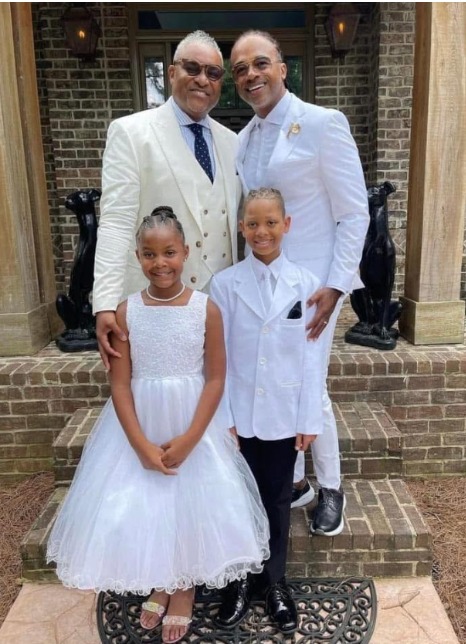
My husband — the pastor of our church — came out as gay in front of our entire congregation, and it nearly killed me. Literally. My name is Tamika. I'm a 52-year-old mother of four. And right here in this post, I'm going to share the most humiliating, devastating moment of my entire life... and what happened immediately after that almost put me in the ground. So let me start from the beginning. My husband Jeremiah and I built Greater Hope Fellowship from nothing. Thirty-one years ago, we started with folding chairs in a rented storefront on Martin Luther King Boulevard. Forty people. A keyboard player who could only play in three keys. And a man I believed God had called to lead. I was beside him for everything. When the church grew to 200 members, I organized the women's ministry. When we broke ground on the new building, I was the one on the phone with contractors at 6 AM while getting the kids dressed for school. When Jeremiah preached on Sunday mornings, I sat in the front pew with my Bible open, nodding, believing every word. Pastor and First Lady. That's who we were. But behind closed doors, something was missing. For years — and I mean years — Jeremiah pulled away from me. Physically. Emotionally. The kind of distance you can feel across a king-sized bed even when you're lying two feet apart. I'd reach for him at night and he'd already be turned toward the wall. I'd try to initiate something and he'd say he was tired. Stressed about the church. Burdened by the weight of ministry. And I believed him. Because what else was I supposed to believe? This was a man of God. A man who preached about covenant and commitment and the sanctity of marriage every other Sunday. A man the whole community respected. So I turned the blame inward. I started picking myself apart. Maybe I'd gained too much weight after the last baby. Maybe I wasn't desirable anymore. Maybe I needed to try harder — cook better, dress better, pray more, complain less. I remember standing in front of the bathroom mirror one morning, pulling at the skin under my chin, staring at the gray coming in at my temples, thinking: He doesn't want you, Tamika. Look at you. I carried that shame for over a decade. And on top of the rejection, my body had been breaking down in ways I couldn't explain. My knees throbbed every morning when I got out of bed. My hands swelled so bad some days I couldn't get my wedding ring on. I had this heaviness in my chest — not sharp pain, just a constant pressure, like someone was sitting on my sternum. I was exhausted by noon. Brain fog so thick I'd forget what I walked into a room for. I'd be leading Bible study on Wednesday nights and lose my train of thought mid-sentence. I mentioned all of this to my doctor. Every single visit. And every single time, I got the same answer. "Tamika, you're in your fifties. This is just part of aging. Try some ibuprofen for the joints. Get more sleep." He'd scribble a prescription and send me on my way. I tried turmeric because my sister Paulette swore it changed her life. I tried fish oil capsules. I tried glucosamine. I tried apple cider vinegar mixed in warm water every morning because a woman in my prayer group said it cured her arthritis. Nothing made much difference. But I figured — this is just what getting older looks like. Your body hurts. Your husband doesn't touch you. You smile on Sunday and cry on Monday. You keep going because that's what women like me do. But after 31 years of marriage, nothing could have prepared me for the real reason my husband pulled away from me. It was the first Sunday of November. Harvest Sunday. Our biggest service of the year outside of Easter. The sanctuary was packed — 400 people, maybe more. Deacons in their white. The choir in burgundy robes. Flowers on the altar. Children squirming in the back rows. I was in my usual seat. Front pew, left side. My daughter Kayla beside me. My mother on the other side, fanning herself with a church program. Jeremiah had been acting strange all week. Quiet. Barely eating. I'd catch him sitting in his office at the church staring at nothing, his Bible closed on the desk in front of him. I asked him three times if something was wrong. Each time: "I'm fine, Tamika. Just preparing for Sunday." The service started normally. Praise and worship. Offering. The choir sang "Great Is Thy Faithfulness" and the whole congregation was on their feet. Then Jeremiah walked to the pulpit. He stood there. Didn't open his Bible. Didn't greet the congregation the way he always did — "Good morning, Greater Hope, isn't God good?" He just stood there. Gripping the sides of the pulpit with both hands. The sanctuary went quiet. I felt something cold run through my chest. Like ice water in my veins. He cleared his throat. "Church... I need to say something today that I should have said a long time ago." His voice cracked on the word today. "I have stood in this pulpit for 31 years and preached to you about truth. About living an honest life before God. About not hiding in the darkness." He paused. His jaw tightened. "But I have been hiding. And I can't do it anymore." The sanctuary was dead silent. You could hear the ceiling fans turning. My mother reached over and grabbed my hand. She didn't know why. She just felt it. The way mothers do. "I am..." Jeremiah closed his eyes. "I am a gay man. I have been my entire life. And I have lied to this church, to my family, and to myself for 31 years because I was afraid." I heard my daughter gasp beside me. I heard murmuring ripple through the congregation like wind through tall grass. But I didn't hear any of it. Not really. Because the moment those words left his mouth, something inside my chest seized. Not emotionally. Physically. A crushing, searing pain exploded behind my sternum. Like someone had reached into my chest and squeezed my heart with a fist. I couldn't breathe. My vision tunneled. The stained glass windows blurred. The burgundy choir robes dissolved into smears of color. I grabbed for the pew in front of me. Missed. My mother screamed my name. "TAMIKA!" I felt my body tilt sideways. Felt the cold tile of the church floor against my cheek. I could hear voices — so many voices — shouting, praying, crying. Someone was saying "Call 911!" Someone else was saying "Give her room!" And somewhere above it all, I heard Jeremiah. "Tamika — oh God — Tamika!" Then everything went black. The next thing I remember is fluorescent lights. Bright. White. Buzzing. Machines beeping in a rhythm I didn't recognize. An IV in my left arm. Wires taped to my chest. A blood pressure cuff squeezing my bicep every few minutes. My daughter Kayla was sitting in a chair next to the bed. Her eyes were swollen. Mascara streaked down her cheeks. I tried to speak. My throat was dry. "Mama." She grabbed my hand. "Don't try to talk yet." Jeremiah was nowhere in the room. A few minutes later, a woman in a white coat walked in. She introduced herself as Dr. Anita Jeffries, a cardiovascular specialist. She pulled a chair up next to my bed. I asked her what happened. Dr. Jeffries explained, very calmly, that I had been in a medically induced coma for the past 48 hours. I had collapsed from acute heart failure. My heart had stopped beating on the floor of that church. The paramedics got there within nine minutes. They shocked my heart twice before it restarted. I stared at her. Heart failure. That couldn't be right. I'm 52. I don't smoke. I don't drink. I walk the track at the park three mornings a week. I cook my own meals. I take my vitamins. How could my heart just stop? Dr. Jeffries looked at me with an expression I will never forget — gentle, but heavy. Like she'd delivered this news too many times to too many women who looked just like me. She told me that my husband had explained what happened at the church. He had to — it was relevant to understanding why I collapsed. She said the emotional shock of hearing Jeremiah's confession triggered the cardiac event. But then she said something that changed everything. She said even if Jeremiah had never stood up in that pulpit — even if that Sunday had been completely normal — my heart was already failing. The collapse would have happened eventually. Could have been carrying groceries in from the car. Could have been climbing the stairs at church. Could have been playing with my grandchildren in the backyard. My arteries were severely blocked. Blood was barely reaching my heart. And the reason? Something that had been building inside me silently for years. Chronic inflammation. I looked at her like she'd switched to a foreign language. Inflammation? I thought that was just a word they put on supplement bottles. My joints hurt and I was tired — but that couldn't cause heart failure. Could it? She asked me how long I'd been dealing with joint pain, stiffness, and fatigue. I told her years. At least seven or eight. She nodded slowly. Like she'd heard this answer a hundred times before. Then she said: "Tamika, bear with me. Because what I'm about to explain is something most doctors never connect for their patients — and it's the reason Black women die from heart disease at nearly twice the rate of white women in this country." That got my attention. She explained that inflammation is supposed to be temporary. You cut your finger, your body sends help to fix it, and then the inflammation shuts off. Simple. But for most people over 40, it never shuts off. She said: "Think of it like a row of dominoes. The first domino — the one that starts it all — is oxidative damage. Destructive molecules called free radicals attack your healthy cells. That triggers your immune system. Your immune system fires off inflammatory chemicals. And those chemicals cause everything you feel — the pain, the swelling, the stiffness, the fog." She looked at me. "Tamika, every treatment you've tried — the ibuprofen, the turmeric, the fish oil — they target the last dominoes. The pain. The swelling. But none of them touch the first domino. None of them stop the free radicals that start the whole thing." She called it the Downstream Treatment Trap. "It's like trying to stop a flood by bailing water. You can bail faster. Get a bigger bucket. But as long as the pipe is burst, you will never get ahead." I asked her what damage specifically. That's when she explained what chronic inflammation does to your blood vessels. She said two things happen when inflammation stays active for years. And both of them can kill you. First: your arteries stiffen. She said when your body is inflamed for years, the walls of your blood vessels get irritated. They lose their flexibility. They tighten up. "Imagine trying to drink a thick smoothie through a pinched straw," she said. "That's what your heart has been doing — straining to push blood through arteries that won't open." Blood pressure rises. The heart muscle thickens. That heaviness in your chest? That was your heart fighting to keep up. Until one day, it can't. Second — and this one was worse — the inflammation destroys the inside of your arteries. She said when your body is stuck in attack mode for years, it overproduces free radicals — aggressive molecules that are supposed to clean up damage and then disappear. But when they're being produced around the clock, they start destroying healthy tissue instead. She called it oxidative stress. "Think of a healthy artery like a smooth glass pipe," she said. "Everything flows through cleanly. Nothing sticks. But years of oxidative stress turn that smooth glass into sandpaper." And once the walls are rough, everything catches. Cholesterol. Calcium. Cellular waste. It builds up. Layer by layer. Hardens into plaque. Plaque that blocks blood and oxygen from reaching your heart. Dr. Jeffries said: "Tamika, that is what nearly killed you. Your arteries were blocked." She paused. Then she said softly: "This is why cardiovascular disease kills more Black women than breast cancer, lung cancer, and diabetes combined. We're walking around with years of chronic inflammation silently stiffening and blocking our arteries. And most of us have no idea until we end up in a bed just like this one." I thought about my grandmother. She died of a stroke at 63. Everyone said it was high blood pressure. I thought about my Aunt Lorraine. Heart attack at 58. Everyone said it was stress. Nobody ever said it was chronic inflammation. Dr. Jeffries told me that almost no doctor connects these dots. They don't teach the inflammation-to-cardiovascular pathway properly. The research exists. It's been published. But it's not making it into the exam room. Women come in with joint pain and get sent home with ibuprofen. They come in with fatigue and get told to sleep more. They come in with high blood pressure and get prescribed medication. Nobody is looking upstream at the chronic inflammation that's causing all of it. She said: "The supplements you tried — the turmeric, the fish oil, the glucosamine — they were better buckets. Nobody ever showed you where the shut-off valve is." I sat in that hospital bed staring at the ceiling. Kayla was holding my hand so tight her knuckles were white. All I could think was: I almost died on the floor of the church I helped build. In front of 400 people. In front of my children. In front of my mother. And it wasn't just because of Jeremiah. It was because something had been silently destroying me from the inside for years while every doctor I saw told me it was "just getting older." I asked Dr. Jeffries what I needed to do. She pulled her chair closer. She said there were two things that needed to happen at once. "First — you need to stop the free radicals that are starting the whole cascade. The first domino. Kill it at the source." "Second — you need to open your blood vessels back up. They've been stiff and narrow for years. Even if you stop the damage, blood still can't flow if the arteries won't open." Then she said: "Tamika, you need both. One without the other doesn't work." She put it to me like this: "Imagine a building on fire with a blocked exit. Put out the fire but leave the exit blocked — people are still trapped. Open the exit but leave the fire burning — you're pushing people into the flames." "You need to put out the fire AND clear the exit. Same time." I understood immediately. She said there's one molecule that does both. I asked what it was. She said: "Molecular hydrogen." I almost laughed. Hydrogen? Like the gas? She smiled. Said she gets that reaction every time. Then she broke it down simply. Molecular hydrogen — H2 — is the smallest molecule in existence. So small it can get inside places nothing else can reach. Inside your cells. Inside your mitochondria. Deep inside the walls of your blood vessels. That's where the free radicals are doing their damage. And that's exactly where hydrogen goes. "Most antioxidants — vitamin C, turmeric, all of it — they're too big," she said. "They can't get past the cell walls. They're fighting the battle from outside the building. Hydrogen walks right through the front door." And here's what makes it different from every other antioxidant: it's selective. It only targets the most destructive free radicals — the hydroxyl radicals that are roughening your arteries and triggering the whole cascade. It leaves the beneficial ones alone. The ones your immune system actually needs. "That's the fire being put out," she said. "At the source. At domino one." But hydrogen does something else too. She explained that when free radicals have been destroying your blood vessels for years, they kill off the cells responsible for producing nitric oxide — the molecule that tells your arteries to relax and open up. Without it, your blood vessels stay tight and narrow. By stopping the free radicals, hydrogen lets those cells heal. They start producing nitric oxide again on their own. Your vessels relax. Blood flows. "This isn't like blood pressure medication forcing your arteries open," she said. "This is your body healing and doing it naturally." She leaned back. "One molecule. Puts out the fire and clears the exit." I asked her why nobody talks about this. She sighed. She said the standard approach is ibuprofen. Naproxen. Celebrex. They block the pain signal. And yes, the pain goes away fast. But they can't touch the free radicals. Can't stop the oxidative stress. Can't open your arteries. They silence the alarm while the fire keeps burning. I asked about turmeric — I'd been taking it for months. She said turmeric has real anti-inflammatory properties. But the molecules are too big. Less than 5% even gets absorbed, and what does get through can't reach inside your cells where the damage is actually happening. "Turmeric calms things on the surface," she said. "But it can't reach the fire inside the cells." Fish oil, glucosamine — same story. Too big. Working downstream. Treating symptoms while the first domino keeps falling. She looked at me: "Tamika, everything you tried was a better bucket. Hydrogen is the shut-off valve." But then she warned me — most hydrogen products on the market don't work. She said the biggest problem is concentration. Most hydrogen tablets deliver 2-3 parts per million. Clinical research uses 7 PPM or higher. At 2-3 PPM, you're not getting enough to make a real difference. "It's like trying to put out a house fire with a cup of water," she said. "Right idea. Not nearly enough." The second problem is delivery. Hydrogen water bottles and machines lose most of their hydrogen to the air before you even drink it. Hydrogen is the lightest element on earth — it escapes within minutes. By the time you take your first sip, most of it's already gone. The only delivery method that works is effervescent tablets dissolved in water and taken immediately — so the hydrogen generates right when you drink it. I asked her what I should take. She said there's one brand that gets it right. 12 parts per million — six times stronger than most products. Magnesium-based effervescent tablets. Third-party lab tested. No fillers. No additives. Just pure molecular hydrogen. She takes it herself every morning. Gives it to her own mother, who had a similar scare four years ago. Then she wrote the name on a piece of paper and handed it to my daughter. PrimeCell H2. 12 PPM molecular hydrogen tablets. She said it's not something you'll find at a Walgreens or a CVS. Kayla would have to order it online. But she told me this is essential for any woman — especially any Black woman over 40 — dealing with chronic inflammation who wants to protect herself from what happened to me. She could prescribe blood pressure medication and statins to manage symptoms. But unless I addressed the root cause — the oxidative stress and chronic inflammation silently destroying my blood vessels — it would happen again. And next time, I might not be so lucky. Two days later, I was discharged. Kayla ordered a 3-month supply of PrimeCell H2 that same night. The tablets arrived three days later. Instructions said to drop one tablet into a glass of water, let it dissolve, and drink it once daily. I started that evening. Here's what happened: Week 1: I dropped the first tablet in a glass of water and watched it fizz. Easy to take. No aftertaste. No stomach issues — which I always had with ibuprofen and turmeric. Nothing dramatic happened that first week. Dr. Jeffries told me to be patient. The hydrogen needs time to start neutralizing the accumulated free radical damage, and the cellular repair process doesn't show visible results overnight. So I took it every morning. Right after my devotional. Made it part of my routine. Week 2: The brain fog started lifting. That thick, heavy feeling behind my forehead — the one I'd been living with for years, the one that made me lose my train of thought during Bible study — it was clearing. I felt sharper. More present. The stiffness in my hands when I woke up was noticeably less. I could grip my coffee mug without wincing. I didn't need to sit on the edge of the bed for five minutes waiting for my knees to cooperate before I stood up. Week 3: The heaviness in my chest — that constant pressure I'd been carrying for years — was gone. Just gone. I was sleeping through the night. I had energy I hadn't felt since my forties. I walked the track at the park for the first time since the hospital and did three laps without stopping. Not winded. Not stiff. Strong. Week 4: I went back to see Dr. Jeffries for my follow-up. She ran the bloodwork. My inflammatory markers had dropped significantly. My blood pressure had stabilized. The vascular stiffness measurements showed real improvement. She looked at the numbers, looked at me, and said: "Tamika, whatever you're doing — keep doing it. These numbers are excellent." She didn't gush. She didn't get excited. She just nodded, with this quiet expression that said: This is exactly what I expected to see. That meant more to me than any compliment. Now let me tell you where things stand. Jeremiah and I are separated. He moved out of the house the week after I came home from the hospital. I won't pretend that doesn't hurt. Thirty-one years. Four children. A church we built together. A life I thought was real. Some days I'm angry. Some days I grieve. Some days I pray for him and some days I can barely say his name. But I'll tell you what I'm not doing anymore. I'm not dying. I'm not letting chronic inflammation silently destroy my body while doctors tell me it's "just getting older." I'm not swallowing pills that work on the surface while the real damage happens inside my cells where nothing can reach it. And I'm not sitting in a hospital bed while my daughter holds my hand and wonders if her mother is going to wake up. I'm telling you this story because I need you to hear it. Because Black women are dying from heart disease at rates that should make the news every single night. And most of us have no idea that chronic inflammation — the kind that shows up as joint pain, stiffness, fatigue, brain fog, swelling — is the silent engine driving it. We push through. We take care of everybody else. We pray about it and keep going. And all the while, our arteries are stiffening. Plaque is building. The first domino keeps falling. Nobody tells us. Nobody connects the dots. Until we collapse in a church. Or a kitchen. Or a grocery store parking lot. I don't want that for you. If you're a woman over 40 — especially a Black woman — and you've been dealing with joint pain, stiffness, swelling, fatigue, brain fog, or that heavy feeling in your chest that doctors can't explain: You may be at risk right now. That inflammation you've been managing with ibuprofen or turmeric or prayer and a heating pad? It's not just making your knees ache. It may be silently stiffening and blocking your arteries. You might not feel it yet. I didn't either. Until I woke up in a hospital bed with my daughter's mascara-streaked face staring back at me. According to Dr. Jeffries, the most effective way to protect yourself is to address both sides of the problem simultaneously — neutralize the free radicals that are driving the inflammatory cascade AND restore the nitric oxide production that opens your blood vessels. And the only molecule that can do both — that can reach inside every cell, every mitochondria, and selectively target the most destructive free radicals while allowing your body to restore nitric oxide naturally — is molecular hydrogen at therapeutic concentration. That means PrimeCell H2. Now here's the thing. If you were to buy a separate turmeric supplement, a separate omega-3, glucosamine for your joints, and a standard antioxidant blend — and still not reach the free radicals inside your cells where the real damage is happening — you'd be spending upwards of $120 a month. And you'd be swallowing a handful of pills every day, hoping they work together. PrimeCell H2 delivers what none of those can. 12 PPM of pure molecular hydrogen — six times the concentration of standard hydrogen products — in one daily tablet dissolved in water. The hydrogen reaches every cell in your body within minutes. A single bottle costs less than what most people spend on ibuprofen and turmeric combined. But right now, for women reading this post, PrimeCell is offering a special introductory price that makes it even more accessible. I'm not going to pretend I negotiated some deal. The truth is, after I shared my story with the PrimeCell team, they wanted to make it as easy as possible for women dealing with inflammation to try it. So they've set up a special link where you can get PrimeCell H2 at a significant discount from the regular price. And because they know that if you're dealing with chronic inflammation, there's a good chance your mother, your sister, your daughter, or your best friend from church is dealing with it too — they're including bundle pricing that lets you stock up and share. Click here to check the current pricing and availability I know they sell out regularly — 12 PPM therapeutic-grade hydrogen tablets at this quality level aren't mass-produced — so I'd encourage you to check while it's still in stock. And here's what makes this a no-brainer. PrimeCell offers a full 90-day money-back guarantee. That means you can try it for 90 days. See if your joint stiffness improves. See if the swelling goes down. See if the brain fog clears. See if you sleep better. See if you wake up with more energy than you've felt in years. And if for any reason you don't feel a difference, they'll refund every penny. No questions asked. 90 days. That's three full months to decide if it works for you. There is zero risk. So don't wait until you collapse. Don't wait for a heart scare. Don't wait until you're the one on a stretcher while your children scream your name. We have spent our whole lives being strong for everyone else. Holding families together. Holding churches together. Holding communities together. No more smiling on Sunday and suffering on Monday. It's time to take care of ourselves. Click the link below to check if PrimeCell still has the 12 PPM Molecular Hydrogen tablets in stock. If they're in stock, grab a supply. You'll be glad you did. I wish I had known about this before I collapsed on the floor of the church I helped build with my own hands. Don't let what happened to me happen to you. 👉
PrimeCell H2
PrimeCell H2 is a next-generation molecular hydrogen tablet designed to selectively neutralize the most damaging free radicals in your body - at the cellular level, right where aging actually happens.
LEARN MORELike this ad? Make it yours.
Crush rebuilds this exact creative around your product — your brand, your colors, your offer — in about a minute.