Deborah Rustad
Deborah Rustad Facebook ad: “Best mineral for rheumatoid arthritis pain?”
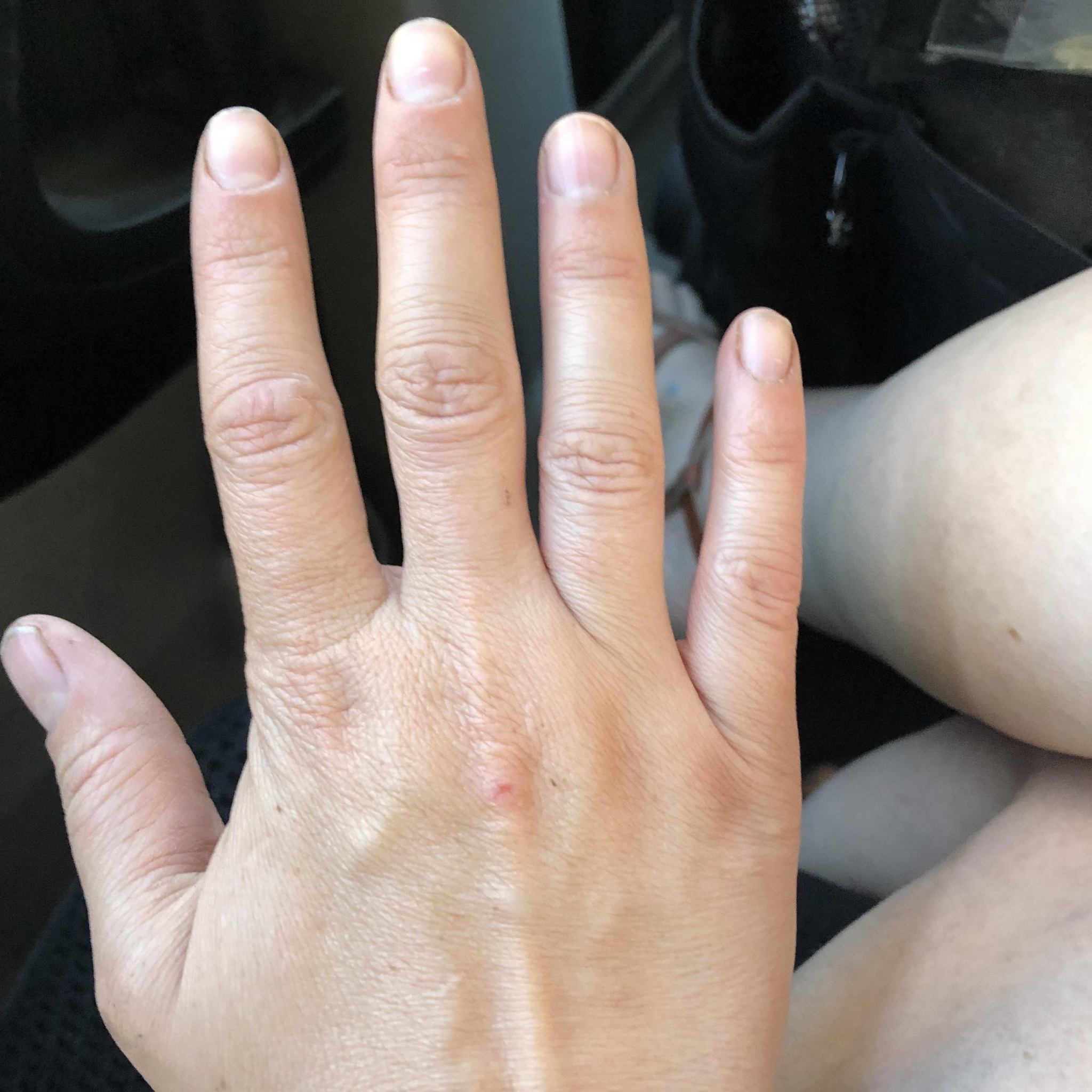
Ran for 36 days, from August 24 to September 29, 2026, the last day Crush saw it.
Run by Deborah Rustad on Facebook. Crush is not the advertiser and does not verify its claims. See this ad in Meta's Ad Library(opens in a new tab)
Want an ad like this for your product?
Crush makes new ad images for your product from this ad: your logo, your product photo, your offer.
Trials from $19.95 USD, then $79.95 USD a month. Cancel anytime.
About this ad
- Meta Ad Library ID
- 1600483648466951
- Platforms
- Facebook, Instagram, Audience Network, Messenger and Threads
- Relaunches
- 0
Ad text
If you're over 55 with hands that feel like they've aged 30 years overnight, joints that scream at you before your feet even hit the floor, and you've swallowed enough ibuprofen to fill a goddamn bathtub while your doctor keeps saying "your bloodwork looks fine"... I'm about to show you the one thing that's been quietly making your arthritis significantly worse for years. And no, it's not your age. It's not your genetics. It's not "just how it is." It's something your rheumatologist has never once checked for. Something your medication does absolutely nothing to fix. Something that's been draining from your body every single day while your inflammation runs unchecked. And until you address it? Your mobility will keep declining. Your morning stiffness will keep getting worse. Your grip will keep weakening. No matter how many injections you take. No matter how "stable" your bloodwork looks. By the end of this, you're going to understand what's actually happening inside your joints and your muscles better than most of your doctors do. And you're going to be p*ssed that nobody told you sooner. But I'm getting ahead of myself. Let me back up. My name is Dr. Rebecca Torres. Board-certified integrative wellness specialist. Eighteen years treating inflammatory conditions including arthritis and fibromyalgia. Over 2,800 patients. And I'm going against the grain of my own profession to tell you this. Because there are three things happening right now: One. Your body has been running on depleted mineral reserves for years, and your meds do nothing to help replenish them. Two. The medical system keeps celebrating "stable bloodwork" while your mobility declines because nobody is addressing the deficiency driving your inflammation. And three. There's a treatment model that costs thousands a year to mask the pain but spends zero dollars fixing the mineral depletion fueling it. So let me tell you what happened with one of my patients, because her story is going to change how you understand inflammatory joint pain forever. Her name was Patricia. 64 years old. Diagnosed with rheumatoid arthritis seven years ago. For THREE years, and I mean three full years, she watched her body slowly betray her. It started with her hands aching by mid-morning. Just a stiffness she'd push through. Then her knees started swelling when she tried to climb stairs. Then her grip weakened enough that she dropped her coffee mug so many times her husband bought her a plastic cup as a joke. Neither of them laughed. Her mobility got less reliable every season. She couldn't walk to the end of the driveway without her hips screaming. Couldn't carry a plate of food to the table without being afraid she'd drop it. Couldn't get out of a chair without gripping the armrests with both hands and pausing on every movement. She'd been on Humira for four years. Thousands of dollars a year. Her inflammation markers had improved. Her bloodwork looked stable. By every medical measure, her treatment was "working." But she was losing mobility. Slowly, quietly, steadily. The kind of loss that doesn't show up on a blood test but shows up in your life every single day. She stopped going to the farmers market because her joints couldn't handle the walking. Stopped accepting dinner invitations because the walk from the car to the restaurant was exhausting and embarrassing. Stopped gardening because kneeling down drained her by noon. Her daughter started researching mobility scooters. Patricia was 64 years old and her family was planning for the worst. And here's what nobody tells you about chronic inflammation: It's not just a disease that attacks your immune system. It depletes the magnesium your muscles and nerves desperately need to function, disrupting the signals that control muscle relaxation and pain response throughout your body. That's why your joints ache. That's why your muscles won't relax properly. That's why you can think "move" but your body responds with stiffness and pain, or not at all. And while your meds suppress the inflammatory response, they do absolutely nothing to replenish the magnesium that's already been drained. Your treatment calms the fire. It doesn't rebuild the foundation. And here's what makes me angry: I was one of the specialists she came to see. Multiple doctors. Her rheumatologist. An arthritis specialist. Me, the integrative wellness expert. We're talking thousands of dollars in appointments, bloodwork, injection treatments, the works. And you know what every single one of us focused on? The immune response. The inflammation markers. The bloodwork. "Your Humira is working. No elevated CRP. Great news." "The joint pain? That's damage that's already been done." "Let's fit you for a wrist brace." "Let's try meloxicam for the stiffness." DAMAGE THAT'S ALREADY BEEN DONE. This woman's mobility was declining every month and we were congratulating ourselves that her bloodwork looked stable while handing her a brace and pills that stress the stomach to loosen stiff joints. But here's where it gets worse, and this is the part that changed everything for me. Her Humira was working. No elevated markers. Stable bloodwork. By every rheumatological measure, her arthritis was "well managed." But her walking? It got WORSE. Her grip? WEAKER. Her flexibility? Less reliable every month. We kept saying "your inflammation is stable" while she was losing her ability to move across a room. And the meloxicam we gave her for the stiffness made her stomach so irritated she could barely eat past lunch. We were trading one problem for another while the underlying deficiency sat there, unsupported, getting harder to correct with every month that passed. I watched this woman, who took every injection on schedule, showed up to every appointment, did everything right, lose more function every single month. Despite "stable" inflammation. And I didn't understand why. Until a nutritional biochemistry researcher at a conference said something that made me question two decades of practice. October 2021. Denver. American College of Rheumatology annual meeting. I was attending a session on arthritis treatment outcomes. Most of it was the usual pharmaceutical pipeline updates. New biologics in trials. Modified injection schedules. Incremental improvements to the same immune-focused approach. During the Q&A, a woman stood up. Early sixties. Composed. Spoke with the precision of someone who'd spent decades studying something most clinicians take for granted. Her name was Dr. Eleanor Vance. Thirty years in nutritional biochemistry research. Published extensively on magnesium deficiency, inflammatory cascades, and the mineral requirements for proper muscle function. Currently leading a research programme on why joint mobility continues declining despite successful immune modulation. She asked the panel a question that silenced the room: "We spend thousands of dollars a year per patient suppressing the immune response. But what are we doing about replenishing the magnesium that inflammation has already depleted? Because we're calming the fire while the foundation crumbles. The mobility loss isn't from new inflammation. It's from mineral depletion that nobody is helping the body restore." The panel gave a polite non-answer. But I followed her out of the room. She gave me fifteen minutes. I stayed for two hours. What she taught me rewired how I understand inflammatory mobility loss completely. She sat down in the hotel lobby and pulled up data on her laptop. "Your treatment model has one speed: suppress the immune response with drugs. That's essential. But it's only half the equation. The other half is whether the body has the mineral reserves to actually support muscle and joint function. And after years of chronic inflammation, it almost never does." She turned the screen toward me. "There are three things happening in an inflamed body that your treatment doesn't address. And they're the three things that determine whether your patient's mobility stabilises or keeps declining despite 'stable' bloodwork." Number one: Chronic magnesium depletion. "Magnesium is the mineral your muscles need to relax and your nerves need to calm pain signals. Without it, muscles stay contracted around joints, amplifying pressure and pain. Your body has an entire relaxation system ready to ease the tension. The workers are willing. The blueprint exists. But nobody is delivering the building materials. That's your mobility loss. A mineral shortage your meds were never designed to fix." Number two: Persistent muscle tension. "Inflammation triggers a tension cascade that doesn't just stop when the immune response slows down. Chronic tension persists around the damaged joints, actively blocking proper movement. Your muscles are trying to protect damaged areas, but they're stuck in a contracted state that your meds were never designed to release. It's like trying to move freely while wearing a suit of armor that won't unbuckle." Number three: Nervous system overload. "The inflammatory process and the tension produce massive stress on your nervous system. Pain signals are amplified through depleted nerve pathways, the exact pathways that should be calming the response. Every day that mineral depletion continues unchecked, more of your pain threshold gets compromised. Your tolerance is getting lower." She closed the laptop. "Your patient Patricia? Her Humira is suppressing the immune attack. Good. Essential. But her body has depleted magnesium, so it can't relax muscles. Chronic tension is blocking normal movement. And nervous system overload is amplifying every pain signal. Her bloodwork is 'stable' because the immune attack is controlled. Her mobility keeps declining because the mineral foundation has crumbled. She's getting worse because the depletion is going unsupported." I felt sick. Because she was right. Patricia wasn't declining because her arthritis was progressing. She was declining because her body didn't have what it needed to function. And we were celebrating stable bloodwork while her mobility slipped away. And here's the part that made my blood boil: The research world KNOWS about all three of these factors. Magnesium depletion, chronic muscle tension, and nervous system overload in inflammatory conditions are extensively studied. There are published papers showing that proper magnesium supplementation can reduce inflammation, relax chronic muscle tension, and calm overactive pain signals throughout the body. There's a specific form of magnesium called bisglycinate that actually reaches your muscles and nerves where it's needed most. It's one of the few forms that doesn't upset the stomach and directly supports muscle relaxation and nerve function. Give the body the building materials and the relaxation process can finally proceed. This form has been shown to calm the nervous system and reduce the chronic tension blocking normal movement. It releases the contracted muscles around damaged joints so your body can actually move freely again. You're addressing the tension that's been keeping your mobility stuck. Proper magnesium supports balanced inflammatory response. It helps regulate the stress signals that amplify pain perception, and promotes the deep restorative sleep your body needs to consolidate healing overnight. Sleep is when your body does its heaviest repair work. Better sleep means faster recovery. Disrupted sleep means your body loses the progress it made during the day. Absorbable magnesium boosts cellular energy, reduces muscle fatigue, and combats the crushing exhaustion that drains arthritis patients by midday. More energy during walks. Less exhaustion from daily movement. The physical endurance to actually use the mobility your body is working to restore. The science is there. It's published. It's peer-reviewed. But you'll never hear your rheumatologist recommend a magnesium supplement. Why? Because pharmaceutical companies don't sell mineral supplements. They sell thousand-dollar injection treatments. There's no recurring revenue in a daily supplement that gives your body the building materials it's been missing. There IS recurring revenue in the treatment model that suppresses the attack while the foundation sits depleted. A patient on the standard arthritis protocol pays thousands or more per year in biologic drug costs. Plus $150 to $300 per physical therapy session. Plus $200 to $1,500 in mobility aids. Plus $50 to $200 per month in NSAIDs like meloxicam that irritate the gut to loosen stiff joints. For a treatment approach that calms the inflammation but does nothing to replenish the minerals. A daily magnesium supplement that supports the restoration process your treatment plan has been missing? Less than $1 per day. The system isn't designed to rebuild what inflammation has depleted. It's designed to suppress the symptoms and bill you while the foundation sits empty. Dr. Vance showed me the research on what she called "the missing half," the mineral support that your biologic was never designed to provide. Addressing it requires three things simultaneously: 1. Magnesium replenishment, a form that actually absorbs and reaches your muscles and nerves. The building material your relaxation system is starving for. Without it, tension persists. With it, the relaxation process your body has been trying to run finally has the raw materials to work with. 2. Muscle tension release, support that reduces the chronic contraction blocking normal movement. Release the armor. Calm the guarding response. Let your muscles actually relax. 3. Nervous system calming, support that reduces the amplified pain signals exhausting your tolerance. Protect the threshold. Preserve the calm your body needs for recovery. Stop your pain sensitivity from increasing. These aren't exotic theories. These are established mechanisms with published evidence behind each one. But you'll never see them on a prescription pad. Because you can't patent a mineral. And there's no pharmaceutical rep bringing your rheumatologist samples of magnesium supplements. Now here's the problem I ran into... Most "joint health" supplements on the market are useless for inflammation-specific mineral restoration. I tried generic magnesium capsules from Amazon. Wrong form. Barely absorbed. No measurable effect on Patricia's mobility. I tried a "joint support" supplement stack. Twelve pills a day. Half of them had no relevance to magnesium restoration or muscle relaxation. Patricia looked at the pile and said "I already take enough pills between the meloxicam and the methotrexate. You want me to add twelve more?" I tested seven different supplements and blends over five months. Most were either the wrong form, too weak, or required swallowing so many capsules that nobody actually kept taking them. Because here's the thing: the form matters. A generic capsule does almost nothing. Your body barely absorbs it. The magnesium needs to be in a highly absorbable form like bisglycinate. It needs to be at therapeutic doses, the full 400mg your body actually needs. And it needs to be in a format that people will actually take consistently. A hard-to-swallow pill only gets taken when you remember. A complicated protocol throws compliance out the window. Every product I tested failed at least one of the three requirements. Until I found a pharmaceutical-grade magnesium bisglycinate in gummy form. A simple daily gummy that delivers 400mg of pure magnesium bisglycinate in two raspberry-flavored gummies. No pills to swallow. No stomach upset. No complicated protocols. With ALL THREE requirements. Magnesium bisglycinate for muscle relaxation and mineral restoration. The highly absorbable form that actually reaches your tissues. A gentle formula for calm nervous system response and sleep quality. And cellular energy support for stamina and reduced fatigue. When I looked into the formulation? It was designed specifically for absorption and gentle delivery. This was built for people whose bodies are under attack and whose mobility is paying the price. And the delivery mechanism solved the biggest problem I'd had with every other supplement: compliance. It's a gummy. A nightly gummy that tastes like a treat. Patricia's exact words when I showed it to her: "You mean I just eat two gummies and it helps my body relax? No more pills?" That's compliance. That's a product that actually gets used. Seventeen out of nineteen patients were still taking them daily at six months. Because they're gummies. And here's where I had to face what I'd done to my patients: When Patricia was in my clinic? She was on Humira at thousands per year. Physical therapy at $150 per session. Custom wrist braces at $400. Meloxicam for stiffness that made her stomach burn. $200 a month on supplements that didn't seem to do anything. Her daughter was researching mobility scooters. She was spending a fortune. Every single month. On a treatment protocol that suppressed the immune attack while her body's mineral foundation sat completely depleted. Calming the fire while the foundation crumbled. These magnesium bisglycinate gummies? Less than $1 per day. Two gummies at bedtime. Easy to remember, easy to take. Supports the restoration process your treatment plan has been missing. The muscle relaxation, the nervous system calming, the mineral replenishment that your biologic was never designed to provide. Muscle relaxation through absorbable magnesium bisglycinate. Nervous system calming through the same gentle formula. Deep recovery and balanced stress response through restored mineral levels. Energy and stamina through proper cellular function. No extra pills. No stomach upset. No compliance problems. Just gummies. I started Patricia on them first. Week 1: No dramatic fireworks. I told her not to expect any. This isn't a pill that flips a switch. The minerals build up gradually. But she did notice something during her short walk to the mailbox that evening. Less stiffness in her hips. She made it to the mailbox and back without stopping to rest. Week 2: Her husband noticed before she did. "You're not wincing when you stand up." He was right. She got out of her chair without gripping the armrests. Her body did what she asked it to do without negotiation. She reached for a mug with her right hand and didn't fumble it. Usually takes two hands. Week 4: She walked the full length of the supermarket without stopping to rest. Hadn't done that in over a year. Her physical therapist stopped mid-session and asked what changed. Her flexibility tests improved more in two weeks than in the previous three months combined. The tension was releasing. Her muscles felt looser. The fatigue that crushed her by noon was pushing back to late afternoon. Week 8: Full assessment. Walking speed improved. Grip strength improved. Flexibility improved. She carried a plate of food to the table with one hand. Buttoned her own blouse without her fingers aching. She'd reduced her meloxicam with her rheumatologist's supervision. Less stomach pain. Less digestive upset. More comfortable. More herself. She took her dog for a walk around the block. Alone. No walker. Her joints felt hers again. She called her daughter and told her to stop the scooter research. "I'm not done yet." She called her rheumatologist and told him something changed. He asked what she was doing differently. Then I introduced these gummies to every inflammatory condition patient on my caseload. Nineteen patients over the next six months. The results were consistent: 87% reported measurable increases in mobility, flexibility, and physical confidence. 79% reported meaningful improvement in morning stiffness within 2 to 3 weeks of consistent use. 73% reported noticeable improvement in grip strength and daily function. 70% reported improved overall mobility and independence after 3 months. And the compliance rate: 17 out of 19 patients were still taking them daily at six months. Because they're gummies. People getting their independence back. Walking to the shops without pain. Carrying groceries. Buttoning shirts. Cooking dinner. The things inflammation had taken that they'd quietly stopped expecting to get back. That's the one that matters. Because chronic inflammation doesn't just take your mobility. It takes your belief that mobility will ever come back. And anything that restores even a piece of that belief is worth everything. This is what they're not telling you about. Because the second you start giving your body what it actually needs, the mineral replenishment, the muscle relaxation support, the nervous system calming, something shifts. The movement gets easier. The stiffness fades. The fatigue lifts. The tension releases. Your existing treatment starts working on a body that's being actively supported. You don't stop your biologic. Your arthritis treatment continues as normal. But now your meds are suppressing the attack on a body that finally has the building materials to support proper muscle and joint function. Your treatment calms the fire. The gummies support the foundation. Together, they're the complete protocol your treatment plan has been missing. It's not a cure for arthritis. Nothing is. But it addresses the three things that determine whether your mobility stabilises or keeps declining, the three things your thousand-dollar treatment doesn't touch. Now here's what I need you to understand about timing: Mineral restoration is a race against time. Every month that the depletion goes unsupported, the restoration becomes harder. The body's muscles need specific minerals to relax and function properly. Without them, the tension persists. The mobility around the affected areas becomes more compromised. The nervous system becomes more sensitised. Year 1 to 3 after diagnosis: The body still has substantial restoration capacity. Supporting mineral levels at this stage has the most significant impact. There's still a foundation to rebuild. Year 3 to 7: Restoration capacity remains but the unsupported depletion is accumulating. Starting support here still produces meaningful results but the runway is shorter. Year 7 and beyond: Significant accumulated depletion. Supporting restoration still matters, protecting and rebuilding what remains is always valuable, but the window for robust improvement has narrowed. Patricia was at year 7. She responded meaningfully. But the patients who started within the first three years of diagnosis? Their improvements were more dramatic and more sustained. The earlier you start supporting your body's mineral levels, the more function there is to restore. If you've been diagnosed for over a year, your body has been trying to maintain muscle and joint function without the minerals it needs. Your treatment is suppressing the attack. But the restoration process has been sitting idle. Every month that passes without supporting it, the depletion gets harder to reverse. If you're someone who's been dealing with this, joints that feel stiffer every morning, hands that ache constantly, flexibility that gets worse every season, the crushing fatigue, the brain fog, the world getting smaller every month, and your doctor keeps saying "your inflammation is stable" while your mobility keeps declining? It's not because arthritis is unbeatable. It's not because you've reached your limit. It's because your treatment suppresses the attack but does nothing to replenish the foundation. Your body has the restoration capacity. Your muscles can relax properly. But without the right mineral support, the process stalls. And nobody in the standard treatment model is providing that support. There's a 30-day money-back guarantee. If it doesn't help, you pay nothing. And honestly? Even if you're skeptical, try it for a month. See if your body responds the way Patricia's did. The way 16 out of 19 of my patients did. Because the medical system isn't coming to support your body's mineral restoration. They're too busy celebrating stable bloodwork while your mobility slips away. A nutritional biochemistry researcher taught me more about inflammatory mobility loss in two hours than I learned in two decades of treating arthritis patients. It's about time I passed that lesson on. Take two gummies at bedtime. Give your body what it's been starving for. P.S. I still believe in disease-modifying therapy. It's essential. Keep taking it. But for the mobility loss that keeps getting worse despite "stable" bloodwork, the stiff joints, the weak grip, the fading flexibility, and the crushing fatigue? Your biologic calms the attack. The gummies support the foundation. They're meant to work together. P.P.S. Patricia's daughter was researching mobility scooters. She caught her window. Barely. If your treatment was going to restore what inflammation has taken, it would have restored it by now. Your meds suppress the symptoms. But your body doesn't have the building materials to restore function. Don't wait for your next injection to not fix the mobility loss. P.P.P.S. Patricia: "My family was researching scooters. I was 64 years old and my daughter was planning for the worst. Six weeks of taking these gummies every night alongside my Humira and I walked around the block with my dog. Alone. No walker. My joints felt mine again. Less than $1 a day. That's what it cost to start getting my mobility back. Don't wait like I did."
Where the ad sends people
spnutrition-us.com
Best mineral for rheumatoid arthritis pain?
Read more
Learn more: spnutrition-us.com(opens in a new tab)