
Inactive· since Apr 7, 2026
- 31
- days it ran
- 0
- relaunches
Ad copy
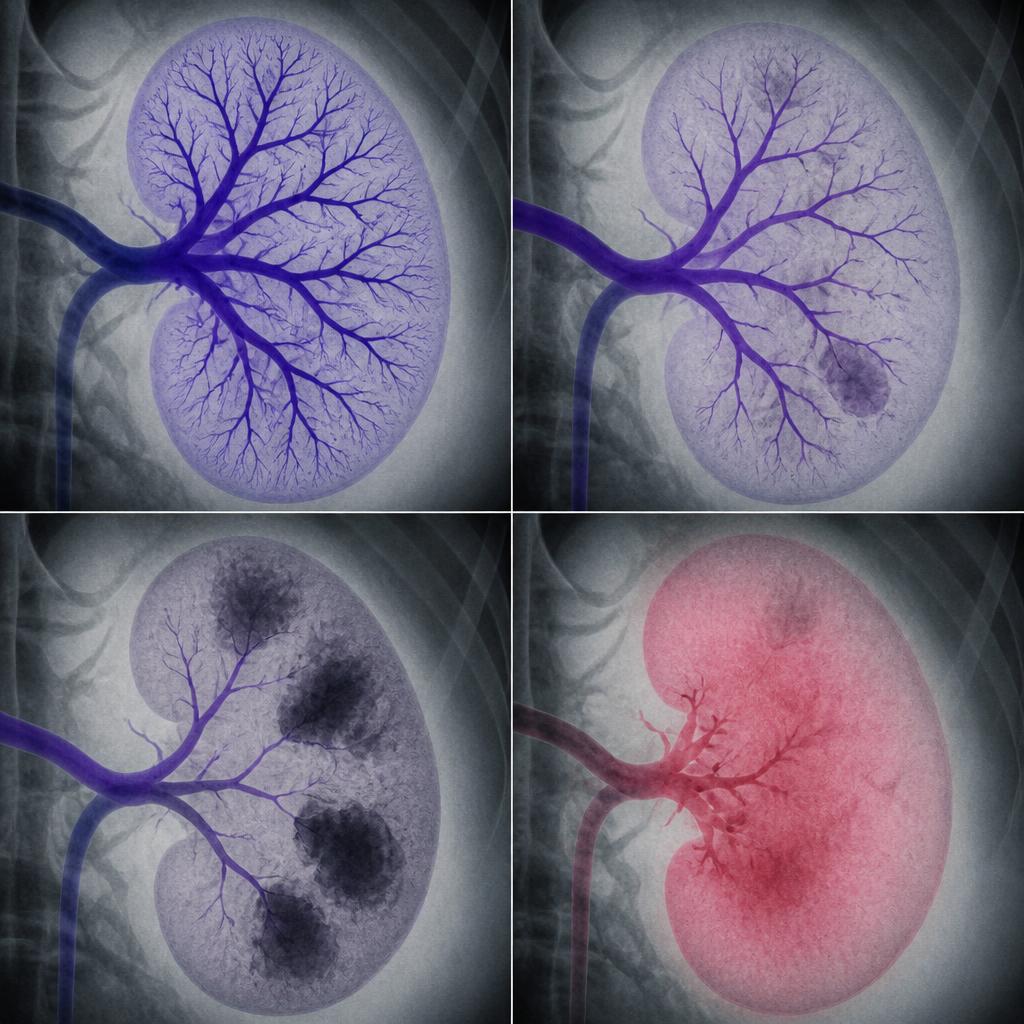
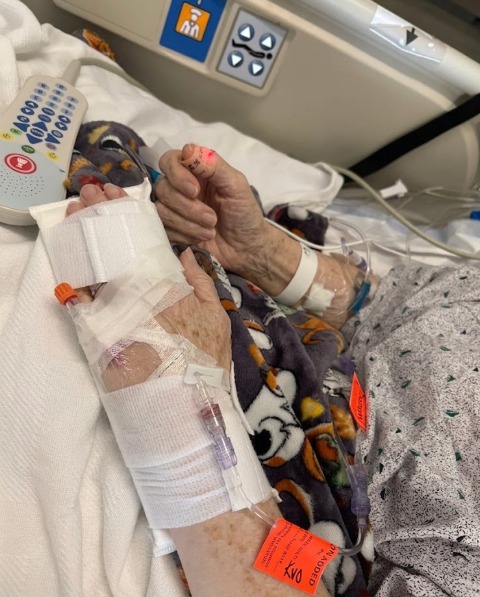
I refused Metformin for three years. Here's what happened to my blood sugar. I've been a nurse for 26 years. I've held the hands of diabetic patients whose kidneys were failing. I've watched their A1C climb year after year while their doctors added medication after medication. I've charted the progression — the fatigue, the swelling, the lab values getting worse — and I've said the same thing every other nurse says: "Your doctor knows best." Then my own blood sugar started climbing. And I realized I'd been lying to my patients. I need to tell you about my mother first. Because until you understand what I watched happen to her, nothing else I say will make sense. My mother was diagnosed with Type 2 diabetes at 56. Her doctor started her on Metformin immediately. 500 milligrams twice a day. She was a good patient. The best kind. Took her medication every single day. Cut out sugar. Walked every morning. Did everything she was told. Her A1C came down from 8.1 to 6.9. Her doctor smiled at the chart. "Looking good, Gloria. Whatever you're doing, keep it up." Keep it up. For nine years, she kept it up. Nine years of Metformin. Nine years of "good numbers." Nine years of her doctor looking at a chart and calling it a success. Then her ankles started swelling. At first she blamed the heat. Then her shoes. Then standing too long at church. By the time they ran the bloodwork, her kidney function was at 28 percent. Stage 4 chronic kidney disease. On a woman whose blood sugar had been "managed" for nearly a decade. I sat in the nephrologist's office with her. He pulled up her labs. "Mrs. Watts, your kidneys have been declining for some time. The damage is consistent with long-term diabetic nephropathy." My mother looked at me. Then back at him. "But my sugars have been good. My doctor said I was doing well." He paused. "Your A1C has been in an acceptable range, yes. But blood sugar control doesn't always prevent microvascular complications. The damage can progress even when the numbers look favorable." Even when the numbers look favorable. Nine years of medication. Nine years of perfect compliance. And the organ damage happened anyway. While everyone watched the number and called it protection. My mother started dialysis seven months later. The first time I drove her, I thought I was ready. I'm a nurse. I've seen dialysis units. I've charted patients in renal failure. I understood the procedure clinically. I wasn't ready. The clinic smelled like rubbing alcohol and something underneath it — something metallic and warm that I've never been able to name. The chairs were beige vinyl recliners arranged in rows, and every one of them had a person in it with tubes running out of their arm. The machines hummed. Not loud. A low, constant drone, like the building itself was breathing. They put my mother in chair seven. A tech found the fistula in her left arm — the surgically created access point they'd implanted two weeks earlier, still bruised purple and yellow around the edges. She winced when the needle went in. Turned her head toward me. Her eyes. That's what I wasn't ready for. Not the tubes. Not the machine. Her eyes. Looking at me the way she looked at me when I was six years old and scared of thunderstorms. Except now she was the one who was scared. And I was supposed to be the one who understood what was happening. The nurse daughter. The one who could explain it. Fix it. I couldn't fix it. Three times a week. Four hours each session. I drove her every Tuesday, Thursday, and Saturday. Watched the blood leave her body through one tube and come back through another. Watched her shrink. Not just thinner — smaller. Like the machine was taking something they couldn't put back. She stopped wearing jewelry because her fingers were too swollen in the mornings and too thin by evening. She stopped cooking because she couldn't stand long enough. She stopped going to church because she was too exhausted on Sundays after Saturday's session. She wasn't living anymore. She was being maintained. She died at 68. Fourteen months after starting dialysis. I was holding her hand. The same hand I used to hold walking to school. --- Four years ago, at my annual physical, my own bloodwork came back flagged. Fasting glucose: 162. A1C: 7.4. My doctor looked at me with that familiar expression — the one I'd seen doctors give my patients a thousand times. "Diane, we need to start you on Metformin. 500 milligrams, twice daily. We'll recheck in 90 days." She reached for her prescription pad. I watched her hand move across the paper and all I could see was my mother's swollen ankles. The dialysis chair. The machine humming three times a week. "I'd like some time to try managing it on my own." She looked at me the way doctors look at nurses who forget their place. "Diane, your A1C is 7.4. That's not borderline. That's diabetic range. Every month you delay treatment increases your risk of complications." Complications. The word landed in my chest like a stone. I took the prescription. Folded it. Put it in my scrub pocket. Never filled it. --- For three years, I tried everything else. Cinnamon supplements. Four months. My fasting glucose dropped 8 points. Then stopped. Then climbed back up. Berberine. Six months. The stomach cramps were almost as bad as what my Metformin patients described. My numbers came down slightly — A1C went from 7.4 to 7.1 — then stalled. I was spending $45 a month on stomach cramps and a number that barely moved. Apple cider vinegar shots every morning before my shift. Three months. The only thing that changed was the acid reflux that kept me up at night. My coworkers thought I was drinking pickle juice. Strict keto. I did it for five months. Lost 14 pounds. Felt terrible — the brain fog was worse, not better. My fasting glucose came down to 138, but my energy was so low I could barely finish a 12-hour shift. And the second I added a piece of fruit back into my diet, my numbers spiked right back up. Like my body had been waiting. I cut out every carb, every grain, every comfort food I'd ever loved. And my blood sugar still wouldn't stabilize. My doctor checked my labs at my next annual. Looked at the results. Looked at me. "Your A1C is 7.2. It's been three years, Diane. We need to start Metformin. The risks of delaying are serious." I almost gave in. I went home that night and found the prescription in my bedside drawer — the original one, from three years ago. Still folded. I smoothed it out on the kitchen table and stared at it. Metformin 500mg. Twice daily. My name in her handwriting. I almost called the pharmacy. Then about two months ago, something happened. --- One of my regular patients came in for her quarterly check. Sweet woman, 63, Type 2 for over a decade. I'd watched her struggle for years — the crashes after meals so bad she'd have to sit in her car in the parking lot for twenty minutes before she could drive. The brain fog. The exhaustion. A1C bouncing between 7.5 and 8.2 no matter what her doctor tried. But that day she looked different. Calmer. Like something had settled. I asked how she was managing. She said something I didn't expect. "My blood sugar's actually been stable. Like, really stable. I found something — my daughter-in-law sent it to me. It's a tablet you dissolve in water. Molecular hydrogen." I almost dismissed it. I've heard every miracle supplement story there is. But she showed me her glucometer log. Two months of readings. Her fasting numbers were consistently between 105 and 118. For a woman who hadn't been under 140 in years. That same night, I checked my own blood sugar before bed. 178. I'd eaten a normal dinner — grilled chicken, vegetables, brown rice. Nothing excessive. I sat at my kitchen table and thought about my mother. The dialysis chair. Her swollen hands. The machine humming. I opened my laptop and started researching molecular hydrogen and blood sugar. --- What I found in two weeks of reading made everything click. And it made me furious. Here's what they taught us in nursing school about Type 2 diabetes: your cells stop responding to insulin, glucose builds up in the blood, Metformin forces your cells to take in more glucose. Simple. Here's what they didn't teach us: Your cells don't just randomly stop responding to insulin. Something is damaging them. Inside every cell, there's a process happening right now — your body produces waste molecules called free radicals. Think of them like exhaust fumes from an engine. In small amounts, your body handles them fine. But when they build up — from stress, processed food, aging, poor sleep — they start corroding the machinery inside your cells. The parts of your cells that are supposed to receive insulin and pull glucose out of your blood? They get burned out. Like a lock that's been rusted shut. The key still works. The lock is broken. That's insulin resistance. Not a mystery. Not genetics. Not bad luck. Damaged cells. But here's where the vicious cycle starts. When glucose can't get into your cells, it stays in your bloodstream. And elevated blood sugar doesn't just sit there — it creates MORE of those damaging waste molecules. Which damage more cells. Which keeps glucose elevated. Which creates more damage. A loop. Getting worse every single day. And Metformin? Metformin forces glucose into your cells. It pushes the number down on the chart. But it does nothing — absolutely nothing — to stop the damage that's rusting the locks shut in the first place. It's mopping the floor while the pipe is still leaking. That's what happened to my mother. Nine years of "managed" blood sugar. Her A1C looked acceptable. But the cellular damage was destroying her kidney tissue the entire time. Nobody tested for it. Nobody addressed it. Nobody even looked. Then I found the clinical research. A 24-week study — published in a real medical journal, the kind I use for continuing education credits — tested a natural compound that goes inside the cells and neutralizes the specific waste molecules causing the damage. Not all of them — your body needs some for immune function. Just the destructive ones. The ones rusting the locks. After 24 weeks, A1C dropped by 12 percent. Enough to move patients from diabetic range back toward normal. The cellular damage markers plummeted. No side effects. The compound is molecular hydrogen. The smallest molecule in existence. So small it can get inside every cell in your body — including crossing into your brain, which almost nothing else can do. Every supplement you've ever taken works on the surface — in your gut, in your bloodstream. The real damage is happening deep inside cells where none of those supplements can reach. Hydrogen gets there. That's why it works when nothing else did. And the tablets deliver something else your body is desperate for — magnesium. Up to 75 percent of Americans are magnesium-deficient. And magnesium is required for the specific enzymes that process blood sugar. Without it, your body physically cannot regulate glucose properly. You're fighting a blood sugar battle with your engine running on empty. Two problems. One tablet. One glass of water. --- I ordered PrimeCell H2 that night. 12 parts per million of therapeutic-grade molecular hydrogen. Plus 80 milligrams of bioavailable magnesium per tablet. I didn't tell my doctor. Didn't tell anyone at work. Just added it to my morning routine before my shift. The first thing I noticed was the afternoons. By day five, the 2 PM crash wasn't happening. That heavy, drowning fatigue that used to hit me mid-shift — where I'd be charting and realize I'd read the same line four times — it was lifting. My head was clearer. Not stimulant-clear. Just... functioning. Like the fog had been so constant I'd forgotten what normal felt like. By week two, my fasting glucose was 134. Down from 162. I checked it twice because I didn't trust the number. By week three, something happened that wasn't on a monitor. I was charting at the nurses' station around 3 PM — the time of day I used to dread because the fog would roll in so thick I'd have to reread every line. A coworker asked me a question about a patient's medication interaction. And I answered it. Without looking it up. Without hesitating. Without that horrible pause where I can feel the information stuck somewhere behind my eyes but can't pull it forward. I just answered. Like I used to. Like a nurse with 26 years of experience is supposed to. I sat there for a minute after she walked away. Staring at the chart. Not because I was confused. Because I was clear. And I'd forgotten what clear felt like. That night I ate the same dinner — chicken, vegetables, rice — and tested two hours later. 128. Not 178. Not even close. I sat on the edge of my bed staring at the monitor. And for the first time in four years, I didn't think about dialysis. At eight weeks, I ran a full panel through the hospital lab. A1C: 6.1. Down from 7.2. In eight weeks. No Metformin. No statin. No prescription. I printed the results. Walked into my doctor's office on my day off. She opened the file on her laptop. Looked at the screen. Scrolled down. Looked at me. Back at the screen. Scrolled again — comparing the history. Four years of numbers. The 7.4 at diagnosis. The 7.2 that wouldn't budge no matter what I tried. And now 6.1. She closed the laptop halfway. Took off her glasses. Set them on the desk. "You still haven't filled the Metformin." "No." "Your A1C is 6.1." "Yes." A long pause. She picked up her glasses. Put them back on. Opened the laptop again like she needed to verify what she'd just read. "Whatever you're doing — I want to see these hold for another 90 days. But Diane... these are excellent. This is better than what I typically see at 90 days on Metformin." She didn't ask me to stop. She didn't write a prescription. I walked to the parking lot. Got in my car. Closed the door. Opened the glove box. The original Metformin prescription was in there — I'd moved it from my bedside drawer weeks ago. Still folded. Still in her handwriting. I held it for a long time. Then I put it back. Not because I might need it. Because I never want to forget how close I came. And I thought about my mother. What if someone had told her about this nine years ago? Before the swelling. Before chair seven. Before her kidneys failed while her doctor smiled at a number on a chart. She'd be 72. She'd be alive. --- I'm not writing this to sell you anything. I'm a nurse. I don't sell supplements. I'm writing this because I watched my mother die from complications of a disease that was supposedly "managed." And I almost followed the same path. If your blood sugar is climbing and your doctor is reaching for the prescription pad — I hear you. I was in that chair. If you're already on Metformin and the stomach cramps, the diarrhea, the exhaustion are making you miserable — and your numbers still aren't where they should be — I hear you. If you've tried cinnamon, berberine, keto, apple cider vinegar, and nothing moves the needle — I hear you. Because nothing you tried was reaching the actual problem. The cellular damage burning deep inside your cells where none of those supplements can reach. PrimeCell H2. One tablet. One glass of water. 12 parts per million molecular hydrogen plus bioavailable magnesium. Addresses the cellular damage your Metformin ignores and the mineral deficiency nobody's testing for. 👉 shop.getamalahealth.com/pch/sp P.S. — I told three nurses on my floor. Showed them my labs. Explained the mechanism. Nurses understand oxidative stress — we studied it. Within a month, four of them ordered it. One of them — Janet, 54, pre-diabetic, A1C of 6.7, doctor pushing Metformin — ran her bloodwork after six weeks. A1C dropped to 5.9. Her doctor didn't write the prescription. P.P.S. — You'll feel it working within the first week. Not the blood sugar numbers — those take weeks to show on bloodwork. But the energy. The afternoon crashes disappearing. The brain fog lifting. That's molecular hydrogen crossing your blood-brain barrier and reaching the cells your Metformin never touches. If you've taken supplements before and felt nothing, that's because they never reached where the damage is happening. This is different. You'll know the first morning. P.P.P.S. — PrimeCell has a 90-day money-back guarantee. If your numbers don't improve, full refund. No questions asked. In 26 years of nursing I've never seen a pharmaceutical company offer to give your money back if their drug doesn't work. P.P.P.P.S. — PrimeCell is a small company and they sell out regularly. If you've got bloodwork coming up in the next 30 to 60 days and you want to give your body a real shot at better numbers before that draw, check availability now. Every day your cells spend under oxidative stress is another day the vicious cycle keeps spinning — and another day closer to complications your doctor won't warn you about until it's too late. I waited three years. My mother waited nine. Don't burn your timeline. 👉 shop.getamalahealth.com/pch/sp
Fix Yourself at the Cellular Level
PrimeCell H2 is a next-generation molecular hydrogen tablet designed to selectively neutralize the most damaging free radicals in your body - at the cellular level, right where aging actually happens.
LEARN MORELike this ad? Make it yours.
Crush rebuilds this exact creative around your product — your brand, your colors, your offer — in about a minute.