
Inactive· since May 29, 2026
- 6
- days it ran
- 1
- relaunches
Ad copy
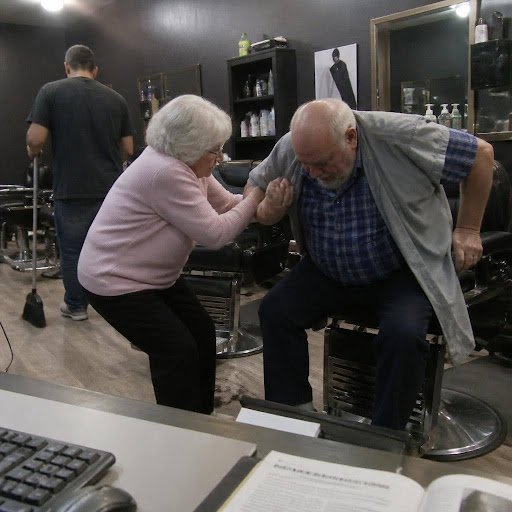
My husband has been cutting a man named Ray's hair every three weeks for six years. He watched Ray's grip go from solid to shaking, his conversations go from sharp to scattered, his wife go from waiting in the car to walking him through the door. Three months ago, Ray gripped the armrest and stood up from the chair on his own. My husband came home that night and said something I can't stop thinking about. I'll get to what he said. But first you need to understand what we watched happen in that chair — because a barber and his wife see things that doctors miss and families can't see. And what we saw in Ray Purcell over the last two years is something I think you need to hear. My name is Connie. I'm 59. My husband Dale is 62. He's owned a two-chair barbershop on Main Street for 28 years — Dale's, with an apostrophe, on a hand-painted sign he's never replaced because the first one still works fine. That's Dale in a sentence. If it still works, don't fix it. I run the front desk. Answer the phone. Manage the schedule. Sweep up. Make the coffee that sits on a hot plate by the window and keeps the waiting area smelling like a kitchen instead of a barbershop. I've been doing it since 1998. I'm on my feet nine hours a day and by closing time my body feels like it's been wrung out. I've blamed that on the job for 28 years. Maybe it is the job. Maybe it isn't. When you work the front desk of a small-town barbershop for 28 years, you learn things about people they don't even know about themselves. I know which men get a haircut before a job interview because they only come in on Mondays and they wear a collared shirt. I know which men are going through a divorce because they switch from every four weeks to every two — they want to look good and they can't explain why. I know which men are sick because they stop coming and nobody says anything and then one day their wife calls to cancel the standing appointment and her voice is too steady. I know all the regulars by name, by schedule, by the car they pull up in. And when something changes — when a wife starts driving instead of the husband, when a handshake gets weaker, when a man who used to talk for thirty minutes straight goes quiet — I notice. Not because I'm looking for it. Because 28 years of watching men sit down and stand up in the same chair has trained me to see it whether I want to or not. My own husband has been on Atorvastatin for three years. I need to tell you that now because it matters later. His doctor put him on it when his LDL hit 174. Dale didn't argue — he's not the type. He took the pill and went back to cutting hair. But I've watched his hands. I watch them every day. He flexes his fingers between clients now — opens and closes them behind his back when he thinks nobody's looking. He switched from his long shears to shorter ones last year because the long ones cramp his hand by afternoon. He blames it on 28 years of repetitive motion. Maybe it is. But I've watched those hands hold scissors steady for three decades and they weren't doing this before the Atorvastatin. I don't say anything about it. Dale doesn't discuss his body the way women discuss their bodies. If I brought it up, he'd say he was fine. So I watch. That's what wives do. We watch. And we wait. And we keep track. Ray Purcell started coming to Dale's in 2019. Every three weeks. Thursday afternoons. He was 60 at the time — retired shop teacher, still built like a man who spent his career showing teenage boys how to use a lathe. Thick hands. Square shoulders. The kind of man who fills a barber chair completely and makes it look like it was built for him. He was a talker. Walked in the door already mid-sentence — "Connie, you're never going to believe what my neighbor did to his fence" — and didn't stop until the cape came off. He asked about our daughter Melissa every single visit. When she got engaged, Ray brought a card. When she had the baby, Ray brought a stuffed bear in a plastic bag and left it on the front desk and said "for the little one" and walked back to Dale's chair like it was nothing. He had a grip you noticed. When he shook your hand it meant something — not crushing, not showing off, just present. When Dale finished a cut, Ray would grip both armrests and push himself up in one motion. No pause. No gathering. Just up. Like the chair was a trampoline. His wife Ellen dropped him off and went shopping or ran errands. Didn't come in. Didn't need to. Ray walked in on his own and walked out on his own and she'd pull up twenty minutes later and he'd climb in the passenger side and they'd leave. That was Ray for the first four years. The change started so slowly that I might have imagined the first few signs if it hadn't kept getting worse. The visit he paused before standing up. Not a long pause — just a beat. His hands on the armrests, a moment of calculation, then up. I only noticed because I'd watched him launch out of that chair a hundred times without thinking. This time he thought about it first. The visit his story didn't land. He was telling Dale about a project at his church — building shelves for the food pantry — and he stopped mid-sentence. Not a dramatic stop. Just a fade. Like the signal dropped and he couldn't find it again. Dale filled the silence with a question and Ray picked up a different thread and they moved on. But the shelf story never got finished. The visit Ellen came inside. First time in four years. She sat in the waiting area and read a magazine she wasn't actually reading — I could see her eyes weren't moving across the page. She was listening. Tracking. Making sure. The visit Ray's hands shook reaching for his wallet. A tremor I recognized because I'd been watching the same tremor develop in Dale's hands for two years. Ray's fingers fumbled with the bills. He pulled out a twenty and it took him two tries to separate it from the others. He laughed it off. "Fingers are stiff today." I smiled and said "mine too." But mine weren't. The visit he needed help standing up. Dale had to grip his forearm and pull. Ray made a joke about it — "getting old, Dale" — and Dale laughed because that's what barbers do. They laugh at the things they see so the client doesn't have to face them. But Dale looked at me over Ray's head as he walked him to the door and I saw it in his eyes. We've been watching this man for six years. Every three weeks. In the same chair. And the man walking out that door was not the man who used to bounce out of it like the chair had springs. The visits kept coming. The decline kept compounding. Ellen started driving Ray to every appointment. He stopped getting out of the car until she came around to his side. She'd take his elbow — not supporting him, not exactly, but there in case he needed it. Every time. The way you keep your hand near a child learning to walk even though they probably won't fall. His conversations got shorter. The stories that used to fill a thirty-minute haircut became fragments — a few sentences, then silence, then a different topic that didn't connect to the first one. Dale would ask questions to keep the rhythm going, the way a good barber does, but Ray's answers got vaguer. "How's the church project going?" "Oh, it's fine. It's coming along." No details. No shelves. No food pantry. Just fine. He stopped asking about Melissa. Not abruptly — he just stopped bringing her up. The man who remembered my daughter's engagement, my daughter's baby, who brought a stuffed bear in a plastic bag — couldn't locate her name anymore. I know because I tested it once, casually. "Melissa sends her regards, Ray." He smiled and nodded and said "tell her I said hello" and I could see in his eyes that he was trusting the context instead of the memory. He knew she was someone he should know. He just couldn't reach it. Dale started mentioning things after closing. Sweeping the floor, putting the chairs down, the shop empty and quiet the way it is at 6 PM when the last customer has left and it's just us and the hair on the floor. "Ray's neck felt different today." "Different how?" "Rigid. Like the muscles are locked. Used to be, I'd tilt his head for the neckline and it would move easy — he'd relax, let me work. Now it's like I'm turning a mannequin. Everything is tight. His traps. His shoulders. All of it." Dale was touching Ray's body every three weeks. Holding his head. Feeling the muscles in his neck and shoulders. A barber's hands on a client's body are a diagnostic tool nobody thinks about — they feel what no blood test measures and no doctor palpates because a fifteen-minute office visit doesn't include holding a man's head in your hands for twenty minutes. "He's on one of those cholesterol medications," Dale said one evening, hanging up his apron. "I heard Ellen mention it to the pharmacist last week when I was picking up my own prescription." Dale's own prescription. The Atorvastatin in the bathroom cabinet. The same drug. He didn't connect it. I didn't either. Not yet. We just watched. Three months ago. A Thursday in March. The bell on the door rang at 2:15 PM. I looked up from the desk. Ray walked in. Not shuffled. Not was-guided. Walked. Shoulders back. Eyes clear. "Connie. How's Melissa and that baby?" I gripped the edge of the desk. He remembered her name. He hadn't said her name in eight months. Dale looked up from the client he was working on. I caught his eye in the mirror. He'd heard it too. Ray sat in the waiting chair. Picked up the sports section from the stack of newspapers on the side table. Started reading it — actually reading it, not staring at it. Turned the page. Commented on a score. "Can you believe the Bengals traded their running back? Criminal." When Dale called him back, Ray stood up from the waiting chair without using the armrests. Just stood. Walked to Dale's chair. Sat down. Started talking. And didn't stop. The church shelves. The food pantry. The neighbor's fence — the story from two years ago he'd never finished. He finished it. He told it with details — the neighbor's name, the type of wood, the HOA fine, the resolution. Like he'd pressed play on a recording that had been paused for eighteen months. I sat at the front desk and I felt the hair on my arms stand up. Because I'd watched this man deteriorate visit by visit, three weeks at a time, for two years. And I was watching him come back. Dale finished the cut. Unclipped the cape. Ray gripped both armrests. Pushed himself up. One motion. No pause. No gathering. No calculation. Up. The way he used to stand up four years ago. Like the chair was a trampoline. He walked to the desk. Pulled out his wallet. Peeled a twenty from the stack — clean, first try, no tremor. Handed it to me with a steady hand. "Keep the change, Connie." He walked out the door. Got in the driver's seat of his own car. Ellen was in the passenger seat. He was driving. The bell on the door stopped ringing. The shop was quiet. Dale stood behind his chair looking at the door Ray had just walked through. That evening, at home, Dale was standing in the kitchen. Still in his apron. Scissors in his back pocket. He was staring at his own hands the way a man stares at something he's about to lose. "Connie." "What?" "Something happened to Ray." "I know. I saw it." "No — I mean something happened to his BODY. I've been cutting that man's hair for six years. I've had my hands on his neck and shoulders every three weeks for six years. And today —" He paused. Opened and closed his own fingers. "Today his neck moved. It moved the way it used to move. The muscles were loose. His traps weren't locked. His head tilted when I guided it like he actually had control of his own neck again. It's been rigid for two years, Connie. Like cutting hair on a statue. And today he felt like a person." He looked at me. "What the hell happened to Ray?" I found out two weeks later. Ellen came by the shop on a Saturday morning to pick up a jacket Ray had left on the coat hook. The shop was closed. I was doing the books at the front desk. Dale was in the back restocking. I let her in. Handed her the jacket. And then I asked. "Ellen — can I ask you something? Not as a business. Just as someone who's been watching." She looked at me. She knew what was coming. "Dale and I have watched Ray in that chair every three weeks for six years. We watched him decline. His hands, his memory, his energy, everything. And three visits ago something changed. He walked in like a different person. Dale says even his muscles feel different." Ellen leaned against the counter. Set the jacket down. Then she stopped. Looked at me like she was deciding something. "How much time do you have?" "Ellen, I have all the time you need." She pulled the extra stool from behind the counter. Sat down. I sat down across from her. The shop was dark except for the desk lamp. And for the next twenty minutes, she told me everything. "Nobody notices," she said quietly. "His doctor doesn't notice. Our friends don't notice. They see him once a month or once every few months and the change is too slow. But you — you see him every three weeks. Same chair. Same time. I should have known you'd catch it." "What happened?" "Our son-in-law Kevin happened." "Kevin is a pharmacist. Been in it for eighteen years. He saw Ray at Thanksgiving — first time in about a year. And the look on his face when Ray walked into the dining room told me everything I needed to know about how bad it had gotten." Ellen picked at the edge of the jacket on the counter. "Because when you see someone every day, you adjust. You don't see the decline. You just see today. And today is only a little worse than yesterday, so it feels normal. But Kevin hadn't seen Ray since the previous Thanksgiving. And to him, it was like looking at a different person." I thought about Dale. His hands. The flexing between clients. The shorter scissors. I see him every day. I've adjusted. "Kevin pulled me aside after dinner. He said: 'Ellen, what's happening to Ray? His hands are shaking. He asked me the same question three times. He couldn't cut his own turkey. Is his doctor monitoring this?'" "I told him his doctor says the numbers look great. LDL is down. The medication is doing what it's supposed to do." "Kevin got quiet. Then he said: 'Ellen, his doctor is watching the wrong number.'" I knew that sentence. I didn't know why I knew it. But something about it — the shape of it, the weight of it — felt like the answer to a question I'd been carrying for two years without knowing how to ask it. "Kevin explained it that night. At our kitchen table. Ray was asleep in his recliner — by 8 PM, same as every night." "He said LDL cholesterol isn't dangerous by itself. Your body makes it on purpose. Brain needs it. Cells need it. The danger is when LDL gets attacked by hydroxyl radicals — the most destructive free radicals in the body. When that happens, the LDL oxidizes. Changes structure. Becomes sticky. Embeds in artery walls. That's plaque. That's the heart attack." "Statins lower ALL the LDL. The useful kind, the harmless kind, the dangerous kind. But they don't stop the oxidation. The process that actually turns cholesterol into a weapon keeps going. Unchecked. And nobody tests for it because oxidized LDL isn't on a standard blood panel." I thought about every man who'd sat in Dale's chair and declined the same way Ray had. The slower grips. The foggier conversations. The wives who started driving. The same trajectory. The same timeline. The same medication. "And there's a second problem," Ellen continued. "The same pathway statins block also produces CoQ10 — the energy molecule every cell needs. Heart. Muscles. Brain. Statins can cut CoQ10 by up to 40%. That's not a side effect. That's what the drug does." "Ray's hands, Connie. Five years on Lipitor. His muscles were being starved of energy by the drug that was supposed to save his heart. His brain was being starved of the cholesterol it needs to function. And his doctor kept saying the numbers look great." She looked at me. "Sound familiar?" It sounded like Dale. The flexing fingers. The shorter scissors. The cramping by afternoon. Three years of Atorvastatin and hands that used to hold a straight razor steady enough to shave a jawline are now struggling with the long shears by 2 PM. "Kevin told us about molecular hydrogen," Ellen said. "H2. The smallest molecule there is. Selective antioxidant — only targets hydroxyl radicals. Doesn't touch the beneficial free radicals. And because it's so small it goes everywhere — crosses the blood-brain barrier, gets into the mitochondria, reaches inside the artery walls where the oxidation is happening." "When the oxidative stress drops, the body stops overproducing cholesterol as a defense mechanism. The cycle breaks. No enzyme blocking. No CoQ10 depletion. Over 2,000 peer-reviewed studies." "Does it actually work?" I asked. "Because I've watched Ray go from needing help out of a barber chair to walking in like he's 55 again." "Kevin researched the products himself. Most hydrogen supplements don't deliver enough — the hydrogen escapes through containers before you can drink it. One brand uses magnesium-based tablets that generate the hydrogen directly in your stomach. 12 parts per million at absorption — the clinical dose. Everything else he tested was two or three. He verified it himself at his pharmacy." "The brand is called PrimeCell. Amala Health. One tablet in a glass of water every morning. Ray started in December. By January his hands were steadier. By February he was driving again. By March —" "He stood up from Dale's chair like a trampoline." "Like a trampoline." She picked up the jacket. "His bloodwork at three months — LDL 129, down from 166 on the statin. Oxidized LDL 37 — his doctor had never tested it before. When Kevin asked why, the doctor said it's not a standard marker." "Not a standard marker. The thing that actually causes the damage nobody was measuring. For five years." She paused at the door. "Tell Dale." I didn't tell Dale that day. I went home and sat at the kitchen table and looked at his pill organizer on the counter. Atorvastatin. Every night for three years. I picked up my phone. Searched PrimeCell. Read the third-party testing. Found the certificate of analysis — H2 concentration verified, heavy metal screening, purity testing. Found the clinical trial Ellen had mentioned — 24-week randomized controlled. Read the abstract twice. Then I texted Ellen and asked for Kevin's number. She sent it immediately — like she'd been expecting the request. I texted Kevin. Told him who I was. Told him my husband was on the same medication Ray had been on. Asked if this was real. He called me back instead of texting. Talked for ten minutes. Answered every question. And then he said something that closed it for me: "I wouldn't have given it to my own father-in-law if I wasn't sure. I watched Ray at that Thanksgiving table and I decided I wasn't going to watch it again." Then I thought about Dale's hands. The way he flexes them when he thinks nobody's watching. The way he switched from long shears to short. The way he hasn't offered a straight razor shave in over a year — the thing his father taught him, the thing that made his shop his shop. His father's leather strop is still hanging on the wall. It hasn't been used in 14 months. I ordered PrimeCell at 10:15 PM. The bottle arrived three days later. Tuesday morning. I dropped a tablet in a glass of water and set it next to Dale's coffee before he came downstairs. "What's this?" "Something Ray's wife told me about. Drink it." "Connie —" "Dale. Your hands have been cramping for two years. You switched to short scissors. You haven't touched the strop since last January. I'm not going to watch your hands go the way Ray's went when his wife just told me how to stop it. Drink it." He looked at me. 35 years. He knows when I mean it. He drank it. I sat across from him. Counted the minutes on the microwave clock. Seventeen minutes. He set his coffee down. Looked at his hands. Opened them. Closed them. "Connie." "What?" "My hands don't hurt." Week one — Dale cut hair all day without switching to the short scissors. He used the long shears from the first client at 8 AM to the last at 5:30 PM. He didn't flex between clients. He didn't shake out his fingers behind his back. I watched from the front desk and I didn't say a word. Week two — I heard a sound from the back of the shop before opening. A rhythmic, soft whisking sound. I walked back and Dale was standing at the mirror. Running his father's strop. Pulling the straight razor down the leather strip in long, even strokes. Testing the edge on his forearm the way his father taught him. He saw me in the mirror. Didn't say anything. Just kept stropping. The razor moved in his hand the way it used to move — fluid, controlled, precise. No tremor. Week three — Dale's first straight razor shave in fourteen months. A regular named Carl who'd been asking for one for a year. Dale draped the hot towel. Applied the lather. And drew the blade along Carl's jawline with a hand that didn't shake. I stood in the doorway of the back room and watched the strop swaying gently on its hook with each stroke. The leather his father gave him. Back on the wall where it belongs. I'd been taking PrimeCell alongside Dale since that first Tuesday morning. By week two the heaviness I carried home every evening — the bone-deep tiredness I'd blamed on nine hours on my feet — had lifted. I wasn't dragging to the car at closing anymore. I wasn't falling asleep on the couch by 8 PM. I didn't say anything about it to Dale. But I noticed. Six weeks. Dale's bloodwork. I made him ask for oxidized LDL. He didn't know what it was. I explained it the way Ellen explained it to me — the number nobody tests for, the one that actually tells you whether your cholesterol is dangerous. Total cholesterol: 201. Down from 238. LDL: 124. Down from 174 — LOWER off the statin than his best number on it. Oxidized LDL: 33. His doctor looked at the results. Looked at Dale. Looked at the results again. "You stopped the Atorvastatin." "Six weeks ago." Long pause. The doctor studied the screen. "I'm not going to pretend I understand what's happening here. But these numbers are excellent. Keep doing what you're doing. Come back in three months." Dale shook his hand on the way out. Full grip. The doctor noticed — I could tell because he looked down at their clasped hands and then back up at Dale with an expression that wasn't quite surprise but wasn't quite understanding either. Ray came in last Thursday. Three weeks since his last cut. Walked in the door already talking. "Connie — you hear about the Bengals? They're going to regret that trade. I've been saying it since March." He sat in the waiting chair. Picked up the paper. Turned to the sports section. Dale called him back. Ray stood up. One motion. Sat in Dale's chair. Started telling a story about the food pantry shelves — the same shelves he'd been building when the story stopped mid-sentence two years ago. He finished it this time. Every detail. The wood. The brackets. The volunteer who stripped the screw and had to start over. Dale cut his hair. Tilted his head for the neckline. Ray's neck moved — loose, easy, controlled. After Ray left — drove himself, Ellen in the passenger seat, both of them laughing about something as they pulled out of the parking lot — Dale stood behind his chair in the empty shop. I was sweeping. "Connie." "Yeah?" "His neck felt right today. For the first time in two years. His neck felt right." He looked at his own hands. Opened and closed them. No tremor. Full grip. "Mine do too." I'm telling you this because I think you might be where I was four months ago. Not in a barbershop. In a house. In a kitchen. Next to a man whose hands used to do things they don't do anymore. Whose stories used to have details that are missing now. Whose doctor keeps looking at a chart and saying everything is fine while you watch something that is clearly not fine. Maybe you see him every day and you can't detect the change because you're inside it. You've adjusted to each small loss in real time — the way Ellen adjusted to Ray. The way I adjusted to Dale. You don't have a barber chair. You don't have a three-week interval that makes the trajectory visible. You just have today. And today is only a little worse than yesterday. But if someone who sees your husband every few weeks told you what they're seeing — if a barber said his neck muscles feel like a mannequin, if a friend said he seems different, if your daughter called and said "Dad doesn't sound like himself" — would you listen? You're at a crossroads. One path — keep filling the prescription. Watch your husband become the man Ray was a year ago — the man whose stories faded mid-sentence and never got finished. The church shelves. The neighbor's fence. The details that used to pour out of him like they'd been waiting all week, gone. Watch his wife start driving. Watch his hands shake reaching for his wallet. Watch him need help out of a chair he used to launch from. Watch the tools gather dust — the way Dale's strop gathered dust for fourteen months. Watch the doctor say the numbers look great while the man behind the numbers disappears. Another path — try what Ellen tried. One tablet. One glass of water. Every morning. Watch him become Ray three months ago — walking through a door already talking, remembering names he'd lost, driving himself for the first time in a year, standing up from a chair like it has springs. Watch him become Dale — picking up the tool his father gave him, the one that hadn't been touched in fourteen months, and holding it steady enough to draw a blade along a jawline without a tremor. PrimeCell has a 90-day money-back guarantee. If his numbers don't improve, if he doesn't feel the difference, every penny back. You risk nothing. Ellen risked nothing. Ray drove himself to his last haircut. I risked nothing. Dale's strop is back on the wall. You already know which path makes sense. P.S. — The product is PrimeCell H2. Made by Amala Health. 12 parts per million of molecular hydrogen — four to six times what most products deliver. Magnesium-based tablet that generates H2 directly in the stomach. Third-party tested. Dale has been taking it for four months. His oxidized LDL is 33. His doctor hasn't renewed the Atorvastatin. The straight razor is back in rotation — three clients last week asked for a hot towel shave and Dale's hand didn't shake once. His father's strop is on the wall. Fourteen months of dust wiped off in week two. I keep two bottles in the house now because I refuse to let his hands go back to what they were. P.P.S. — If your husband isn't on a statin, PrimeCell still works. The oxidized LDL mechanism runs whether he's medicated or not — hydroxyl radicals attack cholesterol regardless. If his LDL is elevated and his doctor is pushing medication, this is what you try first. If he IS on a statin and the side effects are stealing his hands, his energy, his clarity — this addresses the oxidation the statin can't touch while supporting the CoQ10 his body is being drained of. Talk to his doctor. Let the bloodwork make the case. That's what Ellen did. That's what I did. P.P.P.S. — Dale has 14 regular clients who are on statins. He knows because they mention it. Sore muscles. Stiff hands. Brain fog. They sit in his chair and tell him about it the way men tell barbers things they won't tell their doctors. Dale can't prescribe anything. He's a barber. But he told one of them — Carl, the first client he shaved with the straight razor after it came back. He told Carl the same way Ellen told me. Quietly. At the chair. The way men pass information to each other when nobody else is listening. Carl ordered it that night. His wife called me a week later. "Connie, what did Dale tell Carl? Because something is different." That's how it moves. Chair to chair. Kitchen to kitchen. One wife to the next. P.P.P.P.S. — PrimeCell is a small company and they sell out. If your husband has bloodwork in 30 to 60 days, check availability now. Every day on the statin without addressing the oxidation is another day the cycle continues. Ray lost two years in Dale's chair before Kevin stepped in. You found this today. P.P.P.P.P.S. — If you're reading this for yourself — not for your husband, for you — PrimeCell works the same way regardless of gender. I started taking it the week Dale did. My own cholesterol was 224. It's 189 now. The tiredness I blamed on the job — the dragging by 3 PM, the exhaustion after a day at the desk — it lifted. I didn't mention that in the story because it wasn't about me. But it might be about you. Don't forget their 90-day money-back guarantee. https://track.getamalahealth.com/5548c06d-d9c3-4785-b466-fec64a6fdb28
Fix Yourself at the Cellular Level
PrimeCell H2 is a next-generation molecular hydrogen tablet formulated to support your body's natural antioxidant defenses — helping you feel sharper, more energized, and more like yourself.
LEARN MORELike this ad? Make it yours.
Crush rebuilds this exact creative around your product — your brand, your colors, your offer — in about a minute.