
Active· since Jun 4, 2026
- 99
- days running
- 0
- relaunches
Ad copy
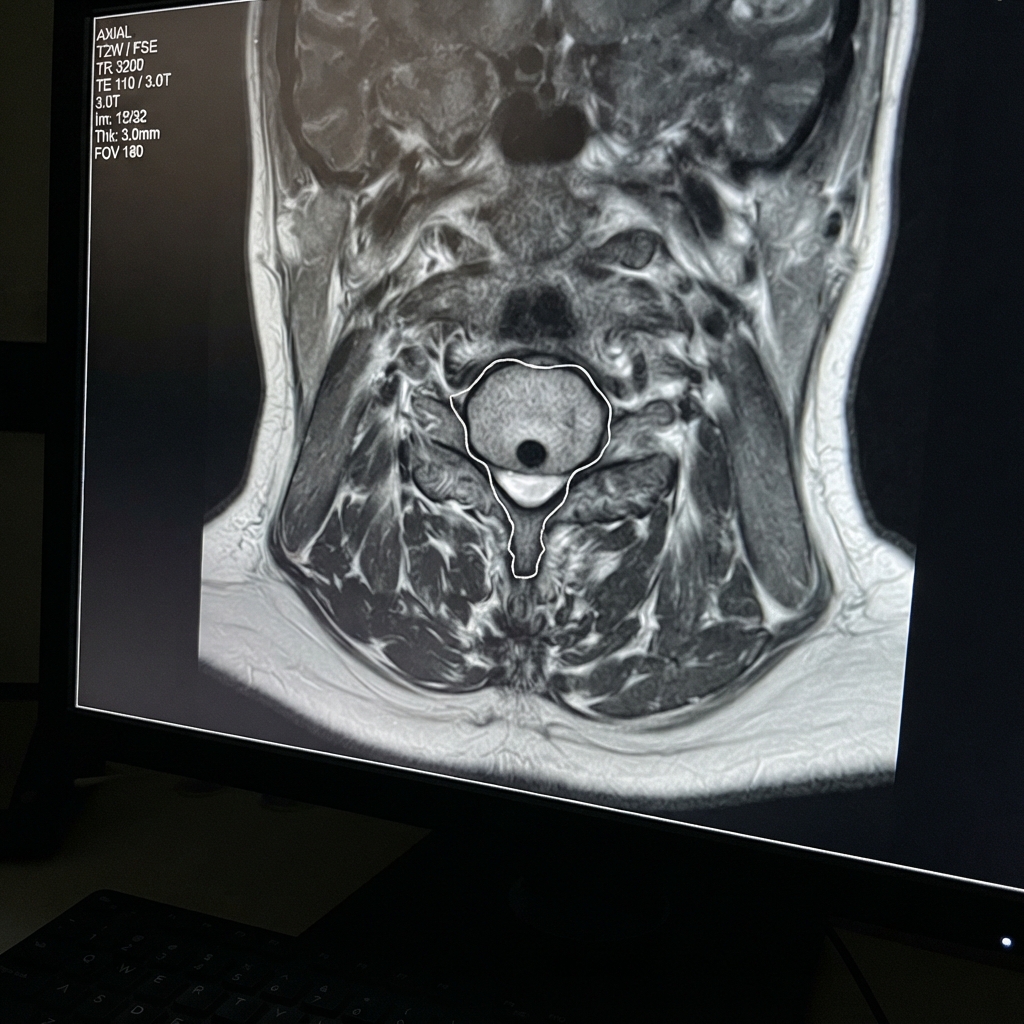
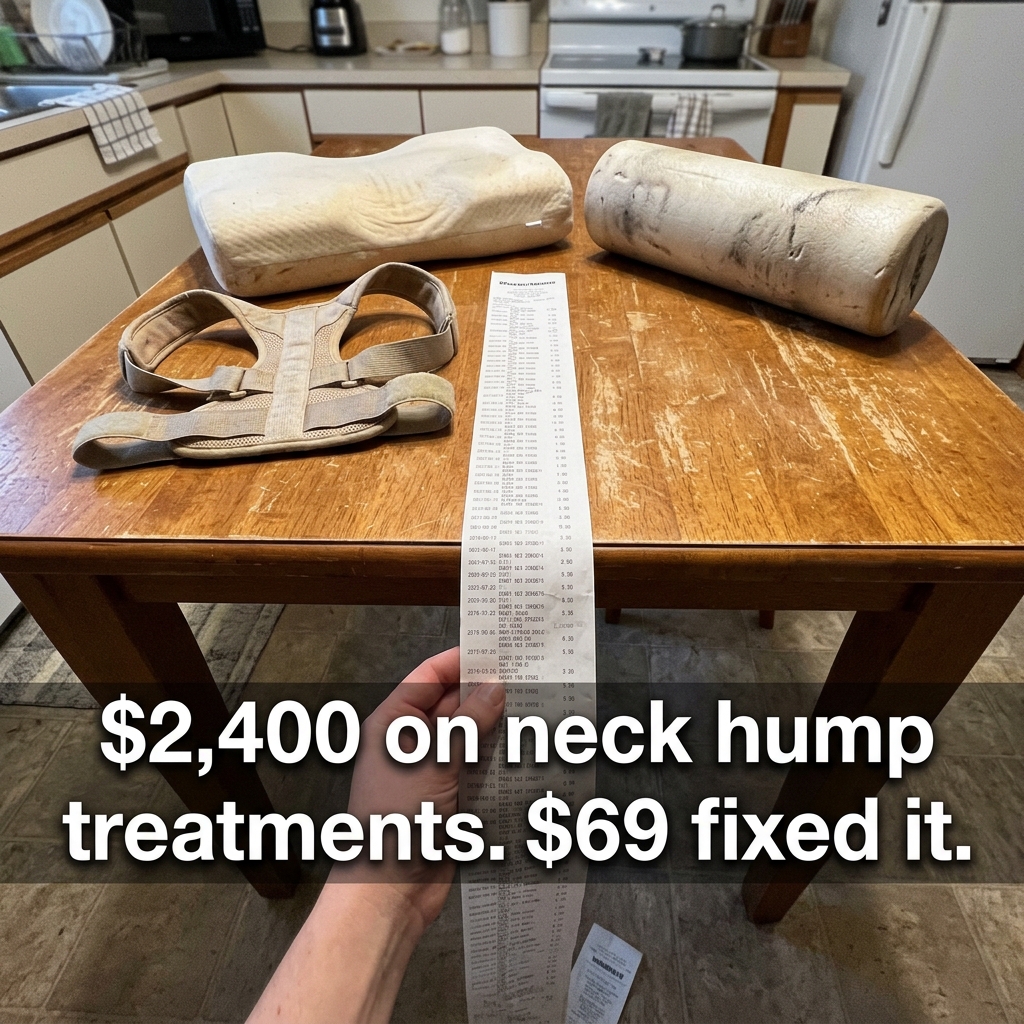
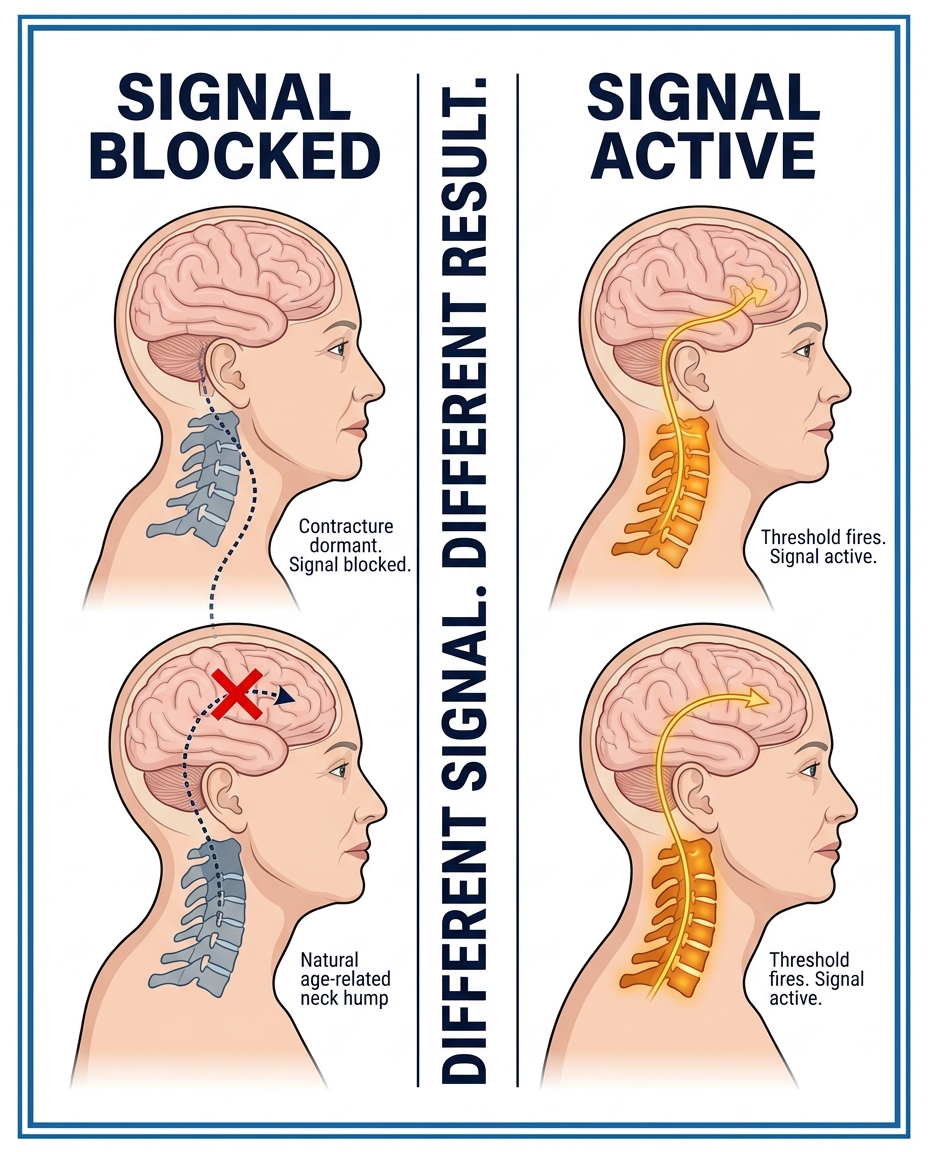
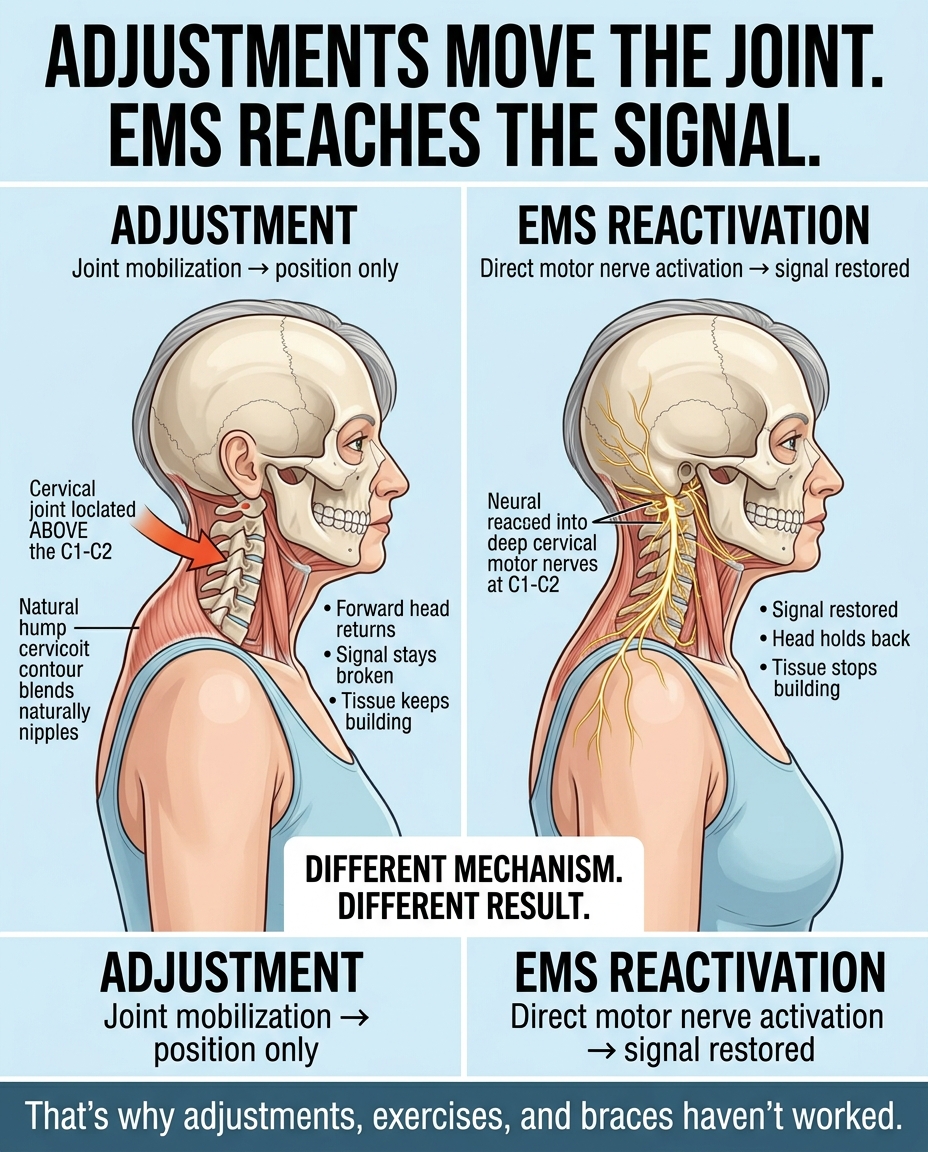
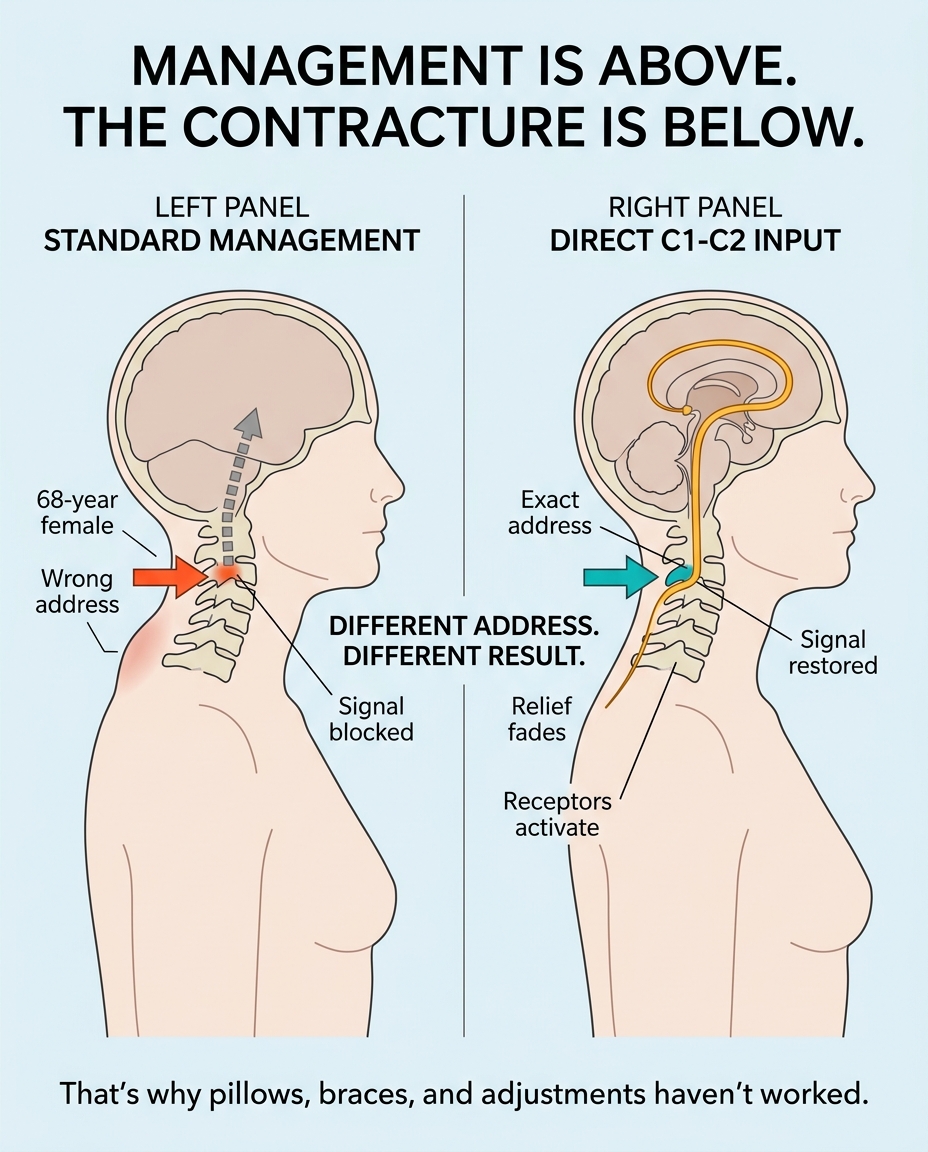
"I've Had This Neck Hump for 3 Years. Five Practitioners. Zero Answers." I've had this neck hump for three years. Not a posture problem. Not a muscle tension issue. A building, visible, persistent tissue accumulation at the base of my skull that shows up in every photo, gets worse every season, and has made every person in my life make the same small adjustment at least once: Stepping back from the camera. Suggesting I stand somewhere else. Saying nothing but meaning something. I'm 52 years old. I have never had bad posture in my life. And I am building a neck hump like someone who has been hunched over a desk since high school. Let me tell you about the practitioners. Practitioner #1: My primary care. She looked at my cervical measurements. Stable-ish. "Probably postural habits." Recommended posture awareness exercises and an ergonomic chair review. Eight weeks later: still building. Worse, actually. Especially after long days and mornings. Practitioner #2: A physiotherapist. Assessed my cervical curve. Mild forward head translation. "That's probably it." Prescribed a home exercise program and a cervical pillow. I bought the pillow. Did the exercises. Washed the pillowcase weekly. Did the program daily. The tissue kept building. Practitioner #3: A chiropractor. Cervical X-ray: mild forward displacement. Adjustment assessment: normal. He said, "It might be thoracic restriction." Adjusted my mid-back twice a week and gave me a foam roller protocol. I rolled religiously for three months. The hump didn't change. Not even a little. He added a second protocol. Then a third. Then said, "Some cervical progressions are just hard to address." Some cervical progressions are just hard to address. That's what $800 in specialist copays gets you. Practitioner #4: A manual therapist. She assessed my suboccipital zone. Said the muscles were contracted. "Consistent with forward head syndrome." I said, "But I've been doing everything right." She said, "That's the problem with cervical tissue progression. You can do everything right above the contracture and still have ongoing tissue buildup below it. The contracture at C1-C2 re-engages within 24 to 48 hours of any mobilisation above it. You don't address the joint above. You address the contracture itself." Three years. Four practitioners. Posture habits, thoracic restriction, cervical pillows, three protocols. And it was the suboccipital contracture at C1-C2 the whole time. She put me on direct suboccipital management. Twice weekly sessions, hands-on sustained compression at C1-C2. "Give it three months." I gave it three months. The tissue reduced maybe 20%. The forward pull went from constant to frequent. The morning calculation went from twenty minutes to most mornings. 20% after three months of twice-weekly specialist sessions. She added a home brace. Added a traction device. Told me to limit forward head activities, stop screen time after 8, avoid all trigger positions. I did everything. Everything. I followed the protocol to the letter like my career depended on it — because it does. I'm a project manager. I lead meetings. I present to clients. And I do it all with a visible tissue accumulation that makes me step back from every client photo and a morning calculation that takes twenty minutes I don't have. Six months of maximum management and I was still building. Still calculating. Still there in the tissue. Practitioner #5: A second specialist. She assessed me. Tissue was still accumulating. "Consistent with established contracture." She said, "Suboccipital contracture is notoriously difficult to address in session. Management helps some people. Some people need ongoing indefinite protocol. Some people just learn to manage it." Learn to manage it. Manage a tissue accumulation that makes colleagues step back from photos with me. Manage a morning calculation that means I'm always ten minutes late to everything. Manage the stepping back, the edge of every frame, the invitations I decline because I know what the photographs will show. I drove home and sat in my driveway for twenty minutes. Here's what nobody explained until I researched it myself: Suboccipital contracture is different from general forward head posture. With general FHP, the joint above the contracture is restricted — you mobilise it, it holds for a session, you feel improvement. With established suboccipital contracture, the neurological lock at C1-C2 re-engages the moment the external input stops. The receptors at the suboccipital address have stopped firing the release signal independently. The tissue up there has almost no self-correction mechanism once the contracture is established. Your body can manage load in many areas. Your suboccipital receptors at C1-C2? Almost none without direct input at the exact address. So even excellent management above the contracture causes minimal lasting change. And here's the critical part: adjustment mobilises above the contracture. But the proprioceptive receptors — the mechanism that fires the release signal — remain dormant even after excellent joint mobilisation above them. The receptors are at C1-C2, not at the joint above. So you can mobilise the joint and still have ongoing receptor dormancy at the contracture address. That's why management only got me 20%. It addressed the joint but not the receptor dormancy. And it didn't deliver the three simultaneous inputs the receptor threshold requires to actually fire. For the next year, I tried every tool the cervical forums recommended: Cervical traction device — used it daily. $180. No lasting change. Suboccipital pressure ball — rolled on it every morning. Helped maybe 5%. Unsustainable and imprecise. Postural brace — created external support. Helped during wear. Gone the moment I took it off. Foam roller — rolled the thoracic spine. Some mobility. Never reached C1-C2. Cervical pillow — supported the curve overnight. Tissue still building by morning. Massage gun — stimulated the surface. Gone in minutes. Nothing stayed at the contracture address long enough to matter. Every tool had the right idea. Every one failed because of address precision. Traction devices pulled the wrong direction. Pressure balls were too mobile. Braces worked only while worn. Foam rollers reached the thoracic spine, not the suboccipital zone. Nothing maintained the exact C1-C2 placement with the hold duration the receptor threshold requires. Then a woman in my cervical health forum posted something that stopped my scrolling. "I found something that actually reaches my C1-C2 contracture. It's a tool with two nodes. You lie back on them. You can feel the sustained compression sitting exactly at the suboccipital zone as your head settles. It's the first thing that stays at the right address." I'd read hundreds of tool recommendations in that forum. I'd ignored most of them. But "stays at the right address" — those words got me. Because nothing had ever stayed at the right address. She posted the specification list. I recognized every single input from my management history: Exact C1-C2 anatomical placement. Gravity-assisted sustained delivery. Minimum eight-to-ten minute hold duration. Your own head weight as the force. No external pressure required. Two precision foam nodes. All three required inputs. In one engineered tool. Designed to deliver the receptor threshold at the exact suboccipital address as you lie back. Not a brace that supports above the contracture. Not a roller that reaches the thoracic spine. Not a traction device that decompresses the wrong joint. A tool that sits at the address. Obviously I was skeptical. I'd spent $2,000+ on tools that failed. But the 90-day money-back guarantee meant the worst case was another $49 down the drain. I ordered it at 10 PM because I'd just had a calculation so long during a morning getting dressed that my husband asked if I was running late. Running late. My husband noticed I was running late because of a tissue accumulation at my C1-C2 contracture that five practitioners took three years to correctly address. First session: I lay back on the two foam nodes before bed. The placement was immediate and physical. The nodes sit at the exact suboccipital address — not the thoracic spine, not the general cervical region. I could feel them settling at the precise C1-C2 zone. I could feel something release at the base of my skull within the first few minutes. That was the difference. It was at the right address. I lay there for ten minutes — on my back, because I wasn't ready to change everything at once — and waited for the familiar forward pull that always returned within twenty minutes of lying down. It didn't come. I lay there for an hour. Nothing. No forward pull. No re-engagement. No tissue pressure at the cervical base. I fell asleep at eleven and woke at five-thirty without the usual forward sensation at the base of my skull. Day 3: The morning calculation dropped from twenty minutes to ten. Not zero. But I noticed because I reached for something from the back of the wardrobe and didn't think about the angle. Day 7: I got dressed for a client meeting in eight minutes. No calculation. No recalculation. I stood at the mirror once and left the house. My assistant sent me a message after the meeting: "Great presentation. You seemed really confident today." She didn't know. She had no idea what that message meant to me. Week 3: The morning tissue pressure was gone. The one that used to last until noon — the heavy, forward-pulling sensation that made my family notice my posture at the breakfast table. Gone. Week 5: I went to a family dinner. I ate. I talked. I laughed. I appeared in two photographs. Not at the edge. At the table. My husband kept looking at me across the dinner. After twenty minutes he said, "You haven't stepped back from anything." I hadn't even noticed. That's how gone the calculation was. Week 8: I stopped the traction device. The one that never worked anyway. The one I'd been using out of desperation for two years. Stopped it. Nothing changed. Because the tissue was never a traction problem. It was a receptor dormancy problem. And now the receptors were receiving the right input at the right address. Week 12: My manual therapist assessed me again. The tissue readings had measurably reduced. She asked what changed. I showed her the tool. She looked at the specifications. Looked at me. Said, "This makes sense. These are the three inputs the receptor threshold requires. I don't know why nobody engineers them into a home tool." I said, "Someone finally did." I ordered three more from her parking lot. I will never be without this. My husband says the mornings are different now. Not different in a dramatic way. Different because the twenty-minute calculation, the twice-changing, the stepping-back soundtrack of our life has gone quiet. My colleague at work pulled me aside and said, "Whatever you're doing, keep doing it. You seem like a completely different person." I am a completely different person. I'm the person I was before the tissue stole three years of my life. Sorry this is so long. But I spent three years being told I had postural habits. Then thoracic restriction. Then cervical pillow problems. Then a "difficult contracture." Five practitioners. Three protocols. Seven tools. $4,000+. And not one person told me my C1-C2 receptors needed direct input at the exact address — not management above it. Cevera is the first thing that reached my suboccipital contracture and stayed there. Because it's engineered for the exact address. And exact address is the only format that makes sense when the damage is at C1-C2 and not at the joint above it. THANK YOU for giving me my mornings back. For giving me photographs without calculation. For giving me meetings without stepping back and dinners at the table and mornings where my husband doesn't ask if I'm running late. It still blows my mind. — Sandra 👉 https://trycevera.com/pages/adv-womens-wellness-report 🛡️ 90-Day Money-Back Guarantee 🩺 Precision-engineered · 3 required inputs · Exact C1-C2 placement 📐 Gravity-assisted delivery — lie back for direct suboccipital contracture release
Like this ad? Make it yours.
Crush rebuilds this exact creative around your product — your brand, your colors, your offer — in about a minute.