Cristina Smith
 Facebook ad: “Read this if you have menopause brain”
Ran for 35 days, from October 4 to November 8, 2026, the last day Crush saw it.
Run by Cristina Smith on Facebook. Crush is not the advertiser and does not verify its claims. See this ad in Meta's Ad Library(opens in a new tab)
Make your own version of this ad
Crush makes it, launches it in your own Meta ad account, scales the winners and pauses the losers.
About this ad
- Meta Ad Library ID
- 1662559891923279
- Platforms
- Facebook, Instagram, Audience Network, WhatsApp and Threads
- Relaunches
- 0
Ad text
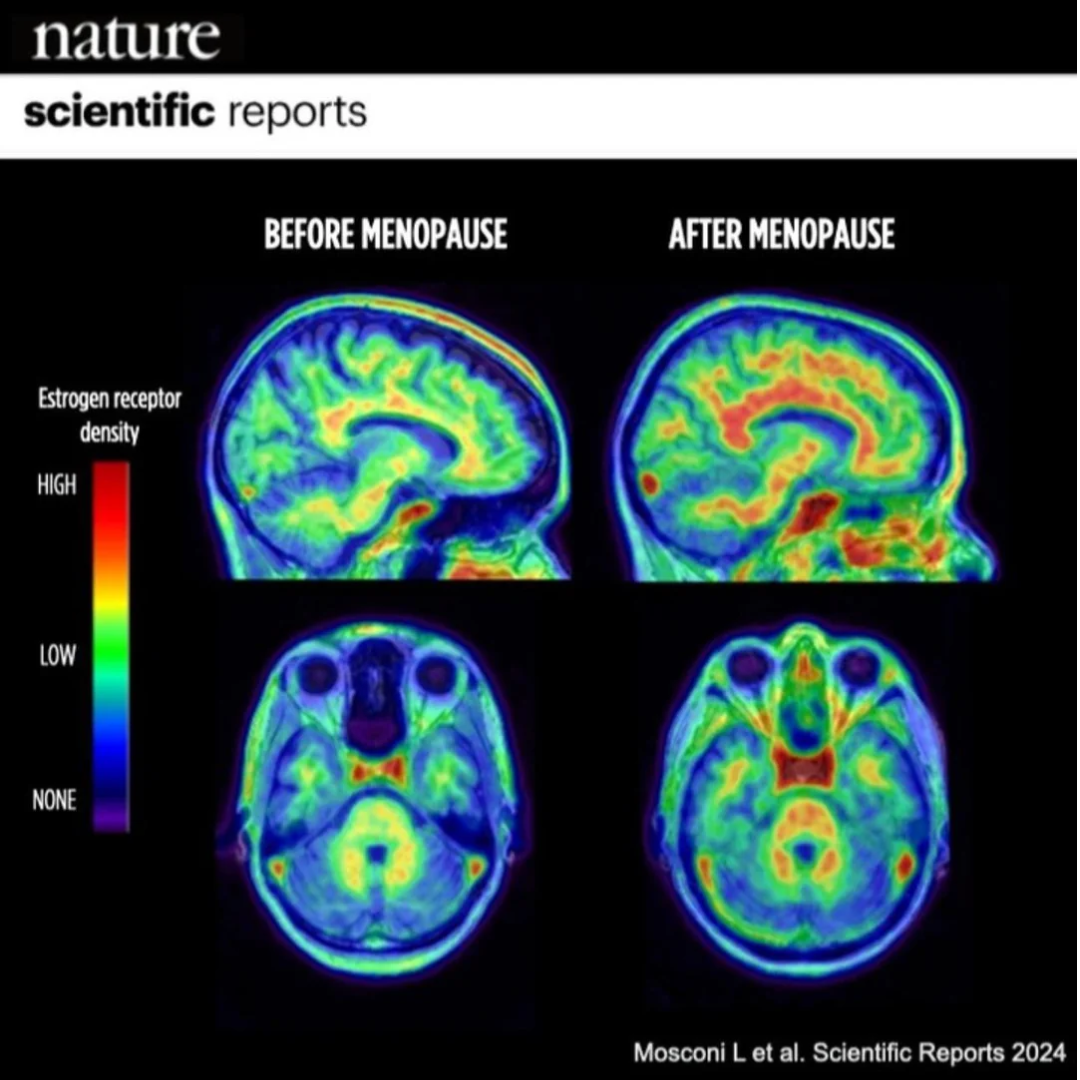
If you're on HRT and still keeping a secret notes document on your phone just to get through your workday — you need to read this. And by the end of this, you're going to be pissed nobody told you sooner. Because there are three things happening right now: One — Your HRT is working. It did exactly what it was supposed to do. But it was never designed to fix what's actually causing your brain fog. Two — And instead of investigating why you're still cognitively declining with stable hormones, your doctor handed you an antidepressant. Or told you it's stress. Or suggested you might have ADHD. Three — There's a specific reason your brain fog hasn't budged — not from the HRT, not from the supplements, not from the lifestyle changes, not from any of it. And it has nothing to do with your hormones. I know because I'm 49 and I've been on HRT for 18 months. Twenty years in my career. The person they pulled into the room when something was hard. The first time it scared me was in a meeting. Mid-sentence. I went to say my boss's name and it was gone. My BOSS. A woman I've worked under for six years. I was looking right at her and her name just vanished. She laughed it off, I laughed too. But I saw her face. That look people give you when they're pretending not to notice. That week I started keeping a document on my phone. Names. Deadlines. Client details. Things I'd confirmed the day before. I wrote down my boss's name before every meeting after that. Five years of working together, and now I needed a cheat sheet just to say her name. Then it got worse. I'd sit down at my desk to do something and by the time I opened my laptop the thought was gone. Not misplaced. Gone. Like it evaporated between standing up and sitting down. I re-read every email three, four times. Started using ChatGPT for things I used to write in five minutes. Started working evenings because everything took twice as long. And I hid all of it. Blamed it on mornings. Said I needed more coffee. Then it happened in front of everyone. Slide six. A presentation I'd given a dozen times. The word "acquisition" just vanished. I could feel it sitting right behind my eyes, right there, and my brain couldn't reach it. I said 'the deal thing' and kept going. The room went quiet. Nobody corrected me. Nobody said anything. I finished the slides. Walked to my office. Closed the door. And cried. That night I was up at 2am Googling "early onset dementia symptoms." Because what if this is just who I am now. My HRT was working. Hot flashes gone. Night sweats gone. Sleep was better. But the one symptom that was actually destroying my career, HRT wasn't touching it. I went back to my OBGYN. Told her the fog was getting worse, not better. She pulled up my labs. Estrogen stable. Everything in range. She adjusted my dose anyway. Said give it a few more weeks. Then she asked if I'd considered an antidepressant. "For the mood component." I told her it wasn't my mood. She nodded. She didn't have another answer. So I started looking on my own. Creatine first. Every woman on Reddit swore by it. I mixed it into my water every morning for six weeks. Bloated. Nothing. Lion's Mane tincture from Whole Foods. Felt something the first two weeks. By week six I couldn't tell if it was doing anything or if I just wanted it to so badly I imagined it. A nootropic blend from Amazon that had my heart racing by noon. Wired but still foggy. I threw it away. Ashwagandha. Magnesium. Fish oil. I was willing to try Skittles if someone said it worked. My counter looked like a pharmacy. My phone looked like a cheat sheet. And I still couldn't remember the word "acquisition." Then the lifestyle overhaul. Cut caffeine. Cut alcohol. Fixed my sleep. Ate clean for two months. Exercised four days a week. The fog didn't move. Two weeks later my boss called me into her office. She said they'd been talking, and they thought I'd benefit from a role with less on my plate. A different department. Fewer moving parts. She said it like she was doing me a favor. Twenty years. Not one flag. Not one review below exceeds expectations. And now they were quietly moving me aside. I thanked her. Walked out. Made it to my car. And I fell apart. The kind of crying where you can't breathe. Where you grip the steering wheel because everything else is dissolving. I sat there until the parking lot was empty. And I whispered it out loud. "I don't feel like myself anymore." But I wasn’t done. I started researching that night. And I found the same thing everywhere. Manage your stress. Try creatine. Give HRT more time. Nothing that explained why I was still declining with stable hormones. So I changed the question. Stopped Googling "perimenopause brain fog" and started searching "why does brain fog persist on HRT with stable estrogen." And I found them. Women describing my exact situation. Hundreds of them. On HRT. Estrogen stable. Still losing words, still losing time, still losing ground. But no one had answers. Then one comment from a woman who'd seen a specialist who studies what hormones actually do inside the brain. Not an OBGYN. Not a neurologist. Someone who specifically studies the cognitive side. She didn't explain what the specialist told her. She just said, "I'm not going crazy. There's an actual reason." I searched for three days. Found one. Two hours away. Six-week wait. When I walked into her office, I was ready to be dismissed again. Dr. Ali was older. She'd been through menopause herself. She didn't interrupt. Didn't glance at the clock. She listened to the whole story. Twenty minutes. When I finished, she leaned forward. "Your estrogen is stable. But you're still cognitively struggling." "Yes." "That's because HRT did one thing. And it did it well. But there's something it was never designed to do." She picked up a pen and started writing on the paper in front of her. "Estrogen isn't just a hormone. It's the delivery system for three specific brain chemicals. The chemicals you need to retrieve words, stay calm under pressure, and think clearly on demand." She looked at me. "During perimenopause, estrogen doesn't just drop. It swings. Wildly. And when it swings, the deliveries stop. Your brain runs out of the chemicals it depends on to function." "There are three that matter most." She wrote the first one down. "Acetylcholine. This is the chemical that carries words from your memory to your mouth. When your brain runs out of it, the word is still in there. But the signal that retrieves it goes dead." I thought about "acquisition." Right there behind my eyes. Not forgotten. Unreachable. "GABA." She wrote the second. "This is the chemical that keeps your nervous system calm under pressure. When it's depleted, your brain floods with cortisol instead. You freeze. You lock up. You can't think in the moment." "That's what happened in my presentation," I said. "I blanked on one word and my whole brain just shut down. I couldn't recover." "That's not weakness. That's a chemical deficit." She wrote the third. "Dopamine. The chemical that gives you mental energy and drive. When dopamine runs low, everything feels harder than it should. You're not lazy. You're not burned out. Your brain is running without fuel." I thought about the evenings. The emails I used to write in five minutes taking thirty. Everything twice as long. She put the pen down. "And HRT?," she said. "HRT got your estrogen stable. That mattered. But by the time most of us start it, those chemicals have been depleted for months. HRT didn't refill what was already gone. Your brain has been running on an empty tank this entire time." I didn't say anything. I didn't have to. "You're not crazy," she said. "Your brain is starving. And HRT, as important as it is, didn't feed it." Then I told her everything I'd tried. She nodded like she'd heard this list a hundred times. "Creatine gives your cells general energy. But it doesn't supply the three specific chemicals your brain is missing. It's like putting gas in a car with a dead battery." "Lion's Mane repairs the wiring between brain cells. That’s real. But if the chemicals aren't there, if nothing is traveling on those wires, repaired connections don't help. You rebuilt the roads but there was nothing driving on them." "The nootropic blend?" She almost smiled. "Stimulants. They flood your brain with adrenaline, which is the last thing you need when your brain is already being flooded with cortisol." "And the ashwagandha and magnesium calms your stress response. But it doesn't restore the three chemicals your brain ran out of. You felt calmer. Your brain was still empty." "Stacking all of them together doesn't fix it either. Five supplements at five different doses, none of them targeting the same system, none of them formulated to work together. You were throwing ingredients at symptoms without understanding what was actually depleted." Every bottle on my counter had solved one piece. None of them had solved the architecture. "What about the diet and exercise? I did everything. Cut caffeine, cut alcohol, ate clean for two months." "Good for your body. But diet and exercise can't manufacture what's been depleted at the chemical level. You were doing everything right. Just not at the layer where the problem actually lives." None of it had been wrong. But none of it had been enough. Because none of it addressed the actual problem. The three chemicals were gone, and nothing I'd taken had restocked them. "So what restocks them?" She pulled the paper toward her and started writing. "Citicoline. This supplies acetylcholine directly. The chemical that carries words from your memory to your mouth. Citicoline restores that signal." "L-Theanine. This restores GABA. The calm under pressure, without making you drowsy." "And N-Acetyl L-Tyrosine. This supplies dopamine. The mental energy and drive. Tyrosine refills the tank." She looked up. "These have been researched for decades. They're not new. They're just not what anyone prescribes for menopause." Then she paused. "But restocking alone isn't enough. While your brain was running on empty, the physical connections between neurons degraded. And a stress loop set in. Every time you blanked in public, it triggered a cortisol spike that damaged your hippocampus, the part of your brain responsible for memory. Which made the next blank worse." "The restock is the engine. But the damage and the loop need addressing too." I drove home that night and for the first time in months, I didn't feel like I was losing my mind. I felt like I finally understood what was happening to it. I went straight to my laptop and did what I always do. I researched. Looked up all three compounds. Found clinical studies confirming everything Dr. Ali had said. Two decades of real trials. Real doses. And women on forums describing my exact situation, same explanation, same three chemicals, they got their brain back. So I tried to put it together myself. And that's where everything fell apart. Found a "brain support" blend on Amazon with citicoline and L-Theanine but no Tyrosine. Took it for a week. Something felt different, maybe. By week two, nothing. I added a standalone citicoline from a different brand. Maybe slightly sharper. Maybe placebo. I couldn't tell. And I still had nothing for the neural damage. Nothing for the cortisol loop. I looked at my counter and there were three new bottles sitting next to my HRT. I was doing the exact same thing I'd been doing before I cleared it. So I went back to the research. And I found something Dr. Ali hadn't mentioned. B-vitamins are essential cofactors. Without them, the raw materials are present but the brain can't actually convert them into functional chemicals. Most formulas skip them entirely. So now I knew what I needed. All three compounds at clinical doses. Something for the neural damage. Something for the cortisol loop. The B-vitamin cofactors. And not in five separate bottles. Nothing I found had all of it. Then in a private Slack community for women in senior leadership I kept seeing one formula being mentioned. I'd been burned too many times. But I clicked. I pulled up the supplement facts panel and read it the way I read everything now. Like a forensic auditor. Citicoline at 250mg. The exact dose from the clinical research. The signal for word retrieval. The first thing Dr. Ali wrote on that paper. L-Theanine at 100mg. GABA. The calm under pressure. N-Acetyl L-Tyrosine at 175mg. Dopamine. The drive and processing speed. All three. Together. At the doses that actually showed results in the studies. Then I kept reading. Lion's Mane at 500mg. Clinical dose. Not the 200mg in the tincture I'd been taking that did nothing. For the neural connections that degraded while the tank was empty. Phosphatidylserine and Rhodiola for the cortisol loop. Maritime Pine Bark for neuroinflammation. The thick, heavy fog that wasn't a metaphor. And the B-vitamin cofactors. The thing most formulas skip entirely. No proprietary blends. No caffeine. Every amount listed. Patented forms. I sat back in my chair. This was everything Dr. Ali had explained. The three fuels, plus the damage that built up while the tank was empty, plus the cortisol loop making everything worse. The complete picture. In one formula. At clinical doses. The label said Brain Bloom. I'd never heard of it. I didn't care what it was called. I cared that someone had finally put it all together. They had a 90-day guarantee. After everything I'd already spent on supplements that didn't work, ninety days of zero risk felt like the easiest decision I'd made in a year. I ordered it that night. Took two capsules with my coffee Monday morning the same way I took everything. Out of obligation, not belief. The first week, something shifted. Quiet. The heavy static behind my eyes felt lighter. I told myself not to notice it. I'd been here before with things that didn't work. I wasn't going to let myself hope over one week. By week two, I got through a full team meeting without losing my thread. Words came back faster. Not perfect. But faster. I caught myself sending an email without re-reading it three times. Just wrote it, checked it once, hit send. First time in months. I wasn't sure if it was real yet. I didn't want to jinx it. Week four. Someone asked a question in a meeting I would have fumbled a month ago. I handled it on the spot. Found the right words. Didn't freeze. A colleague pulled me aside after. "Great input today. You were really on it." Week eight. The precise language was back. Not just common words. The specific, technical vocabulary I'd built over twenty years. I was articulating strategy the way I used to. Making connections without needing notes. I opened the document on my phone. The one I started the week I forgot my boss's name. 247 entries. Every meeting, every name, every word I was afraid I'd forget. I deleted it. Week ten. My boss called me into her office. Same office. Same chair. "We've decided to keep you where you are. Your recent work has been excellent and we see no reason to make a change." I walked out. Went to the bathroom. Locked the door. And cried. Not the broken crying from the parking lot. The kind where you're so relieved you can't hold it in. Twelve weeks in I had a follow-up with Dr. Ali. She ran me through a cognitive assessment. When she finished, she looked up at me. "The improvement is significant. Whatever you're doing, keep doing it.” "It's called Brain Bloom, I told her.” She wrote it down. "I'm going to look into this for my other patients. The improvement from your first assessment to this one is not subtle." That's when I knew I had to say something. I was right where you might be now. On HRT. Estrogen stable. Hot flashes gone. And still losing words, still losing time, still wondering if this is just who I am now. Here's what I wish someone had told me a year ago. HRT is doing its job. It stabilized the delivery system. But the three chemicals were already gone before it started. And every week the tank stays empty, the damage compounds. The loop doesn't pause while you figure this out. It runs. Every day. Every meeting. Every word that vanishes mid-sentence. I don't know if Brain Bloom will work for you the way it worked for me. But it’s the only formula I found that addresses the complete picture. The three fuels, the damage layer, the stress loop, the B-vitamin cofactors. Clinical doses. No proprietary blends. Everything on the label. Not a menopause supplement with ashwagandha and a pink label. The complete protocol in one bottle. It doesn't replace HRT. It completes it. They have a 90-day guarantee. Ninety days. That's enough time to know. And after everything I'd already spent on supplements that didn't work, ninety days of zero risk felt like the easiest decision I'd made in a year. I put the link below.
Where the ad sends people
getavellon.com
Read this if you have menopause brain☝️
You didn't lose your drive. You didn't lose your edge. You just lost your brain — and you know it. The words that used to come easily. The focus that kept you sharp in every room. The version of you that fired on all cylinders. She's still in there. Brain Bloom is a daily cognitive support supplem...
See details: getavellon.com(opens in a new tab)