
Inactive· since May 19, 2026
- 39
- days it ran
- 2
- relaunches
Ad copy
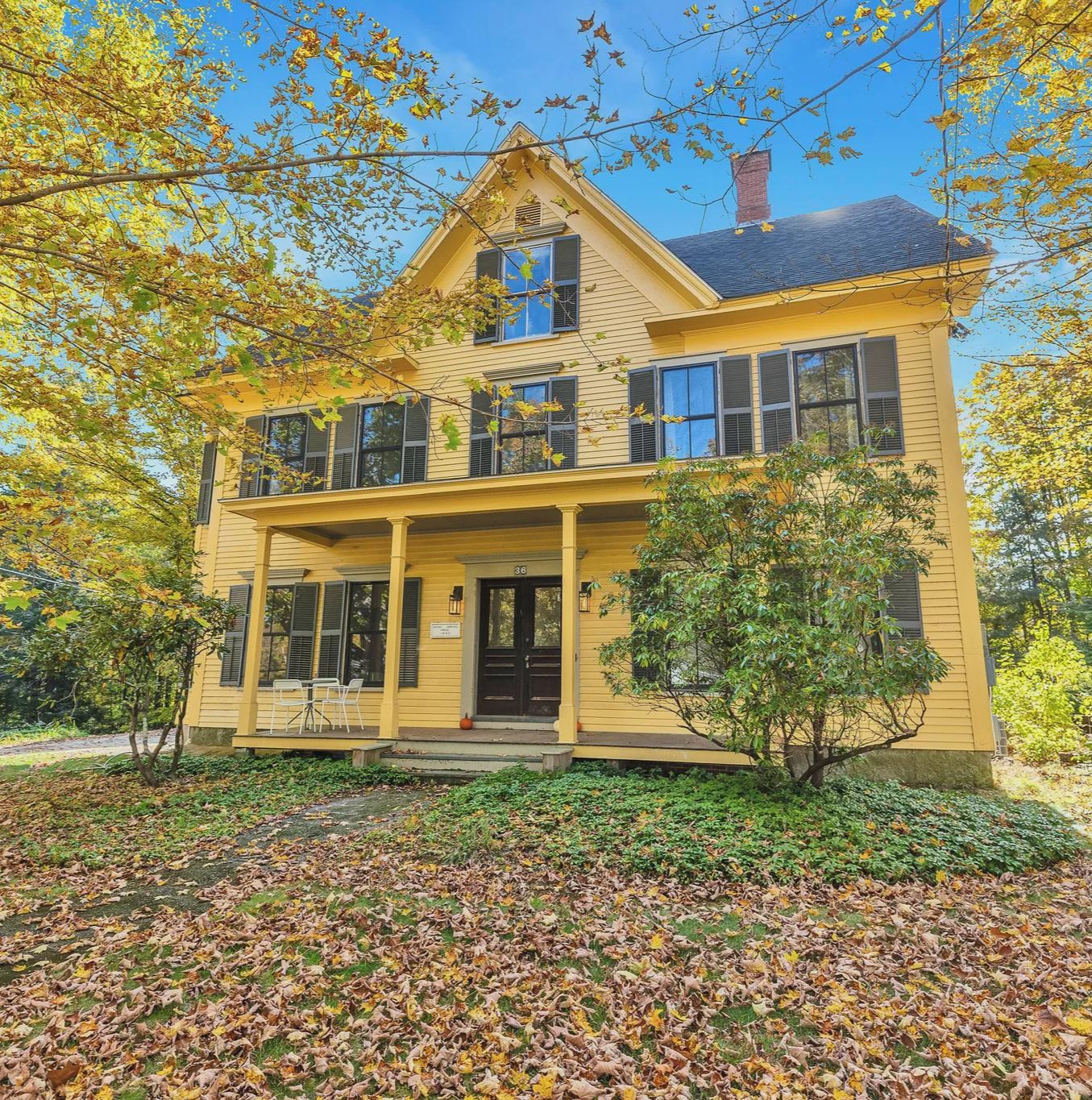
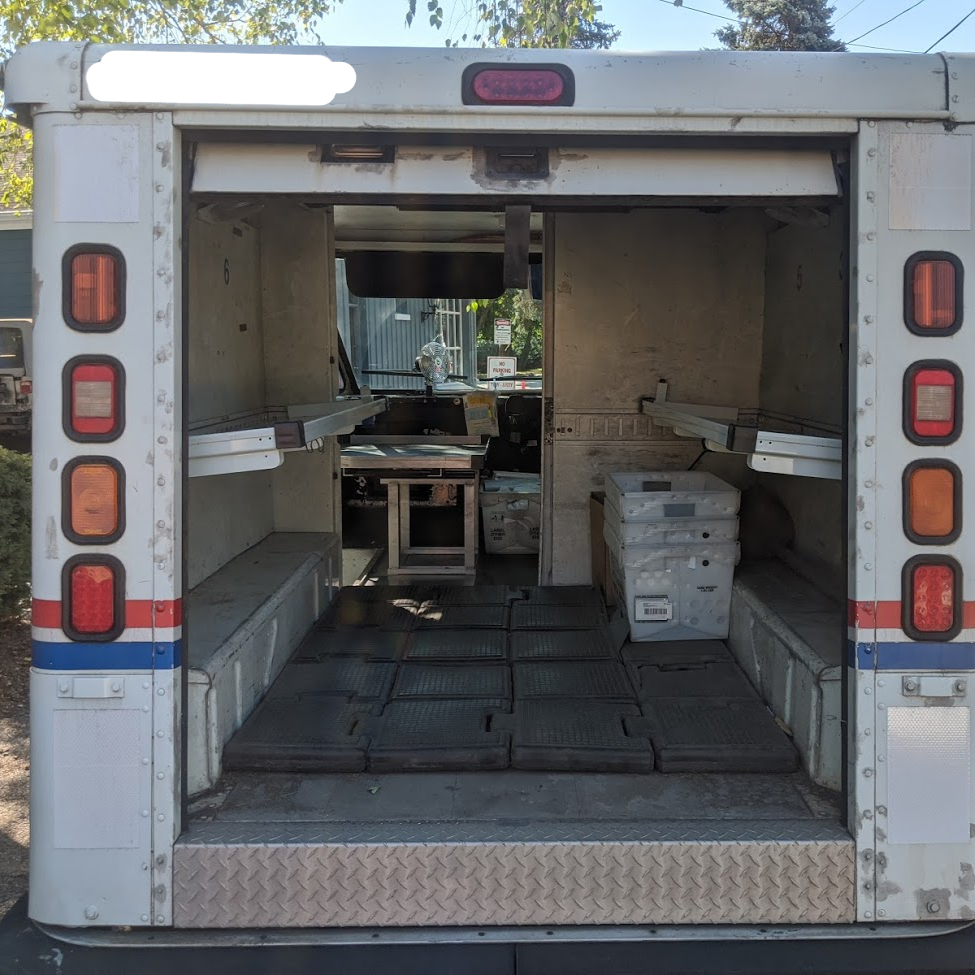
I found a wallet on the dining room table on a Wednesday night and it wasn't mine. It was Frank's. My husband. Worn brown leather, the corner of it curled from 30 years of being shoved into the back pocket of postal blues. He'd left it there next to a pile of mail he was supposed to have delivered two days earlier but had carried home by accident because his head wasn't in it anymore. That's when I knew something was really wrong. Frank doesn't forget mail. Frank has walked the same 11 mile route in Buffalo, New York for 19 years. Same houses. Same dogs. Same old lady on Voorhees Avenue who hands him a Werther's caramel through the screen door every Friday. He knows which mailboxes stick. He knows which porches have ice on them in February before the sun comes up. He once told me he could close his eyes and walk that whole route by muscle memory, just by the way the sidewalks slope. So when my husband, the man who has not missed a day of work in 19 years, who has never once brought mail home by mistake, sat down at the dining room table that Wednesday night and didn't even notice the bundle of envelopes still tucked under his arm, I sat down across from him and I said, "Frank. Honey. What is going on with you." And he looked at me like he was about to cry. My name is Marlene. I'm 58 years old. I live in West Seneca, a working class suburb on the south side of Buffalo, in a two story with green vinyl siding that we've been meaning to power wash for three summers. I work part time at the front desk of a dental office on Union Road. I have two sons, both grown, both out of the house. One is a pipefitter in Rochester, the other one fixes elevators in Cleveland and I don't see him as much as I'd like. And I have a husband who, for the first time since I've known him, was scared. Frank's knees had started giving him trouble in the winter. He didn't say much about it at first because Frank doesn't say much about anything. He's the kind of man who came home with a broken finger from softball in 2003 and didn't mention it for three days. He'll limp around the kitchen for a week before he'll admit something hurts. But this was different. It started as a stiffness. He'd come in from his route, sit down in the recliner to take his boots off, and there'd be this little wince. Just a flicker across his face. I'd ask if he was alright and he'd wave me off. "Long route today." Frank's been saying "long route today" for 19 years. Then by January it wasn't just stiffness. It was a sound. A real, audible click in his right knee every time he stood up out of the recliner. Loud enough I could hear it from across the room. He'd push himself up using the armrests, the way old men do, and the knee would pop and he'd stand there for a second before he started walking, like he was waiting to see if it was going to hold him. I caught him in February sitting on the edge of the bed at 5:15 in the morning, just sitting there. Boots in his hand. Looking at his knees the way a man looks at a car that won't start. He didn't see me in the doorway. He sat there for a full 4 minutes before he stood up. That was the morning I started worrying. The post office offered him an out. He has 19 years in. They told him he could move to a window clerk position. Sit at a counter, hand people money orders, sell stamps, ring up packages. Inside work. Climate controlled. No more walking. He could finish out his last six years to retirement on his backside and his pension wouldn't change. He said no. He said no three different times. His supervisor pulled him aside in March and basically begged him to take it. Frank told me about it that night while I was making meatloaf and he sat at the kitchen table peeling the label off a bottle of Genny. "Marl," he said. "I'm a mailman. I walk." "Frank, your knees." "I walk." That's the whole man. Right there in two words. But by April his right knee swelled up so bad after a Tuesday route that he couldn't get his sock off. I had to peel it off him while he sat on the edge of the tub. The skin around his kneecap was hot and shiny and tight like a balloon. I told him he was going to the doctor and for once he didn't argue. Doctor Pendergast has been our family doctor for 22 years. Good man. Reasonable. He looked at Frank's knee, moved it around, asked some questions. Then he said the thing I have come to hate more than almost any other sentence in the English language. "Frank, this is what happens. We get older. The cartilage wears down. There's not a lot you can do." He said it kindly. He's a kind man. But he said it. He gave Frank a prescription for naproxen and a referral to an orthopedist that would take 4 months to get in to see. And he told him, off the cuff, that if he wanted to keep walking that route, he probably needed to lose 20 pounds. In the car on the way home, Frank didn't say anything. He just drove. We got to a red light on Seneca Street and he stared straight ahead and he said, real quiet, "Maybe I should take the window job." I didn't answer him. I couldn't. Because in 32 years of marriage that was the closest I'd ever heard my husband come to giving up on something. The next morning he took the window job. It was supposed to be temporary. Six weeks. Just to let his knee settle down while he waited for the orthopedist. He told everyone at work it was temporary. He told me it was temporary. He told his supervisor it was temporary. But Frank is a creature of routine, and a routine that breaks doesn't just snap back into place. When you've walked 11 miles a day for 19 years, your body becomes the route. Your blood pressure, your appetite, the time you wake up, the way you sleep, the way you breathe when you're going up a hill on Walden Avenue carrying a satchel of mail. All of it is built around the walk. And when the walk stops, everything else starts coming apart. By week 3 of the window job, Frank had gained 6 pounds. By week 6, he'd gained 11. By week 9, when his orthopedist appointment finally came around, he'd gained 14 pounds and his blood pressure had jumped 18 points and he was sleeping 9 hours a night and waking up tireder than when he'd gone to bed. The orthopedist took an x-ray and said there was some wear but nothing surgical. Cortisone shot. Physical therapy two times a week. And the same sentence. "Frank, at your age, you might just have to accept that the walking route is behind you." Frank didn't say anything in that office. He nodded. He shook the doctor's hand. He walked out to the parking lot, and when he sat down in the driver's seat of our Equinox, my husband, who I have seen cry exactly twice in 32 years, once when his mother died and once when our oldest son was born, put both his hands on the steering wheel and he wept. "Marl. I'm 58 years old. I'm not done." I want you to understand something about Frank. He didn't want the route back because he loved walking. He wanted the route back because that route was who he was. He knew the Pellegrinos on Mineral Springs Road, and he knew their daughter Rachel had just moved back home from Albany after a divorce, and he knew to put her mail on top so her mom didn't see it first. He knew that Mr. Kowalski on Center Road had been waiting on a VA check that was three weeks late, and he'd been calling the post office about it personally to track it down. He knew the dog on Heather Lane was old and blind and would bark at his footsteps but couldn't actually find the door anymore, so he started leaving the packages on the side porch where the dog wouldn't hear. That was Frank's life. That was Frank. And at the window, he was just a guy selling stamps. Customers didn't know him. He didn't know them. He'd come home and sit in the recliner and the click in his knee was still there even though he hadn't walked anywhere, because the swelling didn't go down, it just sat there, and the pounds kept coming on, and his blood pressure kept creeping, and Doctor Pendergast added another pill at his June checkup and said, "Frank, we just have to manage this now." Manage. That was the word that did it for me. Manage. I'm 58 years old. I am not interested in managing the slow disappearance of my husband. I am interested in getting him back. So I started looking. I want to tell you about my sister Diane, because if I don't, none of the rest of this makes sense. Diane is 63. She lives in Williamsville, on the other side of Buffalo, in a condo she bought after her divorce went through in 2019. Diane is the person in our family who reads things. Books, articles, journals, studies. She was a school librarian for 31 years before she retired and she still reads about 3 hours a day. If you want to know something, you call Diane. She'll have read 4 books about it. I called her on a Sunday afternoon in early July. Frank was watching a Bills preseason game in the recliner and the knee was clicking every time he shifted his weight and I went out to the back porch and I called my sister. I told her everything. The route, the window job, the weight, the blood pressure, the orthopedist, the word "manage." Diane was quiet for a long time. Then she said, "Marlene, I want you to look at something. I'm going to send you a link tonight. Don't read it on your phone. Read it on the computer. Take your time." She didn't say what it was. That's how Diane works. That night, after Frank went to bed, I sat at the kitchen table with my laptop and a cup of decaf and I opened the email from my sister. It was a research summary about cartilage. About the cells that maintain it. About how those cells need cellular energy to do their job, and how that cellular energy is produced by little engines inside every cell called mitochondria. And about how, as we get older, the mitochondria don't work as well, and the cartilage cells don't get the energy they need, and so they stop maintaining the joint properly, and the joint starts breaking down. It wasn't about a pill. It wasn't about a surgery. It was about energy. About power. About whether the cells inside the joint actually have what they need to do the work of being a joint. I sat there at the kitchen table at 11:40 at night and I read it three times. The article said something that stuck with me. It said, you've been delivering lumber to a construction site that has no power. The materials are there. The tools are there. But there's no electricity running through the building. Nothing is getting built. Nothing is getting maintained. Because nobody can turn anything on. I thought about Frank's knees. The naproxen was lumber. The cortisone shot was lumber. The "lose 20 pounds" was lumber. But nobody was turning the lights on inside the cells. I called Diane back the next morning. I said, "Okay. What do I do." And she told me about Amla. She'd been taking it for almost a year. She'd started after her own knees got cranky from the elliptical she does five mornings a week at the Y. She heard about it from a woman in her book club whose husband was a pharmacist before he retired. He'd been looking into it for himself. Amla. Indian gooseberry. A small green fruit they've been using in Ayurvedic medicine for thousands of years. Diane explained that it has compounds in it that help activate something called AMPK, which is one of the main pathways your body uses to support mitochondrial function. When AMPK is active, your mitochondria can start producing cellular energy more efficiently, the way they did when you were younger. And when that cellular energy can flow back to the cells that maintain your joints, those cells can start doing their job again. Maintaining the cartilage. Managing inflammation. Supporting mobility. It wasn't a painkiller. It wasn't a band aid. It was supporting the actual engine room of the cells that build the joint in the first place. Diane said, "Marlene, I'm not telling you it's a miracle. I'm telling you that for the first time in a long time something I tried actually made a difference. My knees stopped barking on the stairs. I'm sleeping better. I have more energy at 2 in the afternoon than I had at 10 in the morning a year ago. That's all I can tell you. But for Frank, with what you're describing, I'd at least try it." She told me about Alevia. The company she ordered hers from. She said the bottle was honest, the dosing was clean, and there was a 90 day money back guarantee, which meant if it didn't do anything for Frank we weren't out a dime. I ordered a bottle that night. It arrived four days later. Brown box on the front porch. Frank got home from his shift at the window and he looked at the box on the kitchen counter and he said, "What's that." I said, "It's something Diane told me about. I want you to take it." He looked at me. He looked at the bottle. He's known me a long time. He picked it up, turned it in his hand, set it back down. He said, "Marl, if you're asking me to do this, I'm going to do this." That's the whole man. Right there. He took two capsules the next morning with his coffee and a piece of wheat toast. And I didn't tell him I'd been holding my breath about it. I didn't want to oversell. I didn't want to undersell. I just wanted to see. Week one, nothing. I expected nothing. I'd read enough to know it didn't work overnight. Frank took his capsules every morning and went to his window shift and came home and clicked into the recliner and the knee clicked too. Week two, something. He stood up from the dinner table on a Thursday night to clear his plate, and the knee didn't click. I noticed it before he did. I didn't say anything. Week three, more. He told me on a Saturday morning, while he was scrambling eggs, that he'd slept through the night for the first time in months. He hadn't gotten up at 2:30 to take ibuprofen. He hadn't shifted onto his side at 4 to get pressure off the knee. He just slept. Week four, he walked up the basement stairs carrying a laundry basket. Now, that doesn't sound like anything to most people. But you have to understand. Frank had stopped going down to the basement back in May. He'd send me down to grab his work shirts out of the dryer. The stairs had become a thing. And on a Sunday in week four, he just went down there, did a load, brought the basket up, set it on the dining room table, and turned around to do another one. He didn't even know what he was doing. He'd just stopped thinking about his knees. I sat at the dining room table and watched him fold his postal blues and I felt something shift in my chest. Week six, he asked his supervisor about getting back on the route. His supervisor laughed at him. Not mean. Just surprised. He said, "Frank, you sure?" Frank said, "I'm sure." They put him on a half route to start. 5 miles instead of 11. Three days a week. He came home on the first day, took his boots off in the kitchen, and the knee held him standing. No wince. No flicker. He looked at me and he said, "Marl. It didn't hurt." He said it like a man who'd seen a ghost. By week 9 he was on the full route, full time. 11 miles. Five days a week. The same route. The Pellegrinos on Mineral Springs. The dog on Heather Lane. The Werther's caramel from the lady on Voorhees Avenue, who told him she'd been worried about him. He'd lost 9 of the 14 pounds without changing his diet. The blood pressure had come down 14 points at his last appointment. Doctor Pendergast looked at the chart and looked at Frank and said, "Whatever you're doing, keep doing it." Frank didn't say what he was doing. Frank doesn't say much about anything. I'll tell you the moment I really knew. It was a Saturday morning in late September. I was making coffee in the kitchen and I heard a sound I hadn't heard in 8 months. Frank was in the garage, and he had the radio on, and he was singing. Not loud. Just under his breath, the way he sings when he's working on something. He was changing the oil on the Equinox. He hadn't done his own oil change since the knee started up. I stood at the kitchen window with my coffee and I watched my husband for a long time. He came inside an hour later with grease on his hands and a stupid grin on his face and he said, "Marl. I think I'm back." I want to be careful here. I'm not going to tell you Amla is a cure. I'm not going to tell you it's a miracle. I'm not a doctor and Frank's case is Frank's case. What I can tell you is that for the first time in a year, my husband is walking his route, sleeping through the night, going up and down the basement stairs without thinking about it, and singing in the garage on a Saturday morning. I can tell you that what's actually in the bottle has been used for thousands of years and the research on what it does inside the cell is the kind of research that made my sister Diane, the most skeptical person I know, take it for a year. I can tell you what other things Frank tried did not address. The naproxen masked the pain. The cortisone calmed the inflammation for a few weeks. The "lose 20 pounds" advice was lumber dropped at a construction site with no electricity. None of it touched the engine room of the cells that actually build and maintain the joint. Amla works further upstream. It supports AMPK, which supports your mitochondria, which supports the cells in your joints having the cellular energy to do the work of being a joint. It's not a painkiller. It's power being turned back on inside a building that's been dark for a while. When the cells have the energy they need, they can work on maintaining cartilage. They can help manage inflammation. They can support the mobility your joints used to have without you ever thinking about them. Frank doesn't think about his knees anymore. That's the part I can't get over. He just doesn't think about them. He stands up from the recliner without using the armrests. He carries the laundry basket up the basement stairs. He walks 11 miles a day in a satchel of mail. He goes out to the garage on Saturdays. He sings. If you've been quietly watching someone you love slow down, and you've been told it's just aging, and you've watched the recliners get deeper and the routines get smaller and the things they used to do get put away one by one, I want to tell you that there is a path. It is not magic. It is not overnight. It is not a cure for everything. But it is real. And it costs less than dinner for two at the Outback. Alevia Amla is what we ordered. It's a clean, honest bottle from a company that backs what they make with a 90 day money back guarantee. Which means if you order it, and you take it for three months, and you feel exactly the same as you do today, you send the empty bottle back and they refund every penny. No questions asked. That's how confident they are that your body will respond the way Frank's did. The first day Frank got home from his full route, he sat down at the dining room table to take his boots off and the wallet was in his back pocket where it was supposed to be. He'd remembered to leave his mail at the office. He set the wallet down on the table. The recliner clicked, but the knee didn't. I sat down across from him and I just looked at my husband, and he looked at me, and neither of us said anything for a while. We didn't need to. P.S. If you're sitting there reading this and you're thinking about someone you love who's been slowing down, who's been told "this is just what happens at your age," who's been quietly giving up the things that used to make them them, please don't wait on this. We waited 7 months between when Frank's knee started clicking and when I finally got serious about looking for something that wasn't a painkiller. Those 7 months he was at the window selling stamps and not being himself. Don't lose 7 months. P.P.S. The 90 day guarantee is the part I want you to hear. Alevia stands behind this bottle. If you order it and Amla doesn't do anything for the person in your life, you send it back and they refund every dollar. There is no risk on your side. The only risk is doing nothing. P.P.P.S. Frank walked 47 miles last week. I just had to write that down somewhere. 👉 https://alevia.com/amla/33
Like this ad? Make it yours.
Crush rebuilds this exact creative around your product — your brand, your colors, your offer — in about a minute.