Haley D. Kelly
Haley D. Kelly Facebook ad: “Our values should be our aim-not our emotions…”
Ran for 4 days, from June 18 to June 22, 2026, the last day Crush saw it.
Run by Haley D. Kelly on Facebook. Crush is not the advertiser and does not verify its claims. See this ad in Meta's Ad Library(opens in a new tab)
Want an ad like this for your product?
Crush makes new ad images for your product from this ad: your logo, your product photo, your offer.
Trials from $19.95 USD, then $79.95 USD a month. Cancel anytime.
About this ad
- Meta Ad Library ID
- 1727810711976950
- Platforms
- Facebook and Instagram
- Relaunches
- 0
Ad text
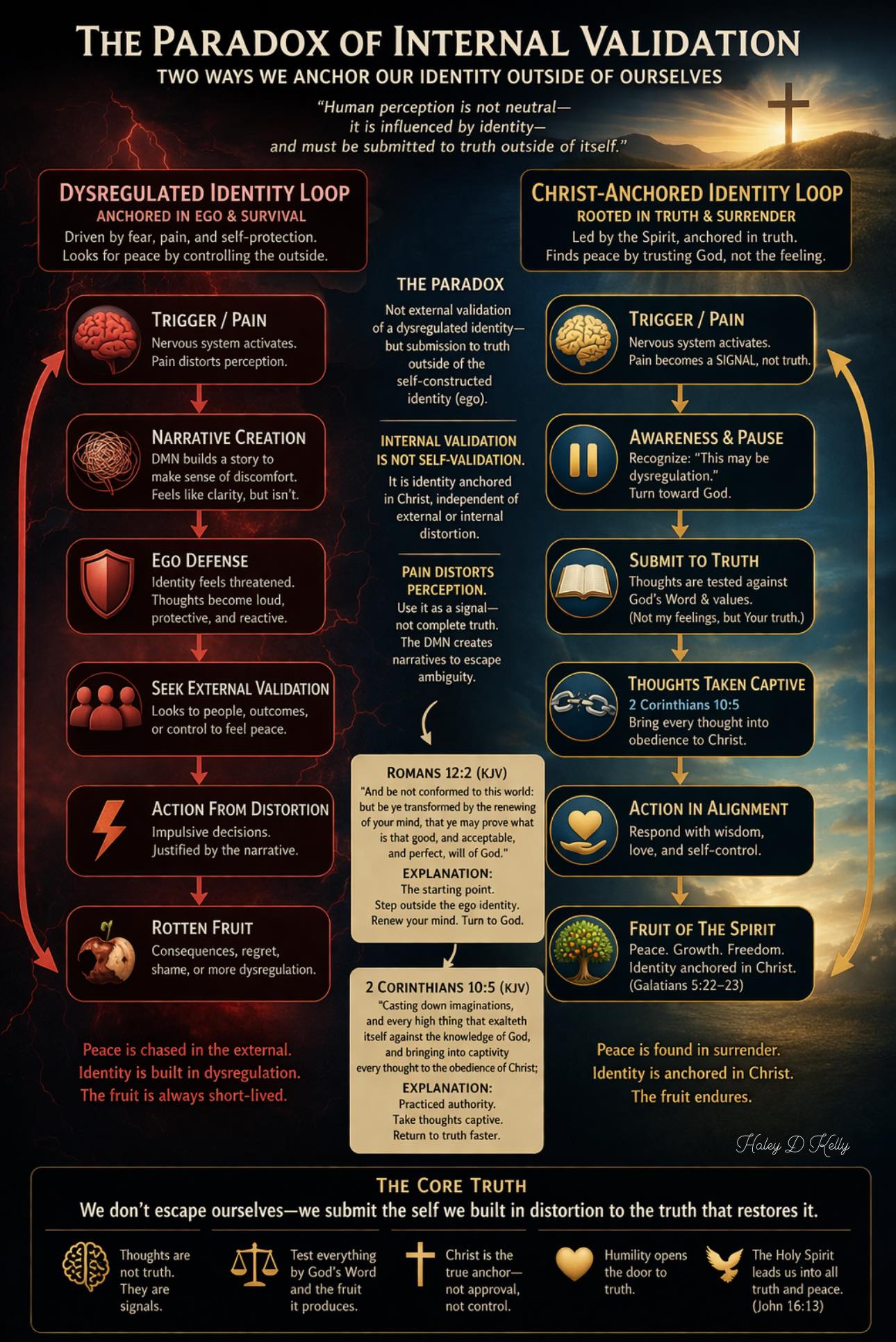
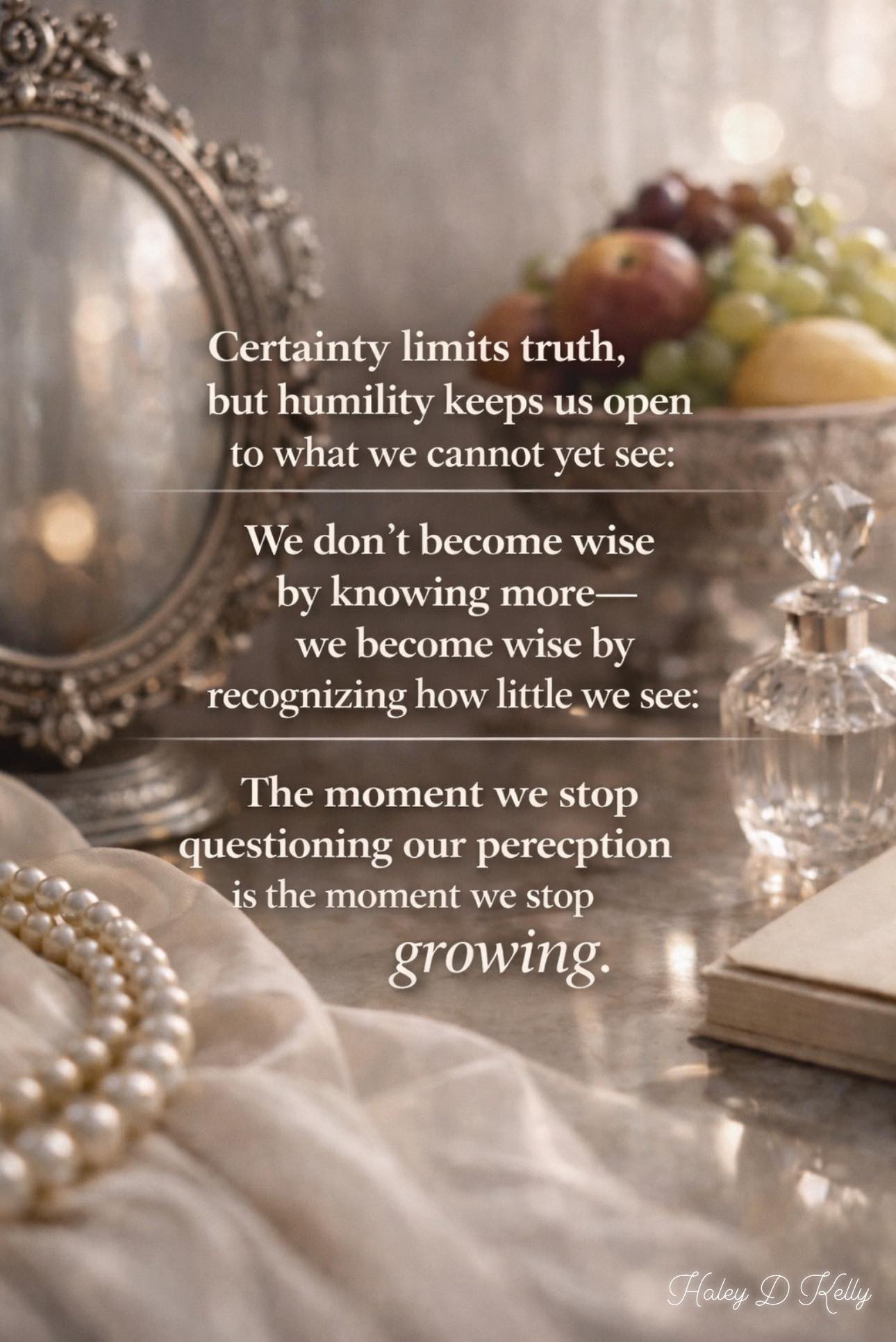
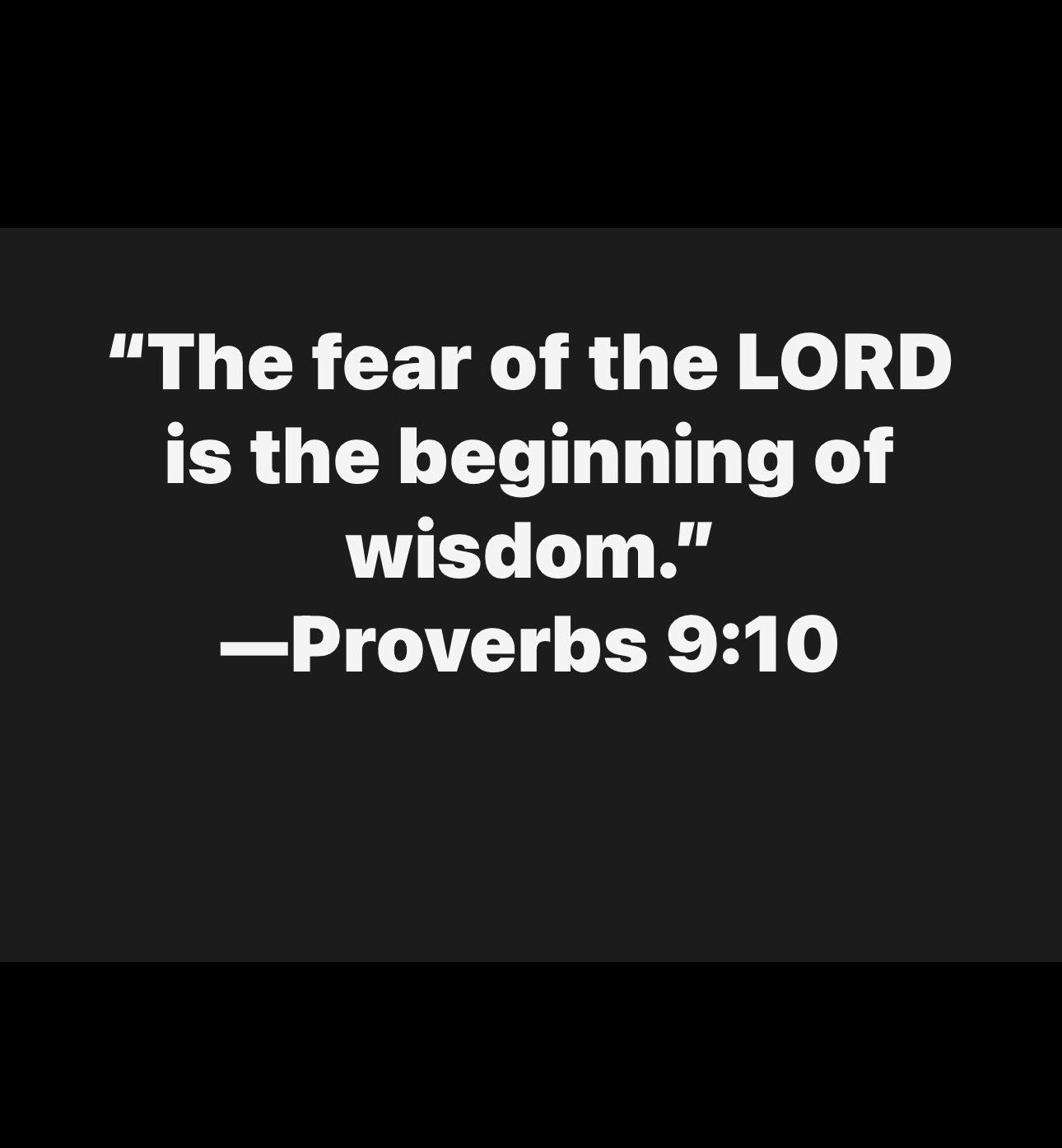
Our values should be our aim—not our emotions, not status, and not material things. Faith in our values keeps our aim from becoming relative to our feelings, which are constantly changing. Otherwise, our identity becomes vulnerable to an emotionally driven aim that shifts with every feeling. That creates instability instead of a value system that subdues our traits to their proper place no matter how we feel about the situation we are focused on. Our values help guide us back to regulation through discernment—patterns recognized over time—instead of quick judgments skewed by emotions. When we suppress traits, we often become focused on controlling outcomes and controlling other people who get in the way of those outcomes. Without faith and discipline in a value system, we choose external regulation instead of using our values to keep ourselves in check and regulate internally. Any emotional charge that gets accepted as certain truth becomes attached to our identity. Our value system should remind us to stay humble. Don’t be so certain. I always say: hold two truths. The paradox exists in everything. There is always context that exists outside of our projections. Choosing another possible narrative instead of the one your emotions immediately judged is a way to stay humble. It creates true discernment because it gives us enough time to pause instead of react. Once we become more regulated, our prefrontal cortex comes back online and allows us to see a clearer picture—one that still leaves room for possibilities instead of attaching a triggered emotion to a narrative we can no longer see past. The moment we stop asking questions, we start confusing our bias for the entire picture. Stay humble. Use values to guide yourself instead of treating automatic thoughts and emotions as proof of a binary definition that allows you to label people, externally regulate, and protect an identity from anything that threatens it. If we are triggered, what emotion is underneath the narrative? And what narrative is attached to that emotion? If you are witnessing your own certainty, why can’t you leave room for the context no one else can see? Every human being has limited perception. What’s funny is that many people judge others and their intentions without considering they may be missing the very context that explains the behavior they are condemning. We all justify our own actions because we can see the circumstances that led us there. But when someone else does something we don’t like—or expresses a trait we suppress within ourselves—we are often quick to thin-slice their character instead of leaving room for the possibility that their intentions were not nearly as horrible as the impact appeared through our limited perspective. Have values. Aim at your values. Otherwise, you’ll justify cutting someone off in traffic or yelling at someone to hurry up simply because they are standing in the way of an emotionally distorted aim. Being late for work suddenly becomes more important than your values. Not getting in trouble becomes the aim. Protecting your image becomes the aim. And before you know it, you’ve justified behavior that violates the very values you claim to stand for. A value-based person can stop and say: “I should have left earlier.” That is internal regulation. External regulation says everyone else is the problem. Internal regulation says I am responsible for my response. The irony is that someone may justify road rage because they don’t want their boss to think poorly of them for being late, yet if that same boss witnessed their behavior on the road, they would probably question their character far more than they would have questioned a late arrival. Values matter. Adults learn to internally regulate so they can respect one another. And the more faith we place in our values instead of our emotions, the less likely we are to sacrifice who we are for an outcome we were never guaranteed in the first place. Subdue your traits to their proper place. Every human trait has a proper time and place. The goal is not to suppress traits or pretend they do not exist. The goal is to steward them correctly. If someone cuts you off in traffic because you’re late, your values remind you that your frustration is not a justification for treating others poorly. The trait may be present, but it is not needed in that moment. However, if someone is intentionally trying to harm you, your values may call upon an entirely different trait. The same strength, aggression, assertiveness, or intensity that would be inappropriate in one situation may be exactly what is required in another. Values help us determine when a trait should be expressed and when it should remain sheathed. Without values, we justify our reactions. With values, we discern our responses. That means we do not use every feeling as permission to act, nor do we suppress parts of ourselves because we fear what they might mean about us. Instead, we recognize our capacity for every trait and learn how to put each one in its proper place. Sometimes compassion is the correct response. Sometimes patience is the correct response. Sometimes forgiveness is the correct response. And sometimes a firm boundary, confrontation, or self-defense is the correct response. The wisdom is not found in denying the trait exists. The wisdom is found in knowing when it serves your values and when it serves your emotions. When someone has lost sight of their values and is attempting to cause harm, our values may require us to stand our ground and defend ourselves. Not from hatred. Not from vengeance. Not from a desire to control. But because protecting what is good is also a value. The trait is the same. The purpose is different. That is the difference between being controlled by an emotionally justified trait and stewarding it. So remember to recognize your emotions. Use your values to help discern the correct response as you choose to internally regulate with integrity to do so because that’s what values are for. They are the aim that keeps your identity stable in the truth— not our feelings. So if your aim is to be happy— consider actually having faith in the fact that your emotions are not truth— they are signals to turn towards your values to internally regulate over using your feelings as justification to externally control others or a certain outcome.  You can’t define a person by a single moment— but if you don’t practice values over believing your limited perception— your identity gets define by the fruit of the choices you justified without considering relativisms power in blinding us from seeing our own character. The relativism that justifies our emotional aim —produces the consequences we then deny being our own fault by becoming a victim to the truth of the actual impact it created. Justifications don’t erase impact and values would allow us to have integrity to admit that truth if we actually practice having values instead of letting our emotions justify misusing our traits with an improper aim as we deny the facts that we chose a defense mechanism over the values needed to keep our identity stable. Stay HUMBLE! Hold 2 truths! Remember to practice your values over justifying external control convinced by believing your dysregulated thoughts and emotions the moment our limited perspective doesn’t have enough context to meet our expectations. Remember to not choose the emotions as truth as emotions naturally narrows our focus —which limits our limited perspective even more. HAVE FAITH! HAVE VALUES! HOLD 2 TRUTHS! There is always a way and Jesus shows us how it’s done if your tired of trying to figure out why your a victim of the same patterns you keep experiencing. Which takes me back to the popular phrase: WWJD? If you are going to fear anything—fear God. Not out of terror, but out of reverence. Because reverence for God helps us see ourselves clearly without constantly justifying the behaviors that blind us from our own character. When we lose sight of that, we begin protecting distortions instead of truth. We defend emotional aims rather than the values that were meant to guide us. We justify our reactions, our choices, and our behavior because admitting the truth would threaten the identity we have become attached to. The paradox is that in trying to protect ourselves from discomfort, we often create the very consequences we later become victims of. We distort reality to protect an image. We sacrifice integrity to protect a feeling. We defend a narrative because it feels true instead of asking whether it actually is true. But reverence for God calls us back to humility. It reminds us that we are capable of being wrong. Capable of self-deception. Capable of justifying things that do not align with the values we claim to hold. The fear of God is not fear that keeps us hiding. It is reverence that keeps us honest. It is the willingness to let truth correct us before consequences have to. Because trust is built through integrity. And integrity is built when our values remain higher than our emotions, our image, our status, our comfort, or our desired outcome. If we are going to fear anything, let it be becoming so certain of our own narrative that we stop seeking truth. Let it be losing the humility required to examine ourselves honestly before God. Because when our emotional aim becomes more important than truth, we begin protecting a distortion. And the more we protect the distortion, the more disconnected we become from reality, accountability, and the very values that allow others to trust us in the first place. “The fear of the LORD is the beginning of wisdom.” — Proverbs 9:10 Wisdom begins when we are humble enough to let truth matter more than our feelings about it. #HaleyDKelly #HaleyKellyReflections #IdentityInChrist —————————————— Neuroscience & KJV Scripture Behind This Reflection 1. Values Create Stability While Emotions Fluctuate Neuroscience The brain’s emotional systems are designed to react quickly to threats, rewards, uncertainty, and social feedback. The amygdala and limbic system generate emotional responses that can change from moment to moment depending on circumstances. Values, however, engage higher-order processing in the prefrontal cortex, particularly areas involved in long-term planning, self-control, moral reasoning, and goal-directed behavior. When people make decisions based on values rather than immediate feelings, they tend to experience greater consistency, emotional resilience, and self-regulation because their behavior is anchored to something more stable than temporary emotional states. Emotions make excellent signals. They make poor masters. ⸻ KJV Scripture Proverbs 4:25-27 “Let thine eyes look right on, and let thine eyelids look straight before thee. Ponder the path of thy feet, and let all thy ways be established. Turn not to the right hand nor to the left: remove thy foot from evil.” Explanation Values keep your eyes fixed on the aim. Emotions constantly pull attention in different directions. Wisdom is remaining established in your path regardless of what you feel in the moment. ⸻ 2. Emotional Certainty Narrows Perception Neuroscience When emotions become highly activated, attention narrows. This is called attentional narrowing. The brain begins filtering information that confirms the emotional state while overlooking information that challenges it. Fear looks for danger. Anger looks for threats. Shame looks for rejection. This is why emotional certainty often feels true while simultaneously reducing our ability to see the whole picture. ⸻ KJV Scripture Proverbs 18:13 “He that answereth a matter before he heareth it, it is folly and shame unto him.” Explanation Emotion often wants to finish the story before gathering all the facts. Wisdom slows down. Wisdom asks questions. Wisdom leaves room for context. ⸻ 3. Internal Regulation vs External Regulation Neuroscience Psychology calls this locus of control. People with strong internal regulation focus on their own responses, choices, and behaviors. People relying on external regulation focus on controlling circumstances, outcomes, and other people. Research consistently shows that internal regulation produces greater emotional stability and resilience. ⸻ KJV Scripture Proverbs 25:28 “He that hath no rule over his own spirit is like a city that is broken down, and without walls.” Explanation A person without self-regulation becomes vulnerable to every emotion, circumstance, and external pressure. The biblical focus is not controlling everyone else. The focus is ruling your own spirit. ⸻ 4. The Prefrontal Cortex Comes Back Online Through Regulation Neuroscience When stress, fear, anger, or shame become intense, activity in the amygdala increases while activity in the prefrontal cortex decreases. This is often called “amygdala hijacking.” The prefrontal cortex is responsible for: * Discernment * Long-term thinking * Self-control * Considering alternatives * Moral reasoning Once emotional arousal decreases, the prefrontal cortex regains influence and allows us to think more clearly. ⸻ KJV Scripture James 1:19-20 “Wherefore, my beloved brethren, let every man be swift to hear, slow to speak, slow to wrath: For the wrath of man worketh not the righteousness of God.” Explanation James is describing regulation. Slow down. Listen. Pause. Allow wisdom to lead instead of emotional reactivity. ⸻ 5. We Judge Others Differently Than We Judge Ourselves Neuroscience Psychologists call this the Fundamental Attribution Error. We explain our own mistakes through context: “I was tired.” “I was stressed.” “I had a bad day.” But we explain others’ mistakes through character: “They are selfish.” “They are lazy.” “They are a bad person.” The brain naturally fills in missing information with assumptions. Humility recognizes that missing information exists. ⸻ KJV Scripture Matthew 7:3-5 “And why beholdest thou the mote that is in thy brother’s eye, but considerest not the beam that is in thine own eye?” Explanation Jesus directly challenges our tendency to see context for ourselves while assuming the worst about others. Humility leaves room for context. ⸻ 6. Suppression Often Creates Projection Neuroscience Traits we deny, suppress, or refuse to acknowledge in ourselves often become emotionally charged when we see them in others. The brain notices unresolved material. This can create projection, where we attribute motives, intentions, or flaws to others that we have not fully examined within ourselves. ⸻ KJV Scripture Jeremiah 17:9 “The heart is deceitful above all things, and desperately wicked: who can know it?” Explanation The greatest blind spot is often ourselves. The heart can justify almost anything when protecting identity. Humility admits that self-deception is possible. ⸻ 7. Fear of God Produces Wisdom Neuroscience Healthy reverence creates accountability. People who regularly examine themselves against a higher standard are less likely to become trapped in self-justification because they continually evaluate their behavior against something larger than personal comfort, emotions, or social approval. ⸻ KJV Scripture Proverbs 9:10 “The fear of the LORD is the beginning of wisdom: and the knowledge of the holy is understanding.” Explanation The fear of God is not terror. It is reverence for truth. It is the willingness to let truth correct us before consequences have to. ⸻ 8. Identity Should Be Anchored in Truth, Not Feelings Neuroscience Identity becomes unstable when it is built primarily on emotional states because emotions naturally fluctuate. People who anchor identity to enduring principles, values, purpose, and meaning demonstrate greater psychological resilience during stress and adversity. ⸻ KJV Scripture Ephesians 4:14 “That we henceforth be no more children, tossed to and fro, and carried about with every wind of doctrine…” Explanation Feelings change. Opinions change. Circumstances change. Truth does not. A mature identity is not tossed around by every emotional storm. ⸻ ✨The Entire Reflection Summarized✨ Neuroscience * Emotions are signals, not truth. * Emotional certainty narrows perception. * Regulation restores prefrontal cortex function. * Values create stability. * Humility reduces cognitive bias. * Internal regulation produces resilience. * Projection often reveals unexamined material. * Reverence for a higher standard reduces self-deception. KJV Scripture Proverbs 3:5-6 “Trust in the LORD with all thine heart; and lean not unto thine own understanding. In all thy ways acknowledge him, and he shall direct thy paths.” 🙏🏻👑✨Explanation✨👑🙏🏻 This may be the verse that best summarizes your entire reflection. Don’t place ultimate trust in your emotions. Don’t place ultimate trust in your limited perception. Don’t place ultimate trust in your immediate understanding. Trust God. Aim at values. Stay humble. Hold two truths. Leave room for context. Use discernment over judgment. Practice internal regulation over external control. And remember: “The fear of the LORD is the beginning of wisdom.” (Proverbs 9:10 KJV) #Hold2Truths #FearOfTheLord #WisdomOverCertainty #ValuesOverFeelings