Haley D. Kelly
Haley D. Kelly Facebook ad: “I knew there was something here.”
Ran for 4 days, from February 25 to March 1, 2026, the last day Crush saw it.
Run by Haley D. Kelly on Facebook. Crush is not the advertiser and does not verify its claims. See this ad in Meta's Ad Library(opens in a new tab)
Want an ad like this for your product?
Crush makes new ad images for your product from this ad: your logo, your product photo, your offer.
Trials from $19.95 USD, then $79.95 USD a month. Cancel anytime.
About this ad
- Meta Ad Library ID
- 2478427919241102
- Platforms
- Facebook and Instagram
- Relaunches
- 0
Ad text
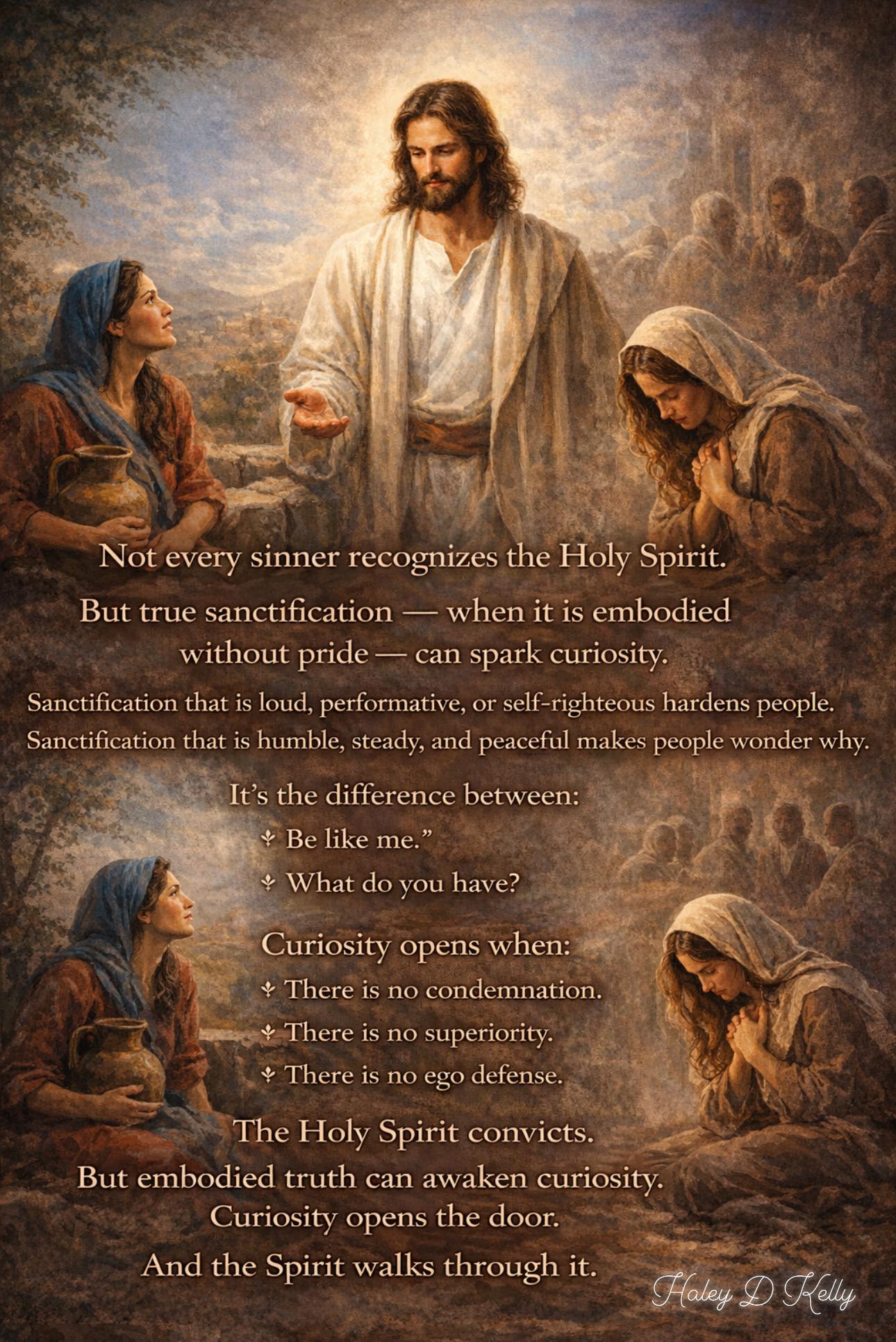
I knew there was something here. Not every sinner recognizes the Holy Spirit… But true sanctification — when it is embodied without pride — can spark curiosity. And that curiosity is more important than most Christians realize. Sanctification that is loud, performative, or self-righteous hardens people. Sanctification that is humble, steady, and peaceful makes people wonder why. And here is why 👑✨ Only those who have eyes to see will see. Only those who have ears to hear will hear. That takes humble curiosity. They must be willing to respond to what the Holy Spirit reveals. Because when the Holy Spirit reveals truth, conviction can feel like shame to our flesh, even though it’s correction.  Wisdom is not hidden knowledge — it’s humility before God. Jesus talks to the woman at the well — the one who had five husbands and was living with a man who wasn’t her husband. He didn’t shame her. He revealed her. And instead of condemning her, He answered her curiosity. She literally asks Him, “Why are you talking to me?” Because Jews didn’t associate with Samaritans. And instead of correcting her behavior first, He reveals who He is. Then there’s the other woman — the one caught in adultery. The one they were ready to stone. And He says, “Let him who is without sin cast the first stone.” He dismantles the self-righteous first. Then He tells her, “Neither do I condemn thee: go, and sin no more.” Order matters. He doesn’t shame. He doesn’t humiliate. He removes condemnation. Then He calls her higher. That authority Jesus has — that’s alignment with the Father. That’s the Spirit without distortion. That’s truth embodied without ego. Those are the values we should be striving for in our relationship with Him — to ground us instead of projecting judgment onto how “unsanctified” our brothers and sisters are… while we still sin too. Especially when we judge harshly and self-righteously. We can tell someone, “Go and sin no more.” But we don’t have the power to make them see. Only the Holy Spirit reveals. The woman at the well became curious because she felt seen — not attacked. The woman caught in adultery was spared because Jesus exposed hypocrisy before addressing her sin. That’s the pattern. Truth without weaponizing it. Correction without superiority. Standards without self-righteousness. If the Holy Spirit delights in curiosity — and Jesus embodied the Spirit perfectly — then curiosity is not rebellion. It’s invitation. He didn’t force them to see. He revealed truth and let the Spirit do the work. That’s the part we don’t control. We can embody the values. We can speak clearly. We can pray. But whether someone becomes curious enough to ask “why?” — that’s between them and God. And honestly? Sometimes the reason we get self-righteous is because we forget we are capable too. There is always a “me” mechanism. If I suppress something instead of subduing it under God’s order, it will come out as judgment toward someone else. Jesus addressed sin — but He never needed to elevate Himself to do it. That’s the difference. If someone hasn’t noticed the nudge yet, I can’t manufacture their sight. The Holy Spirit is the one who makes people see. If we are curious enough, we will follow. If we have faith, we will align. If we walk with Him daily, He interrupts our psychological loops and reorders our thoughts and feelings under His values. That’s relationship. That’s sanctification. And it cannot be forced. #haleydkelly #HaleyKellyReflections #IdentityInChrist ⸻ Description of meaning down below: ———  🧠 Neuroscience Layer Curiosity vs. Shame Conviction vs. Condemnation Why Jesus’ Order Matters When Jesus interacts with both women, notice the psychological sequence: 1️⃣ He regulates the environment first. • He disarms threat. • He removes social violence (stoning). • He crosses social hostility (Samaritan/Jew divide). When threat decreases: • The amygdala calms. • The prefrontal cortex stays online. • Curiosity becomes neurologically possible. Shame activates: • Defensive loops • Identity protection • Narrative justification Curiosity activates: • Dopamine exploration pathways • Learning networks • Cognitive flexibility This is why: • Condemnation hardens. • Revelation softens. Jesus never leads with ego-threat. He leads with identity revelation. ⸻ Suppression vs. Subduing (Romans 8 principle) Suppression: • Pushes desire into the unconscious. • Increases limbic pressure. • Leads to projection. Subduing: • Acknowledges desire. • Places it under higher value hierarchy. • Strengthens prefrontal regulation circuits. Sanctification is neurological retraining. It requires repetition, relationship, and value alignment. But forced compliance triggers rebellion circuitry. Voluntary alignment strengthens integration. That’s why it cannot be forced. ⸻ 📖 Full KJV Scripture + Explanation ⸻ 🌊 The Woman at the Well Gospel of John 4:16–19, 25–26 (KJV) Jesus saith unto her, Go, call thy husband, and come hither. The woman answered and said, I have no husband. Jesus said unto her, Thou hast well said, I have no husband: For thou hast had five husbands; and he whom thou now hast is not thy husband: in that saidst thou truly. The woman saith unto him, Sir, I perceive that thou art a prophet. The woman saith unto him, I know that Messias cometh, which is called Christ: when he is come, he will tell us all things. Jesus saith unto her, I that speak unto thee am he. Explanation: He exposes her truth — but affirms her honesty first: “Thou hast well said…” He does not shame. He reveals. Curiosity increases. Her response is theological hunger, not defensiveness. Revelation precedes transformation. ⸻ 🪨 The Woman Caught in Adultery Gospel of John 8:7–11 (KJV) So when they continued asking him, he lifted up himself, and said unto them, He that is without sin among you, let him first cast a stone at her. And again he stooped down, and wrote on the ground. And they which heard it, being convicted by their own conscience, went out one by one, beginning at the eldest, even unto the last: and Jesus was left alone, and the woman standing in the midst. When Jesus had lifted up himself, and saw none but the woman, he said unto her, Woman, where are those thine accusers? hath no man condemned thee? She said, No man, Lord. And Jesus said unto her, Neither do I condemn thee: go, and sin no more. Explanation: Notice the order: 1. He confronts hypocrisy. 2. Conscience activates (internal conviction). 3. Public shame is removed. 4. Then comes: “Go, and sin no more.” Conviction came internally before correction came verbally. That’s Holy Spirit pattern. ⸻ 🕊️ The Holy Spirit’s Role in Conviction Gospel of John 16:8 (KJV) And when he is come, he will reprove the world of sin, and of righteousness, and of judgment: Explanation: “Reprove” means convict or expose. The Spirit convicts. We do not. We can speak truth. But sight belongs to God. ⸻ ⚖️ Pride vs. Humility Gospel of Luke 18:13–14 (KJV) And the publican, standing afar off, would not lift up so much as his eyes unto heaven, but smote upon his breast, saying, God be merciful to me a sinner. I tell you, this man went down to his house justified rather than the other: for every one that exalteth himself shall be abased; and he that humbleth himself shall be exalted. Explanation: God resists pride — even religious pride. Self-righteousness blocks sanctification. Humility opens it. ⸻ 🧠 The Integrated Pattern Jesus’ model: 1. Remove condemnation. 2. Expose truth. 3. Allow conscience to activate. 4. Call to higher standard. 5. Leave transformation to the Spirit. Our model when dysregulated: 1. Feel threatened. 2. Inflate moral identity. 3. Speak truth with ego. 4. Trigger shame. 5. Harden the other person. One produces repentance. The other produces resistance. ⸻ What You’re Actually Realizing Sanctification cannot be forced because: • Neurologically, forced shame activates defense. • Spiritually, conviction belongs to the Holy Spirit. • Biblically, Jesus corrected after mercy, not before. Curiosity is not rebellion. Curiosity is the doorway to revelation. When someone hasn’t noticed the nudge yet — you cannot manufacture sight. You can only: • Embody truth. • Speak without pride. • Stay humble. • Pray. That’s alignment. You’re brushing up on theology the right way — with humility and hunger. That’s sanctification actually happening. “true sanctification — when it is embodied without pride — can spark curiosity.” It’s the difference between: “Be like me.” and “What do you have?” The Samaritan woman became curious because she felt seen. The woman caught in adultery experienced mercy before correction. Curiosity opens when: • There is no condemnation. • There is no superiority. • There is no ego defense. Neurologically, this makes sense. When someone feels judged: • The amygdala activates. • Identity protection rises. • The brain closes to new input. When someone feels safe: • The prefrontal cortex stays engaged. • Dopamine attaches to exploration. • Curiosity increases. True sanctification is regulated. It doesn’t need to force. It doesn’t need to convince. It doesn’t need to shame. It simply embodies values so clearly that people begin asking questions. And that’s the key: The Holy Spirit convicts. But embodied truth can awaken curiosity. Curiosity can open the door. And the Spirit walks through it. That’s not control. That’s surrender.