Ellen Perkins
Ellen Perkins Facebook ad: “100% Pure Ancient Pandan Leaf Extract”
Ran for 14 days, from March 12 to March 26, 2026, the last day Crush saw it.
Run by Ellen Perkins on Facebook. Crush is not the advertiser and does not verify its claims. See this ad in Meta's Ad Library(opens in a new tab)
Want an ad like this for your product?
Crush makes new ad images for your product from this ad: your logo, your product photo, your offer.
Trials from $19.95 USD, then $79.95 USD a month. Cancel anytime.
About this ad
- Meta Ad Library ID
- 1729657231329160
- Platforms
- Facebook, Instagram, Audience Network, Messenger and Threads
- Relaunches
- 0
Ad text
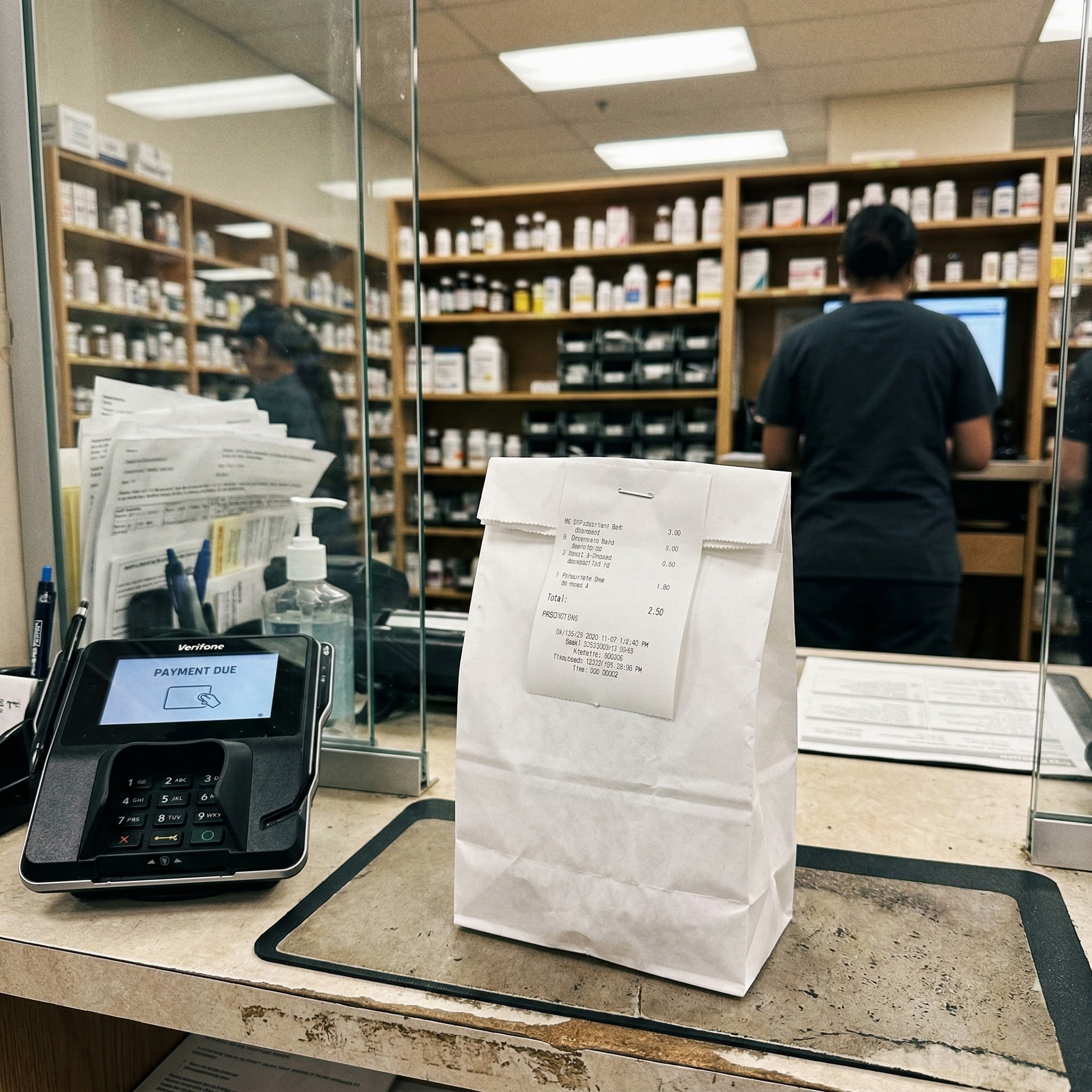
My pharmacist looked around, leaned over the counter, and whispered: "Off the record? I wouldn't take that either." I was standing at the CVS pickup window holding a prescription for Pantoprazole. My third PPI in two years. The first one stopped working after eight months. The second one gave me headaches so bad I couldn't drive. Now my gastroenterologist wanted me to try a third. I handed the prescription to the pharmacy tech. She went to the back. The pharmacist — a man I'd been seeing at that counter for six years — walked over with my bag. He scanned it. Looked at my file on his screen. Looked at me. Then he did something he'd never done before. He leaned forward. Lowered his voice. "Can I ask you something? How long have you been on proton pump inhibitors?" "About two years. This is my third one." He nodded slowly. Looked left. Looked right. "Off the record? I wouldn't take that either. Not long-term." I just stared at him. "What do you mean?" He glanced toward the back where his coworkers were working. Then back at me. "I fill PPI prescriptions all day. Omeprazole. Pantoprazole. Lansoprazole. Hundreds of them. Every week. Year after year. Same people. Same refills. Nobody ever comes off them." "That's what my doctor said. She said it's a long-term medication." "Right. And I'm not telling you to go against your doctor. That's not my place." He paused. Tapped my prescription bag. "But if you asked me personally — not as your pharmacist, just as a person — I'd want to know why I needed to suppress my stomach acid for the rest of my life when my stomach is designed to produce it." That sentence hit me like a truck. Why DO I need to suppress my stomach acid for the rest of my life when my stomach is designed to produce it? He kept going. Still quiet. Still looking over his shoulder. "The science on these isn't complicated. PPIs shut down the proton pumps in your stomach that produce hydrochloric acid. Less acid, less burning. That's the pitch." "But hydrochloric acid isn't a malfunction. It's a feature. You need it. For digestion. For absorbing minerals. For killing bacteria. For signaling the rest of your GI system to work." "When you shut that down, everything downstream suffers. B12 absorption drops. Magnesium drops. Calcium absorption drops — that's where the bone density concerns come from. Your gut bacteria balance shifts because the acid that was keeping harmful bacteria in check is gone." "And the rebound?" He shook his head. "That's the part nobody warns you about. The longer you suppress acid, the harder your stomach tries to compensate. When you try to stop, it overproduces. Way more acid than you had before you started. So you feel worse without the medication than you did before you ever took it." "That's not a side effect. That's dependency by design." I felt sick. "So why does every doctor prescribe these?" He leaned back. Straightened up a little. Looked at me like he was choosing his words very carefully. "Because it's the tool they have. PPI prescriptions went up 400% in the last twenty years. It's what they're trained to reach for. And it works — in the short term. The burning stops. Patient is happy. Box checked." "But nobody's asking the next question. Why is the acid burning you in the first place? Because it shouldn't be. Acid is supposed to be in your stomach. It's supposed to be there. Something else is wrong if normal acid is causing pain." "What's wrong?" I asked. He tapped the counter. "Your stomach has a lining. A mucosal barrier. Protective coating. Its entire job is to keep acid — which is corrosive by nature — from touching the stomach wall." "When that lining is intact, acid does what acid does. Breaks down food. You feel nothing." "When that lining is compromised — and it can be compromised by stress, by diet, by aging, by medications including the very PPIs that are supposed to help you — acid makes contact with exposed tissue." "That's your burning. That's your reflux. That's your 2 AM wake-ups. Not because you have too much acid. Because your barrier has holes." He pointed at my prescription bag. "This medication shuts down the acid. Doesn't touch the barrier. The holes are still there. You just can't feel them because there's less acid flowing through." "Take this for two years, five years, ten years — the barrier is still compromised. Maybe worse, because without adequate acid your stomach's natural maintenance processes don't function properly." "So you're dependent on the drug. And the underlying problem is exactly where it was the day you started. Maybe further along." I stood there. The CVS fluorescent lights buzzing above me. A line forming behind me. The prescription bag in my hand feeling heavier than it should. "So what fixes the barrier?" I asked. He almost laughed. Not mean. Frustrated. "That's the question, isn't it? In twenty-two years behind this counter, I've never once filled a prescription that was designed to repair the mucosal lining. Not one. We have acid blockers, acid neutralizers, acid suppressors. We have nothing for the lining." "The pharmaceutical model doesn't address it. There's no drug for it. So the entire treatment protocol works around the barrier instead of fixing it." He lowered his voice again. "I've done my own reading on this. There are natural compounds that support mucosal lining health. Things that have been used in traditional medicine for generations. Specifically in Southeast Asia. There's a plant called pandan that has research behind it for stomach lining support." "I can't recommend it to you as your pharmacist. I'd lose my license. But I can tell you that if it were MY stomach and MY prescription, I'd be looking at what supports the lining instead of what suppresses the acid." He straightened up. Put on his professional face. "Your prescription is ready. Do you have any questions about the medication?" I looked at the bag. "No. Thank you." I took the bag. Walked to my car. Sat there for twenty minutes. I didn't open it. That night I searched "pandan leaf stomach lining." And everything the pharmacist said started clicking into place. Pandan leaf extract. Used across Southeast Asia for generations for stomach comfort. Natural compounds that soothe and support the mucosal lining. The actual barrier. The thing that twenty-two years of pharmacy prescriptions never once addressed. Not suppressing acid. Not blocking digestion. Supporting the protective lining so acid can exist in the stomach without burning through damaged tissue. Fix the barrier. The acid stops being a problem. Not because you removed it. Because your stomach is protected again. I found Alfrea Pandan. 100% pure pandan extract. One ingredient. Formulated for stomach lining support. Quercetin naturally present for inflammation — my lining had been inflamed for years. Magnesium for sleep — the same mineral my PPIs had been depleting. B vitamins for energy. Iron for absorption. All naturally in pandan. No acid suppression. No shutting down a critical bodily function. Just lining support. I started taking it. Kept the Pantoprazole in the bag. Didn't fill it. Gave myself a month. Week one — the nighttime reflux started easing. Not gone. But softer. Like the edges were being taken off. Week two — I slept through the night four times. First time in over a year without waking up to acid. Week three — I ate dinner without thinking about it. Just ate. Didn't calculate. Didn't brace. Sat on the couch afterward and realized I wasn't waiting for the burn. It didn't come. Week four — the Pantoprazole bag was still sitting on my kitchen counter, unopened. My husband moved it to a drawer. "You clearly don't need this." He was right. Six weeks in I went back to my gastroenterologist. Told her I hadn't filled the Pantoprazole. Told her what I'd been taking instead. She was skeptical. Ordered tests. The results came back. She looked at them. Looked at me. "Your esophageal inflammation has decreased significantly. Whatever you're doing is showing results." She didn't endorse pandan. She didn't say stop your medical plan. She said "showing results." And she didn't push another PPI prescription. That was four months ago. I still go to CVS for other things. My pharmacist sees me. We make eye contact. He gives me this small nod. Like he knows. He can't ask me about it. I can't bring it up. He'd never acknowledge the conversation we had. But last week I was at the counter picking up my husband's allergy medication. And as he handed me the bag, he said — just barely loud enough for me to hear: "You look good, by the way. Rested." That was it. That was all he could say. But I knew what he meant. If you're reading this with a PPI prescription on your counter — Omeprazole, Pantoprazole, Lansoprazole, Esomeprazole, any of them — I'm not going to tell you to stop taking it. That's between you and your doctor. But I am going to tell you to ask one question that nobody in the medical system is asking for you: What is this medication doing for my stomach lining? The answer is nothing. It's suppressing acid. The lining — the actual barrier, the thing that's damaged, the reason acid is burning you — is untouched. And as long as the lining is untouched, you will need that prescription. Month after month. Year after year. Refill after refill. Exactly the way my pharmacist described it — "nobody ever comes off them." Unless something addresses the lining. Alfrea Pandan supports the stomach's mucosal barrier. One ingredient. The one thing that twenty-two years of prescriptions behind that pharmacy counter never once included. They have a 90-day money-back guarantee. Try it for a month. See what happens when something finally supports the part of your stomach that actually needs help. And next time you pick up your refill, look your pharmacist in the eye. Ask them — off the record — what they really think about long-term PPI use. You might be surprised what they say when nobody's listening. https://alfrea.com/products/pandan - Catherine Hewitt P.S. — That CVS prescription bag sat on my counter for six weeks before my husband put it in a drawer. It's still there. Unopened. Four months now. My pharmacist has filled zero PPI refills for me since that conversation. After two straight years of monthly refills, that counter now has one fewer regular. P.P.S. — I felt the first shift around day 10. Real change by week 2. Eating freely by week 3. If you're between prescriptions right now — if your doctor is switching you to your second or third PPI because the first ones "stopped working" — that's your window. Try supporting the lining before you add another acid suppressor to the rotation. P.P.P.S. — Alfrea is small. They sell out. The pharmacy will always have your PPI in stock — that supply chain is built to never run dry. The one thing that might help you stop needing it? That one runs out. If it's available, grab it.
Where the ad sends people
alfrea.com
100% Pure Ancient Pandan Leaf Extract
90-Day Satisfaction Guarantee
Learn more: alfrea.com(opens in a new tab)