Ellen Perkins
Ellen Perkins Facebook ad: “100% Pure Ancient Pandan Leaf Extract”
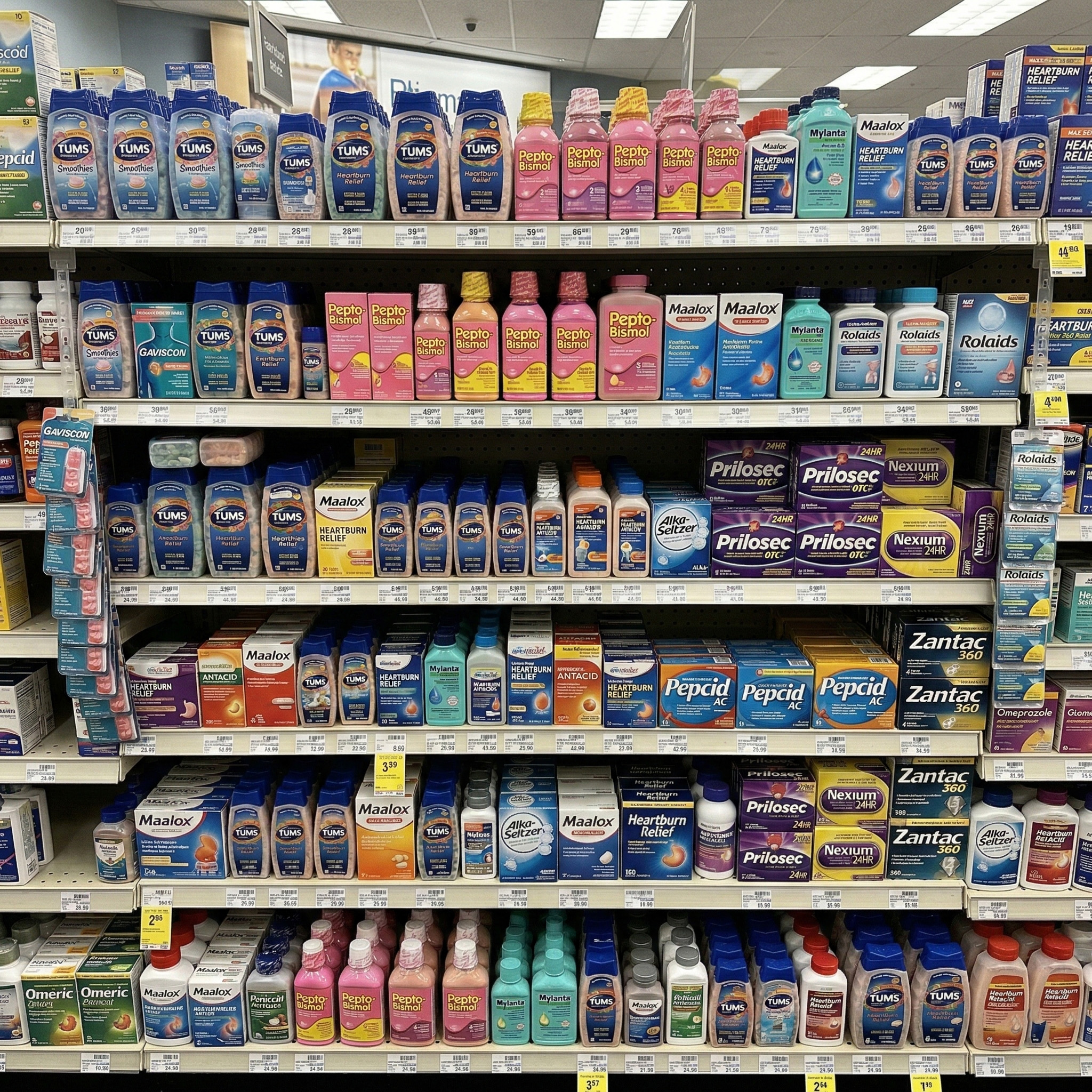
Ran for 13 days, from March 13 to March 26, 2026, the last day Crush saw it.
Run by Ellen Perkins on Facebook. Crush is not the advertiser and does not verify its claims. See this ad in Meta's Ad Library(opens in a new tab)
Want an ad like this for your product?
Crush makes new ad images for your product from this ad: your logo, your product photo, your offer.
Trials from $19.95 USD, then $79.95 USD a month. Cancel anytime.
About this ad
- Meta Ad Library ID
- 1956889128546876
- Platforms
- Facebook, Instagram, Audience Network, Messenger and Threads
- Relaunches
- 2
Ad text
The antacid industry makes $14 billion a year selling you 30 minutes of relief. If they fixed the actual problem, you'd stop buying. Think about that. I'm not a conspiracy person. I'm not someone who thinks the system is rigged. I'm a 52-year-old accountant who spent ten years buying antacids and one afternoon doing the math. The math is what changed everything. Here's what I calculated sitting at my kitchen table with a calculator and my credit card statement: In ten years of acid reflux, I spent approximately $4,800 on Tums, Pepto-Bismol, Gaviscon, and generic antacids. $480 a year. $40 a month. Give or take. That's not a lot of money. That's the problem. It's SO affordable that you never question it. $6 for a bottle of Tums? That's nothing. You throw it in the cart without thinking. But $6 becomes $40 a month becomes $480 a year becomes $4,800 over a decade. For a product that gives you 30 to 60 minutes of relief per dose and requires you to keep buying it forever. That's not a product. That's a subscription you never signed up for. And I'm one person. One customer. Multiply me by 30 million Americans who buy antacids regularly and you start to understand why this is a $14 billion industry. $14 billion. Not for curing acid reflux. For temporarily managing the symptom so you come back next week and buy more. That number changed how I see every antacid bottle on that pharmacy shelf. Because here's what an accountant's brain does with that number — I follow the incentive. If you're a company making billions selling 30-minute relief, what's your nightmare? Someone fixing the problem permanently. Because a fixed customer is a lost customer. A fixed customer never walks down that aisle again. Your business model depends on the problem continuing. I'm not saying there's a boardroom somewhere with executives plotting to keep people sick. I don't believe that. What I believe is simpler and worse. Nobody's looking for a fix because the business doesn't reward fixing. Tums makes money when you buy Tums every week. If Tums fixed your reflux in a month, you'd buy one bottle and never come back. How does a $14 billion industry survive if customers stop coming back? It doesn't. So the entire industry is built on products that manage but never fix. Not because of evil. Because of math. And once I saw the math, I couldn't unsee it. I started asking a question that the antacid industry absolutely does not want you to ask: Why, after decades of research and billions in revenue, has nobody produced a product that addresses WHY acid burns you instead of temporarily neutralizing the acid? The answer isn't because it's impossible. The answer is because there's no incentive. Let me explain what I mean. Your stomach is supposed to have acid. Hydrochloric acid is essential. It breaks down food, absorbs nutrients, kills bacteria, signals your digestive system to function. You need it. It's not a design flaw. The reason acid burns you isn't because you have too much of it. It's because your stomach's mucosal lining — the protective barrier that coats the stomach wall and shields it from acid — is damaged. Healthy lining = acid does its job, you feel nothing. Damaged lining = acid touches exposed tissue, you feel burning, reflux, pain. The problem is the lining. Not the acid. But here's where the money comes in. A product that temporarily neutralizes acid needs to be taken 3 to 8 times a day and repurchased every 1 to 2 weeks. That's a $480/year customer. Multiplied by 30 million people. A product that supports lining repair could potentially resolve the issue in weeks. That customer might buy 2 to 3 bottles and never come back. Which product does a $14 billion industry develop? They build the one that keeps you buying. Every Tums, every Rolaids, every Gaviscon, every generic antacid on that shelf — they all do the same thing. Neutralize acid temporarily. None of them touch the lining. None of them address the root cause. Because the root cause is a one-time sale and the symptom is a lifetime subscription. The same math applies to PPIs — Omeprazole, Prilosec, Nexium. They suppress acid production. You take them daily. They cost more. And they create rebound acid when you try to stop, which locks you in even tighter. The pharmaceutical version of the same business model. Manage the symptom, create dependency, collect monthly. Once I saw this I started looking at the supplement aisle with the same accountant's eye. Probiotics — $40 to $80 a month. Recurring subscription. Designed for your gut, not your stomach. Does nothing for the lining but you keep buying because it takes "3 to 6 months to see results." And when 6 months pass and your reflux is the same, the brand says "try a different strain." Another 6 months. Another $480. Same business model. Different aisle. The entire digestive health industry — pharmaceutical and supplement — is built on products that require you to keep buying. Nobody sells lining repair because lining repair is a terrible business model. Fix the customer, lose the customer. So I stopped looking for products that wanted my repeat business. I started looking for something that could actually make me stop needing it. I searched specifically for mucosal lining support. Not acid management. Not gut health. Stomach lining. The options were almost nonexistent. Billions of dollars in the digestive health market and almost nothing directly supports the stomach lining. That alone told me everything. The most obvious root cause solution for acid reflux — support the barrier that protects you from acid — and nobody sells it. In a $14 billion industry. Nobody. Because it breaks the model. Then I found clinical and traditional Southeast Asian research on pandan leaf. Used for generations for stomach comfort. Natural compounds that soothe and support the mucosal barrier. The barrier. The lining. The thing that $14 billion in antacids ignores because fixing it would end the subscription. One ingredient. Pandan leaf extract. That's what generations of Southeast Asian traditional use came down to. Not a 30-ingredient proprietary blend designed to keep you buying for months. One plant. I found Alfrea Pandan. 100% pure pandan extract. Formulated for stomach lining support. Plus Quercetin for inflammation. Magnesium for sleep. B vitamins for energy. Iron for absorption. All naturally in pandan. Here's what my accountant's brain noticed about Alfrea: it's a small company. Not a publicly traded pharmaceutical giant with quarterly earnings targets that depend on repeat customers. A small company selling one product that does one thing — supports the stomach lining. Their incentive structure is completely different. They don't need me buying forever. They need me telling people it works. I took it for a month. The first week, the nighttime reflux started fading. Not gone. Fading. By week two, I stopped reaching for Tums after dinner. Not because I was disciplined. Because the burning wasn't there to reach for. Week three — I slept through the night five nights out of seven. After ten years of broken sleep. Week four — I looked at my credit card statement. No antacid purchases. For the first time in ten years. That was three months ago. I haven't bought Tums since. Haven't bought Pepto. Haven't bought Gaviscon. Haven't spent a single dollar in the antacid aisle. Ten years and $4,800 in antacids. Three months of pandan and the problem that funded all that spending is gone. Not managed. Gone. Because something finally addressed the lining instead of temporarily neutralizing the acid leaking through it. One bottle of Alfrea Pandan costs less than what I used to spend on antacids in a single month. Let that sink in. One month of root cause support costs less than one month of symptom management. And the root cause approach actually resolves the issue. The antacid industry doesn't make $14 billion by fixing you. It makes $14 billion by keeping you right where you are — buying 30 minutes of relief, week after week, year after year. If you're tired of being a subscription, try being a solution. Alfrea Pandan. One ingredient. Supports the stomach lining. The thing the $14 billion industry will never sell you because it would put them out of business. They have a 90-day money back guarantee. Try it. Do the math after one month. Add up what you didn't spend on antacids. That's your answer. https://alfrea.com/products/pandan — Ellen Perkins P.S. — Pull up your credit card or bank statement right now. Search "Tums" or "antacid" or "pharmacy." Add up the last 12 months. That number is what the industry counts on you never calculating. I calculated mine. It changed everything. P.P.S. — I'm an accountant. I don't trust marketing. I trust numbers. My number is $0 in antacid spending for three consecutive months after ten years of $40/month. That's the only data point I need. P.P.P.S. — Alfrea is a small company. They sell out. If it's in stock, grab it. The antacid aisle will always be fully stocked. They're counting on it.
Where the ad sends people
alfrea.com
100% Pure Ancient Pandan Leaf Extract
90-Day Satisfaction Guarantee
Learn more: alfrea.com(opens in a new tab)